A laser scanning vibrometer was used to measure the amplitudes and phases of the vibrational velocity of shear waves excited by a one-dimensional source in the form of a narrow rectangular bar in a gel-like medium. The vibrations of 26 plates reflecting the laser beam and located inside an optically transparent phantom along a segment with a length of 84.5 mm at a distance of 20 mm from the source were measured. The angular distributions of the amplitude and phase of shear waves at discrete frequencies from 59 to 500 Hz were measured in continuous mode. In pulsed mode, the vibrator excited a pulse in the medium with a duration of 1.5 periods of the 300 Hz frequency. The amplitudes and phases of shear waves were calculated by fast Fourier transform of the time profile of the vibration velocity of the plates with a duration of 50 ms. The angular amplitude distributions measured in the pulsed and continuous modes are qualitatively the same. At all frequencies, the distributions are symmetrical with respect to the vertical axis. The maximum oscillation amplitude is observed at angles close to ±45°. The velocity of shear waves, calculated from the measured phase distributions, increases from 2 to 2.5 m/s with a change in frequency from 50 to 500 Hz. It is shown that this velocity behavior is well described by a relaxation model of the medium with one relaxation time equal to 0.3 ms. Shear wave attenuation depends on frequency and exceeds 1 cm –1 for waves with frequencies above 250 Hz. The maximum attenuation per wavelength is observed near the relaxation frequency of the medium in the 300–400 Hz range. The results can be used to optimize devices for measuring the elasticity of soft tissues.
Исследована зависимость порогов акустической кавитации в водных суспензиях наночастиц пористого кремния (пКНЧ) от степени гидрофобности их поверхности. Наночастицы со средним размером 100 нм изготавливались механическим измельчением пленок пористого кремния (ПК) в этаноле. Согласно данным ИК-спектроскопии, такие пКНЧ исходно характеризуются гидрофильной поверхностью. Для получения амфифильных (гидрофобно-гидрофильных) наночастиц, пленки ПК перед измельчением гидрофобизировались путем модификации поверхности октадецилсиланом. При измельчении в этаноле гидрофобных пленок ПК до наночастиц, происходит разрыв кремний-кремниевых связей с последующим их окислением, за счет чего поверхность частично гидрофилизируется. Показано, что порог акустической кавитации в суспензиях амфифильных пКНЧ существенно снижается по сравнению с гидрофильными КНЧ. Величина порога акустической кавитации в суспензии амфифильных наночастиц с концентрацией 1 мг/мл оставалась практически постоянной в течение 5 дней. Полученные результаты важны для разработки методов сонодинамической терапии раковых заболеваний с использованием пКНЧ.
Measurements of the nonlinear parameter of a gel-like medium were carried out in an acoustical resonator fixed without slipping between two solid-state boundaries. A sample of thickness L is fixed on an oscillating plate (x = 0). The other plate of finite mass on the free surface of the sample (x = L) moves together with this surface. By changing the mass of the plate (x = L), it is possible to achieve additional static deformation of the resonator up to 65%. The dynamic method assumes measuring resonance curves at various static deformations. Nonlinear properties appear at deformations of more than 20%. The nonlinear parameter and shear modulus measured dynamically were compared to static measurements where the dependence becomes nonlinear at strains greater than 30%. The static values of the shear modulus and the nonlinear parameter correspond to the values obtained in the dynamic method within an error.
The dependence of acoustic cavitation thresholds in aqueous suspensions of porous silicon nanoparticles (pSiNPs) on the degree of hydrophobicity of their surface has been studied. Nanoparticles with an average size of 100 nm were prepared by mechanical grinding of porous silicon (pSi) films in ethanol. According to IR spectroscopy data, such pSiNPs are initially characterized by a hydrophilic surface. To obtain amphiphilic (hydrophobic–hydrophilic) nanoparticles, pSi films were hydrophobized before grinding by surface modification with octadecylsilane. When hydrophobic pSi films are ground in ethanol to nanoparticles, silicon–silicon bonds are broken, followed by their oxidation, due to which the surface is partially hydrophilized. It has been shown that the threshold of acoustic cavitation in suspensions of amphiphilic pSiNPs is significantly reduced compared to that of hydrophilic pSiNPs. The threshold value of acoustic cavitation in a suspension of amphiphilic nanoparticles at a concentration of 1 mg/mL remained almost constant for 5 days. The results obtained are important for the development of methods for sonodynamic therapy of cancer using pSiNPs.
The spectral dependence of the optical coefficients of ultrathin copper films 2 – 30 nm thick on the substrate thickness has been studied. The measurements were carried out in a rectangular waveguide in the frequency range 8.5–12.5 GHz for two orientations of the film with respect to the direction of the incident wave. 4 mm to a 4 mm substrate with a film. It is shown that the effect of anomalously high absorption of waves (more than 77%) by copper films no thicker than 10 nm is observed in a wide frequency band. The effect of extremely low reflection (0.06%) was registered when a wave of frequency 11.54 GHz is incident on a film 7.9 nm thick from the side of a 4-mm substrate. It is shown that the frequency range where the effect of minimal reflection was observed exceeds the antireflection band of a dielectric plate with half-wave resonance.
The dependence of optical coefficients of ultrathin copper films 2-30 nm thick on the substrate thickness has been studied. Films were fabricated on quartz substrates 4 mm thick, and the thickness of the substrates (6 and 8 mm) was varied by tightly pressing clean substrates with thicknesses of 2 and 4 mm to a 4 mm substrate with a film. The measurements were carried out in a waveguide in the frequency range 8.5-12.5 GHz in the TE 10 mode for two film orientations with respect to direction of the incident wave. The dependences of the optical coefficients measured when the wave was incident from the side of the film and from the side of the substrate differ significantly. It is shown that the effect of anomalously high absorption of waves (more than 77%) by copper films no thicker than 10 nm is observed in a wide frequency band. The maximum absorption (77.5%) was obtained at frequency of 8.5 GHz when a wave was incident on a film 8.6 nm thick from the side of a 6-mm substrate. The effect of extremely low reflection (0.06%) was recorded for the first time when a wave of frequency 11.54 GHz was incident on a film 7.9 nm thick from the side of a 4-mm substrate. It is shown that the frequency range where the effect of minimal reflection was observed exceeds the antireflection band of a dielectric plate with half-wave resonance. Keywords: ultrathin cooper films, quartz substrate, optical coefficients, waveguide measurements, microwave frequency range.
The dependence of optical coefficients of ultrathin copper films 2 – 30 nm thick on the substrate thickness has been studied. Films were fabricated on quartz substrates 4 mm thick, and the thickness of the substrates (6 and 8 mm) was varied by tightly pressing clean substrates with thicknesses of 2 and 4 mm to a 4 mm substrate with a film. The measurements were carried out in a waveguide in the frequency range 8.5 – 12.5 GHz on the TE10 mode for two film orientations with respect to direction of the incident wave. The dependences of the optical coefficients measured when the wave was incident from the side of the film and from the side of the substrate differ significantly. It is shown that the effect of anomalously high absorption of waves (more than 77%) by copper films no thicker than 10 nm is observed in a wide frequency band. The maximum absorption (77.5%) was obtained at frequency of 8.5 GHz when a wave was incident on a film 8.6 nm thick from the side of a 6-mm substrate. The effect of extremely low reflection (0.06%) was recorded for the first time when a wave of frequency 11.54 GHz was incident on a film 7.9 nm thick from the side of a 4-mm substrate. It is shown that the frequency range where the effect of minimal reflection was observed exceeds the antireflection band of a dielectric plate with half-wave resonance.
The results of application of the ultrasonic (US) Doppler method for measuring the elasticity of skeletal muscles lying at a small depth (2–4 cm) from the skin surface are presented. The technique is based on calculating the speed of shear waves excited by a vibrator on the skin’s surface at frequencies of 150–250 Hz. The distribution of shear displacements in an elastic phantom, calculated by the finite element method, was compared with the results of measurements using a miniature accelerometer. The shear modulus of the elastic phantom, measured using the proposed technique, corresponds to values obtained from static measurements.
The measurements of the reflection and transmission coefficients of platinum films with thicknesses of 1–30 nm fabricated on quartz substrates using magnetron sputtering are reported. The measurements were conducted in a rectangular waveguide at frequencies of 9–11 GHz. For a wave falling onto the Pt film from the quartz substrate side (Q‒Pt orientation), the growth of the absorption coefficient (Amax = 0.45) and the presence of a pronounced minimum of the reflection coefficient (Rmin = 0.23) for the 3-nm-thick film have been observed. In films thinner than 10 nm, the values measured are consistent with the calculations performed with the model thickness dependence of conductivity. The specific conductivity of the Pt films as a function of thickness has been calculated using the approximate boundary conditions and the measured reflection coefficients.
A variational method for separating the signal of the second heart sound into aortic and pulmonary components is proposed based on minimizing the functional using model signals dependent on a number of parameters. The range of variation of these parameters was determined, and the algorithm was tested on model signals and on signals obtained in patients with pulmonary hypertension. An analysis of errors of the method depending on the noise level and the delay time between the components was performed. We demonstrated the efficiency of the algorithm for separating the signals measured in patients and for determining the delay time between the components. The correlation between the delay time and the pulmonary artery pressure was shown, which can serve as the basis for a new method of diagnosis of pulmonary hypertension.
We present the results of our theoretical study of quantum conductance properties of ultrathin silver nanofilms. As the result of our ab initio calculations the quantum size effect in the dependence of electronic conductivity of silver nanofilms on its thickness was found. We revealed the changes in the electronic structure of silver ultrathin nanofilm leading to a change of its conductance properties, which explains the change in the conducive characteristics of ultrathin films observed before in several experimental works. Also we found the emergence of dielectric nature of silver nanofilm conductivity due to changes in its band structure.
Approximate boundary conditions for a problem of calculating the optical coefficients of a system composed of inhomogeneous ultrathin metallic film with an arbitrary thickness dependence of conductivity deposited on dielectric substrate are obtained. The derivation of the boundary conditions is based on the Picard method of successive approximations. Analytical expressions for the errors in calculating the optical coefficients with use of the proposed approximate boundary conditions are presented. It is shown that the error increases with the frequency and the film thickness increasing. The maximum error for films of 10 nm-thickness does not exceed 10.7% at 1 THz. As an example, the complex optical coefficients of a system similar to Fabry-Perot etalon and a metal film without a substrate with model thickness dependence of conductivity are calculated. The coincidence between the results of numerical simulation and calculations performed with approximate boundary conditions is shown. The possibility of direct calculating the average conductivity of a film from experimentally measured reflection and transmission coefficients is demonstrated.
A method is proposed for noninvasive assessment of the pulmonary artery pressure based on separation of the aortic and pulmonary components of the second heart sound S2 and determining the delay time between them. The algorithm for separating the aortic and pulmonary components is based on the Wigner–Ville transform. Analysis of the phonocardiograms of 96 patients with pulmonary hypertension (PH) recorded by doctors of the Scientific Research Center of Cardiology using an original set of equipment was carried out. In 53 patients with PH, it was possible to separate S2 signals into components and determine the delays between them. We construct the dependence of delays between the components on pulmonary artery pressure (PAP), measured by right heart catheterization (RHC). For seven patients with PH, the obtained dependences were used to predict the PAP value from the measured time delay. For five patients, the determination coefficient for the predicted PAP values was 0.83, which indicates a fairly good correlation with measurements by the RHC method.
The reflection, transmission, and absorption coefficients of ultrathin copper films on a quartz substrate in a waveguide at frequencies of 9–11 GHz were measured. Films less than 5 nm thick are almost completely oxidized and transparent to microwave radiation. A conductive layer is formed when the film thickness exceeds 5 nm, however, the reflection coefficient increases with a thickness in the range of 5-15 nm more slowly than it follows from calculations utilized the model conductivity of a continuous film. The results can be explained by the morphology of the films.
Optical properties of silver nanofilms on its thickness and mechanical deformations in visible and infrared ranges are studied theoretically. The deformation of the film during its elongation leads to a rearrangement of the structure of a surface layer and the appearance of dislocations. It is shown that 9% elongation is crucial for the six monolayer silver film. Mechanical deformations change the electronic structure of atoms in a film, which leads to a significant change in their optical properties. Stretching of the film shifts the absorption peak to the long wavelength region and leads to a slight decrease in absorption. The effects are explained by the significant transformation of the electron structure of deformed silver nanofilms.
 Oleg A. Sapozhnikov合作论文数46
 Oleg Vladimirovich Rudenko合作论文数Department of Acoustics, Lomonosov Moscow State University37
 Timofey Krit合作论文数Faculty of Physics, Moscow State University30
 V. A. Vdovin合作论文数26
 Alexander A. Karabutov合作论文数LLC Planet36021
 Alexander Oraevsky合作论文数Science & Engineering Research Center, Department of Biomedical Engineering, Cullen College of Engineering, University of Houston12
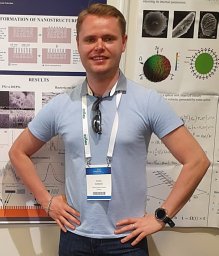 Sviridov Andrey P合作论文数9
 Vera A. Khokhlova合作论文数Physics Faculty, Moscow State University8
 P. S. Glazunov合作论文数7Gramovich V V合作论文数7
 Armen Sarvazyan合作论文数Acad. Sci. USSR6в в костиков合作论文数5O. N. Vyborov合作论文数5Ev Savateeva合作论文数5Tamarov Konstantin P合作论文数5Rodnenkov O V合作论文数5Sergey Tsysar合作论文数Dept. of Acoust., Moscow State Univ.;c;Dept. of Acoust., Moscow State Univ.5SV Solomatin合作论文数5I. A. Khorin合作论文数4p m henrichs合作论文数4T V Martyniuk合作论文数4
 A. I. Korolkov合作论文数Fac Phys, Moscow MV Lomonosov State Univ4V. N. Kornienko合作论文数4Tsysar K M合作论文数4
 Zoran Gatalica合作论文数European Society for Translational Medicine4
 Liubov a Osminkina合作论文数Moscow State University Vorob’evy gory4
 Alexander Karabutov合作论文数International Laser Center Vorob’evy gory, Moscow State University4
 Rinat Esenaliev合作论文数Laboratory for Optical Sensing and Monitoring, Center for Biomedical Engineering, University of Texas Medical Branch;Department of Neuroscience and Cell Biology, University of Texas Medical Branch4Victor Timoshenko合作论文数3r declan fleming合作论文数3V. Yu. Timoshenko合作论文数3Yu. V. Pinaev合作论文数3Smelova E M合作论文数3Vladimir Dmitriev合作论文数3
 S. N. Gurbatov合作论文数Lobachevski State University3Andrey V. Shanin合作论文数Faculty of Physics, Moscow State University3
 Vladimir Lukichev合作论文数3
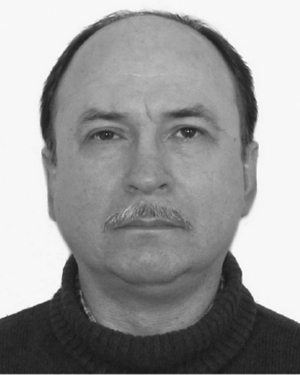 Andrey A. Angeluts合作论文数Department of Physics and International Laser Center, Lomonosov Moscow State University, Moscow, Russia3Tv Martynyuk合作论文数3
 Vitali Goussev合作论文数Ecole Nationale Superieure d’Ingenieurs du Mans, Universite du Maine, Le Mans3YA Pishchalnikov合作论文数2
 Igor Yu. Demin合作论文数2е а лапшин合作论文数2Richard J. Loveless合作论文数2U. A. Tsurikova合作论文数2S. M. Bobkova合作论文数2Ov Rudenko合作论文数2Oleg Prokofiev合作论文数2Da Popov合作论文数2




