Reconstructing the mesoscopic brain connectome is key to understanding the principles of biological neural connectivity, thereby shedding light on how brain functions emerge. However, biological brains typically contain hundreds of millions of neurons and synapses, making large-scale reconstruction difficult using traditional techniques such as tracer labeling and microscopic imaging. So far, only a few model organisms with simple nervous systems, such asC. elegans and zebrafish, have had their connectomereconstructed. Here, we propose a novel method that combines graph neural networks (GNN) with long short-term memory (LSTM) networks to mine spatiotemporal features from neural calcium activity data. The features uniquely characterize neurons and synapses, enabling the prediction of neural connectivity. To validate the effectiveness of the method, we performed multiple whole-brain calcium imaging experiments on C. elegans and collected a large number of calcium activity data to create several datasets. Experiments on these datasets show that the method can reliably predict the connections of local neural circuits in C. elegans, achieving an average accuracy of approximately 0.75, outperforming existing methods. It is anticipated to offer a simpler and data-driven approach for reconstructing connectome in more complex nervous systems.
Background and Objective: Speech has emerged as a low-cost and non-invasive digital biomarker with considerable potential for cognitive impairment detection. However, limited labeled data and cross-dataset variability remain major challenges for robust speech-based screening systems. Methods: We developed a segment-level representation learning framework for speech-based cognitive impairment detection. Speech recordings were divided into short segments and converted into spectrogram representations. To improve robustness under limited-data conditions, offline and online augmentation strategies were combined with autoencoder-based representation learning and contrastive objectives to enhance discriminative latent representations. Results: Experiments conducted on four independent Mandarin Chinese speech datasets demonstrated stable and competitive performance in both binary and three-class classification tasks, with particularly notable improvements in the clinically challenging three-class setting. Ablation studies further supported the effectiveness of the proposed framework. Conclusions: The findings suggest that segment-level speech representation learning may provide a scalable and practical approach for cognitive impairment screening in resource-constrained clinical settings.
As the role of remote sensing continues to grow, the fusion technology of low-spatial-resolution hyperspectral images and high-spatial-resolution multispectral images has become increasingly critical. Traditional methods rely on fixed rules and exhibit poor robustness, whereas deep learning methods struggle to establish efficient interactions between local and global information due to the complexity of their underlying networks. Therefore, we propose a deep learning fusion module that combines pixel-wise adaptive wavelet transform with a spectral–spatial dual-branch extraction. Firstly, by utilizing the unique properties of the wavelet transform, it is possible to effectively preserve spectral information and extract spatial edge features, thereby achieving preliminary fusion by leveraging both low-frequency and high-frequency components. To compensate for the lack of nonlinear expression capability in the wavelet transform, a dual-branch parallel extraction of spectral and spatial features is subsequently performed in the deep learning module. The Multi-Scale Group Convolution module (MSGC) is utilized to extract spectral information, while the Spectral Compression and Spatially Guided Gating Module (SCSGM) is employed to extract spatial information, thereby enhancing the data’s adaptive capability. A bidirectional attention mechanism is interspersed within the module to capture complementary information across different scales, ultimately reconstructing a high-resolution hyperspectral image. Finally, the proposed fusion strategy demonstrates superior performance in practical image reconstruction, outperforming more than ten state-of-the-art fusion methods.
Optical coherence tomography angiography (OCTA) is able to present more detailed information on vascular structure and blood flow, which is important for early diagnosis and assessment of disease progression. Aiming at the problems of the existing OCTA retinal vessel segmentation algorithms, which have unclear edge contour and many breakpoints in the segmentation results, we propose a U-shaped architecture based on Gabor modulation coding for OCTA retinal vessel segmentation. To assist convolutional pathway to refine vessel edge contour information, we proposed a Gabor convolutional pathway with multiple scales, different orientations and fixed weights to modulate and encode feature maps of different sizes. Furthermore, considering the repair of breakpoints and the elimination of anomalies, we proposed an ON-OFF convolution combined with skip connections to extract the multi-level information. According to the experimental results on the OCTA-3 M, OCTA-6 M datasets, this model effectively extracts the edge contour information of blood vessels, reduces the vascular breakpoints, balances the accuracy and integrity of blood vessel segmentation, and achieves superior performance evaluation indicators overall compared with the existing optimal methods in the fundus OCTA retinal blood vessel segmentation task.
To address the urgent need for early Alzheimer’s disease detection in low-resource speech settings, we present the first cross-lingual screening study covering English, Mandarin Chinese, Spanish, and Greek. By integrating these datasets, we establish a multilingual benchmark and propose a parameter-efficient fine-tuning framework that combines layer-wise analysis of Wav2Vec2.0 with Low-Rank Adaptation (LoRA). We evaluate the approach under single- and multi-source transfer scenarios, reflecting practical resource conditions. Results show that LoRA fine-tuning consistently improves accuracy in low-resource target languages, confirming its effectiveness for cross-lingual adaptation. This study establishes the first multilingual benchmark for AD speech screening and introduces a parameter-efficient framework to support future cross-lingual research and applications.
Current spatiotemporal modeling approaches in remote sensing change detection often struggle to distinguish phenological pseudo-changes from semantic changes, leading to false alarms and blurred boundaries. To address this, a Feature-Aligned and Frequency-Aware Network (FACDNet) is proposed based on a physics-inspired decomposition strategy. It consists of three main modules: Feature Distribution Alignment Module (FDAM), Frequency-domain Adaptive Filtering Module (FAFM), and Change Attention Guidance Module (CAGM). Specifically, FDAM is first integrated within the Siamese encoder, and employs a statistical feature alignment mechanism to reduce style-sensitive feature distribution discrepancies. Subsequently, FAFM leverages the wavelet transform to adaptively suppress low-frequency environmental noise while amplifying high-frequency boundary signals, thereby enhancing boundary-aware change cues under background interference. Finally, CAGM adaptively fuses spatial and frequency-domain evidence through an attention-guided gating scheme to support reliable change detection. Experiments on three benchmarks show that FACDNet leads on LEVIR-CD and WHU-CD and remains competitive on SYSU-CD, demonstrating robustness to radiometric inconsistencies.
Remote sensing semantic segmentation faces significant challenges such as difficult multiscale feature capture, complex and variable scenes, and boundary blurring. To address these issues, this study proposes the DREAM-Mamba model. The dynamic omnidirectional scanning mechanism (DOSM) is introduced to adaptively adjust scanning weights, synergizing global context with local details; the adaptive windmill convolution module (AWCM) is designed to accurately fit complex geometric features through dynamic sampling; and the edge enhancement module (EEM) is incorporated to suppress smoothing effects and preserve high-frequency edges. DREAM-Mamba achieves a 93.58% IoU on the WHU dataset and a 72.36% mIoU on the Potsdam dataset, notably becoming the only method to exceed 90% IoU (attaining 90.20%) in the Potsdam building category. The source code is available at https://github.com/wuduan521/DREAM-Mamba
Early detection of Alzheimer's disease is crucial for delaying disease progression and improving patient outcomes. Speech has emerged as a promising biomarker for Alzheimer's disease detection because it is convenient, non-invasive, and low-cost. However, existing studies often rely on a single modality or fail to fully exploit complementary information across modalities. To address these limitations, we propose a query-based multimodal interaction and adaptive gated fusion framework for Alzheimer's disease detection. The proposed framework jointly models multi-view acoustic and textual information derived from speech. Specifically, audio and spectrogram features are extracted from preprocessed speech at the segment level, while the full speech recording is transcribed by an automatic speech recognition system to derive textual features. A shared-query multimodal interaction strategy is employed, in which the same set of learnable queries independently extracts task-relevant information from the audio, spectrogram, and textual representations into a unified query space, followed by an adaptive gated fusion strategy that dynamically integrates the resulting query representation with the original modality-specific representations. Experiments were conducted on the ADReSSo and Pitt datasets, comprising speech recordings from participants with Alzheimer's disease and cognitively normal controls. Experimental results demonstrate that the proposed method outperforms existing approaches, achieving accuracies of 87.14% and 90.20% on the ADReSSo and Pitt datasets, respectively. Furthermore, ablation studies and representation visualizations confirm the effectiveness of the proposed interaction and fusion mechanisms. These findings suggest that the proposed framework effectively exploits complementary multimodal information and learns more discriminative representations for Alzheimer's disease detection, highlighting its potential for speech-based cognitive impairment screening.
Aiming at the segmentation and extraction of the main part of substation equipment, we use Fast Point Feature Histograms (FPFH) and Locally Convex Connected Patches (LCCP) to obtain voxels' integrated geometric features, then aggregate these features and their K nearest neighbors' on voxels to build multi-level voxels' features by bottom-up hierarchy, and achieve pre-segmentation of shapes with the flow-constrained super-voxel clustering algorithm; After the pre-segmentation, we conduct shape analysis to extract semantically meaningful instances of equipment components, achieving part-level point cloud data instance extraction of artificial equipment geometric features. Without training data or manual annotations, the work presented is simple and easy to implement. It can merge patches across surface-singularities. It needs a few parameters, can achieve automatic 3D instance extraction from point clouds for different scenes with the same or similar parameters.
Rhythmic behaviors are essential in biological systems, particularly in animal locomotion. The central pattern generator and sensory feedback loop mechanism have been instrumental in explaining many rhythmic locomotion patterns, however, it is insufficient to account for the tunability and robustness of frequency and amplitude in certain oscillatory movements. This suggests the involvement of additional, less understood circuit mechanisms. This study employs calcium imaging and neuromechanical modelling to investigate the circuit mechanism responsible for sinusoidal forward locomotion in Caenorhabditis elegans . We demonstrate that the feedback loop circuit, consisting of motoneurons and muscles, could govern the generation of oscillations and regulate rhythmic forward movement. This circuit is composed of both negative and positive feedback loops, which together regulate the turnability and robustness of oscillations. The oscillatory behavior of C. elegans typically involves a rhythmic alternation of dorsoventral muscles. Our neuromechanical model of the functional oscillatory unit reveals that asymmetric inputs from interneurons to motoneurons, and asymmetric connections from motoneurons to muscles, are essential for this switching mechanism. Our findings suggest that, besides the established roles of existed oscillator mechanisms, circuits formed by both negative and positive feedback loops contribute to the generation and robust modulation of rhythmic behaviors.
Recent years have witnessed the remarkable success of Text-to-3D generation, particularly with the rise of mainstream conditional diffusion models (DMs). Though achieving substantial progress, existing methods still face a knotty "human preference" dilemma, that is the 3D contents generated by the models often deviate greatly from the desired effects (e.g., perspective, aesthetics, shading, appearance, etc.) due to the lack of attention to human preferences. To mitigate the limitation of data deficiency and enable human preference learning, we first elaborately curate the HP3D, a text-to-3D dataset with expert preference annotations which is initally captioned by the multimodal large model LLava and then refined by human expert. Based on such a brand-new HP3D, we further propose DreamAlign, a reward-free method that does not require designing any complex reward models whereas only by introducing a light-weight lora adapter and then designing a novel direct 3D preference optimization (D-3DPO) algorithm for training. Moreover, in the stage of text-to-3D we design an additional Preference Contrastive Feedback training for score distillation sampling, which enables the generated 3D objects to align the human preferences (e.g., aesthetics, material, etc.). Extensive experiments demonstrate that DreamAlign consistently achieves state-of-the-art performance on generative effects and human preference alignment across various benchmark evaluations.
Reasoning on Temporal knowledge graphs (TKGs) aims to predict future events based on historical cues of entities and their relations. However, most existing reasoning methods usually represent the knowledge timeline as discrete points and focus on reasoning from the single-history perspective, such as repetitive events or query-related first-order historical information, which greatly limit the improvement of reasoning accuracy, especially for fine-grained TKGs with dense timestamps. To address these issues, Multi-History Perspective Network (MuHiNet) is proposed for temporal knowledge reasoning on TKGs, and it takes three historical perspectives into reasoning, namely neighbor history, repetitive history and sequential history, which directly obtains entity representations at any temporal granularity through dynamic entity embeddings for the prediction of future events. It represents entity embeddings as continuous functions of time. Furthermore, it considers the influence of time duration to derive the final entity representations. MuHi-Net contains four modules, the base intensity module, the neighbor historical intensity module, the repetitive historical intensity module and sequential historical intensity module. The base score of event occurrence is firstly calculated by the base module, then the impact of historical facts on the current event are evaluated by the other three modules. The final inference result is obtained based on integrating scores from these four modules. The experiments on three datasets have highlighted the superiority of MuHi-Net. Specifically, on self-built SMOE dataset, MuHi-Net has achieved significant improvement on predictive accuracy in scenarios with dense timestamps by effectively utilizing historical information from multiple perspectives.
This report presents Wan, a comprehensive and open suite of video foundation models designed to push the boundaries of video generation. Built upon the mainstream diffusion transformer paradigm, Wan achieves significant advancements in generative capabilities through a series of innovations, including our novel VAE, scalable pre-training strategies, large-scale data curation, and automated evaluation metrics. These contributions collectively enhance the model's performance and versatility. Specifically, Wan is characterized by four key features: Leading Performance: The 14B model of Wan, trained on a vast dataset comprising billions of images and videos, demonstrates the scaling laws of video generation with respect to both data and model size. It consistently outperforms the existing open-source models as well as state-of-the-art commercial solutions across multiple internal and external benchmarks, demonstrating a clear and significant performance superiority. Comprehensiveness: Wan offers two capable models, i.e., 1.3B and 14B parameters, for efficiency and effectiveness respectively. It also covers multiple downstream applications, including image-to-video, instruction-guided video editing, and personal video generation, encompassing up to eight tasks. Consumer-Grade Efficiency: The 1.3B model demonstrates exceptional resource efficiency, requiring only 8.19 GB VRAM, making it compatible with a wide range of consumer-grade GPUs. Openness: We open-source the entire series of Wan, including source code and all models, with the goal of fostering the growth of the video generation community. This openness seeks to significantly expand the creative possibilities of video production in the industry and provide academia with high-quality video foundation models. All the code and models are available at https://github.com/Wan-Video/Wan2.1.
Computer-aided medical image segmentation helps to assist physicians in locating lesion area for the subsequent diagnosis and treatment. Due to the irregular shape of the target and the uneven sample size between the target and the background area, automatic segmentation of medical images is a challenging task. Many CNN-Based, Transformer-Based models deepen the number of network layers or introduce complex modules in order to improve the segmentation accuracy. Limited by the computational resources, these types of large models are not suitable for the actual clinical environment. Inspired by the rapidity, accuracy, and low consumption characteristics of bio-visual processing, the Ultra-Lightweight Network Inspired by Bio-Visual Interaction (BVI-Net) is constructed in this paper. The Global Pathway is constructed by simulating the dorsal stream, in order to extract global features rapidly, and the Local Pathway is constructed by simulating the ventral stream, in order to process local features finely. At the same time, the skip connection module integrating Graph Convolutional Network (GCN) attention mechanism is constructed to simulate the synchronous integration ability of the visual pathway for multi-level features. The International Skin Imaging Collaboration (ISIC) dataset, the Liver Tumor Segmentation (LiTS) dataset, and the Brain Tumor Segmentation Challenge (BraTS) dataset are used for experiments. The BVI-Net proposed in this paper requires only 0.026M parameters to achieve the excellent performance in three representative medical image segmentation datasets, which has certain advantages over state-of-the-art (SOTA) methods. The biological vision mechanism and the artificial intelligence algorithm are integrated in this paper, which provides new ideas for the construction of biological vision-guided deep learning models and promotes the development of biomimetic computational vision.
Traditional emotion recognition in conversation (ERC) studies are usually designed to predict a fixed set of predetermined emotion categories. This limited supervision diminishes the expressive power of the data, resulting in failure to capture the complexity of human emotions in conversation. Learning from a well-designed fine-grained representation of emotions offers a promising alternative that utilizes a wider range of supervision. In this paper, the proposed Fine-grained Multidimensional Emotion Representation Learning (FMERL) framework integrates multitask learning and contrastive learning, and extends the emotion representation of valence, arousal and dominance (VAD) from the psychological field to both continuous and discrete forms. Firstly, the emotion features from text, audio, and visual modalities are extracted. Then, the multimodal features are fused by a transformer-based model. The multitask learning module consists of three networks: the valence network, arousal network, and dominance network, for learning the continuous fine-grained emotion representations from the fused multimodal features. The contrastive learning aligns fused multimodal features with the discrete fine-grained emotion representations derived through prompt engineering applied to a large language model. The transferable ability of contrastive learning enables FMERL to map the semantic information of emotion representation and fused multimodal features into a shared embedding space, thereby understanding their semantic relationships and enabling zero-shot learning for unseen emotion classes. Experimental results on the IEMOCAP and MELD datasets have shown that FMERL achieves state-of-the-art performance in emotion recognition and implements zero-shot learning.
Biological vision exhibits exceptional contour perception capabilities. In view of this, research on contour detection guided by biological vision is gradually gaining attention. Inspired by the transmission and processing of visual signals in the primary visual pathway, this study proposes a lightweight contour detection network called the Primary-Visual-Pathway UNet (PVP-UNet), comprising an encoder and a decoder. Primarily, inspiration from the binocular vision mechanism, we transmit the original image through dual deformable convolution modules that simulate the receptive fields of the left and right retinas in the encoder. Utilizing the characteristic of the optic chiasm, the output features of the retinal layers are split, swapped, and merged for further processing. Subsequently, dilated convolution modules and normal convolution modules are involved to simulate the magnocellular (M) and parvocellular (P) pathways of the lateral geniculate nucleus (LGN), respectively. An inhibition module was designed based on the suppression mechanism of classical/non-classical receptive fields (CRF/NCRF) in the primary visual cortex (V1). Additionally, the interconnection pattern of the inhibition modules is deployed by leveraging the aggregation characteristics of simple cells to complex cells in the V1 layer. Inspired by the feedback mechanism of visual information, the feature fusion module is introduced in the decoder to integrate features from different encoding layers in the reverse direction of signal transmission along the primary visual pathway. Our experiments show that the respective Optimal Dataset Scale (ODS) scores achieve 0.811, 0.756, and 0.896 on BSDS500, NYUD, and BIPED datasets. The experimental results demonstrate that the proposed network effectively suppresses background noise and highlights primary contours, exhibiting excellent detection performance on the tested datasets. The code is available at https://github.com/k3chencoco/PVP-UNet.
Dolphin whistles represent a primary mode of social communication, characterized by complex frequency modulations. Accurate estimation and tracking of whistle fundamental frequency ( f0) are crucial for understanding dolphin behavior and social interactions. Nevertheless, passive acoustic monitoring (PAM) of dolphins is compromised by marine ambient noise, which degrades f0 tracking accuracy and reduces PAM system effectiveness. To address these challenges, a three-stage approach for dolphin whistle f0 tracking, refered to as enhanced segmented adaptive Gaussian process regression, is proposed. First, a whistle enhancement algorithm based on improved local mean decomposition, effectively suppressing background noise interference, is proposed. Second, a framewise frequency estimation method using a nonlinear least squares (NLS) estimator, accelerated through Toeplitz-plus-Hankel matrix formulation for rapid computation, is developoed. Finally, segmented adaptive Gaussian process regression with Matérn Kernel (ν=3/2) approach to efficiently track the NLS-estimated frequency points is proposed. This method demonstrates suppressing measurement noise while restoring missing whistle f0 points. By leveraging the finite differentiability of the Matérn-3/2 kernel, this method achieves an optimal equilibrium between preserving local trajectory fidelity and maintaining global trend characteristics. Experimental validation using whistle signals from two Tursiops aduncus demonstrates that our proposed f0 tracking method achieves superior accuracy under different signal-to-noise ratios compared to existing approaches.
Edge is a low-dimensional visual structure feature that has an important impact on advanced tasks such as image analysis and understanding, and is the primary step in biometric object recognition and information processing. As a theoretical achievement inspired by biological vision, artificial neural networks have strong theoretical and practical significance. In the edge detection tasks, neural network models based on VGG16 can achieve recognition accuracy similar to that of humans through repeated training. However, many current artificial neural networks are unable to solve lightweight problems, and their "black box" structure limits the optimization space of the model. Therefore, through in-depth research on the structural characteristics of biological visual receptive fields, bio-inspired color opponent and orientation selectivity network for edge detection (COS-Net) is constructed. The features of RGB color channels and luminance channel are extracted by the color opponent receptive field, in order to enhance the ability to extract the edge information from color images. The orientation selectivity receptive fields are used to extract the different orientation features, improving edge positioning ability and refining edge information. By inhibition-facilitation receptive fields, the edge feature extraction ability of specified orientation is enhanced, while the texture noise is weakened. This paper conducts experiments on BSDS, NYUD, and Multicue datasets, the number of parameters required by COS-Net is only 1.484 M and can achieve excellent results (ODS=0.811, 0.750, 0.881/0.820 and OIS=0.833, 0.772, 0.907/0.834) without pre-trained parameters. Results show that COS-Net with biomimetic vision construction has certain advantages in edge detection tasks, providing new ideas for constructing deep learning models guided by biological vision.
In this paper, a Gabor detail feature–enhanced super-resolution network is constructed concerning the biological vision mechanism to address the problem on loss of texture detail information and contextual information in the process of medical image super-resolution. The network infrastructure is a generative adversarial network consisting of a dense residual network generator and a dual-path U-Net discriminator. The Gabor Detail feature extract Module (GDfeM) is designed to address the problem of texture detail information loss by simulating the working mechanism of simple cells. Then, for the problem of insufficient texture detail generation ability of the generator, one of the convolutional blocks of the dense residual network is replaced by GDfeM; for the problem of insufficient texture detail feature extraction ability of the discriminator, aligning the structure of the main pathway U-Net, several GDfeMs and ordinary convolutional kernels are connected to build a detail feature extraction pathway in series, This pathway is connected in parallel with the main pathway through skip connections to form a dual-pathway discriminator. Meanwhile, to address the problem of missing contextual information in the process of super-resolution reconstruction of medical images, a context loss function is introduced to make the network focus on the contextual structural information of the image to reduce distortion and artifacts. Experiments show that our method has PSNR values of 36.562 dB and 35.560 dB, SSIM values of 0.921 and 0.903, and PI values of 3.820 and 2.552 for the 4× super-resolution task on the ChestX-ray8 dataset and the Kaggle Comprehensive CT Scanning Imaging dataset, respectively, and that the PSNR and SSIM values are not the best when compared to other methods, but the obtained PI values are the lowest among all the methods, which shows that our method plays an important role in helping to obtain high-resolution images with more complete, realistic and accurate texture details.
Biological neural networks undergo dynamic structural and functional changes during development, yet how their controllability evolves across different life stages remains largely unexplored. Here, we investigate the neural network of Caenorhabditis elegans (C. elegans), a fully mapped model organism, to examine changes in network controllability from larval stages to adulthood. Using structural controllability and target control frameworks, we show that while global neural controllability progressively increases with developmental complexity, muscle-target controllability declines after early larval stages, indicating a functional shift in control priorities. Furthermore, a comparative analysis between hermaphroditic and male adults reveals that overall controllability remains similar despite substantial differences in neural architecture, with hermaphrodites exhibiting slightly higher efficiency. These findings highlight fundamental principles of how neural circuits reorganize during maturation and suggest that controllability analysis can provide valuable insights into neural function, sex-specific behaviors, and potential applications in modeling developmental and degenerative disorders.
 Hong Huo (霍宏)合作论文数School of Automation and Intelligent Sensing, Shanghai Jiao Tong University138
 Pengfei Shi (施鹏飞)合作论文数Institute Of Image Communication And Information Processing,Shanghai Jiao Tong University22
 Dazhi Guo (郭达志)合作论文数China University of Mining and Technology20
 Deren Li (李德仁)合作论文数China University of Mining and Technology;State Key Laboratory of Information Engineering in Surveying, Mapping and Remote Sensing, School of Remote Sensing and Information Engineering, Wuhan University20
 Peijun Du (杜培军)合作论文数School of Geography and Ocean Science, Nanjing University20
 Ye Yuan合作论文数19
 Yingle Fan (范影乐)合作论文数School of Automation, Hangzhou Dianzi University14
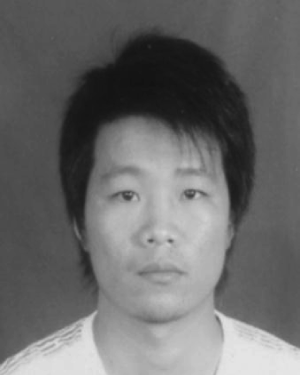 Lihong Wan合作论文数13
 Yiyou Guo合作论文数Shanghai Jiao Tong Univ, Sch Elect Informat & Elect Engn, Shanghai, Peoples R China12Peng Zhao合作论文数11
 Na Liu合作论文数Beijing Institute of Aeronautical Materials(Beijing Institute of Aeronautical Materials,Inst of Aeronautical Materials,Beijing Inst of Aeronautical,Institute of Aeronautical Materials),Beijing,China10
 Xiaoyang Kang (康晓洋)合作论文数Institute of Science and Technology for Brain-Inspired Intelligence, Fudan University9Lihua Zhang (张立华)合作论文数9QingXian Sun (孙庆先)合作论文数8
 Binbin He (何彬彬)合作论文数School of Resources and Environment, University of Electronic Science and Technology of China8Zuoting Song合作论文数7Pengchao Wang合作论文数7Wei Mu合作论文数7Xueze Zhang合作论文数7
 Jian Liu (刘健)合作论文数Beijing Jiaotong University7
 Xi Chen (陈曦)合作论文数Software Engineering Institute, East China Normal University7Zhefei Cai合作论文数6Jianxiong Bin合作论文数6laiwen zheng (郑来文)合作论文数6Gege Zhan合作论文数6
 Junkongshuai Wang合作论文数6
 Asif Raza合作论文数Shanghai Jiao Tong Univ, Dept Automat, Shanghai, Peoples R China6YingQian Wu (吴颖谦)合作论文数6
 Xiankai Lu (卢宪凯)合作论文数School of Software, Shandong University6Li Zhaoyu合作论文数6
 Songzuo Liu (刘凇佐)合作论文数College of Underwater Acoustic Engineering, Harbin Engineering University;National Key Laboratory of Underwater Acoustic, Harbin Engineering University6
 Yunhao Chen (陈云浩)合作论文数Faculty of Geographical Science, Beijing Normal University6
 Weiquan Huang (黄卫权)合作论文数College of Intelligent Systems Science and Engineering, Harbin Engineering University6Shaochong Du合作论文数5
 Hong Tang (唐洪)合作论文数School of Biomedical Engineering, Dalian University of Technology5
 Zhiqiang Li (李志强)合作论文数School of Artificial Intelligence and Computer Science, Shaanxi Normal University5Weibing Wan合作论文数5Salayidin Sirajidin合作论文数4
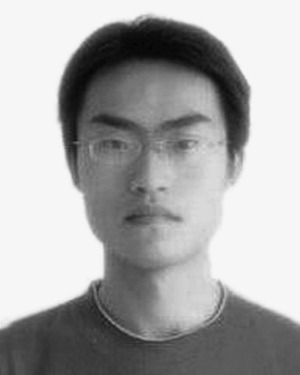 Nan Li (李楠)合作论文数4Kuankuan Xin合作论文数4Zhengwu Yang合作论文数4Chenqin Fu合作论文数4Lan Niu合作论文数4Zongyi Wang合作论文数4Yuan Zhang合作论文数4
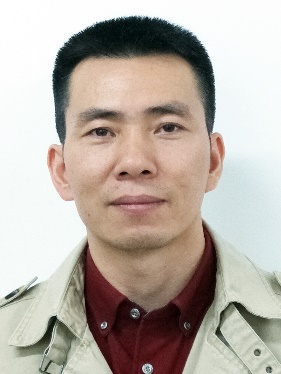 Jiahang Liu (柳稼航)合作论文数College of Astronautics, Nanjing University of Aeronautics and Astronautics4
 Tengfei Bao (包腾飞)合作论文数College of Water Conservancy and Hydropower Engineering, Hohai University4
 Li Luo合作论文数4




