We analytically consider the problem of the Langmuir instability. The instability describes emergence of transverse modulation of horizontal current with vertical shear, when it is superimposed on surface wave co-directional with the flow. Compared to the Craik-Leibovich scheme, we account for the scattering of surface wave on the modulated current, which is significant if the unperturbed wave possesses sufficient spatial coherence. We show that the modulation of the Stokes drift, caused by the interference of the scattered wave with the unperturbed one, leads to an acceleration of the instability development. This acceleration becomes substantial when the modulation period is large enough, so the dispersion law for the scattered wave is approximately satisfied. Specifically, the frequency correction caused by the change in the wavenumber due the modulation should be compensated by the frequency change imposed by the sheared flow. We trace how a partial loss of the wave coherence leads to a reduction in the acceleration. Our results are in qualitative agreement with the available data from wave-resolving numerical simulations.
We develop a theory that determines the radial profile of the mean velocity in a coherent geostrophic vortex forming in a turbulent rapidly rotating fluid. Following the conditions of our experiments, we assume that the flow in the vortex is sustained by the absorption of short-wavelength inertial waves arriving from the vortex periphery. The nonlinear interaction between waves is assumed negligible in the theory. Comparison with experimental data supports the validity of the developed model.
We study the spatial dependence of pair correlation functions of velocity field components in a rotating turbulent fluid on a background of a coherent geostrophic vortex. The statistics of the turbulent pulsations are determined by their dynamics, which is the dynamics of inertial waves affected by the differential rotation in the vortex and a weak viscous damping. We are interested in distances which are larger than the scale of the wave forcing but smaller than the radius of the coherent vortex. We establish the anisotropy of the velocity field correlation function at the distances. All the diagonal elements of the correlation function decay logarithmically in the streamwise direction and power-like in radial direction, and the direction along the rotation axis is independent of the details of the forcing correlation function that indicate "coherency" of the flow. On the contrary, the cross-correlation function of the radial-azimuth velocity components, which turns into the Reynolds stress for zero distance, demonstrates strong dependence on the forcing correlation function and decays quickly at distances larger than the forcing scale.
Chaotic variations in flow speed up mixing of scalar fields via intensified stirring. This paper addresses the statistical properties of a passive scalar field mixing in a regular shear flow with random fluctuations against its background. We consider two-dimensional flow with shear component dominating over smooth fluctuations. Such flow is supposed to model passive scalar mixing, e.g., inside a large-scale coherent vortex forming in two-dimensional turbulence or in elastic turbulence in a microchannel. We examine both the decaying case and the case of the continuous forcing of the scalar variances. In both cases dynamics possesses strong intermittency, which can be characterized via the single-point moments and correlation functions calculated in our work. We present general qualitative properties of pair correlation function as well as certain quantitative results obtained in the framework of the model with fluctuations that are short correlated in time.
We consider a classical problem about dynamic instability that leads to the Langmuir circulation. The problem statement assumes that there is initially a wind-driven shear flow and a plane surface wave propagating in the direction of the flow. The unstable mode is a superposition of (i) shear flow and (ii) surface waves, both modulated in the horizontal spanwise direction and (iii) circulation that is made up with vortices forming near-surface rolls whose axes are coaligned along the shear flow streamlines and whose transverse size corresponds to the modulation period. Usually, the Langmuir circulation is understood as the vortical part of the mode slowly varying in time, which is the combination of the first and the last flows. The novelty of our approach is that we, first, take into account the scattering of the initial surface wave on the slow current. Second, we find the interference of the scattered and the initial waves generating a Stokes drift modulated in the same direction. Third, we establish the subsequent effect of the circulation by the vortex force created by the nonlinear interaction of the initial shear flow and the modulated part of the Stokes drift. Leibovich and Craik previously showed that the third part of the mechanism could maintain the Langmuir circulation. We calculate the growth rate that is approximately twice smaller than that obtained by Craik. The vertical structure of the circulation in the mode consists of two vortices, which corresponds to the next mode in Craik's model.
The mixing of a passive impurity in a random flow in the limit of weak molecular diffusion, when there is a range of scales between a small diffusion scale and a relatively large correlation length of the gradient of the flow velocity field, is considered. In this range of scales, to describe the evolution of the initial distribution of the impurity in space near a certain Lagrangian trajectory, it is sufficient to approximate the velocity field by a linear profile. Second- and fourth-order correlation functions of the impurity concentration are related to the statistics of the affine deformation of a small volume element of the liquid. Meanwhile, the pair correlation function reflects the extension statistics only in the principal direction, and the fourth-order correlation function reflects in its angular singularities the complete extension statistics in a three-dimensional flow. In a two-dimensional flow, the behavior of the fourth order correlation function in angular singularities has different properties and significantly depends on the diffusion coefficient. The conclusions are valid for any time-uniform gradient of the velocity field and are practically significant for the measurement of this statistics.
Vortex flow generation in an incompressible fluid was investigated experimentally inside a rotating closed cubic aquarium. The flow was excited by producing small-scale eddies near the side edges of the cube. Coherent columnar vortices-cyclones extending from the bottom to the lid of the cube were observed in the liquid volume. The lifetime of the cyclones was much longer than the attenuation time due to the viscous friction on the bottom and the lid. It was found that there are two regimes of quasi-two-dimensional turbulence, which are characterized by different ways of interaction between quasi two-dimensional flow and inertial waves. The radial profiles of the time- averaged azimuth velocity in the coherent vortices in these two regimes are investigated. It is shown that the vortices differ in size and in vorticity distribution along the radius.
We study statistical properties of the passive scalar advection in a 2D flow that consist of a steady-state shear flow and a relatively weak smooth random component taking into account the effects of finite weak diffusion. The model is closely related to the dynamics of passive scalar transfer inside coherent vortices emerging as a result of an inverse cascade in 2D turbulence. We analyze both the decay of the passive scalar and the problem with continuous supply of the scalar to the system. In both cases, the passive scalar distribution exhibits strong intermittence, which can be indicated with single-point moments calculated in this study.
We consider analytically pair structure function of turbulent pulsations on the background of a coherent geostrophic vortex in a fast rotating fluid. The statistics of the turbulent pulsation is determined by their dynamics which is the dynamics of inertia waves affected by the differential rotation in the vortex and weak viscous damping. Our consideration is restricted by the smallest scales, where the velocity field remains smooth. We establish the anisotropy of the structure function. The velocity gradient of the turbulent pulsations achieves its largest value for the radial direction and its smallest value in the streamwise direction, resembling its behaviour in turbulent flow with mean shear component without imposed rotation.
We study the resonances in transmission of a subwavelength dielectric lossless structure, periodic in one direction and infinite in the orthogonal (i.e. the effectively 2D problem). We are interested in the case of an encapsulated grid, deeply embedded into an optically-homogeneous surrounding medium. In the case, even a thin periodic structure, characterized by a positive relative excess of the refractive index, demonstrates full reflectance in a narrow bandwidth due to its waveguide capability. Here we systematically study all existing types of the diffraction spectra of the grids. We show that the diffraction type of the grid is determined by the geometric filling factor and the degree of asymmetry of the grid's cross section profile. These two parameters are some linear functions of the complex amplitude of the second spatial Fourier harmonic of the material distribution in the grid. The amplitude determines the coupling between two resonant guiding modes. The coupling is relevant for relatively small angles of incidence, for which it substantially modifies the diffraction spectra in the vicinity of the resonances. Also, we revealed a particular type of diffraction grids, which show suppressed resonances at a relatively large angle of incidence but have full reflectance in one resonance if the angle of incidence is sufficiently small.
Strong rotation makes an underlying turbulent flow quasi-two-dimensional that leads to the upscale energy transfer. Recent numerical simulations show that under certain conditions, the energy is accumulated at the largest scales of the system, forming coherent vortex structures known as condensates. We analytically describe the interaction of a strong condensate with weak small-scale turbulent pulsations and obtain an equation that allows us to determine the radial velocity profile U(r) of a coherent vortex. When external rotation is fast, the velocity profiles of cyclones and anticyclones are identical to each other and are well described by the dependence U(r) ∝± r ln (R/r), where R is the transverse size of the vortex. As the external rotation decreases, this symmetry disappears: the maximum velocity in cyclones is greater and the position of the maximum is closer to the axis of the vortex in comparison with anticyclones. Besides, our analysis shows that the size R of the anticyclone cannot exceed a certain critical value, which depends on the Rossby and Reynolds numbers. The maximum size of the cyclones is limited only by the system size under the same conditions. Our predictions are based on the linear evolution of turbulent pulsations on the background of the coherent vortex flow and are accompanied by estimates following from the nonlinear Navier-Stokes equation.
A condensate in two-dimensional turbulence confined to a finite domain was predicted by Kraichnan. The most common spatial form of the condensate is a coherent vortex of radius comparable with the domain size, which is statistically steady over times much longer than its turnover time. The vortices were successively studied during the last four decades, and their time-averaged properties were recently and extensively considered in theory and measured in experiments. Here, we consider weak perturbations of the coherent flow in the vortices. Our interest lies in slow perturbations, which implies that they are homogeneous along the streamlines of the coherent flow. We show that such kind of perturbations can be considered as waves of condensate propagating in the radial direction with some dispersion law. In the present work, the dispersion law and the propagation length of the waves are found as a function of the radial position inside a vortex flow. Cases of condensate saturated due to bottom friction and of viscous condensate are different. In the first case, there are waves with low damping. In the second case, all waves are of a similar kind as the shear waves in an unsteady laminar boundary layer.
In the presence of strong background rotation, the velocity field tends to become quasi-two-dimensional, which leads to the inverse energy cascade. If the damping is small enough, then the energy is accumulated at the largest scales of the system, forming coherent columnar vortex structures known as condensates. Recently, it was found that the radial velocity profiles of axisymmetric cyclones and anticyclones are described by the dependence UGφ(r)=±ϵ/ν r ln (R/r), where ϵ is statistically stationary turbulent forcing power per unit mass, ν is the kinematic viscosity of a fluid, and R is the transverse size of the vortex. However, the corresponding theory did not take into account the boundary effects and, therefore, was mainly applicable to numerical simulations with periodic boundary conditions. Here, we demonstrate that for typical experimental conditions, the damping of the condensate far enough from the symmetry axis is determined by the linear Ekman friction α=2Ω0E1/2 associated with the no-slip conditions at the lower and upper boundaries of the system, where Ω0 is the angular velocity of the background rotation and E is the Ekman number. In this case, the azimuthal velocity of the coherent vortex does not depend on the distance to the vortex center and is determined by the expression UGφ=±3ϵ/α. We discuss the structure of the coherent vortex in this case and compare the results with velocity profiles of condensates in two-dimensional systems.
The article presents a study of the dependence of the change in the shape of the resonance transmission line for optical thin dielectric gratings. The result of changing the duty cycle for high and low medium contrast while maintaining the amount of substance has been demonstrated. The results of the effect of the filling factor on the resonance transmission width and the frequency position in the normal TE wave drop are numerically investigated. Results for various options of a angles of the falling bunch at various coefficients of filling are presented. The effect of refractive index contrast of this structure on the width and shape of resonance lines was analyzed. In the first approximation, effective refractive indices and effective thicknesses for such structures were calculated. Conclusions are drawn about the conditions under which the structure can be considered optically thin.
The electrochemical part of the transfer function of an electrochemical transducer is studied. The transduction processes are simulated, the processing of the mechanical signal in time is shown, and the electrochemical part of the transfer function of the electrochemical transducer with mesh electrodes is calculated. We also measured directly the electrochemical part of the transfer function of an electrochemical transducer with mesh electrodes by direct control of the mechanical flow of electrolyte in the channel of the transducer. A good agreement of the calculations with the experiment was found. The method of a priori estimation of the electrochemical efficiency of a transducing element, irrespective of which hydromechanical oscillatory system it is built in, is extremely important for the development of microelectronic electrochemical devices. (C) 2020 Published by Elsevier B.V.
We consider the structure of a coherent vortex formed around a solid rotating disc in two-dimensional turbulent flow. We find the average velocity profile of the coherent vortex for different rotation velocities.
Waves excited on the surface of deep water decay in time and/or space due to the fluid viscosity, and the momentum associated with the wave motion is transferred from the waves to Eulerian slow currents by the action of the virtual wave stress. Here, based on the conservation of the total momentum, we found the virtual wave stress produced by calm gravity waves under the assumption that the slow Eulerian currents are weak in the sense that the Froude number is small and the scattering of surface waves by slow flow inhomogeneities can be neglected. In particular, we calculated the virtual wave stress generated by a propagating wave and two orthogonal standing waves. The obtained results possess Euler invariance, are consistent with previously known ones, and generalize them to the case of the excitation of almost monochromatic waves propagating in arbitrary directions.
It is known that the turbulence in a fast-rotating volume becomes effectively two-dimensional. The latter is characterized by an inverse energy cascade leading to the formation of coherent flow in finite systems. In a rotating three-dimensional vessel this flow has the form of columnar vortices. Here we develop an analytical theory describing interaction of the vortex with turbulent pulsations. This interaction results in energy transfer from small-scale eddies to the large-scale vortex. We derive the equation for the radial velocity profile of the vortex and solve it for the simplest boundary conditions. We indicate the domain of physical parameters where our theory works.
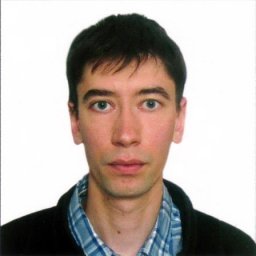 Vladimir M. Parfenyev合作论文数Moscow Inst. of Phys. &Technol.;c;Moscow Inst. of Phys. & Technol.16
 V. V. Lebedev合作论文数10
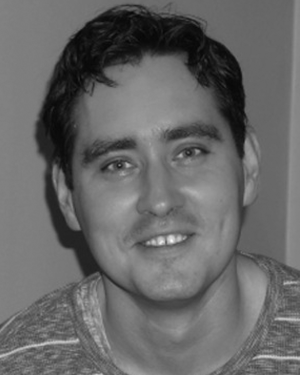 Petr Vorobev合作论文数Department of Mechanical Engineering, Massachusetts Institute of Technology, Cambridge, MA, USA6Gennady Tartakovsky合作论文数6L. L. Ogorodnikov合作论文数5D. A. Zhevnenko合作论文数5
 Sergei K. Turitsyn合作论文数Aston Institute of Photonic Technologies, Aston University5
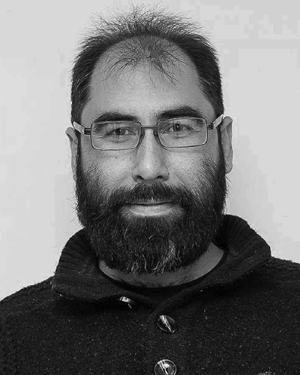 V. G. Krishtop合作论文数Moscow Institute of Physics and Technology5
 Igor V. Kolokolov合作论文数Landau Institute for Theoretical Physics, Russian Academy of Sciences;HSE University5
 Sergey Belan合作论文数Moscow Institute of Physics and Technology, Landau Institute for Theoretical Physics4Andrey K. Sarychev合作论文数4П.В. Дудкин合作论文数3
 Alexey Redyuk合作论文数3
 V. G. Popov合作论文数Odessa National Maritime Academy3A. A. Levchenko合作论文数3S. V. Filatov合作论文数OAO Nizhnetagil’skii Metallurgicheskii Kombinat (NTMK),3E. V. Podivilov合作论文数3
 Stanislav A Derevyanko合作论文数School of Electrical and Computer Engineering, Israel3S. N. Zhabin合作论文数2I. V. Egorov合作论文数2A. S. Shabalina合作论文数2E. S. Gornev合作论文数2Ivan Vointsev合作论文数2Nikolay A. Ivchenko合作论文数2Vladimir Lebedev合作论文数2
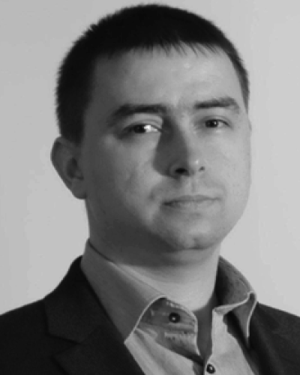 Dmitry L. Zaitsev合作论文数Moscow Inst Phys & Technol, Ctr Mol Elect, Moscow 117303, Russia2Krishtop T V合作论文数Kotelnikov Institute for Radioengineering and Electronics, Mokhovaya 11-7, Moscow 125009, Russia. krishtop@cplire.ru2
 Alexey Bugaev合作论文数2
 Konstantin Turitsyn (Kostya)合作论文数Department of Mechanical Engineering, Massachusetts Institute of Technology2M. Yu. Brazhnikov合作论文数2Vladimir M Lebedev合作论文数2
 Ekaterina Efremova合作论文数2M. A. Nikulin合作论文数1E. Shalymov合作论文数1V. V. Sychev合作论文数1S. A. Babin合作论文数1D. D. Tumachev合作论文数1
 Andrey V Ivanov合作论文数1
 Vladimir Venediktov合作论文数1Leon L. Ogorodnikov合作论文数1А. А. Зинчик合作论文数1
 P. Dudkin合作论文数1Danila Kolymagin合作论文数1U. V. Prokhorova合作论文数Arctic and Antarctic Research institute, St. Petersburg, Russia1
 A. V. Chernykh合作论文数1N. S. Kurochkin合作论文数1
 Ilya D Vatnik合作论文数1Dmitry V. Churkin合作论文数Institute of Automation and Electrometry of, Russian Academy of Sciences,Inst. of Automation and Electrometry1




