Large unmanned underwater vehicles can carry big payloads for varied missions and it is desirable for them to possess an upright orientation during payload release. Their attitude can hardly be maintained during and after the phase of payload release. Releasing a payload from the vehicle induces uncertainties not only in rigid-body parameters, e.g, the moment of inertia tensor due to the varying distribution of the masses on board the vehicle, but also in the hydrodynamic derivatives due to the vehicle’s varying geometric profile. A nonlinear attitude stabilizer that is robust to these time-varying model uncertainties is proposed in this paper. Stability is guaranteed via Lyapunov stability theory. The simulation results verify the effectiveness of the proposed approach.
An adaptive reaching law of chattering‐free discrete‐time sliding mode control is proposed for the systems with external disturbance. An adaptive function is proposed in the reaching law which can increase reaching speed as sliding variable is far away from zero and avoid undesired chattering when sliding variable is close to origin. Moreover, a third‐order backward difference of disturbance is added to obtain a narrower quasi‐sliding mode band (QSMB). Both the closed‐loop system performance and finite reaching steps to achieve the desired QSMB are theoretically analyzed. The simulation results verify the effectiveness of the proposed control strategy.
An improved nonsingular fast terminal sliding mode manifold based on scaled state error is proposed in this paper. It can significantly accelerate the convergence rate of the state error which is initially far from the origin and achieve the fixed-time convergence. In addition, conventional double power term based reaching law is improved to ensure the convergence of sliding state in the presence of disturbances. The proposed approach is applied to the hovering control of an unmanned underwater vehicle. The controller exhibits both fast convergence and strong robustness to model uncertainty and external disturbances.
空投型水下机器人(AUVs)在空中的运动特性是其概念设计阶段的重要依据及理论基础.以空投型AUV作为研究对象,建立AUV/减速伞系统的九自由度模型,并设计AUV飞行姿态控制器令其以期望姿态入水.在建模过程中应用Missile Datcom软件实现对AUV本体气动力参数的估算,并基于软件计算结果对计算过程进行简化、验证.最终完成在风扰动下AUV/减速伞系统的飞行姿态仿真分析,结果表明设计的鲁棒性控制器可以保证AUV以接近期望姿态入水.
单桨微型高速AUV运动时受到螺旋桨转矩的影响会产生剧烈横摇,水平和垂直面运动强烈耦合,甚至发生倾覆现象.针对单桨微型高速AUV运动控制问题,采用了一种主动控制与被动控制相结合的控制策略,利用方向舵与升降舵差动的方式产生主动横摇力矩,并在有限空间内对AUV内部结构进行了重新布局,降低了横摇主动控制引起的艏向与深度控制面操纵性能的损失;设计了横摇、艏向和深度滑模控制器控制器,在考虑执行机构饱和的条件下优先分配横摇控制指令.仿真结果表明该控制策略在有效地镇定横摇时可以降低操纵性损失,减小水平面与垂直面运动的耦合,实现深度和艏向运动的跟踪控制.
A two-stage model-independent hovering control scheme for underwater vehicles, which are subject to unknown yet constant external disturbance, to eliminate steady-state depth error is proposed. Proportional-derivative (PD) state feedback control law is adopted as the ballast mass planner at the first stage for the vehicle to reach both hydrostatic balance and a steady depth. The residual depth error is then removed by an additional disturbance rejection control at the second stage. Global asymptotic stability of the whole system is guaranteed via Lyapunov approach. The effectiveness of the proposed scheme is illustrated by the simulation of diving control of an underwater vehicle with hydraulic variable ballast system.
科里奥利质量流量计可直接测量介质质量流量与密度,因而被广泛应用于海洋石油领域.针对单处理器难以保证CMF信号处理实时性要求的问题,基于双核DSP设计了多任务分布的CMF并行信号处理方法.完成数据采集与数字滤波计算任务的预处理进程与完成频率检测与相位差检测任务的后处理进程以并行方式分布在双核DSP中,2个进程之间通过核间中断进行同步.为了验证相位差检测实时性与精度,构建了CMF信号处理验证平台.实验结果表明,基于双核DSP的CMF并行信号处理方法具有更高的精度与实时性.
新型水下平台用于从水面布放设备至海底,或从海底回收至水面指定位置,其主要运动形式为垂向无动力下潜或上浮.为了克服垂向运动过程中来自水平方向洋流的扰动,需要对平台的水平位置和首向进行控制.针对平台水动力系数等模型参数难以计算,水平洋流未知、且水平推进系统布置特殊的特点,设计了不依赖于模型参数且具有全局稳定性的水平面运动控制系统,并应用Lagrange方法对推力分配进行了优化从而减小运动控制的总功耗.最后通过仿真对控制算法进行了验证.
借鉴在船体结构中成熟运用的有限元法,融合刚体动力学的仿真分析手段,利用Matlab软件对两条水下作业的缆绳进行仿真分析,得到缆绳随时间变化形态,从而判断双缆是否会在水下发生干涉.文章首先分析了船舶运动的对缆绳投掷点的影响,其次给出了缆绳在水下的动力学模型,最后通过仿真得出缆绳在水下的形态.
Hovering control of autonomous underwater vehicles (AUVs) via a variable ballast system (VBS) is challenging owing to the difficulty in precisely estimating related hydrodynamic coefficients and vertical disturbance. In this work, a hierarchical control strategy is proposed which comprises an upper layer-the proportional-integral-derivative (PID) type ballast water mass planner generating the desired ballast mass, and a lower layer-the continuous mass flowrate controller adjusting the actual ballast mass. The resulting flowrate algorithm endows the system with local uniform asymptotic stability and robustness to both modeling errors and vertical disturbance. Numerical results verify the feasibility and effectiveness of the proposed hierarchical hovering control strategy.
A T-S fuzzy model with two rules is established to exactly describe the nonlinear uncertain heave dynamics of underwater vehicles with bounded heave speed.A single linear-matrix-inequality-based (LMI-based) state feedback controller is then synthesized to guarantee the global stability of the depth control system.Simulation results verify the effectiveness of the proposed approach in comparison with linear-quadratic regulator (LQR) method.Nonlinear disturbance observer is appended to the system when the underwater vehicles are affected by the gravity-buoyancy imbalance.The two-stage control method is effective to stabilize an uncertain system with both parameter uncertainties and external disturbances.
深度控制是潜航器运动控制重要组成部分.在近水面航行时,潜航器受波浪力的扰动,二阶波浪力将使潜航器难以保持深度.同时,低航速状态下,水平舵受航速影响舵效大幅降低,本文基于自抗扰控制技术(ADRC)设计了潜航器深度控制器,通过扩张状态观测器(ESO)观测扰动并及时进行补偿.仿真与水池实验表明,相较于传统PID方法,该控制器使得潜航器具有更好的深度控制效果.
This paper proposes a novel nonsingular terminal sliding mode control combined with global sliding surface for a class of uncertain nonlinear second-order systems. The suggested control approach is developed based on the Lyapunov theory. The sliding mode reaching the sliding surface in finite time can be guaranteed. Furthermore, chattering phenomenon caused by the switching control action can be eliminated theoretically, and desirable control performance is realized. The simulation and tank test results for heave control of a remotely operated vehicle are presented to verify the effectiveness of the proposed method.
由于低速航行时舵效较低,潜航器水平控制面产生的升力不足以抵消其在近水面时所受的波吸力扰动,所以引入压载水机构改进深度控制系统的性能,从而使其具有过驱动特征.本文提出了适用于这种过驱动控制系统的复合控制策略,其中前馈控制器输入为由扰动观测器估计的不平衡力,输出为压载水质量;反馈控制器输入为深度偏差,输出为水平舵偏转角.水下压载试验结果表明,扰动观测器可以精确地估计潜航器所受的不平衡力.水池自航试验结果表明,基于复合控制策略的潜航器深度控制系统具有较好的控制性能.
This paper proposes a novel nonsingular terminal sliding mode control combined with global sliding surface for a class of uncertain nonlinear second-order systems. The suggested control approach is developed based on the Lyapunov theory. The sliding mode reaching the sliding surface in finite time can be guaranteed. Furthermore, chattering phenomenon caused by the switching control action can be eliminated theoretically, and desirable control performance is realized. The simulation results for heave control of an unmanned underwater vehicle are presented to verify the effectiveness of the proposed method.
滑动模态控制在无人潜水器运动控制中已经得到较多应用,但其引发的抖振现象仍未很好解决.本文对潜水器的高度控制进行研究,提出一种变增益滑动模态控制方法,旨在保持控制精度的同时抑制抖振现象.此外,还设计了基于高度传感器测量值的非线性状态观测器,以得到高更新率和可靠性的高度及垂荡速度反馈信息,从而改善高度控制系统的控制品质.水池实验验证了本文方法的有效性.
Sequential signal processing based on single digital signal processor (DSP) for Coriolis Mass Flowmeter (CMF) can hardly achieve critical real-time performance. A multi-task parallel signal processing scheme based on dual-core DSP for CMF is proposed in this paper. While the sample-based task implements data acquisition and digital filtering, the frame-based task conducts frequency detection and phase difference detection tasks and etc. The two tasks are synchronized via event-based inter-processor communication. Since no real time operating system (RTOS) is needed for task scheduling, the software is of low complexity. Experimental study verifies the higher real-time performance of the proposed scheme over sequential signal processing.
Due to low efficiency of control surfaces and considerable wave-suction force, depth control of an underwater flight vehicle, moving near surface with a low speed, is extremely hard. To improve depth control performance under such challenging scenarios, a depth-oriented driving scheme where independent bow and stem planes are combined to form virtually a single actuator to generate pure vertical force for heave motion, is proposed. ADRC (active disturbance rejection controller) based depth controller is then designed. Both the results of simulations and tank tests of depth control of an underwater flight vehicle verify the effectiveness of the driving scheme proposed.
In this paper, a hierarchical on-off type variable ballast system (VBS) is proposed to improve the performance of hovering control of underwater vehicles. While the upper layer is a PD-type planner which outputs demanded mass of ballast water, the lower layer is an on-off type flowrate controller to track output of the upper layer, i.e., the demanded mass of ballast water. The effectiveness of the proposed scheme is verified by both simulations and tank tests of diving control of an underwater flight vehicle.
 Anyuan Bi合作论文数13
 Jimao Zhu (朱继懋)合作论文数9Xiaoping Wu (吴小平)合作论文数8Wanjun Pan合作论文数6R Allen合作论文数5Tian-hai ZHENG (郑天海)合作论文数5Shuo ZHAO (赵硕)合作论文数5Jianguo Sun (孙健国)合作论文数4
 Deng Xu合作论文数3
 Chenlu He合作论文数3Robert Allen合作论文数3Weiqi Liu合作论文数3Guo-dong HU (胡国栋)合作论文数3Yuan Qian合作论文数2Jianming Zhou (周建明)合作论文数2Meng-meng XU (许孟孟)合作论文数2Peng XU (徐澎)合作论文数2Peng ZHUANG (庄鹏)合作论文数2
 Hong Yi (易宏)合作论文数School of Naval Architecture, Ocean & Civil Engineering, Shanghai Jiaotong University2Yinggang Tian (田应刚)合作论文数2Chen Xu-Wei合作论文数1Bangchun Wu合作论文数1ShiBo Fan合作论文数1Nan Li (李南)合作论文数1hao pu (蒲浩)合作论文数1Huo-wei LIU (刘火伟)合作论文数1Qing-zhi TANG (汤清之)合作论文数1robert allen合作论文数1Hao Pu合作论文数1Quan SHEN (沈权)合作论文数1Wei HUANG (黄维)合作论文数1
 Qiuhong Li (李秋红)合作论文数College of Energy and Power Engineering, Nanjing University of Aeronautics and Astronautics1Xuesong Xu (徐雪松)合作论文数School of Naval Architecture, Ocean & Civil Engineering, Shanghai Jiao Tong University1
 Bin Fan (樊斌)合作论文数CSSC Huangpu Wenchong Shipbuilding Company Limited1
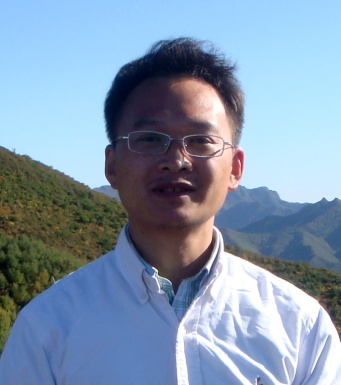 Xiaotong Peng (彭晓彤)合作论文数三亚深海科学与工程研究所1
 Bo Jin (金波)合作论文数School of Mechanical Engineering, Zhejiang University1
 Zhengwei Wu (吴正伟)合作论文数School of Ocean and Earth Science, Tongji University1Xuwei Chen合作论文数1
 Xiaofeng Wang (王霄锋)合作论文数School of Vehicle and Mobility, Tsinghua University1Tong Ge合作论文数Beke1
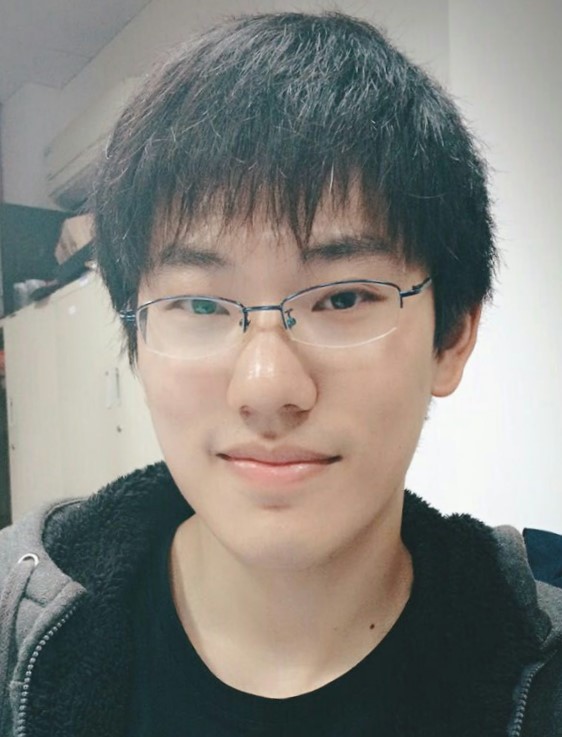 Kui Wang (王奎)合作论文数School of Materials Science and Engineering, Shanghai Jiaotong University1Yufang Zhang (张裕芳)合作论文数School of Naval Architecture, Ocean & Civil Engineering, Shanghai Jiao Tong University1
 Feng Lv (吕枫)合作论文数School of Ocean and Earth Science, Tongji University1Lele Liu (刘乐乐)合作论文数1
 Huaiyang Zhou (周怀阳)合作论文数Department of Oceano Science and Engineering, College of Engineering, Southern University of Science and Technology1
 Jinquan Huang (黄金泉)合作论文数College of Energy and Power Engineering, Nanjing University of Aeronautics and Astronautics1
 Dejun Li (李德骏)合作论文数Institute of Mechatronic and Control Engineering, School of Mechanical Engineering, Zhejiang University1




