In this work, we investigated how the degree of a nanocrystalline cellulose (NCC) aerogel pore saturation with mefenamic acid (MA) affects the chemical reaction between MA and carbon dioxide retained in aerogel pores. A combination of low-temperature nitrogen sorption and IR spectroscopy revealed that with increasing aerogel saturation, the probability of forming an amorphous MA phase inside the aerogel pores increases, while the amount of retained CO2 markedly decreases. Consequently, the probability of initiating a chemical reaction between MA and CO2 is significantly reduced. Furthermore, we found that upon release into the scCO2 phase, the conformer population of MA at low temperatures differs substantially from that in a saturated MA/scCO2 solution at the same state parameters. At elevated temperatures, however, the equilibrium approaches that of a saturated solution. We attributed this effect to the combined influence of the aerogel's confined pore geometry and its ability to form specific interactions with MA molecules, which alters their conformational state.
A method for obtaining of carboxylated single-walled carbon nanotubes suspensions (SWNT) in a number of amide solvents is described. Using Raman spectroscopy, the “dissolving” and dispersing powers of solvents (N,N-dimethylacetamide, 2-pyrrolidone, and N-methylpyrrolidone) have been studied It was shown that N,N-dimethylacetamide is the best solvent among studied in this work for obtaining stable suspensions of carboxylated single-walled carbon nanotubes. The diameters of individual nanotubes prevailing in the suspension, as well as the degree of dispersion were estimated from the data obtained by deconvolution of characteristic spectral bands (radial “breathing” modes). Our estimation shows the presence of about 92
Our research, which employs a comprehensive approach combining high-pressure and magic angle spinning (MAS) NMR spectroscopy methods, investigates the structural and sorption characteristics of composite materials based on cellulose aerogels. The 13C NMR studies, conducted in supercritical CO2, revealed kinetic parameters for the sorption processes that significantly differ from those of silica-based analogs. The analysis of chemical shifts from 19F MAS NMR spectra led to the first identification of two stable phase states of flufenamic acid within the cellulose aerogel: an amorphous phase within the pore volume (-62.15 ppm) and a liquid-like phase on the surface of the pores (-65.09 ppm), with a ratio of 2:1. These findings, which contrast starkly with previous data for silica systems, where only a liquid-like state was observed, underscore the unique three-dimensional architecture and highly developed porous structure of cellulose aerogels. These features appear to stabilize metastable amorphous phases of active pharmaceutical ingredients (APIs), opening up new perspectives for the use of cellulose aerogels in the controlled stabilization of metastable phases of APIs in composite materials.
In the field of materials science, the preparation of new luminescent composite materials based on a mixture of various photoactive compounds with an extended absorption and fluorescence range from the visible to the infrared region is of particular interest. The range of applications for multicomponent photoactive composites is rapidly expanding, including light-harvesting devices and laser limiters. Accordingly, it remains essential to develop polymer dyeing technology that preserves the practically significant properties of the components while eliminating the use of toxic organic solvents and high temperatures.We have created new polymer composites (PMMA/BODIPY/SWCNTs) based on poly(methyl methacrylate) (PMMA) and photoactive compounds of various natures: boron(III) dipyrromethenate (BODIPY) luminophores and semiconductor single-walled carbon nanotubes (SWCNTs), which have absorption and fluorescence ranges in the visible (green) and infrared regions of light, respectively. The concept of dispersing mixtures of BODIPY and SWCNTs in a PMMA polymer within a supercritical fluid environment was successfully demonstrated. In addition, at the first step, we analyzed the spectral properties of BODIPY solutions in the presence of various amounts of SWCNT suspensions (s-SWCNT) in ethanol (with the addition of cholic acid (CA) as a dispersing agent) and dimethylacetamide (DMAA).Using computer simulation, we conducted an analysis of the possible influence of structural factors and intermolecular interactions between BODIPYs and SWCNTs on the optical properties of luminophores in solutions. The computer simulation indicated that non-covalent BODIPY·SWCNT structures form, exhibiting numerous electronic transitions and electron density redistribution within the nanotube (from one part to another) and between BODIPY and SWCNT within the supramolecular complex.It has been experimentally established that BODIPY dyes demonstrate significant spectral properties both in ethanol solutions and in polymer composites containing SWCNTs. Initial results indicate that sc-CO2 solutions present an attractive possibility for immobilizing BODIPY/SWCNT mixtures into polymers, providing unique combinations of spectral characteristics. Thus, the proposed method is an effective way to develop new composites based on a mixture of photoactive compounds with an extended working spectral range from the visible to the infrared spectrum for various optical devices.
Arbidol is a pharmaceutical compound of significant importance due to its versatile applications in antiviral and Immunomodulatory therapies. The present study reports on the identification of multiple arbidol conformers in a supercritical carbon dioxide solution. The conformers were characterized based on various dihedral angles and the analysis of NOESY spectra. The study reveals distinct conformer groups, namely the "opened" and "closed" conformations, based on the angle tau 2 that governs the alignment of the phenyl ring around the indole moiety of the compound. The analysis of the chemical shifts in the 1H NMR spectra of ARB in different solvents (supercritical carbon dioxide, deuterochloroform, and hexadeutero-dimethyl sulfoxide) reveals variations in the proton signals, indicating changes in the conformation of arbidol molecules and the impact of ring currents from the phenyl fragment. The nuclear Overhauser effect spectroscopy analysis of arbidol in supercritical carbon dioxide confirms the presence of distinct conformer groups and their internuclear distances. The distances H22-H25/29 and H22-H10 are found to be indicative of the "closed" conformer group, with values consistent with previous studies. The proportions of "opened" and "closed" conformer groups in supercritical carbon dioxide are calculated using the experimental distances and compared with theoretical calculations. The preference of the conformer group in supercritical carbon dioxide is found to be the "closed" group, similar to previous studies on arbidol forms. Overall, this study provides insights into the conformational behavior of arbidol in supercritical carbon dioxide and highlights the potential of supercritical carbon dioxide as a promising medium for developing new arbidol forms.
This research extends the understanding of lidocaine conformer distributions under various isobaric conditions (10, 20, and 30 MPa) and temperatures (35, 50, and 70 C). Employing quantum chemical calculations and NOESY spectroscopy, the study explores the influence of lidocaine conformers on micronized particle sizes. Results reveal that Trans-conformers, stabilized by intramolecular hydrogen bonds, dominate under specific conditions, impacting the formation of lidocaine dimers. The NOESY analysis demonstrates consistent conformer proportions, highlighting the stability of ethyl fragment positions. These findings contribute significantly to comprehending lidocaine's behavior during the rapid expansion from supercritical to aqueous solution (RESAS) process, offering crucial insights for pharmaceutical formulation design.
The structural and sorption characteristics of a composite material consisting of a silica aerogel loaded with flufenamic acid were investigated using a variety of nuclear magnetic resonance techniques. The composite structure was analyzed using magic angle spinning nuclear magnetic resonance (MAS NMR) spectroscopy, which revealed significant interactions between the aerogel matrix and the FFA molecules. Solid-state 29Si NMR provided insights into the aerogel's stability, while 1H and 13C NMR confirmed the presence of FFA in the matrix, with signals from FFA molecules observed alongside tetraethoxysilane (TEOS) groups. Ethanol-induced desorption of FFA led to narrowed spectral lines, suggesting the breaking of intermolecular hydrogen bonds. 19F MAS NMR spectra indicated changes in FFA local environments upon loading into AG pores. Evaluation of CO2 sorption characteristics using 13C NMR demonstrated a slower sorption rate for AG + FFA than that for pure AG, attributed to decreased pore volume. Furthermore, nuclear Overhauser effect spectroscopy (NOESY) was employed to explore the conformational behavior of FFA within the aerogel matrix. The results indicated a shift in conformer populations, particularly those related to the rotation of one cyclic fragment relative to the other. These findings provide insights into the structural and sorption characteristics of the AG + FFA composite, which are valuable for developing novel drug solid forms. The structural and sorption characteristics of a composite material consisting of a silica aerogel loaded with flufenamic acid were investigated using a variety of nuclear magnetic resonance techniques.
In this work, we studied the conformational equilibria of lidocaine molecules released from NCC-based aerogel that was preliminarily impregnated with lidocaine. The doping of the aerogel with lidocaine was carried out in a saturated lidocaine solution in scCO2 at a temperature of 80 °C and a pressure of 200 bar. The conformational equilibria of lidocaine molecules in the scCO2 phase were examined over a temperature range of 35–80 °C along isochores corresponding to a scCO2 density equal to 1.1 of its critical value. We found that in the scCO2 phase, two stable conformers are predominantly realized. These conformers are characterized by the presence of a thermostable intramolecular hydrogen bond, with the difference between them being the mutual orientation of the two ethyl groups in the structure of the flexible − CH2 − N < (C2H5)2 molecular fragment. We also discovered that the equilibrium concentration of lidocaine released from the aerogel into the scCO2 phase is lower than that of the saturated solution over the studied temperature range. Moreover, the presence of aerogel makes the crossover behavior of solubility less pronounced. By comparing the obtained data with those from our previous work, we found a similarity between the effects of aerogel presence and the rise in CO2 density in the case of saturated lidocaine solution.
Eutectic solvents (ESs) have attracted considerable attention as CO2 absorbents due to their tunable and unique properties. In this study, ESs based on choline chloride (ChCl) as hydrogen bond acceptor were combined with four different hydrogen bond donors (HBDs): urea, formamide, monoethanolamine and 1-aminopropan-2-ol, in different molar ratios. The impact of the primary amino group in HBD, with particular focus on the functional groups present in the vicinity, on the physicochemical and structural properties of the ESs was investigated. The CO2 capture in these ESs was measured. 13C NMR, FTIR and Raman analyses were performed to provide evidence of chemical and structural changes after CO2 capture. Quantum chemical methods were used to investigate the interaction mechanism between the ESs and CO2. The resulting ESs were characterised by measuring their basic physicochemical properties, including melting point, density and viscosity as a function of temperature. A three-parameter correlation equation was proposed to predict the solubility of CO2 in ChCl-based physical absorbents. It is shown that the use of the free volume parameter of ESs can help to identify alternative CO2 absorbents.
The possibilities of nuclear Overhauser effect spectroscopy (NOESY) for conformational analysis of fenamate (e.g., flufenamic acid) molecules were shown. It was established that the proportions of conformer groups changed by up to 32% on passing from a system with pure DMSO to a solvent based on SC-CO 2 with a 2 mol % DMSO addition. The results showed that the conformational equilibrium of small drug-like molecules can be controlled using supercritical fluids for slightly soluble compounds. This is promising for the micronization of fenamates by the RESS, SAS, and DELOS methods.
This work investigated the effect of DMSO-d6 on the conformation of lidocaine and fenamates. Using lidocaine as a model compound, the study investigated the influence of DMSO-d6 on the conformational preferences of fenamates, which have similar fragment structures to the molecule. The NOESY spectra of mefenamic, flufenamic and tolfenamic acid were compared in a mixture of scCO2 + DMSO-d6 at the same state parameters as lidocaine (45 degrees C and 9 MPa). The two-position exchange model was used to calculate the proportions of fenamate conformer groups in scCO2 + DMSO-d6. The addition of DMSO-d6 did not significantly alter the conformation of mefenamic acid, and the ratio of conformers was determined to be 75.3 / 24.7, which is very close to the previously measured in pure scCO2. The results showed that the addition of DMSO-d6 did not significantly alter the conformation of lidocaine and mefenamic acid. This suggests that adding 2 %, DMSO-d6 can be used to evaluate the structure of poorly soluble drug compounds using the NOESY method in supercritical carbon dioxide. The findings of this study are encouraging.
This research determined the proportions of lidocaine conformer groups in a supercritical carbon dioxide environment at constant pressures (10, 20 and 30 MPa) and temperatures of 35, 50 and 70 degrees C for the first time. Results show that the proportions of Cis-conformers and Trans-conformers depend on temperature, with the proportion of Cis-conformers increasing with increasing temperature and the ratio of Trans-conformers increasing with decreasing temperature. Thus, on the 10 MPa isobar, as the temperature increases from 35 degrees C to 70 degrees C, the Trans-/Cis-conformers ratio changes from 99.4%/0.6% to 88.9%/11.1%. On the 20 MPa isobar at the same temperatures the conformer distribution changes from 53.3%/46.7% to 95.6%/4.4% and on the 30 MPa isobar the corresponding values are 4.8%/95.2% and 46.5%/53.5%. It is intriguing how the proportions of conformer groups vary with temperature and this knowledge could be beneficial for micronizing different compounds using supercritical fluid technologies.
The spatial structure of mefenamic acid molecule is investigated by the 2D NOESY method in scCO2 with DMSO. The results will be used to determine the optimal parameters of state for the micronization processing by the GAS technique.
The search for new forms of already known drug compounds is an urgent problem of high relevance as more potent drugs with fewer side effects are needed. The trifluoromethyl group in flufenamic acid renders its chemical structure differently from other fenamates. This modification is responsible for a large number of conformational polymorphs. Therefore, flufenamic acid is a promising structural modification of well-known drug molecules. An effective approach in this field is micronization, employing “green” supercritical fluid technologies. This research raises some key questions to be answered on how to control polymorphic forms during the micronization of drug compounds. The results presented in this work demonstrate the ability of two-dimensional nuclear Overhauser effect spectroscopy to determine conformational preferences of small molecular weight drug compounds in solutions and fluids, which can be used to predict the polymorphic form during the micronization. Quantitative analysis was carried out to identify the conformational preferences of flufenamic acid molecules in dimethyl sulfoxide-d6 medium at 25 °C and 0.1 MPa, and in mixed solvent medium containing supercritical carbon dioxide at 45 °C and 9 MPa. The data presented allows predictions of the flufenamic acid conformational preferences of poorly soluble drug compounds to obtain new micronized forms.
This study examines the influence of mefenamic acid on the physical and chemical properties of silica aerogels, as well as its effect on the sorption characteristics of the composite material. Solid state magic angle spinning nuclear magnetic resonance (MAS NMR) and high-pressure 13C NMR kinetic studies were conducted to identify the presence of mefenamic acid and measure the kinetic rates of CO2 sorption. Additionally, a high-pressure T1–T2 relaxation-relaxation correlation spectroscopy (RRCOSY) study was conducted to estimate the relative amount of mefenamic acid in the aerogel’s pores, and a high-pressure nuclear Overhauser effect spectoscopy (NOESY) study was conducted to investigate the conformational preference of mefenamic acid released from the aerogel. The results indicate that mefenamic acid is affected by the chemical environment of the aerogel, altering the ratio of mefenamic acid conformers from 75% to 25% in its absence to 22% to 78% in the presence of aerogel.
Mefenamic acid has been used as a non-steroidal anti-inflammatory drug for a long time. However, its practical use is quite limited due to a number of side effects on the intestinal organs. Conformational polymorphism provides mefenamic acid with unique properties regarding possible modifications obtained during the micronization process, which can improve pharmacokinetics and minimize side effects. Micronization can be performed by decompression of supercritical fluids; methods such as rapid expansion of the supercritical solution have proven their efficiency. However, this group of methods is poorly applicable for compounds with low solubility, and the modification of the method using a pharmaceutically suitable co-solvent may be useful. In our case, addition of only 2 mol% dimethyl sulfoxide increased the solubility remarkably. Information on the conformational state may be critically important for carrying out micronization. In this work, structural analysis and estimate of conformational preferences of mefenamic acid in dimethyl sulfoxide-d6 (at 25 °C and 0.1 MPa) and in a mixed solvent supercritical carbon dioxide + dimethyl sulfoxide-d6 (45 °C, 9 MPa) were performed based on nuclear Overhauser effect spectroscopy. Results show changes in the conformation fractions depending on the medium used. The importance of allowing for hidden conformers in estimating the conformational state was demonstrated in the analysis. Obtained results may be useful for improving micronization parameters.
Approaches are developed to preparing and studying suspensions of single-walled carbon nanotubes in ethanol with a nonionic surfactant. A nonlinear dependence is established for the dispersion of single-walled carbon nanotubes on the concentration of a surfactant (cholic acid). Results can be used as the basis for developing technologies of creating new construction materials.
A combined approach of computational chemistry, vibrational spectroscopy experiments, and density measurements was used to study the structural properties of water-N-methylacetamide mixtures over the entire concentration range. The structure of N-methylacetamide dimers and hydrogen-bonded complexes of N-methylacetamide with water molecules was investigated by the quantum chemical method on the basis of the density functional theory. The vibrational spectra of aqueous solutions of Nmethylacetamide were recorded. Based on quantum chemical calculations, the bands of the vibrational spectrum were identified, which made it possible to trace the change in hydrogen bonding in the system. At increased N-methylacetamide concentration, the hydrogen bond network rearranges. The number of hydrogen bonds between water molecules decreases, water molecules bind to N-methylacetamide molecules, changing the nature of its environment. Aqueous mixture containing N-methylacetamide shows strong deviations of volumetric properties from ideality. For the further analysis of the data obtained, molecular dynamics simulation of this system was conducted at various temperatures and pressures. It was shown that the resulting hydrogen bonds are of medium strength, but their strength depends on the water molecule environment, which is proved by NBO and QTAIM data. A network of hydrogen bonds is formed in N-methylacetamide aqueous solution, which is noticeably destroyed with an increase in temperature and slightly changes with an increase in pressure.(c) 2022 Elsevier B.V. All rights reserved.
 M. G. Kiselev合作论文数Institute of the Solution Chemistry Ivanovo, Russian Academy of Sciences36
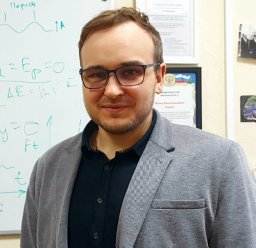 Ilya Khodov合作论文数Institute of Solution Chemistry, Russian Academy of Sciences20
 Olga Victorovna Eliseeva合作论文数18
 Konstantin Belov合作论文数Russian Acad Sci, Krestov Inst Solut Chem17
 A. M. Kolker合作论文数12
 G.G. Bondarenko合作论文数Moscow State Inst. of Electron. & Math.;c;Moscow State Inst. of Electron. & Math.12
 R. D. Oparin合作论文数Institute of Solution Chemistry, Russian Academy of Sciences8
 Dmitry Ivlev合作论文数Institute of Solution Chemistry Ivanovo, Russian Academy of Sciences7M. A. Krestyaninov合作论文数6М. Г. Киселёв合作论文数6V. V. Sobornova合作论文数6Michael A. Krestyaninov合作论文数4Olga V. Eliseeva合作论文数4Dmitriy M. Makarov合作论文数Institute of the Solution Chemistry Ivanovo, Russian Academy of Sciences4
 V.V. Sobornova合作论文数3
 Efimov Sergey Vladimirovich合作论文数Faculty of Physics, Kazan Federal University3
 Peter M. Tolstoy合作论文数Department of Physical Organic Chemistry, Institute of Chemistry, St. Petersburg State University;Center for Magnetic Resonance, St. Petersburg State University3М. А. Крестьянинов合作论文数2
 Ana Batista de Carvalho合作论文数2Valeriia V Mulloyarova合作论文数2A. M. Vorobei合作论文数2M. R. Kiselev合作论文数2G. A. Al’Per合作论文数2Mikhail B. Berezin合作论文数1Я.И. Зуев合作论文数1S. Shishkina合作论文数1
 Darya L. Gurina合作论文数1MY NIKIFOROV合作论文数1Yu. E. Vopilov合作论文数1L.A. Antina合作论文数1Mauricio C da Silva合作论文数1Ya. I. Zuev合作论文数1orhan yasar合作论文数1GA Al'per合作论文数1Michail M Lukanov合作论文数1
 Natalia T. Correia合作论文数1D. Benedis合作论文数1
 Alexander A. Ksenofontov合作论文数G.A. Krestov Institute of Solution Chemistry, the Russian Academy of Sciences1Zdravkovic Igor合作论文数1A. G. Zakharov合作论文数1
 Vasiliy A. Golubev合作论文数1
 Dennis Salahub合作论文数Department of Chemistry, Faculty of Science, University of Calgary;Multiscale Computational Chemistry Lab, University of Calgary1V. M. Bouznik合作论文数1Olga Olegovna Parenago合作论文数NS Kurnakova Institute of General and Inorganic Chemistry1E. D. Totchasov合作论文数1Nikolai G Manin合作论文数1Abdenacer Idrissi合作论文数1Frederic Capet合作论文数1




