1 MoreReceived 8 March 2023DOI:https://doi.org/10.1103/PhysRevC.107.049903©2023 American Physical SocietyPhysics Subject Headings (PhySH)Research AreasParticle & resonance productionRelativistic heavy-ion collisionsNuclear Physics
Dihadron azimuthal correlations containing a high transverse momentum (p(T)) trigger particle are sensitive to the properties of the nuclear medium created at RHIC through the strong interactions occurring between the traversing parton and the medium, i.e. jet-quenching. Previous measurements revealed a strong modification to dihadron azimuthal correlations in Au+Au collisions with respect to p+p and d+Au collisions. The modification increases with the collision centrality, suggesting a path-length or energy density dependence to the jet-quenching effect. This paper reports STAR measurements of dihadron azimuthal correlations in mid-central (20%-60%) Au+Au collisions at root s(NN)= 200 GeV as a function of the trigger particle's azimuthal angle relative to the event plane, phi(s) = vertical bar phi(t) - psi(EP)vertical bar .The azimuthal correlation is studied as a function of both the trigger and associated particle p(T). The subtractions of the combinatorial background and anisotropic flow, assuming Zero Yield At Minimum (ZYAM), are described. The correlation results are first discussed with subtraction of the even harmonic (elliptic and quadrangular) flow backgrounds. The away-side correlation is strongly modified, and the modification varies with phi(s), with a double-peak structure for out-of-plane trigger particles. The near-side ridge (long range pseudo-rapidity Delta(eta) correlation) appears to drop with increasing phi(s) while the jet-like component remains approximately constant. The correlation functions are further studied with the subtraction of odd harmonic triangular flow background arising from fluctuations. It is found that the triangular flow, while responsible for the majority of the amplitudes, is not sufficient to explain the phi(s)-dependence of the ridge or the away-side double-peak structure. The dropping ridge with phi(s), could be attributed to a phi(s)-dependent elliptic anisotropy; however, the physics mechanism of the ridge remains an open question. Even with a phi(s)-dependent elliptic flow, the away-side correlation structure is robust. These results, with extensive systematic studies of the dihadron correlations as a function of phi(s), trigger and associated particle p(T), and the pseudo-rapidity range Delta(eta), should provide stringent inputs to help understand the underlying physics mechanisms of jet-medium interactions in high energy nuclear collisions.
This corrects the article DOI: 10.1103/PhysRevLett.92.062301.
This corrects the article DOI: 10.1103/PhysRevLett.89.132301.
We present three-particle mixed-harmonic correlations < cos(m phi(a) + n phi(b) - (m + n)phi(c))> for harmonics n = 1 - 3 for charged particles in root s(NN) = 200 GeV Au+Au collisions at RHIC. These measurements provide information on the three-dimensional structure of the initial collision zone and are important for constraining models of a subsequent low-viscosity quark-gluon plasma expansion phase. We investigate correlations between the first, second and third harmonics predicted as a consequence of fluctuations in the initial state. The dependence of the correlations on the pseudorapidity separation between particles show hints of a breaking of longitudinal invariance. We compare our results to a number of state-of-the art hydrodynamic calculations with different initial states and temperature dependent viscosities. These measurements provide important steps towards constraining the temperature dependent viscosity and longitudinal structure of the initial state at RHIC. (C) 2018 The Author. Published by Elsevier B.V.
L. Adamczyk,1 J. R. Adams,29 J. K. Adkins,19 G. Agakishiev,17 M. M. Aggarwal,31 Z. Ahammed,54 N. N. Ajitanand,42 I. Alekseev,15,26 D. M. Anderson,44 R. Aoyama,48 A. Aparin,17 D. Arkhipkin,3 E. C. Aschenauer,3 M. U. Ashraf,47 A. Attri,31 G. S. Averichev,17 X. Bai,7 V. Bairathi,27 K. Barish,50 A. Behera,42 R. Bellwied,46 A. Bhasin,16 A. K. Bhati,31 P. Bhattarai,45 J. Bielcik,10 J. Bielcikova,11 L. C. Bland,3 I. G. Bordyuzhin,15 J. Bouchet,18 J. D. Brandenburg,36 A. V. Brandin,26 D. Brown,23 J. Bryslawskyj,50 I. Bunzarov,17 J. Butterworth,36 H. Caines,58 M. Calderón de la Barca Sánchez,5 J. M. Campbell,29 D. Cebra,5 I. Chakaberia,3,18,40 P. Chaloupka,10 Z. Chang,44 N. Chankova-Bunzarova,17 A. Chatterjee,54 S. Chattopadhyay,54 X. Chen,21 J. H. Chen,41 X. Chen,39 J. Cheng,47 M. Cherney,9 W. Christie,3 G. Contin,22 H. J. Crawford,4 S. Das,7 T. G. Dedovich,17 J. Deng,40 I. M. Deppner,51 A. A. Derevschikov,33 L. Didenko,3 C. Dilks,32 X. Dong,22 J. L. Drachenberg,20 J. E. Draper,5 J. C. Dunlop,3 L. G. Efimov,17 N. Elsey,56 J. Engelage,4 G. Eppley,36 R. Esha,6 S. Esumi,48 O. Evdokimov,8 J. Ewigleben,23 O. Eyser,3 R. Fatemi,19 S. Fazio,3 P. Federic,11 P. Federicova,10 J. Fedorisin,17 Z. Feng,7 P. Filip,17 E. Finch,49 Y. Fisyak,3 C. E. Flores,5 J. Fujita,9 L. Fulek,1 C. A. Gagliardi,44 F. Geurts,36 A. Gibson,53 M. Girard,55 D. Grosnick,53 D. S. Gunarathne,43 Y. Guo,18 A. Gupta,16 W. Guryn,3 A. I. Hamad,18 A. Hamed,44 A. Harlenderova,10 J. W. Harris,58 L. He,34 S. Heppelmann,5 S. Heppelmann,32 N. Herrmann,51 A. Hirsch,34 S. Horvat,58 X. Huang,47 H. Z. Huang,6 T. Huang,28 B. Huang,8 T. J. Humanic,29 P. Huo,42 G. Igo,6 W. W. Jacobs,14 A. Jentsch,45 J. Jia,3,42 K. Jiang,39 S. Jowzaee,56 E. G. Judd,4 S. Kabana,18 D. Kalinkin,14 K. Kang,47 D. Kapukchyan,50 K. Kauder,56 H. W. Ke,3 D. Keane,18 A. Kechechyan,17 Z. Khan,8 D. P. Kikoła,55 C. Kim,50 I. Kisel,12 A. Kisiel,55 L. Kochenda,26 M. Kocmanek,11 T. Kollegger,12 L. K. Kosarzewski,55 A. F. Kraishan,43 L. Krauth,50 P. Kravtsov,26 K. Krueger,2 N. Kulathunga,46 L. Kumar,31 J. Kvapil,10 J. H. Kwasizur,14 R. Lacey,42 J. M. Landgraf,3 K. D. Landry,6 J. Lauret,3 A. Lebedev,3 R. Lednicky,17 J. H. Lee,3 W. Li,41 C. Li,39 X. Li,39 Y. Li,47 J. Lidrych,10 T. Lin,14 M. A. Lisa,29 F. Liu,7 P. Liu,42 Y. Liu,44 H. Liu,14 T. Ljubicic,3 W. J. Llope,56 M. Lomnitz,22 R. S. Longacre,3 S. Luo,8 X. Luo,7 G. L. Ma,41 R. Ma,3 Y. G. Ma,41 L. Ma,41 N. Magdy,42 R. Majka,58 D. Mallick,27 S. Margetis,18 C. Markert,45 H. S. Matis,22 D. Mayes,50 K. Meehan,5 J. C. Mei,40 Z. W. Miller,8 N. G. Minaev,33 S. Mioduszewski,44 D. Mishra,27 S. Mizuno,22 B. Mohanty,27 M. M. Mondal,13 D. A. Morozov,33 M. K. Mustafa,22 Md. Nasim,6 T. K. Nayak,54 J. M. Nelson,4 D. B. Nemes,58 M. Nie,41 G. Nigmatkulov,26 T. Niida,56 L. V. Nogach,33 T. Nonaka,48 S. B. Nurushev,33 G. Odyniec,22 A. Ogawa,3 K. Oh,35 V. A. Okorokov,26 D. Olvitt Jr.,43 B. S. Page,3 R. Pak,3 Y. Pandit,8 Y. Panebratsev,17 B. Pawlik,30 H. Pei,7 C. Perkins,4 J. Pluta,55 K. Poniatowska,55 J. Porter,22 M. Posik,43 A. M. Poskanzer,22 N. K. Pruthi,31 M. Przybycien,1 J. Putschke,56 A. Quintero,43 S. Ramachandran,19 R. L. Ray,45 R. Reed,23 M. J. Rehbein,9 H. G. Ritter,22 J. B. Roberts,36 O. V. Rogachevskiy,17 J. L. Romero,5 J. D. Roth,9 L. Ruan,3 J. Rusnak,11 O. Rusnakova,10 N. R. Sahoo,44 P. K. Sahu,13 S. Salur,37 J. Sandweiss,58 M. Saur,11 J. Schambach,45 A. M. Schmah,22 W. B. Schmidke,3 N. Schmitz,24 B. R. Schweid,42 J. Seger,9 M. Sergeeva,6 R. Seto,50 P. Seyboth,24 N. Shah,41 E. Shahaliev,17 P. V. Shanmuganathan,23 M. Shao,39 W. Q. Shen,41 S. S. Shi,7 Z. Shi,22 Q. Y. Shou,41 E. P. Sichtermann,22 R. Sikora,1 M. Simko,11 S. Singha,18 M. J. Skoby,14 N. Smirnov,58 D. Smirnov,3 W. Solyst,14 P. Sorensen,3 H. M. Spinka,2 B. Srivastava,34 T. D. S. Stanislaus,53 D. J. Stewart,58 M. Strikhanov,26 B. Stringfellow,34 A. A. P. Suaide,38 T. Sugiura,48 M. Sumbera,11 B. Summa,32 X. Sun,7 Y. Sun,39 X. M. Sun,7 B. Surrow,43 D. N. Svirida,15 Z. Tang,39 A. H. Tang,3 A. Taranenko,26 T. Tarnowsky,25 A. Tawfik,57 J. Thäder,22 J. H. Thomas,22 A. R. Timmins,46 D. Tlusty,36 T. Todoroki,3 M. Tokarev,17 S. Trentalange,6 R. E. Tribble,44 P. Tribedy,3 S. K. Tripathy,13 B. A. Trzeciak,10 O. D. Tsai,6 B. Tu,7 T. Ullrich,3 D. G. Underwood,2 I. Upsal,29 G. Van Buren,3 G. van Nieuwenhuizen,3 A. N. Vasiliev,33 F. Videbæk,3 S. Vokal,17 S. A. Voloshin,56 A. Vossen,14 G. Wang,6 F. Wang,34 Y. Wang,7 Y. Wang,47 G. Webb,3 J. C. Webb,3 L. Wen,6 G. D. Westfall,25 H. Wieman,22 S. W. Wissink,14 R. Witt,52 Y. Wu,18 Z. G. Xiao,47 G. Xie,39 W. Xie,34 Q. H. Xu,40 Y. F. Xu,41 J. Xu,7 N. Xu,22 Z. Xu,3 C. Yang,40 S. Yang,3 Q. Yang,40 Y. Yang,28 Z. Ye,8 Z. Ye,8 L. Yi,58 K. Yip,3 I.-K. Yoo,35 N. Yu,7 H. Zbroszczyk,55 W. Zha,39 J. B. Zhang,7 J. Zhang,22 S. Zhang,39 L. Zhang,7 J. Zhang,21 X. P. Zhang,47 Z. Zhang,41 S. Zhang,41 Y. Zhang,39 J. Zhao,34 C. Zhong,41 C. Zhou,41 L. Zhou,39 X. Zhu,47 Z. Zhu,40 and M. Zyzak12
L. Adamczyk, J. R. Adams, J. K. Adkins, G. Agakishiev, M.M. Aggarwal, Z. Ahammed, N. N. Ajitanand, I. Alekseev, D. M. Anderson, R. Aoyama, A. Aparin, D. Arkhipkin, E. C. Aschenauer, M. U. Ashraf, A. Attri, G. S. Averichev, X. Bai, V. Bairathi, K. Barish, A. Behera, R. Bellwied, A. Bhasin, A. K. Bhati, P. Bhattarai, J. Bielcik, J. Bielcikova, L. C. Bland, I. G. Bordyuzhin, J. Bouchet, J. D. Brandenburg, A. V. Brandin, D. Brown, I. Bunzarov, J. Butterworth, H. Caines, M. Calderón de la Barca Sánchez, J. M. Campbell, D. Cebra, I. Chakaberia, P. Chaloupka, Z. Chang, N. Chankova-Bunzarova, A. Chatterjee, S. Chattopadhyay, J. H. Chen, X. Chen, X. Chen, J. Cheng, M. Cherney, W. Christie, G. Contin, H. J. Crawford, S. Das, L. C. De Silva, R. R. Debbe, T. G. Dedovich, J. Deng, A. A. Derevschikov, L. Didenko, C. Dilks, X. Dong, J. L. Drachenberg, J. E. Draper, L. E. Dunkelberger, J. C. Dunlop, L. G. Efimov, N. Elsey, J. Engelage, G. Eppley, R. Esha, S. Esumi, O. Evdokimov, J. Ewigleben, O. Eyser, R. Fatemi, S. Fazio, P. Federic, P. Federicova, J. Fedorisin, Z. Feng, P. Filip, E. Finch, Y. Fisyak, C. E. Flores, J. Fujita, L. Fulek, C. A. Gagliardi, D. Garand, F. Geurts, A. Gibson, M. Girard, D. Grosnick, D. S. Gunarathne, Y. Guo, S. Gupta, A. Gupta, W. Guryn, A. I. Hamad, A. Hamed, A. Harlenderova, J. W. Harris, L. He, S. Heppelmann, S. Heppelmann, A. Hirsch, G.W. Hoffmann, S. Horvat, X. Huang, H. Z. Huang, T. Huang, B. Huang, T. J. Humanic, P. Huo, G. Igo, W.W. Jacobs, A. Jentsch, J. Jia, K. Jiang, S. Jowzaee, E. G. Judd, S. Kabana, D. Kalinkin, K. Kang, D. Kapukchyan, K. Kauder, H.W. Ke, D. Keane, A. Kechechyan, Z. Khan, D. P. Kikoła, C. Kim, I. Kisel, A. Kisiel, L. Kochenda, M. Kocmanek, T. Kollegger, L. K. Kosarzewski, A. F. Kraishan, L. Krauth, P. Kravtsov, K. Krueger, N. Kulathunga, L. Kumar, J. Kvapil, J. H. Kwasizur, R. Lacey, J. M. Landgraf, K. D. Landry, J. Lauret, A. Lebedev, R. Lednicky, J. H. Lee, C. Li, W. Li, Y. Li, X. Li, J. Lidrych, T. Lin, M. A. Lisa, P. Liu, F. Liu, H. Liu, Y. Liu, T. Ljubicic, W. J. Llope, M. Lomnitz, R. S. Longacre, X. Luo, S. Luo, G. L. Ma, L. Ma, Y. G. Ma, R. Ma, N. Magdy, R. Majka, D. Mallick, S. Margetis, C. Markert, H. S. Matis, K. Meehan, J. C. Mei, Z.W. Miller, N. G. Minaev, S. Mioduszewski, D. Mishra, S. Mizuno, B. Mohanty, M. M. Mondal, D. A. Morozov, M. K. Mustafa, Md. Nasim, T. K. Nayak, J. M. Nelson, M. Nie, G. Nigmatkulov, T. Niida, L. V. Nogach, T. Nonaka, S. B. Nurushev, G. Odyniec, A. Ogawa, K. Oh, V. A. Okorokov, D. Olvitt, Jr., B. S. Page, R. Pak, Y. Pandit, Y. Panebratsev, B. Pawlik, H. Pei, C. Perkins, P. Pile, J. Pluta, K. Poniatowska, J. Porter, M. Posik, N. K. Pruthi, M. Przybycien, J. Putschke, H. Qiu, A. Quintero, S. Ramachandran, R. L. Ray, R. Reed, M. J. Rehbein, H. G. Ritter, J. B. Roberts, O. V. Rogachevskiy, J. L. Romero, J. D. Roth, L. Ruan, J. Rusnak, O. Rusnakova, N. R. Sahoo, P. K. Sahu, S. Salur, J. Sandweiss, E. Sangaline, M. Saur, J. Schambach, A. M. Schmah, W. B. Schmidke, N. Schmitz, B. R. Schweid, J. Seger, M. Sergeeva, R. Seto, P. Seyboth, N. Shah, E. Shahaliev, P. V. Shanmuganathan, M. Shao, M. K. Sharma, A. Sharma, W. Q. Shen, Z. Shi, S. S. Shi, Q. Y. Shou, E. P. Sichtermann, R. Sikora, M. Simko, S. Singha, M. J. Skoby, D. Smirnov, N. Smirnov, W. Solyst, L. Song, P. Sorensen, H. M. Spinka, B. Srivastava, T. D. S. Stanislaus, M. Strikhanov, B. Stringfellow, T. Sugiura, M. Sumbera, B. Summa, X. M. Sun, Y. Sun, X. Sun, B. Surrow, D. N. Svirida, A. H. Tang, Z. Tang, A. Taranenko, T. Tarnowsky, A. Tawfik, J. Thäder, J. H. Thomas, A. R. Timmins, D. Tlusty, T. Todoroki, M. Tokarev, S. Trentalange, R. E. Tribble, P. Tribedy, S. K. Tripathy, B. A. Trzeciak, O. D. Tsai, T. Ullrich, D. G. Underwood, I. Upsal, G. Van Buren, G. van Nieuwenhuizen, A. N. Vasiliev, F. Videbæk, S. Vokal, S. A. Voloshin, A. Vossen, F. Wang, Y. Wang, G. Wang, Y. Wang, J. C. Webb, G. Webb, L. Wen, G. D. Westfall, H. Wieman, S.W. Wissink, R. Witt, Y. Wu, Z. G. Xiao, G. Xie, W. Xie, Z. Xu, N. Xu, Y. F. Xu, Q. H. Xu, J. Xu, Q. Yang, C. Yang, S. Yang, Y. Yang, Z. Ye, Z. Ye, L. Yi, K. Yip, I.-K. Yoo, N. Yu, H. Zbroszczyk, W. Zha, X. P. Zhang, S. Zhang, J. B. Zhang, J. Zhang, Z. Zhang, S. Zhang, J. Zhang, Y. Zhang, J. Zhao, C. Zhong, L. Zhou, C. Zhou, Z. Zhu, X. Zhu, and M. Zyzak
We report first measurements of e^{+}e^{-} pair production in the mass region 0.4<M_{ee}<2.6 GeV/c^{2} at low transverse momentum (p_{T}<0.15 GeV/c) in noncentral Au+Au collisions at sqrt[s_{NN}]=200 GeV and U+U collisions at sqrt[s_{NN}]=193 GeV. Significant enhancement factors, expressed as ratios of data over known hadronic contributions, are observed in the 40%-80% centrality of these collisions. The excess yields peak distinctly at low p_{T} with a width (sqrt[⟨p_{T}^{2}⟩]) between 40 and 60 MeV/c. The absolute cross section of the excess depends weakly on centrality, while those from a theoretical model calculation incorporating an in-medium broadened ρ spectral function and radiation from a quark gluon plasma or hadronic cocktail contributions increase dramatically with an increasing number of participant nucleons. Model calculations of photon-photon interactions generated by the initial projectile and target nuclei describe the observed excess yields but fail to reproduce the p_{T}^{2} distributions.
We propose to measure spin observables A(N) and A(NN) in elastic pp scattering by using the transversely polarized proton beam and target at momenta p = 12-45 GeV/c. Existence of both polarized target and beam gives us unique possibility to measure AN simultaneously and independently for polarized beam (A(B)) and target (A(T)) to carry out and verify experimental measurements of single-spin and double-spin (A(NN)) measurements in diffractive region.
The STAR Collaboration reports measurements of the longitudinal double-spin asymmetry, A(LL), for neutral pions produced at forward directions in polarized proton-proton collisions, at a center-of-mass energy of 510 GeV. Results are given for transverse momenta in the range 2 < p(T) < 10 GeV= c within two regions of pseudorapidity that span 2.65 < eta < 3.9. These results are sensitive to the polarized gluon parton distribution function, Delta g(chi) down to the region of Bjorken x similar to 10(-3). The asymmetries observed are less than similar to 5 x 10(-3) in magnitude and will help constrain the contribution to the spin of the proton from polarized gluons at low x, when combined with other measurements as part of a global analysis.
Rapidity-odd directed-flow measurements at midrapidity are presented for Λ, Λ[over ¯], K^{±}, K_{s}^{0}, and ϕ at sqrt[s_{NN}]=7.7, 11.5, 14.5, 19.6, 27, 39, 62.4, and 200 GeV in Au+Au collisions recorded by the Solenoidal Tracker detector at the Relativistic Heavy Ion Collider. These measurements greatly expand the scope of data available to constrain models with differing prescriptions for the equation of state of quantum chromodynamics. Results show good sensitivity for testing a picture where flow is assumed to be imposed before hadron formation and the observed particles are assumed to form via coalescence of constituent quarks. The pattern of departure from a coalescence-inspired sum rule can be a valuable new tool for probing the collision dynamics.
The transversity distribution, which describes transversely polarized quarks in transversely polarized nucleons, is a fundamental component of the spin structure of the nucleon, and is only loosely constrained by global fits to existing semi-inclusive deep inelastic scattering (SIDIS) data. In transversely polarized p↑+p collisions it can be accessed using transverse polarization dependent fragmentation functions which give rise to azimuthal correlations between the polarization of the struck parton and the final state scalar mesons. This letter reports on spin dependent di-hadron correlations measured by the STAR experiment. The new dataset corresponds to 25 pb−1 integrated luminosity of p↑+p collisions at s=500 GeV, an increase of more than a factor of ten compared to our previous measurement at s=200 GeV. Non-zero asymmetries sensitive to transversity are observed at a Q2 of several hundred GeV and are found to be consistent with the former measurement and a model calculation. We expect that these data will enable an extraction of transversity with comparable precision to current SIDIS datasets but at much higher momentum transfers where subleading effects are suppressed.
We present measurements of three-particle correlations for various harmonics in Au+Au collisions at energies ranging from root s(NN) = 7.7 to 200 GeV using the STAR detector. The quantity < cos(m phi(1) + n phi(2) - (m + n)phi(3))>, with phi being the azimuthal angles of the particles is evaluated as a function of root s(NN), collision centrality, transverse momentum, P-T, pseudorapidity difference, Delta(eta), and harmonics (m and n). These data provide detailed information on global event properties such as the three-dimensional structure of the initial overlap region, the expansion dynamics of the matter produced in the collisions, and the transport properties of the medium. A strong dependence on Delta(eta) is observed for most harmonic combinations, which is consistent with breaking of longitudinal boost invariance. An interesting energy dependence is observed when one of the harmonics m, n, or m n is equal to two, for which the correlators are dominated by the two-particle correlations relative to the second-harmonic event plane. These measurements can be used to constrain models of heavy-ion collisions over a wide range of temperature and baryon chemical potential.
An improved measurement of the H-3(Lambda) lifetime is presented. In this paper, the mesonic decay modes H-3(Lambda) -> He-3 + pi(-) and H-3(Lambda) -> d + p + pi(-) are used to reconstruct the H-3(Lambda) from Au+Au collision data collected by the STAR collaboration at Relativistic Heavy Ion Collider (RHIC) A minimum chi(2) estimation is used to determine the lifetime tau = 142(+21)(-24 )(stat.)+/- 29 (syst.) ps. This lifetime is about 50% shorter than the lifetime tau = 263 +/- 2 ps of a free A, indicating strong hyperon-nucleon interaction in the hypernucleus system. The branching ratios of the mesonic decay channels are also determined to satisfy B.R.(He-3+ pi(-))/(B.R.(H-3+pi(-))/B.R.((d+p+pi))) = 0.32 +/- 0.05 (stat.)+/- 0.08 (syst.). Our ratio result favors the assignment J(H-3(Lambda)) = 1/2 over J(H-3(Lambda)) = 3/2. These measurements will help to constrain models of hyperon-baryon interactions.
 Mikhail Strikhanov合作论文数Moscow Engineering Physics Institute, National Research Nuclear University391
 Spyridon (Spiros) Margetis合作论文数Kent State University389
 David Underwood合作论文数Collider-Accelerator Department, Brookhaven National Laboratory;Enrico Fermi Institute, University of Chicago388
 Leslie C. Bland合作论文数Department of Physics, Brookhaven National Laboratory371
 Aihong Tang (唐爱洪)合作论文数Department of Physics, Brookhaven National Laboratory370
 Stephen Trentalange合作论文数Physics & Astronomy Department, College of Physical Sciences, University of California, Los Angeles369
 Jeffery Landgraf合作论文数Physics Department, Brookhaven National Laboratory369
 Rene Bellwied合作论文数Department of Physics, College of Natural Sciences and Mathematics, University of Houston369
 K. Krueger合作论文数368
 Daniel Cebra合作论文数Department of Physics and Astronomy, University of California, Davis368Harold Spinka合作论文数Argonne National Laboratory368
 Declan Keane合作论文数Department of Physics, Kent State University368
 William Llope合作论文数Department of Physics and Astronomy, College of Liberal Arts and Sciences, Wayne State University368
 Helen Caines合作论文数Wright Laboratory, Department of Physics, Yale University;Brookhaven National Laboratory367Yuri Fisyak合作论文数Physics Department, Brookhaven National Laboratory367t ljubicic合作论文数366
 Mikhail V. Tokarev合作论文数Joint Institute for Nuclear Research366
 Howard S. Matis合作论文数Nuclear Science Division, Lawrence Berkeley National Laboratory;Silicon Valley Advantage;SensTek;Ashsensors365
 Peter Kravtsov合作论文数Cryogenic and Superconductive Techniques Laboratory, High Energy Physics Division, St. Petersburg Nuclear Physics Institute;Department of High Energy Physics, Petersburg Nuclear Physics Institute;National Research Nuclear University MEPhI364James Colville Dunlop合作论文数364Averichev,GS合作论文数363Juan L Romero合作论文数University of California, Davis362
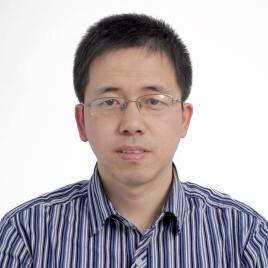 Jiansong Wang (王建松)合作论文数School of Science, Huzhou University362
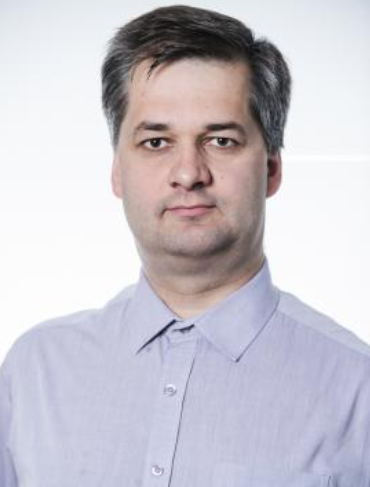 Adam Kisiel合作论文数Zakład Fizyki Jądrowej, Faculty of Physics, Warsaw University of Technology362L. Didenko合作论文数361
 Vitalii A. Okorokov合作论文数Department of Physics, National Research Nuclear University MEPhI359James P. Hays-Wehle合作论文数The Johns Hopkins University Applied Physics Laboratory357
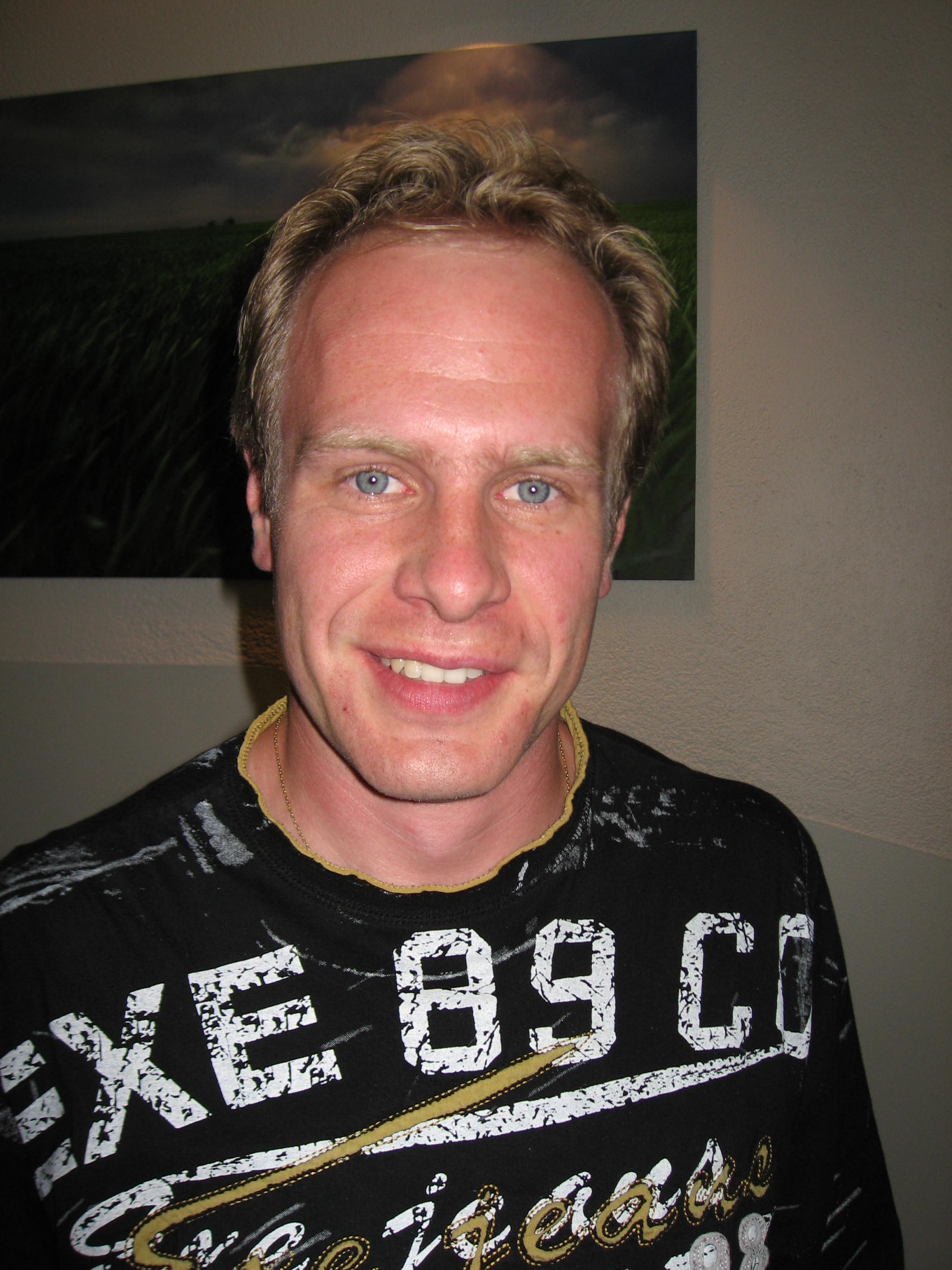 Petr Chaloupka合作论文数Department of Physics, Faculty of Nuclear Sciences and Physical Engineering, Czech Technical University357
 G. V. Efimov合作论文数Joint Institute for Nuclear Research357Yu A. Panebratsev合作论文数357Norbert Schmitz合作论文数357J. Sandweiss合作论文数356
 William Christie合作论文数Collider Accelerator Department, Brookhaven National Laboratory356
 Thomas J. Humanic合作论文数Department of Physics, College of Arts and Sciences, The Ohio State University356
 Richard Lednický合作论文数Veksler and Baldin Laboratory of High Energy Physics, Joint Institute for Nuclear Research356Jurgen Engelage合作论文数355Akio Ogawa (小川暁生)合作论文数Physics Department, Brookhaven National Laboratory354B. Stringfellow合作论文数352
 Bal Govind Srivastava合作论文数Department of Mathematics, Faculty of Science, University of Allahabad352G. Eppley合作论文数352
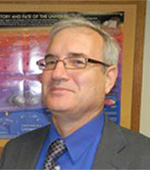 Michael G. Cherney合作论文数Department of Physics, College of Arts and Sciences, Creighton University351Alexei Lebedev合作论文数Physics Department, Brookhaven National Laboratory351E. Shahaliev合作论文数349George Igo合作论文数349
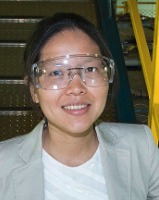 Lijuan Ruan (阮丽娟)合作论文数Physics Department, Brookhaven National Laboratory348
 Jim Thomas合作论文数The Berkeley Laboratory, University of California347
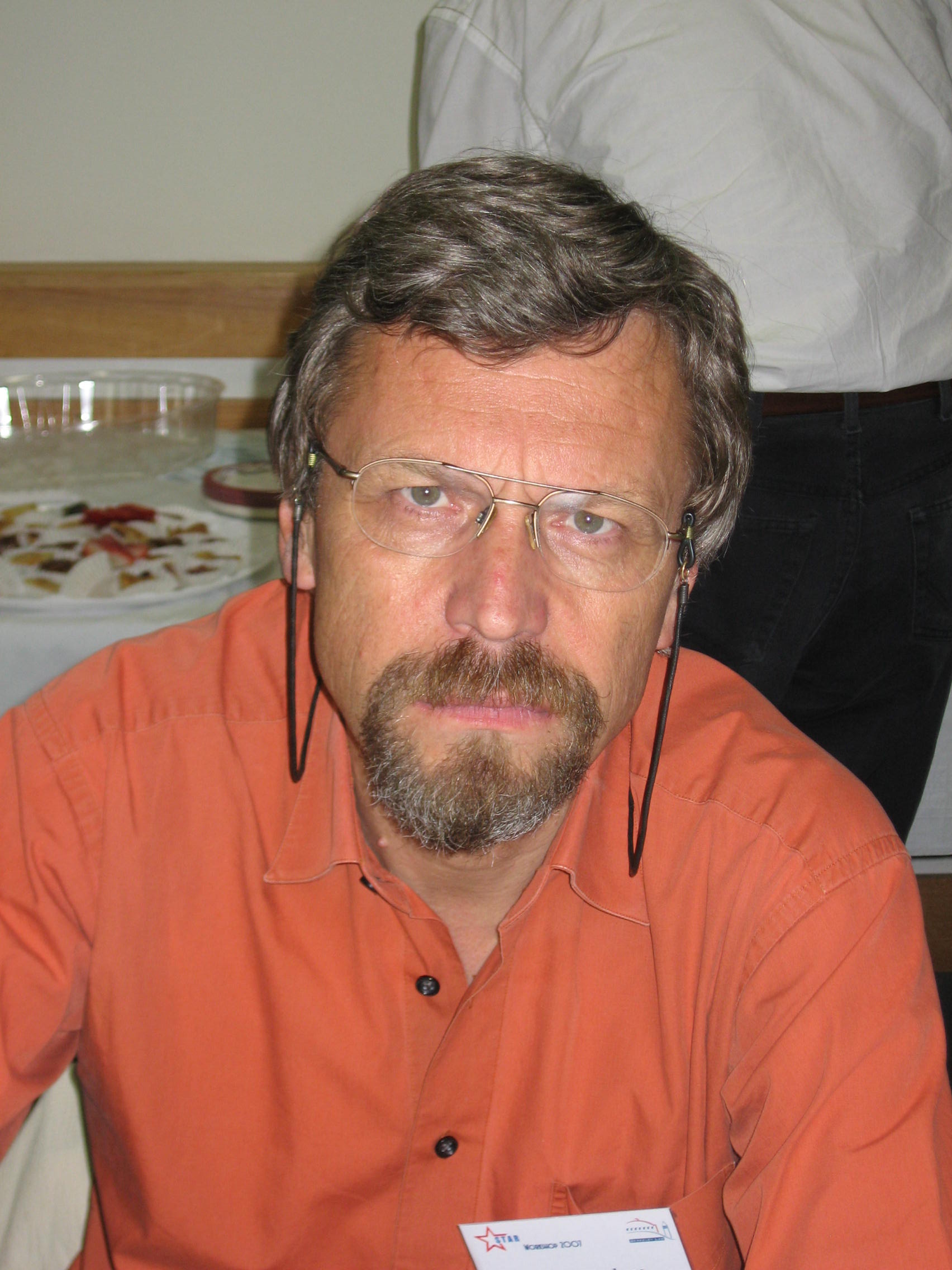 Michal Sumbera合作论文数Nuclear Physics Institute, The Czech Academy of Sciences;Brookhaven National Laboratory347Howard Wieman合作论文数347
 Richard Witt合作论文数E895 Collaboration344




