The results of a geochemical study of rocks and dispersed organic matter (OM) of the middle member of the Vendian Kharayutekh Formation of the Chekurovka Anticline (Kharaulakh anticlinorium of the Verkhoyansk fold-and-thrust belt) close to the Siberian Platform border are presented. Its rocks are found to be unevenly enriched with OM, the maximum present organic carbon content (Corg) reaches 2.6%. The composition and distribution of chemofossils in saturated and aromatic bitumen fractions were studied using gas chromatography and gas chromatography-mass spectrometry. The distributions of alkanes, steranes, terpanes, dibenzothiophenes, and aromatic steroids as well as light isotopic composition of Corg indicate a bacterial-algal origin of OM. Rocks of the middle member of the Kharayutekh Formation originally possessed a high generative potential. Analysis of pyrograms, bitumen characteristics, and the distributions of phenanthrenes and dibenzothiophenes allowed assessing the regional catagenesis of the OM in Vendian deposits in this area corresponding to the early dry gas << window >>. It was established that the studied bitumens are classified as residual and bare evidence of autochthonous and paraautochthonous origins, with biodegraded hydrocarbons. The study demonstrates the local effect of magmatism on the content and composition of bitumens in the near-contact zone of the section. Intrusion of a thick diabase sill resulted in depletion of generative potential of these rocks in the upper part of the section already in the Cambrian period. The considered information gives us more grounds to assume that accumulations of highly viscous heavy oils and solid bitumens, genetically related to the OM of the middle member of the Kharayutekh Formation, might be expected in the Vendian and Cambrian carbonate and terrigenous reservoirs in the north of the Verkhoyansk Trough. The preservation of gas and gas condensate accumulations is unlikely to be good.
Выполнено комплексное биостратиграфическое, литологическое и геохимическое изучение пород керна скважин, пробуренных в бассейне реки Кюленке. Исследование найденных ископаемых остатков, состава пород, анализ распределения трилобитов и изменения литолого-геохимических характеристик отложений позволили выявить особенности строения маркирующих горизонтов, провести корреляцию разрезов скважин и обнажений, сопоставить отдельные интервалы кембрийских отложений с региональными зонами Юдомо-Оленекского фациального региона Сибирской платформы. Установлено, что породы куонамской свиты обогащены ураном (U), наблюдается прямая связь между содержанием U и органическим углеродом (С орг) пород, характерная для черносланцевых отложений нижнего и среднего кембрия из обнажений востока Сибирской платформы. Впервые выявлена связь радиоактивности пород по гамма-каротажу с содержанием U и С орг в породах кембрия. We have studied biostratigraphy, lithology and geochemistry of drill cores from the Kyulenke River basin. The study of fossil remains and rock compositions, the analysis of trilobite distributions and changes in the lithological and geochemical characteristics of the sediments made it possible to identify structural features of the marker horizons, to correlate borehole sections and outcrops, to compare individual Cambrian intervals and the regional zones of the Yudoma-Olenek facies region of the Siberian Platform. The study has shown rocks of the Kuonamka Fomation to be enriched in uranium (U) and revealed a direct relationship between the contents of U and organic carbon (C org) in the analyzed rocks, typical for the lower and middle Cambrian black shale deposits sampled from the outcrops in the eastern parts of the Siberian Platform. For the first time, a relationship of rock radioactivity by gamma-ray logging with the contents of U and C org in Cambrian rocks was established.
The terminal Ediacaran Khatyspyt Lagersta tte (ca. 550 -544 Ma) of Arctic Siberia has been a prime target for geobiological research. Previous evidence suggested that Ediacaran macroscopic soft -bodied organisms could be highly sensitive to sedimentary processes and various environmental factors such as water column stratification and seawater redox-conditions. By integrating organic geochemistry, sedimentology, and palaeontology of the Khatyspyt Formation, we identified three biofacies. The most proximal Longifuniculum biofacies consists of outerto mid -ramp debris flow deposits and is characterised by a high taxonomic diversity and biomarker proxies pointing to a non -stratified non-euxinic water column. The most distal Aspidella biofacies comprises outer -ramp thin -bedded calcareous turbidites and is also marked by a high taxonomic diversity, although the associated biomarker proxies provide evidence for a stratified euxinic environment. Transient between those is the Nenoxites biofacies, consisting of outerto mid -ramp debris flow deposits and characterised by a low taxonomic diversity, with biomarker proxies indicating redox instability. This systematic pattern suggests that the distribution of Ediacaran organisms was influenced by a heterogenous redox landscape. More specifically, the highest diversity of benthic soft -bodied organisms, including the iconic Charnia masoni , appears in stratified euxinic environments, while the highest diversity of macroalgae is found in non -stratified settings. The occurrence of a complex Ediacaran community in a stratified euxinic environment suggests that anoxia might have driven ecological differentiation of organisms, and that heterogeneous and dynamic redox landscapes were far more significant in early animal evolution than hitherto appreciated.
Кинетические характеристики керогена (распределение начального генерационного потенциала по энергиям активации и, соответствующие им, частотные факторы) определяют динамику генерации нафтидов при катагенезе. В известных публикациях, посвященных количественному моделированию процессов нафтидогенеза в куонамской нефтегазопроизводящей толще, кинетические характеристики принимались по аналогии с известными керогенами других комплексов и провинций. Представляется актуальным определение эффективных кинетических характеристик керогена куонамской нефтегазопроизводящей толщи по экспериментальным данным. Для оценки кинетических параметров выполнены специализированные многоскоростные пиролитические исследования. Отмечены вариации результатов пиролиза, предположительно связанные с условиями формирования керогенов и вмещающих пород на этапах накопления органического вещества и диагенеза. Фиксируется влияние карбонатности и содержания органического углерода на значение температуры второго пиролитического максимума. Для реконструкции средних (эффективных) кинетических характеристик керогенов куонамской нефтегазопроизводящей толщи использовались данные по керогенам из скважин Серкинского участка №5 и №10 и Тит-Эбя №6, которые менее преобразованы, чем керогены из скважины Усть-Майская №366 и, вероятно, находятся на начальных этапах мезокатагенеза. Дана оценка средних эффективных кинетических характеристик керогена на текущий момент и с поправкой на возможную частичную преобразованность эталонных образцов. Выполнено сравнение полученных эффективных кинетических моделей керогена с моделями керогенов различного генезиса, известными из литературы. Сделан вывод, что при выполнении регионального историко-генетического («бассейнового») моделирования генерации нафтидов в куонамской нефтегазопроизводящей толще в первом приближении можно использовать полученные эффективные кинетические характеристики или близкие к ним характеристики керогенов Менил-1 и Тип B. The kinetic characteristics of kerogen (activation energy and frequency factor distributions of the initial generative potential) determine the dynamics of naphthide generation during catagenesis. In the previous studies on quantitative modeling of naphthidogenesis in the Kuonamka source rocks, the kinetic characteristics were taken by analogy with the known kerogens from other complexes and provinces. It seems relevant to determine the effective kinetic characteristics of the kerogen from the Kuonamka source rocks from experimental data. To estimate the kinetic parameters, specialized multi-rate pyrolysis studies were performed. The variations in pyrolysis data was reported to be presumably associated with the conditions of kerogen and source rock formation during accumulation and diagenesis of organic matter. The effect of carbonate and organic carbon contents on the temperature range of the second pyrolysis peak is recorded. Reconstruction of the average (effective) kinetic characteristics of kerogens from the Kuonamka source rock, was conducted using data on kerogens from Serkinsky-5 and 10 and Tit-Ebya-6 wells, which are less degraded than kerogens from Ust'-Maiskaya-366 well and probably attained the early mesocatagenesis grades. The current average effective kinetic characteristics of kerogen were estimated and corrected for the possible partial degradation of reference samples. The obtained effective kinetic models of kerogen are compared with models of kerogens of various genetic types known from the literature. The estimated effective kinetic characteristics of kerogens or Menil-1 and Type B kerogens with similar characteristics are to be taken, as a first approximation, in regional historical-genetic (basin) modeling of naphthide generation in the Kuonamka source rock.
-The work is devoted to the analysis of the geological structure and assessment of the oil and gas potential of the Anabar-Khatanga and Lena-Anabar oil and gas areas (OGA) of the Lena-Tunguska oil and gas province, which are located on the continental margin of the Siberian Platform, on the coast of the Laptev Sea. Administratively, the study area includes the northeastern regions of the Krasnoyarsk Territory, the northwest of the Republic of Sakha (Yakutia), the offshore of the Khatanga Bay and the southern, transit part of the Laptev Sea (Khatanga-Lena interfluve). Based on integrated interpretation of geological and geophysical materials, we present regional-zonal models of the geology of the upper Proterozoic-Phanerozoic deposits of the Arctic regions of the Siberian Platform, sets of seismogeological sections, structural and parametric maps, results of structural-tectonic analysis, potential estimates of oil-producing formations; analysis of reservoir properties and types of oil and gas promising objects, and a quantitative assessment of hydrocarbon resources. The study area is of interest in terms of oil and gas potential. In this region, the Central Olgin field was discovered, numerous bitumen, oil and gas shows were noted. A series of oil-producing formations enriched in organic matter occurs in the sedimentary cover, and in the sections of all sedimentary complexes, high-capacity reservoirs are distinguished. There are prerequisites for the formation of both anticlinal and complex oil and gas promising objects. The prospects for the oil and gas potential of the Anabar-Khatanga OGA are mainly associated with Permian terrigenous deposits and Cambrian-Devonian carbonates. In the Lena-Anabar OGA, all upper Proterozoic-Paleozoic sedimentary complexes from the Riphean to the Permian level are of interest in terms of oil and gas potential.
The paper presents the results of the study of organic geochemistry of carbonate rocks, silicites, and calcareous mudstones of the Vendian (Ediacaran) Khatyspyt Formation in the northeast of the Siberian Platform. The distribution of dispersed organic matter (OM) is shown to be uneven. The formation comprises carbonate-dominated intervals depleted in OM, with total organic carbon content (TOC) < 0.1%, or weakly enriched in OM (TOC up to 0.4%), interstratified with carbonate-shale, carbonate-shale-siliceous, carbonate -sili-ceous and siliceous intervals enriched in OM (TOC up to 1-4%). There is also a thin-layered calcareous mudstones anomalously enriched in OM (black shales with TOC at 10%) cropping out in the Khorbusuonka River valley (unit thickness 10 cm). The redox conditions in the water column varied during deposition of the Khatyspyt Formation. Certain intervals characterize a stratified water column and euxinic bot-tom water conditions. During the study, the assessment was conducted of the OM catagenesis and the generative potential of the Khatyspyt Formation. Based on the results of geochemical study and the synthesis of information on the geological structure of sedimentary succes-sion in the northeastern Siberian Platform, the Khatyspyt Formation has been evaluated as one of the hydrocarbon sources for the territory.
—We studied the middle Cambrian unit of the Kuonamka Formation section on the Kyulenke River (Siberian Platform) and performed its biostratigraphic subdivision based on trilobites. The middle Cambrian section has intervals corresponding to the regional zones of the Amginian Stage. Six levels with mass accumulation of fauna remains have been identified: Two levels are located within the Ovatoryctocara Zone; the third level is at the boundary between the Ovatoryctocara and Kounamkites zones; the fourth layer is confined to the roof of the Triplagnostus gibbus Zone; and the fifth and sixth levels are located within the Tomagnostus fissus–Paradoxides sacheri Zone. The composition of rocks and bitumens of their organic matter (OM) has been studied, including the geochemical specifics of the mineral components of rocks (iron, sulfur, and CO2) and of saturated hydrocarbons of bitumens as well as noncarbonate carbon isotopes in the OM. It has been established that the OM sedimentation took place under normal aeration of the sea basin waters, without hydrogen sulfide contamination of the bottom waters. The intensity of chemical and biochemical transformations of mineral and organic components during diagenesis was controlled by the contents of organic carbon and sulfate ion, the activity of the anaerobic prokaryote community, and the rate of sediment mineralization. We have also established relationships between the content of organic carbon in potentially oil source rocks and the contents of iron oxide, total sulfur, and sulfide and sulfate sulfur as well as the ratios of saturated hydrocarbons. The alternation of highly carbonaceous black shales and carbonaceous rocks is apparently due to a change in the composition of biologic communities of microorganisms (sources of hydrocarbon biomarkers) and in the intensity of OM transformation during diagenesis. We assume that the OM transformation included sulfate reduction and dealkylation of high-molecular steroids in the unconsolidated OM-enriched marine sediments with the participation of bacteria. The intensity of these processes depended on the mass of the primary OM, the amount of sulfate ion, and, hence, the pH and Eh of the medium.
—We present a model of the stratigraphic and lateral distribution of Cambrian deposits in the Vilyui hemisyneclise, based on an analysis of drilling data and interpretation of seismic data. The study shows a series of formations and sequences penetrated by wells (Syugdzher saddle, Khorgochum monocline, Ygyatta depression, Tyukyan–Chybyda monocline, Arbai–Sinyaya megaswell, etc.). In the areas where the Cambrian was not penetrated by wells, the distribution of Cambrian deposit was inferred based on the available seismic data. The distribution of the Kuonamka Horizon formed by Cambrian organic-rich rocks is characterized in detail. These are the Kumakh and Sinyaya–Kutorgina sequences and the Inikan and Kuonamka formations. It has been found that the Kuonamka Horizon was deposited during two stages, Botomian and Toyonian–early Mayan. The horizon is overlain by younger deposits of the Mayan Stage, with characteristic cross-bedding structures. Schemes of facies zoning of the Cambrian for Botomian, Toyonian–early Mayan, and middle Mayan times were constructed based on the most recent geological and geophysical understanding of the Vilyui hemisyneclise.
Строение кембрийских отложений вилюйской гемисинеклизы по результатам комплексного анализа данных бурения и сейсморазведкиГубин И. А., Конторович А
Трилобиты, биостратиграфия и геохимия куонамской свиты среднего кембрия (северо-восток Сибирской платформы, р. КюленкеКоровников И. В.,
The organic matter of the Vendian (Neoproterozoic) Khatyspyt Formation was investigated. The new data obtained from the GS and GS-MS analyses include: high UCM humps andheightened peaks of steranes and terpanes against the backdrop of C27+ alkanes on chromatograms of saturated hydrocarbons fractions of five samples; predominance of С21-С26 in n-alkanes distribution; the presence of 12- and 13-monomethylalkanes on chromatograms and demethylatedterpanes on filtered chromatograms (m/z 191 and 177). Besides, dispersed bitumens with biodegraded hydrocarbons have been for the first time identified in carbonate and carbonate-siliceous rocks of the Khatyspyt Formation. Also 8,14-sekohopanes resistant to biodegradation and gammacerane were established. The revealed features of the composition and distribution of hydrocarbons showed that their source was the autochthonous (syngeneic) organic matter of the Khatyspyt Formation,one of the potential hydrocarbon source rock of Northeastern Siberia. The composition and content of bitumen are found to be controlled by the inputs of primary organisms (eukaryotes and prokaryotes)which lived in Vendian seas, by changing redox conditions of sediment deposition and transformation, as well as by relatively little effect of temperature and high degree of biological oxidation in hypergenesis. The patterns of bitumen distribution throughout the section show, that besides the overlying deposits,their accumulations canbe discoveredin the Khatyspyt Formation.
Preview this conference paper: Deposition of the Khatyspyt Facies, Northeastern Siberia, Page 1 of 1 < Previous page | Next page > /docserver/preview/fulltext/2214-4609/2019/P175-1.gif
Despite the known large natural bitumen accumulations and oil seeps in several kimberlite pipes along the periphery of the Sukhana sedimentary basin, interpreted as direct evidence of petroleum potential, the basin still remains one of the least studied (by geological and geophysical methods) regions of the Siberian Platform. The platform cover of the basin is composed by Riphean, Vendian, and Cambrian elastic (terrigenous) and carbonate deposits reaching 5.5-6 km in thickness in the central part of the basin. The hydrogeological specifics of the basin is largely governed by its location within the northern geocryological zone (Olenek cryoartesian basin) and is expressed as a continuous distribution of permafrost aggraded into the permafrost zone of unique thickness. Direct indicators of ore and gas presence are the East Anabar, Central Olenek, and Siligir-Markha fields of natural bitumen and oil shows in kimberlite pipes of the Daldyn-Alakit region (Udachnaya pipe). The bituminous-carbonate sediments of the Khatyspyt Formation (Vendian, Ediacaran) and the highly carbonaceous carbonate-siliceous-shaly sediments of the Kuonamka Formation (lower-middle Cambrian) are the Sukhana source rock complexes. The geochemically substantiated genetic relationship between the natural bitumen deposits of the East Anabar field and the organic matter of the Vendian Khatyspyt Formation makes it possible to estimate the area of the spread of the latter far to the west, beyond the axial part of the basin. Gammacerane, inherited from the organic matter of the Khatyspyt Formation and ranking as well-preserved and most characteristic biomarker of these bitumens, provides a compelling evidence of their consanguinity. The bitumen and oil of kimberlite pipes in the south of the basin, in the area of reefs of the Siligir-Marldia bar, are similar in all geochemical criteria to oils of the Nepa-Botuobiya anteclise. In particular, in primary geochemical characteristics (12- and 13-monomethylallcanes, unique secosteranes, identical carbon isotope composition, etc.) the oils of the Udachnaya pipe are identical to the Irelyakh oils (oil field in the Miniyi arch). No accumulations of oil or natural bitumen genetically related to the highly carbonaceous Kuonamka Formation have been found within the basin. At the same time, "intrafonnational" shows of viscous oil, solid bitumen, and allochthonous bitumen (bitumen extracted with chloro-form) were documented directly in the sections of the formation, which makes the sedimentary basin a very attractive target for "shale oil" exploration. As for the regional assessment of the petroleum potential of the entire basin, its axial part (Sukhana depression) complicated by local uplifts is of the greatest intert. Both the Khatyspyt and Kuonamka Formations are widespread there, with the thermal maturity of their organic matter corresponding to the oil window. In addition, the regional reservoirs at the Vendian-Cambrian boundary have good petrophysical properties on both the western and the eastern flanks of the basin.
Research subject. This article presents new data on carbonate facies of the upperUk subformation, Upper Riphean of theSouth Urals. A particular attention is paid to the distribution of rare-earth elements (REE) and yttrium (Y) in stromatolitic and intraclastic limestones and calcareous shales (bulk samples and their acetic acid leachates).Materials and methods. We have studied lithological features of limestones in the geological section and in thin sections. The contents of trace elements in rocks were determined by the ICP-MS method at the IGG UB RAS (Yekaterinburg), the composition of organic matter was determined at the IPGG SB RAS (Novosibirsk) by gas-liquid chromatography and chromatography-mass spectrometry.Results. The most representative section of the Upper Uk Subformation located along the eastern edge of the town Ust-Katav can be subdivided into several members of different lithology and thickness: (1) biohermdominated member comprising large microbialitic build-ups and inter-bioherm sediments (intraclastic limestones, calcareous biolaminites); (2) transitional member characterised by small bioherms alternating with other carbonates; (3) interbedded coarseand fine-grained limestones. The presence of molar-tooth structures in the carbonate rocks of Uk Formation made it possible to constrain the age of thisUpper Riphean formation to pre-CryogenianConclusions. There are similarities in REE and Y distribution in both clean (devoid of siliciclastic component) bulk limestone samples and in their acetic acid leachates. PAAS-normalised REE + Y patterns demonstrate positive La, Gd, Y anomalies and negative Eu, Ce anomalies. The latter suggest marine depositional environments for theUpper Uk stromatolitic limestones. The results of the pioneering research into the composition of bitumens and biomarkers from the Upper Uk Subformation have shown that carbonates and shales are depleted in the organic matter. The source material for the organic matter was provided by two types of communities comprising both eukaryotes and prokaryotes and inhabiting well aerated environment, perhaps with lowered salinity of marine water.
НАФТИДОПРОЯВЛЕНИЯ В ВЕНДСКИХ И КЕМБРИЙСКИХ ОТЛОЖЕНИЯХ В ЗОНЕ
The composition and distribution of phenanthrenes (polyaromatic compounds) have been studied in chloroform extracts from dispersed organic matter (OM) of clayey, siliceous, carbonate, and terrigenous rocks of different ages and facies and from some oils of the Siberian Platform. Phenanthrenes have been analyzed by gas chromatography-mass spectrometry. High contents of 1,7,8-trimethylphenanthrene and 1,1,7,8-tetramethyl-1,2,3,4-tetrahydrophenanthrene are present in the OM of Vendian and Cambrian carbonate-shale deposits and in ancient oils of the Nepa-Botuobiya and Anabar anteclises. The OM of Permian continental deposits and oils of the Vilyui syneclise is dominated by 1-methyl-7-isopropylphenanthrene (retene). A triangular diagram for identification of the types of original OM of rocks and classification of genetically related oils has been constructed based on the assessment of phenanthrene biomarker distribution. Putative pathways of the formation of phenanthrene biomarkers are discussed. (C) 2018, V.S. Sobolev IGM, Siberian Branch of the RAS. Published by Elsevier B.V. All rights reserved.
 A. A. Kontorovich合作论文数17igor korovnikov合作论文数13
 V. A. Kashirtsev合作论文数13
 Dmitry Melnik合作论文数10е н иванова合作论文数7
 Vladimir Igorevich Rogov合作论文数7
 Vasily Nicolaevich Melenevskii合作论文数7
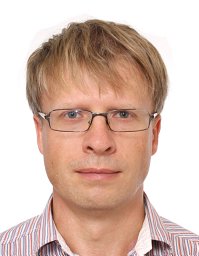 Dmitriy V. Grazhdankin合作论文数Trofimuk Institute of Petroleum Geology and Geophysics of Siberian Branch Russian Academy of Sciences7I. D. Timoshina合作论文数6е а зубова合作论文数4
 b b kochnev合作论文数Dept Stratig & Sedimentol, Trofimuk Inst Petr Geol & Geophys SB RAS4A. A. Postnikov合作论文数4Д С Мельник合作论文数3с ф бахтуров合作论文数3L. S. Borisova合作论文数3V Moskvin合作论文数3
 Vika G. Eder合作论文数3K. E. Nagovitsin合作论文数3V. N. Melenevsky合作论文数3L. M. Burshtein合作论文数3E. A. Fursenko合作论文数3V. P. Danilova合作论文数3E Kostyreva合作论文数3м а левчук合作论文数2н в моисеева合作论文数2Pavel Ivanovich Safronov合作论文数2и н зуева合作论文数2ю н занин合作论文数2
 Moiseev Artem合作论文数2A. N. Fomin合作论文数2S. V. Saraev合作论文数2O. N. Chalaya合作论文数2M.V. Solovev合作论文数1S. A. Dub合作论文数1E. S. Yaroslavtseva合作论文数1Н. В. Чередниченко合作论文数1
 Kirill Dolzhenko合作论文数1и в вараксина合作论文数1Dmitry Novikov合作论文数1
 I. A. Gubin合作论文数1
 Alexey Deshin合作论文数1N. S. Kim合作论文数1L. M. Kalinina合作论文数1
 A. V. Chernykh合作论文数1Anton Kolesnikov合作论文数1
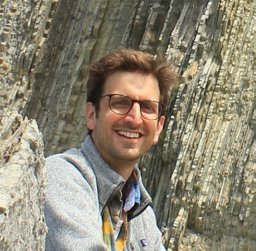 Jan-Peter Duda合作论文数Univ Gottingen, Dept Geobiol, Geosci Ctr, Goldschmidtstr 3, D-37077 Gottingen, Germany1
 Ivanova Ekaterina合作论文数1
 Andrey Maslov合作论文数1
 B. L. Nikitenko合作论文数Trofimuk Institute of Petroleum Geology and Geophysics, Russian Academy of Sciences1




