The effects of nonlinear vacuum electrodynamics are most clearly pronounced in a strong electromagnetic field close to Schwinger limit. Electromagnetic fields of such intensity can be obtained in laboratory conditions only on very few extreme laser facilities and during a short time interval. At the same time, the astrophysical compact objects with a strong electromagnetic field such as pulsars and magnetars are the best suited to study the effects of nonlinear vacuum electrodynamics. We present analytical calculations for pulsar proper radiation in parametrized post-Maxwellian nonlinear vacuum electrodynamics. Based on the obtained solutions, the effect of nonlinear vacuum corrections to pulsar spin down is being investigated. The analysis of torque functions show that the nonlinear vacuum electrodynamics corrections to the electromagnetic radiation for some pulsars may be comparable to the energy loss by gravitational radiation.
It is shown experimentally that an artificial plasmoid being similar to ball lightning can penetrate through glass, leaving a round smooth-edged hole in it.
СООТНОШЕНИЕ МЕЖДУ ФУНДАМЕНТАЛЬНЫМИ ФИЗИЧЕСКИМИ ПОСТОЯННЫМИ 2012 г
We show that the mass of the matter equal to the mass of the observable part of our Universe is reached at the Planck density in the volume which size is comparable with the nucleon size and is close to the pion Compton wavelength.
Properties of the pseudobinary Nd(Fe1-xCox)(2) and Nd(Fe1-xNix)(2) and deuterated Nd(Fe1-xNix)2 powder systems are presented. We have investigated the dependences of the magnetization and coercive force on the M concentration for these systems.
Experiments were carried out on determination of the electric charge and degree of non-quasineutrality in plasma oscillations. These measurements were performed in unstable plasma in the absence of temperature fluctuations when drift-dissipative instability in a magnetic field developed.
ing researcher and teacher, Scientist of Merit of the Russian Federation, distinguished professor of the M V Lomonosov Moscow State University (MGU), honorary professor of the University of Chuvashia, died on March 1, 2000 at the age of 88. In his 70 years of work at the physics faculty of MGU, I A Yakovlev made a fundamental contribution to experimental research into piezoelectrics, ferroelectrics and semiconductors, and into the propagation of surface and pseudosurface elastic waves in solids. He wrote a number of textbooks that continue to be very useful to students and teachers. The lectures that Ivan Alekseevich read to students were wonderfully clear and profound. Ivan Alekseevich Yakovlev was born in Moscow on October 13, 1912. His grandfather, Ivan Yakovlevich Yakovlev, was a well-known Educator of the Chuvash People, who created the Chuvash alphabet and the written Chuvash language. Ivan Alekseevich's father, Alekse|̄ Ivanovich Yakovlev, was a student of professor Klyuchevski|̄ and continued his projects; he became a correspondingmember of the USSR Academy of Sciences. After graduating from school in 1929, Ivan Alekseevich entered the physicomathematical faculty of Moscow State University and graduated in 1932, after completing the courses ahead of the regular time. Yakovlev then worked for a year as assistant professor of the chair of physics at the Institute of Railway Transport Engineers and in 1934 transferred to the general physics chair in the physics faculty ofMoscow State University as assistant professor. From this time until his death Yakovlev's work was based in Moscow State University. From 1943 to 1946 I A Yakovlev was a postdoc at the Institute for Physical Problems of the USSR Academy of Sciences (currently the P L Kapitza Institute for Physical Problems of the Russian Academy of Sciences), working on his DSc thesis. He was able to show, from the study of light scattering in liquid helium, that in theHe I toHe II transition, the experimentally observed intensity of scattered light does not grow anomalously high, as was predicted by certain theories. Later Ivan Alekseevich studied electron scattering in metals and light absorption spectra in sapphire at low (liquid helium) temperatures. In 1942 IvanAlekseevich presented and defended his PhD thesis ``Studies of light scattering at low temperatures''. He defended his DSc thesis ``Studies of phase transitions of second kind in solids;'' in 1957. In 1959 he became an MGU professor. In 1974 he was elected to the Chair of crystal physics of the physics faculty, which he held for 15 years. Yakovlev's main research was carried out at the physics faculty of Moscow State University. At the beginning of the 1950s I A Yakovlev carried out experiments on the molecular scattering of light in crystals. Observations in quartz single crystals revealed for the first time in world physics that light scattering intensity in the a$ b phase transition in the 0:1 temperature interval was higher by four orders of magnitude than at room temperatures. He also studied light scattering in course of phase transitions in other crystals, e.g. ammonium chloride. His most significant results, also a world first, involve absorption of ultrasound in solids during phase transitions. Yakovlev discovered anomalous absorption of sound in potassium sodium tartrate crystals (Rochelle Salt) near the upper and lower Curie points. It was found that the position of the maximum of sound absorption on the temperature axis was independent of sound frequency. L D Landau gave a theoretical explanation of this anomaly and derived a formula for the sound absorption coefficient in ferroand nonferroelectrics. These results were generally recognized and generated a flux of similar studies in the world, and are widely cited. I A Yakovlev contributed much to the study of the spectrum of Mandelstam ±Brillouin scattering in piezoelectric semiconductors in an external DC field, when the acoustic Uspekhi Fizicheskikh Nauk 170 (5) 579 ± 580 (2000) Translated by V Kisin PERSONALIA PACS number: 01.60.+q
It is shown that at low concentrations of charged particles conditions can be realized in a magnetized unstable-to-drift plasma for which concentration perturbations are comparable to the concentration itself. The electron temperature is then determined by potential fluctuations, and the drift oscillation wavelength is of the order of the Debye length.
An experimental and theoretical study of the drift oscillations in a non-equilibrium gas-discharge plasma with a density gradient across a magnetic field at low electron densities was carried out. The solution of the set of differential equations for the bounded cylindrical plasma is used to describe unstable oscillations in the plasma de-stabilized by the action of non-quasi-neutrality in perturbations and ion inertia simultaneously.
An experimental and theoretical study of the drift oscillations in plasma of inert gases with a density gradient across the magnetic field has been carried out under conditions when the plasma is destabilized by the ion inertia. Experimental investigations of the unstable oscillations are performed at low gas pressures and high electron densities. For the theoretical description of the drift oscillations a set of differential equations for a cylindrical bounded plasma is used.
In nonequilibrium plasma with the density gradient across a homogeneous axial magnetic field the nonquasineutrality in perturbations is the factor destabilizing the plasma at excitation of both short and long waves of drift-dissipative instability. At the excitation of long drift waves the nonquasineutrality in perturbations can also destabilize plasma when combined with ion inertia. In strong magnetic fields the role of nonquasineutrality in perturbations turns out to be essential even at high densities of charged particles.
 A. A. Skovoroda合作论文数10Alexandr a Zaitsev合作论文数8N. A. Miskinova合作论文数8m i belavin合作论文数7s a postnikov合作论文数5Vladimir E. Bondarenko合作论文数5V A Sadovnichii合作论文数2L P Kurakov合作论文数2V. I. Trukhin合作论文数2
 Sergey Postnikov合作论文数2
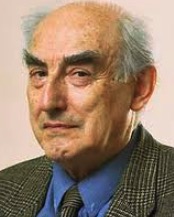 Vitaly L. Ginzburg合作论文数P.N.Lebedev Physical Institute, Russian Academy of Sciences2T. G. Chernevich合作论文数2Tatiana V Laptinskaya合作论文数2T S Velichkina合作论文数2O A Shustin合作论文数2k n baranskii合作论文数2
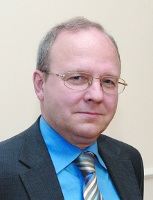 Alexei R. Khokhlov合作论文数Laboratory of Physical Chemistry of Polymers, A. N. Nesmeyanov Institute of Organoelement Compounds, Russian Academy of Sciences;Physics Department, Moscow State University2p s landa合作论文数1b milich合作论文数1g p kutukov合作论文数1Immanuil L Fabelinskiĭ合作论文数1IL FABELINSKII合作论文数1As Ilyushin合作论文数1Vf Makhrov合作论文数1m ya vasileva合作论文数1V. A. Sokolov合作论文数1
 Polina Sheverdyaeva合作论文数Istituto di Struttura della Materia, Consiglio Nazionale delle Ricerche1Anri a Rukhadze合作论文数1
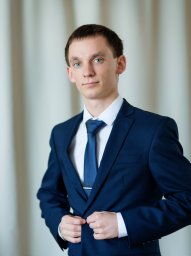 V. A. Simonov合作论文数Institute of Geology and Mineralogy, Russian Academy of Sciences1V. I. Denisov合作论文数1Vladimir I Trukhin合作论文数1B. A. Alterkop合作论文数1
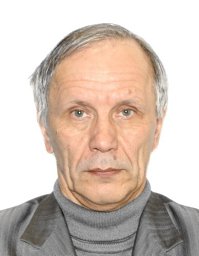 Perov Nikolai Sergeevich合作论文数Department of Magnetism, Lomonosov Moscow State University1Vladimir E Bondarenko合作论文数1
 Irina Savchenko合作论文数Department of Macromolecular Chemistry, Kiev Taras Shevchenko University1




