Process reward models (PRMs) provide fine-grained reward signals along the reasoning process, improving credit assignment beyond outcome-only rewards. Training reliable PRMs often relies on step annotations or heavy verification pipelines, making them expensive to scale and refresh during online RL. Implicit PRMs mitigate this cost by learning decomposable token/step rewards from trajectory-level outcome labels, but they suffer a train-inference mismatch: training only constrains a sequence-level aggregate, while deployment queries token-level scores as local step quality. As a result, token credits are weakly identified and can become predictive of final success without faithfully reflecting which step is correct. This unreliability can even undermine a key promise of implicit PRMs—scoring many candidate tokens—because noisy per-token advantages may systematically reinforce incorrect continuations. We address this with a novel Implicit Prefix-Value Reward Model (IPVRM), which directly learns a prefix-conditioned value function estimating the probability of eventual correctness, and derives step signals via temporal-difference (TD) differences. IPVRM substantially improves step-verification F1 on ProcessBench. Building on these calibrated signals, we further propose Distribution-Level RL (DistRL), which computes TD advantages not only for sampled tokens but also for high-probability candidate tokens across the vocabulary, enabling dense counterfactual updates without additional rollouts. DistRL brings limited benefits with mis-calibrated implicit rewards, but consistently improves downstream reasoning once powered by IPVRM’s reliable prefix values.
Model merging has emerged as a cost-effective approach for consolidating the capabilities of multiple LLMs without retraining. However, existing merging techniques, largely based on linear parameter arithmetic or optimization, struggle when applied to Mixture-of-Experts (MoE) architectures. We identify a critical failure mode in MoE merging, termed routing breakdown, in which the merged router fails to dispatch tokens to suitable experts. Routing breakdown stems from the sensitivity of the non-linear softmax and discrete Top-k routing mechanisms to parameter perturbations from merging, a sensitivity further amplified by load-balancing constraints imposed during MoE pretraining. Because fine-tuned experts exhibit distinct specializations, even modest misrouting can cause severe performance degradation. To address this issue, we propose Hessian-Aware Router Calibration (HARC), a training-free framework that leverages second-order curvature information to realign the merged router. This approach admits a closed-form solution that can be efficiently solved using a matrix-free conjugate gradient method. Experiments on mathematical reasoning and code generation tasks show that HARC effectively mitigates routing breakdown across diverse MoE merging baselines and leads to substantial performance improvements. Our code is available at https://github.com/huangcb01/HARC.
Progress in long-context reasoning for large language models (LLMs) has lagged behind other recent advances. This gap arises not only from the intrinsic difficulty of processing long texts, but also from the scarcity of reliable human annotations and programmatically verifiable reward signals. In this paper, we propose SPELL, a multi-role self-play reinforcement learning framework that enables scalable, label-free optimization for long-context reasoning. SPELL integrates three cyclical roles—questioner, responder, and verifier—within a single model to enable continual self-improvement. The questioner generates questions from raw documents paired with reference answers; the responder learns to solve these questions based on the documents; and the verifier evaluates semantic equivalence between the responder’s output and the questioner's reference answer, producing reward signals to guide continual training. To stabilize training, we introduce an automated curriculum that gradually increases document length and a reward function that adapts question difficulty to the model’s evolving capabilities. Extensive experiments on six long-context benchmarks show that SPELL consistently improves performance across diverse LLMs and outperforms equally sized models fine-tuned on large-scale annotated data. Notably, SPELL achieves an average 7.6-point gain in pass@8 on the strong reasoning model Qwen3-30B-A3B-Thinking, raising its performance ceiling and showing promise for scaling to even more capable models.
While reinforcement learning (RL) has been central to the recent success of large language models (LLMs), RL optimization is notoriously unstable, especially when compared to supervised fine-tuning (SFT). In this work, we investigate the stability gap between SFT and RL from a gradient-based perspective, and show that the convexity of the SFT loss with respect to model logits plays a key role in enabling stable training. Our theoretical analysis demonstrates that this property induces favorable gradient directionality during optimization. In contrast, Proximal Policy Optimization (PPO), a widely adopted policy gradient algorithm utilizing a clipped surrogate objective, lacks this stabilizing property. Motivated by this observation, we propose Logits Convex Optimization (LCO), a simple yet effective policy optimization framework that aligns the learned policy with an optimal target derived from the original RL objective, thereby emulating the stabilizing effects of logits-level convexity. Extensive experiments across multiple model families show that our LCO framework consistently improves training stability and outperforms conventional RL methods on a broad range of benchmarks.
While fusing the capacities and advantages of various large language models offers a pathway to construct more powerful and versatile models, a fundamental challenge is to properly select advantageous model during training. Existing fusion methods primarily focus on the training mode that uses cross entropy on ground truth in a teacher-forcing setup to measure a model's advantage, which may provide limited insight towards model advantage. In this paper, we introduce a novel approach that enhances the fusion process by incorporating both the training and inference modes. Our method evaluates model advantage not only through cross entropy during training but also by considering inference outputs, providing a more comprehensive assessment. To combine the two modes effectively, we introduce ProFuser to progressively transition from inference mode to training mode. To validate ProFuser's effectiveness, we fused three models, including Vicuna-7B-v1.5, Llama-2-7B-Chat, and MPT-7B-8K-Chat, and demonstrated the improved performance in knowledge, reasoning, and safety compared to baseline methods.
Distilling reasoning capabilities from strong to weak language models typically involves imitating specific solution trajectories, effectively transferring what to answer rather than how to reason. This trajectory-level imitation encourages memorization of instance-specific steps rather than acquisition of transferable problem-solving skills, limiting generalization to novel problems. We propose Strategy-Guided Policy Optimization (SGPO), which replaces instance-level trajectory imitation with reusable strategy distillation. SGPO extracts structured strategy descriptions from strong-model responses and, for each problem, constructs both autonomous and strategy-guided trajectories to enable direct comparison of the model's behavior with and without strategic guidance. The framework then addresses two key questions. For how to distill, a token-level forward-KL objective selectively transfers the distributional shift induced by strategy conditioning into the unguided policy, with proximal constraints ensuring stability. For when to distill, adaptive instance-level weighting strengthens guidance when autonomous exploration falls short and reduces it as the model's own competence grows. Experiments on four mathematical benchmarks across two model families show that SGPO consistently outperforms SFT, on-policy RL, and hybrid-policy baselines, improving the average score by 2.2 points over the strongest baseline on Qwen2.5-7B-Instruct. Analysis reveals that the forward-KL objective provides an inherently selective distillation signal that outperforms direct trajectory imitation, and that strategy distillation exhibits complementary scaling with base model capability.
Proactive dialogue has emerged as a critical and challenging research problem in advancing large language models (LLMs). Existing works predominantly focus on domain-specific or task-oriented scenarios, which leads to fragmented evaluations and limits the comprehensive exploration of models’ proactive dialogue abilities. In this work, we propose ProactiveEval, a unified framework for evaluating proactive dialogue capabilities of LLMs. This framework decomposes proactive dialogue into target planning and dialogue guidance, establishing evaluation metrics across various domains. Moreover, it also enables the automatic generation of diverse and challenging evaluation data. Based on the proposed framework, we develop 328 evaluation environments spanning 6 distinct domains. Through experiments with 22 different types of LLMs, we show that DeepSeek-R1 and Claude-3.7-Sonnet exhibit exceptional performance on target planning and dialogue guidance tasks, respectively. Finally, we investigate how reasoning capabilities influence proactive behaviors and discuss their implications for future model development. Our code and data are available at the https://github.com/liutj9/ProactiveEval.
Recent advances in Reinforcement Learning (RL) have substantially improved the capabilities of autonomous search agents, enabling sophisticated planning, and iterative retrieval over dynamic information sources. However, optimizing language models for specialized search behaviors often incurs an alignment tax, where gains in search performance come at the expense of general-purpose capabilities, limiting their effectiveness as universal assistants. In this technical report, we present the training framework behind the Yuanbao search agent, designed to achieve search specialization without sacrificing general intelligence. Built upon the Hunyuan3 architecture, our framework combines agentic reinforcement learning for autonomous search with a cross-domain expert On-Policy Distillation (OPD) pipeline. Experts specializing in complementary general-purpose domains are distilled into the search-specialized student, restoring and further enhancing its broad capabilities. Rather than treating specialization and general capability as competing objectives, our hybrid training strategy jointly optimizes both, effectively mitigating the alignment tax. Extensive experiments demonstrate that the resulting model achieves competitive search performance while consistently improving its general-purpose capabilities, providing a favorable balance between specialized execution and broad generalization in real-world search scenarios.
During the preference optimization of large language models (LLMs), distribution shifts may arise between newly generated model samples and the data used to train the reward model (RM). This shift reduces the efficacy of the RM, which in turn negatively impacts the performance of the policy model (PM). To address this challenge, we propose Mutual-Taught, a self-training method that iteratively improves both the PM and RM without requiring additional human annotation. Our approach mirrors the expectation-maximization (EM) algorithm. In the E-step, the PM is updated using feedback from the current RM, guiding the PM toward a better approximation of the latent optimal preference distribution. In the M-step, we update the RM by constructing training data from the outputs of the PM before and after the E-step update. This process ensures that the RM adapts to the evolving policy distribution. Experimental results demonstrate that this iterative approach leads to consistent improvements in both models. Specifically, our 8B policy model, LLaMA-3-8B-Instruct-MT, achieves a length-controlled win rate of 54.1\% on AlpacaEval-2, while our 8B reward model, FsfairX-LLaMA3-RM-MT, performs on par with GPT-4o-2024-08-06 on RewardBench.
With the rapid growth in the size and complexity of large language models (LLMs), the costs associated with their training and inference have escalated significantly. Research indicates that certain layers in LLMs harbor substantial redundancy, and pruning these layers has minimal impact on the overall performance. While various layer pruning methods have been developed based on this insight, they generally overlook the finer-grained redundancies within the layers themselves. In this paper, we delve deeper into the architecture of LLMs and demonstrate that finer-grained pruning can be achieved by targeting redundancies in multi-head attention (MHA) and multi-layer perceptron (MLP) blocks. We propose a novel, training-free structured pruning approach called BlockPruner. Unlike existing layer pruning methods, BlockPruner segments each Transformer layer into MHA and MLP blocks. It then assesses the importance of these blocks using perplexity measures and applies a heuristic search for iterative pruning. We applied BlockPruner to LLMs of various sizes and architectures and validated its performance across a wide range of downstream tasks. Experimental results show that BlockPruner achieves more granular and effective pruning compared to state-of-the-art baselines.
Alignment techniques enable Large Language Models (LLMs) to generate outputs that align with human preferences and play a crucial role in their effectiveness. However, their impact often diminishes when applied to Small Language Models (SLMs), likely due to the limited capacity of these models. Instead of directly applying existing alignment techniques to SLMs, we propose to utilize a well-aligned teacher LLM to guide the alignment process for these models, thereby facilitating the transfer of the teacher's knowledge of human preferences to the student model. To achieve this, we first explore a straightforward approach, Dual-Constrained Knowledge Distillation (DCKD), that employs knowledge distillation with two KL-divergence constraints from the aligned teacher to the unaligned student. To further enhance the student's ability to distinguish between preferred and dispreferred responses, we then propose Advantage-Guided Distillation for Preference Alignment (ADPA), which leverages an advantage function from the aligned teacher to deliver more nuanced, distribution-level reward signals for the student's alignment. Our experimental results show that these two approaches appreciably improve the alignment of SLMs and narrow the performance gap with larger counterparts. Among them, ADPA demonstrates superior performance and achieves even greater effectiveness when integrated with DCKD. Our code is available at https://github.com/SLIT-AI/ADPA.
Heterogeneous model fusion enhances the performance of LLMs by integrating the knowledge and capabilities of multiple structurally diverse models. However, existing approaches often rely solely on selecting the best output for each prompt from source models, which underutilizes their full potential due to limited source knowledge and results in sparse optimization signals. To address this limitation, we propose FuseRL, a novel two-stage framework comprising FuseSFT and FusePO to maximize the utilization of source LLMs. FuseSFT establishes a robust initialization by integrating the strengths of heterogeneous source models through weighted supervised fine-tuning (SFT) on diverse outputs for each prompt. FusePO optimizes weighted preferences based on the outputs of multiple source models to enable superior alignment performance. Extensive experiments demonstrate the effectiveness of our framework across various preference alignment methods, including RLOO, DPO, and SimPO. Using Llama-3.1-8B-Instruct as the target model, our approach achieves state-of-the-art performance among 8B LLMs on the AlpacaEval-2 and Arena-Hard benchmarks. Further analysis suggests that FuseSFT regularizes the training process to reduce overfitting, while FusePO introduces dense and diverse signals for preference optimization.
While fusing heterogeneous open-source LLMs with varying architectures and sizes can potentially integrate the strengths of different models, existing fusion methods face significant challenges, such as vocabulary alignment and merging distribution matrices. These procedures are not only complex but also prone to introducing noise and errors. In this paper, we propose an implicit fusion method, Weighted-Reward Preference Optimization (WRPO), which leverages preference optimization between the source LLMs and the target LLM to transfer their capabilities effectively. WRPO eliminates the need for vocabulary alignment and matrix fusion and can be efficiently scaled to accommodate various LLMs. To address distributional deviations between the source and target LLMs, WRPO introduces a progressive adaptation strategy that gradually shifts reliance on preferred examples from the target LLM to the source LLMs. Extensive experiments on the MT-Bench, AlpacaEval-2, and Arena-Hard benchmarks demonstrate that WRPO consistently outperforms existing knowledge fusion methods and various fine-tuning baselines. When applied to LLaMA3-8B-Instruct as the target model, WRPO achieves a length-controlled win rate of 55.9\% against GPT-4-Preview-1106 on AlpacaEval-2 and a win rate of 46.2\% against GPT-4-0314 on Arena-Hard. Our code is available at https://github.com/SLIT-AI/WRPO.
We introduce FuseChat-3.0, a suite of large language models (LLMs) developed by integrating the strengths of heterogeneous source LLMs into more compact target LLMs. Our source models include the powerful Gemma-2-27B-it, Mistral-Large-Instruct-2407, Qwen-2.5-72B-Instruct, and Llama-3.1-70B-Instruct. For target models, we focus on three widely-used smaller variants-Llama-3.1-8B-Instruct, Gemma-2-9B-it, and Qwen-2.5-7B-Instruct-along with two ultra-compact options, Llama-3.2-3B-Instruct and Llama-3.2-1B-Instruct. To leverage the diverse capabilities of these source models, we develop a specialized data construction protocol tailored to various tasks and domains. The FuseChat-3.0 training pipeline consists of two key stages: (1) supervised fine-tuning (SFT) to align the target and source model distributions, and (2) Direct Preference Optimization (DPO) to apply preferences from multiple source LLMs to fine-tune the target model. The resulting FuseChat-3.0 models exhibit significant performance gains across tasks such as instruction following, general knowledge, mathematics, and coding. As illustrated in Figure 1, using Llama-3.1-8B-Instruct as the target model, our fusion approach achieves an average improvement of 6.8 points across 14 benchmarks. Moreover, it demonstrates remarkable gains of 37.1 points and 30.1 points on the instruction-following benchmarks AlpacaEval-2 and Arena-Hard, respectively. Our code, models, and datasets are available at https://github.com/SLIT-AI/FuseChat-3.0.
Large language model (LLM) routers improve the efficiency of multi-model systems by directing each query to the most appropriate model while leveraging the diverse strengths of heterogeneous LLMs. Most existing approaches frame routing as a classification problem based solely on the input query. While this reduces overhead by avoiding inference across all models, it overlooks valuable information that could be gleaned from potential outputs and fails to capture implicit intent or contextual nuances that often emerge only during response generation. These limitations can result in suboptimal routing decisions, particularly for complex or ambiguous queries that require deeper semantic understanding. To address this challenge, we propose Lookahead, a routing framework that "foresees" potential model outputs by predicting their latent representations and uses these predictions to guide model selection, thus enabling more informed routing without full inference. Within this framework, we implement two approaches based on causal and masked language models. Empirical evaluations across seven public benchmarks—spanning instruction following, mathematical reasoning, and code generation—show that Lookahead consistently outperforms existing routing baselines, achieving an average performance gain of 7.7\% over the state-of-the-art. Our code is available at https://github.com/huangcb01/lookahead-routing.
The current research on Role-Playing Conversational Agents (RPCAs) with Large Language Models (LLMs) primarily focuses on imitating specific speaking styles and utilizing character backgrounds, neglecting the depiction of deeper personality traits. In this study, we introduce personality-infused role-playing for LLM agents, which encourages agents to accurately portray their designated personality traits during dialogues. We then propose PsyPlay, a dialogue generation framework that facilitates the expression of rich personalities among multiple LLM agents. Specifically, PsyPlay enables agents to assume roles with distinct personality traits and engage in discussions centered around specific topics, consistently exhibiting their designated personality traits throughout the interactions. Validation on generated dialogue data demonstrates that PsyPlay can accurately portray the intended personality traits, achieving an overall success rate of 80.31 Notably, we observe that LLMs aligned with positive values are more successful in portraying positive personality roles compared to negative ones. Moreover, we construct a dialogue corpus for personality-infused role-playing, called PsyPlay-Bench. The corpus, which consists of 4745 instances of correctly portrayed dialogues using PsyPlay, aims to further facilitate research in personalized role-playing and dialogue personality detection.
Aligning small language models with human preferences is challenging, as weak policies struggle to generate informative on-policy samples and suffer from unstable gradients when trained on off-policy signals from stronger models. In this work, we propose ReAlign, a training framework that combines the stability of on-policy learning with the guidance of reviser-assisted supervision. In the ReAlign, we first train a lightweight reviser to improve policy-generated responses using preference-based supervision, conditioned on both the prompt and the initial output. And then, the policy is optimized using a combination of standard on-policy preference pairs and reviser-enhanced pairs constructed as a structured revision task, where the latter provide richer, more learnable feedback. Experimental results on AlpacaEval-2 and Arena-Hard demonstrate that ReAlign significantly boosts alignment performance for weak policies, outperforming strong preference optimization baselines.
Training large language models (LLMs) from scratch can yield models with unique functionalities and strengths, but it is costly and often leads to redundant capabilities. A more cost-effective alternative is to fuse existing pre-trained LLMs with different architectures into a more powerful model. However, a key challenge in existing model fusion is their dependence on manually predefined vocabulary alignment, which may not generalize well across diverse contexts, leading to performance degradation in several evaluation. To solve this, we draw inspiration from distribution learning and propose the probabilistic token alignment method as a general and soft mapping for alignment, named as PTA-LLM. Our approach innovatively reformulates token alignment into a classic mathematical problem: optimal transport, seamlessly leveraging distribution-aware learning to facilitate more coherent model fusion. Apart from its inherent generality, PTA-LLM exhibits interpretability from a distributional perspective, offering insights into the essence of the token alignment. Empirical results demonstrate that probabilistic token alignment enhances the target model's performance across multiple capabilities.
Process reward models (PRMs) provide more nuanced supervision compared to outcome reward models (ORMs) for optimizing policy models, positioning them as a promising approach to enhancing the capabilities of LLMs in complex reasoning tasks. Recent efforts have advanced PRMs from step-level to token-level granularity by integrating reward modeling into the training of generative models, with reward scores derived from token generation probabilities. However, the conflict between generative language modeling and reward modeling may introduce instability and lead to inaccurate credit assignments. To address this challenge, we revisit token-level reward assignment by decoupling reward modeling from language generation and derive a token-level reward model through the optimization of a discriminative policy, termed the Q-function Reward Model (Q-RM). We theoretically demonstrate that Q-RM explicitly learns token-level Q-functions from preference data without relying on fine-grained annotations. In our experiments, Q-RM consistently outperforms all baseline methods across various benchmarks. For example, when integrated into PPO/REINFORCE algorithms, Q-RM enhances the average Pass@1 score by 5.85/4.70 points on mathematical reasoning tasks compared to the ORM baseline, and by 4.56/5.73 points compared to the token-level PRM counterpart. Moreover, reinforcement learning with Q-RM significantly enhances training efficiency, achieving convergence 12× faster than ORM on GSM8K and 11× faster than step-level PRM on MATH. Code and data are available at https://github.com/homzer/Q-RM.
 Wenyin Liu (刘文印)合作论文数School of Computer Science and Technology, Guangdong University of Technology24
 Qifan Wang (王奇凡)合作论文数23
 Fanqi Wan (万凡琦)合作论文数Tencent AI Lab;Alibaba Tongyi20
 Weizhou Shen合作论文数School of Computer Science and Engineering, Sun Yat-sen University12
 Tao Yang合作论文数School of Computer Science and Engineering, Sun Yat-sen University12
 Hongzhan Chen合作论文数School of Computer Science and Engineering, Sun Yat-sen University11Tianyuan Shi合作论文数School of Computer Science and Engineering, Sun Yat-sen University10
 Qinliang Su (苏勤亮)合作论文数School of Computer Science and Engineering, Sun Yat-sen University9Ruijun Chen合作论文数School of Computer Science and Engineering, Sun Yat-sen University8
 Jianxing Yu (余建兴)合作论文数School of Artificial Intelligence, Sun Yat-sen University8
 Yunyi Yang合作论文数School of Computer Science and Engineering, Sun Yat-sen University8
 Ming Yan合作论文数Alibaba Group8
 Jingang Wang合作论文数NLP8
 Dongfang Liu合作论文数Department of Computer Engineering, Rochester Institute of Technology8
 Xingliang Ni合作论文数8
 Rui Wang合作论文数Decilion7
 Ping Cheng (郑平)合作论文数School of Mechanical Engineering, Shanghai Jiao Tong University7
 Ziyi Yang (杨子逸)合作论文数Sun Yat-sen University6
 Ji Zhang合作论文数CRIC6
 Yao Lu合作论文数6
 Wei Bi (闭玮)合作论文数Tencent AI Lab6
 Fuli Feng (冯福利)合作论文数School of Artificial Intelligence and Data Scienc, University of Science and Technology of China;School of Cyber Science and Technology, University of Science and Technology of China6
 Longguang Zhong (龍忠光)合作论文数5
 Zenglin Xu (徐增林)合作论文数School of Computer Science and Technology, Harbin Institute of Technology (Shenzhen);Shenzhen & Peng Cheng Lab5
 Chunyu Kit (揭春雨)合作论文数Department of Linguistics and Translation, College of Liberal Arts and Social Sciences, City University of Hong Kong5
 Zenan Xu (徐泽南)合作论文数School of Computer Science and Engineering, Sun Yat-sen University4Siyue Wu合作论文数School of Computer Science and Engineering, Sun Yat-sen University4Jingsheng LEI (雷景生)合作论文数4
 Kai Wang (王凯)合作论文数College of Agriculture & Biology, Zhongkai University of Agriculture and Engineering4
 Xinting Huang合作论文数School of Computing and Information System, University of Melbourne4Bite Qiu合作论文数City University of Hong Kong4
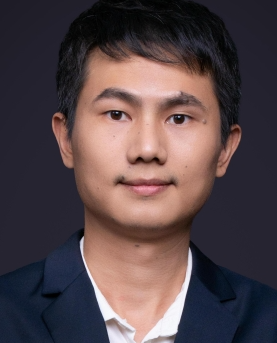 Yanghui Rao (饶洋辉)合作论文数School of Computer Science and Engineering, Sun Yat-Sen University4
 Sinong Wang合作论文数Meta AI4Yunhao Li合作论文数3Wuya Chen合作论文数3Jinghao Deng合作论文数School of Computer Science and Engineering, Sun Yat-sen University3Gang Liu合作论文数3Feifan Yang合作论文数Sun Yat Sen Univ, Sch Data & Comp Sci, Guangzhou, Peoples R China3
 Bei Hua (华蓓)合作论文数University of Science and Technology of China3
 Yi Fang合作论文数Department of Computer Science and Engineering, Santa Clara University;School of Engineering, Santa Clara University3Kun Li合作论文数3
 Yan Song (宋彦)合作论文数School of Information Science and Technology, University of Science and Technology of China3
 Shaoliang Nie合作论文数Facebook3
 Jian Yin (印鉴)合作论文数School of Artificial Intelligence, Sun Yat-Sen University3
 Liangzhi Li (李良知)合作论文数Institute for Datability Science, Osaka University3
 Yinlong Xu (许胤龙)合作论文数School of Computer Science and Technology, University of Science and Technology of China;National High Performance Computing Center, University of Science and Technology of China3
 Fei Huang (黄非)合作论文数Language Technologies Lab, DAMO Academy, Alibaba Group3
 Qing Li (李青)合作论文数Department of Computing, Faculty of Engineering, Hong Kong Polytechnic University3
 Zhaolong Wang (王兆龙)合作论文数School of Energy Science and Engineering, Harbin Institute of Technology3




