The microstructure characteristics of different strips produced by ferrite rolling and austenite rolling in CSP were researched by means of optical and scanning microscope.The mechanical properties and formability of the strips were also analyzed.The results of the research show that compared with strips produced by austenite rolling,the grain size of the strips produced by ferrite rolling is bigger,and the strength is lower.The formability of the strips is good.
For the serious steam crossflow in multi-steam huff and puff well and the discharge of oil sludge,it is developed of blocking off high permeability zone.The affecting factors and blocking off effects are studied and predicted using STARS module of CMG.The results show:there is a optimal blocking radius and injection on rate of the reservoir with different aeolotropy.The imitation results is very valuable for directing the field conduct.
In the middle and late steam injection period,the contradictions among each reservoir become increasingly prominent,and steam absorption capacity of each reservoir is in unequable,which influence the production degree of reservoirs seriously,finding expressions mainly in the decrease of oil production、high water-cut and so on,this paper presents separate layer steam injection technology.Using packers to divide alternate layers effectively,this separate layer steam injection technology carves up independent injection cells vertically,so that injection equipment are used in every layer separately.Therefore,the interferences between high permeable zone and low permeable zone、new and old layers、oil and water formation are eliminated during injection,so the potential of oil reservoir are displayed thoroughly and the producing degree of reservoirs are improved.This technique includes quantitative injection technology、separate layer steam injection technology、automatic steam injection technology. What's more,in view of some special oil wells,this technique also develops separate injection technology of sand exceeding wells and separate layer injection technology of sidetrack drilling wells.
Using Mg powder and B powder as the main raw materials,MgB2 superconductors were fabricated under different sintering methods.X-ray diffractometer,scanning electron microscopy,the Archimedes method and the standard four-probe resistivity detection method,et al.were used to investigate the phase composition,the microstructure,the density,the critical current density and so on of MgB2 samples.It is found that the density of MgB2 bulk decreases with the Mg particle size increasing.The rapidly sintered MgB2 bulks possess lower density and more non-superconducting phases,such as Mg and MgBx(x = 4,6 or 12) than the conventionally sintered ones.The rapidly sintered MgB2 wires exhibit lower critical current density than those conventionally sintered wires.It is revealed that the rapidly sintering method is unfit for the fabrication of high performance MgB2 superconductors.
The hot workability of modified 9Cr-1Mo, as a grade of heat resistant steels, is inferior to that of low-alloy steel, so the inner surface crack (ISC) easily occurs in seamless boiler tubes produced by the Mandrel Mill under improper rolling conditions. With the aid of FEM, the metal flow status during the rolling process was analyzed in 140mm 8-stand mandrel mill of Bao Steel. Both the metallographic shape and size of the ISC together with the result from the simulation show that the ISC of seamless tube forms at the elongation stage of shell. The mechanism of the ISC was discussed. With its initiation in stand No. 1 and No.2 due to poor hot workability of modified 9Cr-1Mo steel, the ISC develops in subsequent passes. Based upon the mechanism devised was a special roll pass system which substantially upgraded the yield of qualified products.
With the development and China’s sulfur-based sulfuric acid industry and as the plant is becoming larger,axial flow compressors have become a necessary choice for large-sized sulfur based sulfuric acid plants and pyrite-based sulfuric acid plants.For different locations of the main blower before and after the drying tower,and using actual engineering examples,two configurations of the axial flow compressor unit in the sulfur-based sulfuric acid process flow are introduced,as well as relevant parameters,start-up principles and precautions,etc.
Models of two small Maglev cars have been made. The track was paved with NdFeB magnets. The arrangement of the magnets made it easy to get a uniform magnetic field distribution along the length of the track and a magnetic field gradient in the lateral direction. When the car with YBCO bulk superconductors was field cooled to LN2 temperature at a certain distance above the track, the car could be automatically levitated over the track and moved along the track without any obvious friction. The model can be used to demonstrate the Meissner effect and a fast transportation system to students and adults.
The morphology of the top surface and the vertical section of single-domain YBCO bulk samples with c-axis parallel to the top surface have been clearly revealed. The sample with c-axis parallel to the top surface grows epitaxial from the seed (in the center) to the edge in all the four regions divided by grown cross traces on the top surface, but the growth style is different in the adjacent regions. If YBCO crystal grows along a (or b) axis in one region, it must be grow along c-axis in the adjacent regions. The grown traces on the top surface forms a 78° angle when the four regions meet each other. The clear traces are formed by the different growth rates, styles along c-axis and a (or b) axis and also the slightly height difference of YBCO crystal between adjacent regions.
A novel layer deletion method is used to experimentally investigate the effect of induced shielding current transmission (ISCT) in the longitudinal direction on the levitation force of a single-domain YBa2Cu3O7−x (YBCO) cylindrical superconductor (ϕ30×7 mm). In the experiment the sample was gradually sliced into two equal sheets, at the middle height along a diameter with 5 mm every step. The experimental results show that the levitation force is closely related with the ISCT in the longitudinal direction. Any layer deletion, even a small piece of layer deletion can reduce the levitation force of the sample. After the whole layer was deleted the levitation force can diminish about 50%. It is also found that the levitation force is directly proportional to the effective factor of surface area, which is equal to the top surface area divided by the total surface area parallel to the top surface of the sample.
The YBCO superconductors with Y2O3 addition were prepared by a modified melt textured process and the effects of excess Y2O3 addition on the physical properties of melt textured YBCO have been investigated. It is found that the melt temperature of YBCO samples decreases drastically with the increasing Y2O3, and the maximum levitation forces are drastically different for samples with different Y2O3 addition. It is also found that the optimal Y2O3 addition to YBCO is about 10wt%. Considering the microstructure and the starting composition, the results are well discussed and interpreted.
Different preparation techniques of Gd211 powders have been studied. The Gd211 powders prepared by three different processes were calcined at different temperatures between 860degreesC and 960degreesC. The single phase of Gd211 was formed above 900degreesC.With calcined temperature increasing, the carbon content of the Gd211 powders reduced, but the Gd211 particle size increased, and the particles being spherical in shape at low calcined temperature became more anomalous. Study of the three preparation processes indicated that the coprecipitation process is complex. But the particles of Gd211 powders prepared by it are fine and homogeneous. The carbon content of the Gd211 powders is small. So the coprecipitation process is the best preparation process of Gd211 powders in the three preparation process.
Experimentally determined AC loss in Bi2223 tapes at 4.2K under applied DC magnetic field is discussed. Considered are the influences on the seif-field loss of: (I) The applied DC field (2). The resistivity of the sheath material. (3) The critical current and the number of superconducting filaments. All of the experiments are performed at 4.2K and at appled magnetic fields of up to 5T.
 Wanmin Yang (杨万民)合作论文数School of Physics and Information Technology, Shaanxi Normal University4
 Lian Zhou (周廉)合作论文数Northwest Institute for Non-ferrous Metal Research;School of Materials Science and Engineering, Northwestern Polytechnical University4
 Pingxiang Zhang (张平祥)合作论文数School of Materials Science and Engineering, Northwestern Polytechnical University4
 Px Zhang合作论文数2
 Jinsheng Zhao合作论文数2RY Jia合作论文数1QiMing Xu合作论文数1X. L. Wu合作论文数1ZM Yu合作论文数1L Zhou合作论文数1Yifang Wu合作论文数1Shengzhi Li合作论文数1Hong Zhang合作论文数university of california san francisco1ZhongZhi Hua (华忠志)合作论文数1ShouWu Qiao (乔守武)合作论文数1Ping Ji (纪平)合作论文数1HongBin Peng (彭洪斌)合作论文数1Wei Han (韩卫)合作论文数1ChengShan Li (李成山)合作论文数1Ming Liang (梁明)合作论文数1
 Peng Liu (刘鹏)合作论文数Shaanxi Normal University1
 Hongliang Xu (许红亮)合作论文数School of Materials Science and Engineering, Zhengzhou University1
 Rui Zhang (张锐)合作论文数School of Materials Science and Engineering, Zhengzhou University;Zhengzhou University of Aeronautics1
 Y.F. Wu合作论文数1Yuande Yin合作论文数1
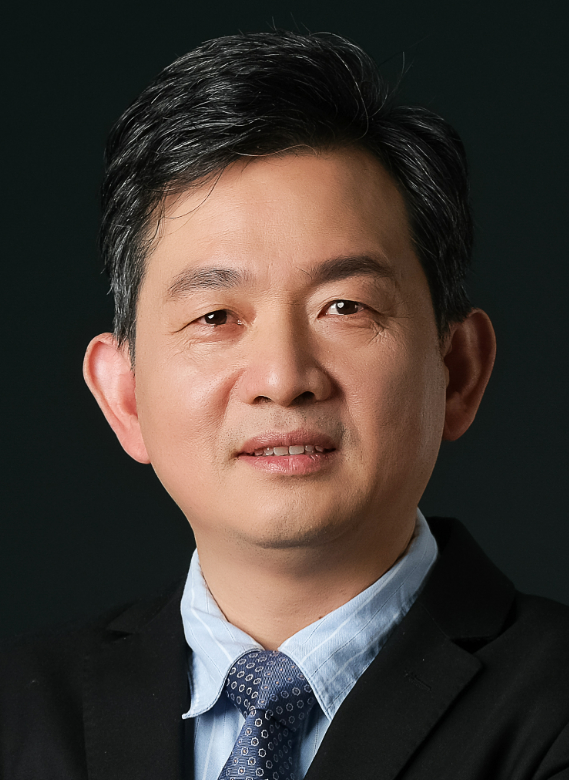 Xiaomin Xiong (熊小敏)合作论文数School of Physics, Sun Yat-sen University1B. X. Bin合作论文数1
 Lifa Hu (胡立发)合作论文数School of Science, Jiangnan University1
 Guo Yan合作论文数1Jie Xu合作论文数1Yanyuan Zhang (张延园)合作论文数School of Computer Science, Northwestern Polytechnical University1
 Zheng Xu (徐政)合作论文数1
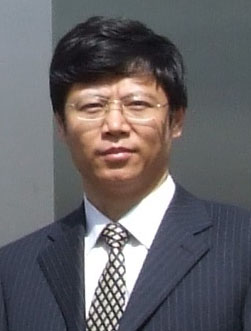 Changsheng Li (李长生)合作论文数School of Materials Science and Engineering, Northeastern University;State Key Laboratory of Digital Steel, Northeastern University1
 C.P. Zhang合作论文数1Zhu Shi Hai (朱世海)合作论文数1Minzhi Wu合作论文数1Qingbin Hao合作论文数1Xixu Chao合作论文数1X B Bian合作论文数1Haijun Sun (孙海军)合作论文数1
 André Sulpice合作论文数CRTBT, CNRS-UJF, BP 166, 38042 Grenoble cedex 09, France1
 Rubens De Andrade合作论文数1Zili Chen合作论文数1J. G. Xue合作论文数1Roberto Nicolsky合作论文数1Eric Mossang合作论文数1Ruyi Ding (丁如义)合作论文数1Wolfgang Gawalek合作论文数1




