The cooperative perception technology of master-slave hand operation provides intelligent and convenient support for people engaged in various risky and arduous tasks. This study presents a master-slave hand operation cooperative perception method for grasping objects through multi-information fusion of flexible strain sensors. A data glove and a strain sensor array are designed on stretchable strain sensors for accurate detection of master-slave hand ontology gestures. Meanwhile, a flexible tactile sensor array is proposed for dexterous hand interactive tactile perception. Furthermore, the master-slave hand gesture coordination method is presented. A method of perceiving dexterous hand grasping operation states is proposed on the basis of tactile perception arrays and clustering analysis of tactile perception sequences. Experimental results show that the proposed data glove and tactile sensor arrays exhibit good performance of master-slave hand ontology gesture perception and coordination as well as dexterous hand interactive tactile perception. The error measurements of the joint angle of master-slave hand during gesture coordination process were less than two degrees.
Owing to their ultrahigh sensitivity, crack-based flexible strain sensors have garnered considerable attention in recent years. In this study, a practical, and reliable chemical bonding-based dip-coating method is proposed to fabricate high sensitivity and high stability crack-based flexible strain sensor with dual hydrogen bond-assisted structure. The strain sensor has a sandwich structure, which is composed of graphene nanoplatelets (GNPs)/poly (sodium-p-styrenesulfonate) (PSS) conductive layer, ultra-violet (UV) adhesive substrate layer, and UV adhesive covering layer. The fabrication process, principle of dual hydrogen bond-assisted structure, strain sensing mechanism, and various properties of the proposed sensor are examined. It is demonstrated that the cracks and the dual hydrogen bond-assisted structure facilitate a practical strain sensor with high sensitivity (gauge factor of 19.65 in the strain range of 0-30%), long-term stability (over 10,000 cycles), good linearity, negligible drift, fast response time (similar to 50 ms), and low detection limit (0.10%). Meanwhile, the proposed crack-based flexible strain sensor can be used as a wearable device, which can be directly mounted on human skin to monitor tiny human motions and writing behavior. Consequently, it exhibits immense potential for wearable applications including artificial skin, human-machine interfaces, and medical healthcare.
六维力/力矩传感器是机器人实现柔顺化、智能化操作的关键传感设备,目前已广泛应用于工业机器人、康复医疗机器人、空间机器人等智能化装备.介绍了国内外六维力/力矩传感器弹性体结构的研究现状及发展趋势;详细论述了全方位机械过载保护与动态性能两个方面的关键技术问题;分析了在常规环境和航空航天、深海等特殊环境的应用现状,着重阐述空间六维力/力矩传感器机械过载保护、温度补偿及容错关键技术问题和深海六维力/力矩传感器压力动态平衡、密封及防腐蚀等关键技术问题;并对六维力/力矩传感器的发展方向进行了展望.
Disk model is usually used to represent graphene nanoplatelets (GNPs) which are considered as frame-like structure with edges and corners, and it has lack of quantitative accuracy. In order to minimize error caused by morphology, distribution, and interaction between GNPs and matrix, square and folded plate models were constructed to predict the percolation volume fraction (phi(c)) of GNPs-based nanocomposites by calculating connection possibility. Meanwhile, disk model is used for comparison. The results revealed that the phi(c) of square and folded plate models is smaller than that of disk model with consistent parameters, and it is concluded that the phi(c) of GNPs-based nanocomposites predicted by disk model should be higher than that of experimental. The correctness of mixed model of square and folded plate is also verified by experimental. Due to the agglomeration of GNPs under the actual situation, the result of simulation is slightly smaller than that of experiment.
In three-dimensional Monte Carlo simulation for carbon-based conductive nanocomposites, representative volume element (RVE) establishes a relationship between the microstructure and electrical properties of nanocomposites. Generating RVE is the first step in simulation, but the lack of systematic research on RVE results in low simulation accuracy and reliability. In this work, a study of the appropriateness, geometry, size, and fillers boundary restraint on RVE for conductive nanocomposites filled with single filler of CNTs, CB or GNPs is studied. The results show that it is reasonable to use RVE in the simulation. The cube is suggested as the standard shape of RVE and the size of RVE can determine by the Chi-square test results obtained from percolation threshold. It is also concluded that periodic and aperiodic boundary restraint are superior to truncated boundary restraint. This study can provide the theoretical and technique foundation for reasonably setting RVE parameters and accurately predicting the electrical properties for nanocomposites filled with different dimension fillers.
Tumor tissues consist of various types of cells including cancer stem cells, base cells, tumor infiltrated immune cells, and even new types of cancer associated cells. The tumor infiltrating cells play important roles in cancer progression and prognosis. Using present web servers and standalone tools of cell type deconvolution, including Timer, CIBERSORT, xCell, we deconvoluted the immune cell composition of microarray gene expression profiles of rectal cancer tissues collected from the rectal cancer patients before radiotherapy operation. By comparing the cell type composition obtained by timer of the rectal tissues from the radiotherapy responsive patients with those of non-responsive patients, we found that the content of CD4+ cells has average content of 0.1378 versus 0.1071 with p=0.0215; the ratio of CD4+/CD8+ is averaged 0.7869 versus 0.5564 with p=0.0210; and_T cells CD4 memory resting and Eosinophils are both significantly higher with p-value of 0.033 and 0.0206, respectively, in radiotherapy responsive rectal cancer patient than in non-responsive cancer patients. The content of CD8+ cells are lower in the responsive than in non-responsive patients, which is averaged 0.1798 versus 0.2104 with p=0.0239. Other significant different cell types include macrophages M1 and M2, adipocytes, plasma cells and preadipocytes. Patients can be classified into responsive and non-responsive by machine learning method based on the tumor infiltrating immune cell composition with accuracy of 65% It will be investigated that if the results can be applied to our newly collected data of other type of cancers including lung and nasopharyngeal carcinoma cancers in the future.
A fully flexible strain sensor from core-spun elastic threads with integrated electrode and sensing cell based on conductive nanocomposite is successfully prepared by a simple coating-drying process. It not only avoids mechanical failure at the junction between the sensing cell and electrode during the stretching process but also easily connect with external equipment or circuit. The conductive nano composite used for electrode and sensing cell is manufactured by carbon black/sliver paste/poly (sodium-p-styrenesulfonate) and single-walled carbon nanotubesicarbon black, respectively. The integrated strain sensor shows a typical resistive behavior and the gauge factor calculated at 0-50% strain is 2.18, which is close to that of the traditional metallic strain sensor. The integration sensor exhibits fast response (-125 ms), excellent stability and durability. The integrated strain sensor could be fabricated into various ideal shapes and located in different places. This new strain sensor is applicable to many situations such as monitoring the liquid level in the container, detecting the density of the solution, measuring acceleration and monitoring human movement. (C) 2018 Elsevier Ltd. All rights reserved.
A multi-component force sensing system, capable of monitoring multiple components of force terms along x-, y-, and z-axis (F x , F y , and F z ) and the moments terms about x-, y-, and z-axis (M x , M y , and M z ) simultaneously, has been utilized in a huge variety of automation systems since 1970s. Fiber Bragg grating (FBG)-based sensing systems offer a significant viable with numerous competitive advantages over traditional force sensing systems such as immunity to electromagnetic interference, high sensitivity, larger sensing range, light weight, small size, intrinsically safe in the explosive environments, and multiplexing capabilities. Recently, a number of applications, such as robotic manipulation and robot-assisted surgery, have benefited from the developments in FBG-based force sensing systems. This paper presents a comprehensive review of different force transduction principles, state-of-the-art designs, and development methods, as well as their significances and limitations. Meanwhile, some of the significant developments in an FBG-based force sensing technology during the last few decades are surveyed, and current challenges in implementing the FBG-based force sensing technology is highlighted.
Accurate description of the relationship between sensor loading deformation and elastomeric structure is very important to improving design efficiency. In this paper, we focus on the spoke torque sensor, according to the deformation characteristics of the sensor under loading, and analyzes the relationship among stress, strain and disturbance of the torque sensor in combination with the deformation compatibility conditions, and establishes the analytical model of the torsion stiffness of the sensor. Finally, by comparing the finite element simulation results, it is verified that by considering the deformation coordination conditions, the precision of the analytical modeling of the torque sensor can be improved.
为实现空间机械臂的灵活控制,需要在机械臂关节处增加扭矩传感器,而航天器发射阶段特有的高冲击和强振动等特点要求扭矩传感器具有高抗过载和容错能力.对扭矩传感器和空间机械臂关节输出法兰进行一体化设计是一种可行途径,它可实现空间机械臂的高集成度和轻量化的目标.结合空间机械臂关节输出法兰设计了一款扭矩传感器,对设计的传感器弹性体进行受力分析,建立了传感器扭转刚度和应交的解析模型,基于参数设计的方法对传感器结构进行优化;为提高传感器的容错能力,根据其结构特点采用双全桥电路冗余设计.实验表明,经过冗余设计,传感器线性度得到改善,轴向抗干扰能力得到提高,线性度为0.77%;重复性0.89%;滞后为0.95%,满足使用需求.
force (Fx, Fy, and Fz), as well as the moments (Mx, My and Mz). This enables them to be frequently used in many robotic applications. Accurate, time-effective calibration and decoupling procedures are critical to the implementation of these sensors. This paper compares the effectiveness of decoupling methods based on Least-Squares (LS), BP Neural Network (BPNN), and Extreme Learning Machine (ELM) methods for improving the performance of multi-axis robotic F/M sensors. In order to demonstrate the effectiveness of the decoupling methods, a calibration and decoupling experiment was performed on a five-axis robotic F/M sensor. The experiments demonstrate that the ELM based decoupling method is superior to LS and BPNN based methods. The presented theoretical and experimental demonstrations provide a comprehensive description of the calibration and decoupling procedures of multi -axis robotic F/M sensors. This work reveals that the ELM method is an appropriate and high performing decoupling procedure for multi -axis robotic F/M sensors. (C) 2017 Elsevier Ltd. All rights reserved.
The correlation between Mechanical stimulation of human body and sEMG signals is discussed. Based on a multi-information sampling system, the mechanical stimulation and sEMG signals of human body can be obtained. The results indicate there is a remarkable relationship between the mechanical stimulation and sEMG signals, and may provide theoretical basis and significative information for finding out the mechanism of massage that massage could improve muscle performance.
With the development in the fields of neurophysiology, clinical diagnosis of muscular degenerative diseases and medical rehabilitation, the electrophysiological reactions of muscles stimulated by micro-force have drawn the attention of scholars both at home and abroad. This paper proposes a new type of vibrotactile device, which can produce micro-stimulating force with variable magnitude, adjustable stimulation depth and presettable frequency. After the micro-stimulating force was applied on the abdominal point of the test finger of the subject, by detecting the surface electromyography(sEMG) signal of the corresponding finger extensor muscle by means of sEMG sensor, perceiving the magnitude of stimulating force by means of force sensor, detecting of surface micro-force stimulation depth by means of infrared sensor, then the effect of micro-stimulating force with different parameters applied on muscle could be explored. And so, reasonable stimulus parameters could be selected in tactile stimulation experiment. This laid the foundation of exploring the mechanisms of mechanical vibration parameters and the subjects' fatigue degree in future studies.
Self-assembly of swarm robots is inspired by the swarm behaviors of the social insects. In this paper, we propose a enhanced self-assembling morphology distributed control algorithm of swarm robots based on the shortest distance priority. This algorithm optimizes the first two stages to directional navigation in the three stages of self-assembling morphology control including random walk, local navigation and autonomous docking. The directional navigation can improve the efficiency of self-assembly. We demonstrate the effectiveness of the algorithm in simulation-based experiment.
Aiming at the control mechanism ,including muscle-reflex control and impedance control of ankle joint during upright stance balance ,an electromyographic (EMG) signal based muscle-reflex control model was proposed to analyze the reflex behavior during the very beginning of push-recovery response .Furthermore ,a proportion-differentiation (PD) based torque control model ,with ankle joint angle and angular velocity as input ,was used to fit the experimental data .During experiments ,volun-teers stood on a force platform and were pushed forward slightly .Volunteers were asked to try to re-cover from these disturbances without bending their knee and hip joints .Kinematics and kinetics data were recorded by inertial measurement unit (IMU) ,EMG and force platform .Experimental results indicate that the PD model can fit well with the control mechanism of ankle joint during the end of push-recovery response .
介绍了一种蓝牙表面肌电采集装置和力传感器相融合的系统,并成功的将该系统应用于人表面肌电相关功能的研究.系统装置包括压力刺激装置、超声波传感器、肌电处理电路、蓝牙传输模块,该系统采用无创伤方式实时采集与存储各类传感器信号.
Efficient and reliable external mechanical actuation is one of the key factors for a successful magnetic resonance elastography (MRE). Existing actuators just attaches to the surface of human tissues and only unidirectional force is applied. A new adsorption actuator is proposed in this study to cope with this problem. It adsorbs soft tissue by creating a vacuum environment between the actuator and the tissue, and they are thereby coupled together during MRE actuation. In the experiments the new actuator performs better with more harmonic vibration, and the driving efficiency was enhanced substantially, too. Different numerical models based on collision hypothesis discover the working principle of the actuator.
A wireless inertial measuring system is designed for human motion analysis in this study. Each of the measurement unit bonded at the human joint consists of a three-axis accelerometer, magnetometer and gyroscope. A wireless body sensor network based on Wi-Fi is built to collect all the information of the measurement units and transfer to the computer in real time. An orientation estimation algorithm presented by quaternion is used to calculate the gyroscope measurement error by using accelerometer and magnetometer data. The motion data are imported into a type of simulation software, Virtual Robot Experimentation Platform (V-REP), to reconstruct the human motion posture. In a simple experiment, the measurement units are fixed on human's lower limbs and the motion data are sampled to update the model in V-REP. The system developed in this study is important to the gait analysis, locomotion control and visual feedback in rehabilitation.
Accurate Force/Moment (F/M) measurements are required in many applications, and multi-axis F/M sensors have been utilized a wide variety of robotic systems since 1970s. A multi-axis F/M sensor is capable of measuring multiple components of force terms along x-, y-, z-axis (Fx, Fy, Fz), and the moments terms about x-, y- and z-axis (Mx, My and Mz) simultaneously. In this manuscript, we describe experimental and theoretical approaches for using modular Elastic Elements (EE) to efficiently achieve multi-axis, high-performance F/M sensors. Specifically, the proposed approach employs combinations of simple modular elements (e.g. lamella and diaphragm) in monolithic constructions to develop various multi-axis F/M sensors. Models of multi-axis F/M sensors are established, and the experimental results indicate that the new approach could be widely used for development of multi-axis F/M sensors for many other different applications.
Multi-component force sensors have infiltrated a wide variety of automation products since the 1970s. However, one seldom finds full-component sensor systems available in the market for cutting force measurement in machine processes. In this paper, a new six-component sensor system with a compact monolithic elastic element (EE) is designed and developed to detect the tangential cutting forces Fx, Fy and Fz (i.e., forces along x-, y-, and z-axis) as well as the cutting moments Mx, My and Mz (i.e., moments about x-, y-, and z-axis) simultaneously. Optimal structural parameters of the EE are carefully designed via simulation-driven optimization. Moreover, a prototype sensor system is fabricated, which is applied to a 5-axis parallel kinematic machining center. Calibration experimental results demonstrate that the system is capable of measuring cutting forces and moments with good linearity while minimizing coupling error. Both the Finite Element Analysis (FEA) and calibration experimental studies validate the high performance of the proposed sensor system that is expected to be adopted into machining processes.
 Quanjun Song (宋全军)合作论文数Institute of Intelligent Machines, Hefei Institutes of Physical Science, Chinese Academy of Sciences;University of Science and Technology of China55
 Ying Huang (黄英)合作论文数School of Electronic Science and Applied Physics, Hefei University of Technology30
 Dan Zhang (张丹)合作论文数Department of Mechanical Engineering, Lassonde School of Engineering, York University30
 Qiaokang Liang (梁桥康)合作论文数College of Electrical and Information Engineering, Hunan University28
 Zhongcheng Wu (吴仲城)合作论文数Institute of Intelligent Machines, Hefei Institutes of Physical Science, Chinese Academy of Sciences;University of Science and Technology of China24Huibin Cao合作论文数20Jianhe Lei合作论文数18Zhen GAO (高振)合作论文数16
 Lifu Gao (高理富)合作论文数School of Information Science and Technology, University of Science and Technology of China;Hefei Institutes of Physical Science, Chinese Academy of Sciences16
 Guangming Song (宋光明)合作论文数School of Instrument Science and Engineering, Southeast University16Junxiang Ding合作论文数14Liankui Qiu合作论文数13ZhengShi Liu (刘正士)合作论文数13Yi Tang (唐毅)合作论文数13
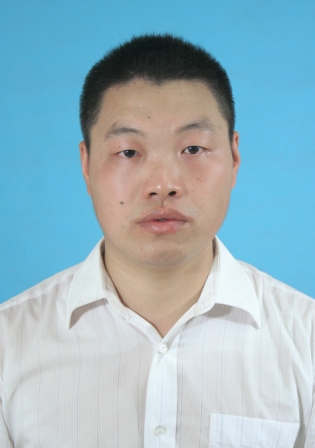 Ping Liu (刘平)合作论文数School of Electronic Science and Applied Physics, Hefei University of Technology12
 Yugang Zhang (张玉刚)合作论文数School of Electronic Science and Applied Physics, Hefei University of Technology;School of Microelectronics, Hefei University of Technology12Yong Yu合作论文数11
 Feng Shuang (双丰)合作论文数School of Electrical Engineering, Guangxi University11Feng Chen合作论文数11
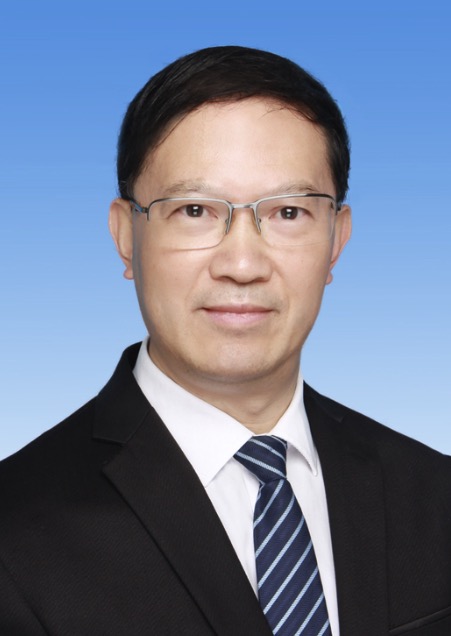 Yaonan Wang (王耀南)合作论文数College of Electrical and Information Engineering, Hunan University11Shan-Hong Li合作论文数10
 Yubing Wang合作论文数9yuxiang sun合作论文数9
 Yuman Nie (聂余满)合作论文数Hefei Institutes of Physical Science, Chinese Academy of Sciences9Caixia Liu (刘彩霞)合作论文数School of Electronic Science and Applied Physics, Hefei University of Technology9
 Xiaolong Wang (汪小龙)合作论文数9
 Ming Meng (孟明)合作论文数Hangzhou Dianzi University9
 Yong Wang (王勇)合作论文数School of Mechanical Engineering, Hefei University of Technology9Huanghuan Shen合作论文数9Sun Jian合作论文数8
 Bo Song合作论文数Sandia National Laboratories8
 Jianju Jiang (江建举)合作论文数深圳职业技术学院教育技术与信息中心8Xiaohong Deng (邓小红)合作论文数8Kui Xiang (向馗)合作论文数Wuhan University of Technology7Min Zhu合作论文数Chinese Acad. of Sci.;c;Chinese Acad. of Sci.7Fei Xu合作论文数7
 Aiguo Song (宋爱国)合作论文数School of Instrument Science and Engineering, Southeast University7
 Gianmarc Coppola合作论文数Department of Mechanical Engineering, Lakehead University7Xiaohui Ming (明小慧)合作论文数7Ming Liu合作论文数6Jing-hua MA (马静华)合作论文数6HongYan Yuan (袁红艳)合作论文数6
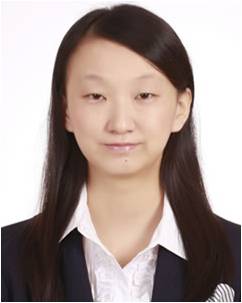 Lina Tong (佟丽娜)合作论文数School of Mechanical Electronic & Information Engineer, China University of Mining And Technology-Beijing6
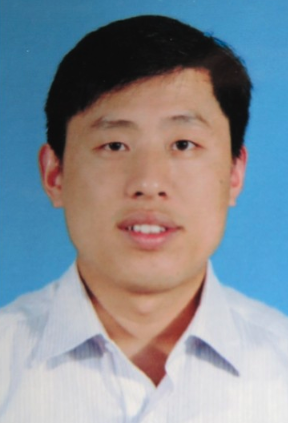 Huaili Qiu (仇怀利)合作论文数School of Electronic Science and Applied Physics, Hefei University of Technology6Ping Fang合作论文数6Bei Xiang合作论文数6Qiansheng Fang合作论文数5




