The Spin Physics Detector collaboration proposes to install a universal detector in the second interaction point of the NICA collider under construction (JINR, Dubna) to study the spin structure of the proton and deuteron and other spin-related phenomena using a unique possibility to operate with polarized proton and deuteron beams at a collision energy up to 27 GeV and a luminosity up to 10^32 cm^-2 s^-1. As the main goal, the experiment aims to provide access to the gluon TMD PDFs in the proton and deuteron, as well as the gluon transversity distribution and tensor PDFs in the deuteron, via the measurement of specific single and double spin asymmetries using different complementary probes such as charmonia, open charm, and prompt photon production processes. Other polarized and unpolarized physics is possible, especially at the first stage of NICA operation with reduced luminosity and collision energy of the proton and ion beams. This document is dedicated exclusively to technical issues of the SPD setup construction.
Several spectrometer upgrades are planned for future phases of the AMBER (NA66) experiment at CERN. Among these upgrades, the replacement of some aging Multi-Wire Proportional Chambers has motivated a R&D program to develop a Micro-Pattern Gaseous Detector and its frontend electronics. The results of testing the first small Micromegas prototype with the TIGER-based front-end are presented.
We present the development and testing of a Micromegas detector prototype and its front end intended to be a candidate for the substitutions of some of the Multiwire Proportional Chambers in the future AMBER (NA66) experiment at CERN. Results of the test of the first small size prototype are discussed.
The present contribution reviews the principle of RF separation and explains its dependence on different parameters of beam optics and hardware. The first examination of potential showstoppers for the RF-separated beam implementation for Phase-2 of the AMBER experiment in the M2 beam line of the North Area is presented. Different beam optics settings have been examined, providing either focused or parallel beams inside the RF cavities. The separation and transmission capability of the different optics settings for realistic characteristics of RF cavities are discussed and the preliminary results of the potential purity and intensity of the RF-separated beam are presented. These show that a trade-off between the overall beam intensity and the share of the required particle type in the overall beam needs to be established. No showstoppers have been identified for achieving the beam parameters required for AMBER’s kaonic Primakoff reactions, kaon spectroscopy, prompt-photon production and kaon charge-radius programs. However, the high beam intensity requirements of the AMBER Drell–Yan programme cannot be satisfied with an RF-separated beam.
We study the spin-exotic $J^{PC} = 1^{-+}$ amplitude in single-diffractive dissociation of 190 GeV$/c$ pions into $\pi^-\pi^-\pi^+$ using a hydrogen target and confirm the $\pi_1(1600) \to \rho(770) \pi$ amplitude, which interferes with a nonresonant $1^{-+}$ amplitude. We demonstrate that conflicting conclusions from previous studies on these amplitudes can be attributed to different analysis models and different treatment of the dependence of the amplitudes on the squared four-momentum transfer and we thus reconcile their experimental findings. We study the nonresonant contributions to the $\pi^-\pi^-\pi^+$ final state using pseudo-data generated on the basis of a Deck model. Subjecting pseudo-data and real data to the same partial-wave analysis, we find good agreement concerning the spectral shape and its dependence on the squared four-momentum transfer for the $J^{PC} = 1^{-+}$ amplitude and also for amplitudes with other $J^{PC}$ quantum numbers. We investigate for the first time the amplitude of the $\pi^-\pi^+$ subsystem with $J^{PC} = 1^{--}$ in the $3\pi$ amplitude with $J^{PC} = 1^{-+}$ employing the novel freed-isobar analysis scheme. We reveal this $\pi^-\pi^+$ amplitude to be dominated by the $\rho(770)$ for both the $\pi_1(1600)$ and the nonresonant contribution. We determine the $\rho(770)$ resonance parameters within the three-pion final state. These findings largely confirm the underlying assumptions for the isobar model used in all previous partial-wave analyses addressing the $J^{PC} = 1^{-+}$ amplitude.
COMPASS is a fixed target experiment at CERN SPS aimed to study hadron structure and spectroscopy. Hadron identification in the momentum range between $3$ and $55 GeV/c$ is provided by a large gaseous Ring Imaging Cherenkov Counter, RICH-1. To cope with the challenges imposed by the new physics program of COMPASS, RICH-1 has been upgraded by replacing four MWPC-based photon detectors with newly developed MPGD-based photon detectors. The architecture of the novel detectors is a hybrid combination of two layers of THGEMs and a Micromegas. The top of the first THGEM is coated with CsI acting as a reflective photo-cathode. The anode is segmented in pads capacitively coupled to the APV-25 based readout. The new hybrid detectors have been commissioned during the 2016 COMPASS data taking and stably operated during the 2017 run. In this paper design, construction, operation and performance aspects of the novel photon detectors for COMPASS RICH-1 are discussed.
Novel gaseous detectors of single photons for RICH applications have been developed and installed on COMPASS RICH-1 in 2016. They have a hybrid architecture consisting of two staggered THGEM layers (one equipped with a CsI photoconverting layer) and a bulk Micromegas; they cover a total area of 1.4 squared meters and operate stably and efficiently. They provide a single photon angular resolution of 1.8 mrad and about 10 detected photons per ring at saturation. The main aspects of their construction and commissioning, their characterization and performance figures are presented.
COMPASS is a fixed target experiment at CERN SPS aimed to study Hadron Structure and Spectroscopy. Hadron Identification in the momentum range between 3 and 55 GeV/c is provided by a large gaseous Ring Imaging Cherenkov Counter (RICH-1). To cope with the challenges imposed by the new physics program of COMPASS, RICH-1 has been upgraded by replacing four MWPCs based photon detectors with newly developed MPGD based photon detectors. The architecture of the novel detectors is a hybrid combination of two layers of THGEMs and a MicroMegas. The top of the first THGEM is coated with CsI acting as a reflective photo-cathode. The anode is segmented in pads capacitively coupled to the APV-25 based readout. The new hybrid detectors have been commissioned during 2016 COMPASS data taking and stably operated during 2017 run. In this paper all aspects of the novel photon detectors for COMPASS RICH-1 are discussed.
C. Adolph, R. Akhunzyanov, M. G. Alexeev, G. D. Alexeev, A. Amoroso, V. Andrieux, V. Anosov, W. Augustyniak, A. Austregesilo, C. D. R. Azevedo, B. Badełek, F. Balestra, J. Barth, R. Beck, Y. Bedfer, J. Bernhard, K. Bicker, E. R. Bielert, R. Birsa, J. Bisplinghoff, M. Bodlak, M. Boer, P. Bordalo, F. Bradamante, C. Braun, A. Bressan, M. Büchele, E. Burtin, W.-C. Chang, M. Chiosso, I. Choi, S.-U. Chung, A. Cicuttin, M. L. Crespo, Q. Curiel, S. Dalla Torre, S. S. Dasgupta, S. Dasgupta, O. Yu. Denisov, L. Dhara, S. V. Donskov, N. Doshita, V. Duic, W. Dünnweber, M. Dziewiecki, A. Efremov, P. D. Eversheim, W. Eyrich, M. Faessler, A. Ferrero, M. Finger, M. Finger, Jr., H. Fischer, C. Franco, N. du Fresne von Hohenesche, J.M. Friedrich, V. Frolov, E. Fuchey, F. Gautheron, O. P. Gavrichtchouk, S. Gerassimov, F. Giordano, I. Gnesi, M. Gorzellik, S. Grabmüller, A. Grasso, M. Grosse Perdekamp, B. Grube, T. Grussenmeyer, A. Guskov, F. Haas, D. Hahne, D. von Harrach, R. Hashimoto, F. H. Heinsius, F. Herrmann, F. Hinterberger, N. Horikawa, N. d’Hose, C.-Y. Hsieh, S. Huber, S. Ishimoto, A. Ivanov, Yu. Ivanshin, T. Iwata, R. Jahn, V. Jary, R. Joosten, P. Jörg, E. Kabuß, B. Ketzer, G. V. Khaustov, Yu. A. Khokhlov, Yu. Kisselev, F. Klein, K. Klimaszewski, J. H. Koivuniemi, V. N. Kolosov, K. Kondo, K. Königsmann, I. Konorov, V. F. Konstantinov, A.M. Kotzinian, O. Kouznetsov, M. Krämer, P. Kremser, F. Krinner, Z. V. Kroumchtein, N. Kuchinski, F. Kunne, K. Kurek, R. P. Kurjata, A. A. Lednev, A. Lehmann, M. Levillain, S. Levorato, J. Lichtenstadt, R. Longo, A. Maggiora, A. Magnon, N. Makins, N. Makke, G. K. Mallot, C. Marchand, B. Marianski, A. Martin, J. Marzec, J. Matoušek, H. Matsuda, T. Matsuda, G.Meshcheryakov,W.Meyer, T.Michigami,Yu.V.Mikhailov,Y.Miyachi, P.Montuenga,A.Nagaytsev, F.Nerling, D. Neyret, V. I. Nikolaenko, J. Nový, W.-D. Nowak, G. Nukazuka, A. S. Nunes, A. G. Olshevsky, I. Orlov, M. Ostrick, D. Panzieri, B. Parsamyan, S. Paul, J.-C. Peng, F. Pereira, M. Pešek, D. V. Peshekhonov, S. Platchkov, J. Pochodzalla, V. A. Polyakov, J. Pretz,M.Quaresma, C. Quintans, S. Ramos, C. Regali,G.Reicherz, C.Riedl,N. S. Rossiyskaya,D. I. Ryabchikov, A. Rychter,V. D. Samoylenko,A. Sandacz, C. Santos, S. Sarkar, I. A. Savin, G. Sbrizzai, P. Schiavon, T. Schlüter, K. Schmidt, H. Schmieden, K. Schönning, S. Schopferer, A. Selyunin, O. Yu. Shevchenko, L. Silva, L. Sinha, S. Sirtl,M. Slunecka, F. Sozzi, A. Srnka,M.Stolarski,M.Sulc,H. Suzuki,A. Szabelski, T. Szameitat, P. Sznajder, S. Takekawa, S.Tessaro, F. Tessarotto, F. Thibaud, F. Tosello, V. Tskhay, S. Uhl, J. Veloso, M. Virius, T. Weisrock, M. Wilfert, J. ter Wolbeek, K. Zaremba, M. Zavertyaev, E. Zemlyanichkina, M. Ziembicki, and A. Zink
We report about the development status of large area gaseous single photon detectors based on a novel hybrid concept for RICH applications.The hybrid concept combines Thick Gaseous Electron Multipliers (THGEMs) coupled to CsI, working as a photon sensitive pre-amplification stage, and Micromegas, as a multiplication stage. The most recent achievements within the research and development programme consist in the assembly and study of 300 x 300 mm(2) hybrid photon detectors, the optimization of front-end electronics, and engineering towards large area detectors. Hybrid detectors with an active area of 300 x 300 mm2 have been successfully operated in laboratory conditions and at a CERN PS T10 test beam, achieving effective gains in the order of 10(5) and good time resolution (sigma = 7 ns); APV25 front-end chips have been coupled to the detector resulting in noise levels lower than 1000 electrons; the production and characterization of 300 x600 mm(2) THGEMs is ongoing.A set of hybrid detectors with 600 x 600 mm(2) active area is envisaged to upgrade COMPASS RICH-1 at CERN in 2016. (C) 2015 Elsevier B.V. All rights reserved.
In the context of a project to upgrade the gas photon detectors of COMPASS RICH-1, we have performed an R&D programme aimed to develop photon detectors based on multi-layer arrangements of thick GEM electron multipliers coupled to a CsI photoconverter. For this purpose, thick GEMs have been characterised in detail including the gain performance, its dependance on the geometrical parameters and its time-evolution, a feature exhibited by the gas detectors with open insulator surfaces. The variation due to this evolution drammatically depends on the parameters themselves.In the present article we summarise the outcomes of the studies dedicated to the thick GEM gain and its evolution versus time. We also include a qualitative model which accounts for the peculiar details of the observed thick GEM gain time-evolution.
In fundamental research, gas detectors of single photons are a must in the field of Cherenkov imaging techniques (RICH counters) for particle identification in large momentum ranges and with wide coverage of the phase space domain. These counters, already extensively used, are foreseen in the setups of future experiments in a large variety of fields in nuclear and particle physics. The quest of novel gaseous photon detector is dictated by the fact that the present generation of detectors has unique characteristics concerning operation in magnetic field, low material budget and cost, but it suffers of severe limitations in effective efficiency, rates, life time and stability, discouraging their use in high precision and high rate experiments. We are developing large size THick GEM (THGEM)-based detector of single photons. The R&D program includes the complete characterization of the THGEM electron multipliers, the study of the aspects related to the detection of single photons and the engineering towards large size detector prototype. Our most recent achievements include: dedicated studies concerning the ion back-flow to the photo-cathode; relevant progress in the engineering aspects, in particular related to the production of large-size THGEMs, where the strict correlation between the local gain-value and the local thickness-value has been demonstrated the operation of a 300 mm × 300 mm2 active area detector at the CERN PS T10 test beam; the introduction of a new hybrid detector architecture offering promising indication, which is formed by a THGEM layer which acts as CsI support and pre-amplification device followed by a MICROMEGAS multiplication stage. The general status of the R&D program and the recent progress are reported
The gaseous COMPASS RICH-1 detector uses two spherical mirror surfaces, segmented into 116 individual mirrors, to focus the Cherenkov photons onto the detector plane. Any mirror misalignment directly affects the detector resolution. The on-line Continuous Line Alignment and Monitoring (CLAM) photogrammetry-based method has been implemented to measure the alignment of individual mirrors which can be characterized by the center of curvature. The mirror wall reflects a regular grid of retroreflective strips placed inside the detector vessel. Then, the position of each mirror is determined from the image of the grid reflection. The images are collected by four cameras. Any small mirror misalignment results in changes of the grid lines’ positions in the image. The accuracy limits of the CLAM method were checked by laser interferometry and are below 0.1mrad.
The THicK GEM (THGEM) electron multipliers are derived from the GEM design, by scaling the geometrical parameters and changing the production technology. Small-size (a few cm(2)) detectors exhibit superb performance, while larger ones exhibit gain response and uniformity limitations. We have studied with a systematic approach several aspects concerning the material (type and thickness of the fibreglass plates) and the production procedure, in particular the cleaning and polishing stages. The net result is the production of large THGEM multipliers reproducing the performance of the small ones. We report in detail about the studies and the results.
COMPASS RICH-1 is a large size gaseous Imaging Cherenkov Detector providing hadron identification in the range from 3 to 55 GeV/c, in the wide acceptance spectrometer of the COMPASS Experiment at CERN SPS.It uses a 3 m long C4F10 radiator, a 21 m(2) large VUV mirror surface and two kinds of photon detectors: MAPMTs and MWPCs with CsI photocathodes, covering a total of 5.5 m(2). It is in operation since 2002 and its performance increased thanks to progressive optimization and to a major upgrade of its photon detection system, implemented in 2006; a new upgrade is foreseen for 2016, with the use of MPGD-based photon detectors.The main characteristics of COMPASS RICH-1 components are described and the most critical aspects related to the C4F10 radiator gas system, to the mirrors and their alignment, as well as the performance of the photon detectors are presented and discussed. The response of the MWPCs and the observed evolution of the effective quantum efficiency of the CsI photocathodes is analyzed. The properties and performance of the MAPMTs with individual fused lens telescopes are presented together with the readout characteristics. The PID performance of COMPASS RICH-1 is discussed and the future upgrade program is mentioned.
Gas detector of single photons are required in Cherenkov imaging counters, in particular when large surface must be instrumented. The present detectors suffer of severe limitations usually related to the ion and photon back flow to the photocatode. The principle and the status of novel photon counters based on Micro Pattern Gaseous Detector is discussed.
Photon detectors based on micropattern gas detectors represent a new generation of gaseous photon detectors. In the context of a project to upgrade the gas photon detectors of COMPASS RICH-1, we are performing an R&D programme aimed both to establish the principles and to develop the engineering aspects of photon detectors based on multi-layer arrangements of thick GEMs electron multipliers coupled to a CsI photoconverter. In this context, a reduced rate of the backflow of the positive ions generated in the multiplication process is required to overcome the critical issues related to the bombardment of the CsI photoconverter by ions. Our studies devoted to develop detector architectures able to provide reduced ion backflow rates are reported.
Recent progress in the development of THGEM-based photon detectors confirm the validity of this novel technology. Detectors made of THGEMs, arranged in a three layer architecture, with a CsI coating on the first layer (acting as a reflective photocathode), have been produced and operated in laboratory and during test beam runs: they provide a gain of 105 and a time resolution better than 10 ns. Improvements in the production of THGEMs with 300×300 mm2 active area have recently been introduced leading to a uniform gain response and performance similar to that provided by the small area THGEMs. Promising results have been obtained by combining THGEM and Micromegas technologies to form a hybrid MPGD-based photon detector: the first prototype has proved to stably operate at large gain in a variety of gas mixtures, including pure CH4 and to provide a low ion backflow rate. The RICH-1 detector of the COMPASS Experiment at CERN SPS will be equipped with a set of MPGD-based photon detectors replacing MWPC-based ones.
The photon detectors based on MPGD (MicroPattern Gaseous Detector) represent the new generation of gaseous photon detectors. We report about an R&D programme dedicated to study both the principles and the engineering aspects of photon detectors based on Thick GEMs (THGEM) electron multipliers coupled to a CsI photoconverting coating. The goal is the development of a gaseous detector of single UV photons, able to stably operate at high gain and high rate, to provide good time resolution and insensitive to magnetic field to be used in the Cherenkov imaging counter RICH-1 of the COMPASS experiment at CERN SPS.
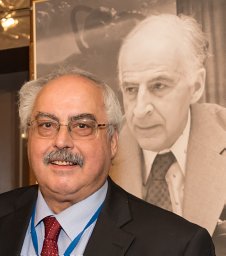 A. Maggiora合作论文数Sezione di Torino, INFN72
 D. Panzieri合作论文数68F Balestra合作论文数46S. Prakhov合作论文数45Francesco Tosello合作论文数43R. Garfagnini合作论文数41m agnello合作论文数40L. Ferrero合作论文数40
 A. Filippi合作论文数INFN, Sez Torino40
 Enrico Botta合作论文数Dipartimento di Fisica dell’, Università Torino40Tullio Bressani合作论文数40l busso合作论文数39
 A. Fontana合作论文数Ist Nazl Fis Nucl39
 Paola Gianotti合作论文数Laboratori Nazionali di Frascati, Istituto Nazionale di Fisica Nucleare39Luca Venturelli合作论文数39E. Lodi Rizzini合作论文数39
 Alberto Rotondi合作论文数Dipartimento di Fisica Nucleare e Teorica dell’, Università Pavia39C. Guaraldo合作论文数39Aldo Zenoni合作论文数38Felice Iazzi合作论文数38
 Piergiorgio Cerello合作论文数Istituto Nazionale di Fisica Nucleare38Usai Gabriele合作论文数Department of Mathematics and Computer Science, Università degli Studi di Cagliari38S. Marcello合作论文数37V. Lucherini合作论文数37
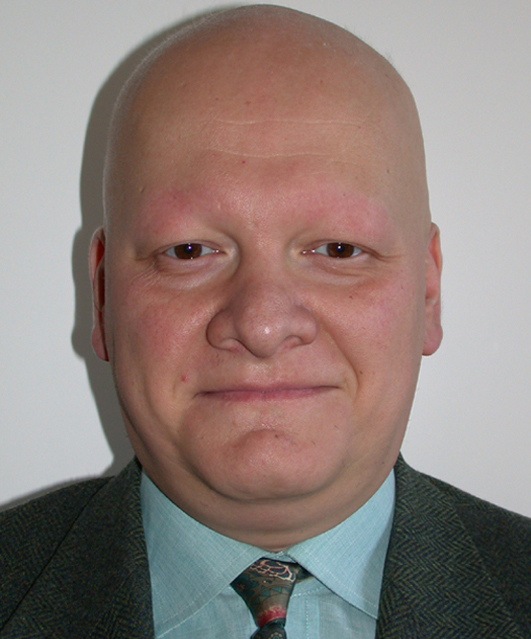 Alessandro Feliciello合作论文数Sezione di Torino, Istituto Nazionale di Fisica Nucleare37B. Giacobbe合作论文数36D. Galli合作论文数36
 Mauro Villa合作论文数Department of Physics and Astronomy "Augusto Righi", University of Bologna36A. Bertin合作论文数36A. Vitale合作论文数36S. Dalla Torre合作论文数36M. Chiosso合作论文数36m alexeev合作论文数35
 Susanna Tessaro合作论文数35
 Volodymyr Tretyak合作论文数35Fulvio Tessarotto合作论文数35Giancarlo Puddu合作论文数35a grasso合作论文数34Franco Bradamante合作论文数34M. P. Bussa合作论文数34S. Serci合作论文数34R. Spighi合作论文数33M. Slunečka合作论文数33P. Salvini合作论文数33S. Costa合作论文数33U. Marconi合作论文数33
 Stefano Levorato合作论文数33
 Antonio Zoccoli合作论文数32v filippini合作论文数32




