Current state-of-the-art 2D and 3D medical image-segmentation methods have achieved remarkable accuracy, yet they usually incur high computational overhead and large model sizes, making deployment on edge devices challenging. To address this issue, we propose LiteFANet, a new lightweight medical image-segmentation model that compresses parameters and reduces computational complexity without noticeably sacrificing segmentation accuracy. Built upon a simplified U-Net backbone, LiteFANet introduces a lightweight multi-branch feature-fusion module for more efficient integration of local and global information. In addition, we design a multi-semantic spatial-channel collaborative attention module that preserves long-range dependency modeling while substantially cutting the computational burden of self-attention. Experiments demonstrate that, even with parameter counts kept below 0.92 M (2D) and 0.59 M (3D), LiteFANet attains outstanding performance on three 2D and 3D benchmark medical segmentation datasets, confirming an excellent trade-off between accuracy and efficiency. Our method is highly practical, and the code can be found at https://github.com/CR818-web/LiteFANet.
TiO2 composite catalysts, with their excellent photocatalytic activity, are superb for treating industrial wastewater pollutants such as RHB. To improve the efficiency of catalyst screening, this paper has developed a machine learning-based predictive model to forecast the degradation efficiency of RHB. The model utilizes 764 data samples to predict the degradation efficiency of RHB. The XGBoost model demonstrated exceptional predictive performance, with an MAE as low as 0.078 %, an RMSE of only 0.118 %, and an R-2 of 0.118 %. Through the analysis of SHAP values and feature importance, it is revealed that the main factors influencing the degradation rate of Rhodamine B are ranked in importance as follows: catalyst characteristics > reaction process > preparation conditions. To validate the practical application value of the model, the degradation rates of F-TiO2, ZnO-TiO2, Co-TiO2, and Ni-TiO2 composite catalysts were compared with the predictions from the XGBoost model. The results show that the error range between the experimental data and the XGBoost model predictions is less than 5 %. The XGBoost model demonstrates high precision and robustness, indicating that machine learning has significant practical application potential and value in predicting the degradation rates of photocatalysts.
As the scale of multi-stage large group decision-making (LGDM) continues to expand, the possibility of low-contribution individuals exhibiting herd behavior also increases, potentially leading to the phenomenon of "fishing in troubled waters." This may obstruct the speed of consensus reaching while generating no valuable opinions, which is a topic worthy of exploration. Considering that humans are easily influenced by interests, the employment of machine intelligence to objectively identify herd behavior is more appropriate. In this context, a herd behavior identification method based on behavioral characteristics clustering from the perspective of human-machine collaboration is herein proposed. First, from the human side, an opinion-social network coevolution model is constructed to simulate the consensus reaching process (CRP) of the expert group. Then, the group is clustered into three subgroups in consideration of behavior that encompasses both opinion changes and trust relationship changes. Based on this, the lowcontribution cluster with a herd behavior pattern can be optimized from the machine side. Through simulation experiments, it is verified that herd behavior management significantly accelerates the consensus-reaching speed under the premise of having minimal impact on the decision-making results. In general terms, this study is the first to propose the concept of herd behavior and provides a solution to manage it from a new perspective, which is suitable for application in multi-stage LGDM scenarios.
In this study, we introduce Light-ESRGAN, a novel cellular image super-resolution reconstruction model utilizing Generative Adversarial Networks (GANs). High-resolution (HR) cellular images are pivotal in pathological research; however, how to caputer critical features such as cell edges during microscopic imaging presents challenges due to hardware limitations and environmental factors. These factors frequently introduce noise and interference. Rapid advancements in deep learning have significantly enhanced the field of image super-resolution reconstruction, demonstrating substantial potential in cellular image processing. Our Light-ESRGAN employs a random degradation modeling process to leverage the GAN architecture for more accurate simulations of real-world degradation. We have also incorporated the Convolutional Block Attention Module (CBAM) into the residual blocks of the generator, thereby enhancing its ability to reconstruct image edges and textures through the fusion of channel and spatial attentions. For the discriminator, a lightweight U-Net structure is adopted, which not only reduces the model's parameter size but also improves its discriminative capacity. Compared to Real-ESRGAN and A-ESRGAN, Light-ESRGAN has reduced model parameters by 34.7% and 66.4%, respectively. It has demonstrated improved performance on publicly available cellular images, increasing the average Peak Signal-to-Noise Ratio (PSNR) by 1.174 dB and 1.992 dB, the Structural Similarity Index (SSIM) by an average of 1.5% and 9.1%, and reducing the Normalized Root Mean Square Error (NRMSE) by an average of 0.005 and 0.009.
Aiming at the complex and changeable environment and the low public participation in emergency decision making, this article proposes a method for the dynamic collaboration of the public and experts in large-scale group emergency decision-making (LSGEDM) based on social media data. First, sentiment analysis is carried out on text data from social media platforms to evaluate the quality of LSGEDM at both the attribute and comprehensive levels. Then, according to the decision-making quality at the attribute level, a method for the dynamic updating of attribute weights is proposed. Next, in the social network environment, the trust relationship between experts is dynamically updated based on the comprehensive quality of decision-making and the distance between the expert and group preferences, and expert weights are calculated by the improved PageRank algorithm. Finally, the effectiveness and superiority of the proposed method are verified via its application to the COVID-19 epidemic in China and a comparative analysis.
Aiming at the challenge of the complex and dynamic environments in emergency decision-making and the difficulty in reaching the consensus of human-machine collaborative large-scale group decision making (LSGDM), this study proposes a human-machine collaboration-driven consensus method for large-scale group decision-making based on reinforcement learning (RL) algorithm, which combines human intelligence and machine intelligence to participate in LSGDM. Firstly, the preference is transformed through an improved hesitant fuzzy linguistic term set (HFLTS) scoring function. Then, experts are clustered and a clustering weight determination method considering the number of experts in the cluster and the credibility of members within each cluster is proposed. Subsequently, using RL algorithm to interact with large-scale group decision environment to participate in the process of large-scale group consensus. Additionally, social media text data is collected and processed to derive attribute weights. Finally, the proposed method is applied to the “Beijing-Tianjin-Hebei heavy rain” case to validate its superiority and reliability.
In the context of large group decision-making (LGDM), the opinions of individuals can influence each other due to their trust relationships. So, trust relationships should be deemed as just as important as evaluation information, and they should be considered jointly throughout the LGDM. This study first transforms the trust relationships between decision-makers into an information type, labeled as compromise information, whose form is the same as the evaluation information. The compromise information is utilized to incorporate trust relationships into various stages of the decision-making process, including clustering, weight determination, consensus reaching, and alternative selection. In the expert clustering and weight determination processes, more criteria and factors are considered by considering the compromise information. In the consensus reaching process, an optimization model is built to adjust the evaluation information of clusters to simultaneously guarantee a substantial increase in the global consensus level and minimize the adjustment cost. The compromise information also serves as a reference to limit the range of the adjusted information. An objective method to determine the consensus threshold is proposed. The proposed method is validated through an application example and comparisons, demonstrating its rationality and effectiveness. Simulation results indicate that the proposed consensus reaching method converges regardless of the number of experts, alternatives, and criteria. The proposed method integrates evaluation information and trust relationships into the LGDM process, thereby improving the rationality and scientificity of the decision results.
CART algorithm is a tree structure used for classification rules in the form of decision tree from a group of unordered and irregular cases. Compared with other classification methods, it has the advantage that a busy large amount of data can is classified yen fully, and then valuable potential information can be found. The method is simple and intuitive, with fast classification speed and high accuracy, which is suitable for large-scale data processing. Moreover, the algorithm process is easy to understand and can though express the importance of attributes praying attributes. The significant sensitivity and unpredictability of house price make it difficult to construct its forecasting model. In this paper, through an example of house price, the influencing factors of house price are deeply analyzed and the existing research results are systematically sorted out, and the decision tree CART detailed is used to build a molybdenum metal price algorithm model and forecast the actual price. By comparing and analyzing the results by using Not principles, the average absolute error is 4.03%, and the accuracy rate of foreforetrend forecasting trend can reach 94.8%, which shows that the algorithm is not only not intuitive and intuitive, but also reasonable and reliable.
The information released by the public on various social media platforms can assist experts in decision-making, thus improving the reliability of the decision-making results and increasing their likelihood of gaining public support. However, the determination of how to fully integrate public opinions with expert opinions and in what aspects to realize the integration is a research topic worthy of attention. Based on this, this paper proposes a multi-subject weighted information fusion method that fully considers public opinion. First, the Bayesian subject model is used to obtain the attribute set of public opinion, and the sentiment analysis technique is used to calculate the reference attribute weights. Second, public opinion is utilized to improve the traditional best–worst method to determine the subjective attribute weights of experts at a faster rate. Third, expert weights are determined using “knowledge” and attribute weights are defined at the aggregate level. Fourth, the cluster weights are determined according to the proximity of the clustered opinions to the public opinions, and the clustered opinions are then summarized to get the overall decision-making information, thus scientifically realizing the synergistic decision-making between the public and experts. Finally, the case of a rainstorm emergency in Henan Province, China, is used to analyze and determine the best plan that matches with the actual situation, and the results are then compared with the findings of existing research to illustrate the feasibility and effectiveness of the proposed method.
PurposeVarious decision opinions comprise the foundation of emergency decision-making. However, decision-makers have difficulty establishing trust relationships within a short time because of decision-making groups being temporary. The paper aims to develop an ambiguity-incorporated opinion formation model that considers ambiguous opinions on relevant risks from a psychological perspective during the consensus reaching process.Design/methodology/approachAddressing the problem of forming a consensus decision-making opinion in an ambiguous environment and relevant risk opinions, different social network structures were first proposed. Subsequently, psychological factors affecting the decision-makers' perception of ambiguous opinions and tolerance for ambiguity under the multi-risk factors were considered. Accordingly, an ambiguity-incorporated opinion formation model was proposed by considering the ambiguity and relevant opinions on multi-risk factors.FindingsA comparison between the ambiguity-incorporated opinion formation model and the F–J model illustrates the superiority of the proposed model. By applying the two types of network structures in the simulation process, the results indicate that the convergence of opinions will be affected by different decision-making network structures.Originality/valueThe research provides a novel opinion formation model incorporating psychological factors and relevant opinions in the emergency decision-making process and provides decision support for practitioners to quantify the influence of ambiguous opinions. The research allows the practitioners to be aware of the influence of different social network structures on opinion formation and avoid inaccurate opinion formation due to unreasonable grouping in emergency decision-making.
For safety applications in intelligent transportation system (ITS), it is essential for vehicles and pedestrians to decode the safety messages from nearby moving vehicles through direct sidelink in the presence of cellular link. This article presents the coverage probability analysis of vehicular safety messages-prioritized cellular vehicle-to-everything (C-V2X) communications. We model the spatial layout of macro base stations (MBSs) and vehicles as a 2-D Poisson point process (PPP) and a Poisson line Cox point process (PLCPP). Since vehicles can be regarded as mobile base stations, we assume that the MBSs and vehicles share the same spectrum. In a similar way, we consider two kinds of users, i.e., planar users and linear users, which are also modeled by a 2-D PPP and a PLCPP, respectively. Using a stochastic geometry tool, we derive the signal-to-interference ratio (SIR)-based coverage probability of four links (i.e., downlink of planar user, sidelink of planar user, downlink of linear user, and sidelink of linear user) according to the vehicle-prioritized association scheme. We assume that the users are required to decode the vehicular safety messages if they are within a certain distance from vehicles. Then, we derive the conditioned coverage probability of four links to study their reliability. In addition, we explore the impacts of several key parameters on the coverage probability and provide some design insights.
In view of the dynamics of the dam safety monitoring data, the sensitivity to time and space, and the nonlinearity, it has been proposed to use the firefly algorithm to search to determine the delay order and the number of hidden layer units and combine them with nonlinear autoregressive algorithms. The algorithms are combined to obtain the FA-NAR algorithm dam deformation prediction model, which is compared with the traditional BP algorithm prediction results, combined with the Xiaolangdi dam deformation monitoring data for prediction, and the dam deformation data predicted by the dynamic neural network have a better convergence effect and a more accurate prediction result. It provides a certain reference basis for perfecting dam safety monitoring.
当前图像去雾算法对人工合成图像域去雾效果与真实图像域去雾效果存在较大差异.针对该问题,提出了一种基于双向域转换网络的自适应单幅图像去雾算法.首先,构建双向域转换网络,实现人工合成有雾图像与真实有雾图像之间的自适应域转换;然后,通过卷积神经网络进行图像去雾.在实验中采用RESIDE人工合成的数据集以及真实环境的有雾图像作为训练集.结果表明,在人工合成图像域和真实图像域所提算法都有较好的处理能力和模型泛化能力,峰值信噪比(PSNR)、结构相似度(SSIM)等指标均有提高.
In this paper, we present the success probability analysis of cooperative cellular vehicle-to-everything (C-V2X) communications, i.e., cellular-relay V2X communications. We model the spatial layout of macro base stations (MBSs) as a 2D Poisson point process (PPP) and roads as a Poisson line process (PLP), with road wireless nodes (including vehicles and roadside units) modeled as a 1D PPP on each road. For a typical source node, we calculate the signal-to-interference ratio (SIR)-based success probability of transmitting a packet to its closest destination node with the assist of its nearest MBS. We take into account three cooperative transmission schemes and derive their expressions of joint success probability in two consecutive phases considering the correlation of road topology and nodes’ locations, respectively. We verify the accuracy of our analytical results through Monte-Carlo simulations. In addition, we explore the impacts of several key parameters on the success probability and discuss the selection of transmission schemes.
当前基于深度学习的垃圾分拣方法存在效率低、处理时间长且对设备计算性能要求高等一系列问题,本文提出一种基于改进型YOLO算法的垃圾分类方法.该方法采用Mosaic数据增强技术降低模型对设备计算性能的依赖,并且通过增多小目标垃圾训练样本扩展数据集;将CSPDarknet-53作为主干特征提取网络,有效解决了推理计算量过大的问题,并且保证了模型的准确率;通过新增多个空间金字塔池化模块(SPP),实现全局特征与局部特征的更好融合,并且有效增强了模型的特征表达能力.由实验结果表明,本文所提方法的垃圾识别平均准确率mAP达到97.72%,处理时间不仅达到工业级检测标准而且显著缩短,对于设备计算性能的要求也大大降低,具有极大的应用价值.
利用自身高速高精度的特点,协作机器人通过模仿人的创造性复杂动作来提高生产效率.当前协作机器人对人动作的模仿主要来自部署人员的长期调试,缺少通用的解决方案,无法快速部署.基于此,提出了一种无锚的基于RepVGG网络的孪生网络协作机器人目标跟踪算法.该算法由孪生网络模块、分类回归模块和机器人执行模块组成.孪生网络模块使用改进的RepVGG网络代替主流的ResNet作为骨干网络用于图片特征的提取,在不损失精度的前提下提高整个网络的运行速度,降低算法对硬件的要求,对专用深度学习芯片更加友好;分类回归模块通过引入中心度分支来提高跟踪框的中心点预测精度;机器人执行模块采用尺度惩罚和宽高比惩罚以平滑跟踪框,保证协作机器人的动作流畅.实验结果表明,平均速率相比替代ResNet骨干网络前提高了14 FPS,实现了实时跟踪的效果.
针对单幅图像低分辨率到高分辨率映射的不适定性,以及特征图通道域和空间域信息利用率低的问题,本文引入基于双注意力机制的对偶学习算法,用于单幅图像超分辨率的重建.算法先对输入图像进行特征提取,较大程度保留特征信息;之后采用双注意力机制计算图像的通道域和空间域的显著性,以提取到更准确有效的深层特征;最后利用对偶学习构建闭环反馈网络,通过对偶关系约束映射空间,以获取最优重建函数.在基准数据集Set5、Set14、BSDS100、Urban100上进行放大2倍和4倍的重建测试实验表明,与其他超分辨率算法相比,本文算法的峰值信噪比和结构相似度都高于其他算法,其视觉效果也比其他算法的图像更清晰.
To compensate for the limitations of existing dedicated short range communications (DSRC), cellular vehicle-to-everything (C-V2X) has been proposed recently, which is also a promising technology for future intelligent transportation systems (ITS). Using stochastic geometry approach, this paper presents the modeling and analysis of success probability in multi-relay cooperative C-V2X networks. The spatial distribution of base stations (BSs) and vehicles in $\mathbb {R}^{2}$ are modeled as a 2D Poisson point process (PPP) and a Poisson line Cox point process (PLCPP), respectively. We focus on the success probability of a source vehicle sending a message to the nearest destination vehicle assisted by the closest BS. Each vehicle is equipped with single antenna whereas each BS is equipped with multiple antennas, which act as independent relays. We consider two decoding schemes, i.e., selection combining (SC) and maximum ratio combing (MRC), and obtain the analytical expressions for joint success probability during two continuous time slots, taking into account the interference correlation (i.e., the spatial correlation of vehicle location). The analytical model is validated using Monte Carlo simulations in MATLAB, and the effects of major parameters on success probability are investigated.
This study proposes a non-threshold consensus model that combines the minimum cost and maximum consensus-increasing for multi-attribute large group decision-making (MALGDM). First, the large-scale experts is classified into several clusters via the combination of the similarities of evaluation information, unit consensus cost, and adjustment willingness. Then, a more sensitive consensus measure method that combines the mean value and variance of the similarities among clusters is presented. Next, a comprehensive identification rule is put forward to determine the cluster with a low consensus level, low unit consensus cost, and high adjustment willingness for information adjustment. An optimization model that combines the minimization of the cost of the cluster and the maximization of the increase of the global consensus level is then constructed to obtain the adjusted information. Also, the adjustment willingness is considered in the constraints to limit the adjustment range. Moreover, instead of the use of a predefined threshold and a maximum number of iterations, a termination index is developed to terminate the consensus reaching process (CRP) to make the CRP more objective and rational. Finally, an application example is presented, and comparison and simulation analyses are performed to validate the feasibility and effectiveness of the proposed model.
 Xuanhua Xu (徐选华)合作论文数Business School, Central South University15
 Hao Wu (吴昊)合作论文数School of Electronic and Information Engineering, Beijing Jiaotong University;State Key Lab of Rail Traffic Control and Safety, Beijing Jiaotong University14
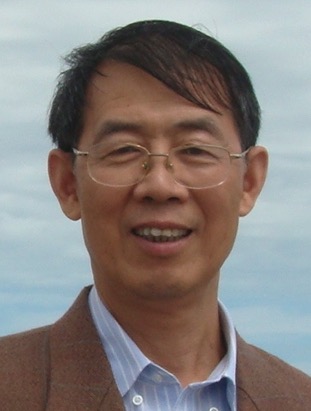 Qunsheng Peng (彭群生)合作论文数Faculty of Science, Zhejiang University10
 XiaoMing Guo (郭小明)合作论文数8
 Yong Zhao (赵勇)合作论文数中国海洋大学数学科学学院5
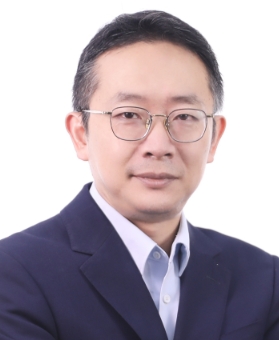 Wei Chen (陈为)合作论文数College of Computer Science and Technology, Zhejiang University;State Key Lab of CAD & CG, Zhejiang University5
 Shiqing Han (韩世清)合作论文数College of Biotechnology and Pharmaceutical Engineering, Nanjing Tech University4
 Jing Cao (曹静)合作论文数School of Public Administration, Xiangtan University4Tang Yongheng (汤永恒)合作论文数3Xiao-Ming GUO (郭晓明)合作论文数3Yuming Wang (王玉铭)合作论文数3
 Mingming Chen (陈明明)合作论文数Key Lab Anim Genet & B, China Agr Univ3
 Ping Wei (韦萍)合作论文数College of Biotechnology and Pharmaceutical Engineering, Nanjing University of Technology3
 Margaret Speed Ricci合作论文数3
 Fan Zhong (钟凡)合作论文数School of Computer Science and Technology, Shandong University3Shuai Wang (王帅)合作论文数3
 Di Qu (瞿涤)合作论文数Department of Medical Microbiology and Parasitology, School of Basic Medical Sciences, Fudan University3Renzheng Huang合作论文数3
 Bernhardt L. Trout合作论文数Department of Chemical Engineering, School of Engineering, Massachusetts Institute of Technology3Manlin Zhang合作论文数2Guang Sun合作论文数2Xiang-yu Zhong合作论文数School of Business, Central South University, Changsha, Hunan 410083, China2Xuanpeng Yin合作论文数Cent South Univ, Sch Business, Changsha 410083, Hunan, Peoples R China2Likang Zheng合作论文数2
 Qingyuan Li合作论文数2Puwei Dai (戴璞微)合作论文数2Peng Guo合作论文数Univ Malaysia Sabah, Kota Kinabalu 88400, Sabah, Malaysia2
 Xiaorong Wang (王小容)合作论文数West China School of Stomatology, Sichuan University2
 Xiaofei Wang (王晓飞)合作论文数School of Computer Science and Technology, College of Intelligence and Computing, Tianjin University2Yuan Liang (梁媛)合作论文数2
 Chunxia Xiao (肖春霞)合作论文数School of Computer Science, Wuhan University2Mingli Zhu (朱明莉)合作论文数2
 Jinsong Li (李劲松)合作论文数College of Biomedical Engineering and Instrument Science, Zhejiang University2
 Jingxian Yu合作论文数2
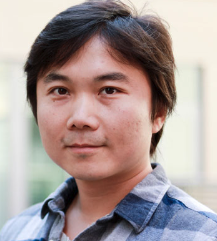 Xiang 'Anthony' Chen (陈翔)合作论文数Department of Electrical and Computer Engineering, Samueli School of Engineering, University of California, Los Angeles;Department of Computer Science, Samueli School of Engineering, University of California, Los Angeles2Tianshu Zhou (周天舒)合作论文数2S Jin合作论文数1H Huang合作论文数1
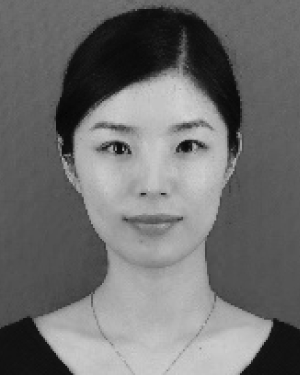 Lingle Pan合作论文数1Yu Tian合作论文数1Linke Liu合作论文数1
 Zong-Bao Yu合作论文数1Wangbin Chen合作论文数1Jin Wang合作论文数1Feng Wang (王锋)合作论文数1
 Chen Jiazhou合作论文数1
 Chen Yang合作论文数1Xiao Wei合作论文数1




