We present comparative theoretical investigation of thermoelectric power and Hall effect in the Hubbard model for correlated metal and Mott insulator (considered as prototype cuprate superconductor) for different concentrations of current carriers. Analysis is performed within standard DMFT approximation. For Mott insulator we consider the typical case of partial filling of the lower Hubbard band (hole doping). We calculate the dependence of thermopower on doping level and determine the critical concentration of carriers corresponding to sign change of thermopower. An anomalous dependence of thermopower on temperature is obtained significantly different from linear temperature dependence typical for the usual metals. The role of disorder scattering is analyzed on qualitative level. The comparison with similar studies of the Hall effect shows, that breaking of electron - hole symmetry leads to the appearance of the relatively large interval of band - fillings (close to the half - filling) where thermopower and Hall effects have different signs. We propose a certain scheme allowing to determine the number of carriers from ARPES data and perform semi - quantitative estimate of both thermopower and Hall coefficient using the usual DFT calculations of electronic spectrum.
We consider a certain class of exactly solvable models, describing spectral properties an electron moving in random in time external field with different statistical characteristics. This electron can be band - like or belong to a quantum well. The known dynamical Keldysh model is generalized for the case of fields with finite correlation time of fluctuations and for finite transfer frequencies of these fluctuations. In all cases we are able to perform the complete summation of all Feynman diagrams of corresponding perturbation series for the Green's function. This can be done either by the reduction of this series to some continuous fraction or by the use of the generalized Ward identity from which we can derive recurrence relations for the Green's function. In the case of a random field with finite transferred frequency there appear the interesting effects of modulation of spectral density and density of states. Dedicated to 130-th anniversary of Pyotr Leonidovich Kapitza.
On the basis of a thermomechanical model of plastic deformation of an elastically compressible isotropically hardening medium, a system of relations is obtained for describing plastic shock waves of finite amplitude, which satisfies the principle of maximum entropy production at the strong discontinuity front. A classification of admissible shock-wave transitions is carried out within the framework of the model of isotropic hardening under the Mises plasticity condition.
We present simple qualitative estimates for the maximal superconducting transition temperature, which may be achieved due to electron-phonon coupling in Eliashberg–McMillan theory. It is shown that in the limit of very strong coupling the upper limit for transition temperature is determined in fact by a combination of atomic constants and density of conduction electrons.
We present theoretical analysis of Hall effect in doped Mott-Hubbard insulator, considered as a prototype of cuprate superconductor. We consider the standard Hubbard model within DMFT approximation. As a typical case we consider the partially filled (hole doping) lower Hubbard band. We calculate the doping dependence of both the Hall coefficient and Hall number and determine the value of carrier concentration, where Hall effect changes its sign. We obtain a significant dependence of Hall effect parameters on temperature. Disorder effects are taken into account in a qualitative way. We also perform a comparison of our theoretical results with some known experiments on doping dependence of Hall number in the normal state of YBCO and Nd-LSCO, demonstrating rather satisfactory agreement of theory and experiment. Thus the doping dependence of Hall effect parameters obtained within Hubbard model can be considered as an alternative to a popular model of the quantum critical point.
Computational technology and software complex are developed for numerical modeling of wave processes in geomedia. Mathematical model of the Poynting–Thomson viscoelastic medium is taken into consideration to describe wave attenuation effect. Applied numerical algorithm is based on the two-cyclic splitting method. Viscous properties are taken into account at the separate stages of splitting. The amplitude-frequency characteristics and images of wavefronts are obtained. Numerical results depict the influence of quality factor on behavior of wavefields.
Dynamic processes in liquid crystals are investigated with the help of simplified mathematical model, describing mechanical, temperature and electrostatic perturbations. On the basis of these equations, the separate subsystem for angular velocity and tangential stress is deduced and analyzed. The problem of perturbing an extended liquid crystal layer by an electric field is considered. It is created by charges on the capacitor plates, periodically located along the layer. The right-hand sides of the second-order equations include bulk forces and moment of forces caused by the electric field action. An algorithm for numerical solution of the subsystem of equations is developed. At the first stage of this algorithm the bulk forces and moment of forces are calculated based on the equations of electrodynamics using the method of straight lines, and at the second stage the distributions of tangential stress, angular velocity and angle of rotation of the liquid crystal molecules are found using the finite-difference scheme “cross”. The algorithm is implemented as a parallel program written in C++ using CUDA technology for computing systems with graphics accelerators.
The finite element method is used to develop a computational algorithm for solving a limited class of problems on the bending of composite plates reinforced with systems of unidirectional high-strength fibers. It is assumed that a neutral plane exists in the region of the plate and behaves similarly to a flexible nondeformable membrane. The displacements of the plate in the longitudinal direction are linear in thickness. In the case of fiber composites with different elastic moduli in tension and compression, the neutral plane, generally speaking, does not coincide with the median plane. The problem of minimizing the elastic energy functional in accordance with the Lagrange variational principle yields a fourth-order elliptic differential equation for the deflection. The bending stiffnesses of the plate included in the coefficients of the equation are calculated with account for the fact that the elastic characteristics of the reinforcing fibers under tension and compression are significantly different. The numerical solution of the equation is obtained via the finite element method with the help of a Bell triangular element. The paper presents computational results for the bending of rectangular laminated plates in which the fibers are laid in different directions.
In the framework of dynamical mean-field theory, we analyze the Hall effect in a doped Mott insulator as a parent cuprate superconductor. We consider the partial filling (hole doping) of the lower Hubbard band and calculate the dependence of the Hall coefficient and Hall number on hole doping, determining the critical concentration for sign change of the Hall coefficient. Significant temperature dependence of the Hall effect is noted. Good agreement is demonstrated with the concentration dependence of the Hall number obtained in experiments in the normal state of YBCO.
We study dynamic processes in liquid crystals using a simplified mathematical model in which a liquid crystal is considered as a finely dispersed continuous medium with rotating particles that has elastic resistance to volume deformation and viscoelastic resistance to the relative rotation of particles. The oscillatory regime of rotational motion described by the Klein–Gordon equation for tangential stress is studied. Moment interactions of particles due to the inhomogeneity of the rotation field are taken into account. The dispersion properties described by a subsystem of two equations for tangential stress and angular velocity are investigated. These equations are used to numerically analyze the rotation field in a liquid crystal under the action of tangential stress caused by the thermal expansion of a metal plate at the boundary. We consider the problem of perturbation of an extended layer of a 5CB liquid crystal by an electric field generated by charges on capacitor plates located periodically along the layer. Singularities of the electric potential at the ends of the capacitor plates are selected explicitly. Some results of computations simulating the Fréedericksz effect in the liquid crystal layer are presented.
Вадим Вениаминович Бражкин (к 60-летию со дня рождения), Арсеев П.И., Виноградов Е.А., Кведер В.В., Литасов К.Д., Муртазаев А.К., Пудалов В.М., Рыжов В.Н., Садовский М.В., Стрельцов С.В., Сурис Р.А., Суровцев Н.В., Щербаков И.А.
Строятся экономичные разностные схемы сквозного счета для решения прямых задач сейсмики в осесимметричной постановке. При распараллеливании алгоритмов, реализующих схемы на многопроцессорных вычислительных системах, применяется метод двуциклического расщепления по пространственным переменным. Одномерные системы уравнений на этапах расщепления решаются на основе явных сеточно-характеристических схем и неявной разностной схемы типа "предиктор-корректор" с контролируемой искусственной диссипацией энергии. Верификация алгоритмов и программ выполнена на точных решениях одномерных задач типа бегущих монохроматических волн. Сравнение результатов показало неоспоримые преимущества схемы с контролируемой диссипацией энергии по точности расчета гладких решений и целесообразность применения явных монотонных схем при расчете разрывов. We construct efficient finite difference shock-capturing schemes for the solution of direct seismic problems in axisymmetric formulation. When parallelizing the algorithms implementing the schemes on multiprocessor computing systems, the two-cyclic splitting method with respect to the spatial variables is used. One-dimensional systems of equations are solved at the stages of splitting on the basis of explicit gridcharacteristic schemes and an implicit finite difference scheme of the “predictor–corrector” type with controllable artificial energy dissipation. The verification of algorithms and programs is fulfilled on the exact solutions of one-dimensional problems describing traveling monochromatic waves. The comparison of the results showed the advantages of the scheme with controllable energy dissipation in terms of the accuracy of computing smooth solutions and the advisability of application of explicit monotone schemes when calculating discontinuities.
It is shown that the famous Allen–Dynes asymptotic limit for the superconducting transition temperature in the very strong coupling region $${{T}_{{\text{c}}}} > \frac{1}{{2\pi }}\sqrt \lambda {{\Omega }_{0}}$$ (where $$\lambda \gg 1$$ is the Eliashberg–McMillan electron–phonon coupling constant and $${{\Omega }_{0}}$$ is the characteristic frequency of phonons) in the antiadiabatic limit of Eliashberg equations $${{\Omega }_{0}}{\text{/}}D \gg 1$$ ( $$D \sim {{E}_{{\text{F}}}}$$ is the half-width of the conduction band and EF is the Fermi energy) is replaced by $${{T}_{{\text{c}}}} > {{(2{{\pi }^{4}})}^{{ - 1/3}}}{{(\lambda D\Omega _{0}^{2})}^{{1/3}}}$$ , with the upper limit $${{T}_{{\text{c}}}} < \frac{2}{{{{\pi }^{2}}}}\lambda D$$ .
We present a brief review of our studies of disorder influence upon Ginzburg-Landau expansion coefficients in Anderson-Hubbard model with attraction in the framework of the generalized DMFT + Σ approximation. A wide range of attractive potentials U is considered from weak coupling limit, where superconductivity is described by BCS model, to the limit of very strong coupling, where superconducting transition is related to the Bose-Einstein condensation of compact Cooper pairs, which are formed at temperatures significantly higher than the superconducting transition temperature, as well as the wide range of disorders from weak to strong, when the system is in the vicinity of Anderson transition. For the same range of parameters we study in detail the temperature behavior of orbital and paramagnetic upper critical field Hc2(T), which demonstrates the anomalies due both to the growth of attractive potential and to the effects of strong disordering.
We present a critical review of recent attempts to introduce a new quantum (‘Planckian’) limit for the temperature dependence of the inelastic scattering rate of electrons in metals. We briefly discuss the main experimental facts and some simple theoretical models explaining the linear-in-temperature growth of resistivity (starting from very low temperatures) in superconducting cuprates and some similar systems. There is no commonly accepted theoretical explanation for such behavior up to now. We also discuss the known quantum limits for electrical conductivity (resistance). It is shown that the universal Planckian limit for the inelastic relaxation rate proposed in some papers is a kind of delusion related to a certain procedure to represent the experimental data.
physical-mathematical sciences, professor, corresponding member of the Russian Academy of Sciences (RAS), Nikolay Nikolaevich Rosanov, an outstanding world-renowned scientist in the field of laser physics and nonlinear optics. N N Rosanov was born on December 26, 1940 into the family of hydraulic engineers Nikolay Semenovich and Marianna Vladimirovna in Leningrad, where they stayed throughout the blockade. In 1948, Nikolay went to School No. 181 (before the revolution, it was gymnasium No. 3, to which S Ya Marshak, D S Merezhkovskii, D I Pisarev, and I I Sollertinskii would go). In his latter school days, Nikolay took part in a math club at the Palace of Pioneers on Nevskii Prospect. In his school days, he found the area of an ellipse (without using integrals) by comparing the areas of two cross sections of a cylinder cut obliquely to the axis and orthogonally. He distinguished himself at the city's physics & math olympics. In 1958, NNRosanov entered the Physics Department of Leningrad State University with a specialization in the Department of Theoretical Physics. He was lucky to have good teachersÐhe attended academician V A Fock's lectures on quantum mechanics and V I Smirnov's on mathematics, and seminars run by O A Ladyzhenskaya, later an academician at the USSR Academy of Sciences. In 1963, N N Rosanov was employed at the S I Vavilov State Optical Institute (SOI), where the first Russian laser had been put into operation some time before, in June 1961. Since 2019, he has been working at A F Ioffe Physical-Technical Institute of RAS. N N Rosanov did his first scientific work under the guidance of V A Fock's disciple A V Tulub, who suggested that he explain the experiment by American authors on the Zeeman effect in a gas laser. The results were submitted by academician AALebedev for publication in the journal Doklady Akademii Nauk SSSR (Soviet Physics ë Doklady in English translation that time) in 1965. Studies of the theory of gas lasers continued. N N Rosanov managed to énd an original solution to the important problem of frequency locking in laser gyroscopes, which ruled out the possibility of a traditional determination of angular velocity: it was proposed that the dependence of phase difference of counter waves on the angular velocity of gyroscope rotation be used for this purpose in the entrapment region. In coauthorship with G N Vinokurov, he developed a theory of transverse modes interaction in a gas laser. N N Rosanov is one of the pioneers of the theory of nonlinear laser dynamics. In the 1970s, long before the frequently cited paper by Lang and Kobayashi appeared, N N Rosanov derived the dynamic equations of a solid-state laser with frequency dispersion, including a laser setup with an additional mirror to show that the delay of optical feedback is one of the laser pulsation mechanisms. Another important problem solved by N N Rosanov together with V A Smirnov was a theory of small-scale self-focusing in multielement laser systems. N N Rosanov supervised the theoretical part of the research, performed at SOI, on a number of applied projects related, in particular, to the development of high-power gas lasers and to the propagation of their radiation through the atmosphere, including the use of adaptive optics. Among the more `academic' results N N Rosanov obtained were new relativistic optical effects in a medium with a nonuniform velocity distribution, as well as a rigorous proof of the impossibility of ideal invisibility even in the case of monochromatic radiation. A theory of particles, waves, and solitons in dynamic resonators with oscillating walls was also formulated. N N Rosanov carried out pioneering work on nonlinear optical effects in an electron-positron vacuumÐa subject that has recently become exceedingly topical owing to achievements in laser physics and technology. An important field initiated and developed by N N Rosanov concerns bistability in spatially distributed systems. For Uspekhi Fizicheskikh Nauk 191 (4) 445 ± 446 (2021) Translated by M V Tsaplina PERSONALIA PACS number: 01.60.+q
 E. Z. Kuchinskii合作论文数Institute for Electrophysics;Russian Academy of Sciences;Institute for Electrophysics, Russian Academy of Sciences66
 Igor Aleksandrovich Nekrasov合作论文数Institute for Electrophysics, Russian Academy of Sciences47
 Oxana V. Sadovskaya合作论文数35N. A. Kuleeva合作论文数17
 Z. V. Pchelkina合作论文数Ural Division, Russian Academy of Sciences Institute of Metal Physics12
 N. S. Pavlov合作论文数11Aleksandr F Andreev合作论文数10
 Gennadii Andreevich Mesyats合作论文数Lebedev Physical Institute, Russian Academy of Sciences10
 Lev Pitaevskii合作论文数7A.I. Posazhennikova合作论文数6Иван Александрович Щербаков合作论文数6
 Boris Goshchitskii合作论文数6Petr I Arseev合作论文数Physical Institute of RAS6
 Stanislav Vladislavovich Verkhovskii合作论文数6Aleksandr F. Andreev合作论文数5M. A. Érkabaev合作论文数5BM Koval'chuk合作论文数5
 Vladimir Fortov合作论文数Russian Academy of Sciences5
 V.V. Ustinov合作论文数Institute of Metal Physics, the USSR Academy of Sciences5A. V. Gurevich合作论文数Lebedev Physical Institute, Russian Academy of Sciences5Vladimir V Serikov合作论文数5
 Robert A Suris合作论文数Institute of Radioengineering & Electronics, RAS5
 E. E. Kokorina合作论文数5о в садовская合作论文数4Александр Юрьевич Румянцев合作论文数4юрий моисеевич каган合作论文数4юрий васильевич копаев合作论文数4E. A. Efimov合作论文数4I. V. Smolekho合作论文数4Oleg N Krokhin合作论文数4
 Lev Bulaevskii合作论文数Los Alamos National Laboratory;IIP4
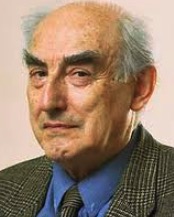 Vitaly L. Ginzburg合作论文数P.N.Lebedev Physical Institute, Russian Academy of Sciences4
 Oleg Vladimirovich Rudenko合作论文数Department of Acoustics, Lomonosov Moscow State University4G. M. Eliashberg合作论文数4B.A. Aleksashin合作论文数4
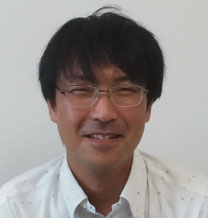 Akira Sekiyama (関山明)合作论文数Division of Materials Physics, Graduate School of Engineering Science, Osaka University;Department of Materials Engineering Science, Graduate School of Engineering Science, Osaka University4Yu. I. Zhdanov合作论文数4Евгений Павлович Велихов合作论文数3V M Schastlivtsev合作论文数3V.A. Chereshnev合作论文数3Владимир Васильевич Устинов合作论文数3юрий васильевич гуляев合作论文数3Lv Keldysh合作论文数3VL KOZHEVNIKOV合作论文数3M. Medvedev合作论文数3Igor Petrakov合作论文数3
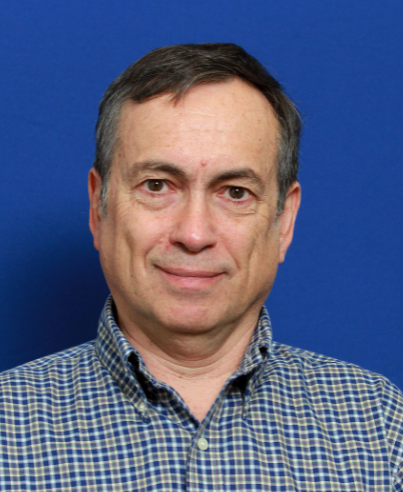 Alexander V. Gurevich合作论文数Department of Physics, Old Dominion University3
 Alexander A. Kordyuk合作论文数IMP Kyiv3
 Jochen Geck合作论文数IFW Dresden, Institute for Solid State Research3




