the field of atomic physics, one of the creators of the modern theory of atomic collisions, Honored Scientist of Russia, Professor Emeritus at St. Petersburg University, died on 15 November 2010. Yu N Demkov was born on 12 April 1926 in Leningrad into the family of engineer-architects designing many public buildings in Leningrad and other cities in the USSR. He graduated magna cum laude from high school in 1942 in the city of Yaroslavl' during the evacuation and entered the Moscow Institute of Steel in 1943. In 1944, when he was 18 years old, Y N Demkov was drafted into the acting army and served as a soldier in the First Ukrainian Front during World War II. In September 1945 he was demobilized, went back to Leningrad, and joined the sophomore class of the Department of Physics at Leningrad State University, where he worked all his life. After graduating with summa cum laude from Leningrad State University in 1949, YuNDemkov joined as an assistant the Chair of Theoretical Physics headed at that time by Academician V A Fock. His graduation thesis, ``Charge exchange in atomic collisions'', proved to be quite relevant and determined the main direction of his research for many years. Yurii Nikolaevich's PhD thesis was devoted to the variation principles in collision theory, which were closely related to the investigations of V A Fock. He defended a PhD thesis in 1954 and later wrote amonograph on the same topic, which was then translated into English and received a university prize in 1962. Yu N Demkov defended his doctoral dissertation, ``Slow collisions of atoms and molecules'', in 1967 and became a full professor in 1970. Yurii Nikolaevich worked successively as an assistant, senior researcher, associate professor, head of the laboratory of the theory of atomic collisions, and professor. From 1975 to 1991, he was the head of the Chair of QuantumMechanics. The work of Yu N Demkov on the collision theory of atoms and ions brought him scientific authority in theoretical physics in our country and later worldwide prominence. He obtained pioneering results in the theories of charge exchange, electron detachment, and other processes. The concepts of the `Demkov model' and `Demkov coupling' are well known in modern atomic physics. The second set of results obtained by Yu N Demkov concerns the problems of symmetry in atomic physics, in particular, when applied to the Fock symmetry of the hydrogen atom and harmonic oscillator. The most important among these results was the explanation of the internal symmetry of the Mendeleev Periodic Table and the so-called (n l, n) energy-level occupation rule. Here, he managed to combine in whole the work of Maxwell on the so-called `fish eye', of Mendeleev, Bohr, and Fock on the hydrogen atom symmetry. Yurii Nikolaevich also obtained, together with G F Drukarev and V N Ostrovskii, fundamental results in the development of the method of zero-radius potentials in atomic physics. The results of these studies are presented in the monograph Method of Zero-Radius Potentials by Yu N Demkov and V N Ostrovskii [(Leningrad: Leningrad State University, 1975), which was translated into English (Plenum Press, 1988)] and awarded a University First-Class Prize. Yu N Demkov's significant achievement was the discovery of a new class of problems in collision theory, so-called harmonic scattering, and the development (together with I V Komarov, A P Shcherbakov, and D I Abramov) of the original theory of this scattering using conformal mappings. This work was awarded an Academician V A Fock Prize of the Russian Academy of Sciences. Other work of Demkov includes original and unexpected results obtained in neutrino focusing studies; polynomial solutions of the problem of the Uspekhi Fizicheskikh Nauk 181 (5) 565 ± 566 (2011) DOI: 10.3367/UFNr.0181.201105l.0565 Translated by M N Sapozhnikov PERSONALIA PACS number: 01.60.+q
The 4 s -1 s two-quantum decay in the hydrogen atom is calculated in the framework of quantum electrodynamics with allowance for cascades. It is shown that the pure two-photon contribution cannot be separated from the contribution of cascade processes. Interference between the transitions of these two types is comparable in magnitude with the pure two-photon contribution. The separation of pure two-photon contributions is discussed recently in connection with the role of two-photon decays in the separation of radiation from matter in the early Universe.
General expressions for the probability of all strongly forbidden magnetic-dipole transitions between states njl and n′jl in the hydrogen atom and light hydrogen-like ions are derived in the lowest order in the parameter (α Z ) in the form W n′jl;njl ( M l) = D n′n lj αm e ( αZ ) 10 (in relativistic units), where m e is the electron mass, α is the fine-structure constant, Z is the nuclear charge, and the constants D n′n lj are presented in an analytical form. Using these expressions, the dependence of the degree of parity violation on the principal quantum numbers n and n ′ of the lower and upper states in the ns 1/2 - n′s 1/2 and np 1/2 - n′p 1/2 M1 transitions is systematically analyzed. The results obtained can be used in designing experiments on parity violation in the hydrogen atom.
Explicit formulasfor strongly forbidden magnetic-dipole transitiions between states njl and n′jl in the hydrogen atom and light hydrogen-like ions are derived. The expressions for transition probabilities are presented in the form W n′jl; njl (M1) = D n′n lj αm e (αZ)10 (in relativistic units), where m e is the electron mass, α is the fine-structure constant, and Z is the nuclear charge; the constants D n′n lj are presented in an analytical form. Before now, only the D 21 01/2 coefficient corresponding to the 1s 1/2–2s 1/2 transition was known in explicit form. The results obtained can be used in designing an experiment on parity violation in the hydrogen atom.
The probabilities of single-photon 2s–1s transition in hydrogen (H) and antihydrogen (\(\bar H\)) atoms in an external electric field are calculated. These quantities are different for H and \(\bar H\) due to the presence of a T odd term linearly dependent on the electric field strength. The relative difference between the probabilities of the considered process for hydrogen and antihydrogen is given, and the conditions under which this difference can be measured are discussed.
The lowest order corrections, considering the electron-electron interaction, to the hyperfine structure of the energy levels of the Li-, B-, and N-like 83 209 BI ions in the 2p 3/2 state are calculated. The contributions of the magnetic dipole moment, electric quadrupole moment, and magnetic octupole moment are taken into account. The dynamic proton model is used, in which an electron interacts with a valence proton of a nucleus via photon exchange. In this model, the distribution of the electric and magnetic moments in a nucleus is taken into account automatically.
Exact quantum-electrodynamic calculations of the interelectron interaction corrections are performed for the 1s 1/22s 1/2 1 S 0, 1s 1/22p 1/2 3 P 0, and 1s 1/22s 1/2 3 S 1 configurations in He-like ions and for the (1s 1/2)22s 1/2 and (1s 1/2)22p 1/2 configurations in Li-like ions for all charges of nuclei 10≤Z≤92. The calculations are performed in the Coulomb calibration. The Coulomb-Coulomb and the Coulomb-Breit parts are calculated exactly, and the Breit-Breit part of the correction is calculated by neglecting the retardation. The calculations are the most exact of those available by now.
We derive a closed relativistic expression that makes it possible to calculate the self-energy of multiply charged ions in an external Coulomb field without resorting to a series expansion in powers of αZ . The expression contains the generalized Bethe logarithm for tightly bound electrons. We do numerical calculations of the self-energy for the 1 s 1/2 -electrons of multiply charged hydrogenlike ions. The proposed method allows for self-energy calculations for any values of the nuclear charge Z .
The opposite-parity spin-rotation levels of PbF and HgF molecules are shown to cross over in magnetic field of about 10(3) G. This results in enhancing a number of P-odd effects caused by the anapole moment of a heavy nucleus.
УСПЕХИ ФИЗИЧЕСКИХ НАУК PERSONALIA 53(092) ПАМЯТИ МИХАИЛА ГРИГОРЬЕВИЧА ВЕСЕЛОВА 4 ноября 1987 г. на 81 м году жизни скончался известный советский физик теоре тик, доктор физико математических наук, заслуженный деятель науки РСФСР Михаил Григорьевич Веселов.М. Г. Веселов родился 20 ноября 1906 г. в деревне Поречье Капшинского района Ленинградской области.Сын крестьянина, он упорным трудом и учебой проложил себе путь в науку.Деятельность М. Г. Веселова целиком связана с Ленинградским государ ственным университетом, который он окончил в 1932 г. и где он занялся научной рабо той под руководством крупнейшего физика теоретика, внесшего основополагающий вклад в развитие современной квантовой теории, Владимира Александровича Фока.Совместная работа с В. А. Фоком, одним из первых учеников и ближайших сотрудников которого являлся Михаил Григорьевич, определила всю его научную судьбу.Момент, в который вступил в науку М. Г. Веселов, был характерен тем, что на повестке дня стояла разработка приближенных методов расчета на основе уже извест ных общих законов и уравнений квантовой механики различных конкретных объектов таких, как атомы, молекулы.Эта задача имела, как указывал впоследствии В. А. Фок, принципиальный характер, поскольку точные решения волнового уравнения Шрёдингера можно было получить лишь для самых простейших систем.Основой большинства при ближенных методов теории систем многих частиц в квантовой механике стал разрабо танный У. Хартри и В. А. Фоком в 1932-1934 гг.метод самосогласованного поля.Однако сразу же после его создания встал вопрос и о его усовершенствовании пли, по современной терминологии, об учете корреляции в движении частиц.Одной из первых работ, рассмотревших электронную корреляцию в атомах, стала совместная работа В. А. Фока, М. Г. Веселова и ученицы В. А. Фока М. И. Петрашень, посвященная неполному разделению переменных в теории многоэлектронных систем
The effects due to the weak interaction between the conduction electrons and the lattice nuclei in external magnetic field are considered. It is shown that the continuous current arises under the influence of the rotating magnetic field.
 Klimchitskaya Galina L.合作论文数Pulkovo Observatory of The Russian Academy of Sciences/Peter The Great St.Petersburg Polytechnic University8
 Victor G. Gorshkov合作论文数Russian Academy of Sciences, Petersburg Nuclear Physics Institute7M. Melibaev合作论文数4ю в новожилов合作论文数3
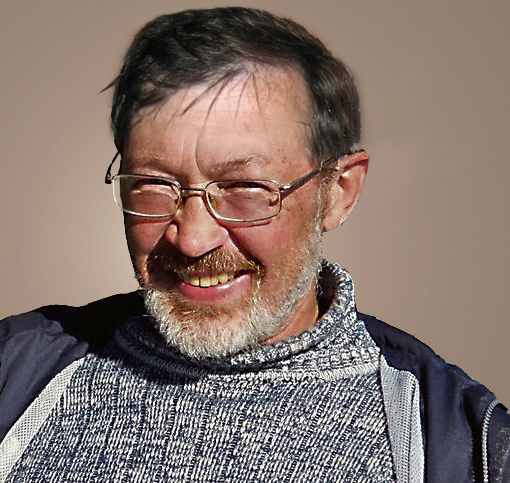 Mikhail G. Kozlov合作论文数Department of Physics, University of Nevada, Reno;Saint Petersburg Electrotechnical University;Neutron Research Department, Petersburg Nuclear Physics Institute3K. V. Koshelev合作论文数2Evgeniĭ E. Nikitin合作论文数2в и очкур合作论文数2Yu. Yu. Dmitriev合作论文数2Igor V. Abarenkov合作论文数2
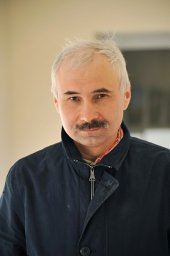 Andrei Puchkov合作论文数Physical Faculty Peterhof, St. Petersburg State University2Iosif B Khriplovich合作论文数2Д. А. Варшалович合作论文数2Ulyana I. Safronova合作论文数2Yu. V. Novozhilov合作论文数2A. O. Mitrushchenkov合作论文数2евгений борисович александров合作论文数1I. A. Goidenko合作论文数1
 Vasily Sharipov合作论文数1Vl Varentsov合作论文数1Ui Safronova合作论文数1MG ARESHIDZE合作论文数1d a solov ev合作论文数1Mitrushchenkov Alexander O合作论文数1
 Dmitry Solovyev合作论文数1Vadim V. Afrosimov合作论文数1Vladimir M. Shabaev合作论文数1Yu. N. Demkov合作论文数1
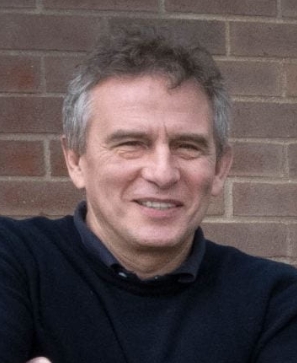 Anatoly Frenkel合作论文数Department of Materials Science and Chemical Engineering, College of Engineering and Applied Sciences, Stony Brook University;Department of Chemistry, College of Arts & Sciences, Stony Brook University;Chemistry Division, Brookhaven National Laboratory1Victor Ezhov合作论文数1A. N. Moskalev合作论文数1
 O. Yu. Andreev合作论文数1R.L. Boada合作论文数1Evgenii B Aleksandrov合作论文数1Gunter Plunien合作论文数1a d gurchumeliya合作论文数1M. N. Adamov合作论文数1M. G. Veselov合作论文数1




