We suggest and describe the protocol of measurements providing completely probabilistic representation of all parameters of polarization biphoton qutrits, i.e. providing explicit expressions for all parameters of qutrits via the probabilities of getting those or other results in measurements.
Active synchronized antenna arrays generating ultra-wideband radiation with an electric field strength of about 1 V/m at a distance of several hundred kilometers have been studied. They are designed to study the passage of ultra-wideband signals in the surface layer of the atmosphere and through the ionosphere. Synchronous antenna arrays with four and nine radiating modules have been created. Their radiation has a symmetrical radiation pattern along the x and y axes with a pulse duration at half-height of about 100 ps. They have a pulse energy potential (E × R) of about 60 and 150 kV, with a gross weight of 50 and 100 kg, respectively. Such characteristics allow these arrays to be placed on air carriers. The option of using air balloons under irradiation in the surface layer of the atmosphere and the option of placing meteorological rockets under irradiation from a height of 300 km to the Earth’s surface is considered.
Today, it can be considered established that the thermal scheme of the human body consists of a "core", which includes the brain, internal organs of the chest and abdominal cavities, and a "shell" consisting of skin, hypodermic matrices, and superficial muscles. The goal of the work is to design a device for slow noncontact defrosting of a limb that has received a cold injury and previously was thermally insulated from the external environment. Measurements were made of the temperature of the muscle tissue of a biological object frostbitten under experimental conditions that was previously placed in a heat-insulating material with subsequent noncontact heating with low-power microwaves. Since the heat-insulating material is ratio transparent for the microwave range, the heating effect will act directly on the sample under study.
Field experiments were carried out to measure ultrawideband subnanosecond radiation pulses in the time domain, taking into account the influence of reflection from the Earth’s surface. The results of these experiments make it possible to prepare experiments in the free atmosphere on real paths of 10 km or more in length. A technical solution for the use of a single-channel ultrawideband emitter with a pulse duration of about 50 ps, which is optimal in terms of weight and size characteristics and lifting to heights of up to 1000 m, is substantiated. A specially designed measuring antenna in the form of a passive antenna array with high sensitivity is used as a receiving measuring channel.
The article is devoted to a study to identify factors that influence the results of a medical examination on the state of intoxication of sober drivers. A continuous study was conducted of 867 medical examination reports drawn up during the year in relation to sober drivers in one of the offices of the medical examination department for intoxication in Moscow. The socio-demographic characteristics of doctors and sober drivers examined by them were studied. Statistically significant differences were found between the conclusions about the presence or absence of intoxication and its severity among sober drivers, depending on the gender of the doctor who conducted the examination, as well as the duration of the general medical experience. An analysis was made of the relationship between the identified clinical signs of intoxication in sober drivers and the conclusions made about the severity of intoxication. The main possible causes of clinical signs of intoxication in relation to sober drivers are considered. The results of the study indicate the existence of a problem of subjective assessment by doctors of those examined as part of a medical examination for the state of intoxication.
The results of the first direct experiments on the passage of pulses of ultra-wideband radiation of subnanosecond duration in the Earth’s atmosphere at a distance of more than 10 km are presented. In contrast to the work calculated, the preservation of the amplitude–time shape of the pulses in the process of increasing the distance is shown. The establishment of this fact is of decisive importance in the practical application of ultra-wideband pulses in new technological developments.
A radiating and measuring complex was created and tested in preliminary experiments to study the deformation of ultrawideband pulses in the atmosphere and ionosphere of the Earth. Ultrawideband modules combined into synchronized active antenna arrays, together with the developed high-sensitivity quasi-horn antenna, make it possible to conduct research at distances of more than tens of kilometers and obtain new data for various practical applications.
The reduced density matrix rho(r) (x,x') of the transverse biphoton state beyond the near zone is found to be real on and only on diagonals in the plane of the photon's transverse coordinates (x,x'). This remarkable feature is found to occur at any distances of photon propagation with diffraction spreading completely taken into account. The functions of the reduced density matrix at two orthogonal diagonals, rho(r) (x,x) and rho(r) (x,-x), are considered as the only two complementary single-particle distributions generated by the reduced density matrix. The ratio of widths of these two distributions is interpreted as the new entanglement parameter R-diag which is found to be very close to and completely compatible with the Schmidt entanglement parameter K.
Field experiments have been carried out to measure ultra-wide-band subnanosecond radiation pulses in the time domain, taking into account the influence of reflection from the Earth's surface. Received results allow us to prepare experiments in a free atmosphere on real ranges of 10 kilometers or more in length. The optimal technical solution in terms of weight and size characteristics and elevation to heights up to 1000 meters is the using a single-channel ultra-wideband radiator with a pulse duration of about 50 ps and a specially designed measuring antenna in the form of a passive antenna array with high sensitivity.
As known, the degree of entanglement of biphoton states with respect to the transverse components of photon wave vectors (momenta) or coordinates can be characterized either by the parameter K associated with the Schmidt decompositions, or by the parameter R, defined as the ratio of the widths of the unconditional and conditional single-particle distributions of biphoton states. As entanglement is a fundamental characteristics of a state, it must be independent of a choice of its different representations, i.e. its entanglement parameters must be identical in the coordinate and momentum representations. Likewise, entanglement itself and its characterization parameters must remain constant along the photon propagation length. It's known, however, that only the parameter K obeys these requirements, whereas the parameter R in the coordinate representation deviates from K beyond the near zone and, thus, becomes inapplicable as a measure of the degree of entablement. But, as shown below, there is a way of saving the parameter R by means of modifying its definition in such a way that the modified parameter R turns out to be as good as the parameter K both in the momentum and coordinate representations, as well as in the near and far zones and everywhere between them. We will discuss also possible ways of measuring this newly defined parameter R experimentally.
Schmidt-decomposition formalism is proposed to be used for evaluation of the degree of quadrature entanglement in two-mode multiphoton states. A series of examples are considered, including analysis of the quadrature entanglement of the two-mode squeezed vacuum. Single-mode and two-mode coherent states with stochastic phases are analyzed by the same method though in this case features of quadrature states are interpreted in terms of decoherence rather than entanglement.
Density matrices of pure multiphoton Fock polarization states and of arising from them reduced density matrices of mixed states are expressed in similar ways in terms of matrices of correlators defined as averaged products of equal numbers of creation and annihilation operators. Degree of entanglement of considered states is evaluated for various combinations of parameters of states and character of their reduction.
A calculation model of a plane aperture with nonuniform asynchronous excitation is constructed. The calculated results are in good agreement with the experimental data for a prototype of an ultrawideband emitter. Energy conversion efficiency in the emitter path from the power supply source of the antenna-feeder system to the radiation energy in the main lobe of the radiation pattern is estimated. Limiting values of such an efficiency and specific weight parameters of the emitter are also determined.
The universal period-tripling system has been discovered in various astronomical, geophysical, and biological phenomena in the range of periods from 1.64 billion years to 50 years; we then confirmed its existence on a scale of up to 10 –15 seconds based on examples of human memory and hearing, several technical and medical devices, and, finally, in the settings of human and animal vision. This unprecedented multiscale discrete spectrum of periods has been studied thus far exclusively on the basis of literature data; as a result, it has been shown that many systems of a diverse nature, including the most common ones, operate against the background of a dimensionless spectrum of ~3 k /2 m periods. This is close to the spectrum of a stochastic attractor, which gives a Pythagorean musical octave. We confirm the result of this phenomenological generalization experimentally by testing various generators of electrical oscillations.
By using the formalism of photon creation operators, we present the simplest description of the effect of quantum teleportation and describe its closest classical analog.
A brief overview of entanglement characterization is given in the cases of biphoton and multiphoton polarization states. The importance of the approach is stressed based on the Schmidt decomposition. This method is applied to the characterization of the quadrature entanglement in two-mode multiphoton states. The fruitfulness of this approach is illustrated by a series of examples.
The concept of the Lorentz-invariant mass of a group of particles is shown to be applicable to biphoton states formed in the process of spontaneous parametric down conversion.The conditions are found when the Lorentz-invariant mass is related directly with (proportional to) the Schmidt parameter K ≫ 1 determining a high degree of entanglement of a biphoton state with respect to transverse wave vectors of emitted photons.
The well-known Hong-Ou-Mandel effect is revisited. Two physical reasons are discussed for the effect to be less pronounced or even to disappear: differing polarizations of photons coming to the beamsplitter and delay time of photons in one of two channels. For the latter we use the concepts of biphoton frequency and temporal wave functions depending, correspondingly, on two frequency continuous variables of photons and on two time variables t(1) and t(2) interpreted as the arrival times of photons to the beamsplitter. Explicit expressions are found for the probability densities and total probabilities for photon pairs to be split between two channels after the beamsplitter and to be unsplit, when two photons appear together in one of two channels.
We consider regimes of spontaneous parametric down-conversion, both noncollinear and nondegenerate in frequencies. Parameters characterizing degrees of noncollinearity and of nondegeneracy are defined, and they are shown to be not independent of each other. At a given degree of nondegeneracy the emitted photons are shown to propagate along two different cones, the opening angles of which are determined by the degree of nondegeneracy. Based on this, the degree of nondegeneracy can be controlled by means of the angular selection of photons, e.g., with the help of appropriately installed slits. For such selected photons their wave functions are found depending on two frequencies or on two temporal variables. Interference effects arising in such states are tested by analysis of the Hong-Ou-Mandel--type scheme with a varying delay time in one of two channels and with photons from two channels sent to the beamsplitter. The temporal pictures arising after the beamsplitter are found to demonstrate extremely strong interference, exhibiting itself in formation of finite-size temporal combs filled with quantum beats. Parameters of combs depend on the degree of nondegeneracy, and the physical reasons for this dependence are clarified.
Single-particle and coincidence distributions of photons are analyzed for the noncollinear frequency-degenerate type-I regime of Spontaneous Parametric Down-Conversion. Noncollinearity itself is shown to provide a new mechanism of strong broadening of the single-particle distributions in Cartesian components of the photon's transverse wave vectors. Related to this, the degree of entanglement appears to be very high and, in fact, this is the same enormous resource of azimuthal entanglement which was found to occur in the formalism of spherical angles used for characterization of photon wave vectors (Phys. Rev. A, 93, 033830, 2016). In Cartesian variables this phenomenon manifests itself as a strong broadening and a very unusual and peculiar shape of the arising single-particle distribution curves. In theory, the key reason for these effects is the reduction of the total wave function of two photons over one of two orthogonal degrees of freedom. In the suggested and discussed experimental scheme this means that all photons of the emission cone have to be taken into account rather than only photons propagating in one given plane which is a common practice in many experiments.
 Maxim A. Efremov合作论文数Institute of Quantum Physics, Ulm University24
 Sergei Kulik合作论文数Department of Physics, Moscow State University15
 P. A. Volkov合作论文数12
 A.E. Kazakov合作论文数11
 Koryun B. Oganesyan合作论文数Yerevan Physics Institute11N. P. Poluektov合作论文数10
 S. V. Vintskevich合作论文数Technol Innovat Inst9G. N. Chuev合作论文数9
 O. V. Tikhonova合作论文数8Vladimir E Ostashev合作论文数8A. M. Movsesian合作论文数7JK McIver合作论文数7E. F. Lebedev合作论文数7
 Joseph Henry Eberly合作论文数The Institute of Optics, Hajim School of Engineering & Applied Sciences, University of Rochester7
 Valeriy P. Yakovlev合作论文数7
 Wolfgang P. Schleich合作论文数Institut für Quantenphysik, Universität Ulm7A I Andryushin合作论文数6
 Julia M Mikhailova合作论文数Department of Mechanical and Aerospace Engineering, School of Engineering and Applied Science, Princeton University6V.P. Pustovetov合作论文数6
 Stanislav Straupe合作论文数Faculty of Physics, Moscow State University6A. V. Ul’Yanov合作论文数6Yu. N. Vavilov合作论文数6r v karapetyan合作论文数5D. A. Grigoriev合作论文数5
 Ekaterina Moreva合作论文数Department of Quantum Optics, Istituto Nazionale di Ricerca Metrologica5
 Victor Victorovich Apollonov合作论文数5Yu. V. Rostovtsev合作论文数5
 Alexei Shurupov合作论文数5V. P. Makarov合作论文数5Yu. A. Trubkin合作论文数5a i artemiev合作论文数4M. V. Efanov合作论文数4Yu. M. Mikhailova合作论文数4
 Nikolai Miklin合作论文数Int Ctr Theory Quantum Technol ICTQT, Univ Gdansk4
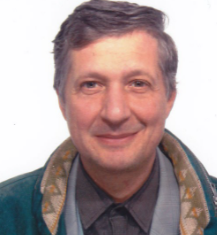 Marco Genovese合作论文数Istituto Nazionale di Ricerca Metrologica4
 Nino Russo合作论文数Dipartimento di Chimica e Tecnologie Chimiche, University of Calabria;Institute of Catalysis, Bulgarian Academy of Sciences;Department of Biological Applications and Technologies, University of Ioannina;Institute of Theoretical and Experimental Biophysics, Russian Academy of Sciences4
 Chi-Kwong Law合作论文数Department of Physics, The Chinese University of Hong Kong4
 Marco Gramegna合作论文数Istituto Elettrotecnico Nazionale4
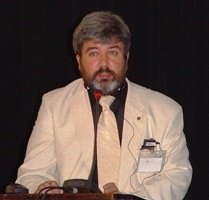 A.M. Prokhorov合作论文数P.N. Lebedev Physical Institute, the Academy of Sciences of the USSR4
 Kam Wai Clifford Chan合作论文数Department of Chemical Pathology, The Chinese University of Hong Kong4Justin Peatross合作论文数Dept. of Physics, Brigham Young University4
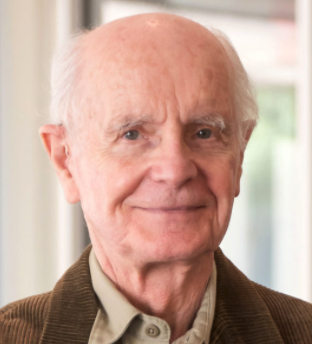 Marlan Scully (司嘉理)合作论文数Department of Physics and Astronomy, Texas A&M University;Princeton University4Dmitri Bitouk合作论文数4
 Misha (Mikhail) Ivanov合作论文数Department of Physics, Faculty of Natural Sciences, Imperial College London4
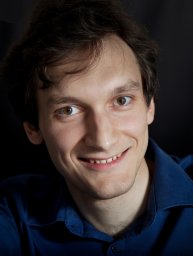 Katamadze Konstantin G.合作论文数Moscow State University4S. V. Petropavlovsky合作论文数3Ai Artemyev合作论文数3AE KAZAKOV合作论文数3A. A. Sysoeva合作论文数3




