Many known 5-HT7 ligands contain either a serotonin-like or an arylpiperazine structure that, in published SAR studies, are generally supposed to bind the same receptor pocket. Conversely, we explored the hypothesis that two such moieties can co-exist in the same ligand, binding to different pockets. We thus designed and synthesized a set of compounds including both a 5-hydroxyindol-3-ylethyl and a 1-arylpiperazine moieties connected by a short linker. The compounds were tested for their affinity for human 5-HT7 serotonin receptor. We further prepared a novel series of 5-HT7 ligands, where the 5-hydroxyindol-3-ylethyl moiety was bioisosterically replaced by a 3-hydroxyanilinoalkyl one. Among the newly synthesized compounds, potent ligands at the 5-HT7 receptor, behaving as antagonists in functional tests, were identified, even if they showed limited subtype selectivity. Docking studies within a model of the 5-HT7 receptor showed that the binding site can actually accommodate both moieties, with the serotonin-like one in the putative orthosteric site and the arylpiperazine one occupying an accessory pocket. The present results demonstrate that it is possible to devise and develop new 5-HT7 ligands merging two privileged structures in the same molecule.
Dyes like CR are able to inhibit the aggregation of Aβ fibrils. Thus, a screening of a series of dyes including ABBB (1) was performed. Its main component 2 tested in an in vitro assay (i.e., ThT assay) showed good potency at inhibiting fibrils association. Congeners 4-9 have been designed and synthesized as inhibitors of Aβ aggregation. A number of these newly synthesized compounds have been found to be active in the ThT assay with IC(50) of 1-57.4 μM. The most potent compound of this series, 4k, showed micromolar activity in this test. Another potent derivative 4q (IC(50) = 5.6 μM) rapidly crossed the blood-brain barrier, achieving whole brain concentrations higher than in plasma. So 4q could be developed to find novel potent antiaggregating βA agents useful in Alzheimer disease as well as other neurological diseases characterized by deposits of amyloid aggregates.
With the aim to discover novel HDAC inhibitors with high potency and good safety profiles, we have designed a small library based on a N-hydroxy-(4-oxime)-cinnamide scaffold. We describe the synthesis of these novel compounds and some preliminary in vitro cytotoxic activity on three tumor cell lines, NB4, H460 and HCT116, as well as their inhibitory activity against class I, II and IV HDAC. Several 4-oxime derivatives demonstrated a promising inhibitory activity on HDAC6 and HDAC8 coupled to a good selectivity profile.
In order to gather further knowledge about the structural requirements on histone deacetylase inhibitors (HDACi), starting from the schematic model of the common pharmacophore that characterizes this class of molecules (surface recognition CAP group-connection unit-linker region-Zinc Binding Group), we designed and synthesized a series of hydroxamic acids containing a bis-(indolyl)methane moiety. HDAC inhibition profile and antiproliferative activity were evaluated.
In contrast to five-membered E-ring analogues, 7-oxyiminomethyl derivatives of homocamptothecins showed ability to form stable ternary complexes with DNA and topoisomerase I. The 7-oxyiminomethyl derivatives of homocamptothecins were evaluated as a racemic mixture. Following the isolation of the two enantiomers, the 20 (R)-hydroxy isomer confirms the best activity. By using a panel of human tumor cells, all tested homocamptothecins showed a potent antiproliferative activity, correlating to the persistence of the cleavable complex. No significant difference was observed between the natural scaffold and the corresponding homocamptothecin homologue. A selected compound of this series exhibited an excellent antitumor activity against human gastrointestinal tumor xenografts.
A series of omega-alkoxy ethers were prepared with variation of the length of the aliphatic chain of suberoylanilide hydroxamic acid (SAHA, vorinostat). Eight carbon long chain analogues showed the best activity, among which several substituted benzyl ether derivatives exhibited inhibitory activity on HDAC comparable to SAHA, and antiproliferative activity on three human cell lines (NB4, H460, and HCT-116) better than SAHA. However, no significant difference in antiproliferative activity was observed between two enantiomers bearing the benzyl ether moiety. (C) 2007 Published by Elsevier Ltd.
Analogues of suberoylanilide hydroxamic acid (SAHA) were prepared by replacing the Zn-binding group with squaric acid, N-hydroxyurea, and 4-hydroxymethyl oxazoline units, also varying the length of the aliphatic chain. No inhibitory activity on HDAC was observed below 1.0 microM and no cytotoxic activity on different tumor cell lines was seen below 20.0 microM.
 Claudio Pisano合作论文数Sigma-Tau19
 Giuseppe Giannini合作论文数16Patrizia Minetti合作论文数16maria ornella tinti合作论文数14
 Walter Cabri合作论文数Fresenius Kabi;University of Bologna12Vesci Loredana合作论文数11
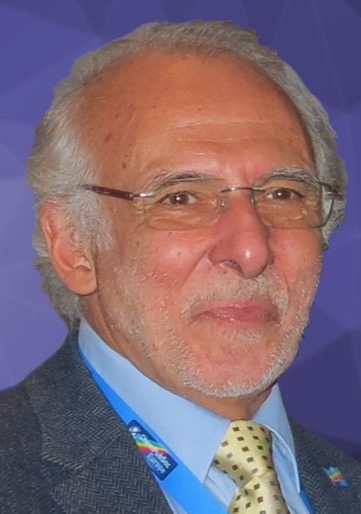 Francesco De Angelis合作论文数University of L’Aquila9P Carminati合作论文数8Battistuzzi Gianfranco合作论文数8Maria Di Marzo合作论文数8Sergio Penco合作论文数7Tiziana Brunetti合作论文数5Riccardo Pezzi合作论文数5
 Franco Zunino合作论文数Dipartimento di Oncologia Sperimentale e Laboratori, Fondazione IRCCS Istituto Nazionale dei Tumori5Gideon Shapiro合作论文数Preclinical Research, Sandoz Pharma Ltd.5piero foresta合作论文数4Teresa Riccioni合作论文数4Fabrizio Giorgi合作论文数4M. Castorina合作论文数4Piero Chiodi合作论文数4Arduino Arduini合作论文数4Mo Tinti合作论文数3
 Enzo Ballatori合作论文数3D. Misiti合作论文数3MA Palladino合作论文数3Diana Celona合作论文数3G Ciccarese合作论文数3Roila F合作论文数3
 Filippo De Angelis合作论文数Computational Laboratory for Hybrid and Organic Photovoltaics, Institute of Molecular Science and Technologies, University of Perugia3Maurizio Botta合作论文数3Sandra Muck合作论文数3
 Enrico Garattini合作论文数Centro Catullo e Daniela Borgomainerio, Istituto di Ricerche Farmacologiche ‘Mario Negri’3Marcella Marcellini合作论文数3Fabio Giannessi合作论文数3Domenico Alloatti合作论文数3
 Miriam Tonato合作论文数3Rosario Nicoletti合作论文数C.R.A. - Tobacco Experiment Institute3MS Dionisi合作论文数2R Sabbioni合作论文数2C Epifani合作论文数2A. Lucenti合作论文数2D Donati合作论文数2A. Pazzola合作论文数2R Maccaferri合作论文数2P Marchei合作论文数2S Porrozzi合作论文数2G Palmiotti合作论文数2P Malacarne合作论文数2M Antimi合作论文数2




