Complex reasoning in Temporal Knowledge Graph Question Answering (TKGQA), which requires both Knowledge Graph (KG) navigation and temporal computation, has received limited attention because current datasets often have limited coverage of multi-hop retrieval and computations. To address this gap, we propose a taxonomy of complex reasoning in TKGQA, which consists of two dimensions: structural complexity and computational complexity. Guided by this taxonomy, we construct CR-TKGQA, a new TKGQA dataset for Complex Reasoning. CR-TKGQA consists of more than 30,000 natural language questions, each paired with an executable SPARQL query on Wikidata. Its intent-driven construction ensures broad coverage across both complexity dimensions, achieved by first seeding computational complexity from human intent and then automatically augmenting structural complexity. Experiments show CR-TKGQA poses challenges to current baselines.
Semantic parsing-based methods for knowledge base question answering have achieved leading performance, but rely on high-quality training data of question-SPARQL query pairs, which requires substantial manual effort. In contrast, question-answer pairs are much easier to obtain. In this paper, we propose a novel task, namely SPARQL Query Annotating (SQA), to automatically construct queries with given question-answer pairs. We propose a novel metric test suite score for the evaluation of this task, and collect a dataset ReQuMA to evaluate this task’s facilitation on manual annotation. We also present QuAD, a Question-Answer Driven method for this task. Our experiments show that the task effectively eases manual annotation, and helps semantic parsing-based KBQA methods to maintain competitive performance when using the constructed queries from QuAD as training data. Analysis shows our test suite score metric effectively reflects the quality of constructed queries. Meanwhile, the substantial performance of QuAD demonstrates its effectiveness as a dedicated SQA method. Our code is available at https://github.com/nju-websoft/SQA .
This paper presents a simple, effective, and cost-efficient strategy to improve LLM performance by scaling test-time compute. Our strategy builds upon the repeated-sampling-then-voting framework, with a novel twist: incorporating multiple models, even weaker ones, to leverage their complementary strengths that potentially arise from diverse training data and paradigms. By using consistency as a signal, our strategy dynamically switches between models. Theoretical analysis highlights the efficiency and performance advantages of our strategy. Extensive experiments on six datasets demonstrate that our strategy not only outperforms self-consistency and state-of-the-art multi-agent debate approaches, but also significantly reduces inference costs. Additionally, ModelSwitch requires only a few comparable LLMs to achieve optimal performance and can be extended with verification methods, demonstrating the potential of leveraging multiple LLMs in the generation-verification paradigm.
Instruction following (IF) is a critical capability for large language models (LLMs). However, handling complex instructions with multiple constraints remains challenging. Previous methods typically select preference pairs based on the number of constraints they satisfy, introducing noise where chosen examples may fail to follow some constraints and rejected examples may excel in certain respects over the chosen ones. To address the challenge of aligning with multiple preferences, we propose a simple yet effective method called Reverse Preference Optimization (RPO). It mitigates noise in preference pairs by dynamically reversing the constraints within the instruction to ensure the chosen response is perfect, alleviating the burden of extensive sampling and filtering to collect perfect responses. Besides, reversal also enlarges the gap between chosen and rejected responses, thereby clarifying the optimization direction and making it more robust to noise. We evaluate RPO on two multi-turn IF benchmarks, Sysbench and Multi-IF, demonstrating average improvements over the DPO baseline of 4.6 and 2.5 points (on Llama-3.1 8B), respectively. Moreover, RPO scales effectively across model sizes (8B to 70B parameters), with the 70B RPO model surpassing GPT-4o.
Recent years have witnessed a surge in the number of large language models (LLMs), yet efficiently managing and utilizing these vast resources remains a significant challenge. In this work, we explore how to learn compact representations of LLM abilities that can facilitate downstream tasks, such as model routing and performance prediction on new benchmarks. We frame this problem as estimating the probability that a given model will correctly answer a specific query. Inspired by the item response theory (IRT) in psychometrics, we model this probability as a function of three key factors: (i) the model's multi-skill ability vector, (2) the query's discrimination vector that separates models of differing skills, and (3) the query's difficulty scalar. To learn these parameters jointly, we introduce a Mixture-of-Experts (MoE) network that couples model- and query-level embeddings. Extensive experiments demonstrate that our approach leads to state-of-the-art performance in both model routing and benchmark accuracy prediction. Moreover, analysis validates that the learned parameters encode meaningful, interpretable information about model capabilities and query characteristics.
Semantic parsing, which converts natural language questions into logic forms, plays a crucial role in reasoning within structured environments. However, existing methods encounter two significant challenges: reliance on extensive manually annotated datasets and limited generalization capability to unseen examples. To tackle these issues, we propose Targeted Synthetic Data Generation (TARGA), a practical framework that dynamically generates high-relevance synthetic data without manual annotation. Starting from the pertinent entities and relations of a given question, we probe for the potential relevant queries through layer-wise expansion and cross-layer combination. Then we generate corresponding natural language questions for these constructed queries to jointly serve as the synthetic demonstrations for in-context learning. Experiments on multiple knowledge base question answering (KBQA) datasets demonstrate that TARGA, using only a 7B-parameter model, substantially outperforms existing non-fine-tuned methods that utilize close-sourced model, achieving notable improvements in F1 scores on GrailQA(+7.7) and KBQA-Agent(+12.2). Furthermore, TARGA also exhibits superior sample efficiency, robustness, and generalization capabilities under non-I.I.D. settings.
Information retrieval (IR) methods for KGQA consist of two stages: subgraph extraction and answer reasoning. We argue current subgraph extraction methods underestimate the importance of structural dependencies among evidence facts. We propose Evidence Pattern Retrieval (EPR) to explicitly model the structural dependencies during subgraph extraction. We implement EPR by indexing the atomic adjacency pattern of resource pairs. Given a question, we perform dense retrieval to obtain atomic patterns formed by resource pairs. We then enumerate their combinations to construct candidate evidence patterns. These evidence patterns are scored using a neural model, and the best one is selected to extract a subgraph for downstream answer reasoning. Experimental results demonstrate that the EPR-based approach has significantly improved the F1 scores of IR-KGQA methods by over 10 points on ComplexWebQuestions and achieves competitive performance on WebQuestionsSP.
Although Transformer has achieved success in language and vision tasks, its capacity for knowledge graph (KG) embedding has not been fully exploited. Using the self-attention (SA) mechanism in Transformer to model the subject-relation-object triples in KGs suffers from training inconsistency as SA is invariant to the order of input tokens. As a result, it is unable to distinguish a (real) relation triple from its shuffled (fake) variants (e.g., object-relation-subject) and, thus, fails to capture the correct semantics. To cope with this issue, we propose a novel Transformer architecture, namely, for KG embedding. It incorporates relational compositions in entity representations to explicitly inject semantics and capture the role of an entity based on its position (subject or object) in a relation triple. The relational composition for a subject (or object) entity of a relation triple refers to an operator on the relation and the object (or subject). We borrow ideas from the typical translational and semantic-matching embedding techniques to design relational compositions. We carefully design a residual block to integrate relational compositions into SA and efficiently propagate the composed relational semantics layer by layer. We formally prove that the SA with relational compositions is able to distinguish the entity roles in different positions and correctly capture relational semantics. Extensive experiments and analyses on six benchmark datasets show that achieves state-of-the-art performance on both link prediction and entity alignment.
Facts extraction is pivotal for constructing knowledge graphs. Recently, the increasing demand for temporal facts in downstream tasks has led to the emergence of the task of temporal fact extraction. In this paper, we specifically address the extraction of temporal facts from natural language text. Previous studies fail to handle the challenge of establishing time-to-fact correspondences in complex sentences. To overcome this hurdle, we propose a timeline-based sentence decomposition strategy using large language models (LLMs) with in-context learning, ensuring a fine-grained understanding of the timeline associated with various facts. In addition, we evaluate the performance of LLMs for direct temporal fact extraction and get unsatisfactory results. To this end, we introduce TSDRE, a method that incorporates the decomposition capabilities of LLMs into the traditional fine-tuning of smaller pre-trained language models (PLMs). To support the evaluation, we construct ComplexTRED, a complex temporal fact extraction dataset. Our experiments show that TSDRE achieves state-of-the-art results on both HyperRED-Temporal and ComplexTRED datasets.
Employing Large Language Models (LLMs) for semantic parsing has achieved remarkable success. However, we find existing methods fall short in terms of reliability and efficiency when hallucinations are encountered. In this paper, we address these challenges with a framework called QueryAgent, which solves a question step-by-step and performs step-wise self-correction. We introduce an environmental feedback-based self-correction method called ERASER. Unlike traditional approaches, ERASER leverages rich environmental feedback in the intermediate steps to perform selective and differentiated self-correction only when necessary. Experimental results demonstrate that QueryAgent notably outperforms all previous few-shot methods using only one example on GrailQA and GraphQ by 7.0 and 15.0 F1. Moreover, our approach exhibits superiority in terms of efficiency, including runtime, query overhead, and API invocation costs. By leveraging ERASER, we further improve another baseline (i.e., AgentBench) by approximately 10 points, revealing the strong transferability of our approach.
While question answering over knowledge bases (KBQA) has shown progress in addressing factoid questions, KBQA with numerical reasoning remains relatively unexplored. In this paper, we focus on the complex numerical reasoning in KBQA and propose a new task, NR-KBQA, which necessitates the ability to perform both multi-hop reasoning and numerical reasoning. We design a logic form in Python format called PyQL to represent the reasoning process of numerical reasoning questions. To facilitate the development of NR-KBQA, we present a large dataset called MarkQA, which is automatically constructed from a small set of seeds. Each question in MarkQA is equipped with its corresponding SPARQL query, alongside the step-by-step reasoning process in the QDMR format and PyQL program. Experimental results of some state-of-the-art QA methods on the MarkQA show that complex numerical reasoning in KBQA faces great challenges.
Entity matching (EM), as a fundamental task in data cleansing and integration, aims to identify the data records in databases that refer to the same real-world entity. While recent deep learning technologies significantly improve the performance of EM, they are often restrained by large-scale noisy data and insufficient labeled examples. In this paper, we present a novel EM approach based on deep neural networks and adversarial active learning. Specifically, we design a deep EM model to automatically complete missing textual values and capture both similarity and difference between records. Given that learning massive parameters in the deep model needs expensive labeling cost, we propose an adversarial active learning framework, which leverages active learning to collect a small amount of “good” examples and adversarial learning to augment the examples for stability enhancement. Additionally, to deal with large-scale databases, we present a dynamic blocking method that can be interactively tuned with the deep EM model. Our experiments on benchmark datasets demonstrate the superior accuracy of our approach and validate the effectiveness of all the proposed modules.
The large volume of open data on the Web is expected to be reused and create value. Finding the right data to reuse is a non-trivial task addressed by the recent dataset search systems, which retrieve datasets relevant to a keyword query. An important component of such systems is snippet generation, extracting data from a retrieved dataset to exemplify its content and explain its relevance to the query. Snippet generation algorithms have emerged but were mainly evaluated by user studies. More efficient and reproducible evaluation methods are needed. To meet this challenge, in this article, we present a set of quality metrics for assessing the usefulness of a snippet from different perspectives, and we select and aggregate them into quality profiles for different stages of a dataset search process. Furthermore, we create a benchmark from thousands of collected real-world data needs and datasets, on which we apply the presented quality metrics and profiles to evaluate snippets generated by two existing algorithms and three adapted algorithms. The results, which are reproducible as they are automatically computed without human interaction, show the pros and cons of the tested algorithms and highlight directions for future research. The benchmark data is publicly available.
Existing approaches to normalize time expressions highly rely on expert-engineered rules or grammars, which are labor-intensive and difficult to scale to different scenarios. In this article, we formulate a novel idea to model the semantics of time expression as update operations. We use the update semantics-based representation to model the normalization task as predicting an operation sequence from a given natural language sequence, which is compatible with the popular Seq2Seq scheme in deep learning. We propose a distantly supervised neural parsing approach DNPTime for parsing the time expressions. DNPTime parses recognized expressions into executable operations to obtain normalized values. Specifically, DNPTime uses the intermediate results from the automatic rule generation approach ARTime to construct distant supervision samples for fine-tuning T5 models. Experimental results show that DNPTime gives the best average performances on different benchmarks with fewer human interventions. • A novel semantic representation for time expressions from the update semantics perspective. • An analysis of operations for expressing the meaning of time expressions. • A distant supervision approach to modeling the normalization task via the Seq2Seq scheme without manual data re-annotation.
Numerical reasoning over hybrid data containing tables and long texts has recently received research attention from the AI community. To generate an executable reasoning program consisting of math and table operations to answer a question, state-of-the-art methods use a retriever-generator pipeline. However, their retrieval results are static, while different generation steps may rely on different sentences. To attend to the retrieved information that is relevant to each generation step, in this paper, we propose DyRRen, an extended retriever-reranker-generator framework where each generation step is enhanced by a dynamic reranking of retrieved sentences. It outperforms existing baselines on the FinQA dataset.
Entity alignment—the discovery of identical entities across different knowledge graphs (KGs)—is a critical task in data fusion. In this paper, we revisit existing entity alignment methods in practical and challenging scenarios. Our empirical studies show that current work has a low level of robustness to long-tail entities and the lack of entity names or relation triples. We aim to develop a robust and adaptive entity alignment method, and the availability of relations, attributes, or names is not required. Our method consists of an attribute encoder and a relation encoder, representing an entity by aggregating its attributes or relational neighbors using the attention mechanisms that can highlight the useful attributes and relations in end-to-end learning. To let the encoders complement each other and produce a coherent representation space, we propose adaptive embedding fusion via a gating mechanism. We consider four evaluation settings, i.e., the conventional setting with both relation and attribute triples, as well as three challenging settings without attributes, without relations, without both relations and names, respectively. Results show that our method can achieve state-of-the-art performance. Even in the most challenging setting without relations and names, our method can still achieve promising results while existing methods fail.
Temporal facts, the facts for characterizing events that hold in specific time periods, are attracting rising attention in the knowledge graph (KG) research communities. In terms of quality management, the introduction of time restrictions brings new challenges to maintaining the temporal consistency of KGs and detecting potential temporal conflicts. Previous studies rely on manually enumerated temporal constraints to detect conflicts, which are labor-intensive and may have granularity issues. We start from the common pattern of temporal facts and constraints and propose a pattern-based temporal constraint mining method, PaTeCon. PaTeCon uses automatically determined graph patterns and their relevant statistical information over the given KG instead of human experts to generate time constraints. Specifically, PaTeCon dynamically attaches class restriction to candidate constraints according to their measuring scores.We evaluate PaTeCon on two large-scale datasets based on Wikidata and Freebase respectively. The experimental results show that pattern-based automatic constraint mining is powerful in generating valuable temporal constraints.
Graph-structured data describing entities and their properties has become a notable component of the Web. With the increasing size of data graphs, an entity is often associated with too many property values to be entirely shown to the user, thereby requiring a compact but characteristic summary to present its most distinguishing features. This paper aims to automatically generate such characteristic entity summaries for human users. To achieve it, we exploit the informativeness of property values by analyzing the data graph using information theory. To improve the utility of information carried by a summary, we learn it from a text corpus. To reduce the information redundancy of a summary, we perform logical reasoning and measure similarity with statistical support. We formalize the entity summarization problem considering these factors as combinatorial optimization problems to solve. Experiments based on a real data graph and hand-crafted gold standards show that our approach improves on two state-of-the-art approaches in F-measure by 20.63%-38.79%.
Temporal facts, which are used to describe events that occur during specific time periods, have become a topic of increased interest in the field of knowledge graph (KG) research. In terms of quality management, the introduction of time restrictions brings new challenges to maintaining the temporal consistency of KGs. Previous studies rely on manually enumerated temporal constraints to detect conflicts, which are labor-intensive and may have granularity issues. To address this problem, we start from the common pattern of temporal facts and propose a pattern-based temporal constraint mining method, PaTeCon. Unlike previous studies, PaTeCon uses graph patterns and statistical information relevant to the given KG to automatically generate temporal constraints, without the need for human experts. In this paper, we illustrate how this method can be optimized to achieve significant speed improvement. We also annotate Wikidata and Freebase to build two new benchmarks for conflict detection. Extensive experiments demonstrate that our pattern-based automatic constraint mining approach is highly effective in generating valuable temporal constraints.
Existing approaches to normalize time expressions highly rely on expert-engineered rules or grammars, which are labor-intensive and difficult to scale to different scenarios. In this article, we formulate a novel idea to model the semantics of time expression as update operations. We use the update semantics-based representation to model the normalization task as predicting an operation sequence from a given natural language sequence, which is compatible with the popular Seq2Seq scheme in deep learning. We propose a distantly supervised neural parsing approach DNPTime for parsing the time expressions. DNPTime parses recognized expressions into executable operations to obtain normalized values. Specifically, DNPTime uses the intermediate results from the automatic rule generation approach ARTime to construct distant supervision samples for fine-tuning T5 models. Experimental results show that DNPTime gives the best average performances on different benchmarks with fewer human interventions.
 Gong Cheng (程龚)合作论文数Department of Computer Science and Technology, Nanjing University;National Key Laboratory for Novel Software Technology, Nanjing University81
 Wei Hu (胡伟)合作论文数Department of Computer Science and Technology, School of Computer Science, Nanjing University58
 Weiyi Ge合作论文数14
 Qingxia Liu合作论文数National Key Laboratory for Novel Software Technology, Nanjing University12
 Wentao Ding合作论文数Beijing Institute for General Artificial Intelligence11
 Zequn Sun (孙泽群)合作论文数School of Computer Science, Nanjing University9
 Saisai Gong合作论文数9
 Huiying Li (李慧颖)合作论文数School of Computer Science and Engineering, Southeast University9
 Xiaxia Wang (王夏霞)合作论文数Department of Computer Science, University of Oxford8
 Jianhao Chen合作论文数State Key Laboratory for Novel Software Technology, Nanjing University8
 Honghan Wu合作论文数Institute of Health Informatics, University College London;KnowLab, University College London;King's College London;Alan Turing Institute8
 Evgeny Kharlamov合作论文数University of Oslo;Bosch Center for Artificial Intelligence7
 Zhiqiang Gao (高志强)合作论文数School of Computer Science and Engineering, Southeast University7Jiwei Ding合作论文数Nanjing Univ, State Key Lab Novel Software Technol, Nanjing 210093, Jiangsu, Peoples R China6
 Jeff Z. Pan合作论文数College of Science and Engineering, School of Informatics, University of Edinburgh;Huawei Technologies Research & Development (UK) Ltd;The Alan Turing Institute6Danyun Xu合作论文数6
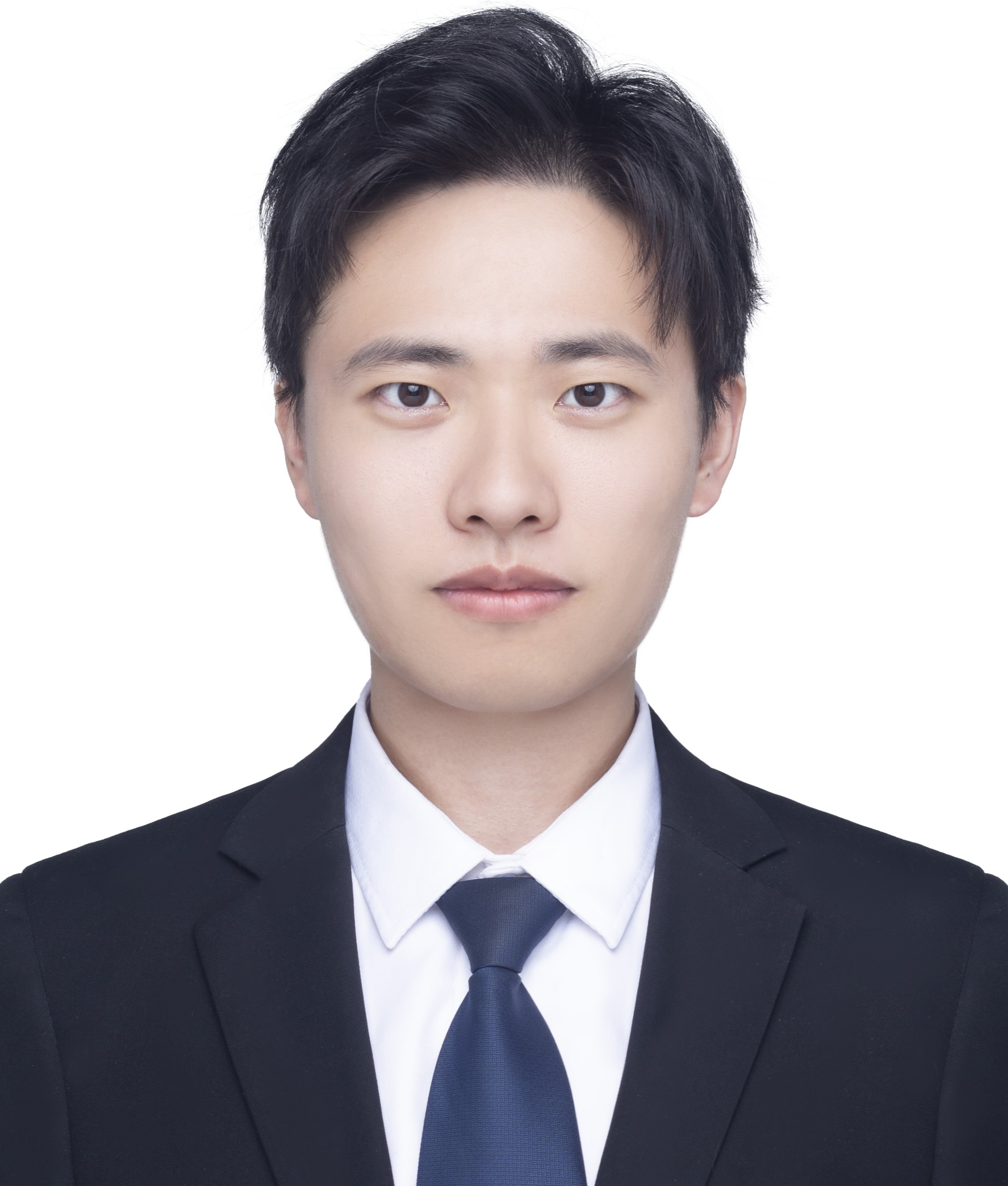 Xiang Huang (黄祥)合作论文数State Key Laboratory for Novel Software Technology, Nanjing University;Websoft Research Group, Department of Computer Science and Technology, Nanjing University;Department of Computer Science, Nanjing University;Tongyi Laboratory, Alibaba Group5
 Yawei Sun (孙亚伟)合作论文数Nanjing University5
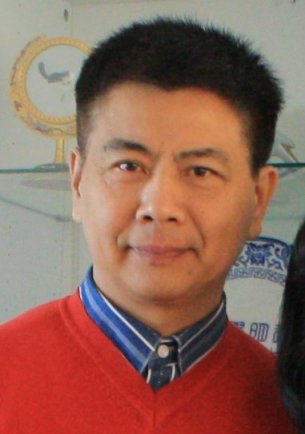 Zhisheng Huang合作论文数Department of Computer Science, Faculty of Sciences, Vrije University of Amsterdam;Faculty of Computer Science and Engineering, Jiangsu University of Science and Technology;International WIC Institute, Beijing University of Technology;Faculty of Computer Science and Engineering, Wuhan University of Science and Technology5Hang Zhang合作论文数5Ningsheng Jian合作论文数5Jinmao Li合作论文数4Jidong Jiang合作论文数nanjing university4
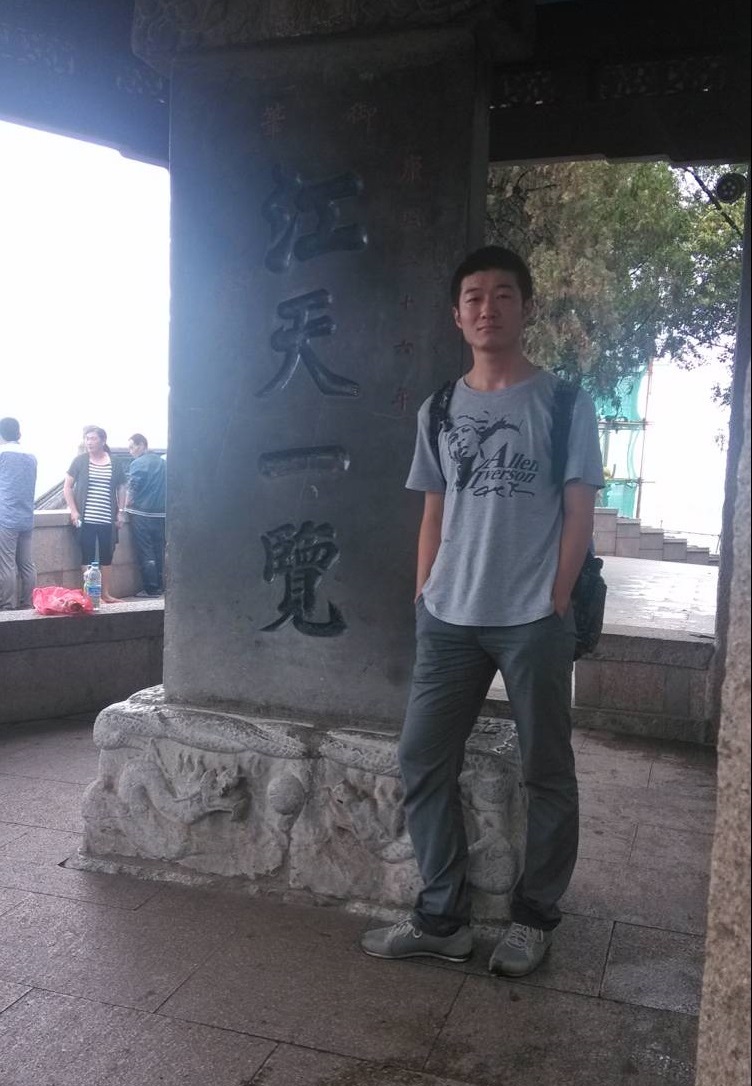 Qingheng Zhang合作论文数State Key Laboratory for Novel Software Technology, Nanjing University, China4
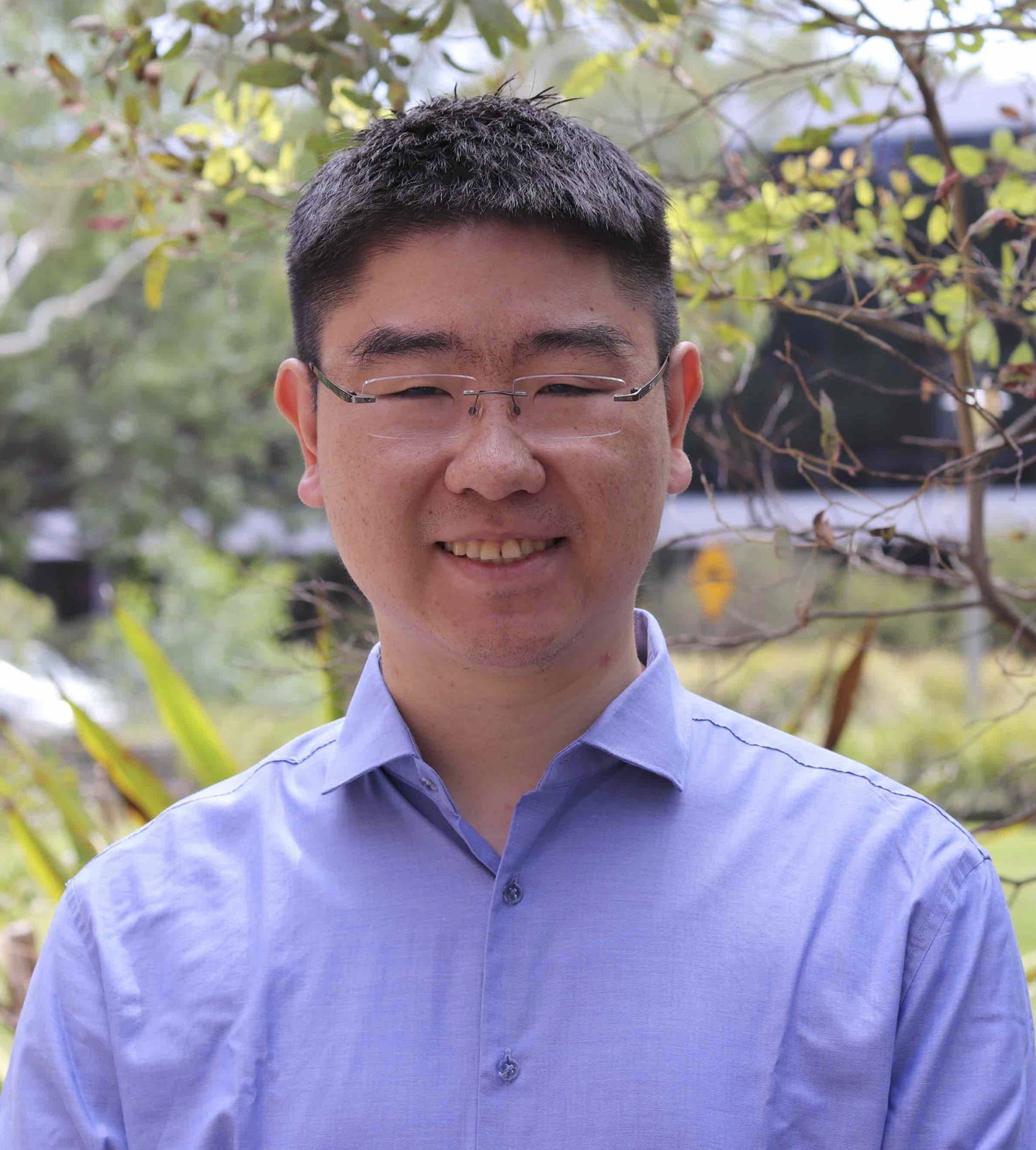 Liang Zheng (郑良)合作论文数School of Computing, Australian National University;Canva4
 Haoxuan Li合作论文数4Jianfeng Chen合作论文数4
 Daxin Liu (刘达欣)合作论文数School of Artificial Intelligence, Nanjing University4Jiacheng Huang合作论文数State Key Laboratory for Novel Software Technology, National Institute of Healthcare Data Science, Nanjing University4Shanshan Huang合作论文数3Junyang Ren合作论文数3Yanan Zhang合作论文数3Sitao Cheng (程思韬)合作论文数3
 Yiheng Shu (舒意恒)合作论文数The Ohio State University;Google3conggang wang (王丛刚)合作论文数3Yulin Shen合作论文数3
 Jinchi Chen (陈金池)合作论文数School of Mathematics, East China University of Science and Technology3Tengteng Lin合作论文数State Key Laboratory for Novel Software Technology, Nanjing University3
 Lingbing Guo (郭凌冰)合作论文数College of Intelligence and Computing, Tianjin University3
 Zixian Huang合作论文数Shanghai Artificial Intelligence Laboratory3
 Heiner Stuckenschmidt合作论文数School of Business Informatics and Mathematics, University of Mannheim3
 Yuqing Zhai (翟玉庆)合作论文数School of Cyber Science and Engineering, Southeast University3
 Hongbing Wang (王红兵)合作论文数School of Computer Science and Engineering, Southeast University;Key Laboratory of Computer Network and Information Integration, Ministry of Education, Southeast University3
 Jinde Cao (曹进德)合作论文数Department of System Science, School of Mathematics, Southeast University3Xiang Zhang (张翔)合作论文数School of Architecture and Urban Planning, Nanjing University3
 Petko Valtchev合作论文数Departement d'informatique, University of Quebec at Montreal3
 Jerome Euzenat合作论文数INRIA;Laboratoire D'informatique De Grenoble;Université Grenoble Alpes3