A brief description of measuring means, a free-oscillation setup with a transverse sting of the model, and test conditions is reported. A procedure for processing experimental data is described. Quasi-steady and damping aerodynamic characteristics of the pitching moment of the model in the range of Mach numbers M = 1.75–6 are obtained. A comparison of research results with calculated data, as well as with the previous experimental data obtained using the base sting is given. It was found that at M = 3–6, regular undamped oscillations of the model are excited.
A brief review of research performed to develop multi-hole probes to measure of aerodynamic angles, dynamic head, and static pressure of a flying vehicle. The basis of these works is the application a well-known classical multi hole pressure probe technique of measuring of a 3D flow to use in the air data system. Two multi-hole pressure probes with spherical and hemispherical head to air-data system for subsonic small-scale vehicles have been developed. A simple analytical probe model with separation of variables is proposed. The probes were calibrated in the wind tunnel, one of them is in-flight tested.
A setup with free oscillations containing a transverse sting for holding the test model and possible test regimes are described. The method of testing and data processing is presented. Aerodynamic characteristics of the pitching moment of the model in a wide range of Mach numbers are obtained. Comparisons of quasi-steady data with numerical predictions and of damping derivatives with those obtained previously in tests of the model mounted on the base sting and with calculated results are performed. The model is found to be statically and dynamically stable except for regimes with М = 1.75 and 2.25, where nondecaying oscillations are excited.
Models of promising reentry vehicles, experimental equipment, and test program are described. The method used to determine the total aerodynamic characteristics of these models on the AB-313 mechanical balance in the T-313 supersonic wind tunnel and the method used for simulations are presented. The aerodynamic coefficients of the examined objects in wide ranges of Mach numbers and angles of attack are obtained. The experimental data are compared with the results of simulations.
The experimental equipment, model, test conditions, and methods used for determining the streamwise damping on a setup with free oscillations on rolling bearings are described. Characteristics of aerodynamic damping of the model with two positions of the rotation axis and Mach numbers M∞ = 2, 4, and 6 are measured. Irregular oscillations of the model with a greater displacement of the rotation axis with respect to the longitudinal axis are found to arise at M∞ = 2.
The paper deals with an experimental study of stationary and nonstationary aerodynamic characteristics of a circular cone in the range of Mach numbers 1.75–7. The experimental equipment and the method of determining the aerodynamic characteristics are briefly described. The integral aerodynamic characteristics of the model in tests with force measurements and the aerodynamic derivatives of the pitching moment in dynamic tests on a setup with free oscillations are obtained. The experimental data are compared with numerical predictions.
Aerodynamic design of an innovative supersonic three-dimensional air-intake including a starting device has been carried out. The intake concept is based on the use of an external compression ramp in the form of a caret waverider. In a design flow regime, this ramp generates a plane oblique shock wave lying on its swept leading-edges and a subsequent two-dimensional isentropic compression wave. The intake starting is provided with a device special flaps of which in the throat are opened slightly in order to enlarge it and to form here both longitudinal and cross slots for air bleed and boundary-layer diversion. The same device can also serve for regulation of intake operating regimes depending on the flight velocity. The experimental model intake with a design Mach number M-D = 2 has been developed and tested at flow Mach numbers 1.5, 1.75, and 2.0 in the T-313 supersonic wind tunnel based at ITAM. Flow patterns about the intake have been observed, and flow parameters characterising the intake performance have been measured. The experimental results obtained have confirmed the workability of the starting/regulating device; the data on the efficiency of the model intake have demonstrated its good characteristics in terms of the total pressure recovery.
Based on the analysis of various aspects of creating a supersonic transport aircraft of the second generation, the necessity of developing unconventional active methods of sonic boom level reduction is demonstrated. Surface cooling is shown to exert a significant effect on formation of the disturbed flow structure up to large distances from the body by an example of a supersonic flow around a body of revolution. A method of reducing the intensity of the intermediate shock wave and excess pressure momentum near the body is proposed. This method allows the length of the reduced (by 50%) sonic boom level to be increased and the bow shock wave intensity in the far zone to be reduced by 12%. A possibility of controlling the process of formation of wave structures, such as hanging pressure shocks arising near the aircraft surface, is demonstrated. The action of the cryogenic mechanism is explained.
The model, experimental equipment, and test program are briefly described. A method of determining the aerodynamic characteristics of the model on the facility with free oscillations is presented. Aerodynamic derivatives of the pitching moment of the model are obtained for two positions of the axis of rotation and Mach numbers M ∞ = 2, 4, and 6. At M ∞ = 2, the model with the rear position of the axis of rotation is not balanced at low angles of attack, whereas irregular self-sustained oscillations of the model with the frontal position of the axis of rotation arise.
The European EXPErimental Re-entry Test bed (EXPERT) vehicle is intended for studying various basic phenomena, such as the boundary-layer transition on blunted bodies, real gas effects during shock wave/boundary layer interaction, and effect of surface catalycity. Another task is to develop methods for recalculating the results of windtunnel experiments to flight conditions. The EXPERT program implies large-scale preflight research, in particular, various calculations with the use of advanced numerical methods, experimental studies of the models in various wind tunnels, and comparative analysis of data obtained for possible extrapolation of data to in-flight conditions. The experimental studies are performed in various aerodynamic centers of Europe and Russia under contracts with ESA-ESTEC. In particular, extensive experiments are performed at the Von Karman Institute for Fluid Dynamics (VKI, Belgium) and also at the DLR aerospace center in Germany. At ITAM SB RAS, the experimental studies of the EXPERT model characteristic were performed under ISTC Projects 2109, 3151, and 3550, in the T-313 supersonic wind tunnel and AT-303 hypersonic wind tunnel.
The influence of the basic factors of cryogenic forcing on formation of the middle zone on the sonic boom and aerodynamic characteristics of the flying vehicle is studied by experimental and numerical methods. Experimental data obtained with alcohol or liquid nitrogen as an injected liquid are used for comparisons; as a result, the total effect of temperature and coolant evaporation can be determined. The influence of temperature is studied by means of numerical simulations of the cryogenic action of distributed injection of air. A comparison of numerical and experimental data reveals the effect of the coolant evaporation process on perturbed flow formation. It is demonstrated that evaporation of the coolant outgoing onto the vehicle surface should be intensified to increase the efficiency of cryogenic forcing (to decrease the coolant flow rate).
Results of numerical and experimental investigations of the sonic boom parameters for two configurations of civil supersonic transport are presented. Numerical modelling is performed by a combined method based on calculating the spatial flow in the near zone of the aircraft configuration and subsequent determination of disturbed flow parameters at large distances from the examined model. Numerical results are compared with experimental sonic boom parameters measured in the near zone and with results of their recalculation to large distances within the framework of the quasi-linear theory. This validation allows the degree of adequacy of the inviscid Euler model for solving the posed problem to be determined. Reasons for certain disagreement between the calculated and experimental data are discussed. The analysis confirms the possibility of attenuating the sonic boom generated by supersonic transport with an unconventional configuration based on a tandem arrangement of two wings on the fuselage.
The possibility of improving the efficiency of cryogenic forcing on the parameters of the hanging shock determining the length of the region of minimization of the sonic boom (middle zone) generated by a modified power-law body is studied. The effect of distributed injection of the coolant from the body surface on the formation of a perturbed flow near the body and at large distances from the body is considered. The scheme of distributed injection and the regime of coolant exhaustion are demonstrated to exert a significant effect on the length of the middle zone of the sonic boom. A scheme of cryogenic forcing is determined, which ensures reduction of bow shock wave intensity by more than 40% at distances corresponding to 7000 body diameters. The mechanism of cryogenic forcing on the flow structure near the body is discussed.
The possibility of controlling the sonic boom level by means of cooling the surface of a flying vehicle is discussed. The effect of surface cooling on the formation of the perturbed flow structure at large distances from the vehicle is demonstrated by an example of a modified power-law body of revolution. The intensity of the intermediate shock wave and the perturbed pressure pulse near the body are seen to decrease, which expands the altitude range of the region where the sonic boom is reduced (down to 50%). At larger distances from the body, cryogenic forcing ensures a 12% decrease in the bow shock wave intensity. The possibility of controlling the process of formation of wave structures near the surface, such as barrel shock waves, is demonstrated. An explanation of the cryogenic forcing mechanism is offered.
Various forms of icing of flying vehicles are considered. Dimensionless parameters of similarity are chosen and justified. The necessity of creating a climatic wind tunnel for modelling the icing processes is grounded. A possible structural scheme of the climatic wind tunnel is given. It seems reasonable to develop a small-scale test bench for testing methods aimed at generating a uniform field of concentrations of supercooled droplets of a given size and for identifying the efficiency of various anti-icing systems and coatings.
Sergey Alekseevich Khristianovich is one of the famous Russian mechanical engineers of the 20th century together with N.E. Zhukovsky, S.A. Chaplygin, N.E. Kochin, and others. He made an immense contribution to some aspects of mechanics, such as aerogasdynamics, rock mechanics, theory of plasticity, filtration theory, and environmental power engineering. All this was preceded by a long, hard, and fruitful life full of outstanding events.
The structure and principle of operation of a new wind tunnel AT-303 with adiabatic compression are described. Results of systematic investigations are presented in terms of velocity distributions both at the nozzle exit and in the region where the models are located. The velocity fields are obtained with the use of total pressure probes in the ranges of Mach numbers from 7.6 to 19.7 and Reynolds numbers per meter Re 1 = (0.25−3.64)·10 7 .
Results on a hyperboloid-flare model tested in a new hypersonic wind tunnel with adiabatic compression AT-303 based at ITAM SB RAS at M ∞ = 10 and 15 and in a wide range of Reynolds numbers are presented. Pressure and heat-flux distributions along the model are compared with data obtained previously in various European hypersonic wind tunnels (Longshot — Belgium, HEG — Germany) and with results of numerical computations. Pressure and heat-flux coefficients measured in the attached flow region are demonstrated to be in good qualitative agreement. Reasons for the differences in results measured in regions of flow separation and reattachment are discussed. Significant viscous effects on characteristics of the flow around the model are demonstrated; a particularly strong effect is exerted on the heat-flux distribution. This fact confirms that it is important to model real Reynolds numbers in wind-tunnel testing of aerospace plane models.
 N. P. Adamov合作论文数17V. I. Zvegintsev合作论文数12V. F. Chirkashenko合作论文数11m d brodetsky合作论文数7I. I. Mazhul合作论文数7Leonid Vasenev合作论文数6E. A. Chasovnikov合作论文数6
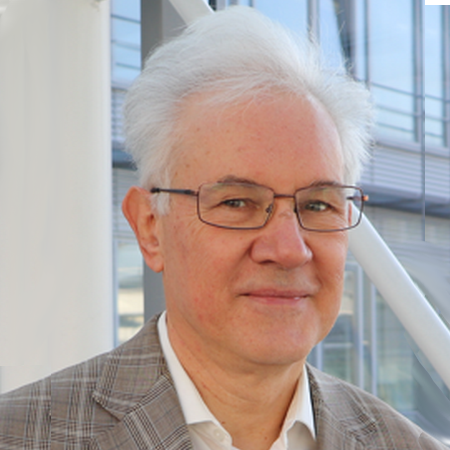 V.M. Fomin合作论文数Institute for Emerging Electronic Technologies, Leibniz Institute for Solid State and Materials Research;State University of Moldova6M. D. Brodetskii合作论文数6A. N. Krylov合作论文数5V. F. Volkov合作论文数5V. I. Kornilov合作论文数4A. A. Dyad’kin合作论文数3L. N. Puzyrev合作论文数3l g vasenyov合作论文数3j c paulat合作论文数3w kordulla合作论文数3Jeanmarie Muylaert合作论文数3Valery V. Chernykh合作论文数3
 S. I. Shpak合作论文数3E. Krause合作论文数3a henze合作论文数2A. A. Dyadkin合作论文数2T. Bonnefond合作论文数2D. G. Nalivaichenko合作论文数2J-M. Muylaert合作论文数2D. Fletcher合作论文数2A. A. Pavlov合作论文数2M. E. Topchiyan合作论文数2Andrey M. Shevchenko合作论文数2
 Anatoliy. Viktorovitch. Lokotko合作论文数2V. Ya. Levchenko合作论文数2A. E. Lutskii合作论文数2Sergey Nikiforov合作论文数2k lomkov合作论文数1m bleilebens合作论文数1axel fezer合作论文数1u peiter合作论文数1m w winter合作论文数1A. Yu. Skorovarov合作论文数1kurt hirsch合作论文数1dieter jacob合作论文数1G. P. Klemenkov合作论文数1i i mazhu合作论文数1Vladimir N. Rychkov合作论文数1Mi Yaroslavtsev合作论文数1
 Matthias Heller合作论文数1Günther Neuwerth合作论文数1u schumacher合作论文数1




