The recently selected missions to Venus have opened a new era for the exploration of this planet. These missions will provide information about the chemistry of the atmosphere, the geomorphology, local-to-regional surface composition, and the rheology of the interior. One key scientific question to be addressed by these future missions is whether Venus remains volcanically active, and if so, how its volcanism is currently evolving. Hence, it is fundamental to analyze appropriate terrestrial analog sites for the study of possibly active volcanism on Venus. To this regard, we propose Mount Etna - one of the most active and monitored volcanoes on Earth - as a suitable terrestrial laboratory for remote and in-situ investigations to be performed by future missions to Venus. Being characterized by both effusive and explosive volcanic products, Mount Etna offers the opportunity to analyze multiple eruptive styles, both monitoring active volcanism and identifying the possible occurrence of pyroclastic activity on Venus. We directly compare Mount Etna with Idunn Mons, one of the most promising potentially active volcanoes of Venus. Despite the two structures show a different topography, they also show some interesting points of comparison, and in particular: a) comparable morpho-structural setting, since both volcanoes interact with a rift zone, and b) morphologically similar volcanic fields around both Mount Etna and Idunn Mons. Given its ease of access, we also propose Mount Etna as an analog site for laboratory spectroscopic studies to identify the signatures of unaltered volcanic deposits on Venus.
MMS four-spacecraft observations with high temporal and spatial resolution made it possible to study the characteristics of intense superthin current sheets (SCSs) with a current density J > 30 nA/m2, formed in bursty bulk flows (BBFs), propagating in the Plasma Sheet (PS) of the magnetotail from the remote X line. Statistical analysis of >1000 SCSs observations showed that, in the majority of cases, the current in the SCSs is parallel to the ambient magnetic field and is carried by field-aligned accelerated electron beams. The half-thickness of the SCSs is several electron gyroradii, and in such thin layers the electric current is carried by demagnetized electrons. Bursts of strong nonideal electric fields E' > 10 mV/m are often observed at the edges and/or inside the SCSs. The generation of such fields brings about energy conversion in the SCSs of hundreds of pW/m3, and in some cases up to several nW/m3, which is comparable to the energy conversion in the electron diffusion region of magnetic reconnection. The strongest energy release is observed in the SCSs formed in the fastest BBFs and under strong variations of the magnetic field in the tail lobes.
The intense electron-scale current structures (ECSs) with the current density J >= 30 nA/m2 are often observed in the Plasma Sheet (PS) during high-speed bulk flows. Using MMS observations we have analyzed 41 earthward and 37 tailward flow intervals and found 452 and 754 ECSs distributed over the PS region, respectively. Almost all ECSs are generated by high-speed electron beams. The duration of ECSs is <= 1 s, and many of them have a half-thickness L <= a few rho e (rho e is the gyroradius of thermal electrons). In such thin ECSs electrons become demagnetized and experience the dynamics like that observed in the electron diffusion region. Strong nonideal electric fields (E') associated with violation of frozen-in condition for electrons are observed in the ECSs. This results in the intense energy conversion with JE' up to hundreds pW/m3. The major part of the dissipating energy is transferred to electron heating and acceleration. We suggest that the ECSs are manifestations of kinetic-scale turbulence driven by the high-speed ion bulk flows. The inductive electric fields generated by the growing magnetic fluctuations accelerate electron beams which, in turn, generate the ECSs. The ECSs thinning during their evolution, probably, stops for L <= a few rho e. Further thinning leads to development of kinetic instability causing the current disruption and strong electric field generation. The last accelerates new electron beams which generate new ECSs in other locations. Thus, the life cycles of the ECSs contribute to energy cascade in turbulent plasma at electron kinetic scales. Electron-scale current structures (ECSs) with a few L/rho e thickness are observed in the plasma sheet during fast ion bulk flows The ECSs are mostly generated by demagnetized electrons experiencing the dynamics similar to that observed in electron diffusion region In the ECSs JE' reaches the values typical for EDR, thus, they significantly contribute to the turbulent energy cascade at electron scales
Scientific objectives, instruments, and measurement program of the scientific instrumentation of the Kazachok stationary landing platform of the State Corporation Roscosmos and the European Space Agency (ESA) ExoMars-2022 project are presented. The scientific objectives of research on the landing platform included the long-term climate monitoring, the studies of the atmospheric composition, the mechanisms for dust lifting and related electrical phenomena, atmosphere–surface interactions, the subsurface water abundance, monitoring the radiation situation, and the study of Mars internal structure. To address these problems, 11 Russian and two European instruments with a total mass of 45 kg were built, tested and integrated into the spacecraft. These include a television camera system, meteorological complexes, a suite for studying dust and related electrical phenomena, optical spectrometers and an analytical complex for studying the atmospheric composition, a microwave radiometer, the neutron and gamma spectrometers for surface research, a seismometer, magnetometers and a Mars proper motion experiment to study its internal structure. Although the ExoMars-2022 project has been discontinued, the scientific objectives of the landing platform have not lost their relevance, and the technical solutions and developments implemented in scientific equipment are of interest and promising for further Mars exploration.
AbstractRecent MMS observations have discovered electron‐scale super‐thin current sheets (STCSs) with a partial electron demagnetization, which distinguishes them from the ion‐scale TCSs traditionally observed by the Cluster mission. Our investigation focuses on the dynamics of STCSs and reveals new aspects influencing their stability. We use the earlier proposed 1D collisionless self‐consistent equilibrium STCS model and show that the free parameters of this model, such as the relative part of demagnetized electrons, their flow velocity and the pressure anisotropy of magnetized electron population, can contribute to the development of tearing instability. With the growth of these parameters, the STCS becomes thinner, which leads to the accumulation excess of a free energy. Stabilizing energy decreases due to the increase of a relative part of demagnetized electrons. Thus, demagnetized electrons in STCSs can provide the development of fast and short‐wavelength electron tearing modes.
We report Magnetospheric Multiscale Mission (MMS) observations of accelerated field-aligned electron beams in the outer ( | B_x| ∼( 10 1pt - 1pt 20) nT ) regions of the Plasma Sheet (PS). The MMS satellites were located earthward of the magnetic reconnection X-line, inside of the bursty bulk flow. The interval corresponds to the growth phase of the substorm. Field-aligned electron beams was produced by electrons suprathermal population with energy ∼ 1pt( 1 1pt - 1pt 5) keV . Newly accelerated electron beams are gyrotropic. In the process of evolution, agyrotropy of the beam develops. This leads to the generation of intense (up to ∼80 nA/m2) field-aligned currents. We demonstrate that acceleration of the electrons is pulsed for the time < 1pt 5 s . Propagation of the high-velocity electron beam results in the development of plasma instabilities and generation of a strong (∼59 mV/m) nonideal electric field at frequencies lower than electron cyclotron frequency ω_c,e . The presence of a nonideal electric field leads to the violation of the frozen-in condition of electron plasma and energy dissipation. The energy transformation power density reaches ∼–1000 pW/m3. Fluctuations in the spectrum of a nonideal electric field experience spectral flattering between ion plasma ω_p,i and electron cyclotron ω_c,e frequencies. This evidences energy transfer from particles to waves at this spectral range. The studied phenomena may provide significant contributions to the development of turbulence on electronic kinetic scales in the outer region of the PS.
A brief review of theoretical studies of circumlunar dusty plasma, the important factors in the formation of which are electrostatic processes and impacts of micrometeoroids on the lunar surface, is given. Observation data of dust particles in the vicinity of the Moon, obtained within the “Luna-25” mission, are described for the first time. It is shown that there is at least one reliable observation of a dust particle either of lunar origin or associated with the high-speed Perseid stream. The need to improve the Lunar Dust Monitor device on the “Luna-27” lander is discussed. The improvement is associated with the need to install a rod for placing electrostatic sensors at a sufficient distance from the device, which is desirable to reduce disturbances of the surrounding plasma and the near-surface electrostatic field because of the influence of the lander.
Dusty plasma processes in the physics of comets are considered. The distribution functions of photoelectrons, the altitude dependences of the charges and sizes of dust particles, as well as electric fields are determined using a physicomathematical model for the self-consistent description of densities of photoelectrons and dust particles above the illuminated part of a comet nucleus. It has been shown that dusty plasma processes are significantly manifested when a comet is sufficiently far from the Sun. The dusty plasma near the comet nucleus with the parameters close to the parameters of the nucleus of Halley’s comet at distances to the Sun no less than 2.5–3.5 AU is formed due to the electrostatic interactions similar to the formation of dusty plasmas near other atmosphereless bodies (e.g., the Moon, satellites of Mars, and asteroids). The dynamics of dust particles at closer distances from the Sun is determined by the gas flow from the comet nucleus.
One of the main features that distinguishes dusty plasma from ordinary (not containing charged dust particles) plasma is anomalous dissipation associated with the process of charging dust particles, leading to new physical phenomena, effects and mechanisms. The process of anomalous dissipation is considered in the context of describing the dynamics of dust particles in the dusty plasma of atmosphereless bodies of the Solar System. A description of the oscillations of a dust particle over the surfaces of Mercury, the Moon, and the Martian satellites Phobos and Deimos is presented, the attenuation of which is determined by the charging frequency of the dust particles, which characterizes anomalous dissipation. The possibility of using an approach that takes into account anomalous dissipation to describe plasma-dust processes in the vicinity of comets is discussed. It is shown that anomalous dissipation plays a significant role in determining the possibility of using the model of levitating dust particles in describing dusty plasma over the surfaces of atmosphereless bodies of the Solar System. The results of numerical calculations are presented, confirming the possibility of using this model for a number of atmospherelesso cosmic bodies.
Представлены научные задачи, приборы и программа измерений комплекса научной аппаратуры стационарной посадочной платформы "Казачок" проекта Госкорпорации Роскосмос и Европейского космического агентства (ESA) ЭкзоМарс-2022. Научные задачи исследований на посадочной платформе включали долговременный мониторинг климата, исследования состава атмосферы, механизмов подъема пыли и связанных электрических явлений, взаимодействий между атмосферой и поверхностью, распространенности воды в подповерхностом слое, мониторинг радиационной обстановки и изучение внутреннего строения Марса. Для решения этих задач были созданы, испытаны и интегрированы в состав космического комплекса 11 российских и два европейских прибора общей массой 45 кг. В их числе система телевизионных камер, метеокомплексы, комплекс для исследования пыли и связанных с ней электрических явлений, оптические спектрометры и аналитический комплекс для исследования состава атмосферы, микроволновый радиометр, нейтронный и гамма-спектрометры для исследования поверхности, сейсмометр, магнитометры и эксперимент по определению собственного движения Марса для исследования внутреннего строения. Хотя проект ЭкзоМарс-2022 прекращен, научные задачи комплекса не утратили актуальности, а технические решения и разработки, реализованные в научной аппаратуре, представляют интерес и перспективны для дальнейших исследований Марса.
This paper studies the current profile in the Сurrent Sheet during the propagation of bursty bulk flows. The presence of superthin current sheets (STCSs) with current densities up to 100 nA/m2 is shown. The current in such structures is predominantly carried by the suprathermal demagnetized electron population. The typical half-thickness is of the order of a few gyroradiuses of thermal electrons. STCSs are often nested inside magnetic islands elongated along the radial magnetotail direction. It is shown that the evolution of such islands occurs due to the development of tearing instability, which also leads to the acceleration of electron beams. Accelerated electron beams generate field-aligned currents in the Plasma Sheet, in which the strong electric fields could be generated as a result of instabilities. These electric fields cause significant energy dissipation in the STCSs.
We review studies of physical processes associated with the impact of external factors in outer space flows of micrometeoroids and solar radiation on the lunar regolith. Under the influence of these factors, regolith microparticles can detach from the surface and levitate. Near-surface plasma and levitating dust particles form a plasma-dust exosphere of the Moon. Under anthropogenic effects on the lunar environment, charged levitating microparticles can have an extremely negative impact on the engineering systems of lunar landers and on the activity and health of astronauts on the Moon. Based on information gained by automated and manned lunar missions and in laboratory experiments, we discuss modern ideas about physical processes occurring near the Moon's surface. Unsolved problems associated with the plasma-dust exosphere of the Moon are considered, and the principal strategies for their solution are outlined.
Since the first automatic missions to the Moon, the activity of dust particles from atmosphereless bodies has been recorded. Since then, a lot of theoretical and experimental studies of this effect have been carried out, but at present there is no clear understanding of the influence of external actions on the dynamics of this phenomenon. This paper presents the results of experiments to determine the effect of hard UV radiation on the activity of dust particles, which makes a significant contribution to particle dynamics. The result of determining the conditions for particle removal from the surface is in accordance with theoretical calculations.
This issue includes articles devoted to the results of the work of the section “Experimental laboratory astrophysics and geophysics” of the National Center for Physics and Mathematics.
In this work we discuss various selected mission concepts addressing Venus evolution through time. More specifically, we address investigations and payload instrument concepts supporting scientific goals and open questions presented in the companion articles of this volume. Also included are their related investigations (observations & modeling) and discussion of which measurements and future data products are needed to better constrain Venus’ atmosphere, climate, surface, interior and habitability evolution through time. A new fleet of Venus missions has been selected, and new mission concepts will continue to be considered for future selections. Missions under development include radar-equipped ESA-led EnVision M5 orbiter mission (European Space Agency 2021 ), NASA-JPL’s VERITAS orbiter mission (Smrekar et al. 2022a ), NASA-GSFC’s DAVINCI entry probe/flyby mission (Garvin et al. 2022a ). The data acquired with the VERITAS, DAVINCI, and EnVision from the end of this decade will fundamentally improve our understanding of the planet’s long term history, current activity and evolutionary path. We further describe future mission concepts and measurements beyond the current framework of selected missions, as well as the synergies between these mission concepts, ground-based and space-based observatories and facilities, laboratory measurements, and future algorithmic or modeling activities that pave the way for the development of a Venus program that extends into the 2040s (Wilson et al. 2022 ).
 H. V. Malova合作论文数Space Research Institute, Russian Academy of Sciences118
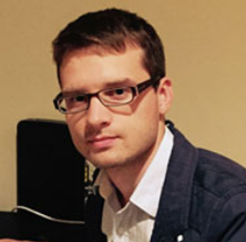 Anton Artemyev合作论文数Department of Earth, Planetary, and Space Sciences, College of Physical Sciences, University of California, Los Angeles93
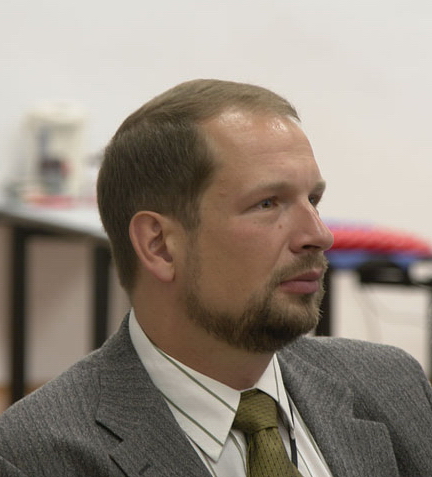 Anatoli A. Petrukovich合作论文数Russian Acad Sci, Space Res Inst81
 Elena E. Grigorenko合作论文数Skobeltsyn Institute of Nuclear Physics, Moscow State University78
 V. Yu. Popov合作论文数67
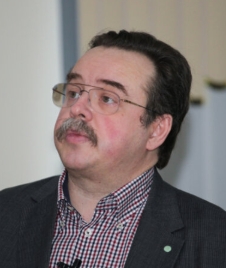 Sergey Popel合作论文数Faculty of Physics, Russian Academy of Sciences;Department of Space Physics, Russian Academy of Sciences;Space Research Institute, Russian Academy of Sciences47Dominique C. Delcourt合作论文数40
 J.-A. Sauvaud合作论文数Centre d’Etude Spatiale des Rayonnements39
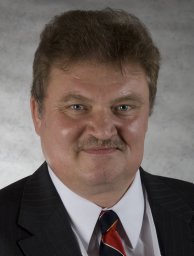 Jorg Büchner合作论文数max planck institute for solar system research33
 V. A. Zakharov合作论文数Institute of Catalysis Novosibirsk USSR31
 Anatoly Neishtadt合作论文数Space Research Institute30
 Eduard Dubinin合作论文数29
 Vahe Peroomian合作论文数28Alexander V. Milovanov合作论文数28
 Gaetano Zimbardo合作论文数Unità di Cosenza, Università della Calabria27
 Oleg Korablev合作论文数Department of Physics of Planets, Space Research Institute, Russian Academy of Sciences25Georgy N. Zastenker合作论文数24Sergey Savin合作论文数23
 Rumi Nakamura合作论文数Institut für Weltraumforschung, ÖAW;Institute of Physics, University of Graz23Golub' Anatoly P合作论文数22
 Oleg L. Vaisberg合作论文数Space Research Institute;Russian Academy of Sciences;Space Research Institute, Russian Academy of Sciences22
 Jan Blecki合作论文数Space Research Center, Polish Academy of Sciences22E. Amata合作论文数21Kh. V. Malova合作论文数21
 S. D. Shuvalov合作论文数20
 O. V. Mingalev合作论文数19Aleksandre Taktakishvili合作论文数19M. Ashour-Abdalla合作论文数18
 Vladimir Nikolaevich Ermakov合作论文数17
 A. Surjalal Sharma合作论文数17R. A. Kovrazhkin合作论文数17I. V. Mingalev合作论文数16
 S.P. Savin合作论文数16Maha Ashour-Abdalla合作论文数16Yu. I. Yermolaev合作论文数16
 Ivan Y. Vasko合作论文数Space Sci Lab, Univ Calif Berkeley15
 A.O. Fedorov合作论文数15
 Stanislav Ivanovich Klimov合作论文数15
 Antonella Greco合作论文数University of Calabria15
 M. S. Dolgonosov合作论文数Space Research Institute, Russian Academy of Sciences15Mostafa El-Alaoui合作论文数15
 V. D. Kuznetsov合作论文数14
 J. L. Rauch合作论文数14
 Zdenek Nemecek合作论文数Department of Surface and Plasma Science, Faculty of Mathematics and Physics, Charles University14
 Jana Šafránková合作论文数Department of Surface and Plasma Science, Faculty of Mathematics and Physics, Charles University13R. Z. Sagdeev合作论文数13
 Vassilis Angelopoulos合作论文数Department of Earth, Planetary, and Space Sciences, College of Physical Sciences, University of California, Los Angeles;Institute of Geophysics and Planetary Physics, University of California, Los Angeles13
 Andrei Runov合作论文数Department of Earth, Planetary, and Space Sciences, College of Physical Sciences, University of California, Los Angeles12Anatolii B. Mikhailovskii合作论文数12




