The separation of americium during the fractionation of a highly active raffinate obtained in the extraction processing of spent nuclear fuel represents an urgent task of the contemporary nuclear fuel cycle. The article discusses new approaches to this task. It is shown that a sodium bismuthate powder (NaBiO3), upon contact with a solution of Am (III) and Cm (III), oxidizes Am (III) to Am (VI) and sorbs actinides. The addition of a (NH4)2CO3 solution results in a content of up to 91
The conditions for the oxidation of Am(III) to Am(VI) and its reduction to Am(V) are shown, and the stability of these forms in a 0.1 M nitric acid model solution of the actinide-lanthanide fraction of high-level waste (HLW) containing isotopes of americium and curium and also praseodymium as a simulant of the behavior of fragmented lanthanides is defined. It was found that about 30
Показаны условия окисления Am(III) до Am(VI), его восстановления до Am(V) и определена устойчивость этих форм в 0.1 моль/л азотнокислом модельном растворе актинид-лантанидной фракции высокоактивных отходов (ВАО), содержащем изотопы америция и кюрия, а также празеодим как имитатор поведения осколочных лантанидов. Установлено, что около 30% америция в состоянии окисления Am(V) от его исходного содержания в модельном растворе, содержащем высаливатель - нитрат аммония - в количестве 8 моль/л, переходит в органическую фазу за одну стадию экстракции 30%-ным раствором трибутилфосфата в разбавителе Изопар М. При этом Cm и Pr экстрагируются на 80-85%. Коэффициент распределения Am составил около 0.1, Cm и Pr - около 1, а фактор отделения Am от Cm и Pr составил около 10. Таким образом, показана возможность селективного выделения америция из ВАО для его последующей трансмутации в быстрых реакторах.
The possibility of producing UO 2 powder from UO 3 using microwave radiation (power 300 W) in the presence of organic compounds with amino groups: carbohydrazide (CH), acetohydroxamic (AHA), and aminoacetic (glycine) acids has been investigated. It was found that in these processes in an oxygen-free atmosphere, UO 2 is produced from UO 3 , and in an air, U 3 O 8 . It was shown that under the action of microwave radiation in the presence of CH and AHA, powdered UO 2 are synthesized from UO 3 . The physical properties of the powders obtained (bulk density with tapping 2.6–2.7 g/cm 3 , specific surface area up to 3.2 m 2 /g, moisture content less than 0.1 wt %) meet the requirements for ceramic-quality powders in the production of fuel pellets.
Fabrication of ceramic UO2 fuel pellets using microwave radiation was studied. The UO2 powder was prepared by microwave denitration of a nitric acid solution containing 400 g L–1 uranium. The tapped density (2.39 g cm–3) and total specific surface area (2.70 m2 g–1) of the powder obtained met the requirements to the powder for nuclear fuel fabrication (TU (Technical Specification) 95 414–2005: Uranium Dioxide Powder of Ceramic Grade with the Uranium-235 Isotope Content Lower than 5.0%). Pellets were pressed from the UO2 powder under varied conditions including pressure, its application mode, pressing time, and presence of binder. The pressed pellets were sintered at 1650°С for 2 h in an Ar + 10 vol % H2 atmosphere under the action of microwave radiation. The density of the samples obtained, 10.40 ± 0.02 g cm–3, meets the requirements to ceramic fuel pellets used in thermal reactors.
Studies have been carried out in order to develop new ways to separate Am and Cm in nitrate solutions. It was shown that Am(VI) produced by oxidation of Am(III) by sodium bismuthate in 0.1 and 3.0 M HNO 3 solutions is extracted with 30% tri- n -butyl phosphate solution in Isopar M diluent. Using this extractive agent in a mixture with a synergic additive of 0.1 M of trioctylphosphine oxide with 0.1 M HClO 4 makes it possible to extract into the organic phase up to 90% of the starting amount of Am with not more than 3% of Cm contained in solution. It was found that, upon introduction of Na 4 XeO 6 ·8H 2 O into a 0.1 M HNO 3 solution containing Am(III) and NaBiO 3 , the solution becomes alkaline (рН ~ 10) and Am(III) is oxidized to Am(IV) to give a stable complex of composition Am(IV)·XeO 6 . As a result, Am remains in solution. Sodium bismuthate present in solution is hydrolyzed to give the solid phase Bi 2 O 5 by coprecipitation of hydrolyzed Cm(III). Thus, the redox separation of Am(IV) from Cm(III) in the solution formed as a result of the interaction Am(III) with a 0.1 M HNO 3 solution with sodium bismuthate and perxenate it contains is a simpler and more effective way, compared with the developed extractive method.
The use of microwave heating to produce solid solutions of actinide oxides in the processes of thermal denitration of model nitric acid solutions formed in reducing stripping schemes at the final stages of the PUREX process, containing U and Th (Pu simulator) and unreacted reducing agents (hydrazine, etc.), is proposed. As a result, after quantitative distilling of water vapor, acid, and volatile products into the collector, denitration reductive thermolysis of the concentrate (melt) of actinide nitrates containing 100% of a solid solution of oxides U(Th)О2 takes place. The U–Th oxide powders obtained meet the regulatory requirements (TU 95414-2005) for ceramic powders.
A procedure was developed for preparing powders of solid solutions of uranium dioxide with 3 or 10 wt % Ce (as Am surrogate) from nitric acid solutions using microwave radiation. The powders obtained consist of particle aggregates of size no larger than 400 µm; the fraction of particles of size smaller than 25 µm does not exceed 1 wt %. The tap density of the powders is 2.3–2.5 g cm−3, and their specific surface area is 2.2–2.5 m2 g−1. The powder characteristics meet the requirements to powders of ceramic quality for nuclear fuel fabrication. The method developed can be used for producing mixed U-Am oxides on a unit for spent nuclear fuel reprocessing at the Pilot Demonstration Power Engineering Complex with the aim of Am transmutation in the BREST-OD-300 reactor.
Denitration of nitric acid uranium solutions under the action of UHF radiation in ambient and reducing atmosphere in the presence of organic reductants containing amino groups (carbohydrazide, acetohydroxamic acid, aminoacetic acid, hydrazine nitrate) and without them to obtain a mixture of uranium oxides was studied. The conditions of thermal transformation of the initially formed mixture of uranium oxides into uranium dioxide powder under the action of UHF radiation were determined. The characteristics of UO2 powders meet the requirements of TU (Technical Specification) 95414–2005 to ceramic-grade powders.
Trivalent transplutonium (TPE) and rare earth (REE) elements are extracted to more than 80% with 30% TBP in Isopar M from solutions containing 0.06–0.5 M HNO 3 and a salting-out agent, NH 4 NO 3 , in a concentration of ≥6 M. The elements are stripped from the organic phase with 0.1 M HNO 3 . The Am(III)/Eu separation factors vary from 1.8 to 2, which can be used for their extraction separation. The Cm/Am(III) separation factors in 0.06–3 M HNO 3 are in the range from 1.1 to 1.2; therefore, to separate these elements, higher oxidation states of Am, Am(VI) and Am(V), should be used. The effect of various factors on the stability of Am(VI) was examined, and the conditions of the existence of Am(VI) and Am(V) in ≤0.1 M HNO3 solutions containing ~8 M NH 4 NO 3 were determined. Curium is extracted with 30% TBP in Isopar M virtually completely, whereas americium only partially (≤30%) passes into the organic phase in the form of Am(III). In the process, high degree of separation of Cm from Am(V) remaining in the aqueous phase is reached (≥99.9%).
It is demonstrated on real solutions of samples of spent nuclear fuel (SNF) from WWER-1000 reactors (1000-MW el water-cooled water-moderated energy reactors) that weakly acidic solutions of iron(III) nitrate at the molar ratio Fe(III): U ≥ 2.0 dissolve SNF with quantitative transfer of U and Pu into the solution. In the process, Fe partially precipitates in the form of a basic salt precipitate together with a part of the fission products (>90% of Ru, ~90% of Мо, >60% of Tc, and 40% of Zr) already in the step of the fuel dissolution. Cs, Eu, and Am pass into the solution together with U and Pu. With the required conditions followed, U and Pu can be separated from the solution by precipitation of their peroxides or quantitatively extracted from this solution with 30% TBP in Isopar L. The presence of ≥1 M Fe(NO 3 ) 3 in the solution considerably increases the distribution ratios of TPE and REE, which allows their recovery from a weakly acidic nitrate solution to be also performed with 30% TBP in a diluent. This process can serve in the future as a basis for the development of a new integrated technology combining the PUREX process with TPE partitioning using a common extractant.
Supercritical fluid extraction (SCFE) using carbon dioxide containing tributyl phosphate (TBP), di-(2-ethylhexyl)phosphoric acid (D2EHPA) and their adducts with HNO 3 is applied for extraction of rare earth elements (REE), thorium (Th) and uranium (U) from monazite concentrate (MC) and phosphogypsum (PG). REE extraction from MC and their separation from Th and U are carried out from the product of MC–Na 2 CO 3 baking (MCS), which is obtained under microwave irradiation, after which the phosphates of REE, Th and U present in the MC are converted into their oxides. Up to 50% of REE can be recovered as the adducts of TBP and D2EHPA with HNO 3 from the resulting powdered MCS under SCFE conditions, whereas Th and U remain in the solid phase. After a complete dissolution of the MCS residue in the mixture of 4 M HCl and 0.05 M HF, Th and U are quantitatively extracted using supercritical carbon dioxide (SC CO 2 ) containing D2EHPA and thus separated from the REE that remain in an acidic solution. The conditions of quantitative isolation of REE, Th and U from PG are determined. The schemes for complex processing of MC and PG aimed at REE recovery and their separation from Th and U are suggested.
Autoclave denitration of solid uranyl nitrate in the presence of hydrazine hydrate at 120°C under the action of microwave radiation (MWR) leads to the formation of uranium dioxide with simultaneous breakdown of excess hydrazine hydrate and nitrate ions. The reaction yields UO 2 when performed in an open system in a reducing medium and U 3 O 8 when performed under the conditions of contact with air. Thus, principles have been developed for a new, virtually waste-free procedure for the synthesis of uranium dioxide for the subsequent preparation of oxide nuclear fuel. The procedure is characterized by high rate and considerably reduced power consumption, compared to the similar process performed with convective heating.
Quantitative recovery of rare earth elements (REEs), Th, and U by supercritical fluid extraction (SCFE) with carbon dioxide containing adducts of TBP and HDEHP with HNO 3 directly from monazite concentrate (MC) powder is impossible and requires the conversion of the constituent elements into more soluble compounds. Microwave (MW) radiation can be efficiently used for MC pretreatment by sintering with Na 2 CO 3 in the presence of coal. The resulting product consists of two phases. One of them contains REEs (∼50%) recoverable by supercritical carbon dioxide (SC-CO 2 ) containing adducts of TBP or HDEHP with HNO 3 . The second phase is a solid solution of CeO 2 with Th and U oxides and remaining amount of REEs. It is resistant to SCFE. Conditions were determined for quantitative dissolution of this phase in a mixture of 4 M HCl with 0.05 M HF. The use of HDEHP under the SCFE conditions allows quantitative recovery of Th and U from the hydrochloric acid solution. In the process, REEs remain in the aqueous phase and are thus separated from Th and U. A possible flowsheet was suggested for the recovery REEs from MC using SCFE with their simultaneous separation from Th and U.
The solubility of the uranyl nitrate complex with tributyl phosphate (TBP) in liquid and supercritical carbon dioxide (SC-CO 2 ) has been measured as a function of temperature and pressure. This complex is formed upon the dissolution of uranium dioxide in the two-phase system consisting of aqueous iron(III) nitrate and TBP-saturated liquid or supercritical CO 2 . The kinetics of the dissolution of ceramic UO 2 in such a two-phase solvent is studied. It has been shown that uranium can be extracted in the presence of TBP-containing supercritical CO 2 via the dissolution of spent oxide nuclear fuel in subacidic iron(III) nitrate solutions with the simultaneous extraction of the uranium complex into the TBP-SC-CO 2 phase.
Microwave (MW) heating of substandard ceramic UO2 pellets in air allows their rapid conversion into powdered U3O8, from which UO2 can be obtained again in a reducing atmosphere. Comparative analysis of the physicochemical and technological properties of the U3O8 and UO2 powders obtained under the action of MW radiation with the industrial (standard) powders demonstrated their suitability for fabricating fuel pellets. The power consumption for MW heating appears to be lower by an order of magnitude than the power consumption for performing similar operations with electric resistance furnaces.
The behavior of uranium and fission product simulators in the processing of model spent nuclear fuel in weakly acidic iron(III) nitrate solutions in the presence of supercritical CO2 containing tributyl phosphate (TBP) has been studied. It has been shown that these conditions provide extraction of uranium from iron oxide solution with simultaneous separation of it from existing fission products. The separation of uranium from the TBP phase is performed via its reextraction with an aqueous solution containing hydrogen peroxide and simultaneous reprecipitation in the form of a peroxide. In this case, a high degree of uranium purification from all the fission products is attained, thus allowing it to be reused in a nuclear fuel cycle.
 Boris F. Myasoedov合作论文数43Yu. M. Kulyako合作论文数41Sergey E. Vinokurov合作论文数31Maxim D Samsonov合作论文数25D. A. Malikov合作论文数22S. A. Perevalov合作论文数21
 Konstantin Pilyushenko合作论文数9
 A. Yu. Shadrin合作论文数7B. V. Savel’ev合作论文数6К. С. ПИЛЮШЕНКО合作论文数3б ф мясоедов合作论文数3Ю. М. КУЛЯКО合作论文数3Ai Fujiwara合作论文数3K. N. Dvoeglazov合作论文数3
 Osamu Tochiyama合作论文数Nuclear Safety Research Association3Am Fedoseev合作论文数2EG Il'in合作论文数2A. A. Bessonov合作论文数2B. Ya. Zilberman合作论文数1В. И. Мальковский合作论文数1s s travnikov合作论文数1M. M. Metalidi合作论文数1E. A. Zevakin合作论文数1N. V. Ryabkova合作论文数1I. V. Blazheva合作论文数1Yu. Yu. Petrov合作论文数1su c lee合作论文数1G. Sh. Batorshin合作论文数1BF MYASOEDOV合作论文数1YM KULYAKO合作论文数1
 Chien M Wai合作论文数College of Science, University of Idaho1
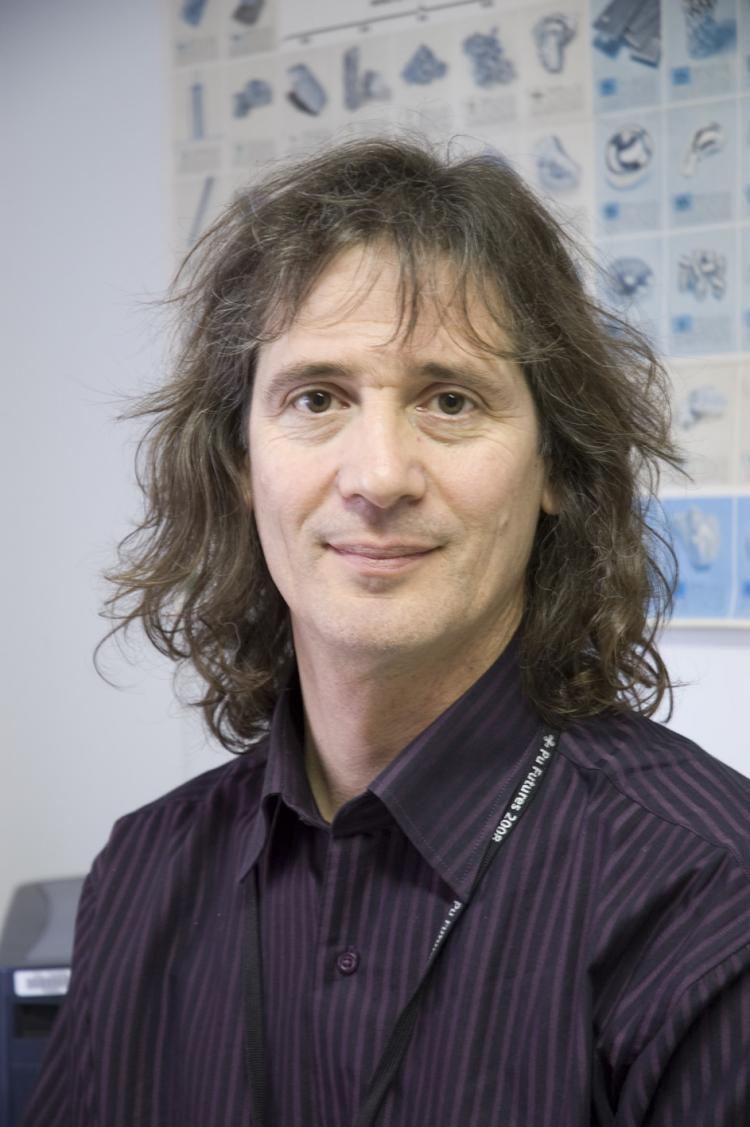 Philippe Moisy合作论文数Institut Franco-Chinois de l'Energie Nucleaire, Sun Yat-sen University;INSTN1
 Atsuyuki Suzuki合作论文数University of Tokyo;Japan Atomic Energy Agency1Charles Madic合作论文数French Alternative Energies and Atomic Energy Commission1Y Kulyako合作论文数1T. I. Bukina合作论文数1Z. K. Karalova合作论文数1Elena A. Lavrinovich合作论文数1A. G. Beirakhov合作论文数1S. Perevalov合作论文数1Ilia a Lebedev合作论文数1V. Ya. Frenkel合作论文数1
 B. Ya. Spivakov合作论文数1N. D. Goletskii合作论文数1
 Yu. S. Fedorov合作论文数1
 Merlin Lecomte合作论文数CEA/DEN/VRH/DRCP/SCPS1




