The Zambian Copperbelt, which is the southern part of the Central African Copperbelt (CACB), contains numerous large to super-large Cu-Co deposits. However, mafic magmatic rocks in this region are poorly understood, and their tectonic setting remains controversial. To address this and to explore their relationship with mineralisation, we investigated the Chambishi Cu-Co deposit in Zambia, presenting mineralogical data of the ores together with precise geochronological and geochemical analyses of gabbro intruded into the Upper Roan Subgroup. LA-ICP-MS zircon U-Pb dating indicates the Chambishi gabbro emplacement at ca. 767 Ma. The rocks exhibit pronounced negative Eu anomalies (delta Eu = 0.17 to 0.24) and Sr depletion, but no significant negative anomalies in Nb, Zr or Hf. They have low Nb/U (17.17 to 25.96) and Ce/Pb (7.64 to 7.88) ratios, high V/Sc (8.7 to 11.8), with epsilon Nd(t) values ranging from -0.70 to +0.67, initial 87Sr/86Sr ratios of 0.70619 to 0.70859 and zircon epsilon Hf(t) values from +0.6 to +12.6. These features of the Chambishi gabbro indicate a sub-alkaline basaltic magma. This magma derived from moderately partially molten enriched mantle one (EMI) type lithospheric mantle metasomatised by subduction-related fluids. Tectonic discrimination diagrams (Zr/Y vs. Zr, Th/Hf vs. Ta/Hf, Zr/Y vs. Zr/Nb) consistently indicate an intraplate tholeiitic affinity formed in an extensional setting. Integrating age data from rift-related Cu-Co deposits across the CACB and the predominance of rift-stage ores at Chambishi, we propose that syn-rift period represents the main mineralisation period for the CACB. The rift extension event recorded by the Chambishi gabbro constitutes a deep-seated response to this main mineralisation period. Later orogenic events only caused localised overprinting.
The Sapat Complex in Northern Pakistan contains remnants of the northern Neo-Tethys Ocean, presently exposed along the Indus Suture Zone. The geochemical evolution of Sapat Complex peridotites during subduction initiation (SI) remains a key unresolved issue. This study presents new mineralogical, geochemical, calcium and ReOs isotopic data for the Sapat Complex lherzolites to constrain their petrogenesis and the nature of melt-rock interaction during the nascent stages of subduction. Petrographic and geochemical analyses indicate that the Sapat lherzolites are characterized by olivine with high forsterite contents (Fo = 100 & times; Mg / (Mg + Fe2+): 0.89-0.91), high-Al spinel (Cr# = 0.45 to 0.51; Al2O3 = 25.2 to 29.3 wt%), orthopyroxene with elevated CaO (0.88-2.46 wt%) and Al2O3 (2.21-4.89 wt%) and relatively low Mg# (0.89-0.90), and clinopyroxene with high Al2O3 (2.74-6.45 wt%) and similarly low Mg# (0.91-0.92). The Sapat Complex lherzolites are believed to have escaped extensive suprasubduction zone re-melting, which produced the highly depleted harzburgites that dominate the ophiolitic complex. They exhibit a narrow range of delta(44)/Ca-40 values (0.75-0.93 parts per thousand), lower than the estimated average for Earth's upper mantle (0.94 +/- 0.10 parts per thousand). This isotopic signature is interpreted to result from interaction with a low-delta(44)/Ca-40 metasomatic agent, likely a carbonate-rich melt derived from the subducting slab. The Os-187/Os-188 ratios of the lherzolites, ranging from 0.12511 to 0.12845, are slightly more radiogenic than the present-day chondritic value (0.1275). The lherzolites of the Sapat Complex display Re-187/Os-188 ratios between 0.228 and 0.321, notably lower than the primitive upper mantle value (similar to 0.4). The younger TRD model ages (<1.0 Ga) recorded by the Sapat Complex peridotites likely reflect multiple episodes of melting and depletion associated with the opening of the Proto-Tethys and Neo-Tethys ocean basins. These findings suggest that the Sapat lherzolites retain a geochemical imprint of early melt-rock interaction during subduction initiation and highlight the significance of carbonate melt metasomatism in modifying the composition of the nascent mantle wedge.
The Sapat Ophiolitic Complex (Northern Pakistan) represents a well-preserved Neo-Tethys oceanic lithosphere remnant along the Main Mantle Thrust/Indus Suture Zone (MMT/ISZ). This study provides new mineralogical, geochemical, and Re–Os isotopic data on chromitites (disseminated, semi-massive, and massive) hosted in dunites. The associated Cr-spinel grains commonly contain base-metal sulfide (BMS), silicate, and platinum-group mineral (PGM) inclusions. Chromitites exhibit uniform Cr# [Cr/(Cr + Al)] (0.79–0.85) and variable Mg# [Mg/(Mg + Fe2+)] (0.52–0.70), consistent with boninitic parental magmas. The melt compositions calculated from spinel chemistry, yield (Al2O3)melt values of 9.36 to 11.55 wt% and (FeO/MgO)melt ratios of 0.60 to 1.22. Trace element concentrations of the chromitites (e.g., Co: 206–544 ppm, Ga: 13–27 ppm, Ni: 441–1300 ppm, Sc: 2.42–5.55 ppm and V: 613–801 ppm) fall within the compositional ranges reported for chromitites derived from the mantle units of other well-characterized ophiolitic complexes. These geochemical features are indicative of an island arc tholeiitic melt exhibiting boninitic affinity. Such magmas were most likely in chemical symmetry with the podiform chromitites and the surrounding mantle peridotites from which they crystallized. Furthermore, the distribution patterns of minor and trace elements in the Sapat Complex chromites support a boninitic magma source. Field relationships, petrographic observations, and whole-rock and mineral chemistry collectively suggest that these chromitites were influenced by both melt-rock reaction and melt-melt interaction. These interactions facilitated the crystallization of high-Cr chromitites from boninitic melts enriched in Cr but depleted in Al and Ti. The iridium-group platinum-group elements (IPGEs) enriched signatures (average: 72.9–165.8 ppb), measured initial 187Os/188Os ratios (0.12161–0.12411) and low Re/Os ratios (0.01–0.29) are consistent with those of mantle-hosted chromitites worldwide, supporting crystallization from deep-mantle boninitic melts in a supra-subduction zone (SSZ) setting.
Small-scale layered mafic intrusions hosting Fe-Ti oxide ores within orogenic belts are unconventional, and their geodynamic background, petrogenesis and metallogenic mechanisms remain poorly understood. To address this issue, our study focuses on investigating two recently discovered layered mafic Shaxi and Shaxinan intrusions from Eastern Tianshan belt in the Central Asian Orogenic Belt (CAOB). The Shaxi and Shaxinan intrusions are characterized as layered gabbro, intricately composed of alternating strata of hornblende gabbro and gabbro. Notably, the Fe-Ti oxide ores are specifically hosted within the basal sections of the hornblende gabbro layers. The zircon U-Pb dating yields an age of 307.9 +/- 4.0 Ma for the Shaxi gabbro, which is coeval with the Shaxinan intrusion and Late Carboniferous mafic magmatism in East Tianshan. Both intrusions are tholeiitic and exhibit enrichment in light rare earth elements (LREE) and large ion lithophile elements (LILE, e.g., Ba and U), and high field strength elements (HFSE, e.g., Nb and Zr) with obvious positive Eu anomalies. The Shaxi and Shaxinan intrusions have limited ranges of the epsilon Nd(t) values from 1.78 to 1.86 and 2.07 to 2.29 respectively but a relatively high (87Sr/86Sr)i from 0.7072 to 0.7075 and from 0.7067 to 0.7069, respectively. In combination with previous studies, our new geochemical and isotopic data suggest that the parental magmas of the Shaxi and Shaxinan intrusions likely originated from the partial melting of a metasomatized lithospheric mantle, a process that was likely initiated by the influx of hot, rising asthenospheric melts. The Shaxi and Shaxinan intrusions display highly differentiated chemical signatures, indicating their parental magmas underwent intense fractional crystallization, leading the residual melts enriched in ore-forming elements and H2O. During ascent and emplacement, these magmas likely assimilated country rocks of the Xingxingxia Group, introducing additional H2O and CO2 into the system. This contamination elevated magmatic oxygen fugacity and played a key role in the formation of Fe-Ti oxide deposits.
The Tuokesai Pb-Zn deposit is located in the eastern section of the West Tianshan Orogen within Precambrian carbonate rocks. However, the genesis of the ore, including sedimentary exhalative and sedimentarymetamorphic types, remains controversial owing to varying interpretations of strata-bound and vein-type mineralization. In this study, we aimed to construct an innovative genesis model, focusing on two mineralization types, by analyzing fluid evolution, material sources, and trace element distributions. Three mineralization stages were identified, each with specific pyrite generation. Stage I pyrite-sphalerite-galena bands (Py-1 and Py2) represent strata-bound mineralization. Stage II sphalerite-pyrite-quartz veins (Py-3) and Stage III pyrite-quartz-calcite veins (Py-4) represent vein-type mineralization. Fluid inclusion microthermometric and H-O isotopic analyses revealed that Stage I fluids are characterized by low temperatures (132-171 degrees C) and moderate salinities (11.8-17.3 wt% NaCl eqv.), and are derived from modified seawater. Conversely, fluids in Stages II-III are associated with moderate temperatures (165-267 degrees C) and variable salinities (2.1-35.3 wt% NaCl eqv.), being derived from a mixture of magmatic and meteoric water. The in situ S isotopic composition suggests that Py-1 and Py-2 (delta 34S = 9.46-12.20 %o) originated from the thermochemical reduction of marine sulfate, whereas Py-3 and Py-4 (delta 34S = 0.85-3.85 %o) originated from magmatic components. LA-ICP-MS analysis of trace elements in pyrite, combined with machine learning classification methods, indicated that Py-1 and Py-2 have a synsedimentary origin whereas Py-3 and Py-4 have a magmatic-hydrothermal origin. Overall, our findings support a novel multistage genesis model for the Tuokesai Pb-Zn deposit, suggesting that Neoproterozoic syngenetic strata-bound mineralization was overprinted by Late Paleozoic vein-type hydrothermal remobilization. This model highlights the importance of incorporating diverse geological events into our understanding of the ore-forming process to facilitate the exploration of carbonate-hosted Pb-Zn deposits within the West Tianshan Orogen.
Late Triassic was critical in paving the age of dinosaurs and emergence of modern ecosystems. The end-Triassic mass extinction (similar to 201 Ma) was triggered by warming, linked to massive volcanism, yet evidence suggests freezing conditions prevailed before this event. Here, we reconstruct the palaeoelevation of southern Altaids (Central Asian Orogenic Belt) during Late Triassic (ca. 204.6-201.9 Ma) using hydrogen isotopes of n-alkanes and a novel ultraviolet-B proxy of pollen. The results show that the Junggar Basin and surrounding mountains reached palaeoelevations of 3,028-4,050 m. This high-altitude setting subjected alpine flora to severe stress, evidenced by malformed pollen grains and elevated ultraviolet-absorbing compounds in sporopollenin. These findings indicate a Tibetan-style "Altaid Plateau" was formed by the amalgamations of the Tarim, European, and Siberian cratons, which catalysed mountain glaciation and alpine ecosystems. In summary, the uplift of the Altaid Plateau reset the Earth's climate and regional ecosystem, connecting global cooling with monsoon intensification.
The Western Kunlun Orogenic Belt (WKOB) records the evolution of the Proto-Tethys Ocean from Neoproterozoic rifting through Early Palaeozoic subduction to final closure. However, the origin of the South Kunlun Block and the polarity of Proto-Tethys subduction remain debated. This study presents detrital zircon U-Pb geochronology and whole-rock geochemistry of metasedimentary and magmatic rocks from the Sailajiazitage Group and Xihexiu Group in the North Kunlun and the Pushou Group in the South Kunlun. Maximum depositional ages (MDAs) of 788 Ma for the Sailajiazitage Group confirm its deposition on the Neoproterozoic Tarim margin. The Xihexiu Group yields MDAs of 422 Ma, and together with active-margin geochemistry and Tarim-affinity detrital zircons (peak at similar to 1405 Ma), identifies this unit as a Silurian-Devonian forearc-to-accretionary wedge formed during northward subduction of the Proto-Tethys beneath Tarim. The Pushou Group yields MDAs of 409 Ma and exhibits arc-affinity geochemical signatures with mixed detrital zircon age populations derived from Gondwana-Tarim detrital components (similar to 760-877 Ma and similar to 1846 Ma), indicating Devonian forearc deposition during southward Proto-Tethys subduction beneath the South Kunlun Block. A 905 Ma orthogneiss within the Pushou Group displays a within-plate granite geochemical signature, recording intraplate magmatism during Rodinia fragmentation. Critically, the absence of similar to 800 Ma detrital zircons that are characteristic of the Tarim margin demonstrates that the South Kunlun Block is an independent Precambrian microcontinent that rifted from Rodinia concurrently with, but separately from, the Tarim Block at 905 Ma. The South Kunlun is therefore interpreted as a composite arc block, comprising a 905 Ma Precambrian microcontinent core overprinted by Cambrian-Devonian arc magmatism and accretionary assemblages generated during Proto-Tethys subduction, prior to its final amalgamation with the Tarim Plate following Proto-Tethys closure at 409 Ma.
The interplay between mantle plume-derived seamounts and subduction zones plays a pivotal role in shaping orogenic evolution, yet its long-term geological fingerprints remain understudied in ancient orogens. Here, we investigate the Mayile ophiolitic m & eacute;lange in West Junggar (Altaids) to unravel the lifecycle of a plume-modified oceanic plate and its interaction with subduction processes. Our integrated petrological, geochemical, and isotopic analyses reveal three distinct phases of magmatism tied to mantle plume and seamount subduction. The 490 Ma Type 1 assemblages (OIB-type hornblende gabbro, carbonatized basalt and basalt) exhibit NbTa enrichment (Nb/Nb* >1), transitional Pacific-to-Indian MORB Pb isotopes, and positive epsilon(Nd)(t) values (6.08-7.55), suggesting that they were derived from a mantle plume source beneath the Junggar Ocean. Hornblende thermobarometry reveals shallow melting (37-280 MPa) under anomalously high temperatures (886-938 degrees C), akin to modern plume-affected oceanic plateaus (e.g., Galapagos). These features record Late Cambrian seamount magmatism atop thinning lithosphere, analogous to Pacific intraplate volcanism. Types 2 assemblages (arc-type diabase, hornblende gabbro, carbonatized basalt and basalts) and granites mark the transition to subduction-dominated processes. Depleted Nb and Ta signatures coupled with Indian-MORB type Pb isotopes and sediment-derived PbNd isotopic components (1-2% input) reflect forearc accretion of plume-modified crust during Late Cambrian-Ordovician subduction. This geochemical shift mirrors global examples of seamount subduction (e.g., Mariana), where plume-derived components become entrained in forearc systems. This study establishes an Early Paleozoic analogue for the complete lifecycle of a plume-influenced oceanic plate: 1) Late Cambrian seamount generation atop a thinning lithosphere, 2) Ordovician southward subduction accretion of plume-modified crust, and 3) progressive mantle source contamination through sediment recycling. These findings advance our understanding of how seamount subduction processes shaped the architectural complexity of ancient oceanic terranes in the Altaids and similar accretionary orogens worldwide.
The Sawayaerdun gold deposit (3.7 Moz at 1.38 g/t Au), located in the South Tianshan orogen, Northwest China, is distinguished by deformed quartz-sulfide veins and veinlets overprinted by extensive quartz-sulfide stockworks. The paragenesis is delineated into four distinct stages: (0) preore framboidal pyrite (Py0) within carbonaceous slate interlayers, (1) early-ore deformed, porous pyrite (Py1) and arsenopyrite aggregates (Apy1), (2) main-ore zoned pyrite (Py2) and rhombic arsenopyrite (Apy2), and (3) late-ore anhedral pyrite (Py3). Diagenetic Py0 is notably enriched in gold (mean of 4.62 ppm), As, Co, Ni, Ti, Ba, and W. Py1 formed during the brittle-ductile transition and exhibits reduced gold concentrations (mean = 0.35 ppm). Subsequent dissolution-reprecipitation processes introduced low invisible gold (mean of 0.66 ppm in Py2), along with elevated As, Co, W, Ti, and Ba contents. Py3 displays negligible or undetectable gold content. Almost all pyrite types exhibit low Co/Ni ratios (<1), and arsenopyrite (Apy1 and Apy2) contains higher Au concentrations than pyrite (Py1 and Py2). Sulfur isotope values (delta S-34 = -1.4 parts per thousand to +0.61 parts per thousand) across all sulfide types indicate a homogeneous, auriferous fluid source. The delta S-34 signatures of Py0 (-1.14 parts per thousand to +0.16 parts per thousand) are comparable to those of the upper Paleozoic clastic-carbonate host sediments, suggesting that sulfur and auriferous fluids were mobilized from these units during regional metamorphism. This interpretation is further supported by Pb isotope compositions, which likewise indicate sedimentary sources for the ore metals. Textural, chemical, and isotopic data indicate that the recrystallization of Au-rich Py0 during regional metamorphism generated auriferous fluids, which through fluid-rock reactions, such as sulfidation and subsequent brittle-ductile transition, formed gold-poor, deformed Py1. Crystallization of Au-poor Py2 resulted from the dissolution-reprecipitation of early Py1 during fluid boiling. These findings, combined with gold contribution estimates, underscore the critical role of early-stage gold enrichment in diagenetic pyrite, and fluid phase separation in concentrating gold in orogenic deposits, thus providing a fundamental exploration target in the South Tianshan region and elsewhere in the Central Asian Orogenic Belt.
The Jurassic tectonic and geomorphic evolution of the Chinese West Tianshan (CWTS) remains controversial, with conflicting models proposing either regional peneplanation or a local topographic relief. We present the first integrated detrital apatite U-Pb geochronology and trace element geochemistry dataset from Jurassic strata in the Yili and Bayanbulak Basins, complemented by previously published detrital zircon U-Pb data, to constrain the Jurassic tectono-geomorphic evolution of the CWTS. Our results demonstrate that early Early Jurassic sediments in the northern Yili Basin were primarily sourced from the North Tianshan-northern Yili Block and central Yili Block, reflecting topographic barriers that restricted southern sediment input. By the late Early Jurassic, these barriers were eroded, enabling south-derived detritus (460-400 Ma) from the southern Yili-Central Tianshan to reach the northern Yili Basin, signaling diminished topographic relief. In contrast, the Bayanbulak Basin recorded consistent provenance from the southern Yili-Central Tianshan throughout the Jurassic, indicating sustained high topography in this domain. These findings reveal a two-stage Jurassic evolution in the Yili-Central Tianshan region: Early Jurassic uplift with proximal sedimentation likely driven by far-field stresses from the Qiangtang collision or Mongol-Okhotsk closure, followed by the late Early to Late Jurassic regional peneplanation, interrupted by a persistent relief in the southern Yili-Central Tianshan. The two-stage Jurassic tectonogeomorphological evolution of the Yili-Central Tianshan reveals a north-to-south, time-transgressive planation across the region, and demonstrates the critical influence of inherited Mesozoic structures on the present-day landscape.
The Altaids represents an exceptional region for investigating the architecture and dynamics of subduction–accretion processes in an accretionary orogen. However, the Devonian tectonic setting of the Altaids remains debated, including whether subduction of the Paleo-Asian oceanic plate continued or had already terminated as a result of continental collision. This uncertainty hinders reconstructions of the accretionary evolution of the Altaids and, more importantly, limits our understanding of the mechanisms of accretionary orogenesis. In this study, we focus on the Central Tianshan Arc in the southern Altaids, which records Paleozoic arc magmatism. Geological mapping, structural analysis, and tectono-magmatic investigations revealed the presence of metamorphosed biotite monzogneisses (470 Ma) and gneissic granodiorite (412 Ma), together with unmetamorphosed monzogranitic veins (410 Ma), MORB-like gabbros (406 Ma), and A-type granites (400 Ma). Cross-cutting relationships and structural constraints indicate a three-stage tectonic evolution, as follows: N–S-directed compression accompanied by regional metamorphism until ca. 412–410 Ma, NS extension at ca. 410–400 Ma, and renewed NS compression with sinistral strike-slip deformation along the Heishanliang Fault after 400 Ma. Combined with regional data, we infer that a subduction polarity reversal occurred on both sides of the Central Tianshan Arc during the Devonian, likely triggered by the arrival of buoyant terranes at the trench, which impeded subduction and led to crustal thickening and regional metamorphism, followed by slab break-off, asthenospheric upwelling, short-lived extension, and a subsequent magmatic hiatus. These findings provide new constraints on the Devonian tectonic setting of the Central Tianshan Arc and enable the development of a coherent geodynamic model for the long-term Paleozoic evolution along the southern Altaids.
The Eastern Sakarya Zone (ESZ) of northeastern T & uuml;rkiye records a remarkable duality in Eocene magmatism, where Cu-Mo fertile felsic porphyries coexist with barren mafic-intermediate intrusions. We present an integrated, multi-proxy investigation of the I(center dot)spir intrusive complex, incorporating whole-rock geochemistry, zircon U-Pb-Hf isotope-trace element systematics, and apatite major-trace element and in-situ Nd isotopic signatures, to delineate the petrogenetic pathways and magmatic processes that control fertility contrasts across this intrusive suite. Zircon and apatite proxies reveal that I(center dot)spir magmas were derived from a juvenile mantle source, retained consistently radiogenic isotopic signatures, and crystallized under relatively reduced, volatile-poor conditions. In contrast, fertile Eocene felsic intrusions in the ESZ show enriched isotopic signatures, elevated oxidation states, and volatile-rich magmas derived from a metasomatized mantle source and buffered in longlived crustal magma reservoirs, conditions favorable for porphyry Cu-Mo fertility. Apatite-derived estimates of Cl, F, S, and Delta FMQ further distinguish these suites, with fertile magmas showing elevated halogens and sulphur contents coupled with oxidized states favorable for delayed sulphide saturation and metal transport. These results demonstrate that in post-collisional arcs, fertility depends not only on tectonic triggers such as slab break-off or lithospheric delamination but also on whether melts are processed through volatile-charged, oxidized hot zones. The I(center dot)spir suite provides a critical juvenile end-member against which fertile felsic counterparts can be contrasted, offering a refined framework to assess magmatic fertility across the Tethyan Metallogenic Belt and other collisional orogens.
Subduction initiation in hot subduction zones leaves a distinct geological record characterized by forearc basalt−boninite−arc tholeiite assemblages and supra-subduction zone ophiolites. However, cold subduction initiation usually lacks these diagnostic features, complicating its identification in the orogenic record. The Central Asian Orogenic Belt has experienced multiple subduction initiation events, making it a natural laboratory for studying such cases. This study presents a new method for identifying cold subduction initiation in the Anqi accretionary complexes in southern West Junggar, Northwest China. By employing field investigation, large-scale mapping, geochemistry, and geochronology, we divided the target area into five tectonic units. Unit 1 predominantly comprises ca. 410 Ma turbidites that deformed before 314 Ma, indicating Devonian ocean basin rifting and the generation of the newly formed ocean. Unit 2 consists of coherent trench turbidites deposited after 358 Ma and deformed before 342 Ma. Unit 3 is an ocean plate stratigraphy mélange formed after ca. 347 Ma. Together, units 2 and 3 indicate an Early Carboniferous accretionary complex distributed along the Anqi fault. Unit 4 contains ca. 314 Ma coherent turbidites, representing a Late Carboniferous mature accretionary complex. Unit 5 comprises post−327 Ma coarse sediments overlying other units, representing a trench-slope basin. Significantly, the detrital zircon provenance of the Early Carboniferous accretionary complex (units 2 and 3) shows a peak predating any intrusive plutons in the area, indicating an immature initial arc stage with mainly eruptive lavas but lacking intrusive rocks. The Early Carboniferous accretionary complex is the only geological record of this initial subduction in the region, suggesting that it preserves evidence of cold subduction initiation.
The Pamir orogen, located on the western part of the Tibetan plateau, preserves essential records pertinent to the evolution of the Tethys Ocean and the coalescence of the Indian and Asian continental blocks. Cretaceous to Cenozoic magmatic rocks are widespread in Pamir; however, several issues regarding their spatio-temporal distribution, petrogenesis, emplacement environment and trigger mechanism remain controversial. In this study we report zircon U-Pb geochronology, whole rock geochemistry, Lu-Hf, and Sr-Nd isotopic data for the igneous rocks from the East Pamir. Based on zircon U-Pb dating, three distinct age groups have been identified within the previously reported Cretaceous (K2) granites from the Tashkorgan area: (1) The late Early Cretaceous rocks are classified as A-type (113.1 f 1.8-111.3 f 2.2 Ma) and S-type granites (107 f 3.1 Ma), with epsilon Hf(t) values ranging from -13.1 to -1.6 and from -12.2 to -10.3, respectively. The epsilon Nd(t) isotopic values of the Atype granites vary between -10.7 to -9.6. (2) The Late Cretaceous granites (81.71 f 0.85 Ma), enclaves (83.46 f 0.80 Ma), and dioritic dike (82.09 f 0.65 Ma) are isotopically more depleted, exhibiting epsilon Hf(t) values of 6.1 to -1.6, -5.2 to -1.9, and - 4.7 to -1, respectively. The enclaves yield epsilon Nd(t) values between -5.2 to -4.1, whereas the dioritic dike has an epsilon Nd(t) value of 0.9. (3) The Cenozoic granites (11.72 f 0.16 Ma) are classified as high Ba-Sr adakites, with epsilon Hf(t) values ranging from -13.3 to -5.7 and epsilon Nd(t) values between -7.3 and - 7.2. The late Early Cretaceous A-type granites are interpreted as products of hybrid melts from both mantle and crustal sources, whereas the contemporaneous S-type granites originated from partial melting of metasedimentary protoliths. Late Cretaceous granites and associated enclaves were derived from juvenile intermediate-mafic sources, and the diorite dike represents a mantle-derived melt. The Neogene adakites originated from metasomatized lithospheric mantle. These igneous rocks record three episodes of tectonic evolution: (1) Late Early Cretaceous extension related to roll-back of the Neo-Tethyan slab; (2) Late Cretaceous delamination of thickened mafic lower crust, facilitated by edge-driven convection; and (3) Cenozoic crustal foundering resulting from underthrusting of the Indian lithosphere, which generated small-volume adakitic magmatism.
Ophiolitic sequences obducted onto continental margins provide critical insights into the oceanic lithosphere's structure and evolution. This study integrates field observations and petrochemical data from Chitral Complex mantle peridotites along the Main Karakoram Thrust (MKT), northwest Pakistan, to study compositional heterogeneity and geodynamic evolution in the Late Cretaceous Neo-Tethyan domain. The peridotites, primarily spinel lherzolite and harzburgite, exhibit notable geochemical variability: spinel Cr# ranges from 0.21 to 0.74, Mg# from 0.40 to 0.71, and whole-rock Al2O3 (0.26-2.06 wt%) and CaO (0.34-2.13 wt%) show broad intervals. Clinopyroxenes are LREE-depleted, though some show LREE enrichment due to melt-rock interaction. Combined spinel and clinopyroxene data suggest similar to 10-20% fractional melting from a depleted MORB mantle source, supported by Os isotope signatures (low Re/Os = 0.02-0.07; Os-187/Os-188 = 0.1219-0.1266; gamma Os = -3.73 to -0.10), indicating a highly depleted mantle. Trace element modeling of clinopyroxenes suggests refertilization by slab-derived fluids, reflecting a shift in melt-depletion mechanisms. These heterogeneous compositions deviate from typical abyssal or forearc lithologies, indicating a tectonic transition from anhydrous MORB-like conditions to fluid-rich subduction environments. This challenges the classical forearc-spreading model for the Karakoram ophiolites because it cannot account for the observed thin crust (<6 km) and low magmatic budgets, whereas subduction re-initiation along an ultraslow-spreading ridge, potentially facilitated by oceanic detachment faulting, naturally explains both features. The Chitral Complex, one of the most compositionally diverse mantle exposures in the northwest Pakistani ophiolitic belt, offers unique insights into Neo-Tethyan mantle dynamics and lithospheric transformation across the Cretaceous-Paleogene boundary.
The Duoshaoshan Pb-Zn deposit (0.25 Mt. @ 5.9 wt% Pb and 3.1 wt% Zn) is hosted in Upper Cretaceous limestone in the Karakorum Range, NW China. Pb-Zn mineralization is characterized by veinlet and stockworks ores that are cut by later vein ores. Four stages of mineralization are recognized: (I) galena stage, (II) galenasphalerite-pyrite stage, (III) galena-smithsonite-cerussite stage, and (IV) quartz-calcite stage. Trace elements (Cd, As, Ge, TI, Zn) enriched in galena, (Ni, TI, Cd, As) enriched in sphalerite, and (Mn, Ni, As, Zn, Tl, Pb) enriched in pyrite, which are consistent with those of MVT deposits. Sphalerite GGIMFis geothermometers (56-127 degrees C; average 108 degrees C) indicate that the Pb-Zn mineralization under a low-temperature condition. In situ delta 34S values of galena (-17.3 to 3.6 %o), sphalerite (-9.4 to 3.42 %o), and pyrite (-27.3 to -4.7 %o) suggest sulfur sources from the bacterial sulfate reduction in local sedimentary rocks. In situ Pb isotope ratios (206Pb/204Pb = 18.751-18.768, 207Pb/204Pb = 15.715-15.728, and 208Pb/204Pb = 39.140-39.183) of galena align with those for the regional MVT Pb-Zn deposits, indicating that the underlying Triassic strata supplied substantial metals for the studied Pb-Zn deposit, whereas the host Cretaceous carbonates did not contribute significant metals. The mineralization styles, sulfides geochemistry, and sulfur-metal sources suggest that the Duobaoshan deposit represents a Mississippi Valley-type Pb-Zn deposit. This study provides important insights into the geochemical features and metal sources of carbonate-hosted Pb-Zn deposits in the Karakorum Range.
The Western Kunlun Orogen (WKO), located on the northwestern margin of the Tibetan Plateau, is considered as an accretionary orogen that preserves the entire tectonic evolution of the Tethyan oceans. Its Paleozoic to early Mesozoic orogenic history is crucial for reconstructing the Paleo-Asian plate, as it occupies a key tectonic position at the junction of the Pan-Asian and Tethyan tectonic domains. However, considerable dispute exists regarding its long-term orogenic process, particularly concerning the closure timings, positions, and subduction polarity of the Proto -Tethys and Paleo-Tethys Ocean in the WKO. The main cause of these controversies is the lack of a high-resolution lithospheric structure in this area. To clarify and gain deeper insights into the orogenic processes of Tethys, a 350-km-long Magnetotelluric (MT) profile, consisting of 32 broadband sounding stations, was deployed across the Tarim Basin (TB), Northern Kunlun Terrane (NKT), Southern Kunlun Terrane (SKT), Mazar Accretionary prism, and Karakorum Terrane (KKT) to collect field data for at least 36 h. Dimensionality analysis indicated that a 2D analysis was valid. The MT data were rotated to a 150 degrees direction before inversion, based on an electrical principal strike analysis. The MT data were then imaged through a joint inversion of Transverse Electric Field (TE) and Transverse Magnetic Field (TM) modes using a nonlinear conjugate gradient (NLCG) algorithm. The resulting model provides crucial new constraints on the lithospheric structure beneath the WKO, revealing several distinct resistive anomalies. The bidirectional dipping geometry of these anomalies, integrated with geochronological and geochemical evidence, reveals two distinct subduction systems: one between the Northern and Southern Kunlun terranes, representing the subduction polarity of Proto-Tethys Ocean, and another between the Southern Kunlun and Karakorum terranes, recording the subduction process of PaleoTethys Ocean. Additionally, we interpret two resistive lower crust-uppermost mantle structures beneath the Mazar accretionary prism as a delaminated oceanic slab. Concurrently, a large, interconnected high-conductivity zone from the crust to the upper mantle is identified, likely reflecting partial melting due to asthenospheric upwelling triggered by Mid-Jurassic slab delamination. Furthermore, we propose that these pre-existing weak zones ultimately facilitated the Cenozoic deformation and uplift of the Kunlun Mountains during the ongoing India-Asia collision.
The triangular Songpan‐Ganzi complex (SGC), the largest turbiditic basin in the Tibetan Plateau, is a key area for understanding the source‐to‐sink process of a trapped basin during the closure of a paleo‐ocean. However, the diversity of age spectra of detrital zircons in this complex was generally neglected in previous study, resulting in hot debates on provenance and tectonic setting of the SGC. Rather than local homogeneity (e.g., depocenters) as previously suggested, at least four categories of age spectra with different age peak associations over the whole SGC can be recognized from the clustering analysis based on our new and previously published detrital zircon data from the SGC. The Monte Carlo unmixing models from four categories of turbidite in the SGC and surrounding terranes/orogens and magmatites reveal that turbidites in the SGC were shaped by the mixing of diverse source combinations with varying degrees. The modeling results were supported by the Hf isotope based on the consistency between the four categories of turbidite and corresponding simulated source associations. Given the diversity of age spectra of turbidites in the whole SGC, previous published paleocurrent data and other geologic facts, we proposed an alternative model in which the internal ocean circulation drove the mixing of different proportions of sources around and transported the mixed sediments to scatter and fill at the scope of the whole SGC during the Mid‐Late Triassic period. This detritus‐filling pattern supports a remnant‐ocean basin model, which provides a feasible solution to the formation of trapped basins in fossil orogens.
Understanding how subduction processes incorporate continental fragments into accretionary complexes is important for constraining the formation of accretionary orogenic belts. The Kokchetav Complex is a distinctive geological unit in the northwestern Altaids of northwestern Kazakhstan that is ideal for investigating such processes. It hosts microcontinental fragments, and accretionary and (ultra)high-pressure ([U]HP) metamorphic rocks. We undertook U-Pb dating and Lu-Hf isotopic analyses of detrital zircons from quartzites, schists, gneisses, and sandstones in the metasedimentary belt, gneissic basement rocks, (U)HP metamorphic belt, and ophiolitic melange in the Kokchetav Complex. The quartzite-schist rocks yield three primary zircon age clusters: middle-late Paleoproterozoic (1.8-1.6 Ga), middle Mesoproterozoic to early Neoproterozoic (1.4-0.8 Ga), and latest Neoproterozoic to Early Devonian (544-406 Ma), with a few isolated zircons dated between 3.6 and 2.8 Ga. These rocks have diverse detrital zircon U-Pb age spectra (unimodal to multi-modal) with variable Hf isotope ratios (-10.9 to +22.0). The zircons have a mixed origin from the early Paleozoic Stepnyak Arc and Precambrian continental fragments, and were not derived from the gneissic basement, indicating an affinity with the Proterozoic Musgrave-Albany Orogen in Australia. Consequently, these zircons reveal that a continent fragment from the northwestern Rodinia supercontinent exists within the Kokchetav Complex, which retained its original nature from the Neoproterozoic to early Paleozoic and was later incorporated into the accretionary complex as tectonic sheets and slices during convergence between the Kokchetav microcontinent and Stepnyak Arc. Our results further indicate that, rather than being part of a unified Precambrian block, the Kokchetav Complex incorporated continental fragments and younger accreted materials that formed in an early Paleozoic supra-subduction zone setting.
Conodonts and ostracods in the orogenic belt can provide valuable insights into the timing and effects of tectonic events. In this study, four species of conodonts and 24 species of ostracods are reported for the first time in the Hongliugou and Kalamaili Formations in the Harlik arc, southwestern Central Asian Orogenic Belt (SW CAOB). Among them, conodont species Caudicriodus woschmidti is the significant element in the lowermost Devonian conodont zone, indicating that the upper part of the Hongliugou Formation dates to the earliest Devonian (Lochkovian) age. The ostracod assemblages identified in the Hongliugou and Kalamaili Formations are characterised by the dominance of Palaeocopid and Metacopina elements, respectively, suggesting a change in environment from inner-shelf to hemipelagic outer-shelf. This transgression is associated with regional extension during the Early Devonian, likely subjected to the retreating subduction of the Paleo-Asian Ocean. Furthermore, paleobiogeographic analysis of Devonian ostracods in the Harlik arc shows a prominent correlation with eastern North America and southern Europe. This suggests that the Harlik arc was probably located in the mid-latitude region of the northern hemisphere, adjacent to the northeastern part of the Laurentia-Siberia continent, during the Early to Middle Devonian.
 Wenjiao Xiao (肖文交)合作论文数Xinjiang Institute of Ecology and Geography, Chinese Academy of Sciences;Institute of Geology and Geophysics, Chinese Academy of Sciences104
 Songjian Ao (敖松坚)合作论文数State Key Laboratory of Lithospheric Evolution, Institute of Geology and Geophysics, Chinese Academy of Sciences51
 Miao Sang合作论文数41
 Dongfang Song (宋东方)合作论文数Institute of Geology and Geophysics, Chinese Academy of Sciences;University of Chinese Academy of Sciences29
 Hao Wang (王浩)合作论文数中国科学院武汉岩土力学研究所28
 Zhou Tan合作论文数Institute of Geology and Geophysics Chinese Academy of Sciences, Chinese Academy of Sciences28
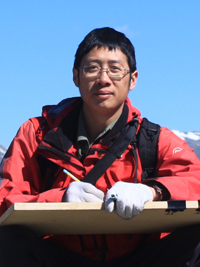 Jien Zhang (张继恩)合作论文数Institute of Geology and Geophysics, Chinese Academy of Sciences28
 Brian Frederick Windley合作论文数Department of Geology, University of Leicester;State Key Laboratory of Lithospheric Evolution, Institute of Geology and Geophysics, Chinese Academy of Sciences27TongHui Fang (方同辉)合作论文数25Mingjie Yu (于明杰)合作论文数School of Geography, South China Normal University24
 Chunming Han (韩春明)合作论文数Institute of Geology and Geophysics, Chinese Academy of Sciences24
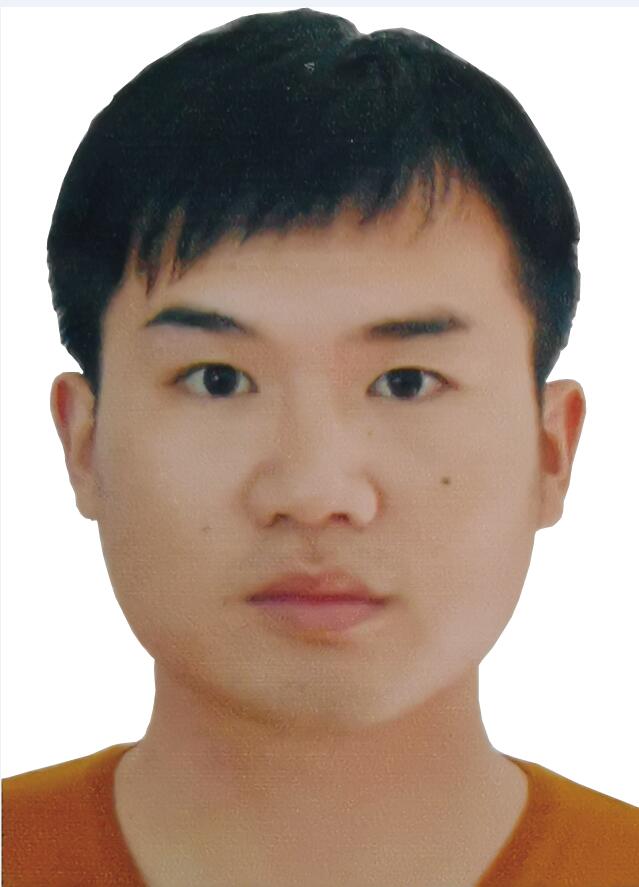 He Yang (杨贺)合作论文数Xinjiang Institute of Ecology and Geography, Chinese Academy of Sciences;University of Chinese Academy of Sciences20
 Zhiyong Zhang (张志勇)合作论文数Institute of Geology and Geophysics, Chinese Academy of Sciences;University of Chinese Academy of Sciences19
 Rui Li (李锐)合作论文数State Key Laboratory of Desert and Oasis Ecology, Xinjiang Institute of Ecology and Geography, Chinese Academy of Sciences, Urumqi, China
19Jingbin Wang合作论文数Google16
Rui Li (李锐)合作论文数State Key Laboratory of Desert and Oasis Ecology, Xinjiang Institute of Ecology and Geography, Chinese Academy of Sciences, Urumqi, China
19Jingbin Wang合作论文数Google16 Xiao-Hua Deng合作论文数14Yuwang Wang (王玉往)合作论文数Technic Research Center for Deep Resources Exploration in Non-ferrous Metal Mines, Beijing Institute of Geology for Mineral Resources Co. Ltd10
 Bo Wan (万博)合作论文数Institute of Geology and Geophysics, Chinese Academy of Sciences;University of Chinese Academy of Sciences10XiaoFeng Wei (卫晓锋)合作论文数Beijing Institute of Mineral Geology Co., LTD9Jingmin Gan合作论文数8XiaoQiang Lv (吕晓强)合作论文数8
 Lingli Long (龙灵利)合作论文数Beijing Institute of Geology for Mineral Resources8
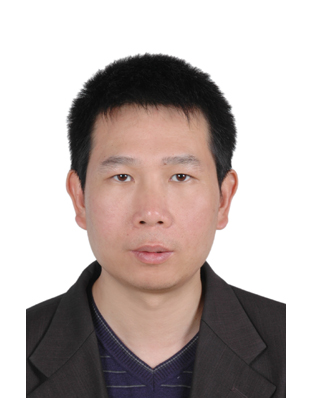 Peng Huang (黄朋)合作论文数Institute of Oceanology, Chinese Academy of Sciences;University of Chinese Academy of Sciences7Yuechen Li合作论文数6
 HuiQiong Zhang (张会琼)合作论文数Beijing Institute of Mineral Geology, Beijing 100012, China6JiangJian Zhu (朱江建)合作论文数6
 Yin Liu (刘寅)合作论文数School of Geosciences, China University of Petroleum6
 Liang Li合作论文数5
 Xiaoliang Jia合作论文数5Tao Zou (邹滔)合作论文数1) Zhongse Zijin Geological Exploration (Beijing) Co., LTD., Beijing 100012, China;
2) Beijing Institute of Mineral Geology Co., LTD., Beijing 100012, China5
Xiaoliang Jia合作论文数5Tao Zou (邹滔)合作论文数1) Zhongse Zijin Geological Exploration (Beijing) Co., LTD., Beijing 100012, China;
2) Beijing Institute of Mineral Geology Co., LTD., Beijing 100012, China5 Wangwei Fu (付王伟)合作论文数哈密市安全生产监督管理局5
 Min Sun (孫敏)合作论文数Department of Earth & Planetary Sciences, Faculty of Science, The University of Hong Kong;Department of Earth Sciences, Faculty of Science, The University of Hong Kong5
 Karel Schulmann合作论文数Centre for Lithospheric Research, Czech Geological Survey, Ministry of the Environment of the Czech Republic5
 Chao Yuan (袁超)合作论文数Chinese Academy of Sciences5
 Hadi Shafaii Moghadam合作论文数Damghan University of Basic Sciences, Damghan University of Basic Sciences5Yu-chun GUAN (管育春)合作论文数4Nijiati Abuduxun合作论文数4Xiaoqiang Lü合作论文数4FenWei Cheng (程奋维)合作论文数4HouYun Sun (孙厚云)合作论文数School of Water Resources and Environment, China University of Geosciences (Beijing); Beijing Institute of Mineral Geology Co., LTD4
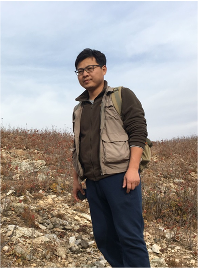 XingKai Huang (黄行凯)合作论文数4Qiao Xu (徐巧)合作论文数4
 Meng Wang (王盟)合作论文数长安大学地球科学与资源学院4
 Junfeng Qu (曲军峰)合作论文数Institute of Geology, Chinese Academy of Geological Sciences4Zhen Yan (闫臻)合作论文数The Institute of Geology, Chinese Academy of Geological Sciences4Qianqian Guo (郭谦谦)合作论文数4




