SUMMARY Non-Newtonian pore-fluid behaviour is incorporated into a generalized Lagrangian–dissipation framework for wave propagation in fluid-saturated porous media. In contrast to approaches that rely on prescribed pore-scale flow patterns, pore geometries, or other microscopic structural assumptions, the present formulation introduces nonlinear rheological effects directly at the macroscopic constitutive level. The resulting model remains consistent with continuum mechanics and Biot-type poroelasticity while allowing non-Newtonian effects to enter three fluid-related dissipation mechanisms: Darcy-type fluid–solid friction, local-deformation (LD) relaxation and bulk-viscous dissipation. Nonlinear dissipation potentials are constructed for these mechanisms and then reduced, through a first-harmonic approximation, to effective frequency-dependent coefficients for harmonic wave analysis. Numerical examples show that the non-Newtonian Darcy-friction and LD mechanisms primarily modify the characteristic frequencies of the corresponding relaxation processes, whereas the non-Newtonian bulk-viscosity mechanism affects both the frequency range and the strength of attenuation and dispersion, with a strong sensitivity to the assumed magnitude of the pore-fluid bulk viscosity. The framework also allows alternative nonlinear representations of Darcy-type fluid–solid friction to be compared within the same Lagrangian–dissipation structure; an alternative nonlinear dissipation operator produces wave-propagation predictions nearly indistinguishable from those obtained using the power-law Darcy-friction model, suggesting that different nonlinear constitutive assumptions may lead to similar effective attenuation structures at the macroscopic scale. Calibration against laboratory measurements on tight carbonate rocks shows that the observed attenuation and velocity-dispersion behaviour can be reproduced using physically interpretable non-Newtonian parameters. These results suggest that non-Newtonian pore-fluid rheology may contribute to frequency-dependent wave-propagation effects in fluid-saturated porous media and provide a flexible macroscopic framework for investigating fluid-related dissipation beyond conventional Newtonian poroelastic models.
Seismic migration images with a high signal-to-noise ratio are crucial for oil and gas exploration and reservoir characterization. However, seismic images obtained with traditional migration methods often suffer from migration artifacts. Thus, one of the most important tasks for seismic data processing is properly separating and suppressing migration artifacts. Unlike random noise, migration artifacts exhibit a correlated distribution, which makes their separation and suppression particularly challenging. To address this issue, we suggest a local similarity-inspired self-learning model for suppressing them. This suggested model can automatically mine supervised information and train an effective denoising network with only the original noisy seismic data. The proposed method is mainly divided into two steps. The first step is to use the local self-similarity of seismic data to construct the training data. The second step is to adopt the prepared dataset generated in the first step to train the denoising model. The denoising network architecture mainly includes an encoder and a decoder. The former is used to extract the features of seismic data, and the latter is used to restore the effective information. After model training, we apply the suggested model to seismic data from two different volumes: the Penobscot dataset and a field dataset collected in the Ordos Basin in northwestern China. The results demonstrate that the suggested model can effectively separate and suppress seismic migration artifacts. Moreover, compared with the K-singular value decomposition and Noise2Sim, it could preserve valid signals better while attenuating migration artifacts more effectively.
Fracture connectivity is a key parameter controlling fluid flow throughout the Earth's crust. While some theoretical and numerical studies suggest that seismic waves are sensitive to fracture connectivity, an experimental validation of this critically important phenomenon was so far unavailable. In this study, we present a novel methodology for fabricating synthetic analogs of rock samples containing connected and unconnected fluid-saturated fractures with well-constrained geometric characteristics. Using a low-frequency forced-oscillation apparatus, we show that the P-wave velocities are higher in samples with unconnected fractures than in those with connected ones. Complementary numerical simulations corroborate these findings and indicate that the dominant mechanism behind the observed differences is wave-induced fluid pressure diffusion within connected fractures. Our results provide direct experimental evidence that, for otherwise identical fracture networks, the presence of interconnectivity produces a measurable reduction in P-wave velocity at seismic frequencies, which is consistent with that previously predicted by corresponding numerical models. This, in turn, opens new and important perspectives for the seismo-hydraulic characterization of fractured rocks.
Seismic data acquisition in mature oil fields or industrial areas often suffers from interference caused by industrial machinery noise,such as that generated by drilling rigs,pumping units,and operating machinery.This noise significantly degrades the signal-to-noise ratio,hindering subsequent processing and interpretation.Unlike random noise,industrial noise exhibits non-stationary characteristics,strong amplitudes,and often overlaps with the desired signal band.Traditional and deep learning methods designed for random noise attenuation are often ineffective against this type of noise.To address this challenge,we propose a Multi-Scale Codec Feature Fusion Network(MCFF-Net).This network employs a multi-scale structure to learn multi-scale features of industrial noise and effective signals using different convolution structures within multi-scale modules.By fusing multi-scale features and incorporating both deep and shallow contextual information,MCFF-Net effectively separates industrial noise from contaminated seismic data.Experiments conducted on both synthetic and real seismic gathers demonstrate the effectiveness of MCFF-Net.Compared to traditional methods including DnCNN and GAN,MCFF-Net achieves superior performance across four metrics.
The characterization of seismic discontinuities is crucial for interpreting the geological structures they represent, such as faults and channels, which are fundamental to reservoir characterization. Transform-based methods, such as the Seislet transform, leverage sparse representations to highlight such features. However, the Seislet transform relies on local slope estimation for trace prediction within its lifting scheme framework. This approach can be suboptimal for complex seismic events involving interfering events or rapid dip changes where a single slope assumption fails. This limitation can lead to energy leakage into detail coefficients, potentially obscuring subtle discontinuities or creating artifacts. To address this, we propose the Seislet transform based on DTW (DTW-Seislet) transform, a novel modification that replaces the slope-based prediction operator with one based on DTW. DTW finds an optimal nonlinear alignment between adjacent traces, inherently adapting to complex waveform variations without assuming a single slope trend. We further enhance the prediction accuracy by incorporating a resampling strategy into the DTW process, allowing for sub-sample alignment precision. We demonstrate how analyzing the detailed coefficients of the DTW-Seislet transform effectively characterizes seismic discontinuities. Validation using synthetic data and 3-D field data demonstrates that the proposed DTW-Seislet approach yields discontinuity maps with improved clarity and accuracy, better delineation of both major and subtle features, and potentially reduced noise artifacts compared to the Seislet transform and conventional C3 coherence attributes. The DTW-Seislet transform offers a promising tool for detailed seismic structural interpretation.
Seismic facies analysis infers stratigraphic depositional facies by interpreting seismic reflection characteristics, which is crucial for oil and gas reservoir prediction. Deep learning has been widely applied in seismic facies segmentation due to its strong feature extraction capabilities. While deep learning methods have demonstrated the ability to capture spatial dependencies, their performance may still be challenged in complex seismic data, especially when only limited labeled data are available. Recently, diffusion models have emerged as powerful generative frameworks capable of modeling multiscale features in seismic data. In this study, we propose a cross-attention guided diffusion model for seismic facies segmentation. First, the seismic facies segmentation task is conceptualized as a denoising problem, where the ground-truth segmentation results are used as the input to the segmentation encoder, and Gaussian noise is gradually added to this input. Second, the Morlet wavelet transform is employed to decompose the seismic data into multiscale time-frequency features, which are used as conditional information for the diffusion model to train the neural network to reconstruct the original data. Finally, a cross-attention module (CAM) is introduced to fuse the conditional feature embeddings with the segmentation feature embeddings, followed by a decoder to reconstruct the segmentation results. Experiments on the F3 and Parihaka datasets demonstrate the advantages of employing diffusion models for seismic facies segmentation and validate the effectiveness of the proposed CAM.
Seismic facies classification is a fundamental task in subsurface characterization, yet existing deep learning approaches often suffer from limited interpretability and reduced sensitivity to minority facies. To address these challenges, we propose the adaptive wavelet scattering transform-SegFormer (AWST-Former) model, a hybrid framework that combines an adaptive wavelet scattering transform with a SegFormer-based segmentation backbone. In the proposed design, fixed wavelet filters are replaced by trainable Morlet wavelets whose parameters are optimized end-to-end, enabling adaptive and physically meaningful multi-scale feature extraction. A multi-order scattering feature fusion module further enhances representation quality by aggregating coefficients across different orders and scales, while the SegFormer-based segmentation network leverages both original seismic inputs and fused scattering features to achieve high-resolution facies delineation. Experiments on the F3 and Parihaka datasets demonstrate that AWST-Former consistently outperforms both standard SegFormer and non-trainable scattering baselines, with notable improvements in segmenting minority facies and complex structures. These results highlight that embedding learnable physics into neural networks provides a powerful paradigm for improving both the performance and reliability of seismic facies classification.
Supervised deep learning methods have been widely applied for seismic random noise attenuation, but their dependence on large volumes of clean training data limits their practicality. Deep image prior (DIP) provides an unsupervised alternative by exploiting the structural bias of convolutional neural networks. However, its performance is sensitive to the choice of stopping iteration and does not explicitly incorporate structural prior information inherent in seismic data. In this study, we propose a non-local reference-guided deep image prior framework for seismic random noise attenuation. Non-local self-similarity (NSS) is extended from the patch level to the pixel level to improve noise level estimation accuracy and to generate structurally consistent reference data. Based on the estimated global noise level, a noise-driven early stopping criterion is introduced to determine the termination point of DIP optimization in a fully unsupervised manner. The NSS-refined reference is used as the network input, allowing structural information to be incorporated into the reconstruction process. In addition, selective weight decay applied to the decoder layers further enhances the separation between signal and high-frequency noise. Experiments on synthetic and field seismic data indicate that the proposed method effectively attenuates random noise while preserving structural continuity and reflection characteristics. Compared with existing unsupervised approaches, the method provides more stable optimization behaviour and improved reconstruction quality without requiring clean training data.
Abstract Seismic horizon interpretation establishes the structural framework for reservoir characterization, yet constructing survey-scale horizon surfaces remains labor-intensive and often involves fragmented tools and substantial manual intervention. We present HorAgent, an intelligent agent that coordinates data preparation, model training, quality assessment, dense prediction, and result export within an expert-supervised interpretation workflow. HorAgent maintains a persistent project state for cross-stage information reuse. For horizon prediction, it integrates complementary 1D trace-based and 2D section-based models through probability-space fusion, combining precise temporal localization with lateral continuity. On the Netherlands Offshore F3 dataset, fusion reduces the MAE from 2.706 ms for the best individual predictor to 2.068 ms, a relative reduction of 23.6%. In the Penobscot field application, HorAgent extends nine sparsely labeled inline sections to seven dense horizon surfaces over the full survey, achieving an overall MAE of 2.63 ms. These results indicate that HorAgent provides a practical framework for survey-scale seismic horizon interpretation by integrating state-aware workflow coordination, heterogeneous model fusion, and expert-guided quality control.
Wigner-Ville distribution (WVD) is a commonly used seismic time-frequency (TF) analysis tool. Nevertheless, it is prone to cross-term interference, distorting TF interpretation. Inverse problem (IP)-based approaches have been used to suppress these cross-terms by decomposing seismic signals into a linear combination of predefined dictionary elements. Although effective in reducing interference, these methods are computationally expensive, requiring iterative optimization processes that can be impractical for largescale seismic data. To address this challenge, we proposed an unsupervised learning-assisted decomposition for WVD network (ULDWVDNet) that leverages deep learning (DL) to enhance the efficiency of IP-based WVD. The proposed model comprises an IP-based network that integrates DL for signal decomposition and reconstruction. The DL-based decomposition model decomposes the analyzed signal into a linear combination and improves its calculation effectiveness, whereas the reconstructed model maintains the accuracy of the decomposed results. Afterward, we applied the WVD to each decomposed signal to achieve a high-resolution TF result. The Marmousi II synthetic data are first used to train the proposed model, and the TF results demonstrate the effectiveness of our proposed model. Moreover, we applied the proposed model to 3D real seismic data for hydrocarbon reservoir detection. The field data results reveal that the ULDWVDNet can produce more accurate and reliable interpretation results.
Gravity exploration has become an important geophysical method due to its low cost and high efficiency. With the rise of artificial intelligence, data-driven gravity inversion methods based on deep learning (DL) possess physical property recovery capabilities that conventional regularization methods lack. However, existing DL methods suffer from insufficient prior information constraints, which leads to inversion models with large data fitting errors and unreliable results. Moreover, the inversion results lack constraints and matching from other exploration methods, leading to results that may contradict known geological conditions. In this study, we propose a novel approach that integrates prior density well logging information to address the above issues. First, we introduce a depth weighting function to the neural network (NN) and train it in the weighted density parameter domain. The NN, under the constraint of the weighted forward operator, demonstrates improved inversion performance, with the resulting inversion model exhibiting smaller data fitting errors. Next, we divide the entire network training into two phases: first training a large pre-trained network Net-I, and then using the density logging information as the constraint to get the optimized fine-tuning network Net-II. Through testing and comparison in synthetic models and Bishop Model, the inversion quality of our method has significantly improved compared to the unconstrained data-driven DL inversion method. Additionally, we also conduct a comparison and discussion between our method and both the conventional focusing inversion (FI) method and its well logging constrained variant. Finally, we apply this method to the measured data from the San Nicolas mining area in Mexico, comparing and analyzing it with two recent gravity inversion methods based on DL.
Seismic acoustic impedance plays a crucial role in lithological identification and subsurface structure interpretation. However, due to the inherently ill-posed nature of the inversion problem, directly estimating impedance from post-stack seismic data remains highly challenging. Recently, diffusion models have shown great potential in addressing such inverse problems due to their strong prior learning and generative capabilities. Nevertheless, most existing methods operate in the pixel domain and require multiple iterations, limiting their applicability to field data. To alleviate these limitations, we propose a novel seismic acoustic impedance inversion framework based on a conditional latent generative diffusion model, where the inversion process is made in latent space. To avoid introducing additional training overhead when embedding conditional inputs, we design a lightweight wavelet-based module into the framework to project seismic data and reuse an encoder trained on impedance to embed low-frequency impedance into the latent space. Furthermore, we propose a model-driven sampling strategy during the inversion process of this framework to enhance accuracy and reduce the number of required diffusion steps. Numerical experiments on a synthetic model demonstrate that the proposed method achieves high inversion accuracy and strong generalization capability within only a few diffusion steps. Moreover, application to field data reveals enhanced geological detail and higher consistency with well-log measurements, validating the effectiveness and practicality of the proposed approach.
Seismic facies analysis plays a crucial role in reservoir evaluation and enhancing exploration accuracy. Deep learning (DL) has demonstrated strong potential for fast, accurate, and automated seismic segmentation. However, DL-based methods typically require a large amount of labeled training data, which often lacks physical interpretability. To address these challenges, we propose a hybrid automatic seismic facies classification approach that combines the wavelet scattering transform (WST) with DL, named WSTSFNet. The WST, a time-frequency (TF) method, can be viewed as a type of convolutional neural network (CNN) that employs fixed wavelets as filters, enhancing the model's feature representation, robustness, and generalization capabilities. Additionally, we adopt a modified U-Net as the backbone to establish a nonlinear mapping between 3-D seismic data and facies. To further improve segmentation accuracy, we integrate a holistically nested module in the proposed model. Finally, the proposed WSTSFNet is applied to the Netherlands F3 Block data for performance evaluation. The field data results reveal that the proposed WSTSFNet performs better compared to the comparison networks.
Wigner-Ville distribution (WVD) is a commonly used time-frequency representation (TFR) tool for analyzing amplitude-modulated and frequency-modulated (AM-FM) signals. Unlike the linear-based time-frequency (TF) methods, WVD is quadratic and not limited by the Heisenberg uncertainty principle, enabling high-resolution TF spectra. Nevertheless, traditional WVD suffers from the presence of cross-terms, which restrict its practical applications. To address this issue, we propose an adaptive masked Wigner-Ville distribution network (AMWVD-Net), an interpretable unfolding-based learning approach that combines iterative optimization techniques with deep neural networks. This hybrid design leverages the prior knowledge embedded in optimization algorithms while benefiting from the learning capacity and hardware acceleration of deep learning (DL). Moreover, it avoids the parameters that need to be set manually in the traditional optimization algorithms. Due to its efficient DL architecture, our AMWVD-Net can utilize hardware acceleration and parallel acceleration, thereby avoiding the computational inefficiency issue of traditional iterative algorithms while maintaining good TF results. To test the effectiveness of the proposed model, we apply it to synthetic and real data. The numerical results demonstrate that our suggested AMWVD-Net achieves superior TF resolution while significantly reducing computational time compared to conventional iterative optimization-based WVD methods.
Summary Interfacial slip at fluid–solid boundaries can significantly modify hydraulic transport in tight porous media, yet its implications for representative wave-induced fluid-flow mechanisms have not been systematically investigated. In this study, we develop a physically explicit multiscale poroelastic framework to investigate how pore-scale interfacial slip propagates through representative poroelastic relaxation mechanisms. Starting from oscillatory viscous flow in a cylindrical pore with interfacial slip boundary conditions, we derive a slip-modified pore-scale transport model that provides a physically explicit realization of hydraulic transport under slip conditions. Rather than introducing a new wave-induced attenuation mechanism, the derived transport model is consistently incorporated into the Biot, Biot–squirt, and White–squirt formulations to systematically examine how the same pore-scale transport modification influences viscous flow, squirt-flow relaxation, and mesoscopic pressure diffusion. The results show that interfacial slip systematically reduces viscous resistance, enhances dynamic permeability, and primarily manifests as a shift of the characteristic frequencies governing wave-induced fluid flow. Although the same transport modification is introduced into each model, its macroscopic manifestation depends on the governing relaxation mechanism, leading to distinct responses in the Biot, Biot–squirt, and White–squirt frameworks. Comparisons with laboratory measurements on tight carbonate samples demonstrate that the proposed framework reproduces the principal trends of seismic dispersion and attenuation while maintaining physically reasonable model parameters. These results establish a physically explicit connection between pore-scale interfacial transport and multiscale seismic wave propagation, providing a physically consistent basis for incorporating interfacial effects into poroelastic wave-propagation models and for improving the interpretation of seismic responses in tight porous media.
Prestack elastic parameter inversion is important for reservoir characterization and quantitative seismic interpretation. Most existing deep-learning-based methods have achieved promising results, but they generally require sufficient labeled training data and have limited flexibility in integrating multi-source conditioning information. To address this issue, we propose a multi-condition guided diffusion model for controllable elastic parameter synthesis. Elastic parameter training datasets are first constructed based on well log statistics and geological characteristics of the target area and are used to train the diffusion model. A unified multi-condition guided diffusion framework is then developed to incorporate both implicit and explicit conditioning information. Specifically, iterative latent variable refinement, Adapter-based conditioning, and a diffusion posterior sampling (DPS)-projection guidance strategy are introduced for implicit model-domain constraints, implicit structural constraints, and explicit conditioning-operator constraints, respectively. Synthetic examples demonstrate that the proposed method can generate elastic parameter samples that are consistent with the prescribed conditions under both single-condition and multi-condition guidance. When seismic data are used as conditioning information, the framework can be further adapted to seismic elastic parameter inversion. Experiments show that the proposed method improves the prediction of representative elastic parameters, including P-wave velocity, S-wave velocity, and density, compared with baseline methods. The synthesized samples can also support downstream deep-learning-based inversion under limited labeled data, achieving competitive performance.
Complex salt geometries and strong velocity contrasts pose significant challenges for velocity model building and subsalt imaging. Although full waveform inversion (FWI) provides high-resolution velocity models, its performance strongly depends on the accuracy of initial model. On the other hand, gravity focusing inversion (GFI) can recover compact density distributions and provide reliable long-wavelength structural information for seismic exploration, but it suffers from poor depth resolution and inherent non-uniqueness. To better invert salt structure by leveraging the complementary advantages of full waveform and gravity data, we propose a multi-physics alternating coupled inversion strategy for salt dome model. The proposed strategy mainly includes three parts. First, we perform FWI using a simple layered velocity model to obtain preliminary velocity updates and extract the salt top boundary. Second, this structural information is used as a constraint in GFI to recover a compact salt density distribution beneath the salt top. Third, the resulting salt geometry is used to construct an improved velocity model for the next stage of FWI. Through iterative alternation, FWI provides reliable structural constraints for GFI, while GFI supplies a more reasonable macroscopic salt model for FWI, effectively mitigating the strong dependence on the initial model. In addition, a depth-varying density contrast is introduced in GFI to better represent sediment compaction effects. Compared with unconstrained GFI and conventional FWI using a horizontally layered initial model, the proposed method effectively improves both velocity and density reconstruction in the modified BP salt model and SEG/EAGE salt model.
With the continuous advancement of oil and gas exploration, the focus has gradually shifted from conventional structural reservoirs to lithologic reservoirs. However, lithologic reservoirs are often deeply buried and thinly layered, exhibiting weak seismic responses. In addition, strong lateral heterogeneity in their spatial distribution makes them increasingly subtle and difficult to characterize, posing significant challenges for reservoir detection. To address the problem of accurately detecting subtle reservoirs, this study proposes a subtle reservoir detection workflow based on the fluid mobility attribute derived from the frequency-corrected generalized S-transform (FCGST). The workflow utilizes the high-resolution and high-precision time–frequency spectrum generated by FCGST to extract fluid mobility attributes from seismic data, thereby effectively characterizing the spatial distribution of subtle reservoirs. The effectiveness of the proposed workflow is validated using both synthetic models and field seismic data from the Permian Maokou Formation in the Sichuan Basin. Compared with conventional generalized S-transform-based approaches, the proposed method reduces the dominant-frequency estimation error from approximately 30% to less than 3% under different signal-to-noise ratio (SNR) conditions in synthetic tests, while significantly improving the spatial focusing of reservoir-related anomalies. In synthetic tests under noisy conditions (SNR as low as 5 dB), the FCGST-based attribute exhibits enhanced robustness and maintains clearer delineation of reservoir boundaries. The proposed workflow demonstrates strong potential for practical exploration applications, providing effective support for subtle reservoir characterization, well placement, and horizontal well trajectory optimization.
Deep learning has become a prevailing paradigm across a wide range of geophysical applications. Yet most existing studies concentrate on methodological refinements – novel network architectures, physics-informed constraints, or taskspecific loss functions – while paying comparatively little attention to a more fundamental challenge of any data-driven approach: the availability and representativeness of high-quality training data. This limitation is especially pronounced in geophysics. Unlike computer vision, which benefits from large-scale, well-curated benchmarks such as ImageNet, comparably abundant and reliably labelled geophysical data are prohibitively expensive to acquire and, in most field settings, lack accessible ground-truth supervision. To alleviate this data deficiency, we propose GeoVolDiff, a generative framework for three-dimensional geological volumes. It comprises three coupled stages: (i) constructing a foundational training corpus through physics-based forward simulation; (ii) training a Latent Diffusion Model (LDM) to capture the statistical distribution of 3D geological structures; and (iii) synthesizing diverse, structurally plausible volumes at scale for downstream geophysical tasks. We examine the utility of the synthesized data on a representative downstream task, seismic impedance inversion. Without incorporating any additional physical or geological prior, inversion networks pre-trained exclusively on synthesized data attain competitive performance on both synthetic and field datasets, indicating that data synthesised by the generative model can serve as an effective surrogate for costly field-acquired labels.
This paper establishes a generalized non-Darcy motion equation incorporating the influence of the threshold pressure gradient (TPG) based on macroscopic seepage experiments in tight porous media and the microscopic constitutive relationship of fluid flow. A generalized dissipation coefficient, considering nonlinear effects and TPG, is derived, leading to the formulation of a wave equation applicable to tight porous media. Numerical results indicate that due to the TPG effect, a solid-like behavior in fluid flow emerges beyond inertia and viscosity, introducing novel characteristics in the dispersion and attenuation of P-wave velocity that differ from those predicted by Biot’s model. This finding enhances the understanding of seismic wave behavior in tight reservoirs.
 Naihao Liu (刘乃豪)合作论文数School of Information and Communications Engineering, Xi'an Jiaotong University118
 Zhaoqi Gao (高照奇)合作论文数School of Information and Communications Engineering, Xi'an Jiaotong University69
 Wenchao Chen (陈文超)合作论文数School of Information and Communications Engineering, Xi'an Jiaotong University69
 Zhiguo Wang (王治国)合作论文数School of Mathematics and Statistics, Xi'an Jiaotong University62
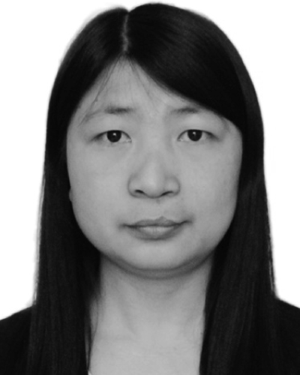 Xiudi Jiang合作论文数41
 Yijie Zhang (张懿洁)合作论文数School of Information and Communications Engineering, Faculty of Electronic and Information Engineering, Xi'an Jiaotong University36
 Ru-Shan Wu合作论文数Modeling and Imaging Laboratory, Institude of Geophysics and Planetary Physics, University of California, Santa Cruz;Departmrnt of Earth & Planetary Sciences, University of California, Santa Cruz35
 Hongling Chen合作论文数National Engineering Laboratory for Offshore Oil Exploration, Xi’an Jiaotong University, Xi’an, China33
 Daxing Wang合作论文数33
 Zhen Li (李振)合作论文数School of Information and Communications Engineering, Faculty of Electronic and Information Engineering, Xi'an Jiaotong University32Bing Zhang合作论文数Xi'an Jiaotong University32
 Jigen Peng (彭济根)合作论文数School of Mathematics and Information Science, Guangzhou University30
 Zongben Xu (徐宗本)合作论文数Institute for Information and System Sciences, School of Mathematics and Statistics, Xi'an Jiaotong University29
 Yajun Tian (田亚军)合作论文数School of Information and Communications Engineering, Faculty of Electronic and Information Engineering, Xi'an Jiaotong University28
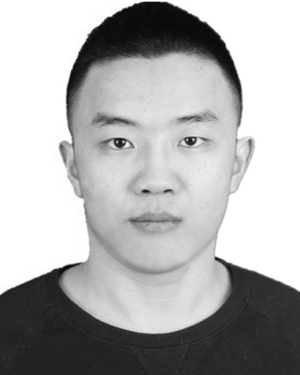 Wei Zhang合作论文数27
 Chuang Li (李闯)合作论文数School of Information and Communications Engineering, Faculty of Electronic and Information Engineering, Xi'an Jiaotong University24
 Zhibin Pan (潘志斌)合作论文数School of Information and Communications Engineering, Xi'an Jiaotong University24
 Haixia Zhao (赵海霞)合作论文数School of Mathematics and Statistics, Xi'an Jiaotong University22
 Wei Wang合作论文数School of Electronics and Information Engineering, Sichuan University21
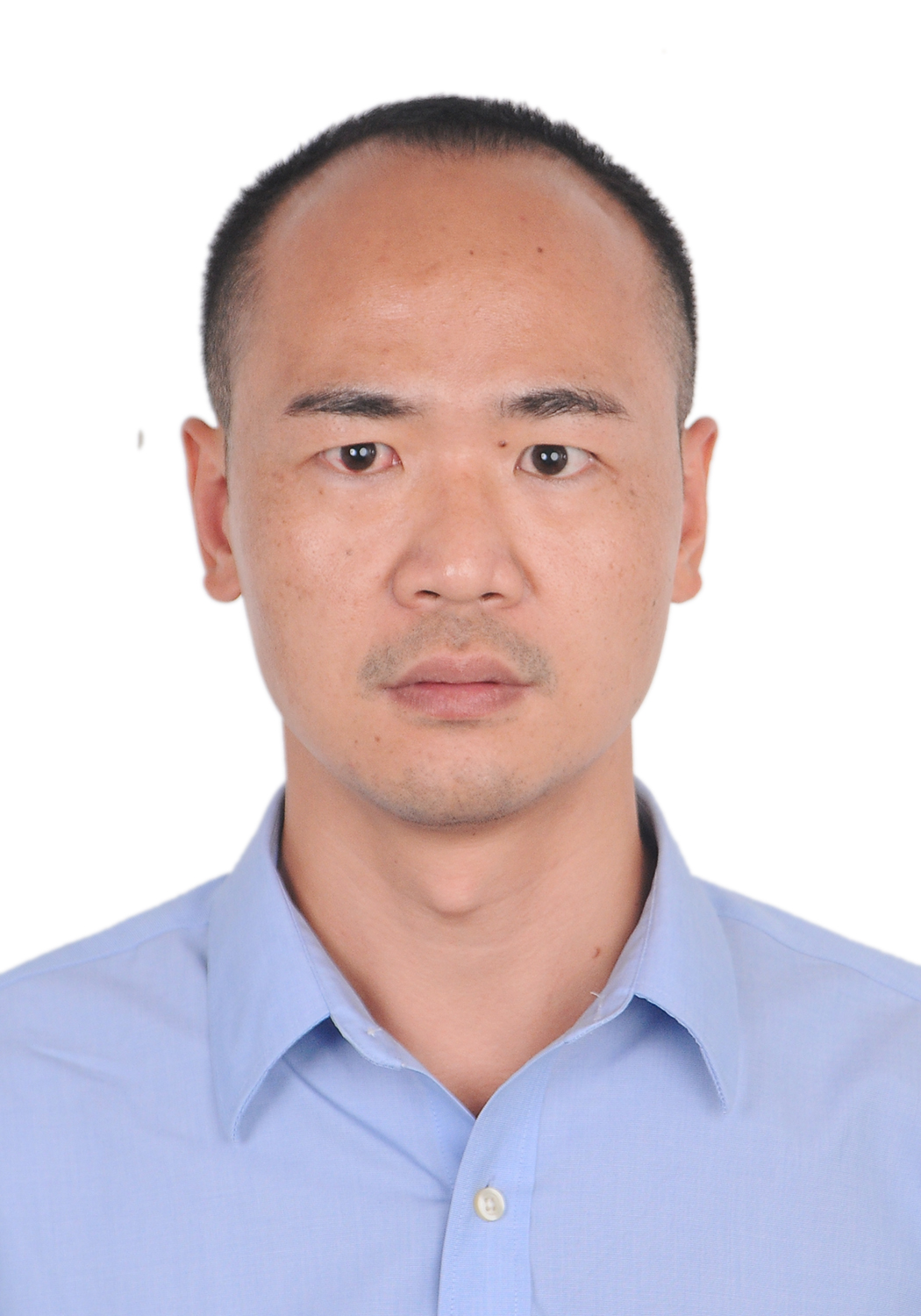 Bangyu Wu (吴帮玉)合作论文数School of Mathematics and Statistics, Xi'an Jiaotong University20Hui Li (李辉)合作论文数School of Information and Communications Engineering, Faculty of Electronic and Information Engineering, Xi'an Jiaotong University19
 Xiaokai Wang (王晓凯)合作论文数School of Information and Communications Engineering, Faculty of Electronic and Information Engineering, Xi'an Jiaotong University17Rongchang Liu合作论文数16
 Feipeng Li (李飞鹏)合作论文数School of Information and Communications Engineering, Faculty of Electronic and Information Engineering, Xi'an Jiaotong University16Senlin Yang合作论文数14
 Tao Yang合作论文数Sch Mech Engn, Xi An Jiao Tong Univ14BaoLi Wang (王保利)合作论文数14Wei Zhao合作论文数14
 Lingling Wang (汪玲玲)合作论文数Institute of Geophysics & Geomatics, China University of Geosciences (Wuhan)13Yanhui Zhou (周艳辉)合作论文数School of Information and Communications Engineering, Faculty of Electronic and Information Engineering, Xi'an Jiaotong University13
 Pengliang Yang (杨鹏亮)合作论文数哈尔滨工业大学数学学院12
 Yang Yang (杨旸)合作论文数Department of Electronic & Infomation Engineering, School of Automatical Science and Engineering, Faculty of Electronic and Information Engineering, Xi'an Jiaotong University12
 Junxiong Jia (贾骏雄)合作论文数School of Mathematics and Statistics, Xi'an Jiaotong University12Zhuosheng Zhang (张茁生)合作论文数School of Mathematics and Statistics, Xi'an Jiaotong University12Dehua Wang合作论文数11Yanbin He合作论文数11
 Qian Wang合作论文数School of Mathematics and Statistics, Xi’an Jiaotong University, Xi’an, China11
 Wenhao Xu合作论文数11
 Guowei Zhang合作论文数11WenBo Sun (孙文博)合作论文数11Fengyuan Sun (孙逢圆)合作论文数11Qianzong Bao (包乾宗)合作论文数11
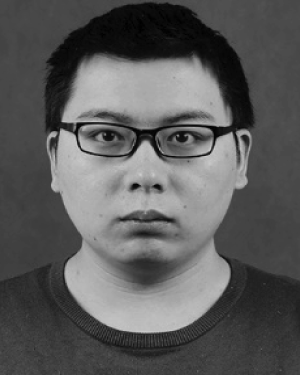 Hao Wu合作论文数Univ Alabama, Dept Geol Sci, Tuscaloosa, AL 35487 USA10
 Xiangxiang Zhu (朱项项)合作论文数School of Mathematics and Statistics, Northwestern Polytechnical University10
 Kexue Li (李科学)合作论文数School of Mathematics and Statistics, Xi'an Jiaotong University10
 Xueyu Zhu合作论文数10
 Yu Geng (耿瑜)合作论文数10
 Fangyu Li (李方昱)合作论文数Department of Artificial Intelligence and Automation, School of Information Science and Technology, Beijing University of Technology9
 Chuangji Meng合作论文数9




