针对某集团供氧系统应急保障能力不足、氧气放散量大、液氧汽化消耗蒸汽量过高、氮气应急和调峰备用欠缺的问题,以开发可变多循环冷能利用技术为核心,通过扩建液氧储槽和汽化系统、新建液氮储槽及汽化系统、构建氧氮冷能利用装置实现利用液氮的冷能液化氧气、利用氧气的液化潜热汽化氮气,推出高效氧气变负荷+氮气节能回收的新技术.新工艺最终实现了冷能的可变循环利用,大幅度提高氧氮资源利用率,减少蒸汽消耗,提高供氧系统的稳定性和液氮储存保障能力,可产生良好的经济效益.
随着世界硫化镍矿资源的不断消耗,提升或开发从红土镍矿中更高效、经济地提取镍和钴的工艺是目前及未来研究和关注的焦点.本文总结了目前国内外以硝酸作为浸出介质处理红土镍矿的湿法冶金工艺及目前工艺发展现状,旨在为红土镍矿湿法冶金工艺研究者提供一种研究思路.
金川集团开式循环冷却软化水系统存在水浊度高,Ca2+、Mg2+离子浓缩造成循环软化水硬度高,塔体混凝土腐蚀剥落,填料破损老化,树脂处理临界点无法确定等问题.从外部环境污染物的组成、污堵作用区域、腐蚀成因等方面入手,利用离子交换树脂的微孔吸附功能及层叠过滤原理,优化循环冷却软化水系统生产工艺和离子交换器工艺,将软化水导入离子交换器进行再处理,采用"N次小反洗+1次大反洗"先进工艺进行树脂再生,有效降低了循环冷却软化水的浊度指标和减少微生物,有效节约了水资源,降低了冷却循环软化水生产系统的运行成本,提高了设备使用寿命.
通过分析空分装置的两次故障,揭示了水分进入空分装置带来的严重后果和危害性.本文详细论述了故障排查和分析的全过程,最终找到液泛事故原因为增压膨胀机空气冷却器的换热管泄漏,水分进入空分装置,导致板式换热器高压空气通道被堵,板式换热器换热能力严重不足.根据故障原因,对增压膨胀机空气冷却器安全运行提出了合理化建议和预防措施.
通过对金川集团压缩风资源利用现状的调研,提出针对性的优化整合策略.通过对压缩风管网实施集中+分布式网格化供风模式,采用定压+自动双式混联控制,使供风设备与供风工艺匹配更加科学,从而构建起高效节能的压缩风资源应用新体系.
分析了空分系统低温液位计非正常波动现象及原因,提出了解决方法及注意事项.处理后液空液面的波动值降低了16倍,主冷的波动降低了3/4.
For the problem of high oxygen exhaust rate in large scale nonferrous metallurgical industry,This paper put forward nerwork solution of oxygen supply.On the basis of the network supply system,the oxygen exhaust rate was reduced and good economic benefits were obtained by using optimized software control system including cascade pressure-reducing intelligent matching control technology,auto-cruise control system of oxygen production.
Based on overcoming the technical bottle neck of air delivery to multiple PS converters by different compressors operated in combinational style,this paper proposes the control conception and method about how to safely and efficiently utilize the compressors under condition of large-scale huge fluctuation,and helpfully probes into how to achieve net configuration of combinational air delivery system.The first suite of combinational air delivery system for multiple converters with advanced level in the world is successfully developed.The system dramatically improved the usage efficiency of compressors,and reduced the initial cost of investment and obtained considerable effect of energy saving.
Based on 802.11 and the rate requirement of QoS,this paper uses the cross-layer designing method to jointly consider the rate requirement for data transmitting in the application layer and the random access process in the MAC layer,and proposes a rate-requirement aware adaptive MAC protocol (RAA-MAC) for wireless ad hoc networks. The simulation results show that,compared with 802.11 protocol,RAA-MAC has improved a lot in the throughput and the delay of data packets.
Wireless sensor networks have been widely used in many important areas.Medium access control(MAC) protocols have a significant effect on the function and performance of sensor networks.This paper summarizes the present design paradigms of the MAC protocol in wireless sensor networks.Then,based on the sensor MAC(SMAC) protocol,and by jointly considering the time division multiple access(TDMA),carrier sense multiple access(CSMA) and the synchronization scheme of the SMAC,a new contention-allowed TDMA based MAC protocol for wireless sensor networks(contention-allowed TDMA based SMAC,C-TDMA-SMAC) is proposed.The simulation results show that,compared with SMAC protocol,this protocol has improved a lot in the delay of packets,energy consumption and the reception rate of the packets.
In this paper, we present a joint power control, link scheduling and rate control (PSR) algorithm for wireless ad hoc networks by using the convex optimization theory. This algorithm practically considers the power control problem in the interference-based link scheduling process, and provides a congestion control on the transport layer. Both our theoretical analysis and simulation results prove that the PSR algorithm can converge quickly and is possible for distributed implementation in the wireless ad hoc networks.
 Delun Zhang (张得仑)合作论文数5JuanJuan Zhang (张娟娟)合作论文数3XU Chun-lian (许春莲)合作论文数2
 Xinming Zhang (张信明)合作论文数School of Computer Science and Technology, University of Science and Technology of China2yunxia he (何云霞)合作论文数1Zhenglu LI (李正录)合作论文数1BingChuan Liu (刘冰川)合作论文数1
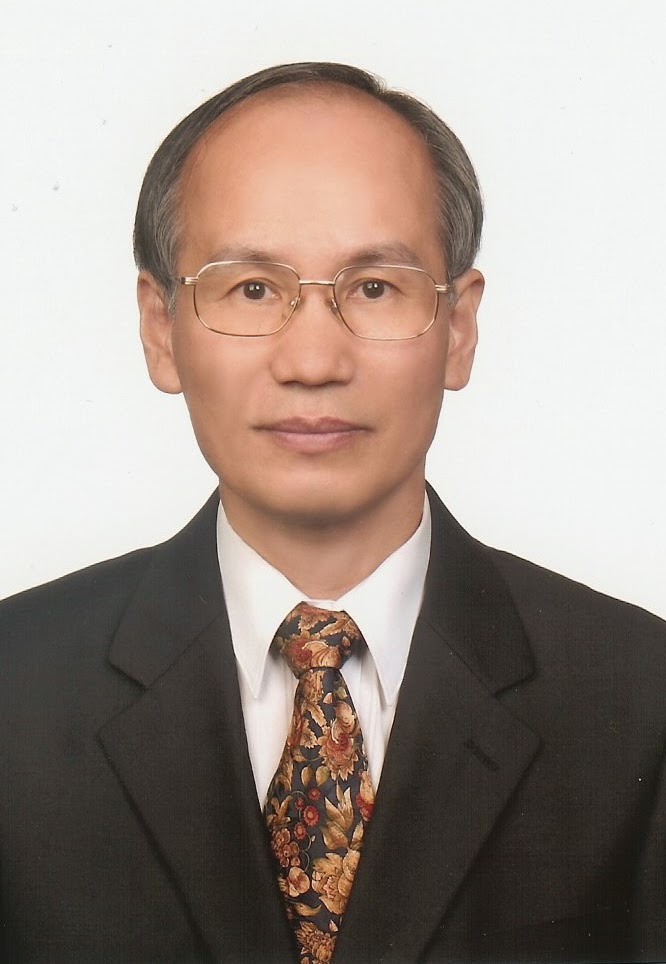 Dan Keun Sung (成檀根)合作论文数School of Electrical Engineering, Korea Advanced Institute of Science and Technology1Zhiwei Zhao (赵志伟)合作论文数1Shibing Qi (祁世兵)合作论文数1Xiaomin Wang (王晓民)合作论文数1
 Vincent Zheng合作论文数WeBank1
 Can Que合作论文数1




