Works concerning the quantum effect of nonlocal screening on field characteristics in the problem of scattering a plane wave by nanoscale structures, including ones located near a transparent substrate, are reviewed. Efficient computer models for analyzing such structures are constructed by applying the discrete source method. The nonlocality effect is studied using the generalized nonlocal optical response model. The field characteristics of nonspherical layered nanoparticles deposited in an active medium or on the surface of a transparent substrate are considered. It is shown that nonlocality has a large effect on the optical characteristics in the far- and near-field regions. It is established that the nonlocality effect leads to a decrease in the intensity of surface plasmon resonance by up to 2.5 times under a small shift toward short wavelengths. In the presence of a substrate, the excitation of particles by a propagating or an evanescent wave is considered. It is shown that the largest effect is exhibited for nonspherical layered particles located in the evanescent wave region.
Based on the discrete sources method, a mathematical model of the plasmon nanolaser resonator deposited on the prism surface in an active ambient medium is developed and implemented, which allows taking into account the non-local effect (NLE) in the plasmon material. The resonator’s characteristics are optimized, which makes it possible to obtain a field enhancement on the external surface of the resonator by more than two orders of magnitude. The influence of the NLE on the enhancement in the spectral wavelength range is investigated. It is shown that accounting for the NLE leads to a significant decrease in the near-field intensity.
The problem of excitation of a core–shell particle located on a transparent substrate by a field of an evanescent electromagnetic wave is considered. The particle consists of a dielectric core with a metal nanoplasmonic shell in which spatial dispersion occurs. Based on the Discrete Sources Method, a model has been constructed that considers the influence of the presence of the substrate and nonlocality in a metal on the optical scattering characteristics. The effect of the asymmetry of the particle geometry on the optical characteristics of the near field has been investigated. It was found that the asymmetry of the particle geometry significantly affects the intensity enhancement coefficient, as well as the absorption cross-section.
Based on the discrete source method, a rigorous approach has been developed and implemented that allows one to analyze light scattering by models of resonators of plasmonic nanolaser (SPASER). This approach takes into account all features of the boundary value problem for the Maxwell system, including the interaction of the resonators with the prism surface and the nonlocal screening effect, which is treated in the framework of the generalized nonlocal optical response (GNOR) model. It is shown that a resonator model with a dielectric core and a plasmonic shell has significant advantages over a layered model with a plasmonic core. The conditions are established under which the field can be enhanced by several orders of magnitude. It is shown that taking into account the GNOR leads to a decrease in the field intensity by 50%.
Current paper presents a comprehensive up-to-date review of one of the most recently developed numerical schemes based on the Discrete Sources Method. The aim of these developments is to implement and justify new efficient mathematical models allowing to accurately simulate response of small plasmonic nanoparticles with scale less than 10 nm to the different types of incident fields. Spatial dispersion effects of the material that are non-negligible at the given scales are incorporated into the numerical technique via Generalized Nonlocal Optical Response approach. Electron energy loss and plane wave scattering problems are considered, with the latter additionally featuring account for the presense of the substrate in the medium. Validity of the obtained results is ensured via a posteriori residual estimation, via comparison of computed scattering properties to the other available simulation techniques, and via comparison to the experimental electron energy loss measurements available in reference literature.
На основе метода Дискретных источников разработана и реализована математическая модель резонатора плазмонного нанолазера, располагающегося на поверхности призмы в активной среде, позволяющая учитывать эффект нелокальности (ЭН) в плазмонном материале. Проведена оптимизация характеристик резонатора, позволяющая получить усиление поля непосредственно на внешней поверхности резонатора более чем на два порядка. Исследовано влияние ЭН на коэффициент усиления в спектральном диапазоне длин волн. Показано, что учет ЭН приводит к существенному снижению интенсивности ближнего поля.
Based on the discrete sources method, a mathematical model is developed that enables to analyze the fluorescence process in the presence of a plasmonic structure taking into consideration the nonlocal screening effect. It is shown that the plasmonic structure’s quantum yield can be represented analytically omitting integration procedures. The influence of the effect on the quantum yield and the fluorescence enhancement factor is investigated depending on the plasmonic structure geometry. It is demonstrated that accounting for the nonlocal screening effect leads to a shift of the maximum position towards the long-wave region and a decrease in the amplitude of the fluorescence enhancement factor.
The problem of the influence of the nonlocality effect on the optical characteristics of plasmon nanolaser resonators is considered. This was performed within the framework of the generalized nonlocal optical response model; we took the nonlocality into account. Based on an extension of the discrete sources method, we performed a comparative analysis of the frequency characteristics of the field intensity in both the far and near zones, depending on the geometry of the resonator. The shapes of layered nonspherical resonators were considered. We established that, taking the nonlocality effect into account, one obtains a decrease of the intensity of plasmon resonance by up to 2.5 times.
The discrete source method is used to study the influence exerted by nonlocal screening on the optical properties of a linear cluster of nonspherical plasmonic nanoparticles separated by a subnanometer gap. It is shown that deformations of the particles and a reduction in the interparticle gap size lead to an enhanced nonlocal screening effect. It is found that an increase in both scattered and near field intensities is blocked by the nonlocal effect, and deformations of the particles can be used as an alternative to field intensity enhancement.
На основе метода дискретных источников разработана математическая модель, позволяющая проводить анализ процесса флюоресценции в присутствии плазмонной структуры с учетом эффекта нелокального экранирования. Показано, что квантовый выход плазмонной структуры может быть представлен в аналитическом виде, минуя процедуры интегрирования. Исследовано влияние эффекта на квантовый выход и коэффициент усиления флюоресценции в зависимости от геометрии плазмонной структуры. Показано, что учет эффекта нелокального экранирования приводит к сдвигу положения максимума в длинноволновую область и снижению амплитуды коэффициента усиления флюоресценции.
Based on the discrete sources method (DSM), a new mathematical model is constructed and implemented making it possible to take into account the nonlocal effect (NE) in problems of light scattering by plasmonic nanoparticles located on a substrate. The effect of allowing the NE on the integral scattering characteristics in the spectral range near plasmon resonance (PR) is investigated. It is shown that taking the NE into account leads to a shift and a significant change in the PR’s amplitude.
We consider the problem of diffraction of a plane electromagnetic wave field at a linear cluster consisting of two plasmonic nanoparticles while accounting for the nonlocal effect. The research is based on the mathematical model of the generalized non-local optical response. On the basis of the modification of the discrete sources method, a comparative numerical analysis of the scattering characteristics in the frequency domain is carried out depending on the geometry of the particles and the distance between them. It has been established that taking longitudinal fields into account has a significant influence on the extinction cross section and even more on the scattering cross section.
The present book carefully studies the blow-up phenomenon of solutions to partial differential equations, including many equations of mathematical physics. The included material is based on lectures read by the authors at the Lomonosov Moscow State University, and the book is addressed to a wide range of researchers and graduate students working in nonlinear partial differential equations, nonlinear functional analysis, and mathematical physics. Contents Nonlinear capacity method of S. I. Pokhozhaev Method of self-similar solutions of V. A. Galaktionov Method of test functions in combination with method of nonlinear capacity Energy method of H. A. Levine Energy method of G. Todorova Energy method of S. I. Pokhozhaev Energy method of V. K. Kalantarov and O. A. Ladyzhenskaya Energy method of M. O. Korpusov and A. G. Sveshnikov Nonlinear Schrödinger equation Variational method of L. E. Payne and D. H. Sattinger Breaking of solutions of wave equations Auxiliary and additional results
The discrete source method is used to develop and implement a mathematical model for solving the problem of scattering electromagnetic waves by a three-dimensional plasmonic scatterer with nonlocal effects taken into account. Numerical results are presented whereby the features of the scattering properties of plasmonic particles with allowance for nonlocal effects are demonstrated depending on the direction and polarization of the incident wave.
A mathematical model for the analysis of the near field intensity distribution in problems of light scattering by particles on the substrate is developed based on the Discrete Sources Method. The influence of the size and material of the particles and the refractive index of the ambient medium on the distribution of the field intensity inside the substrate near the particle is examined.
В данной работе разработан и реализован строгий метод, позволяющий проводить анализ рассеивающих свойств плазмонных наночастиц, расположенных на подложке, с учётом эффекта нелокальности. Показано, что уменьшение размера частиц приводит к смещению плазмонного резонанса в коротковолновую область и существенному снижению его амплитуды.
A rigorous method for analyzing the scattering properties of plasmonic nanoparticles on a substrate with allowance for nonlocal effects was developed and implemented. It was shown that a decrease in the particle size leads to a blue shift in plasmon resonance and to a substantial reduction in its amplitude.
 Yu. A. Eremin合作论文数52M. O. Korpusov合作论文数26
 Natalia Grishina合作论文数23
 Boris Ivanovich Volkov合作论文数15N. N. Semashko合作论文数14A. N. Bogolyubov合作论文数11Yu. D. Pletner合作论文数11
 A. L. Delitsyn合作论文数Faculty of Physics, Moscow State University10s a iakunin合作论文数8V. B. Glasko合作论文数8Olga a Oleinik合作论文数6V. F. Butuzov合作论文数6v s boldasov合作论文数6Ю. А. Еремин合作论文数5Yuri Eremin合作论文数5A L Groshev合作论文数5M. D. Malykh合作论文数Faculty of Physics, Moscow State University5V. M. Balebanov合作论文数5An Bogolyubov合作论文数4V. V. Kuznetsov合作论文数4A. I. Morozov合作论文数4
 Nikita Orlov合作论文数Laboratory of Genetics;National Institute on Aging;Laboratory of Genetics, National Institute on Aging4L. V. Perova合作论文数4a n tikhonov合作论文数3
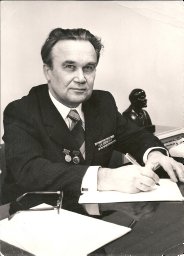 Aleksandr a Samarskii合作论文数Moscow Institute of Applied Mathematics, Academy of Sciences3I. E. Mogilevskii合作论文数3S.A. Yakunin合作论文数3
 Vladimir Kulygin合作论文数3Ya Yeremin合作论文数2Dv Minaev合作论文数2Nn Semashko合作论文数2атанасян л с бутузов в ф кадомцев с б合作论文数2Ya Eremin合作论文数2A Bykov合作论文数2A V Bitsadze合作论文数2M. B. Tverskoi合作论文数2E. V. Yushkov合作论文数2E. V. Shikin合作论文数2A. B. Al'Shin合作论文数2Va Ilin合作论文数1ю в мухартова合作论文数1Tay, R.合作论文数1
 Ilya Mogilevsky合作论文数1а г ягола合作论文数1Nv Orlov合作论文数1Yd Pletner合作论文数1Aa Arsenev合作论文数1Av Bitsadze合作论文数1AB Alshin合作论文数1




