The Particle Swarm Optimization (PSO) algorithm has been one of the most effective methods for solving various complex optimization problems. However, non-adaptive versions of the PSO do not use historical information for performance enhancement and suffer from performance degradation problems. This paper presents a Complex-Order Darwinian PSO (CoDPSO) algorithm, which effectively enhances the performance of the PSO. A complex-order derivative mechanism is introduced into the velocity update rule to improve local exploitation using historical velocity information. Additionally, a Degradation Elimination (DE) strategy is designed to mitigate performance drop during the optimization process. Sensitivity analysis is conducted to evaluate the impact of control parameters on the algorithm's behavior, demonstrating its robustness across a wide range of settings. Comparative experiments on CEC 2022 benchmark functions show that the CoDPSO outperforms other PSO variants in terms of accuracy, stability, and convergence. Wilcoxon statistical tests further confirm the significance of these improvements. The experimental results indicate the feasibility and efficiency of the CoDPSO.
A fractional high-order extended kalman filter (FHEKF) algorithm for a fractional-order nonlinear system is presented. Firstly, the nonlinear function is expanded into a high-order Taylor series with the estimation error as the variable. Then, each high-order polynomial term in the Taylor series is defined as a hidden variable, and the corresponding linear dynamic model is established. Consequently, the state estimation of the original system is reconstructed by combining the estimation of the prediction error and the state prediction. Simulation experiments were carried out to select the optimal order of the Taylor expansion, enumerating the first to fourth-order expressions of the Taylor expansion, and the results show that the third-order Taylor expansion has the highest timeliness. In the motor dynamic process state estimation experiment, the dynamic following and anti-interference performance of the FHEKF (3rd order) with three other filters are compared, and the results prove the effectiveness of the method in this paper.
In industrial control systems, high-order inertial systems widely exist. However, how to design suitable control methods for these systems are facing many challenges, such as slow dynamic characteristics and weak anti-interference ability. This paper emphasizes the theoretical analysis and applications of modified active disturbance rejection control (MADRC) for high-order inertial systems. The stability analysis of MADRC is carried out by separating the high-order transfer function and using the dual-locus diagram method. Then, a simple and quantitative semi-empirical parameter tuning rule based on the expected adjustment time is provided. The effectiveness of the high-order inertial system with MADRC compared to other ADRCs and PIs is then verified by tracking and disturbance suppression simulations. MADRC with the proposed parameter tuning rule is applied to both primary and secondary superheated steam temperature systems of a 660 MW power plant. The running data show that the cascade control system with MADRC can obtain better control performance than the original control method, and show great application potential for more complex industrial control systems.
ABSTRACT For high‐order systems, strong nonlinearities, parameter uncertainties and external disturbances pose significant control challenges. Several improved active disturbance rejection controller (ADRC) methods are proposed, including input modified ADRC (MADRC), time‐delay ADRC (DADRC) and Smith‐like ADRC (SLADRC). These improved ADRC methods are systematically compared with conventional proportional integral (PI) control and regular ADRC, focusing on key performance metrics such as tracking accuracy and disturbance rejection capability. The effectiveness of the proposed improved ADRC methods is validated via numerical simulations of a typical superheated steam temperature (SST) system. The integral absolute error (IAE) of ADRC, MADRC, DADRC and SLADRC shows a reduction of around 30, 50, 33 and 35, respectively, relative to that of PI. The outcomes of numerical simulations demonstrate that improved ADRC methods achieve satisfactory control performance, whereas MADRC stands out with the best overall performance. Thus, field application data show that compared with PI, MADRC exhibits significant reductions in key deviation metrics, with the maximum positive deviation decreasing by 33, the maximum negative deviation decreasing by 8, the average positive deviation decreasing by 25, the average negative deviation decreasing by 11 and the variance deviation decreasing by 18.
Federated learning on connected electric vehicles (BEVs) faces severe instability due to intermittent connectivity, time-varying client participation, and pronounced client-to-client variation induced by diverse operating conditions. Conventional FedAvg and many advanced methods can suffer from excessive drift and degraded convergence under these realistic constraints. This work introduces Fractional-Order Roughness-Informed Federated Averaging (FO-RI-FedAvg), a lightweight and modular extension of FedAvg that improves stability through two complementary client-side mechanisms: (i) adaptive roughness-informed proximal regularization, which dynamically tunes the pull toward the global model based on local loss-landscape roughness, and (ii) non-integer-order local optimization, which incorporates short-term memory to smooth conflicting update directions. The approach preserves standard FedAvg server aggregation, adds only element-wise operations with amortizable overhead, and allows independent toggling of each component. Experiments on two real-world BEV energy prediction datasets, VED and its extended version eVED, show that FO-RI-FedAvg achieves improved accuracy and more stable convergence compared to strong federated baselines, particularly under reduced client participation.
Accurate characterization of complex multi-physics behaviors in secondary batteries over extended aging periods is becoming increasingly critical, which requires high-fidelity models with reliable parameters. This study proposes a data-driven parameter identification framework for an electrochemical-thermal-aging coupled model (ETACM) of lithium-ion batteries (LIBs) over the tested aging range. An improved grey wolf optimizer (IGWO) is first employed for parameter pre-identification to capture overall parameter evolution during aging. Subsequently, a physics-constrained data synthesis method is developed to generate a dense and numerically feasible training set, where polynomial-fitted trajectories and solver convergence checks ensure the physical and numerical feasibility of the synthetic samples. A hybrid CNN-BiLSTM-Attention neural network is then constructed as a parameter estimator to identify eight sensitive parameters. Pre-identification results demonstrate that six sensitive parameters undergo accelerated degradation at higher charging rates, while electrode particle radii exhibit distinct non-monotonic evolution throughout the tested cycling life. The trained estimator achieves high estimation accuracy on the validation set, with coefficients of determination above 0.97 in most cases. Across multiple C-rates and tested degradation stages, the identified parameters enable the multi-physics coupled model to achieve mean absolute errors below 0.03 V and 2.17 degrees C. The proposed method supports the development of reliable multi-physics coupled model, providing valuable guidance for battery design and degradation assessment.
Machine unlearning aims to remove the influence of a designated forget set from a trained model while preserving utility on the retained data. In modern deep networks, approximate unlearning frequently fails under large or adversarial deletions due to pronounced layer-wise heterogeneity: some layers exhibit stable, well-regularized representations while others are brittle, undertrained, or overfit, so naive update allocation can trigger catastrophic forgetting or unstable dynamics. We propose Statistical-Roughness Adaptive Gradient Unlearning (SRAGU), a mechanism-first unlearning algorithm that reallocates unlearning updates using layer-wise statistical roughness operationalized via heavy-tailed spectral diagnostics of layer weight matrices. Starting from an Adaptive Gradient Unlearning (AGU) sensitivity signal computed on the forget set, SRAGU estimates a WeightWatcher-style heavy-tailed exponent for each layer, maps it to a bounded spectral stability weight, and uses this stability signal to spectrally reweight the AGU sensitivities before applying the same minibatch update form. This concentrates unlearning motion in spectrally stable layers while damping updates in unstable or overfit layers, improving stability under hard deletions. We evaluate unlearning via behavioral alignment to a gold retrained reference model trained from scratch on the retained data, using empirical prediction-divergence and KL-to-gold proxies on a forget-focused query set; we additionally report membership inference auditing as a complementary leakage signal, treating forget-set points as should-be-forgotten members during evaluation.
This paper aims to deal with the output feedback control problems of coupled semilinear parabolic partial differential equation (PDE) systems involving spatially varying coefficients under non-collocated mobile actuators and sensors. For this, we begin by establishing well-posedness of the studied PDE systems. Since full state information in this case may be unknown, we design a Luenberger-type observer to achieve the estimation states of the considered systems. An output feedback control scheme is next formulated to ensure that the associated closed-loop PDE systems are exponentially stable. Meanwhile, we assume that the number of actuators and sensors is identical, though their moving heights are different. By partitioning the spatial domain into several parts in accordance with the number of mobile actuators/sensors, a projection modification guidance is then proposed ensuring that each agent moves only within its designated area so as to avoid collisions. A numerical case study is finally provided to demonstrate the effectiveness of our developed results.
Battery electric vehicles (BEVs) are central to reducing urban air pollution and require accurate, real-time energy-consumption prediction to optimize itineraries and vehicle systems. Growing privacy concerns motivate on-device learning. We introduce roughness-index-based federated averaging in a centralized, cross-device FL setup for BEV energy prediction under nonindependent and identically distributed (non-IID) data. Roughness-informed federated learning (RI-FedAvg) adapts client regularization using a per-vehicle roughness index (RI) to mitigate client drift. In addition, we introduce RI-DP-FedAvg, a differentially private extension of RI-FedAvg that combines roughness-informed regularization with formal privacy guarantees using Renyi differential privacy (RDP)-calibrated Gaussian noise. We compare against FedBEV, FedAvg, FedDyn, FedProx, SCAFFOLD, and a DP-enabled baseline (DP-FedAvg) using mean absolute error (MAE). Using real driving logs from the vehicle energy dataset (VED) and simulated heterogeneity (vehicle classes and traffic/weather), RI-FedAvg improves MAE versus baselines and converges in fewer rounds, while RI-DP-FedAvg maintains competitive accuracy under strict privacy levels. We discuss an edge-cloud deployment workflow. These results indicate that RI-FedAvg and RI-DP-FedAvg improve accuracy while keeping data on vehicles in centralized FL architectures.
In this paper, diffusive representation (DR) is shown to be effective in addressing optimal consensus control problems in DPS-based multiagent systems (MASs) for both leader-following and leaderless cases, leading to significant advancements in meeting engineering requirements, facilitating cost savings and enhancing efficiency for optimal performance. First, the concept of DR approach is introduced to transform the original causal convolution pseudo-differential operator (PDO) into DPS, exhibiting infinite dimensional properties. Second, the proposed spatial product operation helps establish a theoretical system of the converted DPSs, including the linear representation for state space model, the Lyapunov functions and the reformulation of LQR optimal control problem with generalized performance indexes. Furthermore, the inverse optimality technique is conducted to develop distributed strategies for the cooperative control of the distributed parameter multiagent systems using DR approach, and derive the solution of globally optimal LQR problem. Finally, fractional-order multiagent systems (FOMASs) to both leaderless and leader-follower UAV formation control scenarios are presented to validate the effectiveness of the proposed results.
Accurate friction modeling remains a critical challenge in high-precision robotic systems due to the complex, nonlinear nature of friction and the distinct behaviors characterizing the presliding and sliding regimes. In this article, a novel fractional-order generalized Maxwell-slip (FO-GMS) model is proposed, incorporating fractional-order elements to describe both elastic and viscous deformations in a unified and compact form. Key properties of the proposed model, including hysteresis, the nondrifting property, the Stribeck effect, and friction lag, are investigated. To efficiently decouple and estimate the static and dynamic parameters, a hybrid identification method combining constrained nonlinear least-squares and a linear decreasing weight particle swarm optimization algorithm is developed. Experimental validation on an industrial robot demonstrates that the FO-GMS model achieves an error reduction of over 50% while utilizing 23.08% fewer parameters compared to conventional GMS and existing fractional models. Furthermore, the sensitivity and generalization capability of the model have been verified across different robot joints and operating velocities. These results confirm the superior accuracy and computational efficiency of the FO-GMS framework.
Fluctuations in battery aging process such as capacity regeneration, outliers, and noise occur far more frequently than expected, with many informative fluctuation patterns being obscured during data preprocessing, making it challenging to capture its underlying patterns as well as to achieve robust battery health prognostic. Motivated by the heavy-tailed distribution of fluctuations and subdiffusion of ions within batteries, this study pioneers a robust fractional-order battery aging model, adaptively accounting for fluctuations leveraging heavy-tailed distribution. First, aging-characteristics-driven physics-informed neural network (PINN) is presented to establish an empirical battery aging model. Fractional-order partial differential equation (FOPDE) describing capacity degradation is employed to embed physical constraints into the loss function, enhancing the accuracy of battery health prognostic. Additionally, the adaptive multitask weighting based on Student-t (AMW-ST) is introduced to weight the loss function terms of PINN. By assuming a heavy-tailed distribution of data labels, it adaptively captures underlying patterns from fluctuations and improves the robustness of the model. Finally, the fine-tuning method is applied to transfer aging information across batteries. By varying fractional order and selectively freezing PINN, this approach reduces time cost while maintaining high accuracy. The proposed method demonstrates effectiveness on eight cells from two datasets, achieving an average error of 0.9% with fine-tuning, 1.2% without fine-tuning, and 1.4% under non-Gaussian noise.
 Ying Luo (罗映)合作论文数School of Mechanical Science & Engineering, Huazhong University of Science and Technology59
 Hyo-Sung Ahn合作论文数Distributed Control and Autonomous Systems Lab, School of Mechanical Engineering, Gwangju Institute of Science and Technology58
 Yan Li (李岩)合作论文数School of Control Science and Engineering, Shandong University46
 Dingyu Xue (薛定宇)合作论文数College of Information Science and Engineering, Northeastern University39
 Blas M. Vinagre合作论文数School of Industrial Engineering, University of Extramadura38
 Fudong Ge (葛富东)合作论文数Department of Automation, School of Electrical and Information Engineering, Tianjin University36
 Kevin L. Moore合作论文数Dept of Electrical Engineering, Colorado School of Mines36
 Jairo Viola合作论文数Univ. Pontificia Bolivariana;c;Univ. Pontificia Bolivariana32
 Haoyu Niu合作论文数University of California28
 Hu Sheng合作论文数27
 Derek Hollenbeck合作论文数University of California24
 Zhenlong Wu (吴振龙)合作论文数School of Electrical and Information Engineering, Zhengzhou University24
 Brandon Stark合作论文数MESA Lab., Univ. of California;c;MESA Lab., Univ. of California24
 Tiebiao Zhao (赵铁彪)合作论文数Mechatron Embedded Syst & Automat Lab, Univ Calif Merced23
 Liping Chen (陈立平)合作论文数School of Electrical Engineering and Automation, Hefei University of Technology23
 Chunhai Kou (寇春海)合作论文数College of Science, Donghua University23
 Haiyang Chao合作论文数Department of Aerospace Engineering, School of Engineering Aerospace Engineering, The University of Kansas;Cooperative Unmanned Systems Laboratory, The University of Kansas23Christophe Tricaud合作论文数23
 Igor Podlubny合作论文数Technical University of Kosice22
 Austin M. Jensen合作论文数Utah State University;Center for Self-Organizing and Intelligent Systems;Electrical and Computer Engineering Department;Center for Self-Organizing and Intelligent Systems, Utah State University21
 Donghai Li (李东海)合作论文数清华大学航空发动机研究院20
 Antonio Lopes合作论文数19
 Calvin Coopmans合作论文数Center for Self-Organizing and Intelligent Systems, Utah State University19
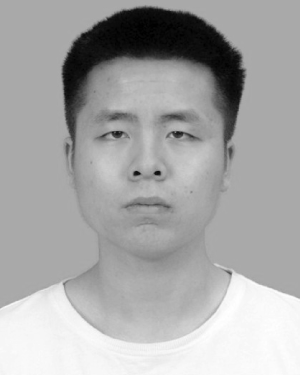 Jie Yuan合作论文数Dept Bioengn, Univ Texas Dallas18
 Yanhong Liu (刘艳红)合作论文数School of Electrical and Information Engineering, Zhengzhou University17Di An合作论文数16
 Xiaohong Wang (王孝洪)合作论文数School of Automation Science and Engineering, South China University of Technology15
 Long Di合作论文数14weijia zheng (郑伟佳)合作论文数13Youguo Pi (皮佑国)合作论文数13
 Tianshuang Qiu (邱天爽)合作论文数School of Biomedical Engineering, Dalian University of Technology13
 Yuquan Chen合作论文数Univ Sci & Technol China, Dept Automat, Hefei 230027, Peoples R China12Lili Ma合作论文数12
 Song Zhen合作论文数Cardiovascular Research Laboratory, University of California, Los Angeles;Department of Medicine (Cardiology),, University of California, Los;University of California, Los Angeles, University of California, Los Angeles12
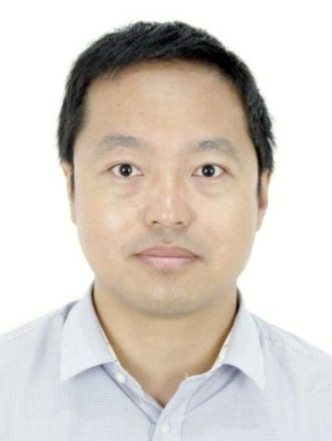 Hongguang Sun (孙洪广)合作论文数College of Mechanics and Engineering Science, Hohai University;School of Mathematics, Hohai University12Kiankeong Ooi合作论文数12Jinsong Liang合作论文数12Guoxiang Zhang合作论文数Mechatron Embedded Syst & Automat MESA Lab, Univ Calif Merced11
 Changpin Li (李常品)合作论文数Qian WeiChang College, Shanghai University11
 Hadi Malek合作论文数Department of Nuclear Medicine, Rajaei Cardiovascular, Medical and Research Centre11
 Juan Chen (陈娟)合作论文数Changzhou University10
 Brendan Smith合作论文数10
 Kai Liu合作论文数Dept Mat Sci & Engn, Stanford Univ10
 Jianxin Xu (许建新)合作论文数Department of Electrical & Computer Engineering, Faculty of Engineering, National University of Singapore10
 Sara Dadras合作论文数Automation and Instruments Lab, Tarbiat Modares University10
 Mac Mckee合作论文数Utah Water Research Laboratory, Utah State University10
 Dali Chen (陈大力)合作论文数College of Information Science and Engineering, Northeastern University10
 Ines Tejado合作论文数9
 Pengchong Chen (陈鹏冲)合作论文数School of Electrical and Information Engineering, Zhengzhou University9




