In this paper, the melt strength of polypropylene is shown to be significantly improved by lignin-cooperative construction of heterophase network structure and the evolution mechanism of lignin on the topology of polypropylene is investigated. Electron paramagnetic resonance (EPR) analysis shows that the free radicals generated by polypropylene irradiation can remain active for 2 weeks; rheological studies show that lignin promotes the formation of heterogeneous network structures in polypropylene, and its melt is characterized by long-chain branching. Phase angle-complex modulus, complex viscosity-complex modulus, Han's, and Cole-Cole curves are used to analyze the liquid-solid transformation, and the results indicate that the enhanced interfacial action is due to the formation of the heterogeneous network structures. The mechanical properties show that the impact strength is increased by 1.8 times due to the synergistic effect of lignin and acrylamide. SEM shows the formation of a fibrous network structure around the lignin, which undergoes interfacial yielding, improving the interfacial interaction between the components.
利用氢氧化钠-聚乙二醇-尿素混合溶液对木质纤维进行冷冻活化处理,然后制备无胶纤维板,通过对比无胶胶合纤维板力学性能,确定木质纤维较佳冷冻活化工艺,并利用傅里叶变换红外光谱、X射线衍射分析、差式扫描量热分析、热重分析、X射线光电子能谱分析对木质纤维的冷冻活化效果进行表征.研究结果表明:木质纤维较佳冷冻活化工艺为氢氧化钠、聚乙二醇、尿素的质量比7∶4.2∶ 12,活化剂质量(以氢氧化钠与尿素的总质量计)与木质纤维的质量比1∶ 12,冷冻温度-15℃,冷冻时间45 min;以此工艺活化处理的木质纤维为原料,所制备纤维板的吸水厚度膨胀率、内结合强度、静曲强度、弹性模量分别优于GB/T 11718-2009《中密度纤维板》性能要求(各指标数值分别提升了 45%、238%、177%和129%);冷冻活化处理会破坏木质纤维中纤维素间的氢键,提高羟基的反应活性并增加活性羟基的数量,在扩张纤维素晶格的同时产生新的结晶并且降低木质纤维的热稳定性.
近年来,植物基生物质资源因具有来源广、可再生、可生物降解等特点而成为人们的研究热点.利用其制备或改性聚合物可缓解石化资源危机,提高聚合物材料的环境适应性;同时,其分子结构中富含的活性官能团和氢键使其用于自修复材料的制备与改性备受关注.以纤维素和木质素为例,综述了近几年植物基生物质资源在自修复材料中的应用,详细介绍了其自然特性及在自修复材料制备中的重要作用.此外,从分子结构的角度具体讨论了Diels-Alder反应、二硫键和氢键等动态化学键在自修复材料中的应用原理.最后,提出了植物基生物质资源用于自修复材料所面临的主要挑战和潜在的解决方案,展望了植物基生物质资源在未来自修复材料中的应用研究方向.
木质素是植物界仅次于纤维素的第二大生物质资源,也是植物类资源中唯一含有芳香结构的天然高分子聚合物.木质素分子结构中存在芳香基、酚羟基和醇羟基等活性基团,可以发生水解、醇解、磺化、烷基化、缩聚或接枝共聚等多种化学反应,这为木质素在聚合物材料中的应用提供了技术基础.文中以弹性体、软硬质泡沫、胶黏剂及涂料为例,综述了木质素在上述聚合物产品制备与改性中应用的最新研究进展,探讨了利用木质素制备改性聚合物产品过程中存在的挑战和潜在的解决方案,展望了木质素在未来聚合物材料中应用的研究方向.
In this work, lignin-containing polyester polyol (LPES) was successfully synthesized by vacuum melting method with lignin instead of polyol, and then reacted with isocyanate and chain extender to obtain lignin-based polyurethane elastomer (LPUE). The effects of lignin as reactive raw material, chain extender, and filler on the structure, thermostability, mechanical performance, and self-healing properties of elastomers were systematically studied, respectively. The comprehensive mechanical properties of the obtained materials were significantly enhanced after the introduction of lignin, especially the maximum tensile strength increased to 26.6 MPa and elongation at break reached 408.6%, which were 1510.3% and 2130.5% higher than that of the original polyurethane elastomer (PUE). Results revealed that lignin in the hard segment had a significant effect on the thermal stability and mechanical properties of polyurethane elastomer, and lignin in the soft segment had an obvious impact on the healing properties. Due to the hydrogen bonding interaction of the polar groups in the molecular chain of lignin to form a microphase-ordered structure, LPUE with excellent mechanical properties can be obtained.
Inspired by biological self-healing phenomena, the preparation of lignin-containing polymer elastomers with a self-healing ability has become the focus of attention. However, the mutually exclusive conflict for the mechanical and self-healing properties of polymer elastomers makes it challenging to optimize both simultaneously. Herein, a facile strategy to prepare lignin-containing polyurethane elastomers based on hydrogen and disulfide bonds with good self-healing properties (> 93%) and tensile strength (10.77 MPa) is reported. The effect of the role of corn stover lignin as a reaction raw material and chain extender, as well as the order of introduction of disulfide bonds on the properties of polyurethane elastomers are explored. The self-healing mechanism for dynamic hydrogen and disulfide bonds in lignin-containing polyurethane elastomers is further elaborated. Due to the aromatic ring structure of lignin and its hydrogen bond interaction with the matrix, the tensile strength of the polyurethane elastomer is improved while maintaining dynamic adaptability and responsiveness. At the same time, the combination of dynamic hydrogen and disulfide bonds improves the self-healing properties of lignin containing polyurethane elastomers. This research reports a novel high-value application of lignin, which is of great significance for making full use of biomass resources.
为充分利用木质素可再生资源,以木质素磺酸钙(CL)和高密度聚乙烯(HDPE)为原料,通过挤出成型法制备了CL/HDPE共混材料.通过扫描电子显徵镜(SEM)、示差扫描量热仪(DSC)、热重分析仪(TG)、万能力学试验机、动态机械分析仪(DMA)等多种表征手段,系统研究了马来酸酐接枝聚乙烯(MAH-g-PE)、乙烯-醋酸乙烯共聚物(EVA)、乙烯-丙烯酸共聚物(EAA)和乙烯-甲基丙烯酸钠共聚物(Surlyn8920)等不同增容剂对CL/HDPE共混材料界面相容性、热性能、静态和动态力学性能的影响.结果表明,增容剂的加入改善了CL/HDPE共混材料的相容性,提高了共混材料的性能.四种增容剂中,以Surlyn8920对CL/HDPE共混材料的相容性改善效果最优.相比于纯HDPE和未添加增容剂的CL/HDPE共混材料,添加5phrSurlyn8920的CL/HDPE共混材料的拉伸强度分别提高了22.3%和8.4%,最大失重速率温度分别提高了11.7、4.7℃.力学性能与热稳定性能的改善源于Surlyn 8920增容剂与CL之间形成的离子键和氢键作用,这也为利用木质素磺酸盐改性聚合物,提高木质素磺酸盐的附加值提供了新思路.
The conversion of lignin into valuable products has attracted the interest of researchers. A series of modified polyurethane adhesives were prepared by blending corn straw enzymatic hydrolyzed lignin with polyester polyol and tolylene-2,4-diisocyanate. Mechanical properties, chemical structures, and thermal stability of the adhesives were characterized by mechanical properties tests, Fourier transform infrared spectrometry (FTIR), and thermogravimetric analysis (TGA). The results of shear strength test under room temperature and high temperature showed that the shear strength for modified polyurethane adhesives was improved by introduction of lignin. The introduction of lignin also improved the heat resistance of polyurethane adhesive. The TGA analysis results showed there were two stages in the thermal decomposition of the lignin blend modified polyurethane adhesive, and the maximum decomposition temperature of the first stage increased with the increase of lignin content, while the maximum decomposition temperature of the second stage decreased with the increase of lignin content. The TGA-FTIR combination analysis studied the main gas generated in the two decomposition stage’s peak times, of which CO2 was produced in the first stage, and CH4 was created in the second stage, indicating that the molecular chain fracture process of the two kinds of adhesives was similar in the whole decomposition process.
A design for strap lap bond joints of wood powder/polyethylene composites (WP/PE) was proposed. The effects of combined treatment on surface properties of WP/PE and failure modes of WP/PE bonded by epoxy and acrylic ester were investigated. A finite element model of strap lap bond joints of WP/PE was established based on the elastoplasticity finite element method, and the effects of lap length and adhesive (epoxy and acrylic ester) on stress distributions and comprehensive displacements of strap lap bond joints of WP/PE were investigated. The results demonstrated that the bonding interface roughness of WP/PE was enhanced by the combined surface treatment. Active oxygen-containing functional groups were introduced to the sample surface. The finite element simulation results revealed that the Mises equivalent stress peaks and comprehensive displacements of strap lap bond joints were concentrated in lap zone ends and board connections, the stress distribution was independent of the lap length, and the Mises equivalent stress peaks and comprehensive displacements were independent of the adhesive.
•Castor oil-based aqueous acrylate/SiO2 hybrid coatings were prepared.•Covalent bonding between organic and inorganic components was built.•Crosslink density increased significantly.•The thermal, mechanical properties and hardness of materials were improved.•An excellent wood coating was obtained.
结合工程教育认证理念,以东北林业大学高分子材料与工程专业为例,对照专业认证标准,通过内部评价、外部评价、反馈与改进,建立了一种"评价-反馈-改进"具有持续改进特征的机制.
Polypropylene blends with both polybutadiene rubber and polycarboxylbuturonile rubber and the required amount of acrylamide was prepared by blending with water, improve the foaming and thermal properties of polypropylene.
木质素作为植物界第二大可再生生物质资源,其有效利用技术一直是人们关注的热点.利用共混技术制备木质素/聚烯烃复合材料不仅可以提高木质素的有效利用率,还可以减少化石能源的消耗,提高聚烯烃的环境适应性,是近年来研究的热门课题.然而聚烯烃和木质素之间的界面黏附能力差,直接影响复合材料的性能,因此改善两者的界面相容性对于提升木质素/聚烯烃复合材料的性能至关重要.本文介绍了木质素的结构与性能,分析了木质素与聚烯烃相容性差的原因,同时从增容方法和共混工艺两方面回顾了国内外在木质素/聚烯烃复合材料界面增容方面的研究现状和最新进展,着重阐述了增容剂种类、木质素改性方法、共混工艺参数的改变对复合材料界面相容性的影响.此外,在木质素/聚烯烃复合材料生产生活应用的基础上展望了木质素/聚烯烃复合材料界面增容的发展趋势,指出进一步寻找成本低廉、性能优异的增容剂,探索更有效的复合增容工艺以及引入能量牺牲键将是未来研究的主要方向.
以玉米秸秆木质素为原料,通过环氧化反应制备了环氧化木质素,并将其用于环氧树脂-聚酰胺体系的共混改性.采用不同升温速率条件下的差示扫描量热分析和树脂固化分析研究了共混树脂体系的固化反应动力学和固化反应过程.结果 表明,采用自催化反应模型描述环氧树脂/环氧化木质素-聚酰胺共混体系的固化动力学更为合适,共混体系固化的平均活化能(Ea)为62.76 kJ/mol,指前因子(A)为8.288×107,反应级数m,n分别为0.6824和0.8014.对共混树脂体系采用75℃/2h和140℃/1h的双温度段控制加热固化,可以得到98%的固化度.在环氧树脂/环氧化木质素-聚酰胺的共混体系中,环氧化木质素除可以催化环氧树脂与聚酰胺固化剂的化学反应外,还可以参与到环氧树脂的交联固化反应中.
以亚硫酸钠为亲核试剂对玉米秸秆木质素进行去甲基化改性,以增加木质素的羟基质量分数和活性.利用FT-IR、DSC、UV测试以及乙酰化滴定等分析方法研究了不同的反应条件对木质素去甲基化改性效果的影响.结果 表明,亚硫酸钠在碱性条件下可与玉米秸秆木质素发生去甲基化反应,其最佳反应条件为:反应时间为2h、反应温度为60℃、m(木质素)∶m(NaOH)∶m(Na2SO3)为10∶1.5∶2.改性后的木质素与原木质素相比,总羟基质量分数可增加30%左右,其中酚羟基质量分数增加20%左右,反应活性明显增强.
在全球化的时代,基于OBE理念设计工程类专业的课程体系,可以促进学生工程实践能力的提升.本文探讨了高分子材料与工程专业中高聚物加工工程课程体系的构建,主要包括明确教学产出、教学产出的实现、教学产出的评价及其使用,为高分分子材料与工程专业的课程体系建设提供了一定的参考.
将玉米秸秆木质素环氧化后用于环氧树脂的共混改性.借助力学性能测试、扫描电镜观测、红外光谱分析和动态力学分析等方法研究了环氧化木质素在聚乙二醇助溶作用下对环氧树脂/聚酰胺体系力学性能、微观相容性、动态力学性能的影响.结果 表明,环氧化木质素与环氧树脂/聚酰胺体系的相容性较佳,能够参与并促进环氧树脂的固化,并可与聚乙二醇协同增韧环氧树脂.随着环氧化木质素添加量的增加,环氧树脂固化物的抗弯强度、抗冲击强度、储能模量和玻璃化转变温度呈现先增加后减小的趋势,当环氧化木质素添加量为8%时,环氧树脂固化物的力学性能和耐热性能提升较大.
In light of current environmental pressures (referring to its destruction) and the consumption of petrochemical resources, the substitution of chemicals products with renewable natural substances has attracted extensive interest. In this paper, a synergistically constructed lignin polypropylene matrix composite with long-chain branched characteristics was prepared by a pre-irradiation and melt blending method. The effects of lignin on the crystallization, rheological behavior, foaming and aging properties of polypropylene were studied. Differential scanning calorimetry and polarized light microscopy results show that lignin undergoes heterophasic nucleation in a polypropylene matrix; rheological studies show that lignin promotes the formation of a heterogeneous polypropylene network, and thus polypropylene exhibits long-chain branching features; nucleation and a network structure endow the polypropylene-based composites with uniform cell size, thin cell walls, and a foaming ratio of 5-44 times; at the same time, a large number of hindered phenols in lignin can capture free radicals to improve the aging properties of the polypropylene. This research will help to convert industrial waste into functional composite materials.
采用空气射流等离子放电技术对木粉/聚乙烯复合材料(PE-WPCs)进行表面处理,以改善其胶接性能,通过接触角和胶接强度测试、傅里叶红外光谱(FTIR)和X射线光电子能谱(XPS)方法等分析研究了木粉含量对PE-WPCs等离子体处理时效性的影响.结果表明:经射流等离子体处理后,PE-WPCs表面产生了含氧极性基团,表面接触角减小,胶接强度明显提高;随着放置时间的延长,处理后PE-WPCs表面极性基团数量减少,表面接触角增大,胶接强度略有下降,表现出一定的处理时效性;PE-WPCs木粉含量越高,处理时效性越小;尽管存在时效性,但处理后PE-WPCs的胶接强度仍远高于未处理PE-WPCs.
利用空气、氮气、氧气3种不同气氛的射流等离子体放电对聚乙烯木塑复合材料(PE-WPC)表面进行处理以改善其胶接性能,其中空气、氮气、氧气气氛处理后的试样分别记为PE-WPC-A、PE-WPC-N和PE-WPC-O.通过对剪切强度、表面接触角、表面形貌、表面官能团以及表面元素含量的测试与表征,研究了不同气氛射流等离子体处理对PE-WPC表面物理化学性质的影响.研究结果表明:射流等离子体处理可以通过改变PE-WPC的表面性质,进而大幅度提高材料的胶接剪切强度,由未处理样品的0.62 MPa提高到处理后试样的11.32~13.79 MPa.对于胶接性能来说,不同气氛的射流等离子体处理效果差别不大;而对于处理后材料表面的微观结构,不同气氛射流等离子体的处理效果存在差别,氮气气氛处理以表面化学改性为主,在材料表面引入更多的含氮基团;氧气气氛处理以表面氧化刻蚀为主,在材料表面引入更多含氧基团;空气气氛处理则是以上2种作用的综合体现.
 Yanhua Zhang合作论文数32
 Jiyou Gu (顾继友)合作论文数Key Laboratory of Bio-based Material Science & Technology, Ministry of Education, Northeast Forestry University31ShiYu He (何世禹)合作论文数17ShanShan He (赫羴姗)合作论文数14XianZhi Kong (孔宪志)合作论文数14Bo Wang (王勃)合作论文数14Dezhuang Yang (杨德庄)合作论文数14Tan Haiyan合作论文数13Zhenhua Gao合作论文数13JinYan Guo (郭金彦)合作论文数13Xinying Lv (吕新颖)合作论文数12WANG Hui (王辉)合作论文数11XingSheng Jiang (姜兴盛)合作论文数11JunYing Zhang (张军营)合作论文数11MingMing Sun (孙明明)合作论文数11DaWei Zhang (张大伟)合作论文数10Yan Tao (陶岩)合作论文数9
 Tong Liu (刘彤)合作论文数东北林业大学 林学院9
 Yunwu Zheng (郑云武)合作论文数9
 Zhifeng Zheng (郑志锋)合作论文数College of Energy, Xiamen University8
 Shuangying Wei (韦双颖)合作论文数东北林业大学材料科学与工程学院8
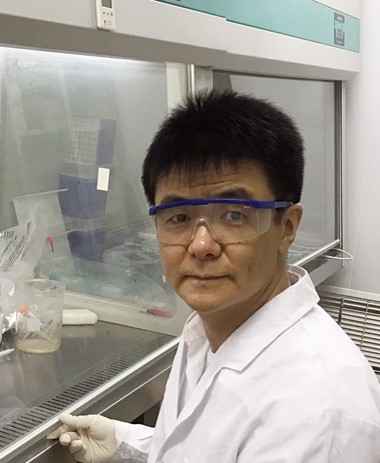 Lei Tao (陶磊)合作论文数Department of Chemistry, Tsinghua University7
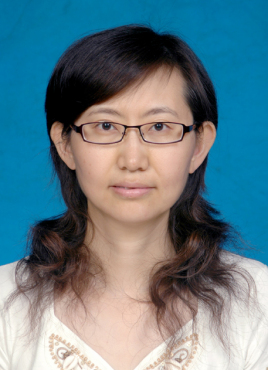 Ruiqi Li (李瑞琦)合作论文数College of Material Science and Chemical Engineering, Harbin Engineering University7Xin-yu SHANG (尚欣宇)合作论文数6Ya-yun LAI (来雅赟)合作论文数6ChunHua Lou (娄春华)合作论文数6Haiying Liu (刘海英)合作论文数College of Materials Science and Engineering, Northeast Forestry University6
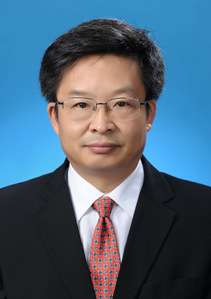 Qingwen Wang (王清文)合作论文数College of Materials and Energy, South China Agricultural University6Li Bin Zhu合作论文数6Quanfu Yin合作论文数5Ya-lan YU (于亚兰)合作论文数5Bing-yu CHEN (陈冰玉)合作论文数5Xiao GUO (郭笑)合作论文数5
 Nan Sun (孙楠)合作论文数5
 Can Liu (刘灿)合作论文数Department of Physics, Renmin University of China5Lixin Zhang合作论文数5
 Chundong Li (李春东)合作论文数School of Materials Science and Engineering, Harbin Institute of Technology5
 Yingfeng Zuo (左迎峰)合作论文数Central South University of Forestry and Technology5Yanhua Zhang合作论文数4
 Yang Liu (刘阳)合作论文数Department of Information of Public Security, Liaoning Police College4Zi-wei YAO (姚子巍)合作论文数4Jia-wei CUI (崔佳韦)合作论文数4Ting-yu ZHAO (赵婷玉)合作论文数4JiaNing Zhao (赵佳宁)合作论文数4
 YuanBo Huang (黄元波)合作论文数集美大学机械与能源工程学院4Xiaolei Teng (滕晓磊)合作论文数4Xin Qi (齐鑫)合作论文数4Wei Dong合作论文数3Si Qiu合作论文数3




