We introduce LLM × MapReduce-V3, a hierarchically modular agent system designed for long-form survey generation. Building on the prior work, LLM × MapReduce-V2, this version incorporates a multi-agent architecture where individual functional components, such as skeleton initialization, digest construction, and skeleton refinement, are implemented as independent model-context-protocol (MCP) servers. These atomic servers can be aggregated into higher-level servers, creating a hierarchically structured system. A high-level planner agent dynamically orchestrates the workflow by selecting appropriate modules based on their MCP tool descriptions and the execution history. This modular decomposition facilitates human-in-the-loop intervention, affording users greater control and customization over the research process. Through a multi-turn interaction, the system precisely captures the intended research perspectives to generate a comprehensive skeleton, which is then developed into an in-depth survey. Human evaluations demonstrate that our system surpasses representative baselines in both content depth and length, highlighting the strength of MCP-based modular planning. Demo, video and code are available at https://github.com/thunlp/LLMxMapReduce .
Embodied AI systems, comprising AI models and physical plants, are increasingly prevalent across various applications. Due to the rarity of system failures, ensuring their safety in complex operating environments remains a major challenge, which severely hinders their large-scale deployment in safety-critical domains, such as autonomous vehicles, medical devices, and robotics. While achieving provable deterministic safety-verifying system safety across all possible scenarios-remains theoretically ideal, the rarity and complexity of corner cases make this approach impractical for scalable embodied AI systems. Instead, empirical safety evaluation is employed as an alternative, but the absence of provable guarantees imposes significant limitations. To address these issues, we argue for a paradigm shift to provable probabilistic safety that integrates provable guarantees with progressive achievement toward a probabilistic safety boundary on overall system performance. The new paradigm better leverages statistical methods to enhance feasibility and scalability, and a well-defined probabilistic safety boundary enables embodied AI systems to be deployed at scale. In this Perspective, we outline a roadmap for provable probabilistic safety, along with corresponding challenges and potential solutions. By bridging the gap between theoretical safety assurance and practical deployment, this Perspective offers a pathway toward safer, large-scale adoption of embodied AI systems in safety-critical applications.
Evaluation is pivotal for refining Large Language Models (LLMs), pinpointing their capabilities, and guiding enhancements. The rapid development of LLMs calls for a lightweight and easy-to-use framework for swift evaluation deployment. However, considering various implementation details, developing a comprehensive evaluation platform is never easy. Existing platforms are often complex and poorly modularized, hindering seamless incorporation into research workflows. This paper introduces UltraEval, a user-friendly evaluation framework characterized by its lightweight nature, comprehensiveness, modularity, and efficiency. We identify and reimplement three core components of model evaluation (models, data, and metrics). The resulting composability allows for the free combination of different models, tasks, prompts, benchmarks, and metrics within a unified evaluation workflow. Additionally, UltraEval supports diverse models owing to a unified HTTP service and provides sufficient inference acceleration. UltraEval is now available for researchers publicly (1).
Rationale: Coronavirus disease 2019 (COVID-19) has caused a global pandemic. A classifier combining chest X-ray (CXR) with clinical features may serve as a rapid screening approach. Methods: The study included 512 patients with COVID-19 and 106 with influenza A/B pneumonia. A deep neural network (DNN) was applied, and deep features derived from CXR and clinical findings formed fused features for diagnosis prediction. Results: The clinical features of COVID-19 and influenza showed different patterns. Patients with COVID-19 experienced less fever, more diarrhea, and more salient hypercoagulability. Classifiers constructed using the clinical features or CXR had an area under the receiver operating curve (AUC) of 0.909 and 0.919, respectively. The diagnostic efficacy of the classifier combining the clinical features and CXR was dramatically improved and the AUC was 0.952 with 91.5% sensitivity and 81.2% specificity. Moreover, combined classifier was functional in both severe and non-serve COVID-19, with an AUC of 0.971 with 96.9% sensitivity in non-severe cases, which was on par with the computed tomography (CT)-based classifier, but had relatively inferior efficacy in severe cases compared to CT. In extension, we performed a reader study involving three experienced pulmonary physicians, artificial intelligence (AI) system demonstrated superiority in turn-around time and diagnostic accuracy compared with experienced pulmonary physicians. Conclusions: The classifier constructed using clinical and CXR features is efficient, economical, and radiation safe for distinguishing COVID-19 from influenza A/B pneumonia, serving as an ideal rapid screening tool during the COVID-19 pandemic.
The recent emergence of contrastive learning approaches facilitates the application on graph representation learning (GRL), introducing graph contrastive learning (GCL) into the literature. These methods contrast semantically similar and dissimilar sample pairs to encode the semantics into node or graph embeddings. However, most existing works only performed \textbf{model-level} evaluation, and did not explore the combination space of modules for more comprehensive and systematic studies. For effective \textbf{module-level} evaluation, we propose a framework that decomposes GCL models into four modules: (1) a \textbf{sampler} to generate anchor, positive and negative data samples (nodes or graphs); (2) an \textbf{encoder} and a \textbf{readout} function to get sample embeddings; (3) a \textbf{discriminator} to score each sample pair (anchor-positive and anchor-negative); and (4) an \textbf{estimator} to define the loss function. Based on this framework, we conduct controlled experiments over a wide range of architectural designs and hyperparameter settings on node and graph classification tasks. Specifically, we manage to quantify the impact of a single module, investigate the interaction between modules, and compare the overall performance with current model architectures. Our key findings include a set of module-level guidelines for GCL, e.g., simple samplers from LINE and DeepWalk are strong and robust; an MLP encoder associated with Sum readout could achieve competitive performance on graph classification. Finally, we release our implementations and results as OpenGCL, a modularized toolkit that allows convenient reproduction, standard model and module evaluation, and easy extension. OpenGCL is available at \url{https://github.com/thunlp/OpenGCL}.
A comprehensive knowledge graph (KG) contains an instance-level entity graph and an ontology-level concept graph. The two-view KG provides a testbed for models to "simulate" human's abilities on knowledge abstraction, concretization, and completion (KACC), which are crucial for human to recognize the world and manage learned knowledge. Existing studies mainly focus on partial aspects of KACC. In order to promote thorough analyses for KACC abilities of models, we propose a unified KG benchmark by improving existing benchmarks in terms of dataset scale, task coverage, and difficulty. Specifically, we collect new datasets that contain larger concept graphs, abundant cross-view links as well as dense entity graphs. Based on the datasets, we propose novel tasks such as multi-hop knowledge abstraction (MKA), multi-hop knowledge concretization (MKC) and then design a comprehensive benchmark. For MKA and MKC tasks, we further annotate multi-hop hierarchical triples as harder samples. The experimental results of existing methods demonstrate the challenges of our benchmark. The resource is available at https://github.com/thunlp/KACC.
Attributed graph embedding, which learns vector representations from graph topology and node features, is a challenging task for graph analysis. Recently, methods based on graph convolutional networks (GCNs) have made great progress on this task. However,existing GCN-based methods have three major drawbacks. Firstly,our experiments indicate that the entanglement of graph convolutional filters and weight matrices will harm both the performance and robustness. Secondly, we show that graph convolutional filters in these methods reveal to be special cases of generalized Laplacian smoothing filters, but they do not preserve optimal low-pass characteristics. Finally, the training objectives of existing algorithms are usually recovering the adjacency matrix or feature matrix, which are not always consistent with real-world applications. To address these issues, we propose Adaptive Graph Encoder (AGE), a novel attributed graph embedding framework. AGE consists of two modules: (1) To better alleviate the high-frequency noises in the node features, AGE first applies a carefully-designed Laplacian smoothing filter. (2) AGE employs an adaptive encoder that iteratively strengthens the filtered features for better node embeddings. We conduct experiments using four public benchmark datasets to validate AGE on node clustering and link prediction tasks. Experimental results show that AGE consistently outperforms state-of-the-artgraph embedding methods considerably on these tasks.
Lots of learning tasks require dealing with graph data which contains rich relation information among elements. Modeling physics systems, learning molecular fingerprints, predicting protein interface, and classifying diseases demand a model to learn from graph inputs. In other domains such as learning from non-structural data like texts and images, reasoning on extracted structures (like the dependency trees of sentences and the scene graphs of images) is an important research topic which also needs graph reasoning models. Graph neural networks (GNNs) are neural models that capture the dependence of graphs via message passing between the nodes of graphs. In recent years, variants of GNNs such as graph convolutional network (GCN), graph attention network (GAT), graph recurrent network (GRN) have demonstrated ground-breaking performances on many deep learning tasks. In this survey, we propose a general design pipeline for GNN models and discuss the variants of each component, systematically categorize the applications, and propose four open problems for future research.
Many applications unroll or stack the graph neural network layer aiming to achieve better results as more layers (i.e., k layers) make each node aggregate more information from neighbors k hops away. However, it has been observed in many experiments that deeper models could not improve the performance and deeper models could even perform worse [Kipf and Welling, 2017]. This is mainly because more layers could also propagate the noisy information from an exponentially increasing number of expanded neighborhood members.
Graphs are useful data structures in complex real-life applications such as modeling physical systems, learning molecular fingerprints, controlling traffic networks, and recommending friends in social
Fact verification (FV) is a challenging task which requires to retrieve relevant evidence from plain text and use the evidence to verify given claims. Many claims require to simultaneously integrate and reason over several pieces of evidence for verification. However, previous work employs simple models to extract information from evidence without letting evidence communicate with each other, e.g., merely concatenate the evidence for processing. Therefore, these methods are unable to grasp sufficient relational and logical information among the evidence. To alleviate this issue, we propose a graph-based evidence aggregating and reasoning (GEAR) framework which enables information to transfer on a fully-connected evidence graph and then utilizes different aggregators to collect multi-evidence information. We further employ BERT, an effective pre-trained language representation model, to improve the performance. Experimental results on a large-scale benchmark dataset FEVER have demonstrated that GEAR could leverage multi-evidence information for FV and thus achieves the promising result with a test FEVER score of 67.10%. Our code is available at https://github.com/thunlp/GEAR.
This paper describes our solution for the video recognition task of ActivityNet Kinetics challenge that ranked the 1st place. Most of existing state-of-the-art video recognition approaches are in favor of an end-to-end pipeline. One exception is the framework of DevNet. The merit of DevNet is that they first use the video data to learn a network (i.e. fine-tuning or training from scratch). Instead of directly using the end-to-end classification scores (e.g. softmax scores), they extract the features from the learned network and then fed them into the off-the-shelf machine learning models to conduct video classification. However, the effectiveness of this line work has long-term been ignored and underestimated. In this submission, we extensively use this strategy. Particularly, we investigate four temporal modeling approaches using the learned features: Multi-group Shifting Attention Network, Temporal Xception Network, Multi-stream sequence Model and Fast-Forward Sequence Model. Experiment results on the challenging Kinetics dataset demonstrate that our proposed temporal modeling approaches can significantly improve existing approaches in the large-scale video recognition tasks. Most remarkably, our best single Multi-group Shifting Attention Network can achieve 77.7% in term of top-1 accuracy and 93.2% in term of top-5 accuracy on the validation set.
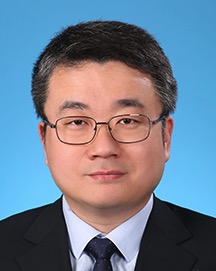 Zhiyuan Liu (刘知远)合作论文数Department of Computer Science and Technology, Tsinghua University11
 Cheng Yang (杨成)合作论文数School of Computer Science, Beijing University of Posts and Telecommunications5
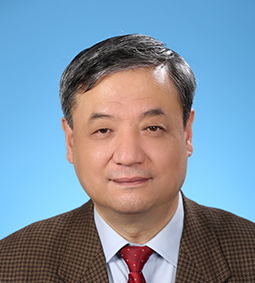 Maosong Sun (孙茂松)合作论文数Department of Computer Science and Technology, Tsinghua University5
 Shengding Hu (胡声鼎)合作论文数ByteDance3
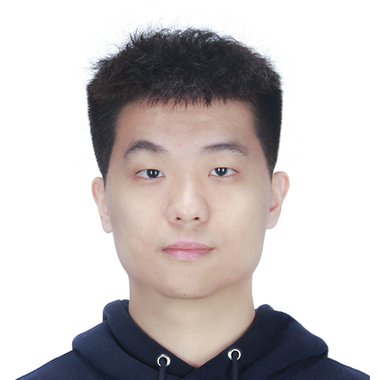 Ganqu Cui (崔淦渠)合作论文数Shanghai AI Laboratory3
 Lifeng Wang合作论文数Tencent Incorporation, Shenzhen, China2
 Xu Han (韩旭)合作论文数2Yu Chao合作论文数Department of Computer Science and Technology, Tsinghua University;Institute for AI, BNRist Center, Tsinghua University1Zihan Zhou合作论文数1Yuanqian Zhao合作论文数1Chaoqun He合作论文数1Renjie Luo合作论文数1Yunlong Bian合作论文数1Qiyuan Wang合作论文数1
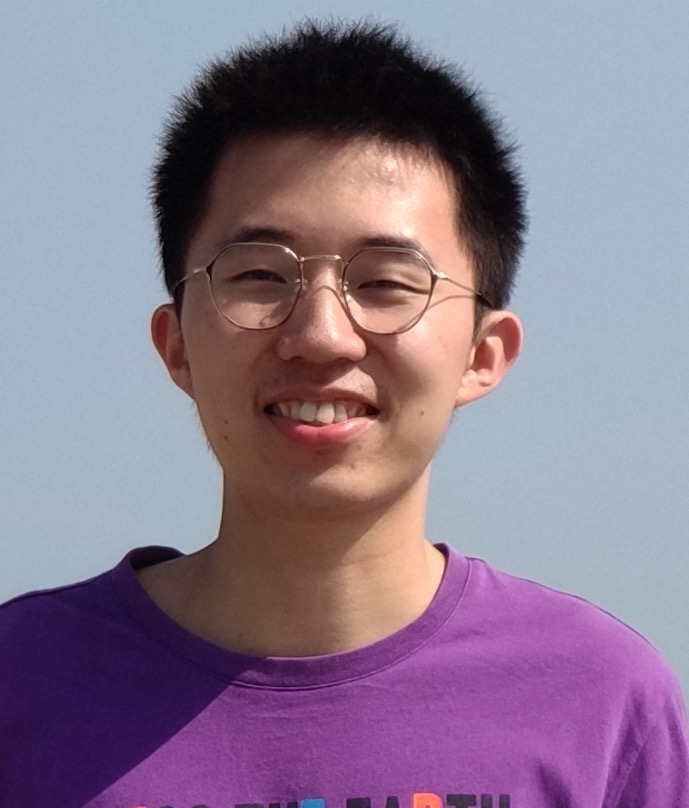 Zhengyan Zhang合作论文数DeepSeek1
 Jiajie Zhang合作论文数Tsinghua University1
 Jie Jiang合作论文数Institute of Automation, Chinese Academy of Sciences1
 Shuo Wang合作论文数1
 Haoyu Wang合作论文数University at Albany1Hanghao Wu合作论文数Department of Computer Science and Technologies, Tsinghua University1Xingyi Cheng合作论文数Ant Financial Services Group, Hangzhou, China1
 Weixiang Chen合作论文数Tsinghua University;1Rui Jin合作论文数1Changcheng Li合作论文数Tencent Incorporation, Shenzhen, China1
 Xiang Long (龙翔)合作论文数Sch Mat & Met, Guizhou Univ1
 Bin Zhang合作论文数1
 Shilei Wen合作论文数Bytedance1Peng Wei (卫鹏)合作论文数1
 Xiao Liu (刘啸)合作论文数Microsoft Research Asia1Hongyi Ren合作论文数1
 Yanming Shen (申彦明)合作论文数School of Computer Science and Technology, Dalian University of Technology1
 Wei Xu (徐葳)合作论文数Institute for Interdisciplinary Information Sciences, Tsinghua University1
 Yisen Wang (王奕森)合作论文数School of Intelligence Science and Technology, Peking University1Zhou Jiesen合作论文数1
 Juanzi Li (李涓子)合作论文数Department of Computer Science and Technology, Tsinghua University1Lou Jian合作论文数1
 Liming Xia (夏黎明)合作论文数Tongji Hospital, Tongji Medical College, Huazhong University of Science and Technology1
 Fu Li合作论文数Department of Computer Vision Technology, Baidu Inc.1
 Xiaomeng Li (李小萌)合作论文数Department of Electronic and Computer Engineering, School of Engineering, The Hong Kong University of Science and Technology;Center for Medical Imaging and Analysis, School of Engineering, The Hong Kong University of Science and Technology1
 Jiwen Lu (鲁继文)合作论文数Department of Automation, Tsinghua University1
 Huahao Shen (沈华浩)合作论文数The Second Affiliated Hospital, School of Medicine, Zhejiang University1
 Jianping Zhao (赵建平)合作论文数Tongji Hospital, Tongji Medical College, Huazhong University of Science and Technology1
 Xin Lv (吕鑫)合作论文数Department of Computer Science at Tsinghua University1
 Wen Li (李雯)合作论文数The Second Affiliated Hospital, Zhejiang University School of Medicine;Institute of Respiratory Disease, Zhejiang University1
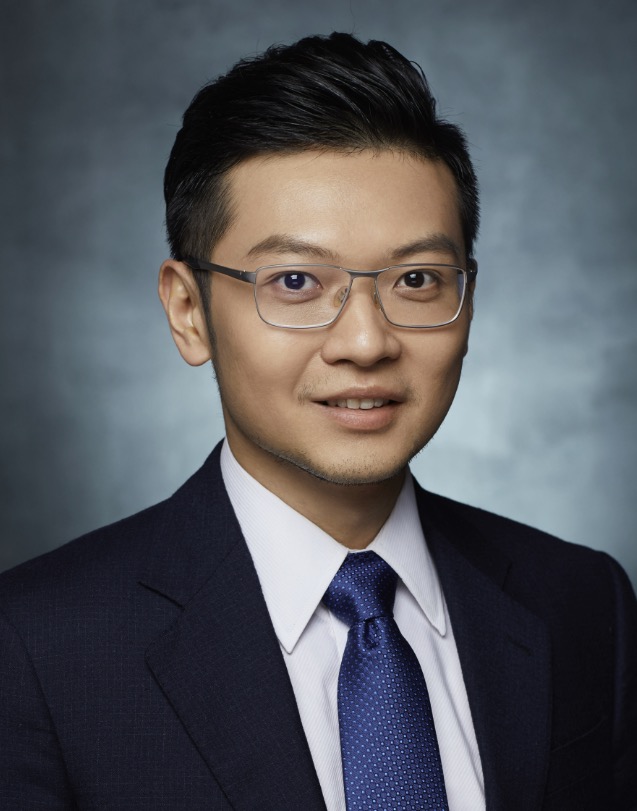 Yang Xia (夏旸)合作论文数The Second Affiliated Hospital Zhejiang University School of Medicine1
) Lihua Wang (王莉华)合作论文数College of Education, Zhejiang University1
Lihua Wang (王莉华)合作论文数College of Education, Zhejiang University1 Yi Zhang (张毅)合作论文数Department of Automation, Tsinghua University1
 Qingshan Jia (贾庆山)合作论文数Department of Automation, Tsinghua University1
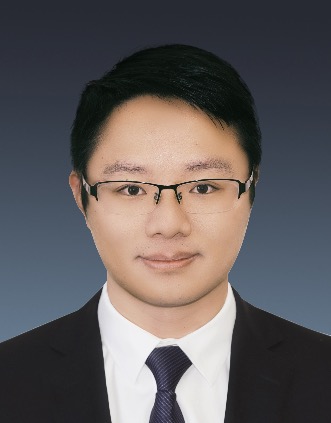 Shuo Feng (封硕)合作论文数Department of Automation, Tsinghua University1




