Representation and character varieties of the Baumslag–Solitar groups BS( p , q ) are analyzed. Irreducible components of these varieties are found, and their dimension is calculated. It is proved that all irreducible components of the representation variety R n (BS( p , q )) are rational varieties of dimension n 2 , and each irreducible component of the character variety X n (BS( p , q )) is a rational variety of dimension k ≤ n . The smoothness of irreducible components of the variety R n s (BS( p , q )) of irreducible representations is established, and it is proved that all irreducible components of the variety R n s (BS( p , q )) are isomorphic to A 1 {0}.
On 1 December 2014 the prominent mathematician Vladimir Petrovich Platonov, academician of the Russian Academy of Sciences (RAS) and the National Academy of Sciences of Belarus, and principal research fellow of the Research Institute for System Studies of the RAS and the Steklov Mathematical Institute of the RAS, observed his 75th birthday. Platonov is an internationally known specialist in the area of algebra, algebraic geometry, and number theory. He has solved several major problems which had long defied the efforts of other mathematicians, among them the problem of strong approximation in algebraic groups (posed in 1937), the Kneser–Tits problem, the creation of the reduced K-theory of finite-dimensional division algebras, and the solution on this basis of the Tannaka–Artin problem and the problem of rationality of group algebraic varieties. He has made important contributions to the development of the arithmetic theory of algebraic groups: a deep direction of research that lies at the junction of group theory, algebraic geometry, and number theory. Over the last several years he has developed a theory for finding fundamental units in hyperelliptic fields, and new highly efficient algorithms have been constructed for calculating such units on the basis of this theory. These and many other results brought him wide international recognition and renown, as evidenced by invitations to speak at the International Congresses of Mathematicians in Vancouver (1974) and Helsinki (1978) and at the European Mathematical Congress in Budapest (1996). His results were the subject of a talk by J. Tits at the Bourbaki seminar in 1977, and in 1978 he received the Lenin Prize in the area of science and technology for the cycle of fundamental papers on the arithmetic of algebraic groups and reduced K-theory. In 1993 he was awarded the Humboldt Prize (Germany). Platonov’s mathematical work is multifaceted and is characterized by deep originality. He has written more than 160 research papers, including 2 monographs. The spectrum of problems investigated by him is very broad and includes a detailed study of basic classes of locally compact topological groups, an analysis of the
Let f = (gj • g2' ...• gm) be a group with m generators. For an arbitrary yield K and a linear algebraic K -group G, the set of all represen tations Hom(f, G( K)) can be identified in a natural way with the K -points of a certain algebraic variety. For any g E f we define a function Tg on Hom(f, G(K)) with values in K: Tg(P) = tr(p(g)) , P E Hom(f, G(K)), where tr X denotes the trace of a matrix X. Consider the ring T(f, G(K)) generated by the functions Tg ; it is called character ring of the representations of f in G(K). Our main goal is to answer the question of whether the rings T(f, GLn(K)) and T(f, SLn(K)) and finitely generated. The answer is given in Theorems 1 and 2. Bibliography: 9 titles. §
On 1 December 2009 Vladimir Petrovich Platonov, academician of the Russian Academy of Sciences and of the National Academy of Sciences of Belarus, turned 70. V. P. Platonov was born in the village Staiki of the Orshan district of the Vitebsk region. In 1961 he graduated with distinction from Belarus State University. In 1963 he defended his Ph.D. dissertation, and in 1966 his D.Sc. dissertation. He has been a professor since 1968. In 1969 he was elected a corresponding member and in 1972 an academician of the Academy of Sciences of the BSSR, and in 1987 an academician of the Academy of Sciences of USSR. He is the author of 161 research publications. From 1963 to 1971 he worked as a docent, professor, and head of the Department of Algebra at Belarus State University. From 1971 to 1995 he headed the Laboratory of Algebraic Geometry and Topology, was the director from 1977 to 1992, and was a principal research fellow at the Institute of Mathematics of the Academy of Sciences of the BSSR. From 1987 to 1992 he served as the president of the Academy of Sciences of the BSSR. He worked at universities and research centres in the USA, Canada, and Germany in the period from 1992 to 2004. At present he is a principal research fellow at the Research Institute of System Research of the Russian Academy of Sciences. Platonov is an internationally known mathematician, an expert in the area of algebra, algebraic geometry, and number theory. He has solved a number of well-known research problems which had long withstood the efforts of many mathematicians. Among these is the strong approximation problem in algebraic groups, the Tannaka–Artin problem and the Kneser–Tits conjecture on the structure of isotropic algebraic groups, the problem of rationality of group algebraic varieties, and others. He has made major contributions to the arithmetic theory of algebraic groups —a direction of research that lies at the junction of group theory, algebraic geometry, and algebraic number theory.
In this note we present some results about computation of the group of S-units in hyperelliptic fields. Let k = Fq(x) be the field of rational functions of one variable over a finite field Fq of characteristic p > 2, and let d(x) = a0x 2n+1 +a1x 2n + · · ·+a2n+1 ∈ Fq[x] be a square-free polynomial, a0 = 0. Let K = k( √ d ). For an irreducible polynomial v ∈ Fq[x], we denote by | · |v the corresponding valuation on k. Let (α, β) be a point on the curve y = d(x), β = 0. Then the valuation | · |x−α has two extensions to K. These extensions will be denoted by | · |1 and | · |2. The non-Archimedean valuation | · |∞ has a unique extension to K, which also will be denoted by | · |∞. The following two cases are the basic cases for investigation of S-units: 1) S = {| · |∞, | · |1}; 2) S = {| · |∞, | · |1, | · |2}. Let OS be the ring of S-integers in K, that is, the elements y ∈ K such that |y|v > 0 for all valuations | · |v on K which do not belong to S. The set US of all invertible elements of OS is called the group of S-units of the field K. By the generalized Dirichlet theorem on units (see [1], Chap. IV, Theorem 9), the group US is the direct product of the group F ∗ q and the free Abelian group G of rank |S| − 1. The independent generators of the group G are called fundamental S-units. In the classical case of a quadratic extension L = Q( √ d ) of Q one can find a fundamental unit of the field L by using the continued fraction expansion of √ d [2]. However the method of continued fractions does not work properly for function fields. A goal of this note is to find an algorithm for computing the fundamental S-units in a hyperelliptic field K in the two basic cases above. The first proposition is of a technical character.
New methods for calculating fundamental S-units in hyperelliptic fields are found. Continued fractions in function fields are investigated. As an application; it is proved that if a valuation is defined by a linear polynomial, then a fundamental S-unit in a hyperelliptic field can be found by expanding certain elements into continued fractions.
The problem of the existence of a decomposition of a finitely generated group Gamma into a non-trivial free product with amalgamation is studied. It is proved that if dim X-s(Gamma) greater than or equal to 2, where X-s(r) is the character variety of irreducible representations of Gamma into SL2(C), then Gamma is a non-trivial free product with amalgamation. Next, the case when Gamma = (a,b \ a(n). = b(k) = R-m(a,b)) is a generalized triangle group is considered. It is proved that if one of the generators of Gamma has infinite order, then Gamma is a non-trivial free product with amalgamation. In the general case sufficient conditions ensuring that Gamma is a non-trivial free product with amalgamation are found.
The problem of the decomposition of one-relator products of cyclics into non-trivial free products with amalgamation is considered. Two theorems are proved, one of which is as follows.Let G = [a, b \ a(2n) = R-m(a, b) = 1], where n greater than or equal to 0, m greater than or equal to 2, and R(a, b) is a cyclically reduced word containing b in the free group on a and b. Then G is a n:on-trivial free product with amalgamation.One consequence of this theorem is a proof of the conjecture of Fine, Levin, and Rosenberger that each two-generator one-relator group with torsion is a non-trivial free product with amalgamation.
 Vladimir P Platonov合作论文数6Lyudvig Dmitrievich Faddeev合作论文数3сергей петрович новиков合作论文数3Andrei S. Rapinchuk合作论文数Department of Mathematics, University of Virginia3
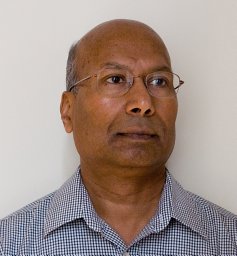 Gopal Prasad合作论文数School of Mathematics, Tata Institute of Fundamental Research3
 Gregory A. Margulis合作论文数Department of Mathematics, Yale University2Vladimir P. Platonov合作论文数2E. I. Zelmanov合作论文数1Yurii Sergeevich Osipov合作论文数1юрий сергеевич осипов合作论文数1Grigorii Aleksandrovich Margulis合作论文数1Людвиг Дмитриевич Фаддеев合作论文数1Алексей Николаевич Паршин合作论文数1Efim Isaakovich Zel'manov合作论文数1Arkadii Anatol'evich Mal'tsev合作论文数1Aa Mal'Tsev合作论文数1Vladimir Chernousov合作论文数1Yu. S. Osipov合作论文数1
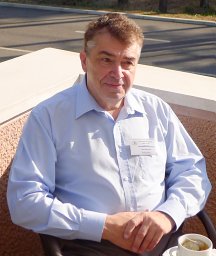 Victor Matveevich Buchstaber合作论文数Department of Mathematics and Mechanics, Moscow State University1Aleksei Borisovich Zhizhchenko合作论文数1Sergei I. Adian合作论文数1E. I. Zel'Manov合作论文数1




