We present an updated global analysis of beauty decays sensitive to the angle gamma of the Cabibbo-Kobayashi-Maskawa matrix and of D-meson mixing data in the framework of approximate universality, in which CP violation in D-D mixing is described in terms of two universal weak phases corresponding to dispersive and absorptive contributions. We extract the fundamental theoretical parameters determining absorptive and dispersive contributions to D meson mixing and CP violation, together with the angle gamma. The results for the charm mixing parameters are x12 similar or equal to x = (0.401 + 0.043)% and y12 similar or equal to y = (0.610 + 0.017)%, while the two CP-violating phases are given by phi M2 = (0.13 + 0.70)degrees and phi Gamma 2 = (2.1 + 1.6)degrees. The angle gamma is found to be gamma = (65.7 + 2.5)degrees, in excellent agreement with the indirect determination from the unitarity triangle analysis.
Simulating detector and reconstruction effects on physics quantities is crucial for data analysis, but it is coming unsustainably costly for the upcoming HEP experiments. The most radical approach to speed-up detector simulation is Flash Simulation, as proposed by the LHCb collaboration in Lamarr, a software package implementing a novel simulation paradigm relying on Deep Generative Models and Seq2seq attention-driven techniques to deliver simulated samples. Thanks to its modular layout, Lamarr provides analysis-level quantities by applying a pipeline of machine learning-based modules that properly transforms the information resulting from physics generators. Good agreement is observed by comparing key reconstructed quantities obtained with Lamarr against those from the existing detailed Geant4-based simulation. Lamarr has been designated with dual capabilities: it can function as a stand-alone simulation framework, while also being seamlessly integrated into the LHCb simulation software.
The fraction of χc1 and χc2 decays in the prompt J/ψ yield, Fχc→J/ψ=σχc→J/ψ/σJ/ψ, is measured by the LHCb detector in pPb collisions at sNN=8.16 TeV. The study covers the forward (1.5
The increasing luminosities of future data taking at Large Hadron Collider and next generation collider experiments require an unprecedented amount of simulated events to be produced. Such large scale productions demand a significant amount of valuable computing resources. This brings a demand to use new approaches to event generation and simulation of detector responses. In this paper, we discuss the application of generative adversarial networks (GANs) to the simulation of the LHCb experiment events. We emphasize main pitfalls in the application of GANs and study the systematic effects in detail. The presented results are based on the Geant4 simulation of the LHCb Cherenkov detector.
Searches for the rare hadronic decays B^{0}→pp[over ¯]pp[over ¯] and B_{s}^{0}→pp[over ¯]pp[over ¯] are performed using proton-proton collision data recorded by the LHCb experiment and corresponding to an integrated luminosity of 9 fb^{-1}. Significances of 9.3σ and 4.0σ, including statistical and systematic uncertainties, are obtained for the B^{0}→pp[over ¯]pp[over ¯] and B_{s}^{0}→pp[over ¯]pp[over ¯] signals, respectively. The branching fractions are measured relative to the topologically similar normalization decays B^{0}→J/ψ(→pp[over ¯])K^{*0}(→K^{+}π^{-}) and B_{s}^{0}→J/ψ(→pp[over ¯])ϕ(→K^{+}K^{-}). The branching fractions are measured to be B(B^{0}→pp[over ¯]pp[over ¯])=(2.2±0.4±0.1±0.1)×10^{-8} and B(B_{s}^{0}→pp[over ¯]pp[over ¯])=(2.3±1.0±0.2±0.1)×10^{-8}. In these measurements, the first uncertainty is statistical, the second is systematic, and the third one is due to the external branching fraction of the normalization channel.
An amplitude analysis of the B+→D+sD−sK+ decay is carried out to study for the first time its intermediate resonant contributions, using proton-proton collision data collected with the LHCb detector at center-of-mass energies of 7, 8, and 13 TeV. A near-threshold peaking structure, referred to as X(3960), is observed in the D+sD−s invariant-mass spectrum with significance greater than 12 standard deviations. The mass, width, and the quantum numbers of the structure are measured to be 3956±5±10 MeV, 43±13±8 MeV, and JPC=0++, respectively, where the first uncertainties are statistical and the second systematic. The properties of the new structure are consistent with recent theoretical predictions for a state composed of c¯cs¯s quarks. Evidence for an additional structure is found around 4140 MeV in the D+sD−s invariant mass, which might be caused either by a new resonance with the 0++ assignment or by a J/ψϕ↔D+sD−s coupled-channel effect.Received 28 October 2022Revised 6 February 2023Accepted 28 February 2023DOI:https://doi.org/10.1103/PhysRevLett.131.071901Published by the American Physical Society under the terms of the Creative Commons Attribution 4.0 International license. Further distribution of this work must maintain attribution to the author(s) and the published article's title, journal citation, and DOI. Funded by SCOAP3.© 2023 CERN, for the LHCb CollaborationPhysics Subject Headings (PhySH)Research AreasMultiquark bound statesParticle interactionsStrong interactionParticles & Fields
Automated analysis of complex systems based on multiple readouts remains a challenge. Change point detection algorithms are aimed to locating abrupt changes in the time series behaviour of a process. In this paper, we present a novel change point detection algorithm based on Latent Neural Stochastic Differential Equations (SDE). Our method learns a non-linear deep learning transformation of the process into a latent space and estimates a SDE that describes its evolution over time. The algorithm uses the likelihood ratio of the learned stochastic processes in different timestamps to find change points of the process. We demonstrate the detection capabilities and performance of our algorithm on synthetic and real-world datasets. The proposed method outperforms the state-of-the-art algorithms on the majority of our experiments.
The volume of data processed by the Large Hadron Collider experiments demands sophisticated selection rules typically based on machine learning algorithms. One of the shortcomings of these approaches is their profound sensitivity to the biases in training samples. In the case of particle identification (PID), this might lead to degradation of the efficiency for some decays not present in the training dataset due to differences in input kinematic distributions. In this talk, we propose a method based on the Common Specific Decomposition that takes into account individual decays and possible misshapes in the training data by disentangling common and decay specific components of the input feature set. We show that the proposed approach reduces the rate of efficiency degradation for the PID algorithms for the decays reconstructed in the LHCb detector.
A measurement of the ratios of the effective decay widths of D-0 -> pi(-)pi(+) and D-0 -> K- K+ decays over that of D-0 -> K-pi(+) decays is performed with the LHCb experiment using proton-proton collisions at a centre-of-mass energy of 13 TeV, corresponding to an integrated luminosity of 6 fb(-1). These observables give access to the charm mixing parameters y(CP)(pi pi) - y(CP)(K pi )and y(CP)(KK) -y(CP)(K pi), and are measured as y(CP)(pi pi) - y(CP)(K pi) = (6.57 +/- 0.53 +/- 0.16) x 10(-3), y(CP)(KK) - y(CP)(K pi) = (7.08 +/- 0.30 +/- 0.14) x 10(-3), where the first uncertainties are statistical and the second systematic. The combination of the two measurements is Y-CP - y(CP)(K pi) = (6.96 +/- 0.26 +/- 0.13) x 10(-3), which is four times more precise than the previous world average.
An amplitude analysis of flavor-untagged B-s(0) -> J=psi p (p) over bar decays is performed using a sample of 797 +/- 31 decays reconstructed with the LHCb detector. The data, collected in proton-proton collisions between 2011 and 2018, correspond to an integrated luminosity of 9 fb(-1). Evidence for a new structure in the J=psi p and J=psi(p) over bar systems with a mass of 4337(-4-2)(+7+2) MeV and a width of 29(-12-14)(+26+14) MeV is found, where the first uncertainty is statistical and the second systematic, with a significance in the range of 3.1 to 3.7 sigma, depending on the assigned J(P) hypothesis.
Tests of lepton universality in B^{0}→K_{S}^{0}ℓ^{+}ℓ^{-} and B^{+}→K^{*+}ℓ^{+}ℓ^{-} decays where ℓ is either an electron or a muon are presented. The differential branching fractions of B^{0}→K_{S}^{0}e^{+}e^{-} and B^{+}→K^{*+}e^{+}e^{-} decays are measured in intervals of the dilepton invariant mass squared. The measurements are performed using proton-proton collision data recorded by the LHCb experiment, corresponding to an integrated luminosity of 9 fb^{-1} . The results are consistent with the standard model and previous tests of lepton universality in related decay modes. The first observation of B^{0}→K_{S}^{0}e^{+}e^{-} and B^{+}→K^{*+}e^{+}e^{-} decays is reported.
A bstract The production cross-section of the χ c 1 (3872) state relative to the ψ (2 S ) meson is measured using proton-proton collision data collected with the LHCb experiment at centre-of-mass energies of $$ \sqrt{s} $$ s = 8 and 13 TeV, corresponding to integrated luminosities of 2.0 and 5.4 fb − 1 , respectively. The two mesons are reconstructed in the J/ψπ + π − final state. The ratios of the prompt and nonprompt χ c 1 (3872) to ψ (2 S ) production cross-sections are measured as a function of transverse momentum, p T , and rapidity, y , of the χ c 1 (3872) and ψ (2 S ) states, in the kinematic range 4 < p T < 20 GeV/ c and 2 . 0 < y < 4 . 5. The prompt ratio is found to increase with p T , independently of y . For the prompt component, the double ratio of the χ c 1 (3872) and ψ (2 S ) production cross-sections between 13 and 8 TeV is observed to be consistent with unity, independent of p T and centre-of-mass energy.
Branching fraction and effective lifetime measurements of the rare decay B_{s}^{0}→μ^{+}μ^{-} and searches for the decays B^{0}→μ^{+}μ^{-} and B_{s}^{0}→μ^{+}μ^{-}γ are reported using proton-proton collision data collected with the LHCb detector at center-of-mass energies of 7, 8, and 13 TeV, corresponding to a luminosity of 9 fb^{-1}. The branching fraction B(B_{s}^{0}→μ^{+}μ^{-})=(3.09_{-0.43-0.11}^{+0.46+0.15})×10^{-9} and the effective lifetime τ(B_{s}^{0}→μ^{+}μ^{-})=2.07±0.29±0.03 ps are measured, where the first uncertainty is statistical and the second systematic. No significant signal for B^{0}→μ^{+}μ^{-} and B_{s}^{0}→μ^{+}μ^{-}γ decays is found and upper limits B(B^{0}→μ^{+}μ^{-})<2.6×10^{-10} and B(B_{s}^{0}→μ^{+}μ^{-}γ)<2.0×10^{-9} at the 95% C.L. are determined, where the latter is limited to the range m_{μμ}>4.9 GeV/c^{2}. The results are in agreement with the standard model expectations.
The first study of the angular distribution of μ^{+}μ^{-} pairs produced in the forward rapidity region via the Drell-Yan reaction pp→γ^{*}/Z+X→ℓ^{+}ℓ^{-}+X is presented, using data collected with the LHCb detector at a center-of-mass energy of 13 TeV, corresponding to an integrated luminosity of 5.1 fb^{-1}. The coefficients of the five leading terms in the angular distribution are determined as a function of the dimuon transverse momentum and rapidity. The results are compared to various theoretical predictions of the Z-boson production mechanism and can also be used to probe transverse-momentum-dependent parton distributions within the proton.
The centrality of heavy-ion collisions is directly related to the medium created therein. A procedure to determine the centrality of collisions with the LHCb detector is implemented for lead-lead collisions at $\sqrt{s_{\scriptscriptstyle\text{NN}}}=5\, \mathrm{TeV}$ and lead-neon fixed-target collisions at $\sqrt{s_{\scriptscriptstyle\text{NN}}}=69\, \mathrm{GeV}$. The energy deposits in the electromagnetic calorimeter are used to determine and define the centrality classes. The correspondence between the number of participants and the centrality for the lead-lead collisions is in good agreement with the correspondence found in other experiments, and the centrality measurements for the lead-neon collisions presented here are the first performed in fixed-target collisions at the LHC.
The first measurement of the lifetime of the doubly charmed baryon Ξ_{cc}^{++} is presented, with the signal reconstructed in the final state Λ_{c}^{+}K^{-}π^{+}π^{+}. The data sample used corresponds to an integrated luminosity of 1.7 fb^{-1}, collected by the LHCb experiment in proton-proton collisions at a center-of-mass energy of 13 TeV. The Ξ_{cc}^{++} lifetime is measured to be 0.256_{-0.022}^{+0.024}(stat)±0.014(syst) ps.
An amplitude analysis of flavor-untagged B_{s}^{0}→J/ψpp[over ¯] decays is performed using a sample of 797±31 decays reconstructed with the LHCb detector. The data, collected in proton-proton collisions between 2011 and 2018, correspond to an integrated luminosity of 9 fb^{-1}. Evidence for a new structure in the J/ψp and J/ψp[over ¯] systems with a mass of 4337_{-4}^{+7} _{-2}^{+2} MeV and a width of 29_{-12}^{+26} _{-14}^{+14} MeV is found, where the first uncertainty is statistical and the second systematic, with a significance in the range of 3.1 to 3.7σ, depending on the assigned J^{P} hypothesis.
A data sample collected with the LHCb detector, corresponding to an integrated luminosity of $9~{\rm fb}^{-1}$, is used to measure $CP$ observables in $B^\pm \to D h^\pm$ decays, where $h^{(\prime)}$ is either a kaon or a pion, and the neutral $D$ meson decay is reconstructed in the three-body final states $K^\pm \pi^\mp \pi^0$, $\pi^\pm \pi^\mp \pi^0$, and $K^\pm K^\mp \pi^0$. The most suppressed of these modes, $B^\pm \to [\pi^\pm K^\mp \pi^0]_D K^\pm$, is observed with a significance greater than seven standard deviations and constraints on the CKM angle $\gamma$ are calculated from the combination of the measurements.
Abstract A study of B+→ J/ψηK+ decays, followed by J/ψ → μ+μ− and η → γγ, is performed using a dataset collected with the LHCb detector in proton-proton collisions at centre-of-mass energies of 7, 8 and 13 TeV, corresponding to an integrated luminosity of 9 fb−1. The J/ψη mass spectrum is investigated for contributions from charmonia and charmonium-like states. Evidence is found for the B+→ (ψ2(3823) → J/ψη)K+ and B+→ (ψ(4040) → J/ψη)K+ decays with significance of 3.4 and 4.7 standard deviations, respectively. This constitutes the first evidence for the ψ2(3823) → J/ψη decay.
 George Lafferty合作论文数School of Physics and Astronomy, The University of Manchester1092
 Concezio Bozzi合作论文数Istituto Nazionale di Fisica Nucleare Sezione di Ferrara1064
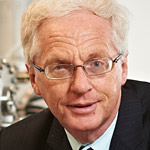 Roger Barlow合作论文数School of Computing and Engineering, University of Huddersfield1054
 Eugeni Graugés Pous合作论文数Department of Quantum Physics and Astrophysics, Facultat de Física, Universitat de Barcelona1048
 David Hutchcroft合作论文数Department of Physics, School of Physical Sciences, Faculty of Science and Engineering, University of Liverpool997M. Martinelli合作论文数966
 Antimo Palano合作论文数University of Bari957
 Arantza Oyanguren合作论文数Institute of Corpuscular Physics, University of Valencia934
 Ulrich Uwer合作论文数Fakultät für Physik und Astronomie, Physikalisches Institut, Universität Heidelberg923
 Steve Playfer合作论文数School of Physics and Astronomy, University of Edinburgh;Institute for Particle and Nuclear Physics, University of Edinburgh918
 Tim Gershon合作论文数Department of Physics, University of Warwick908Bernhard Spaan合作论文数906
 Glen Cowan合作论文数Centre for Particle Physics and Astronomy, Department of Physics, Royal Holloway, University of London904
 Abolhassan Jawahery合作论文数Department of Physics, College of Computer, Mathematical, & Natural Sciences, University of Maryland894
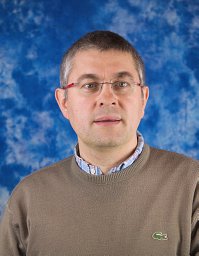 Vincent Tisserand合作论文数Laboratoire de Physique Corpusculaire de Clermont-Ferrand870R. Cenci合作论文数869Daniel Decamp合作论文数859Sergey Filippov合作论文数Institute for Nuclear Research of Russian Academy of Sciences852M. Pappagallo合作论文数852F. Ferreira Rodrigues合作论文数850
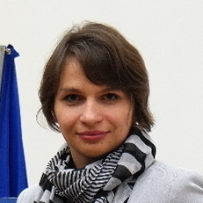 Agnieszka Dziurda合作论文数The Henryk Niewodniczański Institute of Nuclear Physics, Polish Academy of Sciences849D. Martinez Santos合作论文数849
 Marie-Hélène Schune合作论文数Laboratoire De L’accélérateur Linéaire, CNRS843
 Francesca Dordei合作论文数Istituto Nazionale di Fisica Nucleare842
 Valerie Gibson合作论文数The Cavendish Laboratory, Department of Physics, University of Cambridge842
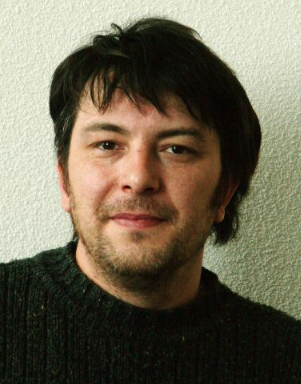 Olivier Deschamps合作论文数Université Clermont Auvergne;Laboratoire de Physique de Clermont Auvergne842
 Conor Fitzpatrick合作论文数Department of Physics & Astronomy, School of Natural Sciences, The University of Manchester840
 Fergus Wilson合作论文数Particle Physics Division A, Science and Technology Facilities Council839
 Neville Harnew合作论文数Department of Physics, University of Oxford839
 Marcin Chrząszcz合作论文数UBS;Institute of Nuclear Physics, Polish Academy of Sciences838
 Marco Gersabeck合作论文数Physikalisches Institut, University of Freiburg838
 Gianluigi Casse合作论文数Oliver Lodge Laboratory, Department of Physics, School of Physical Sciences, Faculty of Science and Engineering, University of Liverpool;Sapienza University of Rome837E. N. Gushchin合作论文数Institute for Nuclear Research, Russian Academy of Sciences837
 Robert Currie合作论文数School of Physics and Astronomy, University of Edinburgh834
 Lars Eklund合作论文数Department of Physics and Astronomy, Uppsala University;Department of Nuclear Physics, Uppsala University834
 Olivier Leroy合作论文数Centre De Physique Des Particules De Marseille, Institut National De Physique Nucléaire Et De Physique Des Particules, CNRS833
 Patrick Koppenburg合作论文数Nikhef832
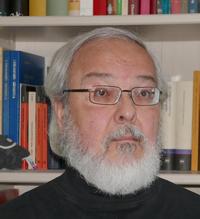 Roland Waldi合作论文数Institut für Physik, Universität Rostock830Christoph Frei合作论文数More information for this company is available on on IMDbPro830L. Del Buono合作论文数LPNHE, Universités Paris VI and VII, IN2P3-CNRS, Paris, France829Saverio Simone合作论文数Dipartimento di Fisica, Università degli Studi di Bari Aldo Moro828D. Galli合作论文数828
 Paolo Gandini合作论文数Istituto Nazionale di Fisica Nucleare826
 Roberto Calabrese合作论文数Dipartimento Di Fisica E Scienze Della Terra, Università degli Studi di Ferrara;Istituto Nazionale di Fisica Nucleare826
 Xabier Cid Vidal合作论文数Department of Particle Physics, Faculty of Physics, Universidade de Santiago de Compostela;Galician Institute of High Energy Physics, Universidade de Santiago de Compostela825S. Farry合作论文数824
 Míriam Calvo Gómez合作论文数Engineering Department, La Salle Digital Engineering School, La Salle Campus Barcelona824R. Lefèvre合作论文数823
 Alexandru Tudor Grecu合作论文数Horia Hulubei National R&D Institute for Physics and Nuclear Engineering823




