目的 回顾性分析单中心血管内治疗创伤性颈内动脉颅内段假性动脉瘤(TIICAP)的安全性及临床疗效.方法 连续回顾2005年9月至2019年9月我中心收治的经脑血管造影检查的颅内动脉瘤患者资料,根据纳入标准选择TIICAP患者.分析患者的手术策略及围手术期抗血小板药物治疗情况,并总结治疗效果和临床与影像学随访结果.结果 共入组29例TIICAP患者,男19例(65.5%),女10例(34.5%),年龄为14~70岁,中位年龄为47(30,53)岁.29例患者均成功实施血管内治疗,其中采用覆膜支架3例,血流导向装置9例,支架辅助弹簧圈栓塞11例,单纯弹簧圈栓塞2例,载瘤动脉闭塞4例.1例行载瘤动脉闭塞患者术前再出血,术后死亡;1例行载瘤动脉闭塞患者术后发生缺血性脑卒中,最终死亡;余27例患者均无并发症发生,顺利出院.23例患者接受影像学随访,13例治愈,5例好转,2例稳定,3例复发(均再次行血管内治疗治愈).24例患者接受临床随访,临床预后均稳定或好转.结论 血管内治疗是处理TIICAP的有效手段,其中血流导向装置、覆膜支架等新技术的优势初现,值得进一步研究.
目的 探讨介入治疗在心房黏液瘤相关性颅内动脉瘤治疗中的可行性、安全性及有效性.方法 连续纳入2018年4月至2021年4月海军军医大学第一附属医院脑血管病中心收治的4例心房黏液瘤相关性颅内动脉瘤患者并对其临床和影像学资料进行回顾性分析,复习与心房黏液瘤相关性颅内动脉瘤发病机制及治疗相关的文献.临床资料包括患者既往史、临床症状、治疗方法、治疗结果及随访情况(包括随访方式、时间及随访结果)等,影像学资料包括颅内动脉瘤个数、部位及形态、大小(最大径、瘤宽、瘤高)等.4例心房黏液瘤相关性颅内动脉瘤均采用介入栓塞治疗.记录手术成功率、围手术期并发症(包括术中动脉瘤破裂出血、载瘤动脉缺血、血管痉挛等).采用Raymond-Roy分级评价动脉瘤栓塞效果(Ⅰ级为完全栓塞,Ⅱ级为瘤颈显影,Ⅲ级为瘤体显影).术后6个月以上,通过住院的方式对患者进行临床随访(有无出现新发症状)及影像学随访(采用头部CT血管成像、DSA方式评估动脉瘤是否复发、支架内是否再狭窄).结果 4例患者临床表现为蛛网膜下腔出血1例,一过性意识障碍1例,头痛1例,1例为体格检查发现;其中多发颅内动脉瘤3例(共6个动脉瘤),单发1例;梭形动脉瘤5个,囊状动脉瘤2个.7个颅内动脉瘤均成功实施介入栓塞术.围手术期无缺血、出血及血管痉挛等并发症,栓塞效果均为Raymond-Roy分级Ⅰ级.术后半年后随访,所有患者随访治愈,无新发症状、支架内再狭窄及栓塞动脉瘤的破裂出血事件.结论 心房黏液瘤相关性颅内动脉瘤多为梭形、多发动脉瘤,可考虑将介入治疗作为一线治疗方案,但其远期复发率及有效性仍需大样本、长期随访来证实.
Objective To evaluate the feasibility,safety and efficacy of Solitaire stent placement for treatment of complex intracranial atherosclerotic stenosis.Methods We retrospectively reviewed the clinical data of 18 patients who underwent Solitaire stent placement for symptomatic intracranial arterial stenoses in our department between November 2011 and June 2012.with focus on the stenosis morphology,condition of the diseased blood vessels,surgical success rate,and perioperative complications.We also summarized the early outcomes and imaging findings during follow-up.Results The patients included 8 males and 10 females,with a mean age of 66.55±9.84 years old.Mori typing results were 5 A,8 B,and 5 C types;LMA typing results were good in 2,moderate tortuosity in 12,severe tortuosity in 4 cases.All the patients received successful Solitaire stent implantation.The average stenosis rate was reduced from(74±12.5)%to(10±5.5)%after the procedure. There was only one patient(5.6%) had post-operative complication(cerebral infarction of the target vessel territory),who had temporal symptom and recovered well at follow-up.Clinical follow-up was available for 18 patients,with a mean of 6.2±1.4 months;and no patients experienced any ischemic episodes.Fifteen patients had DSA or CTA follow-up for a mean of 7.8±2.6 months.There were 3 in-stent restenosis(20%) cases and one of them was symptomatic with transient ischemic attack. Conclusion Solitaire stent placement is feasible,safe and effective for complex symptomatic intracranial artery stenosis,with definite short-term effectiveness,and the long-term effect warrants further investigation.
 Bo Hong (洪波)合作论文数Changhai Hospital of Shanghai3
 Dongwei Dai合作论文数2
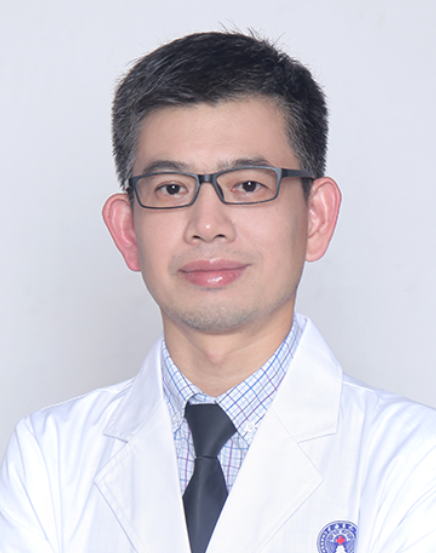 Qinghai Huang (黄清海)合作论文数Changhai Hospital2
 Jianmin Liu (刘建民)合作论文数Ruijin Hospital, Shanghai Jiao Tong University School of Medicine2
 Yi Xu (许奕)合作论文数第二军医大学第一附属医院神经外科2Xiaoxi Zhang合作论文数1Zhiwen Lu合作论文数1Zhe PENG (彭哲)合作论文数1Sisi Li合作论文数1Rui Zhao (赵瑞)合作论文数1Chao Zou (邹超)合作论文数1Yu Zhou (周宇)合作论文数1ZhiGang Yang (杨志刚)合作论文数1
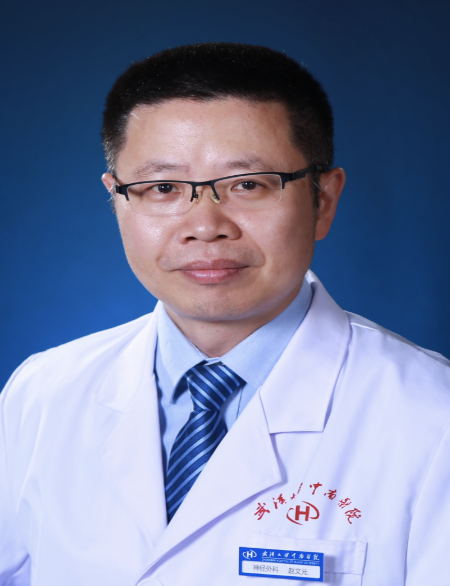 WenYuan Zhao (赵文元)合作论文数The Second Clinical College of Wuhan University1Kaijun Zhao (赵开军)合作论文数1
 Qiang Li (李强)合作论文数第二军医大学长海医院神经外科1
 Yibin Fang (方亦斌)合作论文数Changhai Hospital of Shanghai1Qiao Zuo合作论文数1




