Person re-identification (ReID) has recently achieved remarkable progress, driving its widespread deployment in real-world applications. This, in turn, raises growing concerns about its vulnerability to adversarial attacks, particularly in black-box settings. Existing methods often rely on gradient-based optimization to improve the generalization of adversarial perturbations, but their effectiveness is constrained by the limited diversity of surrogate models. In this work, we propose LoRA-Attack, a novel adversarial attack framework that enhances the structural and parametric dynamics of surrogate models. Specifically, LoRA-Attack integrates Low-Rank Adaptation (LoRA)-based fine-tuning with the generation of universal adversarial perturbations. By embedding LoRA layers into surrogate models, our method enlarges the effective space and implicitly simulates diverse feature-space scenarios, thereby improving cross-model generalization and boosting black-box transferability. Furthermore, we introduce a Lipschitz-based gradient regularization to stabilize optimization, smoothing gradient fluctuations and enforcing perturbation consistency. Extensive experiments show that LoRA-Attack significantly outperforms most of state-of-the-art methods, achieving superior transferability for ReID.
The rise of network function virtualization (NFV) technology has enabled virtual network functions (VNF) and service function chains (SFCs) to develop into standard paradigms for service delivery. The uncertain traffic brought about by edge computing has made it a key issue to figure out how to deploy VNFs for network load balancing. However, traditional methods are limited to SFC embedding solutions and resource management and pay less attention to traffic. To address the above issue, this paper takes into account the spatio-temporal characteristics of network traffic and the traffic scheduling after VNF deployment to solve the load balanced VNF deployment problem. We formalize the problem into an NP-hard nonlinear integer programming problem, which will be solved with the proposed algorithm adaptive VNF deployment and load balanced traffic scheduling (AdpVDLTS). AdpVDLTS divides network time into large and small time slots to operate on traffic and VNFs simultaneously, and achieves load balancing through traffic prediction and collaboration with VNF deployment. Compared with the excellent existing algorithms, AdpVDLTS can maintain more stable load balancing, higher throughput, lower deployment cost, and lower latency. In addition, the effectiveness of the traffic prediction algorithm is proved by ablation experiments.
Network Function Virtualization (NFV) is a foundational technology for Mobile Edge Computing (MEC). It delivers network services by chaining Virtual Network Functions (VNFs) into sequential Service Function Chains (SFCs). One of the most critical challenges in MEC is how to provide continuous and stable services to high-mobility user, such as intelligent vehicles and drones. However, current mobility-aware SFC migration methods remain constrained by either post-hoc reaction or myopic prediction horizons, failing to reconcile the divergent timescales of network services and user mobility, thus resulting in suboptimal resource allocation and service delivery. In this paper, we first formulate the predictive mobility-aware SFC migration problem as an NP-hard Integer Linear Programming (ILP) problem. Aiming to mitigate service disruption for mobile users in MEC networks, we propose PreSFC, a predictive SFC migration framework that integrates multi-slot mobility forecasting with fine-grained network state tracking. We first design Gformer, a deep learning-based long sequence time-series forecasting model, which operates on short time slots (less than 200 ms) to sensitively capture network dynamics while predicting over multiple slots (e.g., 50 slots) to effectively track user mobility. This dual-scale design explicitly addresses the temporal disparity between mobility patterns and service requirements. Based on the predictions, we further propose an Optimal Sub-period Partitioning Migration (OSPM) algorithm to determine migration timing and locations. Extensive simulations show that our approach reduces the maximum and average downtime by approximately 55% and 40%, respectively, compared to benchmark methods.
With the explosive increase in wireless devices, enabling sensing between incompatible radios has become critically beneficial. Integrating diverse IoT devices enhances sensing accuracy by providing richer data, while utilizing the diverse characteristics of heterogeneous signals meets sensing needs in complex environments. However, most existing wireless sensing methods primarily focus on homogeneous signals, while research on sensing with heterogeneous signals is still in its infancy. In this paper, we propose CrossSense, a novel Cross-Technology Sensing (CTS) framework that enables sensing between incompatible WiFi and LoRa device. CrossSense recovers the fine-grained trajectory of a WiFi transmitter based on its emulated LoRa signals. To decompose the motion feature components of WiFi transmitter, we develop a chirp difference vector model that utilizes the energy peak within each chirp window for sensing. We model the relationship between sampling frequency offsets and oscillation frequency offsets among heterogeneous devices to guide the extraction of motion features from the emulated signal. We also propose a greedy-based peak enhancement method to calculate the optimized LoRa phases, minimizing the impact of phase discontinuity caused by cyclic prefix (CP) errors. We implement a prototype of CrossSense on the USRP platform. The extensive experiments demonstrate that CrossSense can achieve an efficient Cross-Technology Sensing with $2.92cm$ distance accuracy and $0.26cm/s$ speed accuracy over a $120m$ sensing range.
Due to constraints in network capacity and coverage, conventional ground-based infrastructures face difficulties in delivering low-latency and high-reliability caching capabilities to users and Internet of Things (IoT) devices located in remote regions, including mountains and oceans. The Space-Air-Ground Integrated Network (SAGIN), envisioned as a foundational structure for 6G communication systems and integrated with Mobile Edge Computing (MEC), can offer a promising solution to efficiently serve the caching demands of users in such underserved locations. Nevertheless, the high heterogeneity and time-varying nature of SAGIN, along with the continuous evolution of the popularity of user requested content, which presents substantial challenges to achieve satisfactory cache hit ratios and low access latency. In this paper, we introduce a novel three-tier edge collaborative caching architecture comprising satellites, Unmanned Aerial Vehicle (UAV) clusters, and ground edge servers. We formulate the cache replacement task as a Markov Decision Process (MDP). To address concerns over user privacy and heterogeneous local model performance, we propose a Federated Discrete Soft Actor-Critic (FDSAC) approach that employs an attention mechanism guided by server activity levels to adaptively weight client models during parameters aggregation. Additionally, a content popularity prediction module based on Bidirectional Long Short-Term Memory (BiLSTM) is embedded within the DSAC agent to derive the optimal cache replacement decisions. Experimental evaluations indicate that the FDSAC achieves superior performance compared to other baseline algorithms in terms of both cache hit rate and content retrieval delay.
Speculative decoding (SD) has emerged as a promis-ing approach to accelerate large language models (LLMs) in-ference.Yet, this acceleration comes at the cost of a higher memory footprint. Sparse activation (SA), on the other hand, has demonstrated effectiveness in reducing memory footprint in LLM inference. Despite the apparent synergy between these twomethods, we find that a straightforward combination actually undermines the benefits of both, due to a fundamental conflict in their optimization objectives. The conflict arises because speculative decoding accelerates token generation by verifying multiple tokens in parallel, which inevitably activates more weights within an autoregressive step, thus undermining the benefits of sparsity. In this paper, we present SpaDec, a novel speculative decoding framework to resolve this conflict and achieve more efficient LLM inference. To achieve this goal, we introduce a light-weight draft-token acceptance predictor module, coupled with an acceptance-guided tree selection algorithm that leverages the target model’s initial hidden layer featuresto proactively trim tokens that are unlikely to be accepted during token verifica-tion. This process introduces minimum extra latency but leaves sparse activation algorithm ample space to minimize redundant computations while maintaining the high accuracy essential for speculative decoding, ultimately achieving both inference speedup and memory footprint reduction brought by speculative decoding and sparse activation, respectively. Experiments on various datasets demonstrate that SpaDec achieves up to 4.31$\times$ speedup while saving an additional 30.0% – 35.3% of memory, which outperforms state-of-the-art (SOTA) solutions by 30.7% – 44.25% on average.
Space-air-ground integrated networks (SAGINs) offer seamless three-dimensional coverage and strengthened flexibility, which are recognized as a core network architecture of 6G. Software-defined networking (SDN) and network function virtualization (NFV) are two enabling technologies for SAGINs that can be utilized to sequentially arrange virtual network functions (VNFs) into service function chains (SFCs) to provide users with resource-efficient and delay-optimized multi-source multicast request (MMR) services. However, SAGINs exhibit significant dynamism and heterogeneity, it brings great challenges when dynamically deploying the MMR’s source nodes and SFCs for fulfilling MMR routing. This paper investigates the multi-source multicast SFC embedding problem (MMSEP) considering the determination of the source nodes for MMR, VNFs placement, as well as network resources and delay constraints in the SDN/NFV-enabled SAGIN. Firstly, we define and formulate the MMSEP and demonstrate its NP-hardness. Subsequently, we employ a heuristic algorithm to assign the optimal source nodes for all multicast destination nodes and utilize the markov decision process (MDP) to simulate dynamic transitions in network states. Finally, we propose a deep deterministic policy gradient with attention mechanism (DDPG-AM) to address the MMSEP, aiming to minimize resource consumption costs and delays while maximizing the revenue of the internet service provider. The simulation results demonstrate that the proposed algorithm surpasses the state-of-the-art DDPG algorithm by approximately 27% in network utility, 17% in latency reduction, and 5% in acceptance ratio.
Deploying Tiny Deep Learning (TinyDL) on Internet of Things (IoT) devices is gaining popularity. To accommodate the limited memory, recent methods split tensors into fine-grained parts and plan memory offline to minimize its footprint. However, they fail to adapt to dynamic memory, missing the opportunity to utilize temporarily available memory for faster inference. Additionally, existing approaches focus solely on minimizing memory size while neglecting cache usage characteristics, resulting in frequent cache misses and increased latency. In this paper, we propose RAMS, an efficient framework supporting runtime adaptive memory scaling to fully utilize the dynamic memory. We design a size-controllable tensor generation method, thereby enabling memory scaling at runtime. We also propose a cache-friendly memory management approach that minimizes cache miss times. RAMS includes an offline planner to minimize the memory footprint essential for inference and an online manager to determine memory sizes and generate layouts for size-controllable tensors based on available memory. RAMS significantly reduces inference latency while maintaining a compact memory footprint. Extensive experiments on commercial devices running RTOS and Android systems demonstrate that, compared to the state-of-the-art methods, RAMS can efficiently reduce latency by up to 1.57 & times; and 1.48 & times; compared to TFLM and TinyTS, respectively using a comparable memory footprint, while reducing power consumption by 67.74% and 15.97%.
Short-video platforms have grown rapidly by allowing users to browse rich media content through seamless swiping. However, the inherently random nature of swipe behavior creates significant challenges for bandwidth efficiency and playback continuity, often resulting in stalls and unnecessary data transfers. We present OffLoad, a new preloading framework that enhances bandwidth efficiency and playback quality using range-based downloading, which generalizes traditional chunk-based preloading to arbitrary-length segments for finer-grained control. At the core of OffLoad is a two-dimensional watch-time estimation model that jointly captures user preferences and video characteristics. Guided by this estimator, OffLoad introduces a hybrid preloading algorithm that integrates heuristic rules with a learning-based module trained directly on large-scale production data, enabling strong generalization in deployment. Following extensive system-level optimization, OffLoad has been deployed on a commercial short-video platform for more than six months. Our A/B testing results show that OffLoad increases overall user watch-time by 1.1 parts per thousand, while simultaneously reducing 0.13% rebuffering events and 4.92% of bandwidth consumption.
Cloud-based autonomous driving relies on low-latency video transmission for accurate downstream perception tasks. However, low-latency video streaming solutions, optimized for human Quality of Experience (QoE), are misaligned with the needs of machine vision tasks. While Region-of-Interest (ROI) encoding aims to bridge this gap, existing methods suffer from two critical limitations: first, insufficient protection for small and vulnerable objects, which are often missed by detection mechanisms or given uniform, inadequate resource allocation; second, prohibitive encoding overhead from fine-grained partitioning, leading to poor system robustness in dynamic network environments. To address these issues, we propose SpotStream, a novel low-latency video transmission framework. SpotStream features a dual-stream importance prediction network to ensure comprehensive coverage and prioritized protection for small objects. It couples this with an efficient, multi-level ROI assignment strategy that significantly reduces encoding overhead by simplifying region structure while focusing resources on critical targets. Comprehensive evaluations demonstrate that SpotStream substantially outperforms state-of-the-art baselines. Notably, under challenging real-world network traces, Spot-Stream improves the F1 score for critical small objects by an average of 12.9% while maintaining excellent system robustness.
Wi-Fi computational imaging has emerged as a promising paradigm for non-intrusive sensing; however, its practical deployment is severely hindered by dense physical multipath clutter, hardware phase quantization errors, and the limited bandwidth of commercial Wi-Fi. Traditional beamforming-based algorithms often completely lose target focus in complex environments, resulting in severe ghosting artifacts. To overcome these fundamental limitations, we propose RISimg, a novel robust Wi-Fi imaging framework empowered by the spatiotemporal coding of Reconfigurable Intelligent Surface. We design a differential coding strategy to guarantee a well-conditioned and noise-robust sensing matrix, and propose a multi-frequency sparse reconstruction algorithm based on the Least Absolute Shrinkage and Selection Operator. By constructing a large-scale overdetermined system, this physics-driven approach effectively suppresses multipath interference and hardware errors, successfully recovering the basic morphological outlines of complex targets. To further enhance the imaging performance, we propose leveraging a Conditional Diffusion Model to refine the imaging results. By utilizing the reconstruction as a structural prior, a carefully designed Conditional U-Net progressively refines the image through a generative reverse sampling process, restoring high-fidelity continuous boundaries. Extensive evaluations using a hardware prototype built with commercial Wi-Fi devices and a low-cost metasurface demonstrate that the final cascaded CDM achieves an unprecedented Structural Similarity Index Measure of 0.9192 and a Spatial Correlation Coefficient of 0.7336, paving a robust new avenue for Wi-Fi imaging.
Unmanned Aerial Vehicle (UAV) equipped with a gateway shows great potential for data collection in many scenarios, especially for the areas lacking of public network infrastructures. However, our in-field experiments on UAV-assisted LoRa networks show that a large throughput gap exists between the ground-to-air and ground-to-ground transmissions. We find that the misalignment of the radiation direction of transceiver antennas with height difference leads to additional signal strength loss, which is ignored by existing ground-to-ground transmissions. In this paper, we propose a directivity-aware ground-to-air link model called annulus model to quantify the impact of directivity on the ground-to-air link quality. Based on our model, a new ground-to-air channel access scheme for UAV-assisted LoRa networks, PreLoRa, is proposed. By predicting the link quality variations, PreLoRa schedules the transmission periods and adopts optimal transmission configurations for ground nodes to improve the link throughput. We implement PreLoRa on commercial LoRa platforms and extensively evaluate its performance in the wild. Experimental results show that PreLoRa can significantly improve data collection throughput by up to 65.5% compared to baseline methods.
In this work, we study how vision-language models (VLMs) can be utilized to enhance the safety for the autonomous driving system, including perception, situational understanding, and path planning. However, existing research has largely overlooked the evaluation of these models in traffic safety-critical driving scenarios. To bridge this gap, we create the benchmark (SafeDrive228K) and propose a new baseline based on VLM with knowledge graph-based retrieval-augmented generation (SafeDriveRAG) for visual question answering (VQA). Specifically, we introduce SafeDrive228K, the first large-scale multimodal question-answering benchmark comprising 228K examples across 18 sub-tasks. This benchmark encompasses a diverse range of traffic safety queries, from traffic accidents and corner cases to common safety knowledge, enabling a thorough assessment of the comprehension and reasoning abilities of the models. Furthermore, we propose a plug-and-play multimodal knowledge graph-based retrieval-augmented generation approach that employs a novel multi-scale subgraph retrieval algorithm for efficient information retrieval. By incorporating traffic safety guidelines collected from the Internet, this framework further enhances the model's capacity to handle safety-critical situations. Finally, we conduct comprehensive evaluations on five mainstream VLMs to assess their reliability in safety-sensitive driving tasks. Experimental results demonstrate that integrating RAG significantly improves performance, achieving a +4.73% gain in Traffic Accidents tasks, +8.79% in Corner Cases tasks and +14.57% in Traffic Safety Commonsense across five mainstream VLMs, underscoring the potential of our proposed benchmark and methodology for advancing research in traffic safety. Our source code and data are available at https://github.com/Lumos0507/SafeDriveRAG.
Recent routing algorithms show the potential of deep reinforcement learning (DRL) for optimal routing in mobile ad-hoc networks (MANETs). However, existing DRL-based methods still have limitations in generalization and adaptability when facing unseen scenarios and mutations under local observation constraints. In this paper, we propose Chimera, a DRL-based routing algorithm for MANETs, which achieves adaptive routing and generalizes to changing environments. Chimera contains a unified-policy multi-agent framework combining traditional routing principles and Policy Pool. Specifically, we introduce Policy Pool, a mechanism where routers select the most suitable policy from multiple policies, enabling adaptation to diverse situations without extensive parameters or real-time adjustments. To achieve overall optimization, we introduce a unified-policy multi-agent framework, where a unified routing strategy across sharing-parameters devices ensures flexibility in diverse networks. Instead of purely DRL-based routing algorithms, we combine traditional methods and DRL algorithms for the robustness of Chimera by introducing the traditional protocol as a policy in Policy Pool and leveraging routing exploration for local observation supplement. Our experimental evaluations demonstrate that Chimera outperforms rule-based and DRL-based routing algorithms in learning effective routing policies, where Chimera achieves an average of 19% higher throughput, 14% less packet loss, and 22% lower delay compared to the best baseline in various MANET scenarios.
Short video streaming has become a dominant paradigm in digital media, characterized by rapid swiping interactions and diverse media content. A key technical challenge is designing an effective preloading strategy that dynamically selects and prioritizes download tasks from an evolving playlist, balancing Quality of Experience (QoE) and bandwidth efficiency under practical commercial constraints. However, real-world analysis reveals critical limitations of existing approaches: (1) insufficient adaptation of download task sizes to dynamic conditions, and (2) watch-time prediction models that are difficult to deploy reliably at scale. In this paper, we propose DeLoad, a novel preloading framework that addresses these issues by introducing dynamic task sizing and a practical, multi-dimensional watch-time estimation method. Additionally, a Deep Reinforcement Learning (DRL)-enhanced agent is trained to optimize the download range decisions adaptively. Extensive evaluations conducted on an offline testing platform, leveraging massive real-world network data, demonstrate that DeLoad achieves significant improvements in QoE metrics (34.4%-87.4% gain). Furthermore, after deployment on a large-scale commercial short-video platform, DeLoad has increased overall user watch-time by 0.9% while simultaneously reducing rebuffering events and 3.76% bandwidth consumption.
Understanding the traffic scenes and then generating highdefinition (HD) maps present significant challenges in autonomous driving. In this paper, we defined a novel Traffic Topology Scene Graph (T2SG), a unified scene graph explicitly modeling the lane, controlled and guided by different road signals (e.g., right turn), and topology relationships among them, which is always ignored by previous high-definition (HD) mapping methods. For the generation of T2SG, we propose TopoFormer, a novel onestage Topology Scene Graph TransFormer with two newlydesigned layers. Specifically, TopoFormer incorporates a Lane Aggregation Layer (LAL) that leverages the geometric distance among the centerline of lanes to guide the aggregation of global information. Furthermore, we proposed a Counterfactual Intervention Layer (CIL) to model the reasonable road structure (e.g., intersection, straight) among lanes under counterfactual intervention. Then the generated T2SG can provide a more accurate and explainable description of the topological structure in traffic scenes. Experimental results demonstrate that TopoFormer outperforms existing methods on the T2SG generation task, and the generated T2SG significantly enhances traffic topology reasoning in downstream tasks, achieving a state-of-the-art performance of 46.3 OLS on the OpenLane-V2 benchmark. Our source code is available at https://github.com/MICLAB-BUPT/T2SG.
In large-scale short-video platforms, CDN resource selection plays a critical role in maintaining users' Quality of Experience (QoE) while controlling escalating traffic costs. To better understand this phenomenon, we conduct in-the-wild network measurements during video playback in a production short-video system. The results reveal that CDNs delivering higher average QoE often come at greater financial cost, yet their connection quality fluctuates even within a single video-underscoring a fundamental and dynamic trade-off between QoE and cost. However, the problem of sustaining high QoE under cost constraints remains insufficiently investigated in the context of CDN selection for short-video streaming. To address this, we propose PIRA, a dynamic resource selection algorithm that optimizes QoE and cost in real-time during video playback. PIRA formally integrating QoE and cost by a mathematical model, and introduce a intra-video control-theoretic CDN resource selection approach which can balance QoE and cost under network dynamics. To reduce the computation overheads, PIRA employs state-space pruning and adaptive parameter adjustment to efficiently solve the high-dimensional optimization problem. In large-scale production experiments involving 450, 000 users over two weeks, PIRA outperforms the production baseline, achieving a 2.1% reduction in start-up delay, 15.2% shorter rebuffering time, and 10% lower average unit traffic cost, demonstrating its effectiveness in balancing user experience and financial cost at scale.
Recent algorithms show deep learning's potential to efficiently allocate traffic flows in wide-area networks (WANs). However, current learning-based methods ignore the importance of edges correlations and traffic differentiation, and have limitations in generalizing to multiple networks, let alone unseen ones, making them impractical. In this paper, we propose a novel traffic engineering algorithm, Aether, which excels in generalizing across different networks and different amount of demands. We propose an elastic multi-agent graph transformer where each agent process a demand, and agents are sequentially modeled by graph transformer to enhance both representation capability and generalization ability. To improve effectiveness, we propose hierarchical graph neural networks which model inter- and intra-relations between edges and paths. And a differentiated traffic strategy is proposed which handles small flows with rules, letting the model focuses on larger flows for better learning. Experiments on real-world data show that our model outperforms state-of-the-art learning-based approaches, achieving 12.1 % to 31.7% better MLU without network-specific training, while demonstrating scalability for large networks. It is worth highlighting that Aether's performance is only 3.9% lower on MLU compared to its network-specific trained version.
Over the past decade, learning-based congestion control algorithms (CCAs) have experienced a significant increase in popularity. Recently, some approaches aim to tackle the computational overhead challenge in previous CCAs caused by extensive neural network parameters and computation delays, which can hinder algorithm effectiveness. Though effective, these approaches have certain constraints in achieving an optimal balance between performance and efficiency. To guarantee decision performance with increased efficiency, we stand on the shoulders of existing learning-based CCAs, gather their wise decisions, and replay them in a suitable manner. In this paper, we propose EchoCC, a unified framework that refines any deterministic learning-based CCA to reduce computation overhead and keep the performance of the original model. EchoCC maintains a “WordBook” which offers effective mapping between inputs and decisions. To ensure the high-quality mapping, we propose action-supervised contrastive learning which aligns the distributions of inputs and decisions. To realize EchoCC in an actual network environment, we address two practical challenges: performance-oriented updating for adaptability and a redundancy-reduction method for limited storage. Extensive evaluations conducted on both live Internet networks and emulated environments, achieve up to 64% reductions in running time and 60% CPU utilization compared to the original model. Importantly, EchoCC maintains network throughput and latency.
 Huadong Ma (马华东)合作论文数School of Computer Science, Beijing University of Posts and Telecommunications166
 Xiaolong Zheng (郑霄龙)合作论文数School of Computer Science, Beijing University of Posts and Telecommunications;State Key Laboratory of Networking and Switching Technology, Beijing University of Posts and Telecommunications47
 Dong Zhao (赵东)合作论文数Beijing Key Laboratory of Intelligent Telecommunications Software and Multimedia, School of Computer Science, Beijing University of Posts and Telecommunications21
 Xi Zhang (张曦)合作论文数Networking and Information Systems Laboratory, Department of Electrical and Computer Engineering, College of Engineering, Texas A&M University15
 Pengjin Xie合作论文数14
 Anfu Zhou (周安福)合作论文数School of Computer Science, Beijing University of Posts and Telecommunications14
 Dan Tao (陶丹)合作论文数School of Electronic and Information Engineering, Beijing Jiaotong University14
 Dan Xia合作论文数12
 Bo Chen合作论文数Beijing University of Posts and Telecommunications8
 Congkai An合作论文数7
 Yan Sun (孙岩)合作论文数School of Computer Sciences, Beijing University of Posts and Telecommunications7
 Yuning Song合作论文数7
 Guiyan Liu (刘贵燕)合作论文数College of Computer Science of Chongqing University6
 Haiyang Zhang (张海旸)合作论文数School of Computer Science, Beijing University of Posts and Telecommunications6
 Songtao Guo (郭松涛)合作论文数College of Computer Science, Chongqing University6
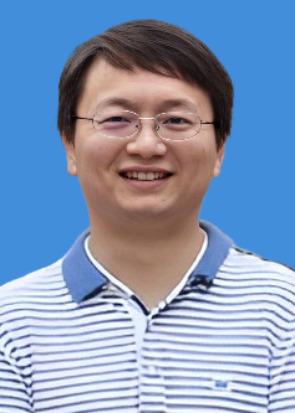 Huiyuan Fu (傅慧源)合作论文数School of Computer Science, Beijing University of Posts and Telecommunications6
 Zihui Luo合作论文数5
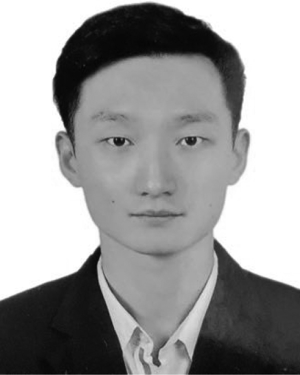 Chaoyu Wang合作论文数Beijing Univ Posts & Telecommun, Beijing Key Lab Intelligent Telecommun Software &, Beijing, Peoples R China5
 Huanhuan Zhang (张欢欢)合作论文数School of Computer Science, Beijing University of Posts and Telecommunications5HanHong Jiang (江汉红)合作论文数5
 Mengshi Qi (齐梦实)合作论文数School of Computer Science, Beijing University of Posts and Telecommunications;State Key Laboratory of Networking and Switching Technology, Beijing University of Posts and Telecommunications;Beijing Key Laboratory of Intelligent Telecommunications Software and Multimedia, Beijing University of Posts and Telecommunications;Multimedia Intelligent Computing Lab, Beijing University of Posts and Telecommunications5
 Pengrui Duan (段鹏瑞)合作论文数School of Computer Science, Beijing University of Posts and Telecommunications5
 Hong Luo (罗红)合作论文数School of Computer Science, Beijing Post and Telecommunications University5
 Dongmei Zhang (张冬梅)合作论文数School of Computer Science, Beijing University of Posts and Telecommunications5Wanzhi Rui合作论文数5
 Peilun Du合作论文数Beijing University of Posts and Telecommunications4Dawei Lu (卢大玮)合作论文数北京邮电大学4Hou Chongyuan (侯重远)合作论文数3f yu合作论文数3Jinxiao Fan合作论文数3
 Jialiang Pei合作论文数3
 Xi Liu合作论文数3
 Kang Xu合作论文数3yan sun (孙岩)合作论文数3
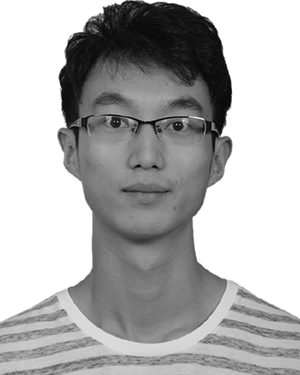 Huaiyu Xu合作论文数Beijing Univ Posts & Telecommun, Beijing Key Lab Intelligent Telecommun Software &, Sch Comp Sci, Beijing, Peoples R China3Yu Fan合作论文数Beijing University of Posts and Telecommunications, Beijing, China3
 Yujia Gao合作论文数Beijing Univ Posts & Telecommun, Beijing Key Lab Intelligent Telecommun Software &, Beijing 100876, Peoples R China3
 Shaopeng Zhu合作论文数3
 Pengfei Wang (王鹏飞)合作论文数School of Computer Science, Beijing University of Posts and Telecommunications3
 Athanasios V. Vasilakos合作论文数Center for AI Research, University of Agder;Department of Computer Science, Electrical and Space Engineering, Lulea University of Technology3
 Honghai Wu (吴宏海)合作论文数3
 Shaojie Tang合作论文数Naveen Jindal School of Management, University of Texas at Dallas3
 Xiaolin Qin (秦小麟)合作论文数College of Computer Science and Technology, Nanjing University of Aeronautics and Astronautics3
 Yuan He (何源)合作论文数Systems and Ubiquitous Networking Group, Institute of Trustworthy Networks and Systems, School of Software, Tsinghua University;Beijing National Research Center for Information Science and Technology, Tsinghua University3
 Chengling Jiang合作论文数3
 Haipeng Liu合作论文数2Yee Mei Foong合作论文数2miguel gomez合作论文数2jacky cheng合作论文数2




