Recent advances in multimodal audio generation have enabled music synthesis from text, visual cues, and other high-level conditions. However, most systems are designed for a single operating mode: either generating music without a reference mixture or extracting a target source from an existing mixture. This fixed-task design limits their use when different combinations of text, visual, and mixture inputs are available. To address this gap, we propose MAGE, a modality-agnostic framework for conditional music generation and mixture-grounded target-source extraction within a shared continuous latent space. Our approach introduces three key components. First, a Controlled Multimodal FluxFormer models the conditional flow from noise to a target audio latent, enabling the same backbone to operate with or without a mixture condition. Second, Audio-Visual Nexus Alignment maps frame-level visual features onto the audio latent sequence, allowing visual evidence to condition the generation process at the audio-token level. Third, a cross-gated modulation mechanism uses the aligned visual representation to regulate intermediate audio features, while text provides separate semantic guidance. We further train MAGE with dynamic modality masking, exposing the same model to text-only, visual-only, joint text-visual, mixture-conditioned, and unconditional configurations. Experiments on the MUSIC benchmark evaluate MAGE under separate protocols for mixture-free generation and mixture-grounded target-source extraction. The results show that MAGE provides a shared conditioning interface across both settings, and that the proposed alignment and gating components improve interference suppression in the extraction task.
This demo presents a real-time markerless biomechanics system that estimates 3D mesh and musculoskeletal pose from a single RGB webcam. The pipeline uses a deep learning approach for low-latency human mesh recovery and neural inverse kinematics. The system runs on a desktop GPU and displays synchronized overlays and joint-angle telemetry.
We propose LiveGesture, the first fully streamable, speech-driven full-body gesture generation framework that operates with zero look-ahead and supports arbitrary sequence length. Unlike existing co-speech gesture methods—which are designed for offline generation and either treat body regions independently or entangle all joints within a single model—LiveGesture is built from the ground up for causal, region-coordinated motion generation. \emph{LiveGesture} consists of two main modules: the Streamable Vector-Quantized Motion Tokenizer (SVQ) and the Hierarchical Autoregressive Transformer (HAR). The SVQ tokenizer converts the motion sequence of each body region into causal, discrete motion tokens, enabling real-time, streamable token decoding. On top of SVQ, HAR employs region-eXpert autoregressive (xAR) transformers to model expressive, fine-grained motion dynamics for each body region. A causal spatio-temporal fusion module (xAR-Fusion) then captures and integrates correlated motion dynamics across regions. Both xAR and xAR-Fusion are conditioned on live, continuously arriving audio signals encoded by a streamable causal audio encoder. To enhance robustness under streaming noise and prediction errors, we introduce autoregressive masking training, which leverages uncertainty-guided token masking and random region masking to expose the model to imperfect, partially erroneous histories during training. Experiments on the BEAT2 dataset demonstrate that LiveGesture produces coherent, diverse, and beat-synchronous full-body gestures in real time, matching or surpassing state-of-the-art offline methods under true zero–look-ahead conditions
Temporal Action Detection (TAD) in untrimmed videos poses significant challenges, particularly for Activities of Daily Living (ADL) requiring models to (1) process long-duration videos, (2) capture temporal variations in actions, and (3) simultaneously detect dense overlapping actions. Existing CNN and Transformer-based approaches, struggle to jointly capture fine-grained detail and long-range structure at scale. State-space Model (SSM) based Mamba offers powerful long-range modeling, but naive application to TAD collapses fine-grained temporal structure and fails to account for the challenges inherent to TAD. To this end, we propose Multi-Scale Temporal Mamba (MS-Temba), which extends Mamba to TAD with newly introduced dilated SSMs. Each Temba block, comprising dilated SSMs coupled with our proposed additional losses, enables the learning of discriminative representations across temporal scales. A lightweight Multi-scale Mamba Fuser then unifies these multi-scale features via SSM-based aggregation, yielding precise action-boundary localization. With only 17M parameters, MS-Temba achieves state-of-the-art performance on densely labeled ADL benchmarks TSU & Charades, and further generalizes to long-form video summarization, setting new state-of-the-art results on TVSum & SumMe.
Latent action representations learned from unlabeled videos have recently emerged as a promising paradigm for pretraining vision-language-action (VLA) models without explicit robot action supervision. However, latent actions derived solely from RGB observations primarily encode appearance-driven dynamics and lack explicit 3D geometric structure, which is essential for precise and contact-rich manipulation. To address this limitation, we introduce UniLACT, a transformer-based VLA model that incorporates geometric structure through depth-aware latent pretraining, enabling downstream policies to inherit stronger spatial priors. To facilitate this process, we propose UniLARN, a unified latent action learning framework based on inverse and forward dynamics objectives that learns a shared embedding space for RGB and depth while explicitly modeling their cross-modal interactions. This formulation produces modality-specific and unified latent action representations that serve as pseudo-labels for the depth-aware pretraining of UniLACT. Extensive experiments in both simulation and real-world settings demonstrate the effectiveness of depth-aware unified latent action representations. UniLACT consistently outperforms RGB-based latent action baselines under in-domain and out-of-domain pretraining regimes, as well as on both seen and unseen manipulation tasks.
Recent advances in dance generation have enabled the automatic synthesis of 3D dance motions. However, existing methods still face significant challenges in simultaneously achieving high realism, precise dance-music synchronization, diverse motion expression, and physical plausibility. To address these limitations, we propose a novel approach that leverages a generative masked text-to-motion model as a distribution prior to learn a probabilistic mapping from diverse guidance signals, including music, genre, and pose, into high-quality dance motion sequences. Our framework also supports semantic motion editing, such as motion inpainting and body part modification. Specifically, we introduce a multi-tower masked motion model that integrates a text-conditioned masked motion backbone with two parallel, modality-specific branches: a music-guidance tower and a pose-guidance tower. The model is trained using synchronized and progressive masked training, which allows effective infusion of the pretrained text-to-motion prior into the dance synthesis process while enabling each guidance branch to optimize independently through its own loss function, mitigating gradient interference. During inference, we introduce classifier-free logits guidance and pose-guided token optimization to strengthen the influence of music, genre, and pose signals. Extensive experiments demonstrate that our method sets a new state of the art in dance generation, significantly advancing the quality and editability over existing approaches.
Co-speech gesture generation has made significant progress toward realistic full-body motion from speaker audio, yet existing models lack fine-grained spatial controllability of individual joints. To address this, we introduce InteractGesture, a model-agnostic, inference-time method for spatially controllable gesture generation. InteractGesture guides target latent estimates of a diffusion sampler through a differentiable RVQ-VAE decoder, backpropagating spatial control gradients to adjust motion latents during sampling. A primary challenge in streaming co-speech generation is chunk-wise dependency: standard sequential inference freezes prior chunks, preventing spatial constraints in future chunks from adjusting preceding trajectories and causing boundary inconsistencies. To overcome this limitation, we propose Progressive Chunk Guidance, a chunk-window strategy that maintains an active set of editable chunk latents with staggered delays, enabling spatial constraints to propagate gradients backward across chunk boundaries during streaming generation. Experiments on the BEAT2 dataset show that InteractGesture improves multi-joint spatial control while preserving overall gesture quality. Furthermore, our approach supports diverse applications, including sparse joint positioning, dense joint trajectory control, and directional pointing. Our project page is available at https://exitudio.github.io/interactgesture-page .
3D Human Pose Estimation (3D HPE) is vital in various applications, from person re-identification and action recognition to virtual reality. However, the reliance on annotated 3D data collected in controlled environments poses challenges for generalization to diverse in-the-wild scenarios. Existing domain adaptation (DA) paradigms like general DA and source-free DA for 3D HPE overlook the issues of non-stationary target pose datasets. To address these challenges, we propose a novel task named lifelong domain adaptive 3D HPE. To our knowledge, we are the first to introduce the lifelong domain adaptation to the 3D HPE task. In this lifelong DA setting, the pose estimator is pretrained on the source domain and subsequently adapted to distinct target domains. Moreover, during adaptation to the current target domain, the pose estimator cannot access the source and all the previous target domains. The lifelong DA for 3D HPE involves overcoming challenges in adapting to current domain poses and preserving knowledge from previous domains, particularly combating catastrophic forgetting. We present an innovative Generative Adversarial Network (GAN) framework, which incorporates 3D pose generators, a 2D pose discriminator, and a 3D pose estimator. This framework effectively mitigates domain shifts and aligns original and augmented poses. Moreover, we construct a novel 3D pose generator paradigm, integrating pose-aware, temporal-aware, and domain-aware knowledge to enhance the current domain's adaptation and alleviate catastrophic forgetting on previous domains. Our method demonstrates superior performance through extensive experiments on diverse domain adaptive 3D HPE datasets.
High-fidelity simulation of mmWave radar signals for dynamic human motion is valuable for developing radar-based human sensing models; yet collecting accurately labeled measurements for a specific deployment site remains expensive. We present HybridSim, a physics-learning hybrid simulator that synthesizes mmWave radar signals from dynamic human meshes under a fixed indoor room configuration, explicitly decoupling propagation into two components. To parameterize the human subject, we use a tri-plane representation to extract human features and a Graph Convolutional Network to stabilize optimization and mitigate gradient instability. The direct signal path is modeled via an inverse-rendering formulation with a microfacet BRDF to capture primary surface reflections. In parallel, the indirect path is approximated by combining 3D Gaussian Splatting with a virtual-receiver geometry to fit and reproduce site-specific multipath interference patterns, achieving substantially lower computational cost than explicit full ray tracing. Experiments in a fixed-room setting show improved agreement with a physically based reference and consistent gains on downstream radar-based human sensing tasks when using HybridSim for site-specific data augmentation.
Collaborative perception allows connected vehicles to overcome occlusions and limited viewpoints by sharing sensory information. However, existing approaches struggle to achieve high accuracy under strict bandwidth constraints and remain highly vulnerable to random transmission packet loss. We introduce QPoint2Comm, a quantized point-cloud communication framework that dramatically reduces bandwidth while preserving high-fidelity 3D information. Instead of transmitting intermediate features, QPoint2Comm directly communicates quantized point-cloud indices using a shared codebook, enabling efficient reconstruction with lower bandwidth than feature-based methods. To ensure robustness to possible communication packet loss, we employ a masked training strategy that simulates random packet loss, allowing the model to maintain strong performance even under severe transmission failures. In addition, a cascade attention fusion module is proposed to enhance multi-vehicle information integration. Extensive experiments on both simulated and real-world datasets demonstrate that QPoint2Comm sets a new state of the art in accuracy, communication efficiency, and resilience to packet loss.
Multi-view human mesh recovery (HMR) is broadly deployed in diverse domains where high accuracy and strong generalization are essential. Existing approaches can be broadly grouped into geometry-based and learning-based methods. However, geometry-based methods (e.g., triangulation) rely on cumbersome camera calibration, while learning-based approaches often generalize poorly to unseen camera configurations due to the lack of multi-view training data, limiting their performance in real-world scenarios. To enable calibration-free reconstruction that generalizes to arbitrary camera setups, we propose a training-free framework that leverages pretrained single-view HMR models as strong priors, eliminating the need for multi-view training data. Our method first constructs a robust and consistent multi-view initialization from single-view predictions, and then refines it via test-time optimization guided by multi-view consistency and anatomical constraints. Extensive experiments demonstrate state-of-the-art performance on standard benchmarks, surpassing multi-view models trained with explicit multi-view supervision.
Stochastic human motion prediction aims to generate diverse, plausible futures from observed sequences. Despite advances in generative modeling, existing methods often produce predictions corrupted by high-frequency jitter and temporal discontinuities. To address these challenges, we introduce KHMP, a novel framework featuring an adaptiveKalman filter applied in the DCT domain to generate high-fidelity human motion predictions. By treating high-frequency DCT coefficients as a frequency-indexed noisy signal, the Kalman filter recursively suppresses noise while preserving motion details. Notably, its noise parameters are dynamically adjusted based on estimated Signal-to-Noise Ratio (SNR), enabling aggressive denoising for jittery predictions and conservative filtering for clean motions. This refinement is complemented by training-time physical constraints (temporal smoothness and joint angle limits) that encode biomechanical principles into the generative model. Together, these innovations establish a new paradigm integrating adaptive signal processing with physics-informed learning. Experiments on the Human3.6M and HumanEva-I datasets demonstrate that KHMP achieves state-of-the-art accuracy, effectively mitigating jitter artifacts to produce smooth and physically plausible motions.
Human mesh recovery (HMR) provides rich human body information for various real-world applications. While image-based HMR methods have achieved impressive results, they often struggle to recover humans in dynamic scenarios, leading to temporal inconsistencies and non-smooth 3D motion predictions due to the absence of human motion. In contrast, video-based approaches leverage temporal information to mitigate this issue. In this paper, we present DiffMesh, an innovative motion-aware Diffusion-like framework for video-based HMR. DiffMesh establishes a bridge between diffusion models and human motion, efficiently generating accurate and smooth output mesh sequences by incorporating human motion within the forward process and reverse process in the diffusion model. Extensive experiments are conducted on the widely used datasets (Human3.6M \cite{h36m_pami} and 3DPW \cite{pw3d2018}), which demonstrate the effectiveness and efficiency of our DiffMesh. Visual comparisons in real-world scenarios further highlight DiffMesh's suitability for practical applications.
Human pose estimation (HPE) has received increasing attention recently due to its wide application in motion analysis, virtual reality, healthcare, etc. However, it suffers from the lack of labeled diverse real-world datasets due to the timeand labor-intensive annotation. To cope with the label deficiency issue, one common solution is to train the HPE models with easily available synthetic datasets (source) and apply them to real-world data (target) through domain adaptation (DA). Unfortunately, prevailing domain adaptation techniques within the HPE domain remain predominantly fixated on effecting alignment and aggregation between source and target features, often sidestepping the crucial task of excluding domain-specific representations. To rectify this, we introduce a novel framework that capitalizes on both representation aggregation and segregation for domain adaptive human pose estimation. Within this framework, we address the network architecture aspect by disentangling representations into distinct domain-invariant and domain-specific components, facilitating aggregation of domaininvariant features while simultaneously segregating domainspecific ones. Moreover, we tackle the discrepancy measurement facet by delving into various keypoint relationships and applying separate aggregation or segregation mechanisms to enhance alignment. Extensive experiments on various benchmarks, e.g., Human3.6M, LSP, H3D, and FreiHand, show that our method consistently achieves state-of-the-art performance.
Recent advancements in 3D human pose estimation from single-camera images and videos have relied on parametric models, like SMPL. However, these models over-simplify anatomical structures, limiting their accuracy in capturing true joint locations and movements, which reduces their applicability in biomechanics, healthcare, and robotics. Biomechanically accurate pose estimation, on the other hand, typically requires costly marker-based motion capture systems and optimization techniques in specialized labs. To bridge this gap, we propose BioPose, a novel learning-based framework for predicting biomechanically accurate 3D human pose directly from monocular videos. BioPose includes three key components: a Multi-Query Human Mesh Recovery model (MQ-HMR), a Neural Inverse Kinematics (NeurIK) model, and a 2D-informed pose refinement technique. MQ-HMR leverages a multi-query deformable transformer to extract multi-scale fine-grained image features, enabling precise human mesh recovery. NeurIK treats the mesh vertices as virtual markers, applying a spatial-temporal network to regress biomechanically accurate 3D poses under anatomical constraints. To further improve 3D pose estimations, a 2D-informed refinement step optimizes the query tokens during inference by aligning the 3D structure with 2D pose observations. Experiments on benchmark datasets demonstrate that BioPose significantly outperforms state-of-the-art methods.
A semantic meta-model is a high-level abstract framework used to define the structured representation of domain knowledge, providing machine-understandable semantics for textual data. This paper proposes a method for constructing a semantic meta-model for events in the power domain based on standard text, and presents a representation method for the semantic meta-model using XML. It maps event information from diverse sources of power standards text into a unified framework, thereby providing technical support for the implementation of power standards, the enhancement of intelligence in the power industry, and the digital transformation of the power sector.
Reconstructing a 3D hand mesh from a single RGB image is challenging due to complex articulations, self-occlusions, and depth ambiguities. Traditional discriminative methods, which learn a deterministic mapping from a 2D image to a single 3D mesh, often struggle with the inherent ambiguities in 2D-to-3D mapping. To address this challenge, we propose MaskHand, a novel generative masked model for hand mesh recovery that synthesizes plausible 3D hand meshes by learning and sampling from the probabilistic distribution of the ambiguous 2D-to-3D mapping process. MaskHand consists of two key components: (1) a VQ-MANO, which encodes 3D hand articulations as discrete pose tokens in a latent space, and (2) a Context-Guided Masked Transformer that randomly masks out pose tokens and learns their joint distribution, conditioned on corrupted token sequence, image context, and 2D pose cues. This learned distribution facilitates confidence-guided sampling during inference, producing mesh reconstructions with low uncertainty and high precision. Extensive evaluations on benchmark and real-world datasets demonstrate that MaskHand achieves state-of-the-art accuracy, robustness, and realism in 3D hand mesh reconstruction. Project website: https://m-usamasaleem.github.io/publication/MaskHand/MaskHand.html.
Reconstructing biomechanically realistic 3D human motion - recovering both kinematics (motion) and kinetics (forces) - is a critical challenge. While marker-based systems are lab-bound and slow, popular monocular methods use oversimplified, anatomically inaccurate models (e.g., SMPL) and ignore physics, fundamentally limiting their biomechanical fidelity. In this work, we introduce MonoMSK, a hybrid framework that bridges data-driven learning and physics-based simulation for biomechanically realistic 3D human motion estimation from monocular video. MonoMSK jointly recovers both kinematics (motions) and kinetics (forces and torques) through an anatomically accurate musculoskeletal model. By integrating transformer-based inverse dynamics with differentiable forward kinematics and dynamics layers governed by ODE-based simulation, MonoMSK establishes a physics-regulated inverse-forward loop that enforces biomechanical causality and physical plausibility. A novel forward-inverse consistency loss further aligns motion reconstruction with the underlying kinetic reasoning. Experiments on BML-MoVi, BEDLAM, and OpenCap show that MonoMSK significantly outperforms state-of-the-art methods in kinematic accuracy, while for the first time enabling precise monocular kinetics estimation.
Human mesh recovery (HMR) is crucial in many computer vision applications; from health to arts and entertainment. HMR from monocular images has predominantly been addressed by deterministic methods that output a single prediction for a given 2D image. However, HMR from a single image is an ill-posed problem due to depth ambiguity and occlusions. Probabilistic methods have attempted to address this by generating and fusing multiple plausible 3D reconstructions, but their performance has often lagged behind deterministic approaches. In this paper, we introduce GenHMR, a novel generative framework that reformulates monocular HMR as an image-conditioned generative task, explicitly modeling and mitigating uncertainties in the 2D-to-3D mapping process. GenHMR comprises two key components: (1) a pose tokenizer to convert 3D human poses into a sequence of discrete tokens in a latent space, and (2) an image-conditional masked transformer to learn the probabilistic distributions of the pose tokens, conditioned on the input image prompt along with randomly masked token sequence. During inference, the model samples from the learned conditional distribution to iteratively decode high-confidence pose tokens, thereby reducing 3D reconstruction uncertainties. To further refine the reconstruction, a 2D pose-guided refinement technique is proposed to directly fine-tune the decoded pose tokens in the latent space, which forces the projected 3D body mesh to align with the 2D pose clues. Experiments on benchmark datasets demonstrate that GenHMR significantly outperforms state-of-the-art methods.
Recent advances in motion diffusion models have enabled spatially controllable text-to-motion generation. However, these models struggle to achieve high-precision control while maintaining high-quality motion generation. To address these challenges, we propose MaskControl, the first approach to introduce controllability to the generative masked motion model. Our approach introduces two key innovations. First, Logits Regularizer implicitly perturbs logits at training time to align the distribution of motion tokens with the controlled joint positions, while regularizing the categorical token prediction to ensure high-fidelity generation. Second, Logit Optimization explicitly optimizes the predicted logits during inference time, directly reshaping the token distribution that forces the generated motion to accurately align with the controlled joint positions. Moreover, we introduce Differentiable Expectation Sampling (DES) to combat the non-differential distribution sampling process encountered by logits regularizer and optimization. Extensive experiments demonstrate that MaskControl outperforms state-of-the-art methods, achieving superior motion quality (FID decreases by 77%) and higher control precision (average error 0.91 vs. 1.08). Additionally, MaskControl enables diverse applications, including any-joint-any-frame control, body-part timeline control, and zero-shot objective control. Video visualization can be found at https://www.ekkasit.com/ControlMM-page/
 Xuejin Gao (高学金)合作论文数Faculty of Information Technology, Beijing University of Technology113
 Yongsheng Qi (齐咏生)合作论文数北京工业大学电子信息与控制工程学院;内蒙古工业大学信息工程学院56
 Liying Fang合作论文数43
 Ian F. Akyildiz合作论文数Department of Electrical and Computer Engineering, University of Iceland;Truva Inc.42
 Jianzhuo Yan (闫健卓)合作论文数Beijing University of Technology31
 Zhi Sun (孙智)合作论文数Department of Electronic Engineering, Tsinghua University29
 Mingrong Ren (任明荣)合作论文数Faculty of Information Technology, Beijing University of Technology28
 Huiqing Zhang (张会清)合作论文数Information Department, Beijing University of Technology27Yafen Li合作论文数26
 Aijun Yan (严爱军)合作论文数Faculty of Information Technology, Beijing University of Technology26Yating Zhang合作论文数23
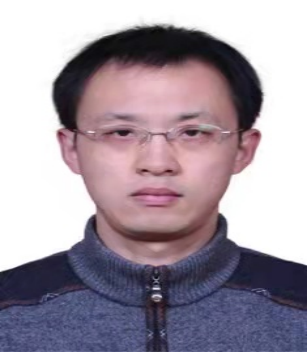 Peng Chang (常鹏)合作论文数Faculty of Information Technology, Beijing University of Technology22
 Bin Fang (方滨)合作论文数Information Department, Beijing University of Technology18
 Huihui Gao (高慧慧)合作论文数Faculty of Information Technology, Beijing University of Technology17Chongzheng Sun合作论文数16
 Minwoo Lee合作论文数15RuiHua Wang (王瑞华)合作论文数15
 Hongfei Xue (薛鸿飞)合作论文数Department of Computer Science, College of Computing and Informatics, University of North Carolina at Charlotte14
 Shih-Chun Lin (林士骏)合作论文数Department of Electronic and Computer Engineering, National Taiwan University of Science and Technology14
 Ekkasit Pinyoanuntapong合作论文数WiNS Lab, University of North Carolina at Charlotte13
 Qingwu Fan (范青武)合作论文数Faculty of Information Technology, Beijing University of Technology11
 QuanGui Zhang (张全贵)合作论文数11
 Min Luo合作论文数Shannon Lab, Huawei Technologies11
 Srijan Das合作论文数Spatio Temporal Activity Recognition Systems10
 Cheng Li合作论文数School of Engineering Science, Faculty of Applied Sciences, Simon Fraser University10
 Arupjyoti Bhuyan合作论文数Idaho Natl Lab, Idaho Falls, ID USA9
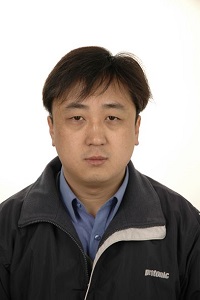 Chunxu Du (杜春旭)合作论文数College of Environmental and Energy Engineering, Beijing University of Technology9
 Jun Zheng (郑军)合作论文数School of Information Science and Engineering, Southeast University;National Mobile Communications Research Laboratory, Southeast University9
 Muhammad Usama Saleem合作论文数Amazon8Pinyarash Pinyoanuntapong合作论文数University of North Carolina at Charlotte8
 Chongfang Ma合作论文数Heat Transfer and Energy Conversion, The Key Laboratory of Beijing Municipality College of Environment and Energy Engineering8
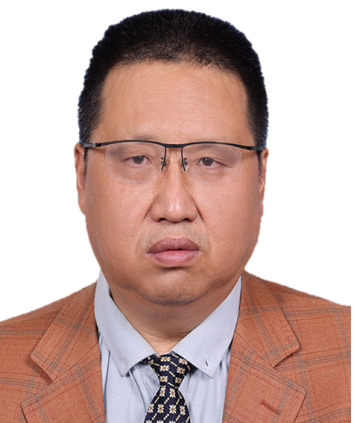 Yuting Wu (吴玉庭)合作论文数College of Mechanical and Energy Engineering, Beijing University of Technology8Chunhua Zhuang合作论文数7Zhang Chun-xiao合作论文数7Haili Zhang合作论文数7
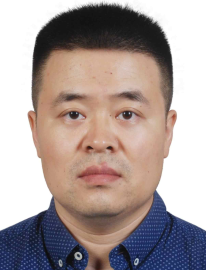 Hongzhi Guo (郭鸿志)合作论文数Northwestern Polytechnical University7
 Tianyou Chai (柴天佑)合作论文数College of Information Science and Engineering, Northeastern University7
 Rui Dai合作论文数Next: Oscar Boykin, University of Florida
Previous: Jim Fenton, Cisco Systems, Inc7Jiandong Yang (杨建栋)合作论文数6Prabhu Janakaraj合作论文数Embedded Computing Lab, GE Research6
Rui Dai合作论文数Next: Oscar Boykin, University of Florida
Previous: Jim Fenton, Cisco Systems, Inc7Jiandong Yang (杨建栋)合作论文数6Prabhu Janakaraj合作论文数Embedded Computing Lab, GE Research6 Chen Chen合作论文数Department of Computer Science, University of Central Florida;Center for Research in Computer Vision, University of Central Florida6Yanjie Gong合作论文数6
 Abdullah Al-Dhelaan合作论文数6Juan Meng合作论文数5Yanxia Yang合作论文数5Xichang Wang合作论文数5
 Sarankumar Balakrishnan合作论文数SUNY Buffalo, Dept Elect Engn, Buffalo, NY 14260 USA5JingWei Liu (刘经纬)合作论文数5Xin Li (李鑫)合作论文数5




