为解决在压敏电阻表面缺陷检测中缺陷样本采集困难以及检测精度差的问题,提出一种采用深度卷积变分自编码器(DCVAE)的无监督表面缺陷检测方法,用于压敏电阻表面缺陷的检测.预处理阶段利用去背景、规范化以及图像差分技术对原始图像进行处理,精准提取出了差分图像,消除了无关数据特征对算法的影响.为了提升缺陷检测的精度,算法首先将空间注意力机制融入变分自编码器,有效地提取出了良品图像的特征;其次将重构前后图像相减得到残差图,突出缺陷区域,衰减非缺陷区域.通过与已有流行的两种无监督缺陷检测方法进行对比,实验结果表明,所提方法F1值至少提升了7.4%,准确率达98.58%.
In the past, the problem of vehicle booming noise is exposed in the real vehicle stage, when most of the related parts are locked, so it is difficult to change any design. Only by adding damper and other patching measures can be taken to solve the problem. In this paper, the optimization research of booming noise is introduced, by means of CAE and DFSS tools in the early design stage of the vehicle. Through the analysis of transfer path, it is found that the path that contributes the most noise comes from the path “power train-tie bar mount-sub frame-vehicle body”. The CAE model is established to predict the vehicle interior noise. The sensitivity of parameters of the tie bar path is studied in detail and optimized design is carried out by using DFSS tool. The simulation results show that the maximum second order booming noise of the vehicle is reduced by 3 dB after optimization. The analysis method and results are validated by test.
With the development of the times, the functional space and indoor environment of indoor architectural spaces are constantly changing to meet the needs of modern people. According to the living needs of modern people, the interior space is optimized without changing the plane shape and retaining the traditional appearance, making the optimized interior layout easier after resetting. This paper constructs an architectural space interior design system based on the characteristics of the interior space design system, uses an interactive genetic algorithm to optimize the system, and conducts architectural exterior window design and architectural shape design for the natural lighting performance of the office building. It is found that the optimization of the office when building indoor spaces, architects need to adopt reasonable window sill heights, window widths, and building floor heights to optimize indoor lighting performance.
The booming of electric vehicles demands efficient battery disassembly for recycling to be environment-friendly. Currently, battery disassembly is still primarily done by humans, probably assisted by robots, due to the unstructured environment and high uncertainties. It is highly desirable to design autonomous solutions to improve work efficiency and lower human risks in high voltage and toxic environments. This paper proposes a novel neurosymbolic method, which augments the traditional Variational Autoencoder (VAE) model to learn symbolic operators based on raw sensory inputs and their relationships. The symbolic operators include a probabilistic state symbol grounding model and a state transition matrix for predicting states after each execution to enable autonomous task and motion planning. At last, the method's feasibility is verified through test results.
To solve the problems of low recognition accuracy and poor robustness of existing sign language letters recognition models in scenes such as complex background interference and overlapping hands, in this paper, a YOLOv5-SLL sign language letters recognition model is proposed. Firstly, a Sign Language Letters (SLL) dataset contains a total of 3373 annotated sign language letters images is established. Secondly, the Convolutional Block Attention Module (CBAM) is introduced into the basis of the YOLOv5 network structure, so that the network can focus more on the extraction of hand features and reduces the interference of background noise. Finally, the redundant bounding boxes are optimized by using the soft-Non Maximum Suppression (soft-NMS) algorithm, which alleviates the problem of missed detection that easily occurs when the hands overlap. The experiments are conducted on the SLL dataset, and the results show that the proposed YOLOv5s-SLL model improves the mean Average Precision (mAP) by 2.03% compared with the YOLOv5 model, under the recognition speed is unchanged. And compared with other advanced algorithms such as SSD, YOLOv3, etc., the YOLOv5-SLL model still has a higher recognition accuracy and robustness.
针对大数据技术课程教学存在的典型问题,基于OBE理念提出教学目标和评价方案,并以学生问卷调查入手,从平台层、数据层、预处理层、模型算法层、应用层及数据可视化分析层介绍大数据技术实践架构的创新设计,全面阐述课程的3个实验项目设计内容与要求,并给出线上实验指导与评价方法.在综合设计方面提出全面参与竞赛的项目策划,分别以全国大数据应用创新竞赛和"手写数字识别"项目为例,说明竞赛项目的良好效果.
本化学信息学开放实验设计了一系列与分子有关的读写、分析、修改任务.学生在编程完成任务的过程中需将程序设计课程里学习到的数据结构与算法同熟悉的化学理论结合,利用计算机去解决与分子有关的具体问题.通过教师的讲解与自身的实践,参与学生能逐步了解计算机分子结构表征的理论与方法,掌握基础的分子信息编程技能.教学经验也表明,普通化学专业的学生能够独立完成主要的实验任务,并在实验过程中对化学信息学本身产生较浓厚的兴趣.
A new method of indoor robot localization is proposed in this paper. Landmarks can be placed anywhere in a 3D-dimension space. Each landmark transfers its position with coded messages. The robot can acquire the landmarks' position by decoding the messages without map-preparing. Based on the law of cosines, this method is used to calculate the position with the angles of detecting several landmarks. It has the advantages of no error-cumulation. The localization method can implement properly with any type of robot platform, and landmark distance-detection and map-preparation are not required. Which decreases the error-generate probability. It also has the advantages of low-cost, landmark easy-setting and high localization accuracy. The accuracy and computation complexity can be dynamically selected while the non-linear error is fixed. The availability and accuracy of this method is proved with indoor experiments.
Aiming at the errors caused by the production and assembly of the robotic arm and the problem of low absolute positioning accuracy, a method of robotic arm calibration and teaching based on binocular vision is proposed in this paper. First, the joints of the robot arm is controled to rotate separately, and the motion trajectory data of the end of the robot arm is recorded by the binocular vision. Then the circle center and circle plane normal vector of each joint axis motion is optimized using Adam algorithm. After identification and calculation, accurate kinematic parameters are obtained, and then kinematically model the manipulator once again. After the calibration is completed, the user can use the teaching rod to define the trajectory under the camera, and the defined trajectory is converted to the robot arm coordinate system for inverse kinematics solution. Finally, the robotic armis controled to reproduce the trajectory. Experimental results show that the proposed method can complete the precise calibration of the kinematic parameters of the robotic arm. After calibration, the average error of the end of the robotic arm is within 1mm, and the absolute positioning accuracy is improved by more than 80%. The method proposed in this paper has low cost and simple operation, and it is easy to be popularized and applied in industrial and desktop robotic arm calibration and teaching.
A novel meter-wave antenna array using unmanned aerial vehicle (UAV) group is presented. The array is composed of UAVs, and each UAV bears a meter-wave antenna element. The UAV-borne array has advantages on reducing the influence of multipath effect, obtaining high gain and high mobility, etc. In order to suppress the grating lobe caused by large element spacing, dual- or multi- layer planar arrays can be built through flight trajectory control of UAVs.
Objective:To explore a three-dimensional dose distribution prediction method for the left breast cancer radiotherapy planning based on full convolution network (FCN), and to evaluate the accuracy of the prediction model.Methods:FCN was utilized to achieve three-dimensional dose distribution prediction. First, a volumetric modulated arc therapy (VMAT) plan dataset with 60 cases of left breast cancer was built. Ten cases were randomly chosen from the dataset as the test set, and the remaining 50 cases were used as the training set. Then, a U-Net model was built with the organ structure matrix as inputs and dose distribution matrix as outputs. Finally, the model was adopted to predict the dose distribution of the cases in the test set, and the predicted 3D doses were compared with actual planned results.Results:The mean absolute differences of PTV, ipsilateral lung, heart, whole lung and spinal cord for 10 cases were (119.95±9.04) cGy, (214.02±9.04) cGy, (116.23±30.96) cGy, (127.67±69.19) cGy, and (37.28±18.66) cGy, respectively. The Dice similarity coefficient (DSC) of the prediction dose and the planned dose in the 80% and 100% prescription dose range were 0.92±0.01 and 0.92±0.01. The γ rate of 3 mm/3% in the area of 80% and 10% prescription dose range were 0.85±0.03 and 0.84±0.02. Conclusion:FCN can be used to predict the three-dimensional dose distribution of left breast cancer patients undergoing VMAT.
In view of the problem that the electrical parameters in the operation of permanent magnetic synchronous motor (PMSM) are more easily affected by conditions such as magnetic path saturation and external temperature changes, resulting in a decrease in operational reliability, a model reference adaptive system (MRAS) parameter identification method based on Popov hyperstability theory is studied. First of all, the mathematical model of PMSM is established, and then, the establishment of a suitable reference model and adjustable model, the use of Popov hyperstability theory design parameter adaptive law, so that the difference between the adjustable model and the reference model output finally converges to 0, to achieve parameter identification of PMSM, effectively identify PMSM inductance, permanent magnet magnetic chain, stabilizer resistance and other major electrical parameters. Finally, the validity of this research method is verified by simulation.
Power transformer is one of the most important equipment in an electric power system. Therefore, the condition monitoring of the power transformer is greatest requirement for its reliable operations and quality power supply in the power grid. Dissolved Gas Analysis (DGA) is a traditional method to detect and diagnose faults in power transformers. Aiming at the shortage of DGA, the paper uses the metal elements in the transformer oil to resolve the online fault diagnosis of the power transformer. Firstly. a large number of data samples of metal elements in the transformer oil are collected and tested. Secondly, BP neural network is used to construct the model of fault diagnosis for transformer. Finally, the model is used to train these samples and give the result of fault diagnosis of the transformer. The actual output is gained and made comparative study with the expected output. The result shows that the metal elements in the transformer oil can be used to detect the fault of a transformer. This method is efficient and reliable for analyzing the fault of transformer.
In order to improve the accuracy of the BP neural network prediction model to predict the transmission synchronizer shift fault, a BP neural network prediction method based on genetic algorithm optimization is proposed. The characteristics and defects of BP neural network and genetic algorithm are introduced. Further study the relevant technology combining BP neural net-work and genetic algorithm. The genetic algorithm is used to optimize the weight and threshold of BP neural network, and train the BP neural network prediction model to obtain the optimal solution. The advantages of the local search ability of BP-neural network and global search ability of genetic algorithm are fully displayed. The simulation results show that the method has higher accuracy and better nonlinear fitting ability for transmission synchronizer shift fault.
以湖南省道S207长沙县段水泥混凝土路面提质改造工程为依托,应用Abaqus三维有限元分析计算软件,针对旧水泥混凝土路面进行直接加铺和共振碎石化加铺沥青层的两种处理方案,分析了不同荷载作用下路面弯沉以及加铺沥青层底部的力学行为,并研究2种改造方案道路结构搭接缝处的力学响应.结果 表明:共振碎石化结构的路面弯沉较大,但比直接加铺结构更加稳定;接缝处荷载作用在共振碎石侧路面强度更弱,作用在直接加铺侧内部应力的变化与峰值更大,结构最不稳定;超载对道路结构有着严重的危害.
采用分离涡模拟的方法研究了锯齿尾缘对压气机叶栅的影响.在保持来流Ma为0.3的情况下,对比了基准叶栅和锯齿叶栅3个攻角下的流场和气动参数.研究结果表明:正攻角下,锯齿使分离涡被切割进而破碎,围绕齿尖形成发卡涡;负攻角下,可能通过势干扰影响叶盆分离涡的强度和脱落频率.进一步研究表明,尖齿整体效果优于宽齿,锯齿对尾迹亏损的作用效果与叶栅进气攻角以及锯齿对流场涡系发展的作用机理紧密联系.
Recently, new energy is conversely distributed and centralized grid connection which need transmit redundant power to other regions urgently by HVDC system. Based on the characteristics of new energy, this paper analyzes the correlation between sending end new energy and receiving end loads by person correlation coefficient method and proposes a correction method for HVDC transmission plan considering the correlation which promotes new energy penetration level and improves utilization of HVDC system. By taking a HVDC system as an example, the results of analyzing practical scheduling data in 2015 demonstrate the feasibility of the proposed method.
Wax deposit becomes more complicated in oil-gas two-phase pipe flow than single phase flow, and therefore remains poorly understood. The increasing trend of deposit with an increasing gas flow rate has been observed in wax deposit experiments under oil-gas stratified pipe flow. In this study, a numerical method is used to clarify this trend by quantitatively analyzing the heat and mass transfer during wax deposit building up. The method was able to predict the experimentally observed trend of deposit without any adjustable parameter. It was found that there are four effects to affect wax deposit when the gas flow rate changed. These four effects focus on the flow, heat and mass transfer characteristic at the oil-deposit interface, which include the effect of oil wetted area, the wax diffusivity, the boundary layer thickness, and the concentration difference between bulk oil and oil-deposit interface on mass transfer. Furthermore, the overall growth behavior of the wax deposit is the consequence of the competition between these four effects as time progresses. These results provided important insight about the effects of the gas flow rate on the wax deposit in oil-gas stratified pipe flow.
To investigate the separation performance of a novel liquid-liquid dynamic hydrocyclone (LLDH), a series of experiments and numerical simulations were conducted. Algebraic slip mixture model was used to simulate the multiphase flow in the LLDH, in which the turbulence was modeled using Reynolds stress model and the rotation of the walls was modeled by multiple reference frame model. The numerical results showed a good agreement with the observations and measurements in experiments. The results showed that the increase of rotation speed would strengthen the swirling intensity in LLDH and thereby separation efficiency was raised. However, increase of flow rate would decrease the residence time of oil droplets, causing reduction in efficiency. By comparison, flow split ratio had slight influence on the flow field, and the efficiency rose a little as flow split ratio increased. The efficiency of the LLDH could remain high when the nondimensional rotation rate was large enough.
A novel gas-liquid cyclone characterized by the generation of swirl flow via guide vanes and a uniflow stream was designed for the pre-separation of a horizontal gravity based separator. The internal flow field and separation performance of the cyclone were investigated by numerical simulation. The Eulerian-Lagrangian approach with the Reynolds stress model (RSM) was used in the simulations. Contours of velocity and pressure within the cyclone are shown, and the trajectories of the droplets are also presented, demonstrating the separation mechanism of the cyclone. Then numerous simulations were conducted with different structural parameters to optimize the cyclone performance. The results show that broadening the width of the gap lw is good for large droplets separation; Decreasing the discharge angle a or increasing the torsion angle beta of the guide vanes can increase the tangential velocity and improve the separation efficiency, but the pressure drop also increases fast; The increase of the diameter of the central body Dc will lead to an increase of tangential and axial velocity, and the pressure drop increases significantly as well.
 Zhiguang Wang (王智广)合作论文数College of Information Science and Engineering, China University of Petroleum – Beijing10
 Yong Tang (唐勇)合作论文数8
 Qiang Lu (鲁强)合作论文数College of Artificial Intelligence, China University of Petroleum, Beijing8Yimin Chen (陈一民)合作论文数School of Computer Engineering and Science, Shanghai University8Zhenwu Wang (王振武)合作论文数7ZhengWei Yao (姚争为)合作论文数杭州师范大学7An Hu (胡安)合作论文数5HouDe Quan (全厚德)合作论文数5Bo Wang (汪波)合作论文数5Guide Zheng合作论文数5Long Huang合作论文数4HUANG Shi-hua (黄诗华)合作论文数4SongSheng Deng (邓松圣)合作论文数4Jun Ma (马骏)合作论文数4
 Chaonan Tong (童朝南)合作论文数School of Automation and Electrical Engineering, University of Science and Technology Beijing4ZengYong Liu合作论文数3WANG Fang (王芳)合作论文数3JiSheng Ma合作论文数3Jun Xie合作论文数3LU Yang (鹿旸)合作论文数3AnKun He (贺安坤)合作论文数3JinFa Guan (管金发)合作论文数3
 Huizhen Wang (王慧贞)合作论文数College of Automation Engineering, Nanjing University of Aeronautics and Astronautics3Bo Zhang (张波)合作论文数中国科学院上海技术物理研究所3Mengkun Li (李猛坤)合作论文数School of Management, Capital Normal University3Yijun Lu (陆意骏)合作论文数3Wanxing Meng (蒙万兴)合作论文数3
 Rong Qi (齐蓉)合作论文数School of Automation, Northwestern Polytechnical University3
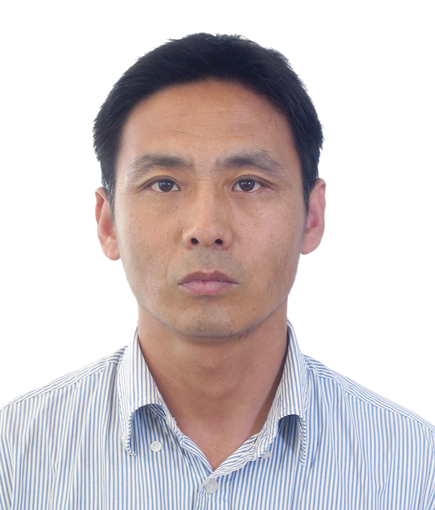 Guofu Feng (冯国富)合作论文数College of Information Technology, Shanghai Ocean University3
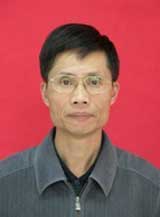 Hui Lin (林辉)合作论文数School of Automation, Northwestern Polytechnical University3Wenfeng Guan (官文锋)合作论文数3Yanli Wang (王彦丽)合作论文数Information Engineering College, Capital Normal University3Zhang Jian-yu合作论文数2Cao Jianfeng合作论文数2Jinfa Guan合作论文数2Li Haixia合作论文数College of Mechanical and Control Engineering, Guilin University of Technology2Xin Bao合作论文数2Huang Zhiyong合作论文数College of Mechanical and Control Engineering, Guilin University of Technology2Shide Hu (胡世德)合作论文数Tongji University2Chen JIANG (江辰)合作论文数2XU Jian-feng (徐剑峰)合作论文数2Hao ZHANG (张昊)合作论文数2JiSen Zhang (张继森)合作论文数2Yue He (何月)合作论文数2Tao Chi (池涛)合作论文数2XiaoKun Cui (崔晓坤)合作论文数2Chaofan Wu (吴超凡)合作论文数湖南省交通科学研究院2




