Aircraft design and manufacturing represent a complex, large-scale systems engineering endeavor involving multiple disciplines and processes. In recent years, the rapid advancement of electrification and digitalization technologies has significantly increased design complexity, revealing limitations in cost control and requirements management within traditional design approaches. This paper proposes a novel design methodology that integrates Design-to-Cost (DtC) principles with the Requirements-Functional-Logical-Physical (RFLP) framework, using an electric propulsion fixed-wing airliner as a case study. The method incorporates DtC principles into the Functional phase of the RFLP process, decomposing total cost into sub-cost components while ensuring compliance with requirements to achieve cost-constrained optimization. Results from the case study demonstrate significant improvements in design process transparency, cost control efficiency, and cross-disciplinary coordination. The paper concludes with a discussion of limitations and directions for future research.
During the conceptual design phase of civil aircraft systems, it is imperative that engineers accurately establish the functional representation of the system and ensure its correctness to provide a solid foundation for subsequent detailed design. Traditional document-based methods for functional representation frequently result in ambiguity, making it difficult to precisely communicate design requirements. Therefore, the academic community is committed to using model-based system engineering to achieve functional representation. However, existing model-based functional representation techniques primarily focus on describing functional input/output, rather than explicitly expressing functional input/output conversions, which can impede system engineers from verifying functional completeness. In response to this issue, this paper proposes a functional quantitative modeling approach for civil aircraft systems based on SysML. Firstly, a quantitatively-analyzable flow model is established, and a general functional model of integrated structure, state, and behavior is subsequently developed based on this flow model. Next, a hierarchical functional model of the system is introduced. Finally, to verify the proposed approach, the elevator surface control system is employed as an example, and a quantitative analysis of the functional model is presented.
As an important direction of modern aviation technology, single pilot operations (SPO) of commercial aircraft puts forward a strong demand for airport capability and efficiency, so it is necessary to establish the airport collaborative decision-making (A-CDM) capability under SPO. Based on the system architecture of A-CDM under current dual-pilot operation mode, this paper analyzes the core information sharing mechanism and milestone method. Then, based on the characteristics of SPO, SPO-A-CDM is proposed. Finally, a co-simulation platform of flight scenario and system model is constructed, and a typical scenario – fixed-point deicing is taken as an example to carry out the model-based simulation analysis of SPO-A-CDM.
The International Civil Aviation Organization (ICAO) has mapped out Single-Pilot Operations (SPO) as the core development direction for the next generation of commercial aircraft operations in 2030. Safety is a key airworthiness factor in commercial aircraft design. Due to the higher degree of air-ground task collaboration and complexity in the SPO mode, the traditional safety analysis methods applied in two-pilot mode cannot effectively identify the potential hazard patterns in the system. To address the above problems, a safety analysis method that combines model-based safety analysis (MBSA) with hazard pattern mining is introduced, and a differential bicluster mining algorithm named TFCluster is proposed to identify maximum differential biclusters from real-valued function-resource matrices without candidate maintenance. Experiment studies on public datasets indicate that TFCluster is efficient and scalable, and outperform the existing differential bicluster algorithms. Taking the typical operating scenario—midterm conflict resolution in the SPO mode as an example—safety analysis of air-ground task collaboration for flight conflict in the SPO air-ground collaborative architecture is carried out. It is found that the proposed method can effectively identify potential hazard patterns, feedback to the system architecture design, and assist safety analysis.
During conceptual design of complex civil aircraft systems, it is indispensable for systems engineers to establish functional architectures, which serve as the basis for subsequent detailed design. Since document-based descriptions of functional architectures tend to result in ambiguities and inconsistencies, academia has been devoted to the formal representation of functional architectures, with the aid of Model-Based Systems Engineering. However, traditional functional modeling approaches generally focus on input-output transformations, rather than state (mode) transitions of systems, which hinders the engineers from representing explicitly the functional architectures involving state-transition logic (e.g., specific signals should trigger the state of landing gear systems to change from retracted to extended, or vice versa). Furthermore, lack of formal representation of the state transitions makes the engineers rely on manual analysis to verify the functional architectures, which can be time-consuming and error-prone. To address this issue, this paper develops a SysML-based approach for functional modeling of civil aircraft systems. First, a state-integrated functional model of components is proposed; thereafter, the integration of the component functional models is proposed; Finally, the landing gear systems is employed to demonstrate the proposed approach above, followed by an illustrative case of functional simulation.
Recently, system functional simulation mostly uses discrete functional logic models, and it is difficult to simulate the impact of continuous behavioral parameter changes on functional logic. To remedy the addressed issue, a functional simulation method integrating a discrete functional model and continuous behavior model is proposed to help engineers analyze the correctness of functional design efficiently. Firstly, a component functional modeling and a system functional architecture modeling method are established based on state machine; secondly, a model integration simulation method based on FMI is established to integrate discrete function models and continuous behavior models of components or systems; Finally, this paper takes the aircraft elevator system as an example to verify the application of functional modeling and simulation methods. The application results show that the functional modeling and the simulation method which integrates dynamic behavior can simulate the continuous behavior and the system function execution effectively. Thereby, the engineers can ensure the correctness of the system design with this method.
The unmanned piloted operations mode is the key development direction of the next generation of commercial aircraft. We propose the remotely piloted operations (RPO) mode of commercial aircraft which combines the autonomous piloting and remotely piloting technology, and describe its organization structure including ground station, airborne intelligent system, and air–ground data link in detail. Then, we take the cruising phase as an example to carry out model-based scenario design and verification. It is found that the RPO mode can basically cover the operations of dual pilots, and autonomous flight in authorized airspace can reduce the workload of the remote pilot and improve airspace utilization and flight safety.
With the continuous advancement of the avionics system, crew members are correspondingly reduced, and Single Pilot Operations (SPO) has attracted widespread attention from scholars. To meet the flight requirements in SPO mode, it is necessary to further strengthen air-ground coordination system integration, but at the same time, there will be some safety issues caused by resource integration, function fusion, and task synthesis. Aimed at the safety problems caused by task synthesis, an efficient differential bicluster mining algorithm--DFCluster algorithm is proposed in this paper to discover potential hazardous elements or propagation mechanisms through mining the resource-function matrixes. To mine efficiently, several pruning techniques are designed for generating maximal biclusters without candidate maintenance. The experimental results show that the DFCluster algorithm is more efficient than the existing differential biclustering algorithms under different scales of artificial datasets and public datasets. Then, a typical flight scenario is designed based on SPO air-ground collaborative system architecture, and combined with our proposed DFCluster algorithm for task synthesis safety analysis. Based on the mining results, the SPO air-ground collaborative system architecture is modified, which ultimately improves the safety of the SPO system.
为了研究复合材料风扇叶片鸟撞损伤机理并指导研发设计,提出一种鸟撞复合材料风扇叶片的精细化分析方法.建立了包含铺层信息的复合材料风扇叶片精细化有限元模型,进行中鸟撞击工况的数值计算,基于ANSYS-Workbench软件的自动化脚本和MATLAB程序提取铺层有限元结果数据进行失效分析,通过Tecplot实现结果的可视化并结合叶片冲击响应进行叶片损伤分析.结果表明:叶片的冲击响应除周向弯曲、轴向弯曲、扭转以外,在伸根段以上部分还包含高阶模态成分;叶片内部失效明显,叶片外表可见损伤较少;在伸根段和榫头内部50%弦长位置出现明显分层,发生基体开裂的铺层较多;相同角度铺层的纤维失效和基体失效位置及演化规律相似,少量铺层在高阶模态影响下,在特殊位置失效;±45°铺层在伸根段前缘附近出现显著纤维拉伸失效,该位置为叶片的鸟撞薄弱点.
In order to cope with the challenges brought by the rapid growth of air traffic, effectively reduce aircraft flight delays, increase airspace capacity and operational efficiency, and reduce the workload of pilots of single pilot operations (SPO) mode aircraft. This paper proposes a spatiotemporal weighted pattern mining algorithm, which can effectively identify the aircraft combination with short distances and large flight delay in the airspace. The algorithm first mines the aircraft combination that meets the maximum spatial distance constraint in the airspace according to the spatial position relationship, and then uses the current delay time of the aircraft as the weight information of the aircraft, and then mines the aircraft combination that meets the distance constraint and the weight constraint at the same time, so as to provide help for the ground controller to make decisions and reduce the flight delay time of the aircraft in the airspace, and improve the operational efficiency of airspace. The experimental results show that the algorithm can accurately mine the aircraft combinations that meet both the maximum spatial distance constraint and the minimum weight constraint, effectively reduce the flight delay of single pilot operations mode aircraft in the flight, reduce airspace congestion, improve the airspace capacity and operation efficiency, and reduce the workload of pilots.
Functional design is regarded as a design activity primarily aimed at clarifying customer needs, and developing the functional architecture and solution concepts for a system under development. Existing functional design approaches are mainly focused on how to assist designers in searching for solution principles for desired products, which, however, do not adequately take into account the interactions between a smart system under development and its environment, and cannot explicitly represent the complex functional logic of the system, resulting in that they cannot effectively assist designers in the functional design of smart systems. Therefore, this paper proposes a scenario-integrated approach for functional design of smart systems to address the above issues. Based on the concept of scenario in software engineering, the proposed approach explicitly elaborates how to employ scenarios to express subjective customer needs and how to generate the functional architectures and the corresponding solution concepts through a structured process. The functional design of the automated doors-unlocking system of a smart vehicle is employed to illustrate the proposed approach, which also demonstrates that the proposed approach is suitable for functional design of smart systems.
Single Pilot Operations (SPO) is an important direction in the development of modern aviation technology. In SPO mode, there needs to construct air-ground cooperating mode among onboard pilot, ground station and air traffic control, which is accompanied by a deeper level of task synthesis. But the high level of task synthesis also introduces safety issues that cannot be underestimated. In this paper, we propose an efficient differential bicluster mining algorithm: TFCluster, to discover potential hazardous elements or propagation mechanism by mining the real-valued resource-function matrixes for task synthesis safety analysis. In order to mine efficiently, several pruning techniques are designed for generating maximal biclusters without candidate maintenance. Taking the typical operating scenario—flight conflict during cruising phase in SPO mode as an example, we show how to use our proposed algorithm for SPO system safety analysis.
As a critical task of conceptual design, function modeling is regarded as a design activity aimed at establishing the functional model(s) of a technical system. Existing functional modeling approaches usually employ a static diagram to represent the functional structure of a technical system, which, on one hand, cannot allow a system engineer to explicitly represent a system that has multiple states, and on the other hand, cannot effectively support system state analysis. Therefore, this paper proposes a state-behavior-function-based approach for achieving the function modeling of multi-state systems to address the above issues. It first introduces the state-behavior-function-based models for representing an object (i.e., a component or a system). Hereby, a state of an object refers to the internal configuration of the object, a behavior represents the state (i.e., configuration) change of the objet, and a function denotes the intended action that the object exerts on one or multiple flows in the environment of the object. This research then proposes an object-based approach for simulating the functional processes in a multi-state system. With this approach, each component of a system is treated as an active object (rather than a static block node in the functional diagram), which can be in different states and can interact with other components or subsystems through the input and output flows. A prototype system is then developed, which cannot only be used for function modeling, but also can be employed for system state simulation. The function modeling of a washing machine and its system state simulation has been employed to illustrate the proposed approach.
The online shopping has been much easier and popular, and meanwhile brings new challenges and opportunities to the field of product design and marketing sale. On one hand, product manufacturers find it challenging to produce new popularly accepted products to meet the customers' needs; on the other hand, end customers usually feel it difficult to buy ideal goods that they really want, even if navigating a huge amount of commodities. There are indeed a 'communication gap' between the customers and manufacturers.As an effort to partially resolve the issue, this paper proposes a novel product synthesis approach from 'voice of the customer' over product knowledge graphs. Here the voice of customers mainly refer to the buyers' product reviews from online shopping platforms or blogs, while the product knowledge graph is constructed containing professional hierarchical product knowledge on its properties based on ontological models. Using the technologies of natural language processing, we first extract the customs' polarities on each specific aspect of a product, which are then transited to design requirements on the product's design components. Based on the requirement extractions, and the pre-built product knowledge, semantic web and reasoning techniques are utilized to synthesize a novel product that meets more customer needs. Typical case studies on mobile phones from raw online data demonstrate the proposed approach's performance.
文章从企业的办公楼租赁成本、人工成本、融资成本、水、电费用以及交通通信成本5个方面,分析国内12个创新型城市的创业成本.发现深圳除了在水费方面具有优势外,其他的成本要素都比较高.最后提出关于深圳降低创业成本、吸引创业人才的几点对策建议.
文章首先界定了创业的内涵,将创业成本划分为直接成本、间接成本、生活成本、机会成本以及社会关系成本;然后提出了创业成本评价指标体系,采用因子分析法和模糊层次分析法,以中国12大创新型城市进行实证分析.发现12个城市中的生活成本和直接成本的排名变动较小,机会成本与社会关系成本的排名变动比较大;直接成本与生活成本具有正相关性,与社会关系成本有负相关性.文章最后根据一二线城市创业成本的现状,提出降低创业成本,改善创业环境,吸引创业人才的政策建议.
The aging and shrinking populations are one of the most challenging global trends, e.g., only in China, there is currently a senior population of about 200 million. How to provide better assist to older people and continuously improve the quality of their daily life are big challenges. The service robot is believed to be one of the most feasible solutions for future senior care. However, identifying the right requirements is the key to develop the right robots for individual users. This paper aims at developing a framework for the identification of design requirements of service robots for senior care. Four kinds of methods and three key factors were used to explore the requirement space of service robots for senior care. Important user requirements are identified, which include: 1) physical function related requirements, 2) social function related requirement, and 3) emotional function related requirements. This study demonstrates the feasibility of applying a systematic approach to explore user requirements for designing service robots.
针对第三方参与废旧家电回收问题进行研究,以第三方家电回收企业利润最大化和回收中心对居民产生的负效用最小化为目标,考虑废旧家电在回收数量、回收质量以及客户需求量等方面的不确定性,建立多周期多目标的废旧家电逆向物流网络模型.采用改进加权平均求解法将双目标规划转化为单目标规划后,再采用区间规划方法对模型进行确定性转化.模型数值仿真得到的优化解能为企业在物流设施选址以及不同周期下的市场缺货量、设施间流量分配等提供一个灵活的决策方案.
Design knowledge reuse is regarded as an effective strategy for design organizations to develop products with shorter time and less effort. However, existing design reuse approaches primarily focus on reusing the geometrical information of similar parts, with a wealth of contextual knowledge behind detailed design results lost. This paper presents an affordance-integrated approach for the reuse of detailed design knowledge, which can be employed to help designers determine the values of geometrical design parameters. First, this paper introduces an affordance-integrated model, called the structure-behavior-affordance, to represent the detailed design information. Then an affordance-based approach is proposed to help designers reuse the detailed design knowledge, which is also integrated with commercial CAD tools. Finally, the proposed approach is implemented as a detailed design knowledge reuse system and a turbocharger shell fixture is adopted as an example to illustrate the proposed design knowledge reuse approach.
This paper presents a Need-Function-Principle- Structure (NFPS) model of engineering design and its application to conceptual design of a dark fiber identifier. Firstly, the NFPS model was presented, and the core concepts of this model were introduced. Secondly, the process of conceptual design based on the NFPS model was described. Finally, the NFPS model was applied to conceptual design of a dark fiber identifier, which demonstrated the feasibility in utilizing the model to conceptual design of multidisciplinary systems. In addition, the NFPS model can be used in embodiment design and design knowledge reuse for further study.
 Youbai Xie (谢友柏)合作论文数School of Mechanical Engineering, Xi'an Jiaotong University;School of Mechanical Engineering, Shanghai Jiao Tong University13
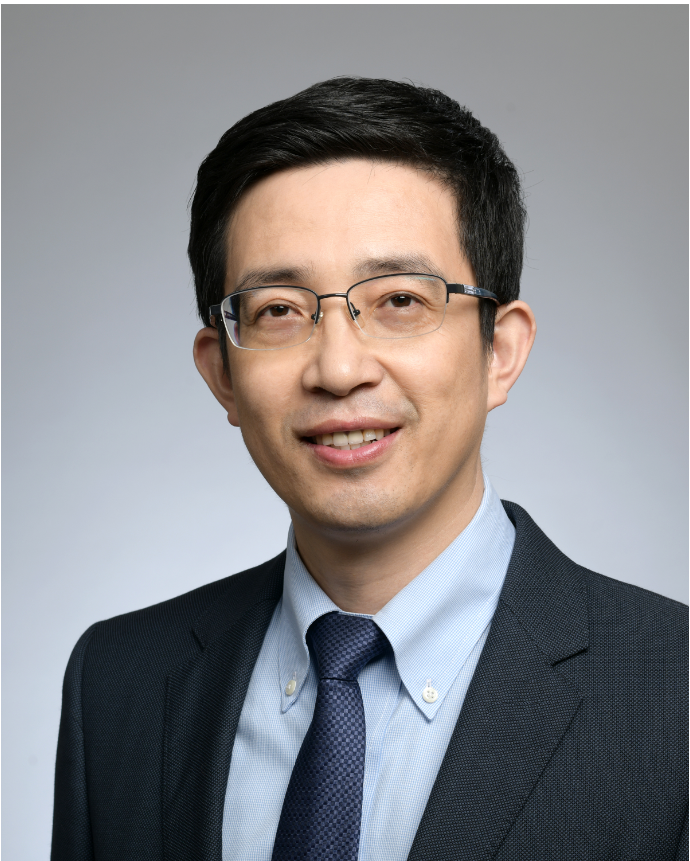 Zhinan Zhang (张执南)合作论文数School of Mechanical Engineering, Shanghai Jiao Tong University11
 Miao Wang (王淼)合作论文数School of Aeronautics and Astronautics, Shanghai Jiao Tong University6
 Zhongqin Lin (林忠钦)合作论文数School of Mechanical Engineering, Shanghai Jiao Tong University6
 Zelin Liu合作论文数6Yue Luo合作论文数5KeLin Zhong (钟科林)合作论文数5
 Guoqing Wang (王国庆)合作论文数School of Aeronautics and Astronautics, Shanghai Jiao Tong University5Guanlong Chen合作论文数4
 Jian Huang (黄坚)合作论文数Welding and Laser Processing Institute, School of Materials Science and Engineering, Shanghai Jiao Tong University;Shanghai Key Laboratory of Materials Laser Processing and Modification, Shanghai Jiao Tong University4Wen-Ming Miao合作论文数4Meng Zhao合作论文数Shanghai Jiao Tong University3
 Yifei Zhao (赵一飞)合作论文数C.Y. Tung Institute of Intelligent Management and Logistics, Shanghai Jiao Tong University3
 Gang Xiao (肖刚)合作论文数School of Aeronautics and Astronautics, Shanghai Jiao Tong University3Yingzhe Li (李颖哲)合作论文数2
 Hao Wang (王皓)合作论文数School of Mechanical Engineering, Shanghai Jiao Tong University2
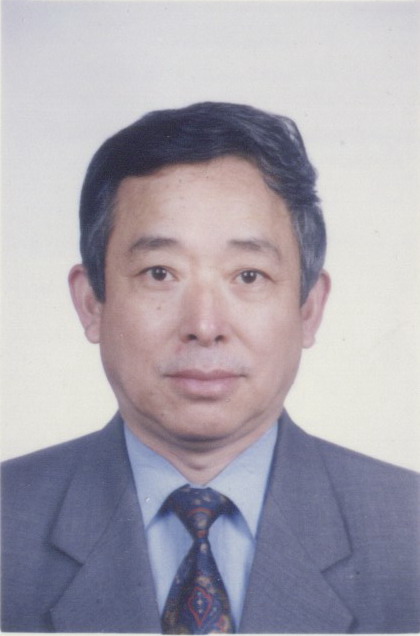 Peien Feng (冯培恩)合作论文数浙江大学常州工业技术研究院2Hairui Xu合作论文数1Yongqi Liu合作论文数1Xu Tang合作论文数1Fajun Gui合作论文数1
 Ying Liu合作论文数Singapore MIT Alliance, E4-04-10, National University of Singapore, Singapore1Ya-bin YANG (杨雅斌)合作论文数1Gong WANG (王宫)合作论文数1CHEN Da-wei (陈大玮)合作论文数1gang liu合作论文数1
 Lin Yuan合作论文数Alibaba Group1Wenhuan Sun合作论文数Dept Mech Engn, Carnegie Mellon Univ1Changqing Xu (徐昌庆)合作论文数1
 Nicolas Perry合作论文数1
 Feiwei Qin合作论文数Zhejiang University, Zhejiang University1
 Zhaohui Du (杜朝辉)合作论文数School of Mechanical Engineering, Shanghai Jiao Tong University1
 Chen He (何晨)合作论文数Shanghai Jiao Tong University1
 Yue Zhou (周越)合作论文数School of Biomedical Engineering, Shanghai Jiao Tong University1
 Rong Wang (汪蓉)合作论文数Antai College of Economics & Management, Shanghai Jiao Tong University1
 Ming Li (李明)合作论文数College of Computer Science and Technology, Zhejiang University1
 Lingge Jiang (蒋铃鸽)合作论文数Department of Electronic Engineering, School of Electronic Information & Electrical Engineering, Shanghai Jiao Tong University1Xin Yang (杨新)合作论文数Department of Automation, Shanghai Jiaotong University, Shanghai, P.R. China1
 Soon Chong Johnson Lim合作论文数Department of Mechanical and Production Engineering, National University of Singapore1Xinghui Xu (徐行辉)合作论文数1
 Yusheng Liu (刘玉生)合作论文数State Key Lab of CAD&CG, College of Computer Science and Technology, Zhejiang University1Yurong Zeng合作论文数Hubei University, Hubei University of Technology1
 Yongsheng Ma (马永胜)合作论文数Department of Mechanical and Energy Engineering, College of Engineering, Southern University of Science and Technology1
 Pengfei Shi (施鹏飞)合作论文数Institute Of Image Communication And Information Processing,Shanghai Jiao Tong University1




