Orthogonal time frequency space (OTFS) systems perform excellently in high mobility communications, but face the challenge of channel estimation. To optimize the channel estimation performance, a compressed sensing-basis expansion model (CS-BEM) OTFS channel estimation approach is proposed in this letter. First, a compressed sensing channel estimation model in the delay-Doppler (DD) domain is derived. Further, a dense pilot insertion scheme in the DD domain is specially designed, which reduces the redundant protected pilot and fully extracts the correlation information among the pilots. In particular, a combined orthogonal matching pursuit (COMP) algorithm is proposed to improve the coefficient estimation accuracy of BEM, benefiting from the exploitation of the coefficient segmentation joint sparsity property. Simulation results show that the proposed CS-BEM OTFS channel estimation approach has lower BER and channel estimation normalized mean square error (NMSE).
AbstractIn the cost function of model predictive torque control (MPTC) of permanent magnet synchronous motor (PMSM), torque and flux linkage have different dimensions, and the weighting factor needs to be properly adjusted to optimise the control performance. Therefore, based on the discrete mathematical model of PMSM, the torque predictive error and flux predictive error expressions are mapped to the two‐phase static coordinate system, which is equivalent to the distance expressions from the endpoint of the voltage vector to the straight line and to the circle respectively. Because they have the same dimension, they can be directly superimposed to form the cost function proposed, which eliminates the selection process of the weighting factor. Then, the candidate voltage vector is substituted into the cost function in turn, and the optimal voltage vector with the minimum cost function is selected as the voltage input of the next control cycle. Finally, the simulation model and an experimental platform are established to compare the steady‐state and dynamic performance of the geometric solution‐based weighting factor determined method proposed with other MPTC methods.
During the further development and utilization of clean energy base with vast engineering restriction, the installed capacity of newly built and planned clean energy stations has increased significantly. When the collected power is sent out via the Voltage Source Converter-Based High Voltage Direct Current (VSC-HVDC) system, higher requirements are placed on the transmission capacity. However, the traditional view is that as the over-current capacity of Insulated Gate Bipolar Transistor (IGBT) device is very weak, the transmission power of VSC-HVDC is limited. Focusing on the specific scenario of long-distance transmission of clean energy through VSC-HVDC system, a research framework based on VSC with parallel connection is proposed, which can provide a new solution to this problem. Three scenarios are analyzed and discussed which provides a feasible technical path for applying parallel connection to large-capacity VSC-HVDC system. And they are traditional valve group structure, the mere parallel connection and the parallel connection with constant AC voltage control mode. The simulation in PSD Power Tools((R)) environment validates the correctness and effectiveness of the proposed method.
建立准确的新能源场站模型是研究大规模新能源接入对电网影响的基础.该文首先从大规模新能源接入对系统功角稳定性、频率稳定性、电压稳定性、和电力电子多频段振荡角度出发,论述大规模电力系统仿真对新能源场站模型的需求,并总结出新能源场站等值模型需求表.然后,通过仿真验证新能源场站模型对大规模电力系统仿真的关键影响因素,在某些工况下,新能源场站内的拓扑结构、集电线路阻抗、发电单元功率分布的影响不可忽略.最后,综述现有新能源场站等值方面相关文献,通过需求分析、场站为单位的建模体系,提出统一结构的新能源场站等值模型.
In view of the growing proportion of renewables and power electronics, the operation characteristics of the power system have changed significantly, and the problem of voltage stability is becoming more and more prominent. As the grid connection interface of renewable energy stations (RES), voltage source inverters (VSCs) play a vital role in the progress of voltage-reactive power(V-Q) regulation. The mathematical model of the grid-connected VSC system is established in MATLAB/Sinmulink in the beginning. And then the system’s stability is studied concerning the influence of the outer loop control and different reactive control (QC) strategies by means of root luci analysis. It is concluded that the outer loop impacts the static stability margin of the system deeply, and the small disturbance stability of constant voltage control (CVC) has better preformance than that of constant reactive power control (CQC) under the weak grid. This paper further constructs Thevenin equivalent circuit of grid connected system of RES, analyzes the sensitivity of key electrical quantities according to the mathematical equations, and reveals the mechanism why the stability of the CQC is inferior to the CVC in weak grids and the limitation of outer loop control structure.
The mode-based damping torque analysis (M-DTA) method for studying the effect of an external controller on power system low-frequency oscillations is proposed in this paper. First, based on the interconnection model between the system and the controller in the frequency domain, the oscillation loop corresponding to the electromechanical oscillation mode is built, and then the mode-based damping torque of the controller can be calculated. Then, the application of the M-DTA method in the power system is illustrated. The derivation shows that in the single-machine infinite-bus power system, the M-DTA method is completely equivalent to the classical damping torque analysis (C-DTA) method. In the multi-machine power system, the mode-based damping torque directily reflects the effect of the controller on the oscillation mode, overcoming the shortcomings of the C-DTA method in which there is no direct correspondence between the damping torque and the oscillation mode. By deriving the relationship with the residue index, the M-DTA method shows higher accuracy than the residue method in applications, such as controller parameter adjustment. Finally, two example power systems are presented to demonstrate the application of the proposed M-DTA method.
优化问题是电力系统领域中最常见的问题之一,大多数工程问题都可以归结为优化问题.为了解决这些优化问题,人们不断地提出各种优化算法.然而,随着人类需求的快速提高和可再生能源的高度渗透,高度复杂的优化问题不断出现,使得传统的优化算法在求解精度和速度上都面临着巨大挑战.近年来,新一代人工智能(artificial intelligence,AI)的发展为优化算法的升级创造了新的机遇.智能电网是未来电网的发展方向,对电网的安全性、稳定性、可靠性、弹性、可持续性、高效性等都有很高的要求.这些要求使得智能电网成为一个具有多目标和多约束的高度复杂的优化问题.最典型的问题是潮流控制.无论是使用传统的还是现代的AI优化算法,已有许多研究人员致力于解决各种潮流控制问题.该文旨在全面、清晰地介绍这一研究领域的最新进展.首先,介绍优化算法的进化过程、分类和最先进的方法.然后,全面回顾传统和现代AI优化在控制潮流可解性、功率与频率、电压、安全性和稳定性方面的应用.这些应用均取得了良好的性能.尽管如此,该文仍然在高效性、可解释性、可迁移性、稳定性、经济性和鲁棒性方面点明一些关键挑战.为了克服这些挑战,给出在未来的研究中有价值的潜在方向,以使现代AI优化更适用于实际工程.
A parameter estimation method based on an improved Whale Optimization Algorithm is proposed in this paper to identify the parameters of a stati
With the "carbon peak, carbon neutral" energy strategy goal, accelerate the construction of new energy-based power system has become the development value direction of China's energy field for a long period of time in the future. In order to cope with the risk of blackout in the new power system, it is necessary to explore the potential and value of distributed resources in blackout from "source-load-storage" and develop a safe and fast blackout recovery plan. Considering the black start process in the complete time scale, a self-recovery scheme for distribution network based on multiple types of distributed resources is proposed in this paper. Firstly, considering the distribution system containing multiple types of distributed resources, a distributed resource start-up sequence optimization model is constructed for different types of power sources with the objective of maximizing the available generation capacity and active load recovery, and then the outage load is input in time steps to minimize the outage loss; secondly, considering the black-start capacity and utilization in the restoration process, a distribution network black-start incentive mechanism including capacity compensation fee and utilization compensation fee is proposed to effectively promote the black-start Finally, taking the improved IEEE33 node system as an example, the analysis of multiple outage scenarios shows that the proposed method can effectively deploy restoration resources and improve the rapidity and stability of distribution system black start.
In order to solve the problem that the inertia and system security of high penetration renewable energy grid decreases, conventional DC island transmission pure renewable energy which can electrically decoupling between large-scale renewable energy power grid and traditional power grid was proposed. Based on the effective capacity coefficient of renewable energy, calculation method of pure renewable energy installed capacity was proposed. Voltage and inertia support problems were solved by dynamic compensation equipment. Based on the minimum power fluctuation of new energy, the optimal hybrid ratio of wind and PV power was studied. Energy storage allocation under optimal ratio of wind and PV power hybrid transportation was also researched. Empirical analysis was carried out in Northwest Power grid. PSD-PEBL program was used to check the power balance which proves the feasibility of the proposed transmission mode. Case analysis proved the feasibility of the proposed transmission mode and provided a new transmission mode for large-scale new energy transmission in the future.
A parameter estimation method based on an im-proved Whale Optimization Algorithm is proposed in this paper to identify the parameters of a static var compensator(SVC)model.First,a mathematical model of SVC is established.Then,the reverse learning strategy and Levy flight disturbance strategy are introduced to improve the whale optimization algorithm,and the improved whale optimization algorithm is applied to the parameter identification of the static var compensator model.Finally,a stepwise identification method,by analyzing the local sensitivities of parameters,is proposed which solves the prob-lem of low accuracy caused by multi-parameter identification.This method provides a new estimation strategy for accurately identifying the parameters of the static var compensator model.Estimation results show that the parameter estimation method can be an effective tool to solve the problem of parameter identification for the SVC model.
该文首先将调差系数和励磁电压强励倍数对暂态稳定的影响转化为研究两者对同步转矩的影响,以便于数学推导.然后对调差系数和励磁电压强励倍数影响发电机同步转矩的机理进行推导和数值计算,继之以单机、两机系统和实际系统的仿真.计算和仿真结果表明,水轮机大负荷下,负调差提供负同步转矩而正调差提供正同步转矩;小负荷下,调差系数提供的同步转矩呈抛物线规律变化.汽轮发电机则不同,大小负荷下,均有负调差提供正同步转矩而正调差提供负同步转矩.但短路故障时,励磁电压达到输出上限,与调差系数无关,所以调差系数不会影响发电机的暂态稳定.与一般认识不同,研究发现,虽然励磁强励顶值电压EFDMAX越大越有利于暂态功角稳定,但影响幅度微小.EFDMAX绝对值的变化对发电机q轴暂态电势q0E? 和发电机同步转矩KS的影响在短路故障期间十分微小,在短路故障消失后影响虽有所增大,但仍然微小.短路故障消失后,EFDMAX增大对发电机无功输出和高压侧母线电压提升明显,这是增大EFDMAX的主要作用所在.
电力电子电源场站与交流电力系统及其他电力电子电源场站间的复杂交互作用,使得基于单机和单场站思想的稳定性评估方法存在失效风险,引发了电网稳定运行的安全隐患.针对上述问题,提出一种对高比例电力电子电力系统中区域稳定性评估的统一性稳定判据.首先,该文提出区域动态统一性稳定指标(unification stability index of dynamicstate,USI1)和区域静态统一性稳定指标(unification stability index of static state,USI2)的定义与计算方法,并详细论述了其理论依据与物理含义;其次,提出基于相对增益矩阵(relative gain array,RGA)理论和统一性稳定指标的高比例电力电子电力系统稳定性评估方法;再次,提出由USI1、USI2和RRGA组成的稳定性评估指标体系,构建了从场站扩展到区域、进而延伸到电力系统的稳定性评估框架;最后,实例验证了该文方法在高比例电力电子电力系统稳定性评估中的有效性.
交直流混联大电网的快速发展对仿真准确性提出了更高要求,只有准确模拟系统的负荷特性,才能够正确反映交直流系统对故障的响应.以往大规模电网的实时仿真中,受限于仿真工具的能力,负荷模拟少量采用或不采用感应电动机模型,由此导致了仿真精度问题.新一代数模混合实时仿真平台的强大仿真能力,为采用大量感应电动机负荷模型进行实时仿真提供了可能.该文基于此平台,研究了大规模感应电动机负荷的实时仿真简化方法,解决了含大规模感应电动机电磁暂态实时仿真电网模型的启动及初始化问题,通过对华东电网实际故障的仿真对比,验证了该文提出方法的准确性和有效性,为进一步深入研究大规模电网交直流相互影响等问题提供了更为准确的仿真手段.
由于风电互联系统结构复杂并且具有随机性,传统控制器难以满足系统多运行方式下的阻尼控制效果,为提高含风电互联系统抑制低频振荡的能力,提出静止无功补偿器(static var compensator,SVC)附加双通道广域阻尼控制方法.首先建立附加双通道控制器模型;其次基于频域子空间辨识与几何测度结合法设计最佳控制回路,实测方便,更有利于应用在复杂电网;最后采用基于多目标函数的改进型鸟群算法(improved bird swarm algorithm,IBSA)对控制器进行优化,确定控制参数.将上述研究方法通过含风电的两区四机系统进行仿真验证,结果表明接入设计控制器的系统阻尼大大提高,控制效果显著,能够快速抑制振荡,从而增强系统稳定性能.
电网仿真是电网运行规划的支撑型技术,被广泛应用于电网各种运行方式的分析与决策。然而,目前基于电网仿真的分析与决策仍然需要人的参与,难以满足日益复杂的大电网需求,亟需寻找一条新的道路。人工智能的发展为电网仿真分析与决策提供了新的思路与方法。已有学者对人工智能在电网仿真分析与决策的应用做了广泛而深入的探索。该文旨在提供一个该领域最新进展的综合而清晰的蓝图。首先,介绍电网仿真分析与决策的概念和人工智能基本方法。然后,对人工智能在安全评估、稳定评估、潮流调整、安全控制、稳定控制、优化运行中的应用进行综述,系统地总结其思路、方法与优劣。尽管现有研究已经取得了不错的效果,但是人工智能应用过程中在知识建模、数据需求、特征提取以及迁移能力等方面还面临着不少挑战。该文在讨论这些挑战的同时,给出未来值得探索的研究方向。
新版《电力系统安全稳定导则》明确提出"新能源场站短路比应达到合理水平",但目前仍欠缺具体的评价方法和标准,无法有效量化电力电子电源集群接入交流电网的稳定程度.针对上述问题,提出一种面向电力电子电源场站稳定性分析的统一性稳定判据.首先,论述了动态统一性指标的定义和指标特性,并基于鲁棒控制理论和多变量频域控制理论提出并网系统的稳定性判据,实现了电磁尺度的稳定性风险精确度量;其次,在忽略电力电子电源、电网及其控制系统动态特性的条件下,将动态统一性指标退化为基于机电尺度相量模型的静态统一性指标,实现了高效率的稳定性风险初筛;再次,构造用于场站稳定性风险初筛和精确度量的两维统一性稳定指标,提升了场站稳定性评估的效率和准确率.最后,基于我国西北地区的案例验证表明,该文提出的统一性稳定判据可有效量化场站并网系统的安全稳定性.
OPINION article Front. Energy Res., 08 April 2022Sec. Carbon Capture, Utilization and Storage https://doi.org/10.3389/fenrg.2022.859696
新能源的快速发展,给系统带来调峰困难、抗扰动能力下降等问题.为了支撑新能源合理规划建议,亟需评估电网能承载的新能源上限.该文结合西北电网能源结构和网架特点,梳理新能源开发和直流外送规模研究的思路框架;推导考虑频率安全约束的高比例新能源系统指标,包括一次调频容量与稳态频率偏差、频率响应特性与暂态频率偏差和直流送出规模与系统惯量指标;建立基于生产模拟结果的频率安全仿真算法.结合"十四五"规划边界条件,研究提出西北电网新能源开发及直流外送建议规模,验证了该文所提方法的有效性和工程实用性.
This paper introduced dynamic stability analysis of sub-synchronous oscillation mode of PLL with the generalized torque analysis method. Firstly, the configuration and the model of the power system connected with PMSG, including PLL, GSC and AC network is given. Then, the generalized torque analysis method in the research of power system subsynchronous oscillation is illustrated. In this method, the idea of damping torque analysis method in power system electromechanical oscillation is extended, and the generalized torque analysis method is proposed. This method is no longer limited to the analysis of the oscillation in the frequency band of 0.1-2.5Hz, and can also analyze the phenomenon of sub/super-synchronous oscillation. Finally, the dynamic stability analysis of sub-synchronous oscillation mode of PLL with the generalized torque analysis method is given, which demonstrated the correctness of the method.
 Huadong Sun (孙华东)合作论文数College of Electrical and Information Engineering, Hunan University18
 Qinyong Zhou (周勤勇)合作论文数China Electric Power Research Institute17
 Xiaohui Qin (秦晓辉)合作论文数China Electric Power Research Institute15
 Yong Tang (汤涌)合作论文数China Electric Power Research Institute15
 Yonghua Yin (印永华)合作论文数China Electric Power Research Institute10
 Yiying Zhu (朱艺颖)合作论文数China Electric Power Research Institute10
 Guangquan Bu (卜广全)合作论文数China Electric Power Research Institute9
 Jun Yi (易俊)合作论文数China Electric Power Research Institute;College of Electrical Engineering and Automation, Shandong University of Science and Technology9
 Shiyun Xu (徐式蕴)合作论文数China Electric Power Research Institute8Zhiwei Xue合作论文数7Yantao Zhang (张彦涛)合作论文数7
 Ruihua Song (宋瑞华)合作论文数State Key Laboratory of Power Grid Safety and Energy Conservation, China Electric Power Research Institute7
 Heping Liu (刘和平)合作论文数School of Electrical Engineering, Chongqing University7
 Donglin Peng (彭东林)合作论文数College of Mechanical Engineering, Chongqing University of Technology7
 Congzhi Huang (黄从智)合作论文数School of Control and Computer Engineering, North China Electric Power University7JingBo He (贺静波)合作论文数6Lei Gao (高磊)合作论文数6
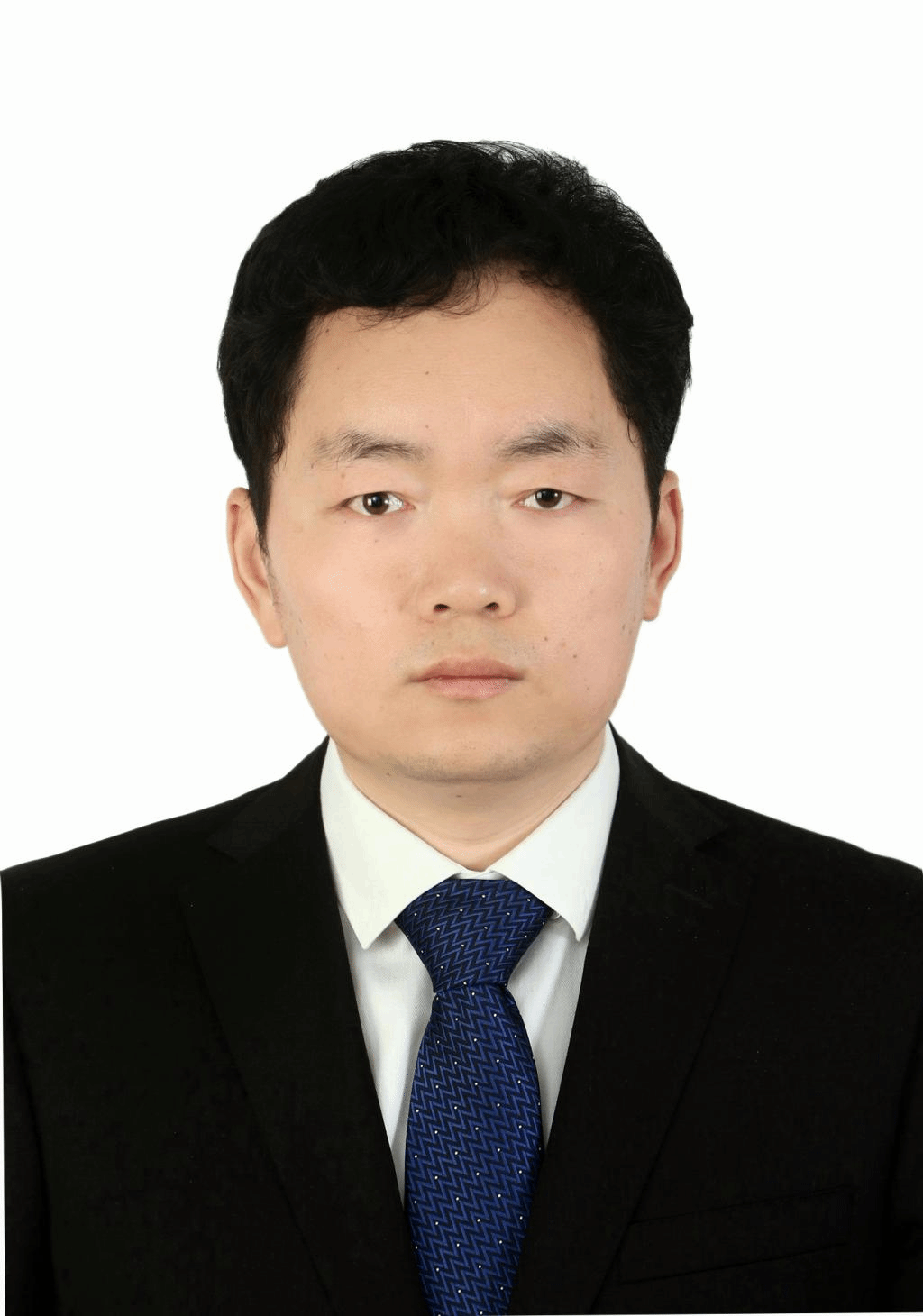 Bing Zhao (赵兵)合作论文数State Grid Metering Center, Institute of Measurement, China Electric Power Research Institute;School of Electrical Engineering, Northeastern Electric Power University6
 Baiqing Li (李柏青)合作论文数China Electric Power Research Institute6Jian Zhang (张健)合作论文数China Electric Power Research Institute6jingtian bi合作论文数5
 Hong Shen (申洪)合作论文数中国电力科学研究院5
 Yalou Li (李亚楼)合作论文数China Electric Power Research Institute5Liang Zhao (赵良)合作论文数5
 Yanhao Huang (黄彦浩)合作论文数China Electric Power Research Institute5
 Weifang Lin (林伟芳)合作论文数China Electric Power Research Institute5
 Yiming Wang合作论文数Beijing Key Lab High Voltage, North China Elect Power Univ4Tao Xu (许涛)合作论文数4LongYing Zhang合作论文数4
 Shiying Ma (马世英)合作论文数China Electric Power Research Institute4Songtao Zhang合作论文数3
 Tianjing Wang合作论文数3Yue Yin合作论文数3Weiping Jiang (蒋卫平)合作论文数3Weifeng Liang合作论文数3Xiaohui Lu合作论文数3Lining Su合作论文数3Nan Liu合作论文数3Yonghui Nie合作论文数3
 HaiLei He (贺海磊)合作论文数3WeiWei Wang (王薇薇)合作论文数3
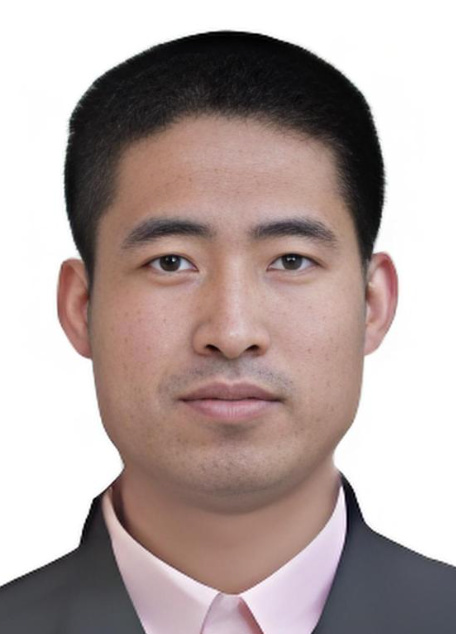 Wenfeng Li (李文锋)合作论文数China Electric Power Research Institute Co., Ltd;Department of Electrical Engineering, College of Electronic and Information Engineering, Tongji University3
 Yunzhou Zhang (张运洲)合作论文数国家电网公司3Xiaoxin Zhou (周孝信)合作论文数3Chong Liu (刘翀)合作论文数3
 Xiaojiang Guo (郭小江)合作论文数3Yunting Song (宋云亭)合作论文数3Dongxia Zhang (张东霞)合作论文数3Xinglei Chen (陈兴雷)合作论文数2




