Objective Synthetic aperture radar (SAR), an active imaging sensor, is pivotal in military reconnaissance, maritime surveillance, and disaster assessment due to its all-weather and all-day imaging capability. However, unlike optical images, SAR imagery is inherently affected by severe speckle noise and exhibits significant variations in target scale, orientation, and background complexity. These factors pose major challenges to accurate target detection. Traditional approaches, such as threshold-based statistical detectors and template-matching methods, heavily rely on prior knowledge and handcrafted features, resulting in limited robustness and adaptability in complex environments. Although deep learning-based detectors, including both two-stage and single-stage frameworks, have achieved remarkable success in optical image detection, their performance degrades when applied directly to SAR imagery. This is primarily due to the lack of rich texture and color cues and the presence of strong noise interference. Recent studies indicate that frequency-domain features contain abundant structural and scale-dependent information, which can effectively complement spatial-domain representations by highlighting the distinct energy distribution between targets and background. Nevertheless, most existing frequency-domain methods rely on fixed-frequency component extraction, overlooking the spectral diversity among targets of different scales and structures. To address these limitations, this study aims to develop a frequency-domain enhanced SAR target detection framework that adaptively models spectral characteristics and achieves robust multi-scale feature fusion, thereby improving detection accuracy and generalization under complex SAR imaging conditions. Methods This paper proposes a dynamic frequency-aware feature enhancement network for SAR target detection. The core objective is to fully exploit the complementary advantages of spatial and frequency-domain features to enhance the robustness and accuracy of SAR target detection. First, a frequency-aware feature modulation (FAFM) module is introduced to replace conventional convolutional operations that rely solely on spatial-domain modeling. Specifically, the FAFM module transforms input feature maps into the frequency domain, decomposing them into distinct spectral components to separately model low-frequency global structure and high-frequency local details. A region-guided weighting mechanism is then applied to adaptively adjust the response intensity of different frequency bands, establishing a correspondence between spatial and spectral domains. This enables the network to suppress high-frequency noise while enhancing edge and texture representations. The modulated spectral features are subsequently remapped back to the spatial domain, yielding a more stable and structure-aware representation for downstream multi-scale fusion. In the multi-level feature fusion stage, to address large target scale variations and the loss of fine details for small objects, a selective bidirectional aggregation (SBA) network is proposed. This network constructs two complementary information flows: a bottom-up semantic flow and a top-down boundary flow. These flows facilitate bidirectional interaction between shallow features, which provide spatial structure and boundary cues, and deep features, which offer high-level semantic context. Through an attention-guided recalibration mechanism, the network dynamically balances the importance of features at different levels, mitigating redundancy and alignment inconsistencies during fusion. Consequently, the SBA module achieves fine-grained feature integration, ensuring the fused representation retains detailed boundary information while maintaining strong semantic expressiveness. Results and Discussions Experimental results demonstrate that the proposed method significantly outperforms existing detectors in terms of both accuracy and robustness. As shown in Table 3, on the RSAR dataset, our method achieves the highest precision (84.10 % ), recall (77.20 % ), and mAP@0.5 (79.60 % ), outperforming YOLOv11-OBB by 3.4 percentage points in mAP@0.5. The F1-score reaches 80.52 degrees o, indicating a well-balanced trade-off. On the RSDD-SAR dataset, which features more complex backgrounds and greater scale variations, our method maintains a clear advantage, with an mAP@0.5 of 95.30 % and an mAP of 55.90%, surpassing YOLOv11-OBB by 2.4 percentage points in mAP. Favorable results are also obtained on the SSDD+ dataset. These results collectively confirm the strong generalization capability of the proposed network across diverse SAR scenarios. Qualitatively, visualization results reveal that the FAFM module effectively enhances target contours and suppresses background clutter, while the SBA network enables more precise bounding box localization and reduces false detections. Ablation studies further validate the complementary effects of the two modules: FAFM contributes to noise suppression and texture recovery, whereas SBA facilitates multi-scale semantic alignment and structural consistency. Their combination effectively addresses key challenges in SAR target detection. Conclusions This paper addresses key challenges in SAR image target detection, such as severe speckle noise interference, significant target scale variations, and insufficient feature representation, by proposing a detection method based on frequency-domain dynamic perception and feature enhancement. The designed FAFM effectively utilizes the complementary nature of frequency-domain and spatial features, improving the model's perception of target edges and texture details. Concurrently, the SBA network enables cross-level bidirectional feature fusion, enhancing the model's ability to represent and discriminate multi-scale targets. Experimental results on the publicly available RSAR, RSDD-SAR, and SSDD+ datasets demonstrate that the proposed method outperforms existing mainstream approaches across multiple metrics, including precision, recall, mAP@0.5, and mAP. It exhibits particularly strong robustness and generalization capabilities in complex backgrounds and multi-scale target scenarios, fully validating its effectiveness and advancement for SAR target detection tasks. Future work will involve testing the model in larger-scale and more diverse real-world application scenarios to further verify its practicality. Additionally, exploring integration with Transformer architectures or generative modeling methods could be pursued to more fully leverage multi-level information from both frequency and spatial domains.
Limited by poor imaging conditions, the collected facial images often exhibit inferior visual quality, which affects downstream tasks such as face recognition and attribute analysis. The existing face super-resolution methods lack effective information acquisition and alignment mechanisms, leading to information loss. To solve the issues, this paper proposes a dual-domain alignment network, which extracts multi-scale and multi-level local and global facial features through an adaptive residual module and a complex convolution residual module. By setting adaptive parameters, the residual module can adaptively adjust the fusion coefficients according to input information, enabling the network to possess better feature representation capability. In the complex convolution residual module, a complex convolution block is introduced to realize joint estimation of frequency-domain information. Furthermore, a light weight alignment and enhancement module is designed to align the features of dual-branch and enhance the spatial domain features. Experimental results demonstrate that the proposed method can reconstruct more natural face images with fewer parameters, and outperforms existing face super-resolution methods.
In recent years, the increase of multimodal image data has offered a broader prospect for multimodal semantic segmentation. However, the data heterogeneity between different modalities make it difficult to leverage complementary information and create semantic understanding deviations, which limits the fusion quality and segmentation accuracy. To overcome these challenges, we propose a hybrid attention driven CNN-Mamba multimodal fusion network (HACMNet) for semantic segmentation. It aims to fully exploit the strengths of optical images in texture and semantic representation, along with the complementary structural and elevation information from the digital surface model (DSM). This enables the effective extraction and combination of global and local complementary information to achieve higher accuracy and robustness in semantic segmentation. Specifically, we propose a progressive cross-modal feature interaction (PCMFI) mechanism in the encoder. It integrates the fine-grained textures and semantic information of optical images with the structural boundaries and spatial information of DSM, thereby facilitating more precise cross-modal feature interaction. Second, we design an adaptive dual-stream Mamba cross-modal fusion (ADMCF) module, which leverages a learnable variable mechanism to deeply represent global semantic and spatial structural information. This enhances deep semantic feature interaction and improves the ability of the model to distinguish complex land cover categories. Together, these modules progressively refine cross-modal cues and strengthen semantic interactions, enabling more coherent and discriminative multimodal fusion. Finally, we introduce a global-local feature decoder to effectively integrate the global and local information from the fused multimodal features. It preserves the structural integrity of target objects while enhancing edge detail representation, thus enhancing segmentation results. Through rigorous testing on standard datasets like ISPRS Vaihingen and Potsdam, the proposed HACMNet demonstrates advantages over prevailing methods in multimodal remote sensing analysis, particularly on challenging object classes.
Semi-supervised medical image segmentation (SSMIS) has proven to be an effective solution that leverages limited labelled data and abundant unlabeled data, thereby significantly reducing the labour and cost associated with manual annotation. However, most of the existing teacher-student frameworks are prone to suffer from confirmation bias during training, adversely affecting the performance of SSMIS. To address this challenge, we propose the Dual Student Discrepancy Correction framework (DSDC), which extends the Mean Teacher (MT) framework by incorporating an additional student model with identical architecture but independently updated parameters. This design mitigates the parameter coupling issue that may arise when updating the teacher model via Exponential Moving Average (EMA) in conventional single-student paradigms. Moreover, the prediction discrepancy between the two student models is leveraged for error detection and correction, enabling the network to identify and rectify its own cognitive biases, ultimately enhancing segmentation accuracy. Comprehensive experiments on two public benchmarks, an MRI dataset (LA) and a CT dataset (Pancreas-NIH), reveal that our DSDC framework surpasses current State-of-the-Art (SOTA) approaches across all evaluation metrics. These findings substantiate the framework's effectiveness in SSMIS tasks. Code is accessible at https://github.com/Sangfugui/DSDC.
Automated classification of cervical cell images is crucial for efficient cervical cancer screening. However, several key bottlenecks hinder its effectiveness: (1) heterogeneous feature representation, resulting from variations in cell morphology, imaging conditions (e.g., color, contrast, scale), and cross-center discrepancies, and (2) data scarcity and imbalance, caused by limited samples for rare lesion categories and skewed class distributions. The bottlenecks degrade model generalization and reduce classification accuracy. To alleviate these issues, we propose a novel hybrid CNN-Transformer network (HCT-Net) that leverages the strengths of both convolutional neural networks (CNNs) and Transformers, aiming to improve classification performance. Our HCT-Net introduces three newly designed modules: a hybrid multi-dimensional self-attention module to enhance global-local feature interactions; a multi-scale feature fusion module for hierarchical semantic representation; and a multi-class prediction module to refine feature-to-classification mapping. Moreover, a joint loss function is designed to mitigate class imbalance during training. Finally, extensive experiments are conducted on three challenging benchmarks-SIPaKMeD (cell-level), Herlev (cell-level), and Mendeley LBC (smear-level), and achieve remarkable accuracy/precision/recall rates of 99.26%/99.50%/99.26% on SIPaKMeD, 98.93%/99.17%/99.24% on Herlev, and 99.48%/99.80%/99.24% on Mendeley LBC, respectively. It is demonstrated that our model significantly outperforms other existing methods in terms of classification performance. The proposed model is available at https://github.com/hanppyzhaoyanli/HCT-Net.
3D Gaussian Splatting (3DGS) has achieved significant progress in the field of novel view synthesis. However, there are challenges associated with using spherical harmonics to learn scenes that involve specular reflections, due to the presence of high-frequency details in such scenes. To address above problem, we propose an image-based view-dependent appearance model to jointly extracts both high-and low-frequency information from the scene, to more efficiently represent the appearance field of 3D Gaussians. Specifically, by statistically assessing the dot product between the view direction and the normal at the respective Gaussian within the image, we develop a view-dependent appearance module that calculates the variances of these dot products; the module is able to adaptively assign weights to both specular and diffuse reflection colors. We propose a normal-guided specular reflections module to extract view-dependent high-frequency information, which effectively filters out specular colors by using a threshold on the variance of the dot product between the view direction and the normal. In addition, to extract low-frequency information, we design an image-based diffuse reflections module to compute the diffuse reflection colors and preserve full-frequency information. Experimental results show that our method outperforms the baseline in both quantitative and qualitative results, significantly enhancing the ability of 3DGS in processing specular reflection scenes.
Time difference of arrival (TDOA) localization enables high-accuracy positioning by analyzing arrival-time differences of target signals at distributed radar nodes, whose performance strongly depends on radar node topology. However, existing studies tend to focus more on improving localization accuracy, while overlooking the impact of radar geometric layout and surveillance coverage on localization performance. To this end, this paper proposes a topology optimization method for a distributed radar system based on an improved non-dominated sorting multi-objective particle swarm optimization (NS-MOPSO) algorithm. A geometric localization model is developed for a distributed TDOA radar system. Based on this model, three optimization objectives are formulated, including minimizing geometric dilution of precision (GDOP), maximizing target coverage, and improving the geometric balance of node placement. These three objective functions are incorporated into the NS-MOPSO framework to achieve a more reasonable radar geometric distribution. To enhance the optimization performance, a series of strategies are adopted, such as non-dominated sorting for Pareto-based solution selection, an improved crowding-distance scheme to encourage balanced multi-objective optimization, and Gaussian mutation to increase solution diversity and reduce the risk of premature convergence. To validate the proposed method, both simulation studies and real-world experiments were conducted under different node deployment scenarios. The results show that the optimized topology achieves a 6.4% reduction in RMSPE and a 4.3% increase in the proportion of high-quality localization regions compared with the best-performing comparative method, while also demonstrating faster convergence and improved stability. These findings confirm the effectiveness and robustness of the proposed approach in enhancing localization accuracy, expanding effective coverage, and improving overall system performance.
In recent years, contrastive learning has made significant progress in DeepFake detection. However, existing methods emphasize class granularity, and it is difficult to distinguish between the real instance and its forgery counterparts effectively. Furthermore, the diversity of forgery cues produced by different manipulation methods cannot be effectively clustered by class granularity alone. Thus, the model’s generalization capability is limited. To tackle the above problems, a Dual-Granularity Contrastive Learning (DGCL) for DeepFake detection is proposed in this paper. Specifically, Class Granularity Contrastive Learning (CGCL) and Instance Granularity Contrastive Learning (IGCL) are designed. Firstly, for semantic aggregation at the class level, CGCL incorporates the class prototype, which encourages anchor approaches to the prototype of the positive class, thereby pulling the intra-class features closer. Secondly, for distinguishing between real and fake instances, Real Instance Granularity Contrastive Learning (RIGCL) and Fake Instance Granularity Contrastive Learning (FIGCL) are proposed based on the instance characteristics. RIGCL endeavors to distinguish fake instances from original real instances by expanding the differentiation in the feature space. Meanwhile, FIGCL extracts consistent forgery features from various manipulation methods using cosine similarity constraints. Finally, the superiority and generalizability of DGCL are validated by the experimental results on CELEBDF, DFD, and DFDC datasets.
Open-vocabulary aerial object detection (OVAD) aims to detect objects outside the training sets, which typically involves distilling knowledge from pre-trained vision-language models, e.g., RemoteCLIP, to inherit its generalizable recognition ability and thereby enabling the models to detect novel categories. However, existing distillation methods lacks a customized perception incentive mechanism, leading to a disconnect between perception with discrimination knowledge and poor inductive generalization. To this end, we propose a Pi-Noise guided progressive prior accumulation student-teacher distillation network (P3AD-Net), which utilizes the structured perturbation of noise distribution to achieve tighter localization-classification synergy. Concretely, we design an adaptive guided noise generator to continuously accumulate universal patterns of object location distributions and refined semantic knowledge. These prior patterns not only provide implicit cues to simplify the detection task, but also establish bidirectional knowledge flow, forming a closed-loop optimization of localization and classification. Then, we introduce a semantic-aware dual-alignment reprojection module (SDAR), which employs cross-modal attention to achieve dual visual-semantic alignment and enhances feature discriminability. This module effectively mines the latent localization-aware information embedded in external teachers, thereby improving the model's recognition sensitivity to unseen categories. Furthermore, to enhance data diversity and increase the number of pseudo-samples, we propose a pixel-level adaptive CutMix strategy. This approach enrichs training scenarios by performing pixel thresholding after channel separation. Extensive experiments on multiple remote sensing object detection benchmarks demonstrate that the proposed method achieves highly competitive performance compared with recent state-of-the-art methods, while maintaining a simple training pipeline without relying on additional classification or caption datasets.
Nowadays, face forgery poses a significant threat to societal security, making the development of effective countermeasures imperative. Though most existing methods adopt neural networks to automatically extract discriminative features for forgery detection and have achieved promising results, significant challenges remain. Namely, when detecting forgery faces generated by unseen forgery methods, the detection performance degrades significantly, indicating poor generalization capability. To address such limitation, a novel deep supervised anomaly detection for generalized face forgery detection (DAGFD) is proposed in this paper. Specifically, the artifact map detector optimized by triplet focal loss and metric-softmax loss is first used to locate the forgery regions and obtain artifact maps. Next, forgery detection is reformulated from the supervised anomaly detection perspective, and the artifact map score is calculated to detect forgery videos. Furthermore, mean square error (MSE) loss is used to minimize the artifact map score of real samples while increase the one of forgery samples to generalize well to unseen forgery methods. Also, circle loss is used for auxiliary classifier to learn more discriminative artifact features. Finally, the experimental results demonstrate that the proposed method’s detection accuracy is better than other state-of-the-art methods.
In frequency-modulated continuous-wave (FMCW) radar systems, the detection of Doppler-extended targets (DETs) is a critical challenge. The micro-Doppler effects induced by the motion of extended targets such as pedestrians cause the echo energy to spread along the Doppler dimension. As a result, a single range-Doppler cell is unlikely to form a pronounced amplitude peak above the background noise level. Consequently, existing constant false alarm rate (CFAR) methods that rely on single-cell amplitude decisions tend to suffer from performance degradation in DET scenarios and exhibit limited adaptability under varying clutter conditions. To solve these issues, we propose a nonlinear transform-based variability index CFAR detector for DET (DET-NTVI-CFAR), with the aim of improving detection probability and maintaining stable false alarm control in complex clutter backgrounds. This work constructs a detection statistic by applying a nonlinear transform to the accumulated power cells and derives the threshold from the corresponding probability distribution model. A variability index CFAR (VI-CFAR) decision strategy is introduced to select the appropriate detection branch under different operating conditions. In the threshold design stage, the false alarm probability expressions of three sub-detection methods are derived to guide the selection of threshold parameters. Simulation results demonstrate that the proposed method achieves stable false alarm control and improves detection probability in various environments. Field test results also confirm the applicability of the DET-NTVI-CFAR detector.
In symmetric alpha-stable (S alpha S)-distributed impulsive noise, classical direction-of-arrival (DOA) estimators degrade markedly due to heavy-tailed statistics. To address this, we propose an adaptive, gridless DOA method for coprime arrays. First, we design a condition-selection phased fractional lower-order moment scheme that determines the fractional order by minimizing the condition number, thereby accommodating varying noise intensities without prior knowledge of the characteristic index alpha. Then, leveraging the virtual uniform linear array (ULA) formed by the coprime difference coarray, we establish a covariance-matching gridless sparse reconstruction framework to estimate DOAs, eliminating angular grid mismatch and internalizing regularization selection within a constrained optimization, thus avoiding manual tuning. Numerical simulations indicate that, across a broad range of generalized signal-to-noise ratios (GSNRs), snapshot counts, and noise intensities, the proposed method delivers overall gains in estimation accuracy and resolution over existing approaches. Real-world validation using a millimeter-wave (mmWave) radar sensor further verifies its detection performance and practical utility.
Traditional direction-of-arrival (DOA) estimation algorithms fail to account for the impact of nonuniform noise in practical applications, leading to model mismatch and inaccurate DOA estimation. To overcome this issue, we propose a robust gridless sparse iterative estimation (RGSIE)-based DOA algorithm using coprime arrays. First, the received signal model is constructed, and adaptive reconstruction of the covariance matrix is achieved by setting the diagonal elements to their minimum values based on the characteristics of nonuniform noise. Subsequently, leveraging the sparsity of DOAs in the spatial domain, interpolation and overcomplete representation of the second-order received signals in the virtual domain are performed. A covariance fitting optimization problem is then formulated using a gridless sparse iterative estimation method, achieving high-precision DOA estimation and enhanced degrees of freedom. Furthermore, we employ an alternating projection (AP) strategy in the optimization process, effectively reducing the computational cost associated with complex iterative procedures. Numerical simulations validate the effectiveness and robustness of the proposed algorithm, and its performance is further demonstrated using real-world measurements from millimeter-wave radar sensors.
In the past few years, feature fusion-based violence detection has made remarkable progress. However, existing detection methods primarily focus on temporal feature analysis, which may result in an insufficient representation of the subtle variations inherent in violent behaviors, ultimately compromising detection performance. To overcome this limitation, this study introduces a Wavelet-Based Time–Frequency Feature Fusion (WTFF) method. Specifically, the Wavelet-Dilated Separable Convolution Module (WDCM) and the Time–Frequency Feature Fusion (TFFF) Network are designed. Firstly, the input video data is utilized by the WDCM to extract and process frequency-domain features, enabling the model to capture fine-grained behavioral details often overlooked in temporal analysis. Secondly, the TFFF fuses the temporal and frequency-domain features, thereby improving the model’s ability to discriminate violent events. Ultimately, the effectiveness and superiority of the proposed approach are demonstrated by experimental results on UCF-Crime, XD-Violence, and ShanghaiTech datasets, achieving 85.87% (AUC), 84.77% (AP), and 97.91% (AUC), respectively.
Accurate detection of small objects plays an important role in the application of Autonomous aerial vehicles (AAV). However, current works mainly extract comprehensive features from unimodal images, which can obtain very limited distinguishable features for objects, especially those with small sizes. To address this issue, we propose a dynamic cascade cross-modal coassisted network, which integrates multimodal images fusion and fine-grained feature learning to generate powerful object semantic representations. Specifically, we design a multimodal high-order interaction module to achieve collaborative interaction of spatial details and channel dependencies between modalities, thereby enhancing object discrimination. To preserve multimodal fine-grained details, we devise a scale-adaptive dynamic feature prompt module, which dynamically motivates the backbone network to capture feature degradation clues. Meanwhile, to maintain the spatial correlation of multimodal cross-scale features and improve the quality of feature fusion, we derive a global collaborative enhancement module into the feature pyramid network for enhancing the detection accuracy across multiple scales. Extensive experimental results on multimodal datasets have shown that our method achieves favorable performance, surpassing other state-of-the-art methods.
Remote sensing change detection (RSCD) has become an essential tool in observing and analyzing geographical information. However, existing deep learning approaches dependent solely on visual modalities may encounter challenges in discerning subtle variations amidst noise interference. To overcome these issues, we propose a multiscale semantic-guided synergistic interaction network (MSSI-Net), which utilizes the advanced multimodal semantic representations for enhancing the capacity to perceive hierarchical changes. Specifically, we first devise a multiscale interaction module (MIM) that leverages a multiscale attention mechanism to guide the interaction between the coarse and fine stages of different visual features. The fine-grained visual features subsequently complement the semantic features through scale weight reassignment to enhance the discriminative capability of vision-language features. Furthermore, driven by the semantic-guided synergistic interaction mechanism, our developed cross-modal feature fusion module (CFFM) exploits both homogeneous and heterogeneous features among modalities. This ensures that the generated vision-language features are semantically representative. Finally, we formulate a manifold differential perception head (MDPH) to optimize the detection of changes by efficiently fusing diverse differential feature representations, achieving comprehensive performance enhancement. Extensive experiments conducted on four benchmark datasets (LEVIR-CD, CDD, SYSU-CD, and WHU-CD) indicate that the designed MSSI-Net achieves state-of-the-art performance compared with existing methods.
Direction of arrival (DOA) estimation using coprime arrays is a significant topic in array signal processing. Existing approaches typically assume either Gaussian or impulsive noise, limiting their effectiveness under mixed conditions. This paper proposes a DOA estimation method for coprime arrays in the presence of mixed noise composed of symmetric α -stable (S α S) impulsive and nonuniform Gaussian noise. A condition selection phase fractional lower-order moment (PFLOM) replaces the conventional second-order covariance, addressing the convergence failure caused by impulsive noise of varying intensity. To further mitigate nonuniform noise while preserving signal components, a covariance matrix reconstruction is introduced. Based on this, a Toeplitz-structured virtual covariance matrix is constructed via baseline mapping, enabling effective DOA estimation. Simulations show the proposed method achieves higher accuracy and robustness than existing algorithms, particularly under low generalized signal-to-noise ratio in mixed noise.
The sparsity and uncertainty of millimeter-wave (MMW) radar point clouds make it difficult to extract features for matching with images, leading to a major challenge for targetless radar-camera extrinsic calibration. To address this problem, we propose a differentiable calibration method based on detection attributes, enabling targetless extrinsic calibration between MMW radar and camera. Our approach utilizes a three-branch neural network to extract cross-modality features between point clouds and images. By leveraging the dynamic properties and radar cross-section (RCS) values of detected objects, the sparse MMW radar point clouds are augmented, and by calculating the relevance between paired features, the impact of uncertainty in MMW radar detection is resolved. Subsequently, a differentiable probabilistic perspective-n-point (PnP) solver is employed to achieve end-to-end extrinsic parameter estimation without relying on initial extrinsic parameters or specific calibration targets. On the pose dataset constructed from the nuScenes dataset, the proposed method achieved a registration accuracy of 90.10%. Additionally, real-world experiments validate its precision and robustness in radar-camera calibration, demonstrating its effectiveness in targetless scenarios.
Sketch face synthesis aims to generate sketch images from photos. Recently, contrastive learning, which maps and aligns information across diverse modalities, has found extensive application in image translation. However, when applying traditional contrastive learning to sketch face synthesis, the random sampling strategy and the imbalance between positive and negative samples result in poor performance of synthesized sketch images regarding local details. To address the above challenges, we propose A Facial Structure Sampling Contrastive Learning Method for Sketch Facial Synthesis. Firstly, we propose a region-constrained sampling module that utilizes the distribution map of facial structure obtained by a dual-branch attention mechanism to segment the input photos into diverse regions, thereby providing regional constraints for sample selection. Subsequently, we propose a dynamic sampling strategy that dynamically adjusts the sampling frequency based on the feature density in the distribution map, thereby alleviating sample imbalance. Additionally, to diminish the background influence and enhance the delineation of character contours, we introduce the mask derived from the input photo as an additional input. Finally, to further enhance the quality of the synthesized sketch images, we introduce pixel-wise loss and perceptual loss. The CUFS dataset experiment demonstrates that our method generates high-quality sketch images, outperforming existing state-of-the-art methods in subjective and objective evaluations.
Recently, the rapid advancement of the unmanned aerial vehicle (UAV) remote sensing technology has positioned object detection in UAV imagery as a prominent research domain. However, object detection models designed for conventional imagery often fail to achieve satisfactory detection accuracy due to the challenges of varying object scales and a high proportion of dense small objects in UAV imagery. Based on this observation, we devise a multiscale frequency-aware and dual attention-guided feature fusion network (MFDAFF-Net) for UAV imagery object detection. MFDAFF-Net integrates spatial domain multiscale feature fusion with frequency domain information augmentation, effectively improving the detection accuracy of objects with varying scales in UAV imagery. Specifically, we construct a multiscale frequency-aware feature pyramid network as the neck of the model, which facilitates thorough top-down fusion of multiscale features through a meticulously designed feature fusion architecture. Then, we design a dual attention-guided adaptive feature fusion network (DAAFFN) as the specific feature fusion strategy. The DAAFFN effectively enhances and fully integrates multiscale features by leveraging spatial-channel collaborative attention and interscale feature interactions. Moreover, a wavelet-inspired frequency-aware module (WFM) is proposed to disentangle high-frequency object details from low-frequency backgrounds, eventually improving the detection performance for dense small objects. Comprehensive experimental evaluations conducted on the VisDrone2019 and UAVDT datasets demonstrate that MFDAFF-Net substantially outperforms existing state-of-the-art UAV imagery object detection methods.
 Kangning Du合作论文数59
 Chong Fu (付冲)合作论文数School of Computer Science and Engineering, Northeastern University43
 GUO Yanan (郭亚男)合作论文数35
 Dongfeng Wang合作论文数33
 Zongmin Zhao合作论文数School of Electronic and Information Engineering, Beihang University, Beijing, China22
 Shu Tian (田澍)合作论文数School of Computer & Communication Engineering, University of Science and Technology Beijing12
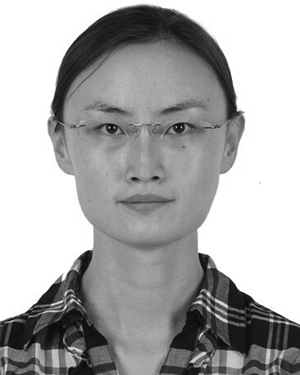 Peiran Song合作论文数Dept Elect Engn, SUNY Buffalo9
 Ye Zhang (张晔)合作论文数School of Electronics and Information Engineering, Harbin Institute of Technology7
 Xiangwei Xing合作论文数College of Electronic Science and Engineering, National University of Defence Technology7
 Lihong Kang合作论文数6
 Chiu-Wing Sham合作论文数School of Computer Science, The University of Auckland6
 Chunzhuo Fan合作论文数4
 Shengbin Zhuang合作论文数4Dengyi Chen合作论文数4
 Changtong LIU (刘昌通)合作论文数4MouYan Zou (邹谋炎)合作论文数4DongFeng Wang (王东峰)合作论文数4
 Xian Sun (孙显)合作论文数Aerospace Information Research Institute, Chinese Academy of Sciences4
 Fan Zhang (张帆)合作论文数School of Automation, Central South University4Ming Tie (铁鸣)合作论文数4
 Yunxiao Liu合作论文数3
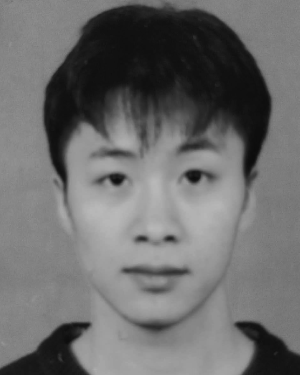 Changwu Chen合作论文数3Kaixuan Li (李凯旋)合作论文数3Meng LI (李萌)合作论文数3Zhaonan Lin合作论文数2Xibao Huo合作论文数2Qingxin Sheng合作论文数2
 Wenchao Zhang合作论文数2
 ZHENG Danyang (郑丹阳)合作论文数2Lin Yu (于琳)合作论文数2Chao XIU (修超)合作论文数2Hua ZHANG (张华)合作论文数2
 Yanan Guo合作论文数2Huanan Li (李华楠)合作论文数2Guo-gang ZHU (朱国刚)合作论文数2Meng Li (李猛)合作论文数2Jia LI (李佳)合作论文数2
 Xi Zhou (周曦)合作论文数Cloudwalk2
 Tao Wang (王涛)合作论文数School of Computer and Information Technology, Beijing Jiaotong University2Qian Luo (罗倩)合作论文数Beijing Information Science & Technology University2
 Xian Zhu (朱希安)合作论文数School of Information & Communication Engineering, Beijing Information Science and Technology University2
 Xiaojun Liu (刘小军)合作论文数Aerospace Information Research Institute, Chinese Academy of Sciences2Benkui Zhang (张本奎)合作论文数2
 Junxin Chen (陈俊鑫)合作论文数School of Software Technology, Dalian University of Technology2
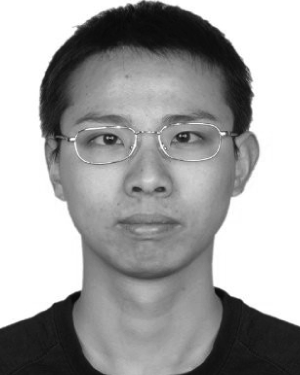 Jian-Feng Gu (贾建峰)合作论文数2Ying Xie合作论文数1




