Multi-component ocean-bottom seismic data offer several advantages, including a high signal-to-noise ratio and comprehensive PP and PS wavefield information. However, the strong reflection characteristics of the sea surface generate various types of ghost waves that severely degrade data quality. The source-side ghost waves not only change the effective wave waveforms but also induce the notch effect in frequency spectra and even produce false structures in stacking profiles. Here, the optimization of the up-down deconvolution method is addressed to suppress the source-side ghost waves. Based on this method, a complete source-side ghost suppression process is constructed. In traditional methods, the upgoing and downgoing wavefields are derived through vertical wavenumber calibration. However, the wavenumber-domain method is computationally demanding and relies on precise source-receiver geometry for accurate determination of vertical wavenumbers. To address these problems, the upgoing and downgoing wave-fields are extracted using the matching method in this study. Then, the up-down deconvolution process is applied to improve the effectiveness of source-side ghost wave suppression. Finally, synthetic and field data case studies, with detailed discussion, are presented to illustrate that the algorithm of our optimized up-down deconvolution is effective.
INTRODUCTION In recent years, with the steady development of offshore energy exploration technology, submarine gas seepage sites,and their products are gradually being identified and analyzed.The submarine cold seep is a seepage phenomenon in which hydrocarbon gases stored deep in the seafloor are transported to seawater by gushing or seepage under the action of tectonic compression (Roy et al., 2019; Tinivella and Giustiniani, 2016).
>0 INTRODUCTION Scholte wave dispersion curves contain rich information regarding seafloor media and have therefore attracted increasing attention(Wang et al., 2022; Dong et al., 2021; Du et al., 2020). Ocean bottom seismometer(OBS) data are widely used in the study of seafloor medium information(Wang et al., 2024), and contain rich surface wave information. Surface wave dispersion curve inversion, a key processing technique can be applied to obtain parameters such as shear wave velocity, thickness, and Poissonpersion curve invers' s ratio of geological layers. However, dision is an iterative optimization process that is characterized by multiple parameters, extremes, and modes, due to its high nonlinearity(Cox and Teague, 2016; Xia et al., 1999). Specific surface wave analysis techniques must be developed to overcome the challenges associated with the dispersion curve inversion.
In marine seismic exploration, streamer seismic acquisition technology is crucial for the investigation and assessment of oil and gas reservoirs. However, the presence of the free surface leads to the generation of ghost waves, which introduce a series of notches in the seismic data spectrum and loss of low-frequency energy. This reduces the resolution of the seismic profile and significantly degrades the quality of the imaging. Moreover, the effectiveness of ghost wave suppression in actual data can only be judged in the frequency domain and cannot be proven in the time domain. Therefore, this study employs Green's theory to suppress ghost waves and, building on this foundation, proposes and derives a method for ghost wave extraction based on Green's theory. The physical significance and effectiveness of the method are verified from a one-dimensional perspective. A workflow for ghost wave suppression and extraction tailored for offshore streamer data has been successfully established. To improve computational efficiency, the integration region is dynamically partitioned based on the particularities of the Green's function, which substantially reduces the computational load while ensuring the accuracy of the results. The processing results of simulated and field data demonstrate that the method can effectively suppress and extract ghost waves, and the extracted ghost waves lay the foundation for subsequent studies on the impact of sea surface undulations on imaging results.
Seismic interferometry can obtain a new record by correlating original response received at two different stations. In the record, one station acts as the virtual source, while the other is regarded as the receiver. However, conventional cross-correlation interferometry calculations may yield inaccurate imaging results for virtual source records due to non-stationary phase region influences from the source. To solve this problem, we propose a new calculation method. In this method, for the traditional correlation result, the virtual event is selected through a time window and the correlation coefficients are calculated with the real data. Finally, by selecting the appropriate coefficient range, the source that needs to participate in the superposition calculation is determined. To verify the accuracy of this method, it is combined with conventional interferometry to process both the marine vertical cable seismic (VCS) model and actual data. By comparison, the profile obtained by the improved method are more accurate.
With the increasing maturity of ocean bottom seismometer technology in gas hydrate exploration, more and more researchers apply ocean bottom seismometer exploration technology for offshore oil exploration. However, due to the special observation mode of ocean bottom seismometer, it is impracticable to process ocean bottom seismometer data using traditional data processing methods, such as velocity analysis and pre-stack time migration. This manuscript proposed a new velocity analysis method for ocean bottom seismometer data, which obtains more accurate root-mean-square velocity than the existing method. Then we deduced the Kirchhoff pre-stack time migration formula for ocean bottom seismometer data. Two models demonstrate the correctness of the velocity analysis and migration methods. Finally, the two methods were applied to the actual ocean bottom seismometer data, and the obtained migration profile is consistent well with the profile of towed streamer data in the nearby area.
Time-shifted seismic research plays an important role in monitoring changes in the gas-water interface uplift, the weakening of amplitude attributes, and gas distribution due to mining. When time-shifted seismic research involves non-repeatable data with significant differences between data sets due to variations in seismic data acquisition parameters and seismic geometries, it necessitates consistent processing before time-shifted monitoring comparisons. In this paper, a study of time-shifted seismic monitoring using two non-repetitive data sets based on the ocean bottom cable (OBC) and towed streamer data is presented. First, amplitude, frequency, wavelet, and time difference are processed to achieve consistency for time-shifted comparisons. Secondly, three modes of seismic geometry normalization are compared to optimize the appropriate offset, azimuth, and signal-to-noise ratio (SNR). Finally, after eliminating the fault surface wave, the maximum trough amplitude attribute is extracted for the same position in the two data sets to analyze time-shifted differences under the three modes using the ratio method and difference method. The conclusions show the following: the OBC and towed streamer data can achieve consistency in terms of amplitude, frequency, wavelet, azimuth, SNR, and time difference; the data reconstruction method outperforms other methods in normalizing offset, azimuth, and SNR; and the time-shifted comparison method of the amplitude attribute ratio method proves more effective than the difference method. This study offers a reliable foundation for future time-shifted seismic research with non-repetitive data to monitor changes in subsurface oil and gas. It also provides a methodological basis for carbon capture and storage (CCS) monitoring technology.
In advance geological prediction, seismic wave velocity information is an important carrier or evaluation index for predicting geological hazards in front of the tunnel. The velocity model influences not only the migration imaging effect, but also the predictability and interpretation of results. The traditional velocity analysis method based on flattening the in-phase axis is unsuitable for this because the advance prediction observation system and the detection direction are in the same direction. In this paper, proposed an ellipsoidal positioning velocity analysis method to determine the mean velocity of stratigraphic rays based on the characteristics of the over-the-top expedition observation system, combined with three-component data direction constraints, which can accurately invert the spatial velocity model. The accuracy of the orthorectified result was determined by establishing a geologic model of a typical rock fracture zone and comparing and analyzing wavefield snapshots with seismic data. Through velocity analysis of manually established model orthorectified data and engineering example data, the research results show that the ellipsoidal localization velocity analysis method can obtain accurate velocity distribution in front of the palm face in overcasting, determine the degree of anomaly fragmentation, water content, and lithological changes using wave velocity ratio information, and improve the prediction accuracy.
SUMMARY Dispersion inversion of Scholte wave is an effective method for constructing the shear wave velocity models of seabed sediments, but it is usually conducted based on the elastic layered medium theory, which ignores the viscoelasticity of sediments. In this work, we use the transitive matrix method to establish the dispersion equation for Scholte wave under horizontally layered viscoelastic seabed. This equation integrates the kinematic property of seismic wave in a viscoelastic media and the fluid–solid coupling mechanism. The phase velocity and attenuation coefficient dispersion curves of Scholte wave are presented by the real and imaginary parts of the complex-valued roots of the dispersion equation at different frequencies solved by Muller iteration algorithm, respectively. We perform numerical comparisons and analyses on the dispersion curves of Scholte waves for three typical seabed models under both elastic and viscoelastic conditions. Results demonstrate that the seabed viscoelasticity could greatly affect the propagation and dispersion characteristics of Scholte wave. Moreover, the dispersion curves of Scholte wave are sensitive to the variations in S-wave velocity and quality factor of seabed sediments.
In recent years, sparker source has gradually been applied for high-resolution seismic surveys. But the air gun is still the most commonly used seismic sources in marine seismic exploration. The seismic data frequency range of the air gun sources is below 200 Hz. On the contrary, the seismic data frequency range of the sparker sources is about 50–500 Hz. The low and high frequency components of the seismic data are both important for high resolution seismic exploration. Usually the energy produced by the air gun sources is stronger than that of the sparker sources, so the exploration depth of the air gun sources is bigger than that of the sparker sources. How to make full use of the two kinds of source to carry out high-resolution seismic exploration is a particularly meaningful work. Here the combined processing idea of the two kinds of sources’ towed streamer seismic data were presented and we designed a complete data processing workflow. The amplitude matching of air gun and sparker source seismic data is a very key technique in this combined processing. The main processing steps include conventional processing such as noise attenuation, amplitude compensation, wavelet processing, velocity analysis, pre-stack time migration and so on. But also, there are some special processing techniques such as the residual static corrections, CDP trim statics corrections and post-stack predictive deconvolution which are applied to the sparker source data. The results show that the migration section of the combined processing is better than those of the separately processing.
The initial model plays an important role in seismic inversion. Generally, the initial model is constructed by lateral extrapolation of parameters under horizons constraints. However, without horizon data, initial modeling becomes a challenging task. Velocity spectrum is a 2D image that can reflect the characteristics of the formations. We regard the problem of establishing the initial model as the problem of similarity analysis of seismic lateral characteristics and propose a method of establishing the initial inversion model based on velocity spectrum and Siamese network. Firstly, the lateral variation of formation characteristics is tracked on velocity spectra generated by common depth point (CDP) gathers. Then, the target tracking results at different CDP positions are obtained with the triple Siamese network. Finally, the discrete inversion parameters are extrapolated along the tracking paths to obtain the initial inversion model. The Siamese network can quickly obtain the similarity of 2D images and does not need manual labels. The theoretical and practical results show that our method can efficiently generate the initial model that conforms to the seismic structure and stratigraphic characteristics without the constraint of interpreted horizon data.
The microscale physical properties of gas hydrate-bearing sediments (HBSs) are significant for understanding their macroscale elastic responses and further facilitating seismic exploration. Several models have been developed to investigate the microscale properties of gas HBSs, whereas most of them place emphasis on the construction of the rock frame, ignoring the influence of mixing patterns of pore fluids. Based on laboratory observations, we have developed a rock-physics model that integrates the spatial distribution of gas hydrate, water, and free gas in pores; in addition, this model considers the variable stress-strain relationship of the pore fluids depending on hydrate saturation. We also attempt to incorporate the effect of temperature on the elastic properties of gas HBSs through theoretical modeling. Our approach of handling hydrate-gas spatial relationship reasonably delineates the velocity trends, ensuring that prediction results are congruent with field data. Moreover, the variable stress-strain relationship of the pore fluids allows for the achievement of better simulation results than those by conventional iso-stress and iso-strain fluid mixing schemes. Integrating the factors tied to hydrate dissociation and hydrate moduli reduction during heating processes enables the prediction of a declining trend in the velocity-temperature relation, which is congruent with laboratory-measured data. This model provides an alternative approach to predict the elastic properties of gas HBSs and can reasonably explain the effects of fluid saturation and temperature.
Optical fiber seismic exploration technology has been widely used in marine oil and gas hydrate exploration due to its wide frequency band and high sensitivity. However, there are more types of noise in the collected data by optical fiber hydrophone than by a conventional piezoelectric seismic exploration system. Considering that the conventional denoising method is time-consuming, this paper proposes a convolutional neural network (CNN) and a ResUNet network based on deep learning to suppress the noises. ResUNet is improved on the basis of CNN; it is composed of a feature extraction part, a feature reconstruction part and a residual block. Both CNN and ResUNet networks achieved obvious denoising effects on optical fiber towed streamer seismic data and improved the signal-to-noise ratio of data effectively. The ResUNet network has better denoising effects than CNN, even better than conventional denoising methods. The ResUNet network can solve the problem of gradient disappearance caused by network deepening; it recovered edge data well, and it has high efficiency compared with conventional denoising methods. Two evaluation indexes, relative error (RE) and similarity structure degree (SSIM), were introduced to compare the denoising effect of the ResUNet network with that of CNN. The experimental results showed that the performance of the ResUNet network in these two aspects is better than that of CNN.
Vertical cable seismic (VCS) is a reflection seismic exploration technique, which is mainly used for structural imaging in high dip angle areas. Because the source and receiver points are usually not in the same plane, it is not possible to use conventional velocity analysis to obtain the velocity field. In most cases, the velocity field of the streamer data is processed in the same survey area as the VCS. Seismic interferometry is to obtain new seismic signals by cross-correlation or convolution operation of seismic signals received by different receivers. Therefore, we propose to apply seismic interferometry to VCS exploration. Compared with conventional VCS data processing, this method does not need towed streamer data and improves exploration efficiency. In this paper, the method is applied to model data and actual data of South China Sea respectively to obtain the stacking profile. The results show that this method is applied to VCS data, and the stacking profile is continuous in phase axis and clear in structure.
Seismic and rock physics play important roles in gas hydrate exploration and production. To provide a clear cognition of the applications of geophysical methods on gas hydrate, this work presents a review of the seismic techniques, rock physics models, and production methods in gas hydrate exploration and exploitation. We first summarize the commonly used seismic techniques in identifying the gas hydrate formations and analyze the limitations and challenges of these techniques. Then, we outline the rock physics models linking the micro-scale physical properties and macro-scale seismic velocities of gas hydrate sediments, and generalize the common workflow, showing the frequently-used procedures of building models with detailed analysis of the potential uncertainties. Afterwards, we summarize the production techniques of gas hydrate and point out the problems regarding the petrophysical basis and abnormal seismic responses. In the end, considering the geological and engineering problems, we come up with several aspects of using geophysical techniques to solve the problems in gas hydrate exploration and production, hopefully to provide some important clues for future studies of gas hydrate.
实际地下介质的复杂多样对地震探测技术提出严峻的挑战.黏弹性介质理论的发展及其应用,使得波场衰减信息的利用成为地下油气储层预测的重要技术之一.在概要回顾介质非弹性吸收衰减的一些经典黏弹性模型、黏弹孔隙介质理论和黏弹各向异性理论的基础上,重点介绍了介质中地震波衰减机理的研究进展、衰减各向异性以及强衰减介质理论的提出和发展现状;通过数值模拟对比强调了强衰减模型介质中地震波的衰减特征,指出了强衰减模型综合考虑介质的多种物理因素建立耗散系数来描述地震波黏滞衰减特征的有效性.认为:由于衰减机制研究尚不完善,波场强衰减是值得攻关研究的重要方向,但需要大量岩石物理实验的支撑,并充分结合流体流动机制和各向异性理论建立一般性的衰减介质理论.
海洋天然气水合物是21世纪重要的潜在新能源.针对海洋天然气水合物地震探测技术,从水合物储层的地震识别特征、岩石物理模型以及多波地震技术应用3个方面,分析了在针对不同类型水合物储层时现有岩石物理模型的诸多不适应性;介绍了单纯利用海洋高分辨率纵波技术识别水合物储层、预测水合物饱和度的效果及其局限性;从纵波似海底反射(BSR)及地震空白带(SBZ)识别标志与水合物储层指示关系的非唯一性角度阐明了联合使用纵波和横波进行水合物储层识别与饱和度估算的优势,指出海洋水合物多波地震技术发展中面临的提高海底地震仪(OBS)数据处理与成像精度、建立兼顾温压条件的岩石物理模型等亟需解决的问题;最后提出了基于水合物储层薄(互)层模型的弹性波响应研究、利用地震技术动态监测水合物储层空间分布及饱和度变化等未来的主要研究方向,以推动水合物勘探开发的地震技术发展.
海底地震仪(OBS)能够全方位同时记录纵波和转换横波,记录的资料具有信噪比高等特点,近年来在我国得到快速发展,并广泛应用于南海天然气水合物的勘探和识别,取得了良好的应用效果.以国内OBS技术发展史为基础,介绍了中国南海天然气水合物勘探历程,论述了OBS技术在水合物识别方面的必要性,列举了OBS技术勘探水合物的实例,并对OBS资料的处理、解释及反演技术进行了梳理,现有文献表明OBS技术在地层弹性参数反演、判定储层储集类型、水合物饱和度估计等方面发挥了重要作用,最后对OBS技术未来的发展及应用方向进行了展望.认为将OBS资料用于渗漏型水合物地震各向异性研究是未来的一个重要研究方向.
地震勘探是通过观测和分析人工地震产生的地震波在地下的传播规律,推断地下岩层的性质和结构的地球物理勘探方法.地震勘探课程是勘查技术与工程专业本科生必修的专业骨干课.本文结合作者从事地震勘探工作及讲授《地震勘探》课程中积累的经验浅谈了教学过程中存在的一些问题及解决思路.
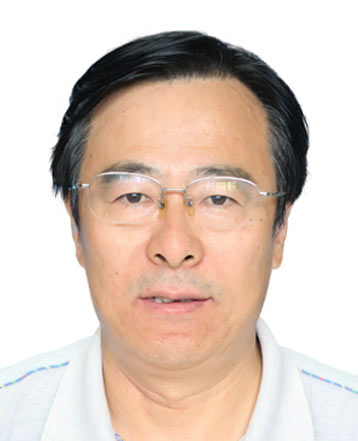 Xuewei Liu (刘学伟)合作论文数School of Geophysics and Information Technology, China University of Geosciences, Beijing14
 Changliang Xia (夏常亮)合作论文数12
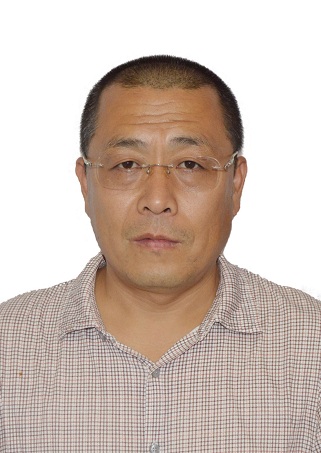 Yun Wang (王赟)合作论文数School of Geophysics and Information Technology, China University of Geosciences, Beijing7Xuelei Chen合作论文数6
 Qingxian Zhao (赵庆献)合作论文数广州海洋地质调查局5Hongfei Qian合作论文数4Zhu Yang合作论文数4
 Zhongliang Wu (吴忠良)合作论文数Institute of Earthquake Forecasting, China Earthquake Administration4Canping Li (李灿苹)合作论文数3Hemin Yuan合作论文数China Univ Geosci Beijing3KaiBen Yu (于凯本)合作论文数3Youwei Han合作论文数2Chang-hui JU (琚长辉)合作论文数2Cheng-zeng YANG (杨城增)合作论文数2Weiwei Wang合作论文数2Yi ZHANG (张壹)合作论文数2XiaoZhu Hao (郝小柱)合作论文数2YongMing Wang (王永明)合作论文数2Luping Sun (孙鲁平)合作论文数School of Geophysics and Information Technology, China University of Geosciences, Beijing2
 Rongyi Qian (钱荣毅)合作论文数School of Geophysics and Information Technology, China University of Geosciences, Beijing2
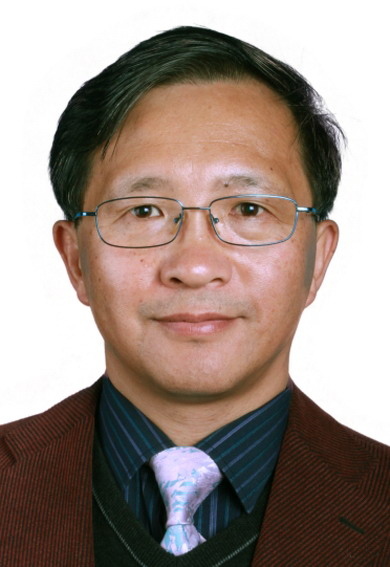 Xing Gao (高星)合作论文数Institute of Vertebrate Paleontology and Paleoanthropology, Chinese Academy of Sciences;University of Chinese Academy of Sciences2Zikun Li合作论文数1Huimin Zhang合作论文数1Chengliang Xie合作论文数1Zhifang Wu合作论文数1Guangzhou Shao合作论文数1Dian-wen LIANG (梁殿文)合作论文数1Li Kaifu (李开富)合作论文数1Zhang Hong-jun合作论文数1
 Xiaobo Liu合作论文数1GAO Zhen (高振)合作论文数1Bin Liu合作论文数1Yong-Qiang FENG (冯永强)合作论文数1Ling Ding合作论文数1Li Yang (杨丽)合作论文数1Yun-xia Xu合作论文数1Dong-min JIN (金东民)合作论文数1Qi Bin (戚宾)合作论文数1LI Shuilong (李水龙)合作论文数1Dongyang PAN (潘冬阳)合作论文数1Changchun Liu合作论文数1Mili XIA (夏密丽)合作论文数1Xueliang Li合作论文数1Ru ZHANG (张儒)合作论文数1
 Yi Zhang (张壹)合作论文数School of Earth Sciences, Zhejiang University1
 Amir Haroon合作论文数GEOMAR, Helmholtz Ctr Ocean Res, Kiel, Germany1LI Min-feng (李敏锋)合作论文数1Hao HU (胡浩)合作论文数1Shuai DENG (邓帅)合作论文数1




