Fibrotic scar is one of the main impediments to axon regeneration following spinal cord injury (SCI). In this study, we found that CD44 was upregulated during the formation of fibrotic scar, and blocking CD44 by IM7 caused downregulation of fibrosis -related extracellular matrix proteins at both 2 and 12 weeks postspinal cord injury. More Biotinylated dextran amine (BDA)-traced corticospinal tract axons crossed the scar area and extended into the distal region after IM7 administration. A recovery of motor and sensory function was observed based on Basso Mouse Scale (BMS) scores and tail -flick test. In vitro experiments revealed that inhibiting CD44 and JAK2/STAT3 signaling pathway decreased the proliferation, differentiation, and migration of fibroblasts induced by the inflammatory supernatant. Collectively, these findings highlight the critical role of CD44 and its downstream JAK2/STAT3 signaling pathway in fibrotic scar formation, suggesting a potential therapeutic target for SCI.
BACKGROUND:Maintaining the repair phenotype of denervated Schwann cells in the injured distal nerve is crucial for promoting peripheral nerve regeneration. However, when chronically denervated, the capacity of Schwann cells to support repair and regeneration deteriorates, leading to peripheral nerve regeneration and poor functional recovery. Herein, we investigated whether neurotrophin-3 (NT-3) could sustain the reparative phenotype of Schwann cells and promote peripheral nerve regeneration after chronic denervation and aimed to uncover its potential molecular mechanisms.METHODS:Western blot was employed to investigate the relationship between the expression of c-Jun and the reparative phenotype of Schwann cells. The inducible expression of c-Jun by NT-3 was examined both in vitro and in vivo with western blot and immunofluorescence staining. A chronic denervation model was established to study the role of NT-3 in peripheral nerve regeneration. The number of regenerated distal axons, myelination of regenerated axons, reinnervation of neuromuscular junctions, and muscle fiber diameters of target muscles were used to evaluate peripheral nerve regeneration by immunofluorescence staining, transmission electron microscopy (TEM), and hematoxylin and eosin (H&E) staining. Adeno-associated virus (AAV) 2/9 carrying shRNA, small molecule inhibitors, and siRNA were employed to investigate whether NT-3 could signal through the TrkC/ERK pathway to maintain c-Jun expression and promote peripheral nerve regeneration after chronic denervation.RESULTS:After peripheral nerve injury, c-Jun expression progressively increased until week 5 and then began to decrease in the distal nerve following denervation. NT-3 upregulated the expression of c-Jun in denervated Schwann cells, both in vitro and in vivo. NT-3 promoted peripheral nerve regeneration after chronic denervation, mainly by upregulating or maintaining a high level of c-Jun rather than NT-3 itself. The TrkC receptor was consistently presented on denervated Schwann cells and served as NT-3 receptors following chronic denervation. NT-3 mainly upregulated c-Jun through the TrkC/ERK pathway.CONCLUSION:NT-3 promotes peripheral nerve regeneration by maintaining the repair phenotype of Schwann cells after chronic denervation via the TrkC/ERK/c-Jun pathway. It provides a potential target for the clinical treatment of peripheral nerve injury after chronic denervation.
通过查阅大量中外文献,结合临床工作,从国内心理社会肿瘤学专业人员的视角,描述国内外心理社会肿瘤学的临床实践,包括痛苦筛查、癌症症状的精神科管理、心理干预的实施以及心理社会肿瘤学多学科团队建设的最新进展,指出国内心理社会肿瘤学在上述临床实践中存在的挑战和不足,并从探索适合我国国情的痛苦筛查管理的模式与流程,心理干预方法本土化和在国内建立心理社会肿瘤学多学科团队等方面对学科进一步规范发展以及如何更好地融入肿瘤临床实践提出了新的思考.
We have used a chromosome fragmentation strategy based on systematic genomic insertions of the rare cutting yeast I-SceI endonuclease to assess structure and sequence organization of homologous chromosomes between evolutionary divergent pathogenic and non-pathogenic Leishmania species. This method was combined to physical mapping and hybridization studies using a number of specific chromosomal markers as probes. Our studies have concentrated on two different chromosomes of Leishmania major (L. major), L. donovani and L. infantum and of the non-pathogenic species L. tarentolae. Specific chromosome fragmentation events at the level of multiple I-SceI genomic integrations indicated that very similar distances separated internal genomic sequences between homologous chromosomes and that distances from chromosome ends were more variable. The order and orientation of genes along the homologous chromosomes were also conserved between species. With only few exceptions, genome organization between pathogenic and non-pathogenic Leishmania species was found to be highly conserved. Genomic comparison of pathogenic and non-pathogenic species may be useful for depicting regions involved in species-specific related pathologies.
 Yening Zhang合作论文数3
 Lili Tang (唐丽丽)合作论文数Beijing Cancer Hospital3Ying Pang合作论文数3Shuangzhi He合作论文数2Xiong Xu合作论文数2Weizhen Li合作论文数2
 Shusen Cui (崔树森)合作论文数吉林大学中日联谊医院手外科2Rangjuan Cao (曹让娟)合作论文数2
 Kurt Fritzsche合作论文数2Anne-Kristin Toussaint合作论文数1Tingting Tong合作论文数1Li Zhongyuan合作论文数1Wenxuan Chen合作论文数1Tuo Yang合作论文数1Guanyong GAO (高冠勇)合作论文数1Hong-wei YUE (岳红卫)合作论文数1Linhong HUANG (黄林宏)合作论文数1
 Jinjiang Li合作论文数1Shuang Du合作论文数1Xinlu Zhang合作论文数1SHAO Xiang-jun (邵香君)合作论文数1LinChong Kang (康林冲)合作论文数1ZhuYing Wu (武竹英)合作论文数1
 Daobing Wang (汪道兵)合作论文数Beijing Institute of Petrochemical Engineering1JinLin Mao (毛金林)合作论文数1
 Yan Wang (王燕)合作论文数School of Social Development and Public Policy, Fudan University1
 Ning Zhang (张宁)合作论文数School of Chemistry and Chemical Engineering, Nanchang University;Institute for Advanced Study, Nanchang University1
 Chao Chen (陈超)合作论文数School of Chemistry and Chemical Engineering, Nanchang University1
 Yilu Wang合作论文数1Goelz Tanja合作论文数1Zhang Weizhong合作论文数1
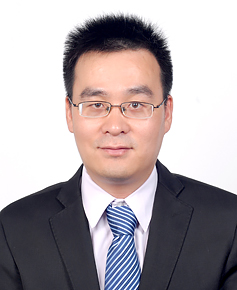 Qiding Zhong (钟其顶)合作论文数China National Research Institute of Food & Fermentation Industries1Binglan Wang合作论文数1Li Yue-Ying合作论文数1Yi He合作论文数1
 Aimin Wu (吴爱民)合作论文数School of Materials Science and Engineering, Dalian University of Technology1Aixiang Wei合作论文数1
 Zimeng Li (李梓萌)合作论文数Beijing Cancer Hospital1
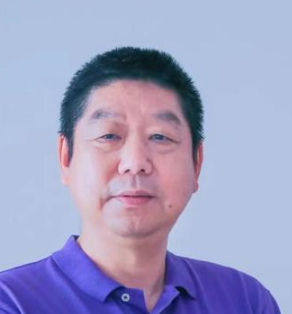 Bolin Zhang (张柏林)合作论文数College of Biological Sciences and Technology, Beijing Forestry University1
 Xiaoli Liu (刘晓莉)合作论文数College of P.E and Sports, Beijing Normal University1
 Hangjun Chen (陈杭君)合作论文数Zhejiang Academy of Agricultural Sciences;South China Agricultural University1
 Gang Li (李刚)合作论文数Medical School of Tianjin University;State Key Laboratory of Precision Measurement Technology and Instrument, School of Precision Instruments and Opto-Electronics Engineering, Tianjin University1
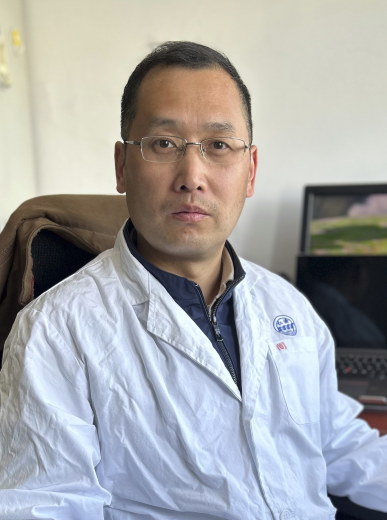 Yongjun Zhou (周永军)合作论文数Renji Hospital, School of Medicine, Shanghai Jiao Tong University1
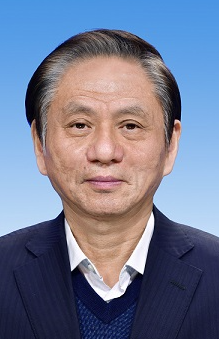 Xiaosong Gu (顾晓松)合作论文数Nantong University;School of Medicine, Tianjin University;School of Medicine, Nanjing University of Chinese Medicine1
 Rainer Leonhart合作论文数1
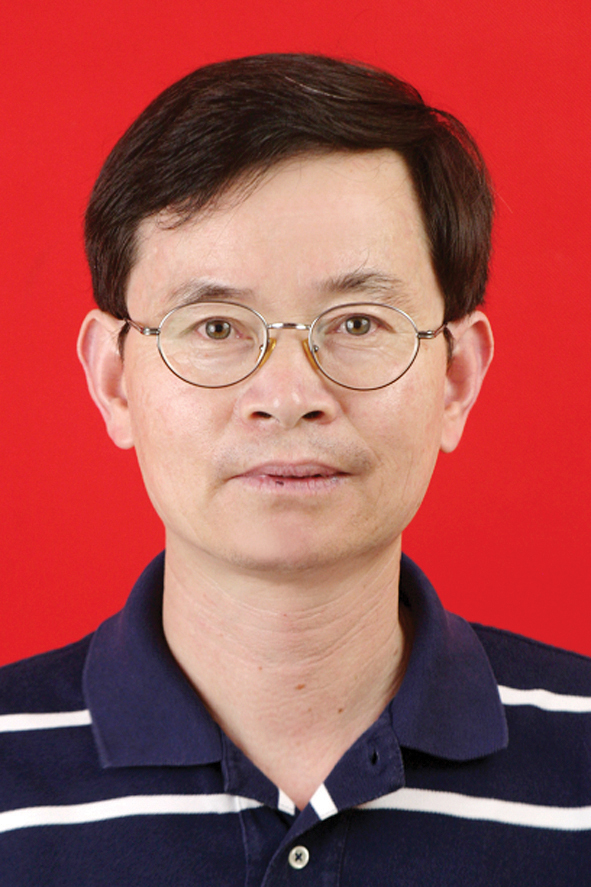 Yonghua Zheng (郑永华)合作论文数College of Food Science And Technology, Nanjing Agricultural University1
 Alexander Wuensch合作论文数1




