Flotation complexation extraction can effectively extract and separate lithium isotopes. The effects of nitrogen flow rate, bubble size, gas holdup, reaction flow pattern, aeration time, and temperature on the separation process were studied. In addition, the complex relationship and separation mechanism of lithium with 10-hydroxyquinoline were discussed. Results show that nitrogen flow rate and bubble size significantly affected the flotation complexation extraction process. With an appropriate flow rate, we obtained a homogeneous regime pattern containing small and evenly distributed bubbles to achieve better separation efficiency and ensure a smooth extraction process. According to the slope method, lithium and 10-hydroxybenzoquinoline were complexed and extracted at a ratio of 1: 2. Compared with the traditional oscillating extraction, the bubble mass transfer mode in the flotation complexation extraction strengthened the complex extraction process and achieved higher extraction rate and separation efficiency.
Effective separation of lithium isotopes (6Li and 7Li) is a significant challenge in developing clean nuclear energy. In this work, 7Li was separated and enriched by 10-hydroxybenzoquinoline using flotation complexation extraction under alkaline conditions. In addition, the thermodynamic process of lithium isotope separation was discussed and the separation mechanism was explained by theoretical calculation according to density functional theory. Finally, the conditions of the Li+ stripping process were investigated. The results showed that the single-stage separation factor was 1.023 ± 0.001, and the abundance of 7Li reached 92.72%. The stripping ratio of lithium reached 98% by stripping five times using pure water.
Li-6 and Li-7, with excellent nuclear properties, are important raw materials in the development of the nuclear industry. In the current work, a mercury-free extraction and lithium isotopic separation system with benzo-15-crown-5 (B15C5) ether as the extractant, ionic liquid as the co-extractant, and anisole as the diluent was constructed. In addition, a novel method for extracting lithium ions with B15C5 and multistage cross-flow separation of lithium isotopes by the organic liquid film were introduced. After 20 stages of cross-flow extraction, the abundance of Li-6 increased from 7.498 to 9.654% and the abundance of Li-7 increased from 92.502 to 93.561%. It was demonstrated that the B15C5 system not only can enrich Li-6 but also can serve to enrich Li-7. The reason for the enrichment of lithium isotopes by this method was explored. Moreover, this study predicted the number of theoretical cross-flow stages of the abundance of Li-6 and Li-7 which can be used as a nuclear material.
The solvent extraction separation of lithium isotopes has become of growing interest due to the need for Li-6 and Li-7 isotopes in the nuclear industry. A one-step synthesis of room temperature ionic liquid with low viscosity 1-Ethyl-3-methylimidazolium bis(trifluoromethylsulfonyl)imide GEMIm][NTf2]) (with reaction yields of 87.47%) was used by the ultrasonic method. The addition of ionic liquid [EMIm] [NTf2] in the system significantly improved the extraction efficiency and separation factor compared to the traditional organic solvent anisole for extraction separation of lithium isotopes. The distribution ratio increased from 0.00145 (with the single stage separation factor of 1.024 +/- 0.001) to 0.134 (with the single stage separation factor of 1.034 +/- 0.001). Furthermore, a multi-stage extraction process was intended to enhance lithium isotope separation performance. Each stage of stripping can be considered as an extraction separation equilibrium process, in which the strip liquor from the load organic phase is used for separation in the next stage as the "original aqueous solution". The abundance of( 6)Li(+) gradually improved with an increase in the extraction stages. The relative abundance of Li-6(+) increased by 1.492% at the 20-stage extraction separation (from 7.53% to 9.022%). This new and simple approach (stripping cross-flow multistage method (SCFM)) was to achieve large enrichment of lighter isotopes of lithium (Li-6(+) ) by combined extraction and stripping process. In summary, the present study offers the possibility for the enrichment of Li-6(+) during lithium isotope extraction separation. (C) 2021 Elsevier B.V. All rights reserved.
Current research found that the extraction process of lithium ions by crown ether-ionic liquid system was a cation exchange process inwhich lithiumions are dehydrated. Obtained and predicted the structure of the composite product of crown ether and organolithium, and based on the weighing method, the formation of 1:1 complex [Li(B15C5)](+) was determined. and it was found that the extraction of lithium ion by the diluent was in accordance with the cavity effect of anion. The coextraction of diluent and ionic liquid, the percentage of competition of common metal cations in aqueous solution to the extraction of lithium ions by Benzo-15-crown 5-Ether (B15C5) were also discussed. Finally, the effect of different diluents on lithium isotope separation and the thermodynamics of lithium isotope exchange in the B15C5-[HMIm][NTf2]-anisole system were studied. The separation factor of lithium isotope was the largest when chloroform was used as the diluent (alpha = 1.034), and the exchange of lithium isotopes was a spontaneous reaction at low temperature (Delta H < 0, Delta S < 0). (C) 2020 Elsevier B.V. All rights reserved.
In this paper, a novel method, multi-stage cross-flow separation of lithium isotopes by organic liquid film method was investigated. A green organic extraction phase was formed with ionic liquid-B15C5-anisole, and the bis(trifluoromethanesulfonyl)imide solution was used as a multi-stage cross-flow balance liquid. The abundance of 6Li in the 20-stage cross-flow extraction increased from 7.51% to 8.17%. The effect of the concentration of bis(trifluoromethanesulfonyl)imide on the stripping of lithium ions in the organic extraction phase and the loss of lithium ions during the multi-stage cross-flow process was studied. Also, the number of theoretical cross-flow stages of the abundance of 6Li (30%) that can be used as nuclear fuel was predicted.
The organic liquid film extraction system, a novel extraction system, was investigated for the extraction and separation of lithium isotopes using ionic liquid as the co-extractant and Dibenzo-15-crown 5-Ether (DB15C5) as the extractant. Multiple subjects were studied during the investigation, including the effects of extraction time; gas flow rate; temperature; counter anions of lithium salt; the length of the cationic carbon chain of ionic liquid on extraction, and separation of lithium isotopes. The maximum separation factor alpha was 1.037 +/- 0.002 and the abundance of Li-6 increased from 7.61 % to 7.86 %. Based on the slope analysis method, the formation of 1:1 complex [Li (DB15C5)](+) in the extraction phase was determined. The exchange of lithium isotope is spontaneous reaction at low temperatures (Delta H<0, Delta S<0). Also, the back-extraction times of lithium ions from extraction phase to aqueous phase were studied.
Li-6 and Li-7 play important roles in the nuclear industry. In this study, the recovery of lithium isotopes in the loaded phase after extraction was compared for the first time between the stripping and wet digestion method. The results showed non-significant differences in the data obtained after processing in the two methods. The recovery of lithium isotopes by wet digestion is simple and complete. But it destroys the organic phase and requires heating at high temperatures, making it suitable for handling small amounts of samples. The stripping method is recommended for sample processing because it involves lesser chemical reagents and related hazards without damaging the sample.
In this works,the extraction kinetics of lithium from high concentration aqueous solutions using 4'-acetylbenzo-15-crown-5 and 1-butyl-3-methylimidazolium bis[(trifluoromethyl) sulfonyl]imide with constant interfacial area cell are reported.The effects of stirring speed,equilibration time,temperature,interfacial area and the mass transfer resistance zone are studied.The results indicate that the thickness of interface film does not change from 1 600 rpm to 2 000 rpm,the extraction equilibrium time of lithium ions is 40 minutes,the mass-transfer resistance of the extraction process is mainly from organic phase and this extraction process is a mixing-controlled kinetics process that occurs at interfacial area.The extraction kinetic equation of vLi,0 =10-3.843±0.001 ·[Li+]0.9071 ·[[BMIm]+]0.8328 ·[AcB15C5]0.s555 is obtained by researching the concentration of lithium ions,crown ether,ionic liquids.The extraction mechanism of lithium is deduced by determining the mass-transfer rate step of forming the final complex of lithium ions at the interface,which is consistent with the experimental results.
选用溶剂挥发法,以氯化胆碱和氯化锌为原料,成功合成了一种新型的Zn(Ⅱ)单晶[Ch][ZnCl3],并采用单晶X射线衍射、红外光谱、X-粉末衍射、元素分析等对单晶结构进行表征.结果表明:该晶体属于单斜晶系,空间点群为P 21/c,晶胞参数a=7.322(4)?,b=9.423(5)?,c=16.688(8)?,V=1145.8(10)?3,Z=4,C5H14Cl3NOZn,Mr=275.89,Dc=1.599 g/cm3,F(000)=560,m=2.797 mm-1,R=0.0524和wR=0.1434.通过热分析,热分解温度为323.5℃,具有较好的热稳定性,熔点为43℃,相变焓为94.1 J·cm-3.
A solvent extraction system was selected to separate lithium isotopes by using 1-Ethyl-3-methyl-imidazolium-bis (trifluoromethysulfonyl)-imide ([EMIm][NTf2]) as extraction solvent, Dibenzo-15-crown-5 (DB15C5) as extracting agent and a traditional organic solvent as diluent. The effect of kinds of diluent, the content of ionic liquid in organic solvent, extraction time, extractant concentration and counter anions of lithium salt on the separation of lithium isotopes was studied. The single-stage separation factor a can reach up to 1.031 +/- 0.001 and the abundance of the light isotope Li-6 in organic phase can reach 7.76%. The exchange mechanism between the lithium salt and the ionic liquid is cation exchange. Lithium ions and ionic liquid cations are 1:1 exchange in the extraction system. Multistage experiment for separation of lithium isotope was also developed for enrichment of Li-6 as much as possible. The abundance of Li-6 in organic phase can reach 7.80% after 5 stages extraction experiment. Lithium of organic phase was stripped into the aqueous phase by 1 mol L-1 HCl solution.
以4-硝基苯并-15-冠醚-5(4-NO2-B15C5)做萃取剂,苯甲醚和1-丁基-3-甲基咪唑双(三氟甲烷磺酰)亚胺盐([C4 mim][NTf2])作稀释剂和协萃剂,以1 mol/L LiCl溶液作萃取溶剂,构建高效的冠醚—离子液体/锂盐溶液的溶剂萃取体系.重点考察了有机相组成、冠醚浓度和锂盐阴离子等对锂同位素分离的影响.结果表明,4-硝基苯并-15-冠醚-5具有良好的锂同位素分离效果,在萃取CF3 COOLi时最大单级分离系数(α)可达1.043±0.01.
In the present study, amidoxime hybrid mesoporous silicas (denoted KIT-6-AO samples) were synthesized via co-condensation of tetraethoxysilane (TEOS) with 2-cyanoethyltriethoxysilane (CPTES) and then reduced in a hydroxylamine hydrochloride solution. The adsorbents were characterized using SAXRD, SEM, TEM, N-2 adsorption-desorption isotherms, FT-IR, elemental analysis, and Zeta potential test. Batch experiments were conducted to investigate the adsorption of U(VI) in KIT-6-AO samples. Experimental data indicates that the amidoxime-functionalized KIT-6-AO-20% shows the best adsorption performance, and the maximum monolayer U(VI) sorption capacity was calculated to be 323.94 mg.g(-1) at 298 K and pH = 5.0 with the Langmuir model. Adsorption equilibrium was reached within 45 min in KIT-6-AO-20% sample. The sorption behavior of U(VI) on KIT-6 and KIT-6-AO-20% were strongly dependent on pH and independent of ionic strength. In addition, sorption kinetic and thermodynamic results suggest that the sorption reaction was a spontaneous, endothermic, and chemical process. Furthermore, the U(VI) adsorption mechanism on amidoxime groups was also investigated using XPS and FT-IR analysis. We found that the entanglement of electrons of the N atom in -C=NOH and/or -C-NH2 and the O atoms in C=NOH coordinated with U(VI) to form strong complexes. Overall, the synthesized KIT-6-AO samples could be used as effective materials for removal U(VI) from aqueous solutions. (C) 2019 Elsevier B.V. All rights reserved.
The low temperature molten salt method was used to extract potassium from K-feldspar ore, and some related factors including mass ratio between NaNO3, NaOH, H2O and K-feldspar ore, particle size of K-feldspar ore, reaction temperature and time were investigated, respectively. In addition, the optimum condition for this method was determined by a series of condition experiments. What was more, the K-feldspar ore and the leach residue after reaction based on the above optimum condition were analyzed by XRD, SEM and EDS, separately. The results of which indicated that the mechanism of extraction of potassium for this method was according to the ion exchange reaction between sodium ion and potassium ion, and the extraction ratio of potassium had an obvious improvement than that of traditional methods, which could reach up to 96.25%. Therefore, this method can be a feasible solution to extract potassium from K-feldspar ore for its low energy consumption and high efficiency.
In present study, amidoxime-functionalized MCM-41 microspheres silica materials (denoted as MCM-41-AO) were synthesized and applied to enrich uranium from aqueous mediums. The adsorbents were characterized in detail by SEM, TEM, EDS, FT-IR, elemental analysis and the zero point of change (pHzpc) test. The effects of the pH, ionic strength, contact time, coexisting cations and temperature on the adsorption properties of U(VI) were investigated. The highest sorption capacity of U(VI) on MCM-41-AO was evaluated to be 384.59 mgg(-1) by Langmuir isotherms model at pH=5.00 +/- 0.05 and T=298 +/- 2 K. The adsorption thermodynamics and thermodynamic studies suggest that the U(VI) adsorbed on the amidoxime functionalized microspheres silicas is a chemisorption, spontaneous and endothermic process. In addition, the adsorption mechanism for U(VI) on MCM-41-AO also has been explored by the XPS and FT-IR. The results manifest that the effective adsorption U(VI) is mainly ascribed to the steady formation of surface complexes between uranium ions and the amidoxime ligands.
A green and efficient ionic liquid-anisole extraction system was employed for the separation of lithium isotopes by comparing 4-aminobenzo-15-crown-5 (4-NH2-B15C5), 4-nitrobenzo-15-crown-5 (4-NO2-B15C5) and benzo-15-crown-5 (B15C5) extraction agents. The results of the effects of crown ether substituents, crown ether concentration and lithium salt anion on solvent extraction indicated that the molar ratio of crown ether and lithium ion complex is 2:1 and the order of the extraction efficiency in three extraction agents was 4-NH2-B15C5 > B15C5 > 4-NO2-B15C5. Furthermore, the single-stage separation factor a for Li-6/Li-7 obtained in present work was 1.032 and maximum abundance of Li-6 in organic phase was reached 7.762% in the extraction system of LiI/4-NO2-B15C5-ILs. (C) 2018 Elsevier B.V. All rights reserved.
Room-temperature ionic liquids based on the bis ((trifluoromethyl)sulfonyl)-imide anion with the tributyl phosphate (TBP) system employed to extract lithium ion from salt lake brine with a high Mg/Li ratio. The influences of cation structure, concentration of ionic liquid and phase ratio on extraction efficiency were investigated. Results indicated that N-butyl pyridinium bis((trifluoromethyl)sulfonyl)imide (BD) has high extraction efficiency for lithium; tributylmethylammomium bis((trifluoromethyl)sulfonyl)imide (JA) has lower extraction efficiency for lithium and impurity ions but exhibits better selectivity; when cation exchange mechanism occurs during solvent extraction by using ionic liquids as a synergistic extraction agent, the cation more hydrophobic was, the more difficult for it to enter the solution exchange process.
PbTiO3 and CaTiO3 ceramics are prepared at temperatures above 2000 degrees C by a direct current arc discharge technique under an argon atmosphere, and the microstructure, components and morphology of each material are investigated. Both samples show the formation of a perovskite structure. Moreover, a tetragonal phase is found in the PbTiO3 ceramic material, and a cubical phase is formed in the CaTiO3 ceramic material. In this work, PbTiO3 and CaTiO3 ceramics were rapidly prepared using a simple DC arc discharge technique; we found this technique of ceramic material synthesis was much faster and better than conventional methods. The whole reaction process only takes 30 seconds because of ultrafast kinetics of crystallization.
Lithium isotopes(lithium-6 and lithium-7),as important raw materials required in the development of nuclear energy,play a great role in energy,environment,defense-national security, and other fields. The chemical exchange methods for lithium isotopes separation include amalgam exchange process,solvent extraction,chromatography and membrane method. The separation mechanisms,advantage and disadvantage of various lithium isotopes separation methods,have been systematically analyzed,classified and summarized in this paper. The results indicated that lithium isotope separation is related to the bond effect of complexing agent and lithium ionic in the chemical exchange separation system;and lithium amalgam exchange process will be replaced by other non-mercury separation systems due to environmental concerns. In addition,the lithium isotopes separation methods of using solvent extraction,ion exchange chromatographic and membrane are very promising,which all are relatively effective separation . Based on the summarization of the current research progresses,the future researches on the separation of lithium isotopes are highlighted,such as the design and synthetics of new chelating agent,the combination of different separation process and the separation mechanism in different experiment condition.
A green and efficient liquid–liquid extraction system was developed for the separation of lithium isotopes by using hydrophobic ionic liquids (ILs=[C4,6,8,10mim]+[NTf2]−) as extraction organic phase and benzo-15-crown-5 (B15C5) as complexing agent. The maximum single-stage separation factor α of 6Li/7Li obtained in this study was 1.029±0.001, indicating 6Li was enriched in ionic liquid phase while 7Li was concentrated in the aqueous phase. The lithium ion was extracted into the ionic liquid in the formation of 1:2 complex [Li+(B15C5)2]. The negative data of thermodynamic parameters (∆H0 and ∆G0) suggest that the extraction system was a spontaneous exothermic process. In addition, effective lithium isotopes separation factor and the extraction efficiency of lithium ions can be gained in the condition of lower temperature with softer counter anions in the novel extraction system.
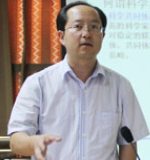 Yongzhong Jia (贾永忠)合作论文数中国科学院青海盐湖研究所55
 Yan Jing (景燕)合作论文数Qinghai Institute of Salt Lakes, Chinese Academy of Sciences;University of Chinese Academy of Sciences55
 Jinhe Sun (孙进贺)合作论文数Qinghai Institute of Salt Lakes, Chinese Academy of Sciences;University of Chinese Academy of Sciences21
 Shaolei Xie (谢绍雷)合作论文数11XingQuan Wang (王兴权)合作论文数11
 Liu Bing合作论文数10Jiang Xiao合作论文数10Quanyou Zhang合作论文数8Chenglong Shi合作论文数7
 Shuangbin Li合作论文数6Zezheng Zhang合作论文数5Xiaohua Wang合作论文数5Duyuan Yue合作论文数5Huaxin Sun合作论文数4Fei Shao合作论文数4MiXiang Qi (祁米香)合作论文数4Xiaojie Yin合作论文数3Jiang XIAO (肖江)合作论文数3王苏合作论文数中国科学院大学中国科学院力学研究所3Jun Ma (马珺)合作论文数3
 Huaiyou Wang (王怀有)合作论文数Qinghai Institute of Salt Lakes, Chinese Academy of Sciences;University of Chinese Academy of Sciences3Zhanqin Wang合作论文数2Qing Luo合作论文数2Wenbo Zhu合作论文数2
 Wu Li (李武)合作论文数中国科学院大学青海盐湖研究所2
 Yong Jia合作论文数2Chenglong Xia (夏承龙)合作论文数2KW Kim合作论文数1Su Yuhui合作论文数1
 Yao Li (李垚)合作论文数University of Chinese Academy of Sciences;Institute of Process Engineering, Chinese Academy of Sciences1Chao Zhang合作论文数1Dai Nguyen合作论文数1zhenhua cui合作论文数1Bingjun Xie (谢炳俊)合作论文数1
 Fanglong Qiu (邱方龙)合作论文数1Xingquan Wang合作论文数1Lv JI (纪律)合作论文数1GaoQi Chen (陈高琪)合作论文数1YanLi Shi (史衍丽)合作论文数1XiaoHua Wang (王小华)合作论文数1
 Su Wang (王苏)合作论文数Institute of Mechanics, Chinese Academy of Sciences1
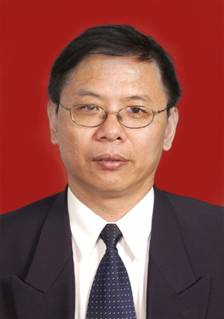 Jianji Wang (王键吉)合作论文数School of Chemistry and Chemical Engineering, Henan Normal University1
 Jun Wang合作论文数Chinese Academy of Sciences, Chinese Academy of Sciences1Feng Gao合作论文数1




