OBJECTIVE:Lupus nephritis is a severe and common complication of systemic lupus erythematosus (SLE). The pathogenesis of lupus nephritis is characterized by B-cell activation and autoantibody formation. Rituximab and belimumab, as well as telitacicept, target B cells through different mechanisms, potentially exerting a synergistic effect in the treatment of lupus nephritis. This study aims to investigate the efficacy and safety of treatment with rituximab followed by belimumab or telitacicept in the management of refractory lupus nephritis. METHODS:We conducted a single-center, open-label, retrospective study, including 25 patients with refractory lupus nephritis. All patients received combination therapy with rituximab in individualized dosages to achieve peripheral B-cell depletion, and then followed by belimumab or telitacicept. The follow-up period was at least 12 months, and the primary end point was renal remission rate at the last follow-up. RESULTS:During a median follow-up of 19 (13, 29) months, 20 of 25 (80%) patients achieved objective remission (OR), including 19 (76%) patients achieved complete renal response (CRR). After rituximab (712 ± 416mg in average), 18 patients received belimumab and seven patients received telitacicept. In the rituximab plus telitacicept group, all patients achieved CRR; while in the rituximab plus belimumab group, 12 (66.7%) patients achieved CRR and 13 (72.2%) patients achieved OR. The mean SLEDAI-2K score decreased from 15 ± 6 to 6 ± 6, representing an average reduction of 60%. At the last follow-up, 18/25 (72%) had prednisone ≤ 5 mg/d or even discontinued prednisone use. Adverse effects were mainly immunoglobulin deficiency, respiratory tract infection, urinary tract infections, and rash. No death occurred. CONCLUSIONS:Rituximab followed by belimumab or telitacicept may be effective in inducing remission in refractory lupus nephritis, with tolerable adverse effects.
目的:回顾性分析继发性甲状旁腺功能亢进(SHPT)的透析患者行甲状旁腺全切+前臂自体移植(TPTX+AT)后早期低钙血症的患病率及潜在危险因素。方法:选取2015年11月至2018年11月在浙江大学医学院附属第一医院接受TPTX+AT治疗的SHPT患者254例。收集患者术前和术后的血清钙、磷、甲状旁腺激素(PTH)、碱性磷酸酶(ALP)等指标,采用Logistic回归分析评估术后低钙血症危险因素。结果:254例患者中107例(42.13%)发生低钙血症。根据术后1周是否发生低钙血症将患者分为两组,低钙血症组血液透析患者比例高达82%,而非低钙血症组仅65%(P<0.01)。多因素Logistic回归分析显示,血液透析方式(OR=2.155,95%CI 1.164~3.991,P=0.015),PTH≥1 656 ng/L(OR=1.771,95%CI 1.021~3.072,P=0.042),ALP≥242 U/L (OR=1.739,95%CI 1.002~3.018,P=0.049)是SHPT患者TPTX+AT术后1周发生低钙血症的独立危险因素。结论:低钙血症是PTX术后常见的并发症。术前高ALP、高PTH及接受维持性血液透析患者其术后更易发生低钙血症。
Objective:To investigate the graft survival rate after total parathyroidectomy (TPTX) plus forearm muscle auto-transplantation in patients with secondary hyperparathyroidism (SHPT) and evaluate the effect of graft survival status on calcium and phosphorus metabolism.Methods:It was a retrospective cohort study. The end-stage renal disease patients who were diagnosed with SHPT and underwent TPTX plus forearm muscle auto-transplantation from November 2015 to December 2018 at the First Affiliated Hospital of Zhejiang University School of Medicine were enrolled. The clinical data including serum calcium, phosphorus, intact parathyroid hormone and alkaline phosphatase preoperative and postoperative 1 week, 1 month and 6 months, and cumulative requirements of calcium carbonate and calcitriol in postoperative 1 month and 6 months were collected. The graft survival rate was summarized and the differences of serum calcium, phosphorus, and supplementation dosage of calcium and calcitriol after surgery between the graft survival group and the graft non-survival group were compared.Results:A total of 191 patients were included in the study, with 95 males (49.7%), and 172 patients of age <60 years old. There were 154 grafts surviving with a graft survival rate of 80.6%. There were no significant differences in the levels of serum calcium, phosphorus, alkaline phosphatase at 1 week, 1 month and 6 months after surgery, and cumulative dosage of calcium carbonate at 1 month and 6 months after surgery between the two groups (all P>0.05). The dose of calcitriol in the graft non-survival group was significantly higher than that in the graft survival group within 1 month after surgery [41.50 (30.00, 45.00) μg vs. 32.75 (25.50, 40.50) μg, Z=-2.307, P=0.021]. However, there was no significant difference in cumulative calcitriol supplementation between the two groups within 6 months after surgery ( P>0.05). Conclusions:The graft survival rate after TPTX plus forearm muscle auto-transplantation is high in SHPT patients. Within 6 months after surgery, there is no significant difference in serum calcium, phosphorus and cumulative supplemental doses of calcium and calcitriol between the graft survival and non-survival groups.
Objective:To investigate the emergency treatment and clinical effect when the guidewire stuck in the right atrium during central vein catheter placement for hemodialysis.Methods:Five cases with guidewire stuck in the right atrium during central vein catheter placement for hemodialysis from January 2011 to July 2018 admitted into the First Affiliated Hospital of Zhejiang University were retrospectively analyzed. In two cases, the guidewires were found completely stuck when the insert depth was about 20 cm. The guidewires were not able to move forward nor backward. In the other three cases, the guidewires could be moved forward but not backward with the insert depth at about 18 cm. All patients received emergent computed tomography angiography (CTA) or digital subtraction angiography (DSA) imaging. Images showed that the guidewires were stuck in the right atrium near the ventricular valve. The guidewire core drawing method, the multipurpose angiography(MPA) catheter capturing method and the manual guidewire adjusting method were used for emergent treatment.Results:One patient with completely stuck guidewire was successfully treated with guidewire core drawing method and the temporary central vein catheter catheterization through the internal jugular vein was performed under DSA. In a completely stuck case and a retrogradely stuck case, the J-shaped ends of the warped guidewires were captured into the MPA catheter, and the guidewires were then withdrawn from right atriums along with the contrast catheter. In the other 2 retrogradely stuck cases, under DSA, the guidewires were repeatedly pushed, the direction of J-shaped ends was manually adjusted, and then the guidewires were repeatedly pushed and pulled until catheters can be pulled out of the right atriums. The later 4 cases had permanent central vein catheter placement with the same guidewire after the stuck guidewires were withdrawn from the right atrium and readjusted.Conclusions:All three methods can successfully solve the emergent situation of the stuck guidewire in the right atrium. For patients with completely stuck guidewires, the MPA catheter capturing method can be simpler, safer, and more effective.
目的 探讨Notch信号配体DLL4在糖尿病肾病中(diabetic nephropathy,DN)的作用及其相关作用机制.方法 24只雄性CD-1小鼠随机分为对照组(Control组)、糖尿病肾病组(DN组)、过表达DLL4组(DN+DLL4组)及空载体组(DN+V组).DN组、DN+DLL4组及DN+V组小鼠通过腹腔注射链脲佐菌素(STZ)建立糖尿病肾病模型,并对DN+DLL4组与DN+V组小鼠经尾静脉注射pcDNA3.1 DLL4真核表达载体与pcDNA3.1空载体.于造模后12周收集相关标本.应用RT-PCR及Western blot检测各组小鼠中DLL4的mRNA及蛋白表达;应用免疫组化法检测DLL4的组织定位;利用化学分析仪器检测各组小鼠的血糖及24h尿蛋白水平;应用HE及PAS染色检测各组小鼠肾组织结构变化;透射电镜观察肾组织超微结构改变;利用Western blot 检测各组小鼠肾组织中M1巨噬细胞型标记物iNOS与CD16/32及M2型巨噬细胞CD206的蛋白表达;细胞流式技术检测各组小鼠肾组织单核细胞中M1与M2型巨噬细胞所占比例.结果 与Control组相比,糖尿病肾病小鼠中DLL4的mRNA及蛋白表达显著增加,而DN+DLL4组小鼠的DLL4表达水平显著高于DN组与DN+V组;免疫组化结果显示DLL4主要表达于肾组织的内皮细胞中;过表达DLL4能够显著促进糖尿病肾病小鼠的24h尿蛋白含量,但不影响小鼠的血糖浓度;过表达DLL4能够明显加剧糖尿病肾病小鼠的肾组织损伤,引起足细胞发生融合或断裂,加重系膜基质的沉积;过表达DLL4能够诱导巨噬细胞的M1型分化,增加M1标记性分子iNOS与CD16/32的蛋白表达.结论 Notch信号通路配体DLL4通过促进巨噬细胞的M1型分化加剧肾组织结构及功能的损害,最终加重糖尿病肾病的病理损伤.
Objective:To explore the efficacy of parathyroidectomy(PTX)for persistent hyperparathyroidism(PHPT)after renal transplantation and examine the effect of PTX on renal allograft function.Methods:For this single-center retrospective study, 31 patients undergoing PTX for PHPT after renal transplantation from May 2010 to October 2018. The changes of serum calcium, serum phosphorus, alkaline phosphatase, parathyroid hormone(PTH), serum creatinine, and estimated glomerular filtration rate(eGFR)during peri-operative periods(1w, 1/3/6/12m)were compared. The operative successful rate(12 m)was calculated and postoperative complications were recorded. The definition of a successful operation was a normalization of blood calcium after PTX and/or a reduction of >50% in PTH as compared with pre-operation.Results:The serum calcium pre-PTX was(2.78±0.18)mmol/L and it decreased markedly to(2.19±0.34)mmol/L at 1 week post-operation( P<0.01). The serum phosphorus pre-PTX was(0.76±0.16)mmol/L and it dropped significantly to(0.97±0.26)mmol/L at 1 week post-operation( P<0.01). The pre-PTX level of PTH was(276.00±200.60)ng/L and it decreased significantly to(46.62±104.36)ng/L at 1 week post-operation( P<0.01). The pre-PTX level of alkaline phosphatase was(261.59±236.95)U/L and it declined significantly to(154.90±117.37)U/L at 3 months post-operation( P<0.01). No significant difference existed in postoperative serum creatinine or eGFR levels compared with baseline values. The operative successful rate was 90.3% at 12 months post-operation. The incidence rates of postoperative transient hypocalcemia, persistent hypoparathyroidism and hoarseness were 35.5%, 3.2% and 3.2% respectively. There was no persistent hypocalcemia, incision hemorrhage, incision infection or surgery-related death. Conclusions:PTX may quickly and effectively alleviate high calcium, low phosphorus, high PTH and high alkaline phosphatase after renal transplantation. Both effective and safe for PHPT after renal transplantation, PTX has no effect on renal allograft function.
Objective To investigate the application of percutaneous transluminal balloon dilatation (PTA) in catheter replacement within patients with catheter-related central vein disease (CVD). Methods Thirteen cases of CVD patients from Jan 2015 to Mar 2018 admitted into the First Affiliated Hospital of Zhejiang University were retrospectively analyzed. All of them underwent digital subtraction angiography (DSA) to clarify problem origin. Suitable balloons were chosen to dilate the original catheters or the occlusive veins, and then the original catheters were replaced. PTA was used to help catheter replacement and all patients were followed up for 6 months. Results Four of the 13 patients were found stuck when replacing catheters. All of them successfully had catheters removed with PTA (Hong's techniques). All patients had successfully catheter replacement with blood flow volume>250 ml/min. Among 4 patients with edema, 3 patients showed better within 6 months. Only 3 patients needed warfarin to keep blood flow volume>250 ml/min within 6 months. Conclusions PTA shows advantages of lesser trauma, better tolerance and higher success rate in patients with catheter-related CVD. It can also relieve symptoms resulting from occlusive central vein.
Conducting poly(3,4-ethylenedioxy-thiophene) (PEDOT) thin films were prepared onto ITO glass by electrodepositing from aqueous electrolyte. Factors, e.g. deposition charge and deposition potential, affecting the electrochemical activity of conducting films towards the electrochemical detection of morphine, were evaluated. The conducting films prepared at the optimal preparation parameters, i.e. deposition charges of 20~40 mC (at 0.8 cm2 ITO surface) and deposition potential of 1.2 V (Ag/AgCl), were found to possess the highest electrochemical activity. PEDOT-modified electrode showed a good linear relationship between the current response and morphine concentration in the testing solution from 0.05 to 6 mmol·L-1, with a correlation coefficient of 0.995. A very low detection limit, 0.05 mmol·L-1, was obtained.
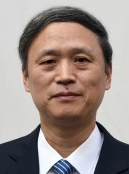 Jianghua Chen (陈江华)合作论文数Kidney Disease Center, The First Affiliated Hospital, Zhejiang University School of Medicine6
 YongChun He (何永春)合作论文数3
 Ping Zhang (张平)合作论文数School of Artificial Intelligence, Hebei University of Technology3Hua Jiang (蒋华)合作论文数2Yuxin Lin合作论文数1Kaixiang Sheng合作论文数1CHEN Siyu (陈思瑜)合作论文数1Yaomin Wang合作论文数1
 Yupeng Hong (洪誉鹏)合作论文数Zhejiang Prov Peoples Hosp, Hangzhou Med Coll1Pingping Ren合作论文数1Wenqing Xie合作论文数1Zili ZHENG (郑自力)合作论文数1Qiu-yue LIU (柳秋月)合作论文数1Hulin LU (陆虎林)合作论文数1Kezhong Tang合作论文数1WANG Yanqiao (王艳桥)合作论文数1Ying Xu合作论文数1Nan Shi合作论文数1Hao YANG (杨浩)合作论文数1
 Chen Liangliang (陈亮亮)合作论文数1HongFeng Huang (黄洪锋)合作论文数1Jun Tian (田君)合作论文数1
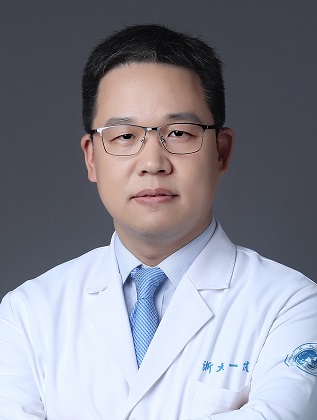 Fei Han (韩飞)合作论文数The First Affiliated Hospital, Zhejiang University School of Medicine1
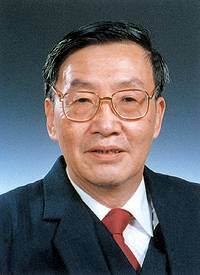 Chunan Cao (曹楚南)合作论文数Department of Chemistry, Zhejiang University1
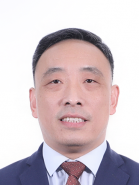 Jiming Hu (胡吉明)合作论文数Department of Chemistry, Zhejiang University1
 Jianqing Zhang (张鉴清)合作论文数Department of Chemistry, Zhejiang University1Shangzhi Ding (丁尚志)合作论文数1




