采用X射线荧光光谱法测定高性能陶瓷中的硅元素含量,系统研究了熔剂、稀释比、脱模剂、熔融温度与时间对测定结果的影响,并分析了产生这些影响的机理.结果表明,当无水四硼酸锂、碳酸锂、样品三者质量比(m(无水四硼酸锂):m(碳酸锂):m(样品))=8.0:1.5:0.2时,在1050℃下先预熔5 min、再摇摆熔融10 min,可以获得高质量的熔片.硅的质量浓度在55%~70%时,相关系数为0.9997,方法检出限为0.81%.硅元素的加标质量为0.02 g时,加标回收率为98.5%~99.0%.此方法已应用到日常陶瓷样品的检测.
In this paper,X-ray photoelectron spectroscopy,X-ray diffraction,scanning electron microscopy and Raman spectroscopy were employed to study the surface physical and chemical properties of silicon carbide fi-bers with low oxygen and high carbon.Results show that fiber surface is smooth and compact,and disorderd free carbon exists in the surface of the fibers,which is in accordance with the chemical compositon of fibers.Al-so,the surface of fibers is mainly composed by SiOx Cy ,followed by SiC,and SiO2 .The fiber surface physical and chemical properties can help the combination of fibers and matrix with proper strength,which is beneficial to enhance the strength and improve the fracture toughness of the composite materials.
The SiCf/resin composites with different fiber content (10%-40%)are prepared to study the dielectric and microwave absorption properties.The results show that with the addition of SiC fibers,both the permittivi-ty and tangent loss of the composites are increased when the fiber content ranges from 10%-25%.When the content of fiber was 25%,and the sample thickness was 3 mm,the average reflection loss in X band was-7.81 dB which was an appropriate value for dielectric medium to absorb microwaves.
The commercial Nicalon 202 SiC fiber was exposed in thermal air to degum and heat treated in argon gas from 1 100 to 1 400 ℃.Change of the chemical,structural and electrical properties of the resultant fibers as a function of thermal treatment temperature were studied.The results showed that the SiCx Oy phase decom-posed evidently above 1 200 ℃,which led to the formation and crystallization of SiC.With the raise of the heat-ing temperature,the tensile strength of fiber decreased,the specific conductivity and dielectric loss of the fiber increased.Moreover,after heating at 1 400 ℃ the fracture behavior of the fiber turned to intergranular mode from amorphous brittleness mode.
In this work,PCS cured fibers were pyrolysis nitridation in the ammonia atmosphere for carbon re-moval and amination,and then condensation/nitridation reaction at high temperature in the nitrogen to produce Si3 N4 fibers.Results showed that as-prepared Si3 N4 fibers were colorless and transparent.What was more,the skin of the fiber was smooth and the cross section was rather dense without identifiable defects.This paper also discussed the mechanism of nitridation and the influence of pyrolysis conditions on the structure and properties of Si3 N4 fibers.The results of FT-IR spectra and elemental analysis showed that the carbon content was ex-tremely low after amination and pyrolysis,which was less than 1%,while the nitrogen content increased with the elevated pyrolysis temperature,and the oxygen content first increased and then decreased with the elevated pyrolysis temperature.The fibers were amorphous when the pyrolysis temperature was less than 1500℃,while the tensile strength reached a maximum at 1300℃.The processes of pyrolysis nitridation were a process of de-carburization and ammonification,and then condensation/nitridation at high temperature in the nitrogen,finally producing Si3 N4 fibers.
In order to investigate the oxidation-curing mechanism of polycarbosilane(PCS) green fibers,the products during oxidation-curing of PCS green fibers in different temperature zone were analyzed by IR,1H NMR and GC-MAS,and the oxidation-cured PCS fibers were analyzed by IR.It was found that the major reactions occurred during oxidation-curing were the oxidation of Si—H bonds and the formation of Si—OH groups.And the condensation reactions were took place between the Si—OH groups to produce Si—O—Si linkages,which were responsible for curing.When the curing temperature was over 150℃,the Si—CH3 groups were also oxidized into Si—OH,further promoting the curing process.At the same time,the side chains of PCS molecule were decomposed to small molecule during oxidation-curing,forming big molecule by condensation of the Si—OH groups.The higher the oxidation-curing temperature,the higher the molecular mass of the products.It was essential to discharge the gas during the oxidation-curing,and the decomposed products can be avoided to be adhesion on the surface of the fibers and make the fibers sticking.
Silicon carbide ceramics have been widely used in petroleum chemical,automotive,mechanical and aerospace industries because of their excellent resistance to thermal shock,high temperatures,oxidation and chemical corrosion.In this paper liquid phase sintered silicon carbide ceramics were prepared with A_2O_3、Y_2O_3、A_2O_3-Y_2O_3 and SiO_2-YAG as sintering additives respectively.Compared with solid state sintered silicon carbide ceramics,the liquid phase sintered one exhibits superior performance.The effects of different additives on the densification and microstructure were also investigated by the measurement of weight loss,linear shrinkage and relative density as well as X-ray diffraction(XRD) and scanning electron microscopy(SEM) analysis.It is found that A_2O_3 was not effective sintering additive due to its high evaporation rate at the sintering temperature.With Y_2O_3 as the sintering additive,large amount of Y_2O_3 from the powder bed diffused into the sample,but the materials did not densify,so Y_2O_3 could not improved the densification of silicon carbide effectively.However,different ratios of A_2O_3-Y_2O_3 significantly promote the sintering,and much improved densification were obtained.With the best result for A_2O_3-Y_2O_3 ratio right for the formation of YAG,the final density was 3.03 g/cm~3,and SEM showed the densification of this sample was highest.The liquid-phase sintering mechanisms of SiC were also studied.
The deflection of filaments between two fulcrums was analyzed. Two kinds of filaments are (considered), one with uniform diameter and the other with a diameter gradient. The expressions of the (maximum) deflection were derived through mechanics analysis, and the parameters affecting the maximum (deflection) were discussed. The analysis indicates that the maximum deflection is directly proportional to density and the square of span, and inversely proportional to stress, but independent of diameter and elastic modulus.
 Lifu Chen (陈立富)合作论文数College of Materials, Xiamen University4
 MaTai Ding (丁马太)合作论文数3Yongcai LI (李永财)合作论文数2XiaoJun Chen (陈小君)合作论文数2Shaonan Ding (丁绍楠)合作论文数2Zhihui Cai (蔡智慧)合作论文数2
 Siwei Li (李思维)合作论文数College of Materials, Xiamen University2
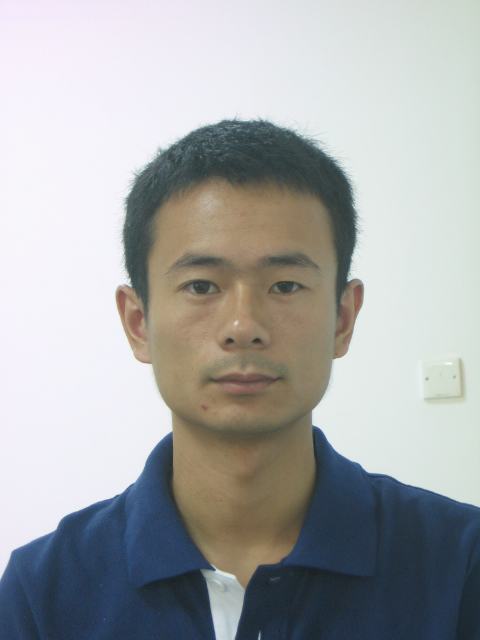 Zhiming Su (苏智明)合作论文数厦门大学材料学院2
 Anhua Liu (刘安华)合作论文数College of Materials, Xiamen University2Feng-ping LI (李风萍)合作论文数1Huazhan LI (李华展)合作论文数1qingliang wu (吴清良)合作论文数1QianJun Huang (黄前军)合作论文数1MeiYu Chen (陈美瑜)合作论文数1Wenli Xia (夏文丽)合作论文数1Jun ZENG (曾军)合作论文数1
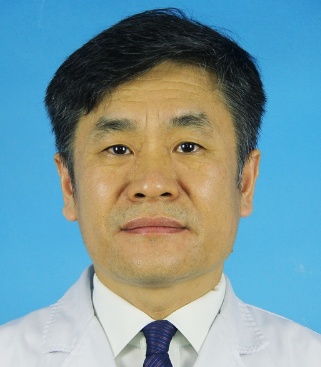 Wei Zhou (周伟)合作论文数Beijing Jingmei Group General Hospital1
 Ling Liu (刘玲)合作论文数School of Pharmacy, Henan University1Jianming Chen (陈剑铭)合作论文数1




