Transformers have shown great promise in various point cloud comprehension tasks, but still face challenges due to the quadratic computational and memory cost when dealing with large-scale 3D point clouds. Many recent studies focus on reducing these costs and improving model performance by solely applying restricted local attention but overlook the coarse-grained global structural information, which is also crucial to 3D semantic segmentation. In this paper, we propose a novel Broadcast-and-Mixing Transformer model for 3D semantic segmentation. Leveraging the joint utilization of global, regional, and local structures within the point cloud, our approach first broadcasts the global representations learned by a lightweight voxel set attention to the regional level and then mixes them with local point features using a unique voxel-point self-attention mechanism. The model enables effective information exchange across different granularity levels, encompassing global-regional-local interactions, and controlling the overall computational complexity without a substantial increase after incorporating global information. Extensive experiments on large-scale indoor and outdoor datasets demonstrate the effectiveness of our proposed method, surpassing hybrid-input approaches and matching global-attention baselines with significantly lower memory cost.
Low-light image enhancement improves the quality of video surveillance and image analysis and, as a result, has long been a hot topic in image processing. However, current research on this topic faces a difficult challenge—effectively suppressing noise while improving brightness and maintaining color consistency, especially in extremely dark scenes, where dark noise amplification, uneven exposure, and color shifts often interact, leading to detail loss and color distortion. To address the issue, we propose a dual-stage low-light enhancement framework based on the HVI (Horizontal/Vertical-Intensity) color space. The low-light image is first mapped to the HVI space, obtaining the intensity component I and the HVI-based feature map, with I being explicitly extracted as an intensity prior. A Transformer-based pre-recovery module is introduced for global dependency modeling, guided by the intensity prior I through an Intensity-Conditioned Block (ICB) for conditional feature interaction. Subsequently, a dual-branch enhancement network utilizes lightweight Complementary Cross-Attention (CCA) blocks for brightness refinement and color denoising. Finally, the enhanced image is remapped to the sRGB color space. The proposed framework decouples global brightness recovery and feature preprocessing from detail enhancement and color refinement, improving stability in extremely dark and high-noise scenarios. Through 18 quantitative and qualitative experiments, we demonstrate that our proposed method achieves superior performance in dark noise suppression and color restoration across multiple low-light datasets.
With the rapid development of artificial intelligence technology, facial expression recognition (FER) has gained increasingly widespread applications in digital human generation, humanoid robotics, mental health, and human–computer dialogue. Typical FER algorithms based on machine learning have been widely studied over the past few decades, which motivated our survey. In this study, we have surveyed the state of the art in FER across two categories: traditional machine learning-based (ML-based) and deep learning-based (DL-based) approaches. Each category is analyzed based on six subcategories. Then, twelve methods, including four ML-based models and eight DL-based models, are compared to evaluate FER performance across four datasets. The experimental results show that in validation sets, the average accuracy of HOG-SVM is 50.12%, which is the best performance for the four ML-based methods; in contrast, Poster has an average accuracy of 75.98%, which is the best result obtained among the eight DL-based methods. The most difficult expression to recognize is contempt, with recognition accuracies of 10.00% and 40.06% for ML-based and DL-based methods, respectively. The accuracy of the ML-based method for identifying neutral expression is the highest at 35.25%; the DL-based method has the highest accuracy in identifying surprise at 69.56%. From the theoretical analysis and comparative experimental results of existing methods, we can see that FER faces challenges, including inaccurate recognition in complex environments and unbalanced data categories, highlighting several future research directions, especially those involving the latest applications of digital humans and large language models.
In the field of virtual human generation, Neural Radiance Fields (NeRF) have made significant strides in precise geometric modeling and color accuracy, establishing new benchmarks for complex viewpoint synthesis and 3D reconstruction. Despite these advancements, existing methods face substantial limitations in real-time dynamic facial expression capture and managing high-frequency details, particularly in rapid facial movements and accurate lip synchronization. These constraints are largely due to the high computational load and the dense data requirements hamper real-time rendering. Additionally, traditional radiance fields struggle to capture subtle facial changes driven by audio, often resulting in animations that lack expressiveness and naturalness. Building upon the foundation laid by TalkingGaussian,this paper introduces an advanced framework named SynGauss that employs 3D Gaussian Splatting to precisely decouple facial and lip movements. We have enhanced this approach by incorporating lip expression coefficients and a regional multi-head attention mechanism, which allow for detailed and controlled animation of complex facial dynamics. Our modifications provide a more refined control over lip movements and facial expressions, significantly improving the realism and expressiveness of the animations while maintaining the efficiency required for real-time applications. This approach holds great promise for real-time applications such as virtual assistants and immersive entertainment experiences, offering more realistic and controllable animation generation.(Project address https://github.com/zzyfight0703/SynGauss/tree/main)
Multi-view clustering (MVC) for remote sensing data has attracted increasing attention due to its ability to exploit complementary information from multiple modalities without requiring labels. Recent graph-based deep clustering methods have shown strong potential in modeling spatial structures inherent in remote sensing data. However, existing approaches often emphasize capturing rich node relations while overlooking the optimization of these relations, leading to noisy connections and weak inter-cluster discrimination. To address this issue, we propose a novel Multi-view Graph Clustering with dual Relation Optimization (MDRO) framework tailored for remote sensing data. Specifically, we first segment the remote sensing image into irregular superpixels to reduce computational complexity and use superpixels as graph nodes. Then, MDRO constructs high-order similarity matrices guided by clustering distribution matrices and performs dual relation optimization to suppress noise relations and strengthen similarity relations. Furthermore, an optimal transportation-based constraint is introduced to guide the formation of robust and balanced cluster assignments, mitigating over-smoothing and trivial solutions in graph learning. Comprehensive experiments on four benchmark remote sensing datasets demonstrate that MDRO consistently outperforms existing single-view and multi-view clustering methods, achieving superior accuracy and robustness.
Image-based viewpoint estimation is one of the tasks in image analysis, and another is the inverse problem of selecting the best viewpoint for displaying a three-dimensional object. Currently, two issues need further exploration in image-based viewpoint estimation research: insufficient labeled data and a limited number of evaluation methods for estimation results. To address the first issue, this paper proposes a spherical viewpoint sampling method based on a combination of analytical methods and motion adjustment, and designs a viewpoint-based projection image acquisition algorithm. Considering the difference between viewpoint inference and image classification, we propose an accuracy evaluation method with deviation angle tolerance for viewpoint estimation. Based on constructing a new dataset with viewpoint labels, the new accuracy evaluation method has been validated through experiments. The experimental results show that its estimation accuracy can reach 89% according to the new estimation evaluation indicators. Additionally, we applied our method to estimate the viewpoints of images from a furniture website and analyzed the viewpoint preferences in its furniture displays.
Semantic segmentation of large-scale indoor 3D point cloud scenes is crucial for scene understanding but faces challenges in effectively modeling long-range dependencies and multi-scale features. In this paper, we present RegionPVT, a novel Regional-to-Local Point-Voxel Transformer that synergistically integrates voxel-based regional self-attention and window-based point-voxel self-attention for concurrent coarse-grained and fine-grained feature learning. The voxel-based regional branch focuses on capturing regional context and facilitating inter-window communication. The window-based point-voxel branch concentrates on local feature learning while integrating voxel-level information within each window. This unique design enables the model to jointly extract local details and regional structures efficiently and provides an effective and efficient solution for multi-scale feature fusion and a comprehensive understanding of 3D point clouds. Extensive experiments on S3DIS and ScanNet v2 datasets demonstrate that our RegionPVT achieves competitive or superior performance compared with state-of-the-art approaches, attaining mIoUs of 71.0% and 73.9% respectively, with significantly lower memory footprint.
Extracting k-order maximal-sum principal submatrix from an n-order real matrix is a typical combinatorial optimization problem and an NP-hard problem. To improve the computational efficiency of solving this problem, we, in this paper, propose an accelerated algorithm with row-by-row updates, called the fusion row update accelerated algorithm, which works by reducing the number of addition operations for submatrix elements. The new algorithm is applied to accelerate color combination selection and maximize color difference, which improves the readability of data visualization results; it is also applied to accelerate stock investment portfolio selection and minimize correlation degree, which decreases the investment risk in the view of daily return volatility.
The fog density level, as one of the indicators of weather conditions, will affect the management decisions of transportation management agencies. This paper proposes an image-based method to estimate fog density levels to improve the accuracy and efficiency of analyzing fine meteorological conditions and validating fog density predictions. The method involves two types of image entropy: a two-dimensional directional entropy derived from four-direction Sobel operators, and a combined entropy that integrates the image directional entropy and grayscale entropy. For evaluating the performance of the proposed method, an image test set and an image training set are constructed; and each image is labeled as heavy fog, moderate fog, light fog, or fog-free according to the fog density level of the image based on a user study. Using our method, the average accuracy rates of image fog level estimation were 77.27% and 79.39% on the training set using the five-fold cross-validation and the test set, respectively. Our experimental results demonstrate the effectiveness of the proposed combined entropy for image-based fog density level estimation.
A rational investor always pursues a portfolio with the greatest possible return and the least possible risk. Therefore, a core issue of investment decision analysis is how to make an optimal investment choice in the market with fuzzy information and realize the balance between maximizing the return on assets and minimizing the risk. In order to find optimal investment portfolios of financial assets with high volatility, such as gold and Bitcoin, a mathematical model for formulating investment strategies based on the long short-term memory time series and the dynamic programming model combined with the greedy algorithm has been proposed in this paper. The model provides the optimal daily strategy for the five-year trading period so that it can achieve the maximum expected return every day under the condition of a certain investment amount and a certain risk. In addition, a reasonable risk measure based on historical increases is established while considering the weights brought by different investment preferences. The empirical analysis results show that the optimal total assets and initial capital obtained by the model change in the same proportion, and the model is relatively stable and has strong adaptability to the initial capital. Therefore, the proposed model has practical reference value and research significance for investors and promotes a better combination of computer technology and financial investment decision.
With the advancement of virtual reality and 3D game technology, the demand for high-quality 3D indoor scene generation has surged. Addressing this need, this paper presents a method leveraging a VAE-GAN-based framework to conquer two primary challenges in 3D scene representation and deep generative networks. First, we introduce a matrix representation to encode fine-grained object attributes, alongside a complete graph to implicitly capture object spatial relations—effectively encapsulating both local and global scene structures. Second, we devise a unique generative framework based on VAE-GAN and the Bayesian optimization. This framework learns a Gaussian distribution of encoded object attributes through a VAE-GAN network, allowing for sampling and decoding of the distribution to generate new object attributes. Subsequently, a U-Net is employed to learn spatial relations between objects. Lastly, the Bayesian optimization module amalgamates the generated object attributes, spatial relations, and priors learned from data, conducting global optimization to generate a logical scene layout. Experimental results on a large-scale 3D indoor scene dataset substantiate that our method effectively learns inter-object relations and generates diverse and plausible indoor scenes. Comparative experiments and user studies further validate that our method surpasses the current state-of-the-art techniques in indoor scene generation and is comparable to real training scenes.
Some time-consuming and labor-intensive techniques, like manual drawing or interactive modeling with an image editing system, are often used to show how a desert area might look after being transformed into a green field (oasis) in an image way. In order to improve the rendering efficiency of image style transformation and increase the variety of renderings, we can build an algorithm for automatically generating style images based on machine learning. In this paper, after comparing seven generative adversarial network (GAN) models in the way of theory analysis, we propose a method for generating green fields using desert images as input data, and a comprehensive comparison is presented on how GANs are currently applied to solve the desert-to-oasis problem. Experimental results show that two GAN models, geometrically consistent GAN and cyclic consistent GAN, have the best transfer effect of a desert image to oasis one in the view of quantitative indicators, Fréchet inception distance, and learned perceptual image patch similarity.
Applying point cloud data to road analysis is crucial for obtaining practical features for segmenting and classifying road point clouds. This study proposes a multi-step method for extracting road points and road network structures from urban Light Detection and Ranging (LiDAR) point cloud data. The first step is a two-step algorithm of coarse grid classification and local optimization of point cloud fine classification. This step extracts road point clouds from various parts of the city. The second step involves the road-point cloud splicing work. Finally, we extract the urban road network structure according to the point cloud of the urban main road and calculate the width of each road. We evaluate the method’s feasibility using four urban road point clouds. Experimental results show that the proposed method can quickly and accurately extract road points, obtaining a road data accuracy and integrity of >94% and a road width estimated relative error of <7%.
For automatic indoor furniture layout, we design a combinational optimization algorithm which takes full advantage of multi-threading using combined methods. Based on simulated annealing algorithm, four cost functions are built to optimize the layout within a single group. To avoid falling into the local minimum, the metropolis acceptance criterion is adopted to randomly jump out of the local optimal solution. Based on the design idea of indoor energy field to optimal placement point of the group, the ground energy matrix is employed. Our algorithm is proved to be able to give better layout suggestions for a variety of indoor scenes.
河北是我国重要的粮食主产省之一,作物高产稳产严重依赖灌溉,多年对地下水超采导致地下水位逐年下降,威胁区域灌溉农业可持续发展.在地下水限采政策实施后,如何实现地下水压采目标下利用有限灌水维持区域粮食生产能力,对实现区域粮食安全和水资源可持续利用具有重要意义.本研究提出了依据国网河北电力公司对河北平原农用机井电气化改造实现的灌溉用电实时采集和计量,通过"以电折水"换算,根据用电数据调控地下水开采,实现地下水开采总量控制,满足地下水压采目标.在此基础上,建立针对区域主要粮食作物冬小麦-夏玉米一年两熟有限供水下的优化灌水制度和灌水调控土壤主要耗水层水分下限指标,通过提升限量供水下的水分利用效率,维持限水条件下区域粮食生产能力.集成用电信息和限量灌溉决策指标,形成确保地下水压采目标的精准控灌决策支持系统,服务农业生产.该决策支持系统可在实现调控灌溉水量的同时,进行优化灌溉决策,既满足政府对区域地下水开采的调控需求,也满足不同经营规模农户用水管理的需求,具有良好的应用前景.
To reduce the flicker artifacts caused by video defogging, a surveillance video defogging algorithm based on the background extraction and consistent constraints is proposed. First, an inter frame consistency constraint is constructed and applied to background modeling. Second, the extracted background is defogged with an improved static defogging approach. Third, the foreground is extracted using the extracted background and further defogged using constraints of the consistency between the foreground and background. Experimental results show that our algorithm can remove fog effectively and preserve the temporal coherence well.
"以电折水"是一种农业灌溉用水的间接计量方法,通过建立灌溉耗电量与取水量之间的定量关系,实现利用灌溉耗电量数据间接求算灌溉用水量.以电折水系数是灌溉取水量与耗电量的比值,其准确性是影响该方法进行灌溉用水间接计量的主要因素.本研究基于县域农业灌溉以电折水系数与地下水位监测结果,分析了河北平原区以电折水系数的区域特征以及地下水埋深对以电折水系数的影响;选择位于山前平原区的中国科学院栾城农业生态系统试验站为典型地点,开展了机井用电量和抽水量关系的灌溉试验研究,分析了灌溉时长、灌溉方式和季节等要素对以电折水系数取值的影响规律.本研究发现:1)同等地下水埋深条件下,山前平原区以电折水系数高于中东部平原区,且随着地下水位埋深增加,以电折水系数降低.地下水埋深每增加10 m,山前平原区深层井以电折水系数降低0.42 m3?kWh?1,中东部平原区深层井降低0.15 m3?kWh?1.2)灌溉试验结果表明,机井的灌溉耗电量与取水量关系较为稳定,同一机井不同次灌溉之间的以电折水系数波动幅度为5.7%;受地下水水位季节性变化的影响,3月上旬到6月中旬的灌溉季内以电折水系数季节性变化幅度约为±10%;管灌、喷灌等不同灌溉方式对实际以电折水系数具有显著影响,管灌比喷灌的以电折水系数高28.8%.3)目前的河北平原县域以电折水系数测算结果尚不能满足农户灌溉用水计量和水权、水资源税核定的需求,应考虑地下水季节性变化、灌溉技术类型差异和非灌溉用电的影响,进一步提高以电折水方法的计量精度.
3D point clouds have lots of applications in the fields of reverse engineering, laser remote sensing and automatic driving. The registration of point clouds scanned form different positions or different angles is the basis for shape understanding and analysis. However, due to the complex environment and the large amount of data, the automatic registration of different scans is still a challenging problem. In this work, we propose a fast registration algorithm using the prior information under a voxel structure. In this algorithm, the point cloud is firstly voxelized and organized with a 3D voxel structure. Then, we take an initial alignment based on reliable parts according to prior information. Finally we refine registration using kd-tree to accelerate Iterative Closest Point algorithm. To evaluate our algorithm, we take both synthetic data and real data experiments. The results show that our algorithm is higher efficiency and robustness.
人员能力检测结果监控是一种有效监控人员是否具备持续该检测能力的一种手段,通过采购标样对人员进行监控成本较高,因此,设计一种拉伸测试人员能力检测结果人员比对监控方法适用于各实验室,能有效地评估人员能力及检测结果的准确性,为实验室质量体系管理提供一种更好的监控方法.
The recognition and classification of White Blood Cell (WBC) play a remarkable role in blood-related diseases (i.e., leukemia, infections) diagnosis. For the highly similar morphology of different WBC subtypes, it is too confused to classify the WBC effectively and accurately for visual observation of blood cell smears. This paper proposes a Deep Convolutional Neural Network (DCNN) with feature fusion strategies, named WBC-AMNet, for automatically classifying WBC subtypes based on focalized attention mechanism. To obtain more localized attention of CNN, the fusion features of the first and the last convolutional layer are extracted by focalized attention mechanism combining Squeeze-and-Excitation (SE) and Gather-Excite (GE) modules. The new method performs successfully in classifying monocytes, neutrophils, lymphocytes, and eosinophils on the complex background with an overall accuracy of 95.66%, better than that of general CNNs. The multi-classification accuracy of WBC-AMNet with the background segmentation is over 98% in all cases. In addition, Gradient-weighted Class Activation Mapping (Grad-CAM) is employed to visualize the attention heatmaps of different feature maps.
 Xiaopeng Zhang (张晓鹏)合作论文数National Laboratory of Pattern Recognition, Institute of Automation, Chinese Academy of Sciences;University of Chinese Academy of Sciences29
 Yuping Lei (雷玉平)合作论文数中国科学院遗传与发育生物学研究所农业资源研究中心13
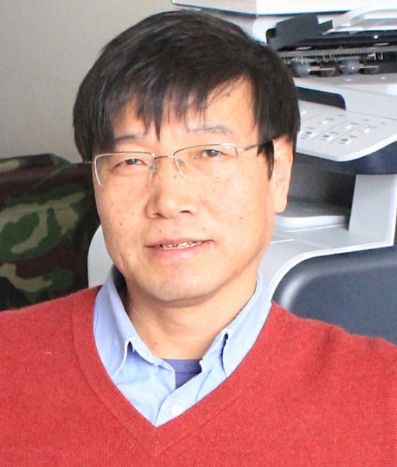 Zhenwu Lu (卢振武)合作论文数University of Chinese Academy of Sciences;Changchun Institute of Optics, Fine Mechanics and Physics, Chinese Academy of Sciences11
 Jianghong Liao合作论文数11ZhiCheng Weng (翁志成)合作论文数10
 Xiaochun Wang (王小春)合作论文数College of Science, Beijing Forestry University8Liuhong Luo (罗柳红)合作论文数College of Science, Beijing Forestry University8
 Chunsheng Hu (胡春胜)合作论文数Center of Agricultural Resources Research, Institute of Genetics and Developmental Biology, Chinese Academy of Sciences;University of Chinese Academy of Sciences7
 Yuming Zhang (张玉铭)合作论文数中国科学院遗传与发育生物学研究所农业资源研究中心7
 Weiliang Meng (孟维亮)合作论文数State Key Laboratory of Multimodal Artificial Intelligence Systems, Institute of Automation, Chinese Academy of Sciences;School of Artificial Intelligence, University of Chinese Academy of Sciences7Renzhao Mao合作论文数7Liu Jia合作论文数6
 Yanjun Shen (沈彦俊)合作论文数Center of Agricultural Resources Research, Institute of Genetics and Developmental Biology, Chinese Academy of Sciences5
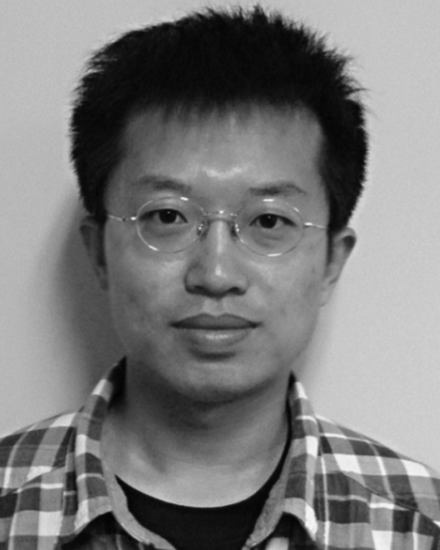 Guanbo Bao合作论文数5Peng-ju TENG (滕鹏举)合作论文数4jianjiang wang (王建江)合作论文数4
 Yisong Cheng (程一松)合作论文数Center for Agricultural Resources Research, Institute of Genetics and Developmental Biology, Chinese Academy of Sciences4
 Oliver Deussen合作论文数Department of Computer and Information Science, University of Konstanz4Yi-Kuan Zhang合作论文数4
 Xiying Zhang (张喜英)合作论文数Center for Agricultural Resources Research, Institute of Genetics and Developmental Biology, Chinese Academy of Sciences;University of Chinese Academy of Sciences3
 Shaodi Ge合作论文数3
 Meiting Hou合作论文数3
 Mingrui Dai合作论文数China Acad Railway Sci, Railway Big Data Res & Applicat Innovat Ctr, Beijing, Peoples R China3Shengpeng Mu (慕生鹏)合作论文数3Yi Lei合作论文数3Jiazhen Li合作论文数3ChunQiang Li (李春强)合作论文数3
 Weiming Dong (董未名)合作论文数Institute of Automation, Chinese Academy of Sciences;University of Chinese Academy of Sciences3
 Yongqing Qi (齐永青)合作论文数中国科学院遗传与发育生物学研究所农业资源研究中心3
 Marc Jaeger合作论文数3
 Wujun Che (车武军)合作论文数Institute of Automation, Chinese Academy of Sciences;University of Chinese Academy of Sciences3
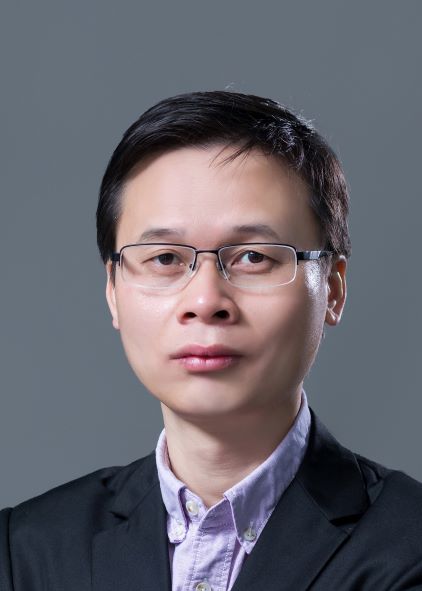 Zhanglin Cheng (程章林)合作论文数Shenzhen Institute of Advanced Technology, Chinese Academy of Sciences;School of Artificial Intelligence, University of Chinese Academy of Sciences3Xinying Liu合作论文数3
 Jianwei Guo (郭建伟)合作论文数School of Artificial Intelligence, Beijing Normal University3Dengshun Li (李登顺)合作论文数2Ziyi Wang合作论文数2Fangfang Zhang合作论文数2Xuechen Yang合作论文数2Si-jing DING (丁思静)合作论文数2ZHANG Cong (张聪)合作论文数2XIA Shasha (夏莎莎)合作论文数2TieGang Cheng (成铁刚)合作论文数2HongXi Wang (王鸿玺)合作论文数2XiaoRu Jiang (蒋晓茹)合作论文数2JingLi Zhao (赵晶丽)合作论文数2SuXia Wu (吴素霞)合作论文数2XiaoLei Wang (王晓磊)合作论文数2
 Suying Chen (陈素英)合作论文数Institute of Genetics and Developmental Biology, Chinese Academy of Sciences2
 Wei Chen (陈伟)合作论文数Institute of Semiconductors, Chinese Academy of Sciences2




