In order for large language model (LLM)-based assistants to effectively adapt to evolving information needs, it must be possible to update their factual knowledge through continued training on new data. The standard recipe for doing so involves continued pre-training on new documents followed by instruction-tuning on question-answer (QA) pairs. However, we find that LLMs trained with this recipe struggle to answer questions, even though the perplexity of documents is minimized. We found that QA pairs are generally straightforward, while documents are more complex, weaving many factual statements together in an intricate manner. Therefore, we hypothesize that it is beneficial to expose LLMs to QA pairs before continued pre-training on documents so that the process of encoding knowledge from complex documents takes into account how this knowledge is accessed through questions. Based on this, we propose pre-instruction-tuning (PIT), a method that instruction-tunes on questions prior to training on documents. This contrasts with standard instruction-tuning, which learns how to extract knowledge after training on documents. Extensive experiments and ablation studies demonstrate that PIT significantly enhances the ability of LLMs to absorb knowledge from new documents, outperforming standard instruction-tuning by 17.8%.
Generative Artificial Intelligence (AI) has enabled the development of sophisticated models that are capable of producing high-caliber text, images, and other outputs through the utilization of large pre-trained models. Nevertheless, assessing the quality of the generation is an even more arduous task than the generation itself, and this issue has not been given adequate consideration recently. This paper proposes a novel evaluation framework, GPTScore, which utilizes the emergent abilities (e.g., zero-shot instruction) of generative pre-trained models to score generated texts. There are 19 pre-trained models explored in this paper, ranging in size from 80M (e.g., FLAN-T5-small) to 175B (e.g., GPT3). Experimental results on four text generation tasks, 22 evaluation aspects, and corresponding 37 datasets demonstrate that this approach can effectively allow us to achieve what one desires to evaluate for texts simply by natural language instructions. This nature helps us overcome several long-standing challenges in text evaluation--how to achieve customized, multi-faceted evaluation without the need for annotated samples. We make our code publicly available at https://github.com/jinlanfu/GPTScore.
Recent developments in Language Models (LMs) have shown their effectiveness in NLP tasks, particularly in knowledge-intensive tasks. However, the mechanisms underlying knowledge storage and memory access within their parameters remain elusive. In this paper, we investigate whether a generative LM (e.g., GPT-2) is able to access its memory sequentially or randomly. Through carefully-designed synthetic tasks, covering the scenarios of full recitation, selective recitation and grounded question answering, we reveal that LMs manage to sequentially access their memory while encountering challenges in randomly accessing memorized content. We find that techniques including recitation and permutation improve the random memory access capability of LMs. Furthermore, by applying this intervention to realistic scenarios of open-domain question answering, we validate that enhancing random access by recitation leads to notable improvements in question answering. The code to reproduce our experiments can be found at https://github.com/sail-sg/lm-random-memory-access.
On-the-fly retrieval of relevant knowledge has proven an essential element of reliable systems for tasks such as open-domain question answering and fact verification. However, because retrieval systems are not perfect, generation models are required to generate outputs given partially or entirely irrelevant passages. This can cause over- or under-reliance on context, and result in problems in the generated output such as hallucinations. To alleviate these problems, we propose FILCO, a method that improves the quality of the context provided to the generator by (1) identifying useful context based on lexical and information-theoretic approaches, and (2) training context filtering models that can filter retrieved contexts at test time. We experiment on six knowledge-intensive tasks with FLAN-T5 and LLaMa2, and demonstrate that our method outperforms existing approaches on extractive question answering (QA), complex multi-hop and long-form QA, fact verification, and dialog generation tasks. FILCO effectively improves the quality of context, whether or not it supports the canonical output.
Textual content is often the output of a collaborative writing process: We start with an initial draft, ask for suggestions, and repeatedly make changes. Agnostic of this process, today's language models are trained to generate only the final result. As a consequence, they lack several abilities crucial for collaborative writing: They are unable to update existing texts, difficult to control and incapable of verbally planning or explaining their actions. To address these shortcomings, we introduce PEER, a collaborative language model that is trained to imitate the entire writing process itself: PEER can write drafts, add suggestions, propose edits and provide explanations for its actions. Crucially, we train multiple instances of PEER able to infill various parts of the writing process, enabling the use of self-training techniques for increasing the quality, amount and diversity of training data. This unlocks PEER's full potential by making it applicable in domains for which no edit histories are available and improving its ability to follow instructions, to write useful comments, and to explain its actions. We show that PEER achieves strong performance across various domains and editing tasks.
Fine-tuning language models on tasks with instructions has demonstrated potential in facilitating zero-shot generalization to unseen tasks. In this paper, we introduce a straightforward yet effective method for enhancing instruction tuning by employing symbolic tasks. Compared to crowdsourced human tasks or model-generated tasks, symbolic tasks present a unique advantage as they can be easily generated in vast quantities, theoretically providing an infinite supply of high-quality training instances. To explore the potential of symbolic tasks, we carry out an extensive case study on the representative symbolic task of SQL execution. Empirical results on various benchmarks validate that the integration of SQL execution leads to significant improvements in zero-shot scenarios, particularly in table reasoning. Notably, our 3B model surpasses both the 175B GPT-3 and ChatGPT in zero-shot table reasoning across four benchmarks. Furthermore, experimental results on BBH (27 tasks) and MMLU (57 tasks) reveal that language models can be enhanced through symbolic tasks without compromising their generality. We hope that our paper serves as a catalyst, inspiring increased efforts to incorporate symbolic tasks in instruction tuning.
Despite the remarkable ability of large language models (LMs) to comprehend and generate language, they have a tendency to hallucinate and create factually inaccurate output. Augmenting LMs by retrieving information from external knowledge resources is one promising solution. Most existing retrieval augmented LMs employ a retrieve-and-generate setup that only retrieves information once based on the input. This is limiting, however, in more general scenarios involving generation of long texts, where continually gathering information throughout generation is essential. In this work, we provide a generalized view of active retrieval augmented generation, methods that actively decide when and what to retrieve across the course of the generation. We propose Forward-Looking Active REtrieval augmented generation (FLARE), a generic method which iteratively uses a prediction of the upcoming sentence to anticipate future content, which is then utilized as a query to retrieve relevant documents to regenerate the sentence if it contains low-confidence tokens. We test FLARE along with baselines comprehensively over 4 long-form knowledge-intensive generation tasks/datasets. FLARE achieves superior or competitive performance on all tasks, demonstrating the effectiveness of our method. Code and datasets are available at https://github.com/jzbjyb/FLARE.
This paper surveys and organizes research works in a new paradigm in natural language processing, which we dub "prompt-based learning". Unlike traditional supervised learning, which trains a model to take in an input x and predict an output y as P(y|x), prompt-based learning is based on language models that model the probability of text directly. To use these models to perform prediction tasks, the original input x is modified using a template into a textual string prompt x' that has some unfilled slots, and then the language model is used to probabilistically fill the unfilled information to obtain a final string x, from which the final output y can be derived. This framework is powerful and attractive for a number of reasons: it allows the language model to be pre-trained on massive amounts of raw text, and by defining a new prompting function the model is able to perform few-shot or even zero-shot learning, adapting to new scenarios with few or no labeled data. In this paper we introduce the basics of this promising paradigm, describe a unified set of mathematical notations that can cover a wide variety of existing work, and organize existing work along several dimensions, e.g.the choice of pre-trained models, prompts, and tuning strategies. To make the field more accessible to interested beginners, we not only make a systematic review of existing works and a highly structured typology of prompt-based concepts, but also release other resources, e.g., a website http://pretrain.nlpedia.ai/ including constantly-updated survey, and paperlist.
Generative question answering (QA) models generate answers to questions either solely based on the parameters of the model (the closed-book setting) or additionally retrieving relevant evidence (the open-book setting). Generative QA models can answer some relatively complex questions, but the mechanism through which they do so is still poorly understood. We perform several studies aimed at better understanding the multi-hop reasoning capabilities of generative QA models. First, we decompose multi-hop questions into multiple corresponding single-hop questions, and find marked inconsistency in QA models' answers on these pairs of ostensibly identical question chains. Second, we find that models lack zero-shot multi-hop reasoning ability: when trained only on single-hop questions, models generalize poorly to multi-hop questions. Finally, we demonstrate that it is possible to improve models' zero-shot multi-hop reasoning capacity through two methods that approximate real multi-hop natural language (NL) questions by training on either concatenation of single-hop questions or logical forms (SPARQL). In sum, these results demonstrate that multi-hop reasoning does not emerge naturally in generative QA models, but can be encouraged by advances in training or modeling techniques.
Systems for knowledge-intensive tasks such as open-domain question answering (QA) usually consist of two stages: efficient retrieval of relevant documents from a large corpus and detailed reading of the selected documents to generate answers. Retrievers and readers are usually modeled separately, which necessitates a cumbersome implementation and is hard to train and adapt in an end-to-end fashion. In this paper, we revisit this design and eschew the separate architecture and training in favor of a single Transformer that performs Retrieval as Attention (ReAtt), and end-to-end training solely based on supervision from the end QA task. We demonstrate for the first time that a single model trained end-to-end can achieve both competitive retrieval and QA performance, matching or slightly outperforming state-of-the-art separately trained retrievers and readers. Moreover, end-to-end adaptation significantly boosts its performance on out-of-domain datasets in both supervised and unsupervised settings, making our model a simple and adaptable solution for knowledge-intensive tasks. Code and models are available at https://github.com/jzbjyb/ReAtt.
Evaluation of text generation to date has primarily focused on content created sequentially, rather than improvements on a piece of text. Writing, however, is naturally an iterative and incremental process that requires expertise in different modular skills such as fixing outdated information or making the style more consistent. Even so, comprehensive evaluation of a model's capacity to perform these skills and the ability to edit remains sparse. This work presents EditEval: An instruction-based, benchmark and evaluation suite that leverages high-quality existing and new datasets for automatic evaluation of editing capabilities such as making text more cohesive and paraphrasing. We evaluate several pre-trained models, which shows that InstructGPT and PEER perform the best, but that most baselines fall below the supervised SOTA, particularly when neutralizing and updating information. Our analysis also shows that commonly used metrics for editing tasks do not always correlate well, and that optimization for prompts with the highest performance does not necessarily entail the strongest robustness to different models. Through the release of this benchmark and a publicly available leaderboard challenge, we hope to unlock future research in developing models capable of iterative and more controllable editing.
Pretrained language models (PLMs) have been shown to accumulate factual knowledge during pretrainingng (Petroni et al., 2019). Recent works probe PLMs for the extent of this knowledge through prompts either in discrete or continuous forms. However, these methods do not consider symmetry of the task: object prediction and subject prediction. In this work, we propose Symmetrical Prompt Enhancement (SPE), a continuous prompt-based method for factual probing in PLMs that leverages the symmetry of the task by constructing symmetrical prompts for subject and object prediction. Our results on a popular factual probing dataset, LAMA, show significant improvement of SPE over previous probing methods.
The information in tables can be an important complement to text, making table-based question answering (QA) systems of great value. The intrinsic complexity of handling tables often adds an extra burden to both model design and data annotation. In this paper, we aim to develop a simple table-based QA model with minimal annotation effort. Motivated by the fact that table-based QA requires both alignment between questions and tables and the ability to perform complicated reasoning over multiple table elements, we propose an omnivorous pretraining approach that consumes both natural and synthetic data to endow models with these respective abilities. Specifically, given freely available tables, we leverage retrieval to pair them with relevant natural sentences for mask-based pretraining, and synthesize NL questions by converting SQL sampled from tables for pretraining with a QA loss. We perform extensive experiments in both few-shot and full settings, and the results clearly demonstrate the superiority of our model OmniTab, with the best multitasking approach achieving an absolute gain of 16.2% and 2.7% in 128-shot and full settings respectively, also establishing a new state-of-the-art on WikiTableQuestions. Detailed ablations and analyses reveal different characteristics of natural and synthetic data, shedding light on future directions in omnivorous pretraining.
Publicly available source-code libraries are continuously growing and changing. This makes it impossible for models of code to keep current with all available APIs by simply training these models on existing code repositories. Thus, existing models inherently cannot generalize to using unseen functions and libraries, because these would never appear in the training data. In contrast, when human programmers use functions and libraries for the first time, they frequently refer to textual resources such as code manuals and documentation, to explore and understand the available functionality. Inspired by this observation, we introduce DocPrompting: a natural-language-to-code generation approach that explicitly leverages documentation by (1) retrieving the relevant documentation pieces given an NL intent, and (2) generating code based on the NL intent and the retrieved documentation. DocPrompting is general: it can be applied to any programming language and is agnostic to the underlying neural model. We demonstrate that DocPrompting consistently improves NL-to-code models: DocPrompting improves strong base models such as CodeT5 by 2.85 execution-based evaluation on the popular Python CoNaLa benchmark; on a new Bash dataset tldr, DocPrompting improves CodeT5 and GPT-Neo1.3B by up to absolute 6.9
Tables are an important form of structured data for both human and machine readers alike, providing answers to questions that cannot, or cannot easily, be found in texts. Recent work has designed special models and training paradigms for table-related tasks such as table-based question answering and table retrieval. Though effective, they add complexity in both modeling and data acquisition compared to generic text solutions and obscure which elements are truly beneficial. In this work, we focus on the task of table retrieval, and ask: "is table-specific model design necessary for table retrieval, or can a simpler text-based model be effectively used to achieve a similar result?'' First, we perform an analysis on a table-based portion of the Natural Questions dataset (NQ-table), and find that structure plays a negligible role in more than 70% of the cases. Based on this, we experiment with a general Dense Passage Retriever (DPR) based on text and a specialized Dense Table Retriever (DTR) that uses table-specific model designs. We find that DPR performs well without any table-specific design and training, and even achieves superior results compared to DTR when fine-tuned on properly linearized tables. We then experiment with three modules to explicitly encode table structures, namely auxiliary row/column embeddings, hard attention masks, and soft relation-based attention biases. However, none of these yielded significant improvements, suggesting that table-specific model design may not be necessary for table retrieval.
Abstract Recent works have shown that language models (LM) capture different types of knowledge regarding facts or common sense. However, because no model is perfect, they still fail to provide appropriate answers in many cases. In this paper, we ask the question, “How can we know when language models know, with confidence, the answer to a particular query?” We examine this question from the point of view of calibration, the property of a probabilistic model’s predicted probabilities actually being well correlated with the probabilities of correctness. We examine three strong generative models—T5, BART, and GPT-2—and study whether their probabilities on QA tasks are well calibrated, finding the answer is a relatively emphatic no. We then examine methods to calibrate such models to make their confidence scores correlate better with the likelihood of correctness through fine-tuning, post-hoc probability modification, or adjustment of the predicted outputs or inputs. Experiments on a diverse range of datasets demonstrate the effectiveness of our methods. We also perform analysis to study the strengths and limitations of these methods, shedding light on further improvements that may be made in methods for calibrating LMs. We have released the code at https://github.com/jzbjyb/lm-calibration.
Neural abstractive summarization models are flexible and can produce coherent summaries, but they are sometimes unfaithful and can be difficult to control. While previous studies attempt to provide different types of guidance to control the output and increase faithfulness, it is not clear how these strategies compare and contrast to each other. In this paper, we propose a general and extensible guided summarization framework (GSum) that can effectively take different kinds of external guidance as input, and we perform experiments across several different varieties. Experiments demonstrate that this model is effective, achieving state-of-the-art performance according to ROUGE on 4 popular summarization datasets when using highlighted sentences as guidance. In addition, we show that our guided model can generate more faithful summaries and demonstrate how different types of guidance generate qualitatively different summaries, lending a degree of controllability to the learned models.
Previous studies have made great advances in 001 RST discourse parsing through neural frame-002 works or efficient features, but they split the 003 parsing process into two subtasks and heavily 004 depended on gold segmentation. In this pa-005 per, we introduce an end-to-end method for 006 sentence-level RST discourse parsing via trans-007 forming it into a text-to-text generation task. 008 Our method unifies the traditional two-stage 009 parsing and generates the parsing tree directly 010 from the input text without requiring a compli-011 cated model. Moreover, the EDU segmentation 012 can be simultaneously generated and extracted 013 from the parsing tree. Experimental results 014 on the RST Discourse Treebank demonstrate 015 that our proposed method outperforms existing 016 methods in both tasks of sentence-level RST 017 parsing and discourse segmentation. Consid-018 ering the lack of annotated data in RST pars-019 ing, we also create high-quality augmented data 020 based on several filtering strategies, which fur-021 ther improves the performance. 022
Integrating extracted knowledge from the Web to knowledge graphs (KGs) can facilitate tasks like question answering. We study relation integration that aims to align free-text relations in subject-relation-object extractions to relations in a target KG. To address the challenge that free-text relations are ambiguous, previous methods exploit neighbor entities and relations for additional context. However, the predictions are made independently, which can be mutually inconsistent. We propose a two-stage Collective Relation Integration (CoRI) model, where the first stage independently makes candidate predictions, and the second stage employs a collective model that accesses all candidate predictions to make globally coherent predictions. We further improve the collective model with augmented data from the portion of the target KG that is otherwise unused. Experiment results on two datasets show that CoRI can significantly outperform the baselines, improving AUC from .677 to .748 and from .716 to .780, respectively.
Toxic language detection systems often falsely 001 flag text that contains minority group men-002 tions as toxic, as those groups are often the 003 targets of online hate. Such over-reliance on 004 spurious correlations also causes systems to 005 struggle with detecting implicitly toxic lan-006 guage. To help mitigate these issues, we cre-007 ate T OXI G EN , a new large-scale and machine-008 generated dataset of 274k toxic and benign 009 statements about 13 minority groups. We de-010 velop a demonstration-based prompting frame-011 work and an adversarial classifier-in-the-loop 012 decoding method to generate subtly toxic and 013 benign text with a massive pretrained language 014 model (Brown et al., 2020). Controlling ma-015 chine generation in this way allows T OXI G EN 016 to cover implicitly toxic text at larger scale, 017 and about more demographic groups, than pre-018 vious resources of human-written text. We 019 conduct a human evaluation on a challeng-020 ing subset of T OXI G EN and find that annota-021 tors struggle to distinguish machine-generated 022 text from human-written language. We also 023 find that 94.5% of toxic examples are labeled 024 as hate speech by human annotators. Using 025 three publicly-available datasets, we show that 026 finetuning a toxicity classifier on our data im-027 proves its performance on human -written data 028 substantially. We also demonstrate that T OXI - 029 G EN can be used to fight machine-generated 030 toxicity as finetuning improves the classifier 031 significantly on our evaluation subset.
 Graham Neubig合作论文数Language Technologies Institute, School of Computer Science, Carnegie Mellon University17
 Jun Araki合作论文数Bosch Research8
 Zhicheng Dou (窦志成)合作论文数Gaoling School of Artificial Intelligence, Renmin University of China7
 Pengfei Liu (刘鹏飞)合作论文数Qing Yuan Research Institute, School of Electronic Information and Electrical Engineering, Shanghai Jiao Tong University5
 Ji-Rong Wen (文继荣)合作论文数Gaoling School of Artificial Intelligence, Renmin University of China5
 Fangzheng (Frank) Xu合作论文数Language Technologies Institute, School of Computer Science, Carnegie Mellon University4
 Jinlan Fu (傅金兰)合作论文数College of Computer Science and Artificial Intelligence, Fudan University4
 Haibo Ding合作论文数Northeastern University, Northeastern Univ.4
 Ruohong Zhang合作论文数Carnegie Mellon University3
 Jian-Yun Nie合作论文数Département D'informatique Et De Recherche Opérationnelle, Faculté Des Arts Et Des Sciences, Universite de Montreal3
 Zora Wang (王芷若)合作论文数Language Technologies Institute, School of Computer Science, Carnegie Mellon University3
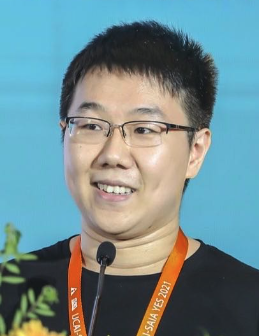 Qian Liu (刘乾)合作论文数TikTok AI Innovation Center3
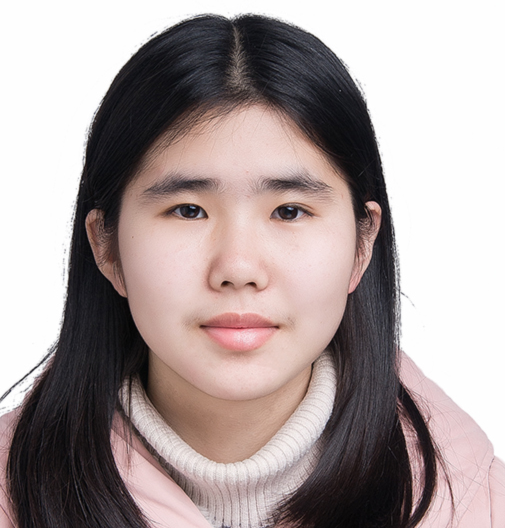 Weizhe Yuan合作论文数New York University3
 Yiming Yang合作论文数Machine Learning Department, School of Computer Science, Carnegie Mellon University;Language Technologies Institute, School of Computer Science, Carnegie Mellon University3
 Timo Schick合作论文数Inflection AI2
 Ming Yue合作论文数Renmin University of China & Beijing Key Laboratory of Big Data Management and Analysis Methods, Beijing, China2
 Hiroaki Hayashi合作论文数Salesforce Research2
 Songwei Ge合作论文数Department of Computer Science, University of Maryland;Berkeley AI Research2
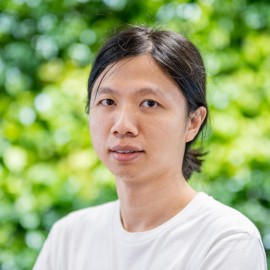 Min Lin合作论文数Sea AI Lab2
 Patrick Lewis合作论文数Cohere2
 Luyu Gao合作论文数Language Technologies Institute, Carnegie Mellon University2
 Zhiqing Sun (孙之清)合作论文数Language Technologies Institute, Carnegie Mellon University;Allen Institute for AI2
 Jane Dwivedi-Yu合作论文数FAIR Labs, Meta AI2
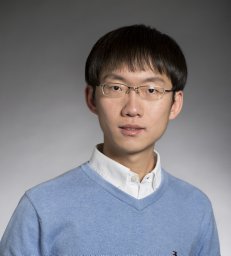 Pengcheng Yin (殷鵬程)合作论文数Google DeepMind2
 Jamie Callan合作论文数Language Technologies Institute, School of Computer Science, Carnegie Mellon University;School of Information Systems & Management, Heinz College, Carnegie Mellon University2
 Fabio Petroni合作论文数European Laboratory for Learning and Intelligent Systems;European Molecular Biology Laboratory2
 Wayne Xin Zhao (赵鑫)合作论文数Gaoling School of Artificial Intelligence, Renmin University of China2
 Sebastian Riedel合作论文数NLP Laboratory, Department of Computer Science, University College London;DeepMind2
 Weizhu Chen合作论文数Microsoft GenAI2
 Edouard Grave合作论文数Kyutai2
 Gautier Izacard合作论文数Microsoft AI2
 Jane A. Yu合作论文数1Zhiruo Wang合作论文数1
 Yao Dou合作论文数Georgia Institute of Technology1
 Xuan-Phi Nguyen合作论文数Salesforce AI Research1Qingfei You合作论文数1
 Peter Jansen合作论文数College of Information Science, The University of Arizona1
 Gerry Che合作论文数NVIDIA1
 Pengcheng He合作论文数Zoom1
 Longxu Dou (窦隆绪)合作论文数Harbin Institute of Technology1
 Victoria Lin (林曦)合作论文数Foundational AI Research, Meta1
 Tongyao Zhu合作论文数Sea AI Lab, National University of Singapore;WING Lab, National University of Singapore1
 Jordyn Seybolt合作论文数1John Li合作论文数1
 Fan Zhou合作论文数EconCS Group, Harvard University1Jason Krone合作论文数Amazon.com1jinxiu li合作论文数1
 Christoforos Nalmpantis合作论文数Aristotle Univ Thessaloniki, Sch Informat, Thessaloniki, Greece1Maria Lomeli合作论文数Meta1




