周羽暄 问: 按部就班地生活和学习,是我现在的常态,犹如平静的湖水.能让这泓湖水泛起一丝涟漪的是在大家谈论梦想的时刻,可是我自己却没有梦想,没有目标,这让我很沮丧,甚至觉得自己有些无知."怎么连未来想做什么都不清楚呢?"我常常这样自责.每个人都应该有梦想吗?我想请问老师,您高中的时候有梦想吗?
高手 哥哥是中医,今天跟我们溜达着看房子.一进售楼大厅,一个美女款款走来准备给我们介绍.哥哥道:"姑娘,你最近熬夜体虚呀,你……"等我们出门的时候,他卖出去十几服中药了……
[背景]新型冠状病毒肺炎(简称:新冠肺炎)疫情严重影响直接面对疾病危险的医务人员的心理状况.[目的]了解新冠肺炎疫情期间医务人员抑郁情绪、焦虑情绪和失眠问题发生现况及相关影响因素.[方法]于2020年2月13日-3月1日,采用方便抽样对482名医务人员进行网络问卷调查,使用自编问卷调查基本人口学信息和新冠肺炎相关问题,使用患者健康问卷抑郁量表(PHQ-9)、广泛性焦虑障碍量表(GAD-7)和失眠严重指数量表(ISI)调查医务人员抑郁情绪、焦虑情绪和失眠问题发生现况.以PHQ-9得分、GAD-7得分和lSl得分为应变量做多重线性回归分析(逐步法),以有无抑郁情绪、焦虑情绪和失眠问题为应变量做多因素logistic回归分析(向前-条件法),将基本人口学信息和新冠肺炎相关问题作为自变量同时纳入回归方程进行筛选,分析最终进入回归方程的自变量与应变量的关系以探索相关影响因素.[结果]医务人员抑郁情绪、焦虑情绪和失眠问题的发生比率分别为14.3%、11.2%和23.2%,不同年龄、性别、所在地疫情分级、职业类别及是否支援湖北人群中的发生率差异无统计学意义.直接接触发热或确诊患者的医务人员抑郁(b=1.73,95%CI:0.79~2.66)和失眠(b=2.43,95%CI:1.48~3.39)程度更严重且出现失眠问题的风险更高(OR=1.89,95%CI:1.21~2.96).认为目前防护措施不可避免感染新冠肺炎的医务人员抑郁(b=1.72,95%CI:0.65~2.80)、焦虑(b=1.75,95%CI:0.76~2.75)及失眠(b=1.73,95%CI:0.63~2.82)程度更严重且更有可能出现抑郁情绪(OR=1.97,95%CI:1.11~3.49)、焦虑情绪(OR=3.00,95%CI:1.64~5.46)及失眠问题(OR=1.79,95%CI:1.08~2.96).[结论]新冠肺炎疫情期间医务人员抑郁情绪、焦虑情绪和失眠问题的发生风险较非疫情期间升高,工作是否接触高危人群和防护措施是否得当会影响医务人员的心理.
Background: Growing evidence supports a clear association between COVID-19 pandemic and mental health. However, little is known about the longitudinal course of psychopathology in young adults at different stages of the pandemic. Methods: This large-scale, longitudinal, population-based survey was conducted among college students in China. The rates of three mental health problems (acute stress, anxiety, and depressive symptoms), and their change patterns at two phases of the pandemic (early vs under-control) were measured. Predictors of changes in mental health symptoms were examined utilizing multivariate regression. Results: Among the 164,101 college students who participated in the first wave survey (T1=during onset of outbreak), 68,685 (41.9%) completed a follow-up survey (T2=during remission). In the follow-up survey, the prevalence of probable acute stress (T1: 34.6%; T2: 16.4%) decreased, while the rates of depressive (T1: 21.6%; T2: 26.3%) and anxiety symptoms (T1: 11.4%; T2: 14.7%) increased. Senior students, with suspected or conformed cases in their community and COVID-19 related worries (all AORs > 1.20, ps < 0.001) were found to have a higher risk of developing mental health problems in at least one wave. Less physical exercise, low perceived social support, and a dysfunctional family were found to negatively impact psychological symptoms. Conclusions: Acute stress, anxiety, and depressive symptoms have been prevalent among college students during the COVID-19 epidemic, and showed a significant increase after the initial stage of the outbreak. Some college students, especially those with the risk factors noted above, exhibited persistent or delayed symptoms.
 HaiBiao Ceng (曾海标)合作论文数3WeiHao Guan (关伟豪)合作论文数3Yifan Zhang合作论文数1Meilei Su合作论文数1lun wu (吴伦)合作论文数1Yan DAO (道焰)合作论文数1Zihao Chen合作论文数1
 Jinfang Zhang合作论文数1Tong Wang合作论文数1
 Zijuan Ma合作论文数1Wei LAI (赖炜)合作论文数1xiaohong gu (古小红)合作论文数1
 Li Yuanyuan合作论文数1XueYun Li (李学云)合作论文数1XiaoHua Liu (刘晓华)合作论文数1YanNa Wang (王艳娜)合作论文数1
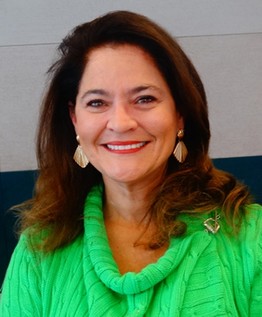 Larkin S. McReynolds合作论文数Department of Clinical Epidemiology, Mailman School of Public Health, Columbia University1
 Fang Fan合作论文数1
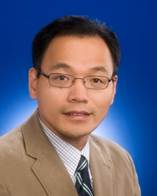 Xianchen Liu合作论文数South China Normal University;Shandong University;University of Tennessee Health Science Center;University of Pennsylvania's Center for Public Health Initiatives1
 Ning Pan (潘宁)合作论文数School of Foreign Studies, Jilin University1
 Jinxin Zhang (张晋昕)合作论文数School of Public Health, Sun Yat-sen University1Jingbo Zhao (赵静波)合作论文数1
 Xiuhong Li (李秀红)合作论文数School of Public Health, Shenzhen, Sun Yat-Sen University1
 Dongfang Wang合作论文数Department of Surgery, University of Kentucky1




