This study addresses the fixed-time collision-avoidance containment control problem for multiple unmanned surface vehicles (multi-USVs) under limited communication and actuation resources. An adaptive fixed-time extended state observer (AFxTESO) is first constructed to estimate unmeasured velocities and lumped disturbances. Unlike conventional fixed-time extend state observer (FxTESO), the proposed AFxTESO employs an adaptive gain adjustment law that strengthens the correction during transients and relaxes it in steady operation, so that fixed-time convergence is preserved while estimation accuracy is improved. Furthermore, a novel dynamic event-triggered mechanism (DETM) scheme is developed to update the control input only when the triggered condition is violated. Compared with other event-triggered mechanisms, the fixed-time convergent dynamic variables are integrated into proposed triggered condition, so that the triggered threshold can adapt to the system state without undermining the fixed-time property of the closed-loop system. In addition, an enhanced potential function (EPF) is incorporated to guarantee collision avoidance among USVs and obstacles. A Lyapunov-based analysis shows that the overall closed-loop system is practically fixed-time stable and free of Zeno behavior. Simulation studies under two disturbance scenarios demonstrate that the proposed scheme maintains effective collision-avoidance containment control, supported by both qualitative trajectories and quantitative indices.
Maritime Autonomous Surface Ships (MASS) are expected to be deployed widely due to their potential to enhance operational efficiency and reduce costs. Ensuring their success requires a new high level of safety analysis in Human-Machine Interaction (HMI). However, the task is particularly challenging under complex and dynamic maritime conditions. To address this challenge, this study proposes an advanced safety analysis framework that integrates Systems Theory Process Analysis (STPA) with Complex Network (CN) theory, namely STPA-CN, for analysing MASS HMI risks. To improve the precision of network analysis, a two-stage adaptive node ranking algorithm called MI-WLR is developed, which incorporates Mutual Information (MI) theory into the Weight LeaderRank (WLR) structure. The framework contains four components: (1) constructing the MASS HMI risk evolution Network (MHN) based on CN modelling and STPA outcomes; (2) analysing the topological characteristics of the MHN; (3) applying MI-WLR to rank the importance of risk nodes; and (4) conducting robustness analyses to validate the model's effectiveness. The results reveal that system-level hazards and accidents serve as key hubs in the MHN, with human factors, interface design, and environmental conditions exerting diverse degrees of influence. Notably, critical risks are often embedded within the human-machine interface, and targeting high-ranking nodes can effectively disrupt risk propagation pathways. This study fills an important research gap by introducing a novel and scalable framework for MASS HMI safety assessment, providing both theoretical and practical support for risk mitigation and the secure integration of autonomous technologies in maritime operations.
With the rapid advancement of Maritime Autonomous Surface Ships (MASS), the complexity of onboard automation and remote operations has significantly increased, placing greater demands on the safety and reliability of Human-Machine Interaction (HMI). Ensuring safe navigation under varying levels of autonomy requires a structured and comprehensive assessment of HMI-related risks. This study proposes a novel risk-informed safety framework for HMI in remotely controlled MASS, particularly those operating at Degree of Autonomy 2 (DoA2). By integrating Systems-Theoretic Process Analysis (STPA) with the Human Factors Analysis and Classification System (HFACS), the framework systematically identifies unsafe interactions, causal factors, and control structure vulnerabilities across multiple functional levels. The approach captures both technical failures and human factors, offering a holistic view of HMI safety. A case study of DoA2 ships demonstrates the applicability and effectiveness of the proposed STPA-HFACS framework in visualising unsafe scenarios and tracing their root causes. The findings highlight key areas for risk mitigation through targeted technological improvements and enhanced operator training. This research contributes a structured methodology for MASS HMI safety assessment and provides practical guidance for risk management in semi-autonomous ship operations.
This paper investigates the resilient collision-free cooperative encirclement control problem for multiple unmanned surface vehicles (multi-USVs) subject to Denial-of-Service (DoS) attacks and obstacle constraints. Unlike existing methods that require continuous communication, a novel resilient control framework is proposed to guarantee mission success under topological disruptions. First, a real-time topology identification mechanism (RT-TIM) is developed to dynamically classify USVs into connected and isolated USVs based on communication link availability. Based on RT-TIM, a resilient fixed-time extended state observer (RFxTESO) is designed, which switches between distributed and local estimate modes. RFxTESO ensures the fixed-time estimation of velocities and lumped disturbances even when the communication topology is severed by DoS attacks. Subsequently, a dual-mode cooperative controller is proposed, incorporating an Enhanced Potential Function(EPF) into the kinematic guidance law. This approach effectively resolves collisions with obstacles and neighboring vessels while avoiding the singularity issues in existing potential field methods. Theoretical analysis proves that the entire closed-loop system is practical fixed-time stable. Finally, comparative simulation results demonstrate the superiority of the proposed strategy in terms of convergence speed, resilience against DoS attacks, and collision avoidance capabilities.
Existing studies on maritime accident analysis often lack a systematic comparison of risk factors across different navigational waters, limiting the development of targeted safety strategies. To bridge this research gap, this study proposed a novel, data-driven analytical framework that integrates association rule mining, the decision-making trial and evaluation laboratory, and the total adversarial interpretive structural modelling. Firstly, based on 1294 maritime accident investigation reports, a comprehensive risk factor database was established, and association rule mining was employed to extract the direct associative relationships between risk factors. Secondly, the decision-making trial and evaluation laboratory method were applied to quantify the causal intensities and influence directions among these risk factors based on the mined associations. Finally, the total adversarial interpretive structural modelling was utilized to construct adversarial hierarchical topologies, clarifying the multi-level causal structures within the risk system for different waters. The results indicate significant differences in the critical risk factors across inland waters, coastal waters, ports, and open waters. Although both inland and coastal waters highlight the importance of ship seaworthiness and crew competence, inland ship operations demand high skills on ship handling, whereas coastal navigation requires stronger emergency response capabilities. Port operations require particular attention to the integrity of safety management systems, while effective communication and a strong corporate safety culture are crucial for mitigating risks in open waters. These findings underscore the distinct risk profiles inherent to different waters and highlight the necessity for implementing tailored preventive measures.
The assessment of multi-ship collision risk situation holds important theoretical value and practical significance for enhancing waterborne vessel safety supervision and ensuring safe navigation. However, maritime multi-ship navigation risks are often influenced by the coupled influence of hydro-meteorological conditions and multi-ship navigation situations, exhibiting significant uncertainty and fuzziness. In order to address those gaps, this study aims to propose a collision risk assessment method for multi-ships. First, a dual-dimensional evaluation indicator system integrating hydro-meteorological factors and multi-ship characteristics was constructed, accompanied by six calculation methods for indicator values, providing an operational basis for accurate risk assessment. Subsequently, game theory was employed to integrate weighting results derived from the best-worst method and the extension correlation function method, so as to mitigate the one-sidedness of a single weighting approach. Finally, based on the designed indicator interval grades, a finite interval cloud generator was constructed to characterize the fuzziness and uncertainty of the indicators, thereby achieving a precise quantitative rating of multi-ship collision risk. Validation through four groups of multi-ship potential encounter scenarios in the Bohai Sea of China shows that the proposed method can accurately distinguish the risk levels of different scenarios. Moreover, the variance of the evaluation results is 1 to 4.17 times that of the traditional extension cloud model, indicating higher confidence and sensitivity. The method provides objective and precise technical support for navigation situation monitoring in multi-ship potential encounter scenarios.
With the rapid development of Internet of Things (IoT) technology, unmanned surface vehicles (USVs), as critical nodes in distributed maritime sensing networks, have seen their autonomous collision avoidance capabilities become central to enabling coordination among multiple devices and real-time decision-making. Based on this, this article presents an intelligent strategy for collision and obstacle avoidance in USVs during multitarget encounter scenarios. A collision risk model based on the International Regulations for Preventing Collisions at Sea (COLREGs) and common practices of sailors is constructed, with it being used as a constraint for the differential evolution (DE) algorithm. The objective function is decomposed geometrically and in terms of states, transforming the evaluation of the entire path into evaluating individual path points. In this way, high-quality path points are fully utilized, and a fitness function is built based on each individual path point. The population initialization operation of the DE algorithm is improved through a chaotic multipopulation parallel optimization strategy, with a chaotic matrix being introduced to enhance search traversal. Additionally, a parameter randomization strategy is introduced in mutation and crossover operations to avoid local optima, and each subpopulation is optimized in parallel to obtain the best collision avoidance route. Finally, the simulation experiments results demonstrate that the improved DE algorithm demonstrates superior performance in both collision avoidance efficiency and path optimization, confirming the effectiveness of the approach in complex multitarget encounter scenarios.
The fatigue experienced by navigational officers unfolds in intricate temporal sequences with interdependencies. Addressing the prevalent deficiency of fragmenting fatigue states in most seafarer fatigue investigations, a novel approach for fatigue detection of navigational officer is proposed: The Gaussian Hidden Markov Model (GM-HMM). This innovation aims to identify the fatigue dynamics of navigational officers by utilising electroencephalography (EEG) data obtained from the bridge simulator, alongside the dynamic characteristics inherent in ship navigating fatigue. The GM-HMM model operates within a probabilistic framework to discern the fatigue states of navigational officers, capitalising on the physiological insights gleaned from EEG signals. Empirical evidence underscores the heightened efficacy of the GM-HMM model in fatigue detection, as contrasted with the traditional logistic regression model. Consequently, this model not only enhances the efficacy of shipborne real-time fatigue warning systems but also mitigates the maritime perils stemming from human factors, which might otherwise precipitate accidents of considerable consequence.
During an emergency evacuation scenario, accurately and timely predicting human evacuation time beforehand is crucial for developing an efficient evacuation plan. This study aims to develop an innovative simulation-based framework in which series state-of-the-art Machine Learning (ML) models are applied to predict human evacuation time from passenger ships. It also develops a multi-dimensional decision-making approach to evaluate their performance from the perspectives of high prediction accuracy and timeliness to support rapid response during emergencies. Firstly, an agent-based modelling technique incorporating two objectives and seven influential factors specific to human evacuation scenarios onboard ships is used to simulate the evacuation process. Then, the evacuation model is validated using three indicators to ensure its accuracy and relevance. Secondly, nine state-of-the-art ML models are applied to predict and analyse human evacuation time. To further investigate the role of feature interactions and enhance predictive accuracy, an additional model called the Attention-enhanced Light Gradient Boosting Machine (Attention-LightGBM) is proposed. Additionally, four statistical indicators are utilised to monitor the performance of each model. Finally, a new weighted selection method based on analytic hierarchy process and entropy weight method is created to conduct a comprehensive assessment from the perspectives of accuracy and timeliness. The findings reveal that the AttentionLightGBM demonstrates significant advantages in prediction accuracy, while the LightGBM excels in prediction timeliness. This study not only provides theoretical and technical support for emergency management onboard ships but also suggests methodological advancements for future research on complex human evacuation scenarios from passenger ships. The source code is publicly available at: https://github.com/AdvMarTech/Eva_Predict_ML.
The emerging Maritime Autonomous Surface Ships (MASS) significantly challenges team collaboration in the maritime sector. Although significant progress has been made, current research lacks a holistic analytical approach to MASS operational teams, with most studies focusing on isolated aspects. To address this gap, a twostep framework is developed to model and analyse MASS team tasks from a system-wide perspective. Firstly, a team cognitive work analysis and an improved hierarchical task analysis are conducted, clarifying the division of responsibilities and information transmission paths. Secondly, a task network is constructed using complex network theory, and key topological characteristics are extracted. Thirdly, eight types of node importance ranking methods are employed, including three based on individual indicators and five based on hybrid algorithms, along with robustness analysis based on deliberate attacks to quantitatively identify critical nodes from different perspectives and analyse their roles in team tasks. Finally, Boolean algebra is applied to integrate the results of the node rankings, and a susceptible infected model is utilised to validate the validity of ranking results, allowing for prioritisation of critical nodes. The results demonstrate that targeted attacks based on betweenness centrality cause the network to collapse rapidly, with reachability dropping sharply once 16.7 % nodes fail. The entire system becomes nearly non-functional when 54.2 % nodes fail. The decline in reachability slows after 25 % nodes fail, indicating diminishing marginal impact. This study contributes to the development of a holistic framework for analysing team tasks of MASS, with future work exploring dynamic modelling and weighted interdependencies across broader maritime scenarios.
With the growing demand for safe obstacle avoidance and precise trajectory tracking in the autonomous navigation of unmanned surface vessels (USVs), this paper investigates an adaptive differential evolution approach for integrated path planning and tracking control. In the path planning stage, an elite archive mechanism is first incorporated into the mutation process, and the scaling factor F and crossover rate CR are adaptively adjusted to enhance population diversity and global search capability. Then, the International Regulations for Preventing Collisions at Sea (COLREGs) are embedded into the algorithmic framework to reinforce collision avoidance performance in complex encounter scenarios. A multi-objective fitness function combining six performance criteria is subsequently constructed to evaluate individual path points, thereby identifying high-quality solutions that ensure both safe navigation and route efficiency. In the tracking control stage, the optimally generated reference trajectory is then employed as the input command for the vessel's motion control subsystem. A fuzzy logic system is introduced to approximate unknown nonlinear dynamics, and an adaptive fuzzy logic controller is designed to guarantee accurate tracking of the planned path. Finally, simulation tests are used to show the algorithm's efficiency and usefulness.
Maritime accidents are significant obstacles to the development of shipping industries. Their consequences are another important issue because they often involve significant economic losses and human casualties. Accident consequences do not occur randomly, but are triggered by a series of influential factors. To determine the critical factors contributing to accident consequences, a data-driven research framework is proposed. Firstly, 198 maritime accident investigation reports from the Marine Accident Investigation Branch (MAIB) and Australian Transport Safety Bureau (ATSB) are collected to build a database. Secondly, relevant influential factors are identified based on a literature review. Thirdly, a TAN (Tree Augmented Network)-based BN (Bayesian network) model is developed. Fourthly, a model validation process, including a comparative analysis, Kappa test, and scenario analysis are performed. The five critical factors are determined as accident type, ship type, ship age, ship length and gross tonnage. Valuable implications are generated through this research framework and can be a valuable reference for the safety management of concerned parties. In addition, the TAN model can be a predictor for developing mitigation measures to minimize accident consequences.
It is vital to effectively quantify the human movement parameters in rolling ships to save lives in maritime emergency and/or accidents. This study aims to develop a new two-layer social force model (2LR-SFM) to improve human evacuation efficiency in rolling ships. Firstly, the forces acting on humans are analysed in terms of physical forces, psychological adjustment, and inertial analysis, and the three-dimensional human moving process is described by a modified model. Secondly, the individual’s velocity and acceleration are calculated at each time step according to the walking direction, rolling amplitude, and rolling period. Thirdly, the accuracy of the human walking speed attenuation in 2LR-SFM simulation is verified by using the velocity data collected from real ship experiments. Finally, simulations are carried out in the dining room of a ship to reveal the human movement patterns in different rolling scenarios. The results reveal that the simulation process of 2LR-SFM satisfies the basic rules of human evacuation. With the increase of rolling amplitude, humans are more affected by the rolling motion, resulting in exponentially increased evacuation time. This study enables to simulate the evacuation process under different rolling scenarios and hence realizes a dynamic analysis for the first time in the area.
Planning a reasonable path and avoiding collisions with surrounding obstacles are among the most critical aspects of Unmanned Surface Vehicle (USV) navigation, which has drawn considerable attention from researchers in recent years, with various heuristic and intelligent optimization algorithms being applied to path planning. However, most existing algorithms have not sufficiently integrated safety and economy, leading to the planned paths that may not align with maritime practice. Therefore, to tackle the aforementioned issues, this paper introduces a differential evolution algorithm (DE) with an adaptive crossover factor for path planning and collision avoidance in USV. The collision risk index (CRI) is integrated with the DE, and the CRI is improved by introducing a restriction factor. The experimental results demonstrate that, compared with the other three algorithms, the improved DE exhibits greater advantages in terms of closest distance to the encountered ship, closest distance to obstacles, and total yaw distance, thereby validating the effectiveness of the algorithm.
The analysis of ship avoidance maneuvers is of significant value for assessing the risk of vessel collisions and enhancing ship safety management. A new method has been proposed that utilizes the dynamic spatio-temporal data collected by the Automatic Identification System (AIS) to extract avoidance behaviors. This method integrates navigational rules and maritime practices to determine encounter situations and identify the avoidance process. Validation using actual AIS data has proven the accuracy and effectiveness of the method. It offers an efficient model for extracting encounter and avoidance behaviors from AIS data, providing support for the analysis of ship behavior and research on maritime safety.
It is crucial to understand the movement characteristics and behaviour of individuals during ship emergencies for successful human evacuation on board ships. This study aimed to analyse the effect of heeling angles on human movement characteristics and comprehensive evacuation efficiency on passenger ships through the development of a new experimental dataset of human evacuation. To achieve this, a series of tests were conducted using an experimental simulator closely resembling the evacuation scenarios recommended by the International Maritime Organization (IMO). It is revealed that a heeling angle significantly reduces both walking and running speeds of participants. Notably, when the heeling angle is 16°, males demonstrated better adaptability as their speed was less affected compared to females. Additionally, height is found to be positively correlated with movement speed across different scenarios. In counter flow tests, a comprehensive evacuation experiment was systematically quantified. The results showed that evacuation time increased with higher heeling angles. Furthermore, participants tended to maintain a larger personal space in a heeling ship, resulting in lower density when the heeling angle reached 16° compared to other scenarios. The outcomes of this study offer valuable insights for validating evacuation models and developing guidelines for human evacuation from passenger ships.
Despite the progress in autonomous ship technology, unknown risks persist in the design, operation, and regulation of maritime autonomous surface ships. A comprehensive literature review for hazard identification and risk analysis method of maritime autonomous surface ships is currently lacking. Based on a database of 62 relevant literatures, this study presents the distribution of relevant literatures by journal, year of publication, country or region of authorship, and institution. To gain further insights into the research hotpots and the frequently neglected risk influential factors, the literatures are classified into four groups based on the categories of risk influential factors, and a comprehensive list of risk influential factors is compiled. Based on this, the research content is analysed with respect to human factors, ship-related factors, environmental factors, and technology factors. Furthermore, statistical analysis is conducted on 23 literatures related to systematic risk analysis of maritime autonomous surface ships in terms of data sources and risk analysis methods, noting that researchers commonly utilize datasets and a combination of risk analysis methods. This study not only contributes to the understanding of the current status and challenges in hazard identification and risk analysis of maritime autonomous surface ships but also provides potential future research directions.
When a ship accident occurs, emergency evacuation of passengers in a shorter time is one of the most effective means of reducing casualties. However, in addition to the ship inclination, the efficiency of the emergency evacuation can be affected by human behavior (e.g., competitive behavior), which affects human moving speed. Therefore, to analyze the impact of competitive behavior during ship evacuations, a dynamic evaluation system is developed to measure nested competitive behavior. Firstly, the perceived area is obtained by dividing the pedestrian visual perspective, which is used to calculate crowd density at every time step. Secondly, fuzzy logic is used to calculate the real-time competitive degree based on the inclined angle and crowd density, integrated into the human evacuation model as an input parameter to update competitive behavior. Finally, this study analyzes and evaluates evacuation time and efficiency with different proportions of competitive people at different inclined angles, using a dining room on a ship as a case study. The results show that without ship inclination, the total evacuation time decreases with an increase of the proportion of competitive people as more competitive people can accelerate the evacuation process. However, the inclination of a ship leads to a decrease in human walking speed, congestion at the exit, and a slower overall evacuation process. According to the findings of this study, an appropriate increase in the proportion of competitive humans is beneficial to the efficiency of emergency evacuation, while strengthening the guidance at the exit will also reduce the evacuation time.
 Xinjian Wang合作论文数Dalian Maritime Univ, Nav Coll, Dalian 116026, Peoples R China47
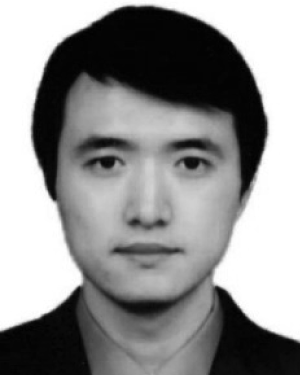 Yao Cai合作论文数21
 Zaili Yang合作论文数School of Engineering, Faculty of Engineering and Technology, Liverpool John Moores University;Liverpool Logistics Offshore and Marine Research Institute, Liverpool John Moores University21
 Jin Wang合作论文数School of Engineering, Faculty of Engineering and Technology, Liverpool John Moores University20
 Zhaolin Wu (吴兆麟)合作论文数20
 Huanxin Wang合作论文数Dalian Maritime University(Dalian Maritime University),Dalian,China19Xin Wang (王欣)合作论文数Navigation College of Dalian Maritime University16Siming Fang合作论文数14
 Shengke Ni合作论文数14Guoyou Shi (史国友)合作论文数Navigation College, Dalian Maritime University13
 Tieshan Li (李铁山)合作论文数School of Automation Engineering, University of Electronic Science and Technology of China12RenXiang Bo (卜仁祥)合作论文数11
 Shu-kai Zhang (张树凯)合作论文数10
 Junzhong Bao (鲍君忠)合作论文数Navigation College, Dalian Maritime University10Yuhao Cao合作论文数8
 Sean Loughney合作论文数Liverpool Logistics, Offshore and Marine (LOOM) Research Institute, Liverpool John Moores University8Xiang-Yu Zhou合作论文数8
 Yinwei Feng (冯胤伟)合作论文数7Jun Ning (宁君)合作论文数7JiaGen Yu (于家根)合作论文数7Weifeng Li (李伟峰)合作论文数Navigation College, Dalian Maritime University6
 Fengwu Wang (王凤武)合作论文数Navigation College of Dalian Maritime University6
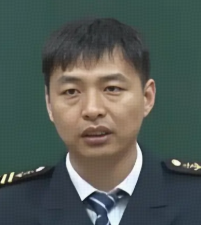 Wenjun Zhang (章文俊)合作论文数Navigation College, Dalian Maritime University6Xiaori Gao合作论文数6Guoqing Xia (夏国庆)合作论文数5Li Yong-Pan合作论文数5Jiahui Shi合作论文数5
 Zhiwei Zhao合作论文数5Bo-wen SHI (石博文)合作论文数5Yihang Wang合作论文数4Liang Cao合作论文数4Haibo Xie合作论文数4Yang Ou合作论文数Jinzhou Maritime Safety Administration(Jinzhou Maritime Safety Administration),Jinzhou,China4YuanQuan Wen (文元全)合作论文数4ShuoHui Zhang (张硕慧)合作论文数4ZhongYi Zheng (郑中义)合作论文数4DaGang Liu (刘大刚)合作论文数4Zhen Li (李桢)合作论文数4Zhongming Xiao (肖仲明)合作论文数Navigation College, Dalian Maritime University4Longhui Gang (冮龙晖)合作论文数Navigation College, Dalian Maritime University4
 Baijun Tian (田佰军)合作论文数Navigation College, Dalian Maritime University4Ren-Da Cui合作论文数3Tianyu Yang合作论文数3Shibo Zhou合作论文数3
 Shiqi Fan (范诗琪)合作论文数School of Transportation and Logistics Engineering, Wuhan University of Technology3ShiPing Zhang (张世平)合作论文数3Fang Dong (东昉)合作论文数3
 Wei Li (李伟)合作论文数Marine Engineering College of Dalian Maritime University3




