In this letter, optical intelligent reflecting surface (OIRS) is integrated into the visible light positioning (VLP) system to boost the positioning accuracy. Initially, we model the channel gains and the received signals as functions of the user locations, which facilitates the adoption of the maximum likelihood estimation approach to estimate the user positions. Subsequently, the Cram & eacute;r-Rao lower bound is derived for each user to theoretically characterize the positioning accuracy. Moreover, an OIRS alignment problem is formulated to minimize the lower bound of the mean squared error across all users, and then solved by the proposed iterative optimization algorithm based on the Schur complement condition. Finally, simulation results validate the effectiveness of the proposed algorithm and demonstrate the significant performance improvements achieved with OIRS assistance.
With the growing demand of serviceability for mobile terminals, mobile terminals are facing the problem of coexistence of multiple standards, functions and systems [1]. If traditional terminals are upgraded in the pattern of hardware upgrade to implement upgrading and capability enhancement, a large amount of electronic waste will be generated [2]. Therefore, it is necessary to break through the high-performance, open and reconfigurable software-defined radio (SDR) method of communication and perception. Faced the above problems, this paper proposes a generalized computational complexity analysis model, which gives a modular computational complexity analysis method by decoupling and separating the functions of the communication system.
With the development of $\mathbf{5 G}$ technology, traditional broadcasting systems face limitations such as unidirectional transmission, high dependence on terminals, and insufficient coverage flexibility, making them difficult to meet the high-concurrency and low-latency demands of mobile scenarios. 5 G NR (New Radio) MBS (Multicast and Broadcast Service) technology, which integrates features of cellular networks and broadcast television, supports SIM-free reception, dynamic coverage, and efficient multicast. It represents a key direction for overcoming the bottlenecks of traditional broadcasting. The 3GPP Release 17 standard, led by CBN (China Broadcasting Network Group Co., Ltd.), has incorporated NR MBS into the standard specifications, promoting the deep integration of broadcasting and communication networks.
At the beginning of 2024, China-Aided Project of DTMB-A in Pakistan was completed and handed over. The main components of the construction of the Pakistan Digital Television Project include establishing three independent ground digital television trial networks in Islamabad and surrounding areas. In the paper, the scheme and transmission parameters of DTMB-A network coverage in Pakistan Islamabad and the surrounding area were proposed. Each site uses the independent front-end system with multi frequency network coverage and it is the typical case for the oversea application of DTMB-A standard. The design of the Pakistan digital TV coverage integrates both fixed reception and mobile reception, with the goal of ensuring extensive coverage from a single station. After the completion of this project, a large number of fixed and mobile site tests were conducted. The test results show that DTMB-A single site coverage can not only achieve ultra large area coverage, but also take into account the mobile reception in major areas.
Research on pilot-free communication has gained attention for improving spectral efficiency by eliminating pilot overhead. However, existing deep learning-based end-to-end (E2E) systems often suffer from high bit-error-rate (BER) in time-varying fading channels due to inter-symbol interference and overfitting. In this paper, we propose a novel pilot-free E2E physical layer communication framework called channel-aware shuffled transformer network based E2E framework (CAST-E2E) that integrates channel-aware positional encoding to dynamically adjust positional embeddings using estimated channel state, enabling implicit inter-symbol interference (ISI) mitigation. We also introduce a shuffled preamplification module with a squeeze-and-excitation (SE) block and channel shuffling to enhance feature diversity and robustness. Experimental results illustrate that the proposed CAST-E2E framework achieves superior BER performance with low complexity, outperforming conventional OFDM and state-of-the-art deep learning based methods in time-varying wireless environments.
With the freeze of 3GPP Release 15 protocols, the world has entered the 5G commercial era. In recent years, major communication companies and organizations have set up project groups for IMT-2030 to put forward proposals on the 6G consideration of ongoing development, in which case the existing 5G new radio technology needs to be thoroughly verified. This paper, based on the software-defined radio (SDR) open source platform OpenAirInterface (OAI), provides a laboratory verification platform for 5G NR to evaluate the system performance in typical channel models. It provides a straightforward and flexible way of verifying the connectivity effect between the 5G core network (5GC), next Generation Node Base station (gNB) and User Equipment (UE) by visualization means such as software oscilloscopes.
In RF communication systems, using neural network to solve the nonlinear distortion of Power Amplifier(PA) has been important and widely researched in recent years. As wideband PA brings more severe distortion to the high-frequency signal, the general neural network training method cannot achieve better performance than low-frequency situation. According to the characteristics of nonlinear regression, we propose an optimization of neural network training method for PA and DPD, which is called dual-block learning, under the mean-square error criteria. By global batch stochastic gradient descent algorithm, we make the low-frequency block(LFB) learns robust features of PA, which will smooth the output distribution. Then we use residual connection and the smoothed signal to train an added high-frequency block(HFB) to capture the high-frequency features of PA. We take PA modeling simulations on various kinds of neural networks and the normal mean-square error get improved about 3 dB generally. We also add a pre-training trick to Digital PreDistortion(DPD) system. The result shows the Adjacent Channel Power Ratio(ACPR) also outperforms the general trained models. Besides training method, we also find that the appropriate memory setting for wideband will make sense for ACPR improvement.
The HDR VIVID technology in China, including HDR testing methods, has been announced for nearly 3 years. However, the testing execution of HDR implementation is very complex. And, the testing needs a lot of time. DTVNEL has developed a device and method that can automatically test HDR Vivid output video signals. This article focuses on introducing the implementation method of HDR Vivid signal automatic testing, effectively reducing the workload and time of testing.
Non-invasive phototherapy is a non-invasive, painless, non-toxic, safe and effective photomedicine method that stimulates the organism through light irradiation and produces a series of physiological and biochemical reactions, which plays a role in repairing or regulating the physiological functions of the tissues or the organism so as to achieve the purpose of treating diseases. At present, non-invasive phototherapy has shown great potential in the prevention and treatment of joint degenerative diseases such as Osteoarthritis (OA) and neurodegenerative diseases such as Alzheimer's Disease (AD). However, the existing non-invasive phototherapy instruments are large, expensive, require professional operation and other problems, and patients need to go to the hospital for long-term treatment and other problems, which greatly increase the economic and time costs of patients. Moreover, LED is not flexible and generates high heat, requiring the addition of heat dissipation components, which cannot fit well with the skin. OLED light-emitting devices can be directly prepared into a surface light source on a flexible substrate, which itself is characterized by thinness, high flexibility, precise conformability, low power consumption and low heat generation, which is more suitable for clinical applications. In this paper, a wearable non-invasive phototherapy device based on flexible OLED is designed, which is characterized by flexible and thin, low power consumption and low heat generation. In addition, a driving scheme with precisely adjustable OLED luminous brightness, power is designed to determine the required optical dosimetry for optimal therapeutic effect.
The integration of satellite communication systems with terrestrial 5G networks, aimed at establishing a comprehensive and seamless air-space-ground integrated network that caters to the diverse service requirements of users, represents a significant direction for the future of communications. However, low-orbit satellite high-dynamic communications links face various challenges, such as low SNR and large frequency offsets. This paper proposes a joint subcarrier frequency offset (CFO) estimation algorithm for the 5G(fifth-generation mobile communication technology) Non-Terrestrial Networks (NTN) scenario, integrating 5G and low Earth orbit (LEO) satellite communication systems. The algorithm uses a combination of Fast Fourier Transform (FFT) and interpolation for initial coarse frequency offset estimation, followed by phase-based fine estimation using Primary Synchronization Signal (PSS) and Secondary Synchronization Signal (SSS). The simulations demonstrate that the proposed methodology achieves comprehensive coverage of the Doppler frequency shift range with enhanced precision. It exhibits robust performance in conditions characterized by low signal-to-noise ratio (SNR) and large frequency offsets, thereby significantly enhancing the overall system's capabilities.
With the iterative upgrading of communication protocols, the complexity of the communication systems is increasing rapidly. In order to satisfy the requirements of implementation complexity, the hardware of the user equipment (UE) has to be upgraded and replaced, resulting in a large amount of electronic wastes. However, the software defined radio (SDR) is designed based on softwares using a general hardware platform. Therefore, only the software upgrade is needed for the communication system if the UE is implemented by SDR. The resource waste can also be reduced greatly. In order to match the computational re-sources of the hardware platform to the computing requirements of the software implementation, a performance evaluation model is studied in this paper. A general scheme is proposed to estimate the computational complexity of the signal processing for the specific communication protocol. Then, the computational ability of the hardware platform can be evaluated compared with the estimated complexity to determine if the hardware can support the specific communication protocol. The numerical results of typical communication systems are also provided to assess the proposed model.
5G NR (New Radio) broadcast is a technology that integrates communication and broadcasting. It broadcasts TV signals through 5G mobile cellular base stations, enabling 5G users of all communication operators and general 5G terminals to enjoy mobile multimedia services such as watching TV, watching live broadcasts, and listening to radio without data traffic. It can also realize personalized services such as smart platform information interaction and video on demand through the coordination of 5G unicast channels. This article explains that relying on the high efficiency and wide coverage of 5G NR MBS (Multicast and Broadcast Service), society will have faster and more accurate information transmission and command and dispatch capabilities when responding to emergencies and natural disasters. In the face of emergencies, 5G NR MBS can ensure the instant and accurate transmission of information. At the same time, combined with the wide coverage and backhaul capabilities of the 5G network, it provides first-hand information for decision-making, greatly shortens the response time, and improves the scientificity and effectiveness of emergency decision-making.
Most of state-of-the-arts region-based detectors are suffered from the requirement of training for a large volume of bounding box annotated data. In this paper, we propose an innovative weakly-supervised architecture, namely SEP-Net, that employs an efficient proposal searching method on feature maps to generate region proposals via transforming CNN classifiers to object detectors without bounding box annotations. We further show the proposed framework can be used for real-time detection, in which high computation efficiency is a prerequisite. Moreover, the training procedure is exactly the same as what’s for CNN classifiers, so is easy to transfer a pre-trained CNN to our weakly-supervised detector as well. Experimental validation on ImageNet 2012 dataset show that the novel model outperforms classical and most recent state-of-the-art weakly-supervised method by a wide margin in terms of both accuracy and efficiency.
A theoretical channel impulse response (CIR) model of short-range non-line-of-sight (NLOS) ultraviolet communications (UVC) in noncoplanar geometry under the single-scatter condition is proposed. Simulation results obtained from the widely accepted Monte-Carlo (MC)-based channel model of NLOS UVC are provided to verify corresponding theoretical results obtained from the proposed theoretical single-scatter CIR model. Additionally, an outdoor experiment with a light-emitting diode (LED) as the light source is first designed to measure the channel step response of NLOS UVC and to further validate the proposed theoretical single-scatter CIR model. By varying the different parameters of the transmitter and the receiver, such as the baseline range, the inclination angle, the azimuth angle, the beam divergence angle, and the field-of-view angle, the results of the proposed theoretical single-scatter CIR model and the MC-based channel model are exhibited and further analyzed in detail. Results indicate that the computational time cost by the proposed theoretical single-scatter CIR model is decreased to less than 0.6% of the MC-based one with comparable accuracy in assessing the temporal characteristics of NLOS UVC channels. Additionally, theoretical results obtained from the proposed theoretical single-scatter CIR model manifest satisfactory agreement with corresponding experimental measurements.
In recent years, as the high-resolution (HD) display technology continues to develop, the widespread utilization of display technology has become a reality, while the incidence rate of visual fatigue surged as well. Organic light-emitting diode (OLED) and quantum dot liquid crystal display (QD-LCD) are two display technologies with respective advantages. In order to study the display quality of the two display technologies and their impact on visual fatigue, we applied a combination of subjective and objective evaluations. The experiment consists of 41 volunteers, and their subjective feedbacks are adopted to compare the display quality and the impact on visual fatigue of two display technologies under various viewing tasks. Results show that teenage subjects and myopic patients suffer from greater eye fatigue after watching quantum dot liquid crystal displays (QD-LCD) TV as opposed to watching organic light-emitting diode (OLED) TV, and there is no significant difference between the two display technologies in other occasions.
Due to the high path loss of non-line-of-sight (NLOS) ultraviolet communications (UVC) channel, pulse modulation schemes, such as on-off keying (OOK) and M-ary pulse-position modulation (PPM), and photon-counting receivers are commonly adopted. Although M-ary PPM can be demodulated and decoded without the channel state information, its spectral efficiency is lower than OOK's. To improve the spectral efficiency of M-ary PPM in NLOS UVC, a power-domain multilayer-superposed transmission (MST) scheme with binary PPM (BPPM) is proposed in this work. Based on this scheme, the signal in each layer can be directly decoded without successive interference cancellation, which is necessary for other MST schemes in the power domain. Hence, a low complexity receiver in the NLOS UVC system can be realized. Additionally, the bit-error rate (BER) and achievable data rate (ADR) expressions of the proposed MST scheme are derived. Monte-Carlo simulations are performed to verify the analytical BER expression. The NLOS UVC system performance employing the proposed MST scheme is further demonstrated and compared with pure BPPM. The results indicate that with the optimal power allocation factor for each layer, the overall ADR of the NLOS UVC system with the proposed power-domain MST scheme can surpass that with pure BPPM.
The performance of multipulse pulse-position modulation (MPPM) in non-line-of-sight (NLOS) ultraviolet communications (UVC) with output signals of detectors following Poisson distribution and Poisson-triggered Gaussian (PTG) distribution has been investigated. Specifically, the probabilities of a given number of incorrectly identified pulsed or empty slots in an MPPM symbol have been derived with output signals Poisson and PTG distributed. Based on those probabilities, the expressions of symbol-error rate and achievable data rate of MPPM in the NLOS UVC systems have been further obtained. Finally, Monte-Carlo simulations are presented to verify the theoretical results.
With the explosive growth of the data traffic and the access number of intelligent devices, the wireless communication systems based on the radio frequency (RF) is suffering from the pressure of spectrum shortage and access congestion constantly, which can be alleviated with the help of visible light communication (VLC). However, due to the limitations of VLC such as finite coverage and inconvenient uplinks, it is imperative to form the hybrid systems and realize the complementary advantages of VLC and RF. In this paper, the hybrid VLC-RF system with multi-users is investigated, where the sum achievable rate and energy efficiency (EE) are maximized via the alternate optimization of transceiver association and power allocation. In addition, based on various types of multiple access points, EE is optimized under different QoS requirements for green communications. With the assistance of proper approximations, the overall problem is decomposed into several convex sub-problems, which can be solved analytically and avoid traversal permutation. The numerical simulations show the effectiveness and scalability of the proposed algorithm in the hybrid VLC-RF system, which can achieve superior performances than the conventional methods and single systems in multifarious scenarios.
For reliable synchronization and transmission parameter signalling (TPS) detection, the preamble based on distance detection (PBDD) is adopted in the digital terrestrial television multimedia broadcasting -advanced (DTMB-A) standard. However, the conventional signalling detection methods do not take the channel information into consideration and will undergo severe performance loss over frequency-selective channels, especially those with strong and long delay echos. In this paper, a novel two-stage TPS detection method is proposed based on the preamble for DTMB-A system, which utilizes the channel information to enhance the detection accuracy. After coarse distance evaluation, the equalization will be performed on the possible candidate subcarriers to reconstruct the OFDM signalling block, hence a more reliable correlation statistic can be obtained to achieve more accurate signalling detection. As demonstrated in the simulations, the detection accuracy can be improved remarkably by compensating the impact of the transmission channel compared with the traditional detection schemes, while the increment of the computational complexity is acceptable.
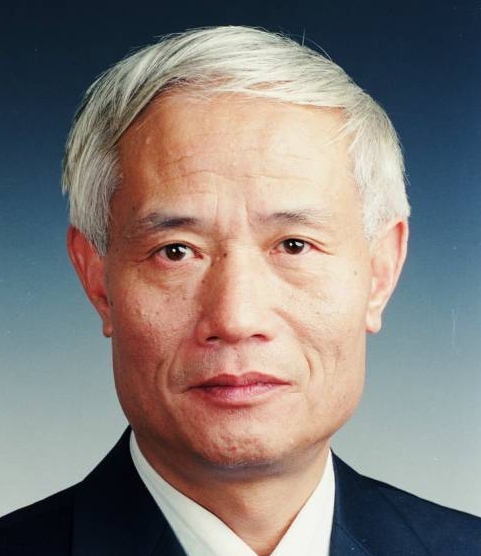 Zhixing Yang (杨知行)合作论文数Department of Electronic Engineering, Tsinghua University;National Engineering Lab. For Dtv(Beijing)126
 Jian Song (宋健)合作论文数Shenzhen International Graduate School, Tsinghua University99
 Jun Wang (王军)合作论文数Department of Electronic Engineering, Tsinghua University53
 Jintao Wang (王劲涛)合作论文数Department of Electronic Engineering, Tsinghua University45
 Fang Yang (杨昉)合作论文数Department of Electronic Engineering, Tsinghua University44
 Kewu Peng (彭克武)合作论文数Beijing National Research Center for Information Science and Technology, Tsinghua University36
 Chao Zhang (张超)合作论文数Labs of Avionics, School of Aerospace Engineering, Tsinghua University33
 Hui Yang (阳辉)合作论文数Research Institute of Information Technology, Tsinghua University26
 Yu Zhang (张彧)合作论文数Department of Electronic Engineering, Tsinghua University24
 Lin F. Yang (杨林)合作论文数15
 Bo Ai (艾渤)合作论文数State Key Laboratory of Rail Traffic Control and Safety, Beijing Jiaotong Unviersity14
 Xingbo Guo (郭兴波)合作论文数Department of Electronic Engineering, Tsinghua University12
 Yisheng Zhu (朱义胜)合作论文数Information Science and Technology College, Dalian Maritime University12Shigang Tang合作论文数11XunChun Li (李薰春)合作论文数9Tian Cao (曹天)合作论文数9
 Ziwei Zheng (郑紫微)合作论文数Zhejiang Wanli University9
 Ke Gong (龚克)合作论文数College of Electronic Information and Optical Engineering, Nankai University9
 Taotao Zhang合作论文数9Meng Han (韩猛)合作论文数8Tianfeng Wu合作论文数7
 Longzhuang He合作论文数7
 Hongming Zhang (张洪明)合作论文数Department of Electronic Engineering, Tsinghua University7
 Aidong Men (门爱东)合作论文数School of Artificial Intelligence, Beijing University of Posts and Telecommunications7
 Yonglin Xue (薛永林)合作论文数Department of Electronic Engineering, Tsinghua University7
 Linglong Dai (戴凌龙)合作论文数Department of Electronic Engineering, Tsinghua University7
 Yunchuan Huang合作论文数6
 Baitao Gong (龚柏涛)合作论文数6Chang Wenting合作论文数6
 Qingyu Li合作论文数6HaiDong Fang (房海东)合作论文数National Engineering Lab. For DTV6
 Wenbo Ding (丁文伯)合作论文数6
 Tengjiao Wang (王腾蛟)合作论文数School of Computer Science, Peking University;Key Lab of High Confidence Software Technologies, School of EECS, Peking University6
 Zhu Han (韩竹)合作论文数Wireless Networking, Signal Processing and Security Lab, Department of Electrical and Computer Engineering, Cullen College of Engineering, University of Houston6
 Ling Huang (黄玲)合作论文数College of Mathematics and Informatics, South China Agricultural University6Cen Liu合作论文数5
 Peixiang Cai合作论文数5SuQuan Ding (丁溯泉)合作论文数5
 Yue Sun (孙玉娥)合作论文数School of Rail Transportation, Soochow University5Changqing Liu合作论文数5Jiachen Huang (黄嘉辰)合作论文数5Ziyang Feng合作论文数4
 Fubin Wang合作论文数Tsinghua Univ, Dept Elect Engn, Tsinghua Natl Lab Informat Sci & Technol, Beijing 100084, Peoples R China4Yongjun Deng合作论文数4
 Xuan Huang合作论文数4Jian Fu (符剑)合作论文数4
 Feng Yang (杨峰)合作论文数School of Computing and Artificial Intelligence, Shandong University of Finance and Economics4
 Keqian Yan合作论文数4




