Remote sensing imagery poses a distinct challenge for semantic segmentation due to its inherent fractal complexity and the diversity of geometric structures present in real-world geospatial scenes. Euclidean-based models typically assume spatial uniformity; however, such assumptions often break down when confronted with objects exhibiting markedly different structural characteristics—such as roads versus vegetation—thereby complicating the feature representation process. Hyperbolic space offers a theoretically grounded alternative for modeling such hierarchical and heterogeneous patterns, yet fully replacing Euclidean geometry incurs significant computational overhead. We therefore introduce Geometry-Aware Adaptive Routing (GAAR), a novel module that facilitates geometry-aware routing by dynamically allocating high-level features to either Euclidean or Hyperbolic subspaces through a learnable binary gating mechanism, informed by structural priors learned during training. To further promote routing stability and geometric consistency, we introduce Geometry-Aware Deterministic Regularization (GADR), a regularization strategy that encourages confident, structure-aligned assignments. GAAR is plug-and-play and integrates seamlessly into existing segmentation architectures. Experiments on three challenging Remote Sensing Image Semantic Segmentation (RSISS) benchmarks demonstrate that our approach consistently outperforms state-of-the-art (SOTA) methods, particularly in geometrically complex regions, offering a scalable and effective solution to the limitations of purely Euclidean modeling.
Identifying delicate yet discriminative features is the main task of fine-grained visual categorization (FGVC). The Transformer’s long-range receptive field makes it appropriate for FGVC. Existing Transformer-based efforts heavily rely on attention weights to mine fine-grained local features. However, the approach will highlight irrelevant, even adversarial, regions. In this paper, we propose a new formulation that optimizes the token-importance indicator to distinguish the contribution and suppression of tokens and effectively select discriminative patches. Given a network, the Part Selection Module(PSM) introduces gradients to attention weights for token polarity and utilizes the fusion rule to aggregate multi-layers information. The Dual-Polarity ViT(DP ViT) can reduce misleading attention and focus on subtle yet discriminative parts. Our method outperforms existing methods and improves baselines.
The aim of image fusion is to synthesize the information from multiple images to provide richer information for understanding human image content. Since the visual saliency of the images is the basis for understanding the content of the images, understanding and emphasizing image fusion information of different modes is the key of multi-modal image fusion. In the field of infrared and visible image fusion, the fusion logic of current research relies principally on understanding the results of fusion, subjectively emphasizing the strong contrast region in the infrared image and the texture detail in the visible image. The emphais on content, based on people's subjective understanding, reflects people's demands and understanding of the fusion results, but this subjective emphasis is not sufficiently complete to pay attention to the content of the source images, and ignores certain details, which affects the fusion effect. Therefore, this article proposes to learn the human understanding of the saliency features of the image through deep neural networks to obtain more complete fusion features than subjective emphasis. These features implicitly reflect human vision's perception of the importance of different modal features in fusion. ASNet has a great performance in salient target inference from the human gaze, we therefore introduce it to obtain salient features more coherent with human visual understanding in source images, which are used as attention prior information.
Due to the significant intra-class variability and high inter-class similarity of corals in underwater environments, it is extremely difficult to accurately classify coral image. Hence, a coral image classification approach based on dual-branch feature fusion (DBFF) neural network is proposed, one branch is the residual network to fuse high-dimensional and low-dimensional features, and the other one is multi-scale feature extraction using pyramid convolution. Then, the features of the two branches are fused to obtain richer global features with detailed information to better distinguish similar species. The experimentation result on the coral dataset StructureRSMAS shows that classification accuracy of DBFF is 92.40%, which achieves a higher classification accuracy than that of the existing methods.
Face detection has been well studied for many years and one of the remaining challenges is to detect complex occluded faces in a real-world environment. Hence, this paper introduces a Multi-task Perceptual Occlusion Face Detection framework with a semantic attention network (MTOFD), which can detect face under complex occlusion conditions, especially, it takes the discrimination of occlusion type as a learning task, and use occlusion semantic information to improve face detection. In addition, an adaptive semantic attention network is employed to solve the conflict problem caused by multi-task in feature fusion, in which the potential semantic information of the occlusion task is learned adaptively, and the most important semantic information is selected and aggregated automatically to the task of occlusion face detection. Finally, MTOFD is tested and compared with some typical algorithms, such as FAN and AOFD, and it is found that our algorithm achieves state-of-the-art performance on dataset MAFA.
In image matching, it is essential to obtain more stable and effective feature points. This paper proposes Attention Key.net (ATKey.Net) for the keypoint detection task. Handcrafted and Learned CNN filters are used in a shallow multi-scale architecture with an attention module. Handcrafted filters provide anchor structures for learned filters, which localize, score, and rank repeatable features. Learned CNN filters improve the stability and convergence during backpropagation. Shallow multi-scale architecture has fewer parameters and less computational cost. The attention module gives channel importance. The model is trained on ImageNet and evaluated on the HPatches benchmark. The results show that the repeatability and matching performance is better than the experimental detector.
In spite of great success in many visual recognition tasks achieved by recent deep models, they performed poorly at low resolution conditions. low-resolution image recognition is still a challenging problem. The massive loss of image detail information is the ultimate cause of this problem. However, the loss of individual instance details has little effect on the relationship between instances.Therefore, we propose a multi-level relational distillation method to solve the low resolution identification problem. Based on the teacher student framework of knowledge distillation, It transfer knowledge from teacher to student in two steps. The first step is to train the auxiliary network through the teacher network to remove the redundancy of the model structure. In the second step, the auxiliary network as a new teacher guided low-resolution student network. In order to better learn the behavior of the teacher network, we propose a multi-level instance relationship loss function. It is divided into three different levels: central angle relationship, inter-class angle relationship, and intra-class angle relationship. Respectively it transfer the relationship between instances on different scales, so as to minimize the loss of the image caused by the loss of detailed information. Finally, we carry out experiments on the low resolution image recognition data set CIFAR100 and CIFAR10. The results of experiments have proved that our method can effectively deal with low resolution recognition problems.
The presence of tortuosity in the retinal vessels is crucial in the diagnosis of ocular fundus disorders. There are numerous methods for computing the tortuosity of the retinal arteries available today, all of which have yielded impressive results. However, they usually divide vessels into smaller vascular structures to calculate local tortuosities, which are then weighted summed to get the global tortuosity of the entire vessel. The approach of local division on a two-dimensional image weakens local vessel tortuosity information and makes it unable to accurately portray the vessel's tortuosity. Hence, we propose a wavelet transform-based multi-scale approach for evaluating the tortuosity of fundus vessels in order to investigate the differences between normal and pathological vessels in terms of spatial tortuous properties. To acquire the skeleton of the fundus vessels, we apply the Zhang-Suen method to refine retinal vessel images segregated by experts. The vascular skeletons are then converted into one-dimension signals, on which we carry out a wavelet transform to yield vascular tortuosity of different scales, which is further evaluated with entropy. The results of the experiments reveal that the suggested tortuosity measure can effectively classify the curvature of blood vessel segments and blood vessel networks.
In this paper, our group came up with a new method that automatically creates knowledge graphs from the natural language. It combines different technologies, such as parse of the sentence, Resources Description Framework (RDF), and NoSQL database. For sentences analysis part, we used NLTK and Stanford coreNLP to get parse trees from natural language sentences. Then extract RDF triplets from parse trees, which can be used to create knowledge graphs. Test and compare them on Visual Genome datasets from Stanford University because they include many images with different regions and their descriptions. Finally, we achieved 68%, 91%, and 92% accuracy in predicting subject, predicate, and object, respectively. The result shows that it’s possible to apply for it on the automatic development of knowledge graphs.
Accent classification plays a vital role in the study of automatic speech recognition and the history of language development. Due to the complexity of Chinese structure and the diversity of Chinese accents, general accent classification methods cannot be effectively used for Chinese accent classification. This article proposes an end-to-end classification method. This method first learns a filter bank with variable window width from the original waveform. Secondly, the distinguishable features are extracted according to the different time-frequency aggregations in the voice signal. Finally, we use the temporal convolutional attention network to solve insufficient contextual information for Chinese accent classification to achieve accent feature classification. The effectiveness of this method is evaluated on the Common voice corpus. The results show that the method has better generalization performance. Compared with the baseline method, the English and Chinese speech data set accuracy increased by 6.27% and 26.11%, respectively.
In most scenarios, a single feature or single point movement is not enough to measure the similarity of rigid body movement. This paper exploited and expanded the method, trajectory similarity measure based on multiple movement features, and proposed a new one to calculate the similarity with multiple features instead of a single feature. Our method integrates the Canny edge detector with Hough transform to measure the similarity of rigid motions. The Canny edge detector is responsible for finding object boundaries in the images. Hough transform detects the line segment and the end points of one rigid body. And then, the similarity of rigid bodies is determined according to the point trajectory.
Object classification and localization are two significant aspects of object detector based on the Single Shot MultiBox Detector (SSD). In general, the more feature maps there are, the better the object classification performance will be. However, when the information of excessive feature maps are sparse and unnecessary, the performance of object detection is slightly improved or maybe precisely opposite, which is instead harmful to the production of object localization. The performance of object detectors is not only related to the number of feature maps but also relies partly on the bounding box regression and Non-Maximum Suppression (NMS). In this paper, a detector is constructed based on SSD, called Detection with Refined Feature (DRF), involving center map and scale map, the detection loss is reshaped. Our motivation is to improve the accuracy of classification and localization by searching for central points and predicting the scales of the object points. Center map is used to predict the Intersection over Union (IoU) between the prediction box and ground truth box, while scale map considers the relationships among the different scales. Experimental results on both Pascal VOC and MS COCO 2014 instance datasets demonstrate the effectiveness of DRF. Using Darknet53, we achieve an 86.4% mean Average Precision (mAP) on Pascal VOC2007 and an 87.4% mAP on Pascal VOC2007 and VOC2012. On MS COCO, the DRF with ResNet50 still achieves moderate improvement.
正确识别林区原木运输车辆能有效防止原木被违法运输的异常行为,提高监控管理森林资源的效力.为了解决由于林区道路场景的复杂性,原木端面颜色受光照、湿度等影响使得原木运输车辆识别率较低的问题,将基于YCbCr颜色空间和Hough变换圆检测相结合来识别林区原木运输车辆.同一捆原木端面颜色差异较小,可使用YCbCr颜色特征空间来分割图像,去除背景干扰;图像被转换到RGB空间以去除原木区域二值图像的背景;利用形态学方法统一去除二值化图像的原木缝隙来确定图像边缘;利用Hough变换圆的点线间的对偶性来检测原木运输车辆,降低了噪声的敏感性.实验结果表明,上述方法对成捆裸露在外的原木运输车辆识别率达到了71%以上,鲁棒性和有效性较好.
With the rapid development of convolutional neural networks, the performance of face detection algorithms has been improved. However, the recall rate of the lightweight face detection algorithm is low when it is applied to the small-scale face and dense face. And high-speed and high-accuracy should be considered at the same time. To solve the problems, we propose a lightweight face detection algorithm based on the YOLOv3 key point. The contributions include: (1) A lightweight face detection algorithm, YOLOFKP, face detector, with scale invariance and enlarged receptive field, is proposed based on YOLOv3. (2) Use mosaic for data preprocessing. (3) The loss function Wing loss and activation function Mish for face detection are used in YOLOv3. (4) The classroom face dataset (CLASSROOMFACE) is made. The experimental results show that YOLOFKP has a fast detection speed and a small number of model parameters. It has robustness for small scale faces and dense faces and effectively improves the recall rate of the lightweight face detection algorithm. The test results on the WIDER FACE dataset show that the face recall rate is 91.19%, and the detection speed of 49 FPS is achieved on a single GTX 1080Ti GPU.
Background subtraction algorithm is essential for video processing. such as target tracing, gesture recognition and gait recognition. ViBe has been widely used because of easy implementation and high efficiency. However, the algorithm would produce a ghost imaging when the speed of the moving target changes. On the other hand, ViBe is challenged to adapt to the change of environment and by misjudge the shadow as the foreground target. Moreover, it is also inability to handle well the interference caused by camera jitter. Aiming to the deficiencies of ViBe, we propose a new algorithm Gc_IViBe, which takes advantages from both Grabcut and Improved ViBe (IViBe). Based on the ability of IViBe to eliminate ghost imaging, the proposed algorithm utilizes mask in HSV space to remove background shadows. A further improvement of the algorithm in handling cavity problem and camera jitter is achieved by combinating IViBe and Grabcut. The experimental results show that Gc_IViBe performs better than ViBe in Pixel-level measure Precision, Structural measures S-measure and E-measure. This paper also discusses the evaluation methods. The evaluation results of Precision and S-measure in some cases are apparently different from the truth. while E-measure performs relatively better consistent, which capable to accurately evaluate the problems raised in this article.
设计一种提供线下无人零售服务的全自动奶茶机.该产品使用STM32单片机作为主控装置,在前端提供按键交互和语音交互两种交互方式,提高了用户购买时的效率和用户体验;后端分模块将奶茶的制作分步完成,实现了全自动化生产,将完善产品质量控制和提高零售效率.这种奶茶店具有体积小、效率高、店面选址灵活、人工成本低等优点,可作为线下零售店的一个突破点.
With the rapid development of convolutional neural networks, the performance of face detection algorithms has been improved. However, the recall rate of the lightweight face detection algorithm is low when it is applied to the small-scale face and dense face. And high-speed and high-accuracy should be considered at the same time. To solve the problems, we propose a lightweight face detection algorithm based on the YOLOv3 key point. The contributions include: (1) A lightweight face detection algorithm, YOLOFKP, face detector, with scale invariance and enlarged receptive field, is proposed based on YOLOv3. (2) Use mosaic for data preprocessing. (3) The loss function Wing loss and activation function Mish for face detection are used in YOLOv3. (4) The classroom face dataset (CLASSROOMFACE) is made. The experimental results show that YOLOFKP has a fast detection speed and a small number of model parameters. It has robustness for small scale faces and dense faces and effectively improves the recall rate of the lightweight face detection algorithm. The test results on the WIDER FACE dataset show that the face recall rate is 91.19%, and the detection speed of 49 FPS is achieved on a single GTX 1080Ti GPU.
This paper introduces a sentiment analysis model based on LSTM (Long Short-Term Memory), which can be used for emotional polarity classification of movie review data.The model consists of five levels, namely input layer, embedding layer, LSTM layer, softmax layer, and output layer.IMDb (Internet Movie Database) dataset is used for training, and SGD (stochastic gradient descent), Adadelta, and RMSprop for optimization.The experiment result shows that Adadelta optimization algorithm can get the best training model and the lowest prediction error rate.
In this paper, a hierarchical region merging method is proposed for partitioning synthetic aperture radar (SAR) image into un-overlapping scene area, such as forest regions, urban regions, agricultural regions, and so on. The proposed method mainly consists of two steps: initial over-segmentation and hierarchical regions merging. The over-segmentation uses the watershed transform to the thresholded Bhattacharyya-coefficient-based edge strength map (BESM), and the hierarchical regions merging applies a new region merging cost weighted by a gradually increasing orientated edge strength penalty. There is a defect that the ratio-based edge detector widely used in homogeneous SAR image fails to distinguish the transitions between uniform and texture regions in high spatial resolution SAR image, and yields an initial over-segmentation result with some regions straddling multiple uniform or texture areas. To overcome this, the Bhattacharyya coefficient is used to replace the ratio-based edge detector for extracting the ESM of a SAR image by using a bi-rectangle-window configuration. Multi-scale windows are utilized to capture additional edge information. A new region merging cost is proposed based on the Kuiper's distance, weighted by a new gradually increasing orientated edge strength penalty term. The hierarchical region merging criterion is obtained with the increasing of the strength of the edge penalty. The effectiveness of the proposed method is demonstrated by comparing it qualitatively and quantitatively with several state-of-the-art methods.
Timber transportation surveillance is the key and important means of forest resource management. In order to surveille timber transportation in the forest road, we carry out timber transportation vehicle detection from the video of bayonet, with which we propose an improvement of SSD (Single Shot Multibox Detector) based on MXNet. We establish a timber transportation vehicle dataset for training and testing the ResNet50 and Darknet53 with three thresholds. As mAP (mean Average Precision) is closely related to IoU (Intersection over Union), the original calculation of which does not consider overlap and disjoint between prediction box and the ground truth, we find it contributes the major part of error-detection with SSD. Inspired by this, we combine a novel metric loss calculation called GIoU (Generalized Intersection over the Union) with SSD to improve mAP, which is proved to be greatly promoted in timber transportation vehicle detection.
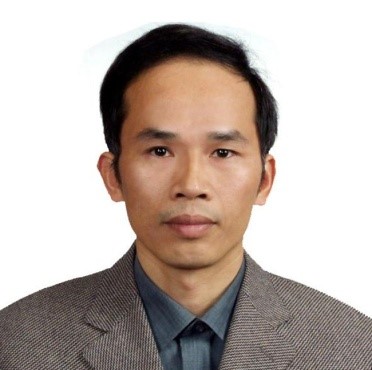 Yiwen Zhong (钟一文)合作论文数College of Computer and Information, Fujian Agriculture and Forestry University7
 Shuihan Jiang合作论文数6Junting Qi合作论文数Fujian Agriculture and Forestry University6
 Han Cao (曹菡)合作论文数School of Computer Science, Shaanxi Normal University6
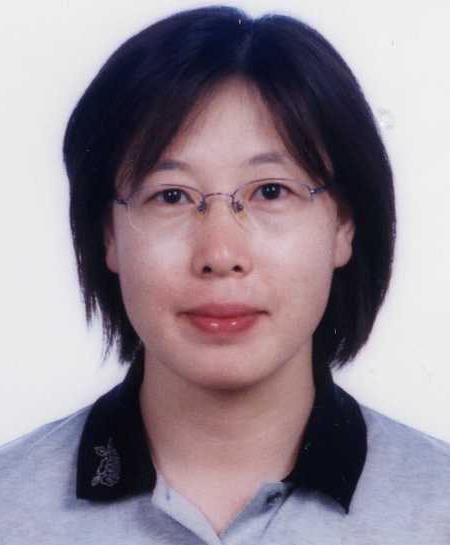 Xiaojuan Zhang (张晓娟)合作论文数Aerospace Information Research Institute, Chinese Academy of Sciences5
 Jiaxiang Lin (林甲祥)合作论文数福建农林大学计算机与信息学院5Haoze Jing合作论文数4
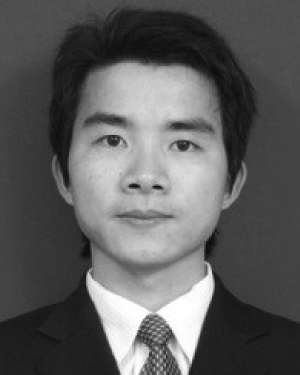 YaoHai Lin (林耀海)合作论文数4
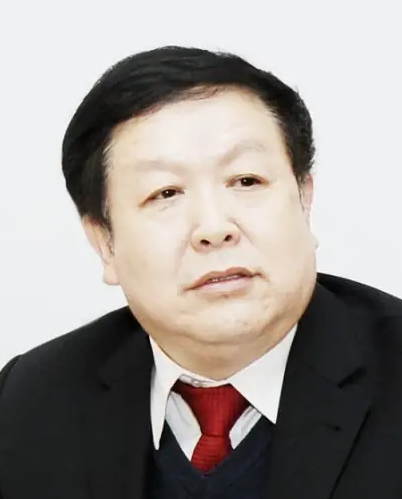 Mingquan Zhou (周明全)合作论文数Beijing Normal University4
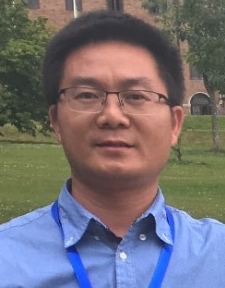 Riqing Chen (陈日清)合作论文数College of Computer and Information Sciences, Fujian Acriculture And Forestry University3
 Min Lin合作论文数College of Telecommunications and Information Engineering, Nanjing University of Posts and Telecommunications3Zhenchang Zhang合作论文数2Hui Zhang合作论文数2
 Lijin Wang (王李进)合作论文数福建农林大学计算机与信息学院2
 Zejun Zhang (张泽均)合作论文数福建农林大学计算机与信息学院2
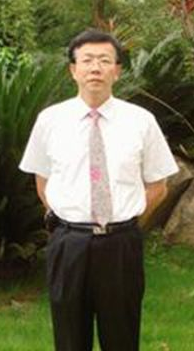 Lin Jing (景林)合作论文数福建农业大学计算机与信息学院2Xueping Wang (王雪平)合作论文数2
 Changcai Yang (杨长才)合作论文数福建农林大学计算机与信息学院2Xiaowen Pan (潘晓文)合作论文数福建农林大学计算机与信息学院2Jie Qiu合作论文数College of Computer and Information Sciences, Fujian Agriculture and Forestry University1Honghui Xue合作论文数1Xianglin Miao合作论文数1Shuyan Wang合作论文数1LEI Xiang (雷响)合作论文数1
 Cheng Li (李诚)合作论文数1Yunqi Gao合作论文数1WANG Lei (王磊)合作论文数1Yan Pei (裴艳)合作论文数1
 Li Cheng合作论文数1Haiyang He合作论文数1
 Jianwei Wu合作论文数1
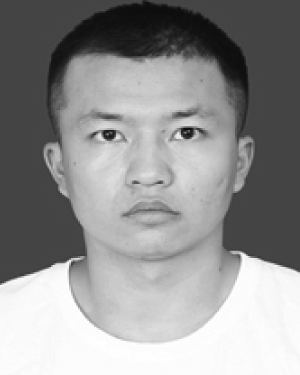 Xiong Pan合作论文数Fujian Agr & Forestry Univ, Coll Comp & Informat Sci, Digital Fujian Inst Big Data Agr & Forestry, Fuzhou, Fujian, Peoples R China1Chao LUO (罗超)合作论文数1Xiao-juan ZHANG (张小娟)合作论文数1XiangLin Mou (缪相林)合作论文数1ZhongJie Xiao (肖钟捷)合作论文数1Qi Chen (陈绮)合作论文数1SiYu Zhang (张思玉)合作论文数1GuiMei Yan (颜桂梅)合作论文数1XiaoYan Lai (赖晓燕)合作论文数1
 Huabing Zhou (周华兵)合作论文数School of Computer Science & Engineering Artificial Intelligence, Wuhan Institute of Technology;Hubei Key Laboratory of Intelligent Robot, Wuhan Institute of Technology1
 Jianzhang Chen合作论文数Sch. of Comput. Sci. & Eng., Univ. of Electron. Sci. & Technol. of China;c;Sch. of Comput. Sci. & Eng., Univ. of Electron. Sci. & Technol. of China1Zhengping Hu合作论文数1Liping Wu合作论文数1
 Guohua Geng (耿国华)合作论文数College of Computer Science, Northwest University1




