The mechanical and thermal properties of B30/iPP, B30/sPS and sPS/iPP/B30 blends were investigated by unnotched izod impact tester, DSC and tensile strength tester. The results showed that the mechanical properties of B30/iPP, B30/sPS and sPS/iPP/B30 blends were better than that of homopolymer B30 and sPS. The blend of sPS/B30 with the ratio of 80/20, unnotched izod impact strength was 41.2 KJ/m(2), tensile strength 32.5 MPa. The blend of B30/iPP with the ratio of 90 to 10, the unnotched izod impact strength was 46.2 KJ/m(2) and the tensile strength 27.2 MPa; and the blend of sPS/iPP/B30 with the ratio of 90/10/10, the unnotched izod impact strength was 42.3 KJ/m(2), and the tensile strength 33.7 MPa. DSC result showed that in the blend system of B30/iPP and sPS/iPP/B30 the iPP-Tg region shifted toward the sPS-Tg. However, the sPS-Tg shifted inward slightly.
By one-pot technique,the copolymerization of styrene with ethylene promoted by CpTiCl3/I4/Zn catalytic system to produce the star-like hydroxyl functionalized S-E block copolymers was investigated via sequential monomer addition strategy in the present of methylaluminoxane(MAO) as cocatalyst for the coordination polymerization stage.The effect of temperature,time,ethylene pressure and the ratio of Al/Ti in mol on the polymerization performance was discussed.Independently from the feed composition,basic S-E block copolymer was obtained,together with aPS,from which the former was separated by solvent extraction.The CHCl3-soluble product was determined by GPC,DSC,and 13C NMR.The DSC result showed that the copolymer featured a glass transition temperature(Tg= 84 ℃) which attributed to the Tgof aPS domain and melting temperature(Tm=112 ℃) which attributed to the Tm of PE domain.The block structure of the aPS-b-PE copolymer was further confirmed by 13C NMR,these results indicated that the PS segment was amorphous and the PE one was crystalline.
This paper reviews the preparation of biomedical polymer materials via living / controlled polymerization,including living free radical polymerization,living anionic polymerization,living cationic polymerization,and living coordination polymerization. They are used as non-viral gene delivery system,nanocarrier,medical carrier,artificial lung membrane,and so on. The trend of biomedical polymer materials in the future is also prospected.
The advances in homopolymerization of polar monomers and copolymerization of nonpolar monomers with polar monomers based on CGC catalyst,half-metallocene catalyst,bis-metallocene catalyst,multinuclear metallocene catalyst,bridged metallocene catalyst,and non-metallocene catalyst are reviewed. The mechanism of polar monomer polymerization promoted by metallocene catalysts includes living radical polymerization and coordination polymerization.Polymer of polar monomer and copolymer of polar monomer with nonpolar monomer are prepared via metallocene catalysts. It not only expands the application of metallocene catalysts in polymer science,but also develops a kind of polar polyolefin resin featuring new performance.
The development in catalyst for broad or bimodal molecular weight distribution polyethylene prepared with the process of single-reactor was described. According to the composition and structure of the catalyst,the catalytic systems were classified as multi-component composite catalyst and mono-component catalyst. The multi-component composite catalysts were divided into metallocene/Ziegler-Natta composite catalyst,different metallocene composite catalyst,chromium based/Ziegler-Natta composite catalyst,metallocene/late transition metal composite catalyst,non-metallocene single site/metallocene composite catalyst,non-metallocene single site/Ziegler-Natta composite catalyst and different late transition metal composite catalyst. The multi-composite catalyst acted as individual active species,which had different kinetic responses,such as different propagation,termination,and transfer rate constants,and as a result,produced a blend of polymeric chains with two or more predominant molecular masses in ethylene polymerization via the process of single-reactor. The mono-component catalysts involved mononuclear metallocene catalyst,multinuclear metallocene catalyst and late transition metal catalyst and other mono-component catalyst. The mono-catalyst which was able to come into being various catalytic active centers could produce polyethylene with broad or bimodal molecular weight distribution in a single-reactor. To form different active species of the mono-component catalyst was probably resulted from that the catalyst was immobilized on different chemical or physical environmental supports and the center metal of the catalyst was coordinated or reacted with ligand,ancillary ligand cocatalyst as well as additive.
A kind of novel bridged nonmetallocene catalysts was synthesized by the treatment of N,N-imidazole and N,N-phenylimidazole with n-BuLi, and MCl4 (M = Ti, Zr) in THF. Those catalysts were performed for ethylene polymerization after activated by methylaluminoxane (MAO). The effects of polymerization temperature, Al/M ratio, pressure of monomer, and concentration of catalysts on ethylene polymerization behaviors were investigated in detail. Those results revealed that the catalyst system was favorable for ethylene polymerization with high catalytic activity. The polymer was characterized by 13C NMR, WAXD, GPC, and DSC. The result confirmed that the obtained polyethylene featured broad molecular weight distribution around 20, linear structure, and relative low melting temperature. © 2007 Wiley Periodicals, Inc. J Polym Sci Part A: Polym Chem 46: 33–37, 2008
 Qigu Huang (黄启谷)合作论文数College of Materials Science And Engineering, Beijing University of Chemical Technology6
 Lifu Ma合作论文数4
 Wantai Yang (杨万泰)合作论文数Department of Chemical Engineering, Tsinghua University;School of Materials Science and Engineering, Beijing University of Chemical Technology3
 Kunxue Deng合作论文数3Hongli Wang合作论文数2Yuan Kong (孔媛)合作论文数2Junlong Li (李俊拢)合作论文数2Yaping Sheng合作论文数2
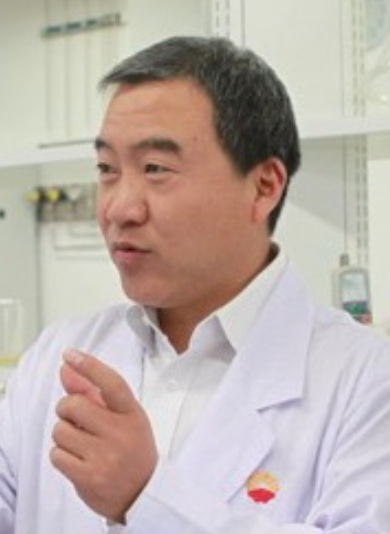 Jianjun Yi (义建军)合作论文数China National Petroleum Corporation2xiao yu yang合作论文数1Xin-hua WU (吴新华)合作论文数1XiaoYu Yang (阳小宇)合作论文数1Mingge Zhang合作论文数1




