Памяти Николая Николаевича Сибельдина, Арсеев П.И., Горбацевич А.А., Демихов Е.И., Кведер В.В., Колачевский Н.Н., Красильник З.Ф., Крохин О.Н., Кукушкин И.В., Месяц Г.А., Сурис Р.А., Тимофеев В.Б., Щербаков И.А.
We present the experimental results regarding the thermal resistance measurements for 100 μm stripe laser diodes emitting in 980 nm spectral range. The dependence of laser thermal resistance on pumping current was measured for series of identical laser chips with resonator length 4 mm and stripe width 95 mkm assembled directly at copper C-mounts and F-mounts without thermo-compensating submounts inside the output power range 10 W and 15 W accordingly. The appropriate method of spectral envelope peak definition was used for output power range 5-15 W in which we observed spectral peculiarities associated with appearance and competition of several peaks at the spectral envelope. We have proposed an explanation of the obtained dependency based on their correlation with the dependence of the total efficiency of the laser on the pump current.
It is generally accepted that the photon size is equal to its wavelength. However, interference of single photons was observed in [4] at a difference between arm lengths of the Mach—Zehnder interferometer much longer than the wavelengths of used photons. This raises the question about the photon localization region to which the present study is devoted.
(FIAN), an outstanding scientist, corresponding member of the Russian Academy of Sciences (RAS), professor, doctor of physico-mathematical sciences, principal research fellow of the Sector of Plasma Phenomena Theory at FIAN, professor at the Moscow Engineering Physics Institute (MEPhI), Viktor Pavlovich Silin, died on 12 January 2019. V P Silin graduated from the Physical Faculty of Lomonosov Moscow State University (MSU). His diploma thesis advisor was D I Blokhintsev. V P Silin's whole life in science was associated with the Lebedev Physical Institute, where he began working in 1949 immediately after he graduated from MSU and where he moved from junior research worker to head of the Department of Solid State Physics (1989±1995). During that time, he published over 700 scientific papers in various fields of physics. He is the author of four monographs fairly popular among specialists in plasma physics and the physics of condensed matter. The brilliant talent of Viktor Pavlovich became apparent as far back as the early 1950s, when he worked in the Department of Theoretical Physics at FIAN. Work on the development of the Tamm±Dankov method that had provided deeper insight into the nature of nuclear interactions appeared in that period. Simultaneously, he became engaged in the quantum many-body theory. Together with Yu L Klimontovich, he derived the kinetic self-consistent field equation describing a weakly ideal quantum Fermi gas. Using this equation, V P Silin predicted the existence of undamped oscillations in Fermi gas near the temperature of absolute zero. After L D Landau formulated the general theory of a Fermi liquid, these undamped oscillations were called zero sound. V P Silin also applied the Fermi-liquid theory to describe the properties of metals. The equation derived by him and known as the Landau±Silin equation became the basis of the description of collective effects in metals and allowed the prediction of cyclotron and spin waves in normal metals, a description of sound wave absorption in normal metals and conducting magnets, and the prediction of quantum spin waves. In 1970, V P Silin was awarded the USSR State Prize for the formulation of the theory of an electron Fermi liquid. Viktor Pavlovich remained interested in condensed matter physics in subsequent years. In the mid-1960s, he and P S Zyryanov conducted a large series of studies on the theory of waves in quantizing magnetic fields. These studies are well known to specialists in the field of semiconductor physics. A little later, V P Silin, together with younger disciples, developed a new approach to the description of magnetic and elastic properties of invar alloys, predicted surface quantum waves, and investigated collective excitations in ferroand antiferromagnets. One of the last areas of study in solid-state physics, to which Viktor Pavlovich had given attention till his last days, was working out the nonlocal electrodynamics of Josephson junctions and layered Josephson systems. He also obtained results of paramount importance in this area. The possibility of the existence of a whole range of new nonlinear vortex Josephson structures was predicted, the effect of quantization of Josephson vortex velocities was discovered, fast vortices were predicted, and the theory of Cherenkov radiation by vortices and vortex chains was formulated. In the late 1950s±early 1960s, V P Silin's scientific interests involved the rapidly developing plasma physics. The remarkable monograph by V P Silin and A A Rukhadze devoted to the problems of the electrodynamics of plasma and plasmalike media appeared in 1961. The monograph became a handbook for many generations of physicists and has recently been reissued. Almost immediately, a large series of papers appeared with NN Bogoliubov's ideas carried over to plasma physics. A number of new collision integrals in quantizing magnetic fields and in strong high-frequency Uspekhi Fizicheskikh Nauk 189 (5) 559 ± 560 (2019) DOI: https://doi.org/10.3367/UFNr.2019.03.038541 Translated by M V Tsaplina PERSONALIA PACS number: 01.60.+q
Lasing efficiency of neodymium-doped yttrium-aluminium garnet (YAG) ceramic samples, which were fabricated at the Fryazino Branch of the Kotelnikov Institute of Radio Engineering and Electronics, Russian Academy of Sciences and the SLPG 'Raduga' in 2016-2017, is studied under the conditions of end-and side-pumping. The efficiency of lasers based on this ceramics was 64 % in the case of end-pumping and 68 %-70 % upon side-pumping. The laser level lifetimes are measured in ceramics with neodymium concentrations of 1, 2, 3, and 4 at %. The measured lifetimes well agree with the literature data. The dependences of the lasing threshold on the cavity length under the conditions of transverse mode locking and diode end-pumping are studied for different samples of laser ceramics in a semiconfocal cavity. In sum, the performed investigations showed that the quality of the first industrial samples of Russian laser ceramics are highly competitive in quality with the ceramics produced by Konoshima Chem. Corp., Ltd., which is considered by the laser community as an etalon.
Three-dimensional simulation is used to theoretically assess temperature profiles in proposed 10-mm-wide cw laser diode bars packaged in a standard heat spreader of the C - S mount type with the aim of raising their reliable cw output power. We obtain calculated temperature differences across the emitting aperture and along the cavity. Using experimental laser bar samples with up to 60 W of cw output power, the emission spectra of individual clusters are measured at different pump currents. We compare and discuss the simulation results and experimental data.
 Gleb Sklizkov合作论文数61
 Gennadii Andreevich Mesyats合作论文数Lebedev Physical Institute, Russian Academy of Sciences39n g basov合作论文数32
 Yu. M. Popov合作论文数25V. A. Boiko合作论文数25
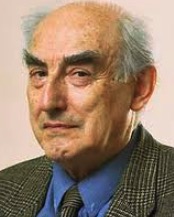 Vitaly L. Ginzburg合作论文数P.N.Lebedev Physical Institute, Russian Academy of Sciences22E A Cheshev合作论文数20Vladislav B Rozanov合作论文数20
 V. A. Gribkov合作论文数19A. S. Shikanov合作论文数19V. Ya. Nikulin合作论文数18
 Victor V. Bezotosnyi合作论文数18Aleksandr F Andreev合作论文数17Peter G Kryukov合作论文数16Иван Александрович Щербаков合作论文数15Vitalii I Konov合作论文数15Pavel P Pashinin合作论文数15Nicolai G Basov合作论文数14
 Vladislav Alexandrovich Oleshchenko合作论文数14V F Pevtsov合作论文数14Fv Bunkin合作论文数13Vyacheslav V Osiko合作论文数Laser Materials and Technologies Research Center of the A.M13Ivan A Shcherbakov合作论文数13Leonid V Keldysh合作论文数13E G Gamalii合作论文数13павел павлович пашинин合作论文数12Igor I Sobel'Man合作论文数12A. A. Rupasov合作论文数12Yu. A. Mikhailov合作论文数12L. I. Ivanov合作论文数11леонид вениаминович келдыш合作论文数11виталий лазаревич гинзбург合作论文数11
 Iosif Gennadievich Zubarev合作论文数11Yurii M Popov合作论文数11Stanislav D Zakharov合作论文数11Evgenii M Dianov合作论文数10Evgenii L Feinberg合作论文数10S. I. Fedotov合作论文数10I. V. Borovitskaya合作论文数10Vladimir I Ritus合作论文数10I. B. Kovsh合作论文数10николай геннадиевич басов合作论文数9A. V. Gurevich合作论文数Lebedev Physical Institute, Russian Academy of Sciences9
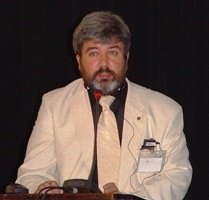 A.M. Prokhorov合作论文数P.N. Lebedev Physical Institute, the Academy of Sciences of the USSR9
 A. A. Tikhomirov合作论文数9
 Oleg Vladimirovich Rudenko合作论文数Department of Acoustics, Lomonosov Moscow State University9Yu A Zakharenkov合作论文数9Sergey M Zakharov合作论文数9e l tyurin合作论文数9




